Chindia Alert: You’ll be Living in their World Very Soon
aims to alert you to the threats and opportunities that China and India present. China and India require serious attention; case of ‘hidden dragon and crouching tiger’.
Without this attention, governments, businesses and, indeed, individuals may find themselves at a great disadvantage sooner rather than later.
The POSTs (front webpages) are mainly 'cuttings' from reliable sources, updated continuously.
The PAGEs (see Tabs, above) attempt to make the information more meaningful by putting some structure to the information we have researched and assembled since 2006.
Image copyright GETTY IMAGESImage caption The Chinese city of Wuhan recently lifted its strict quarantine measures
The Chinese city of Wuhan, where the coronavirus originated last year, has raised its official Covid-19 death toll by 50%, adding 1,290 fatalities.
Wuhan officials attributed the new figure to updated reporting and deaths outside hospitals. China has insisted there was no cover-up.
It has been accused of downplaying the severity of its virus outbreak.
Wuhan’s 11 million residents spent months in strict lockdown conditions, which have only recently been eased.
The latest official figures bring the death toll in the city in China’s central Hubei province to 3,869, increasing the national total to more than 4,600.
China has confirmed nearly 84,000 coronavirus infections, the seventh-highest globally, according to Johns Hopkins University data.
What’s China’s explanation for the rise in deaths?
In a statement released on Friday, officials in Wuhan said the revised figures were the result of new data received from multiple sources, including records kept by funeral homes and prisons.
Deaths linked to the virus outside hospitals, such as people who died at home, had not previously been recorded.
Media caption Learn how Wuhan dealt with the lockdown
The “statistical verification” followed efforts by authorities to “ensure that information on the city’s Covid-19 epidemic is open, transparent and the data [is] accurate”, the statement said.
It added that health systems were initially overwhelmed and cases were “mistakenly reported” – in some instances counted more than once and in others missed entirely.
A shortage of testing capacity in the early stages meant that many infected patients were not accounted for, it said.
A spokesman for China’s National Health Commission, Mi Feng, said the new death count came from a “comprehensive review” of epidemic data.
In its daily news conference, the foreign ministry said accusations of a cover-up, which have been made most stridently on the world stage by US President Donald Trump, were unsubstantiated. “We’ll never allow any concealment,” a spokesman said.
Why are there concerns over China’s figures?
Friday’s revised figures come amid growing international concern that deaths in China have been under-reported. Questions have also been raised about Beijing’s handling of the epidemic, particularly in its early stages.
In December 2019, Chinese authorities launched an investigation into a mysterious viral pneumonia after cases began circulating in Wuhan.
China reported the cases to the World Health Organization (WHO), the UN’s global health agency, on 31 December.
But WHO experts were only allowed to visit China and investigate the outbreak on 10 February, by which time the country had more than 40,000 cases.
The mayor of Wuhan has previously admitted there was a lack of action between the start of January – when about 100 cases had been confirmed – and 23 January, when city-wide restrictions were enacted.
Around that time, a doctor who tried to warn his colleagues about an outbreak of a Sars-like virus was silenced by the authorities. Dr Li Wenliang later died from Covid-19.
Wuhan’s death toll increase of almost exactly 50% has left some analysts wondering if this is all a bit too neat.
For months questions have been asked about the veracity of China’s official coronavirus statistics.
The inference has been that some Chinese officials may have deliberately under-reported deaths and infections to give the impression that cities and towns were successfully managing the emergency.
If that was the case, Chinese officials were not to know just how bad this crisis would get in other countries, making its own figures now seem implausibly small.
The authorities in Wuhan, where the first cluster of this disease was reported, said there had been no deliberate misrepresentation of data, rather that a stabilisation in the emergency had allowed them time to revisit the reported cases and to add any previously missed.
That the new death toll was released at the same time as a press conference announcing a total collapse in China’s economic growth figures has led some to wonder whether this was a deliberate attempt to bury one or other of these stories.
Then again, it could also be a complete coincidence.
China has been pushing back against US suggestions that the coronavirus came from a laboratory studying infectious diseases in Wuhan, the BBC’s Barbara Plett Usher in Washington DC reports.
US President Donald Trump and some of his officials have been flirting with the outlier theory in the midst of a propaganda war with China over the origin and handling of the pandemic, our correspondent says.
Mr Trump this week halted funding for the World Health Organization (WHO), accusing it of making deadly mistakes and overly trusting China.
“Do you really believe those numbers in this vast country called China, and that they have a certain number of cases and a certain number of deaths; does anybody really believe that?” Mr Trump said at the White House on Wednesday.
On Thursday, UK Foreign Secretary Dominic Raab said: “We’ll have to ask the hard questions about how [coronavirus] came about and how it couldn’t have been stopped earlier.”
But China has also been praised for its handling of the crisis and the unprecedented restrictions that it instituted to slow the spread of the virus.
Indian defence officials have reported a coronavirus outbreak at a key naval base in the western city of Mumbai.
Twenty-one personnel have tested positive for Covid-19 at INS Angre, which is the seat of the force’s western command, the navy said in a statement on Saturday.
It added that there are no infections aboard any ships or submarines.
India has 11,906 active infections and 480 deaths, according to the latest data from the ministry of health.
The Navy said that they had tested a number of personnel who had come into contact with a soldier who had tested positive earlier this month. Many of those who had tested positive for the virus, the statement added, were asymptomatic.
All 21 personnel live in the same residential block, which has been declared a containment zone and has been placed under lockdown.
In a video message to personnel last week, Navy Chief Admiral Karambir Singh stressed the importance of keeping ships and submarines free of the virus.
“The coronavirus pandemic is unprecedented and it has never been seen before. Its impact has been extraordinary across the globe, including India,” he said.
The navy has been playing an active role in India’s response to the Covid-19 outbreak.
It has set up isolation facilities to treat patients at one of its premier hospital units and is also running quarantine camps.
The outbreak aboard the Indian naval base follows reports of outbreaks aboard vessels belonging to other nations.
More than 500 sailors on the USS Roosevelt have tested positive for the virus and one of them died earlier this week. And nearly a third of the sailors serving with France’s aircraft carrier Charles de Gaulle – 668 out of nearly 2,000 – have been infected with coronavirus.
Image copyright GETTY IMAGESImage caption The Chinese city of Wuhan recently lifted its strict quarantine measures
The Chinese city of Wuhan, where the coronavirus originated last year, has raised its official Covid-19 death toll by 50%, adding 1,290 fatalities.
Wuhan officials attributed the new figure to updated reporting and deaths outside hospitals. China has insisted there was no cover-up.
It has been accused of downplaying the severity of its virus outbreak.
Wuhan’s 11 million residents spent months in strict lockdown conditions, which have only recently been eased.
The latest official figures bring the death toll in the city in China’s central Hubei province to 3,869, increasing the national total to more than 4,600.
China has confirmed nearly 84,000 coronavirus infections, the seventh-highest globally, according to Johns Hopkins University data.
What’s China’s explanation for the rise in deaths?
In a statement released on Friday, officials in Wuhan said the revised figures were the result of new data received from multiple sources, including records kept by funeral homes and prisons.
Deaths linked to the virus outside hospitals, such as people who died at home, had not previously been recorded.
Media caption Learn how Wuhan dealt with the lockdown
The “statistical verification” followed efforts by authorities to “ensure that information on the city’s Covid-19 epidemic is open, transparent and the data [is] accurate”, the statement said.
It added that health systems were initially overwhelmed and cases were “mistakenly reported” – in some instances counted more than once and in others missed entirely.
A shortage of testing capacity in the early stages meant that many infected patients were not accounted for, it said.
A spokesman for China’s National Health Commission, Mi Feng, said the new death count came from a “comprehensive review” of epidemic data.
In its daily news conference, the foreign ministry said accusations of a cover-up, which have been made most stridently on the world stage by US President Donald Trump, were unsubstantiated. “We’ll never allow any concealment,” a spokesman said.
Why are there concerns over China’s figures?
Friday’s revised figures come amid growing international concern that deaths in China have been under-reported. Questions have also been raised about Beijing’s handling of the epidemic, particularly in its early stages.
In December 2019, Chinese authorities launched an investigation into a mysterious viral pneumonia after cases began circulating in Wuhan.
China reported the cases to the World Health Organization (WHO), the UN’s global health agency, on 31 December.
But WHO experts were only allowed to visit China and investigate the outbreak on 10 February, by which time the country had more than 40,000 cases.
The mayor of Wuhan has previously admitted there was a lack of action between the start of January – when about 100 cases had been confirmed – and 23 January, when city-wide restrictions were enacted.
Around that time, a doctor who tried to warn his colleagues about an outbreak of a Sars-like virus was silenced by the authorities. Dr Li Wenliang later died from Covid-19.
Wuhan’s death toll increase of almost exactly 50% has left some analysts wondering if this is all a bit too neat.
For months questions have been asked about the veracity of China’s official coronavirus statistics.
The inference has been that some Chinese officials may have deliberately under-reported deaths and infections to give the impression that cities and towns were successfully managing the emergency.
If that was the case, Chinese officials were not to know just how bad this crisis would get in other countries, making its own figures now seem implausibly small.
The authorities in Wuhan, where the first cluster of this disease was reported, said there had been no deliberate misrepresentation of data, rather that a stabilisation in the emergency had allowed them time to revisit the reported cases and to add any previously missed.
That the new death toll was released at the same time as a press conference announcing a total collapse in China’s economic growth figures has led some to wonder whether this was a deliberate attempt to bury one or other of these stories.
Then again, it could also be a complete coincidence.
But China has also been praised for its handling of the crisis and the unprecedented restrictions that it instituted to slow the spread of the virus. WHO Director General Dr Tedros Adhanom Ghebreyesus has hailed China for the “speed with which [it] detected the outbreak” and its “commitment to transparency”.
US President Donald Trump this week halted funding for the WHO, accusing it of making deadly mistakes and overly trusting China.
“Do you really believe those numbers in this vast country called China, and that they have a certain number of cases and a certain number of deaths; does anybody really believe that?” Mr Trump said at the White House on Wednesday.
On Thursday, UK Foreign Secretary Dominic Raab said: “We’ll have to ask the hard questions about how [coronavirus] came about and how it couldn’t have been stopped earlier.”
Image copyright GETTY IMAGESImage caption Indore is a bustling commercial city
In early March, 40-year-old Ravi Dosi, a chest specialist in India, saw a baffling surge in patients with respiratory problems at outpatient clinics.
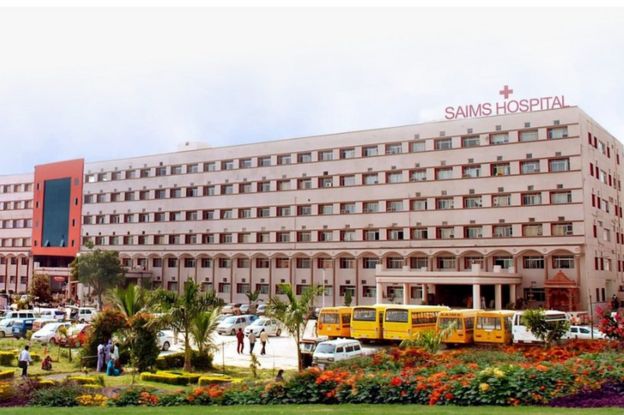
“There was almost a 50% jump in patients with upper respiratory issues and sore throat. They were not responding to antibiotics. Testing was still low and we didn’t really know what was going on,” Dr Dosi, who works at Sri Aurobindo Institute of Medical Sciences, a 1,156-bed private medical college in the central city of Indore, told me.
Less than a fortnight later, Dr Dosi began seeing an uptick in admissions of Covid-19 patients. Around the end of March, the hospital was receiving 28 infected patients every day.
They had dry cough, fever, and difficulty breathing. Their blood oxygen levels were low. They were reporting loss of taste and smell.
In the first wave of patients, nearly a dozen came from far-flung districts, more than 150km (93 miles) from Indore, a bustling commercial city in Madhya Pradesh state. The state has now become a hotspot, with nearly 400 confirmed infections out of the more than 6,400 infections and nearly 200 deaths across the country so far.
By the second week of April, Dr Dosi and his team of 100 doctors and nearly an equal number of nursing staff working 24/7 in three shifts, were treating 144 Covid-19 patients. (Thirty-one had been treated and sent home already.)
A total of 38 patients were in intensive care. Twenty-one of them were critical. There had been seven deaths. “We are handling the largest number of Covid-19 patients in India,” Vinod Bhandari, a surgeon and chairman of the hospital, told me.
Doctors now believe that the infection was spreading in the community long before the government admitted to it, and testing slowly ramped up. Until two weeks ago, Indian health authorities had been denying community transmission.
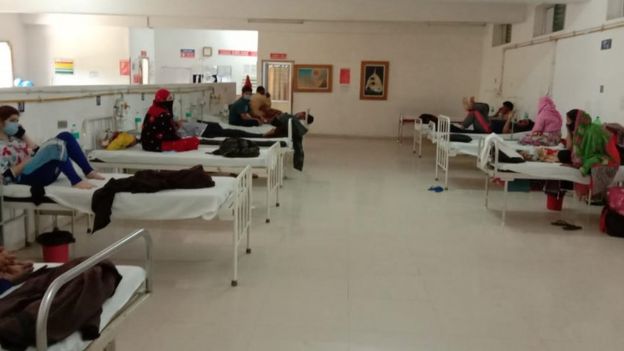
Image caption The hospital in Indore has more than 140 patients
Now a new study by Indian Council of Medical Research (ICMR) using surveillance data from 41 labs in the country has hinted at community transmission: 52 districts in 20 states and union territories reported Covid-19 patients. Some 40% of the cases did not report any history of international travel or contact with a known case. (The survey was based on swabs collected from nearly 6,000 patients who tested positive between 15 February and 19 March.)
Back in the hospital in Indore, the doctors are battling the surge in infections.
Three isolation wards spread over two floors floors are stacked with patients. (The hospital has earmarked 525 beds for Covid-19 patients.) Isolation wards have younger patients with mild infection, while elderly patients with more severe symptoms are in intensive care. The oldest patient is a 95-year-old man, and the youngest is a four-month-old boy.
The team of doctors handling patients includes chest specialists, anaesthetists, microbiologists, and dermatologists. There are patients with a lot of underlying medical conditions – diabetes, hypertension, even cancer – so all the specialists have been called in to help with the treatment.
Dr Dosi wakes up early, puts on protective gear – scrubs, face masks and shields, N95 masks, gowns, double gloves and shoe covers – before going on his rounds of the patients. Doctors say they are not facing a shortage of gear yet.
They are using 22 ventilators to help the critical patients breathe, and also providing oxygen supplies to others using nasal cannulas (nose prongs).
In the isolation wards, patients are given oral medication – antibiotics and hydroxychloroquine (commonly known as HCQ), an anti-malarial drug – and directed to maintain social distancing and wash their hands regularly.
Image caption The isolation wards are packed with patients
“I have never seen a challenge and crisis like this in my career. I have heard stories about an outbreak of plague in Surat [in 1994]. But this seems to be much bigger. The biggest challenge is to keep hopes alive and be positive,” says Dr Dosi.
Keeping hopes up for patients in isolation can be taxing. Three tests, say doctors, are being done for the infection – if the first test comes out positive, the patient remains in isolation for two weeks, and is tested twice on two days after the quarantine period. If the last two tests come back negative, the patient is discharged. If not, the patient has to stay in isolation for another two weeks. “It is a tough grind, mentally,” says one doctor.
For the last three weeks, Dr Dosi has been living in the hospital, away from his wife, two sons and parents. His father is a retired pathologist. They communicate via hurried video calls, between his frantic trips to the isolation wards and intensive care.
I ask him when does he expect this to “get over”, so that he can go home.
“In a couple of weeks,” he says. “The lockdown should have helped to slow down the infection.”
Dr Dosi is alluding to the strict 21-day lockdown India imposed on 24 March to halt the spread of the infection.
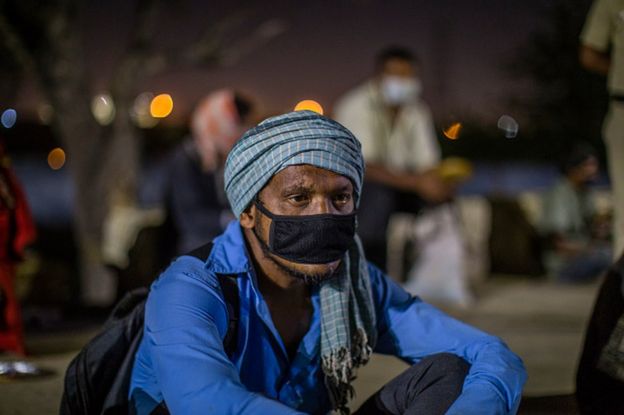
Image copyright GETTY IMAGESImage caption Health officials have been denying community transmission
Things are getting better, he says.
“I am getting 10 patients for admission in isolation wards, and two patients severe enough for intensive care every day now. Earlier this week, it was 50:50.”
It is possibly too early to hazard a guess about when admissions will slow down to single digits. As more people are tested, the number of patients can easily rise again.
It’s been unrelenting, Dr Dosi says.
Early, on Friday, I sent him a text to find out what was going on.
The patients were all returning Chinese citizens who had flown from Moscow to Vladivostok, a Russian city around 100 miles south.
All the new patients were taken to hospital, with two in a serious condition.
In addition, another 86 people in Suifenhe – who came via the same route – were classed as “asymptomatic” but positive for the virus, which China counts separately.
What has Suifenhe done?
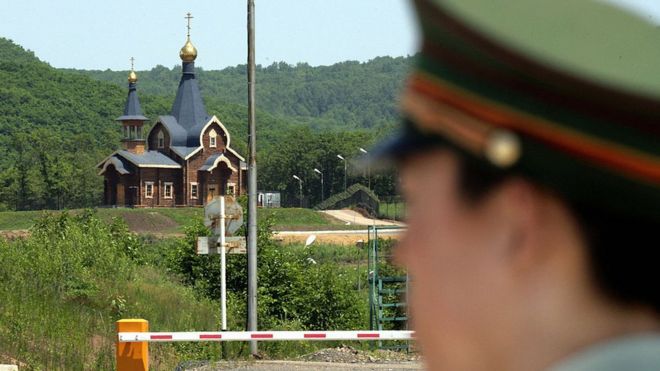
The border was closed to people on Tuesday, the local government said, although cargo can continue. Russia closed its border with China in February.
People in the city have been told to stay at home, although the lockdown isn’t as severe as Hubei province experienced. One person per house can shop for essentials every three days.
At the same time, the new hospital – in an existing building – is due to open this weekend, intended for patients with mild symptoms.
“Of course I’m very scared,” one woman who runs a bakery shop told the BBC.
“We don’t leave the house now. Many people already left the city. But we can’t do that, because we have a shop need to take care of.”
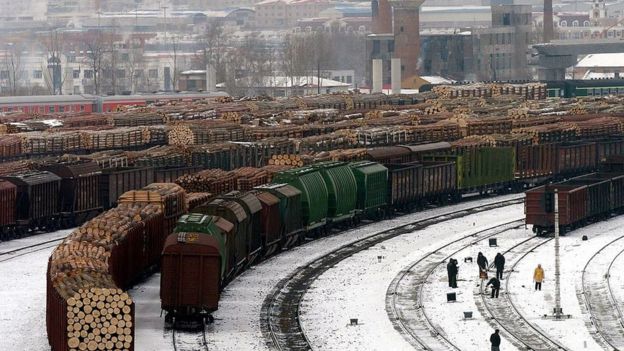
Image copyright SOVFOTOImage caption This picture from 2005 showed the extent of Russian timber exports passing through Suifenhe railway station
Meanwhile, a member of staff at a restaurant in the city said it was normally their high season, with around 1,000 customers a day.
Instead, they were told to close earlier this week, with “no idea” when they can open again.
But the staff member was not critical of the government. He said the lockdown made him feel “secure” – and that he was “very confident” the government would look after the situation.
What is the situation in the rest of China?
China’s recorded rate of Covid-19 infections has slowed dramatically in recent weeks.
On Wednesday, people were allowed to leave Wuhan – where the outbreak emerged – for the first time in 11 weeks if they were deemed virus-free.
There were 221 inbound and outbound flights, with more than 7,000 people leaving and 4,500 arriving. More than half a million used public transport, state media reported.
But although people from Wuhan can leave, they still face restrictions in other cities. In Beijing, for example, they will be tested upon arrival, according to local media.
Even if they pass, they will then be quarantined for 14 days – and tested again – before being released.
BEIJING (Reuters) – Mainland China reported no coronavirus deaths for the first time since the pandemic began, and a drop in new cases, a day before the central city of Wuhan, where the virus emerged late in December, is set to lift its lockdown.
China had 32 new infections by Monday, down from 39 a day earlier, the National Health Commission said.
For the first time since the commission began publishing nationwide data in late January, Hubei’s provincial capital of Wuhan saw no new deaths, joining the rest of mainland China, which has recorded none since March 31.
Wuhan, a city of 11 million that reported only two new infections in the past fortnight is due to allow residents to leave the city on Wednesday, for the first time since it was locked down on Jan. 23 to curb the spread of the virus.
With mainland China well past February’s peak of infections, authorities have turned their attention to imported cases and asymptomatic patients, who show no symptoms but can still pass on the virus.
Total infections in mainland China stood at 81,740 on Monday with 3,331 deaths, the commission said. It reported 30 new asymptomatic cases, nine involving incoming travellers. Of the new asymptomatic cases, 18 were in Hubei.
By the end of Monday, 1,033 asymptomatic patients were under medical observation.
TIGHTER LAND BORDERS
Overseas arrivals made up all 32 of the new cases with symptoms, down from 38 a day earlier. Total imported infections stand at 983, the commission said.
China faces the “dual risks” of imported infections and domestic cluster outbreaks, a commission spokesman told a briefing on Tuesday.
The northeast province of Heilongjiang reported 20 new cases, all in Chinese citizens returning from neighbouring Russia. It had reported 20 new infections on Sunday, all also cases imported from Russia.
On Tuesday, the Chinese consulate in the Russian city of Vladivostok near the border with China said it strongly reminded Chinese nationals not to return home through the border port of Suifenhe, which is to be closed to all arrivals from Tuesday.
China has shut its borders to foreigners as the virus spread globally, though most imported cases have involved Chinese nationals returning from overseas.
The number of inbound travellers through airports is fewer than 3,000 a day, down from about 25,000 in late March, before China slashed the number of international flights.
It also started testing all international arrivals for the virus this month.
BEIJING (Reuters) – Mainland China reported no coronavirus deaths for the first time since the pandemic began, and a drop in new cases, a day before the central city of Wuhan, where the virus emerged late in December, is set to lift its lockdown.
China had 32 new infections by Monday, down from 39 a day earlier, the National Health Commission said.
For the first time since the commission began publishing nationwide data in late January, Hubei’s provincial capital of Wuhan saw no new deaths, joining the rest of mainland China, which has recorded none since March 31.
Wuhan, a city of 11 million that reported only two new infections in the past fortnight is due to allow residents to leave the city on Wednesday, for the first time since it was locked down on Jan. 23 to curb the spread of the virus.
With mainland China well past February’s peak of infections, authorities have turned their attention to imported cases and asymptomatic patients, who show no symptoms but can still pass on the virus.
Total infections in mainland China stood at 81,740 on Monday with 3,331 deaths, the commission said. It reported 30 new asymptomatic cases, nine involving incoming travellers. Of the new asymptomatic cases, 18 were in Hubei.
By the end of Monday, 1,033 asymptomatic patients were under medical observation.
TIGHTER LAND BORDERS
Overseas arrivals made up all 32 of the new cases with symptoms, down from 38 a day earlier. Total imported infections stand at 983, the commission said.
China faces the “dual risks” of imported infections and domestic cluster outbreaks, a commission spokesman told a briefing on Tuesday.
The northeast province of Heilongjiang reported 20 new cases, all in Chinese citizens returning from neighbouring Russia. It had reported 20 new infections on Sunday, all also cases imported from Russia.
On Tuesday, the Chinese consulate in the Russian city of Vladivostok near the border with China said it strongly reminded Chinese nationals not to return home through the border port of Suifenhe, which is to be closed to all arrivals from Tuesday.
China has shut its borders to foreigners as the virus spread globally, though most imported cases have involved Chinese nationals returning from overseas.
The number of inbound travellers through airports is fewer than 3,000 a day, down from about 25,000 in late March, before China slashed the number of international flights.
It also started testing all international arrivals for the virus this month.
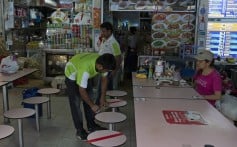
Anyone caught breaking Singapore’s social distancing rules could be jailed from Friday, as the city state ramped up its coronavirus defence and announced the introduction of distance learning for schools.
Under updates to its powerful infectious diseases law, anyone who intentionally sits less than 1 metre away from another person in a public place or on a fixed seat demarcated as not to be occupied, or who stands in a queue less than a metre away from another, will be guilty of an offence.
Offenders can be fined up to S$10,000 (US$6,990), jailed for up to six months, or both. The rules, in place until April 30, can be applied to individuals and businesses.
The news was followed later by an announcement from the education ministry that starting from April, schools will start conducting one day of home-based learning for students per week.
Singapore’s new social distancing laws send needed signal, experts say
27 Mar 2020
“The recent spike in imported cases signals a new phase in our nation’s fight against Covid-19. To support further safe distancing, schools will progressively transit to a blended learning model, starting with one day of home-based learning a week,” the ministry said in a statement.
It added schools will remain open for students whose parents are not able to secure alternative childcare arrangements.
Hundreds of thousands of students in Singapore returned to class on Monday after a week of school holidays, despite growing calls for schools to be closed.
Singapore is one of the few jurisdictions in the region that has yet to suspend schools, unlike Hong Kong, Thailand, Indonesia, and Malaysia.
Education Minister Ong Ye Kung had earlier cited scientific evidence, saying that the pneumonia-like Covid-19 illness does not affect the young as much as adults.
Authorities in the city state, however, have said that suspending schools and closing workplaces are among the next steps to be taken should the situation worsen. Singapore has confirmed 683 cases so far, of which 172 have recovered and two died.
Global condom shortage looms amid virus lockdowns
A global shortage of condoms is looming, the world’s biggest producer said, after a coronavirus lockdown forced it to shut down production.
Malaysia’s Karex makes one in every five condoms globally. It has not produced a single condom from its three Malaysian factories in the past 10 days because of the lockdown imposed by the government to halt the spread of the virus.
That’s already a shortfall of 100 million condoms, normally marketed internationally by brands such as Durex, supplied to state health care systems such as Britain’s NHS or distributed by aid programmes such as the UN Population Fund.
“We are going to see a global shortage of condoms everywhere, which is going to be scary,” Karex Chief Executive Goh Miah Kiat said this week.
“My concern is that for a lot of humanitarian programmes deep down in Africa, the shortage will not just be two weeks or a month. That shortage can run into months.”
The other major condom-producing countries are China, where the coronavirus led to widespread factory shutdowns, and India and Thailand, which are seeing infections spiking only now.
Goh said Karex was in the process of appealing to the government for an exemption to operate under specific conditions. Malaysia is approving other essential goods producers to operate with half of their workforce.
“The good thing is that the demand for condoms is still very strong because like it or not, it’s still an essential to have,” Goh said. “Given that at this point in time people are probably not planning to have children. It’s not the time, with so much uncertainty.”
China to ban most foreign arrivals
China has banned most foreigners from entering the country in an effort to block the spread of the coronavirus through imported cases.
With several exceptions, including transit visas and foreigners arriving via Hong Kong and Macau with short-term entry permits, entry visas issued to foreigners will be suspended as an “interim measure”, according to a statement late on Thursday by the country’s foreign ministry.
“In view of the rapid spread of the new coronavirus epidemic worldwide, China has decided to temporarily suspend entry of foreigners with currently valid visas and residence permits in China,” the ministry said.
“This is an interim measure that China has to take in order to respond to the current epidemic situation, with reference to the practice of many countries,” it added. “The Chinese side will adjust the above measures according to the epidemic situation through separate announcements.”
Pakistan aid workers lack basic kit
Pakistan’s biggest charity, famous for its emergency services for the poor, is kitting staff out in raincoats and rubber boots in the battle against the coronavirus as it can’t get hold of proper personal protective equipment, the organisation says.
Pakistan has reported the highest number of coronavirus infections in South Asia, with 1,179 cases and nine deaths, but health experts say there is a lack of public awareness about the virus and the cash-strapped government is ill-prepared to tackle it.
The Edhi Foundation has for decades stepped in to help when government services fail communities and it runs the country’s largest ambulance service.
Now it has had to train dozens of staff on how to handle suspected coronavirus patients. But providing them with proper protection is a problem given a nationwide shortage of the equipment.
“We’ve compromised on certain things and use alternatives,” Facial Edhi, head of the Edhi Foundation, said at his office in Karachi, Pakistan’s biggest city, on Thursday.
“Full aprons are in short supply in the market.”
He said he was confident the raincoats would work just as well.
South Korea pleads with residents to stay indoors
Authorities in South Korea pleaded with residents on Friday to stay indoors and avoid large gatherings as new coronavirus cases hovered close to 100 per day.
South Korea reported 91 new infections on Friday, taking the national tally to 9,332, the Korea Centres for Disease Control and Prevention said. The country has reported similar daily numbers for the past two weeks, down from a high of over 900 in late February.
The government has sought to convince a restless public that several more weeks of social distancing and self-isolation may be needed to allow health authorities to tamp down the smaller but still steady stream of new cases.
“As the weather is getting nicer, I know many of you may have plans to go outside,” said Yoon Tae-ho, director general for public health policy at the health ministry. “But social distancing cannot be successful when it’s only an individual, it needs to be the whole community.”
Coronavirus: California officials alarmed by rate of infection
27 Mar 2020
Italy reports 662 new deaths, with uptick in new cases
Italy is reporting an uptick in new novel coronavirus infections, after four consecutive days in which new cases had decreased.
The country now has 62,013 active cases, a daily increase of 4,492, the Italian Civil Protection Agency said in its bulletin.
On Wednesday the daily variation was 3,491, on Tuesday 3,612, on Monday 3,780, on Sunday 3,957, and on Saturday a record 4,821.
There are also 662 new fatalities, bringing the total death toll to 8,165, while overall infections, including deaths and recoveries, have risen to 80,539, a daily increase of 8.3 per cent.
Recoveries are up by around 11 per cent to 10,361, while the number of intensive care patients – a closely watched figure given the shortage of hospital beds – has risen by 3.5 per cent, to 3,612.
Russia closes all restaurants nationwide
Russia is temporarily closing restaurants nationwide for a nine-day period starting on Saturday to prevent the spread of the coronavirus.
Restaurants will still be able to provide delivery services during that time, according to the decree by Prime Minister Mikhail Mishustin, published on his website on Friday.
Russia has reported more than 800 cases of coronavirus, predominantly in Moscow, which has seen at least two virus-related deaths. Mayor Sergei Sobyanin has warned that the actual number of cases is probably “significantly more”.
The country has already prohibited regular international flights, and imposed strict quarantine measures for anyone entering the country and anyone who could have been exposed to someone infected with the virus – though has not yet opted to impose lockdown measures like those seen elsewhere.
Coronavirus containment measures spark prison protests across Italy as nation goes into lockdown
First casualty in Kenya
Kenya has recorded its first coronavirus death as a rapid rise in confirmed cases puts Africa’s fragile health systems to the test.
Kenyan Health Cabinet Secretary Mutahi Kagwe said a 66-year-old Kenyan man died on Thursday afternoon despite treatment in an intensive care unit.
Kagwe said the man, who arrived into the country on March 13 from South Africa via Swaziland, was a diabetic. Also on Thursday, three women aged between 30 and 61 tested positive for Covid-19, the disease caused by the coronavirus, taking the country’s total to 31.
Kenya is the second country in East Africa and the 15th on the continent to confirm a coronavirus-related death. Algeria has the highest death toll in Africa with 25 fatalities, while Egypt has reported 24 and Morocco 11.
About a week ago, the continent of 54 countries had reported fewer than 300 cases. But by Friday Africa had 3,221 confirmed cases and 87 deaths. WHO regional director for Africa Matshidiso Moeti said on Thursday that the situation in Africa was “evolving very quickly in terms of geographic spread and the increasing number of cases”.
Australian military to enforce quarantine
The Australian military will help enforce the quarantine of travellers returning to the country, with the prime minister unveiling strict new measures and door-to-door checks on Friday to rein in the spread of Covid-19.
With some two-thirds of Australia’s 3,000 Covid-19 cases still linked to overseas travel, Scott Morrison said 14-day home quarantines would now be actively policed with the help of the military.
Thousands of citizens and residents are still arriving in Australia every day and there have been instances of return travellers repeatedly breaking a promise to stay at home.
Morrison said all returnees arriving after midnight Saturday would now be kept in hotels in the city of arrival for the duration of their quarantine.
Those already on Australian soil and under orders to self-quarantine for two weeks will face active checks, he said.
Quarantine measures will be getting “a lot tougher and a lot stricter,” Morrison said, adding the Australian Defence Force would “assist in the compliance with these arrangements.”
Afghanistan to release 10,000 prisoners
Afghanistan will release at least 10,000 prisoners over the age of 55 in an attempt to prevent the spread of the coronavirus, officials said on Thursday.
“The president has issued a decree that several thousand prisoners will be released soon due to coronavirus,” an official in President Ashraf Ghani’s office said.
Those released will not include members of Islamist militant groups the Taliban or Islamic State, and the process will be completed within 10 days, said two government officials.
Afghanistan has reported 91 cases of coronavirus and three deaths. The country’s western Herat province has recorded at least 54 of the 75 total cases reported in the last week.
International aid groups in recent weeks have raised concerns about the possibility of the coronavirus spreading in prisons across Afghanistan.
JINAN, March 27 (Xinhua) — A shipment of medical supplies donated by Chinese companies in Shandong Province was delivered via a chartered flight on Friday morning from Jinan, the provincial capital, to Serbia to help with local coronavirus fight.
The supplies include 60,000 masks, 100 protective suites, 1,000 goggles and 2,000 boxes of medicine, donated by the Shandong High-speed Group and the First Company of China Eighth Engineering Division Ltd.
A batch of medical supplies donated by Chinese companies earlier, including the HBIS Group Co., Ltd., arrived in Serbia on Thursday with the help of the United Nations Development Programme and the European Union.
As of 3:00 p.m. Thursday local time, Serbia had reported 457 cases of COVID-19 and seven deaths.
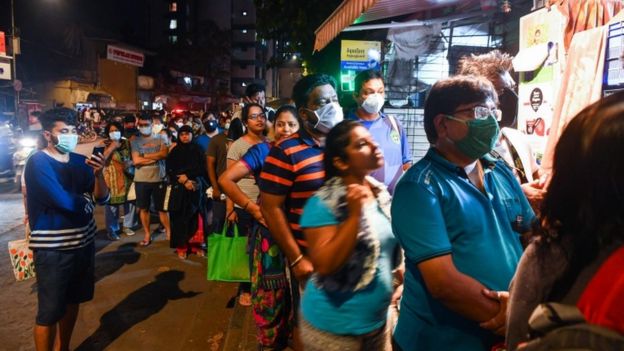
But in Delhi and the financial capital, Mumbai, people fearing shortages quickly thronged shops and pharmacies.
“I have never witnessed such a chaos in my life,” the owner of one store in the Shakarpur district of Delhi said, quoted by the Press Trust of India.
“All our stocks, including rice, flour, bread, biscuits, edible oils, have been sold out.”
Police in the busy city of Ghaziabad, in Uttar Pradesh state, patrolled the streets with megaphones to tell residents to stay indoors.
Image copyright AFPImage caption People in Mumbai rushed to stock up on essentials following Mr Modi’s address
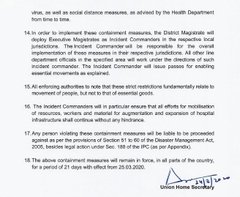
Under the new measures, all non-essential businesses will be closed but hospitals and other medical facilities will continue to function as normal. Schools and universities will remain shut and almost all public gatherings will be banned.
Anyone flouting the new rules faces up to two years in prison and heavy fines.
In his address, Prime Minister Modi also:
Stressed that the 21-day lockdown was “very necessary to break the chain of coronavirus”
Emphasised the seriousness of the situation and said that even developed countries had faced problems in combating it
Said that “social distancing was the only way to stop” the virus spreading
Announced that nearly $2bn (£1.8bn) would be made available to boost the country’s health infrastructure
Called on people not to “spread rumours” and to follow instructions
His announcement came after several Indian states introduced measures of their own, such as travel restrictions and the closure of non-essential services.
India has already issued a ban on international arrivals and grounded domestic flights. The country’s rail network has also suspended most passenger services.
Many parts of India, including cities such as Delhi and Mumbai, are already under tight restrictions. But this move extends those provisions to every corner of the country.
An earlier one-day curfew, which was seen as a trial, was flouted by many.
Mr Modi called on Indians to clap and cheer the emergency services from their balconies on Sunday. But many misunderstood the call and congregated in the streets as they danced and chanted.
“It’s impossible to fathom the cost that India may have to pay if such irresponsible behaviour continues,” Mr Modi warned at the time. “Social distancing is the only option to combat coronavirus.”
The implications of a total lockdown in India are huge, not just economically, but socially.
This is a nation where community is everything. Going to worship at a temple, mosque or church is an essential part of daily life for so many.
This is a seismic cultural shift but – like the rest of the world facing similar restrictions – a necessary one.
What’s the latest from around Asia?
Neighbouring Pakistan has almost twice as many confirmed cases – 878 as of Monday evening. Sweeping restrictions are in place although the government has stopped short of imposing a nationwide lockdown. However, several provinces have announced them independently. The army is being brought in to help enforce the restrictions
Bangladesh, which has reported 33 cases and three deaths, is also deploying its armed forces to help maintain social distancing and boost Covid-19 preventive measures. The soldiers will also monitor thousands of quarantined expatriate returnees. Across South Asia, there are concerns that the actual number of cases could be much higher than is being reported.
Indonesia, which has 49 confirmed Covid-19 deaths – the highest in South East Asia – has converted an athlete’s village built for the 2018 Asian Games into a makeshift hospital for coronavirus patients. A state of emergency was declared in Jakarta on Monday
In Thailand, a month-long state of emergency which will include curfews and checkpoints will begin on Thursday. The government has been criticised for failing to take strong action so far. Four people have died and nearly 900 tested positive
The most populous country that was without a case until now – Myanmar – has announced two cases
And what about the rest of the world?
Elsewhere, governments are continuing to work to stem the spread of the virus which has now affected more than 190 countries worldwide
More than 2.6 billion people are in lockdown now India has introduced its new measures, according to a tally by the AFP news agency
Media caption Reality Check tackles misleading health advice being shared online
Europe remains at the epicentre of the pandemic. On Tuesday, the death toll jumped by 514 in a single day in Spain and other European countries also reported sharp increases
Italy is the worst affected country in the world in terms of deaths. The virus has killed almost 7,000 people there over the past month
The World Health Organization (WHO) has warned that the US has the potential to become the new epicentre of the pandemic
In other developments, Japanese Prime Minister Shinzo Abe said the International Olympic Committee has agreed that the 2020 Tokyo Olympics should be postponed by a year


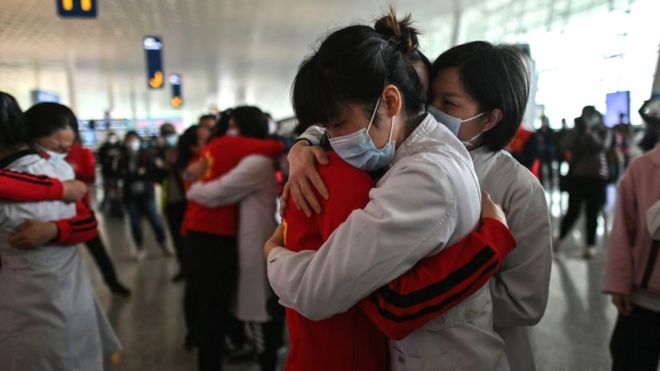 Image copyright GETTY IMAGES










 CHINDIA ALERT: You'll be living in their world, very soon