Archive for ‘Decoupling’

31/05/2020

Is Beijing preparing to decouple from the US?

  • China’s leadership has made it clear to its people that the world will become more dangerous and they must be prepared for hard times
  • Beijing’s relatively small stimulus response to Covid-19 suggests it wants to save its economic policy ammunition for a bigger battle China opted not to set a GDP target for 2020. Photo: Xinhua
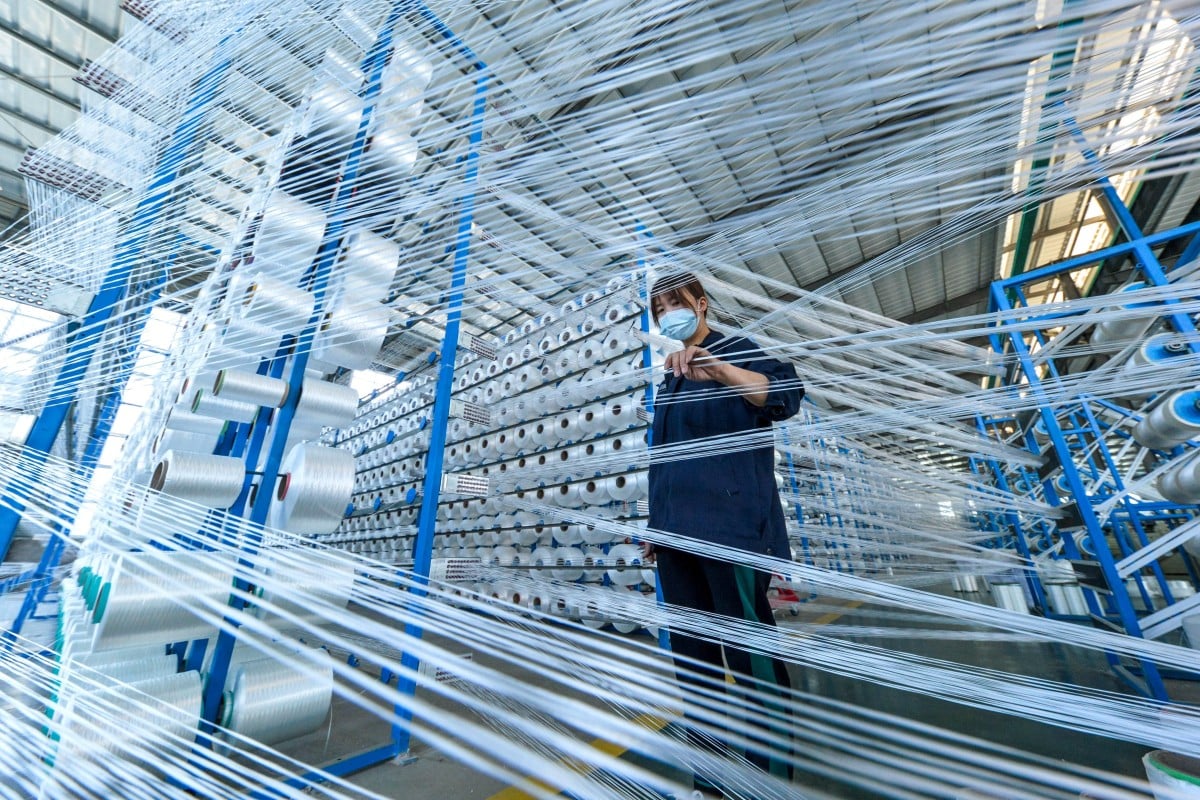
China opted not to set a GDP target for 2020. Photo: Xinhua
Beijing’s decision not to set an annual GDP target for 2020 – for the first time since 2002 – is a sign it is putting stability ahead of growth as part of its preparations for an escalating conflict with the United States.
Economic development has always been the central theme for Beijing since it established diplomatic relations with the US in 1979. But this year it has given priority to job creation and tackling poverty. The coronavirus outbreak might appear to have been the reason for the shift, but the underlying factor is the tension with the US.
Covid-19 offered a preview of what a decoupling of China and US might look like: aircraft grounded, cargo flows disrupted, value chains broken, goodwill and cooperation lost, blame games started.
Both countries have suffered heavy human and economic losses from the coronavirus, yet that did not inspire them to work together. Instead, hostility and rivalry has thrived, and neither wants to blink first.

The Chinese leadership has made it clear to its people that the world will become more dangerous and they must be prepared for hard times. As such, the government is saving its economic policy ammunition.

While the stimulus plans introduced in the US, Germany, Japan and France exceed 10 per cent of their national GDP and interest rates have been cut to the bone, Beijing stopped at just 1 trillion yuan (US$140 billion) worth of special treasury bonds and 1.6 trillion yuan of additional local government bonds. In total, about 2.6 per cent of GDP.

Interest rates in China – 2.7 per cent on 10-year bonds – are some of the highest among major economies.

China’s 6.6 per cent defence spending boost lowest in three decades
23 May 2020

China’s budget fiscal deficit has increased to 3.6 per cent of GDP for 2020, but the larger deficit is mainly from tax and fee cuts instead of increased fiscal expenses, except for an increased military spending.

Beijing is calling on provincial and local authorities to tighten their belts, which is unusual for a government that has huge assets and can increase spending at any time through quantitative easing.

So why is the government, which is known for intervening in the economy, being so restrained?

It is bracing itself for a perceived period of turbulence and hardship as its relationship with the US turns sour. It is putting jobs and social stability on top of its agenda, instead of growth.

Beijing is refraining from excessive spending, eliminating sources of potential instability, making appeals to the most vulnerable social groups, and saving its power for a bigger test.

Against that backdrop, the National People’s Congress passed the national security legislation on Hong Kong. Beijing knew the bill would anger the US, but did it anyway.

Hong Kong is known as China’s gateway to the international capital market and the largest offshore yuan market, but Beijing is ready to trade losses on the financial and economic front for potential gain on a fortified national security fence.

All this points to the suggestion that Beijing is preparing for the possibility of decoupling from the US, even if it doesn’t necessarily want to.

The threat of a new Cold War is clouding the world. The theme of life for one or two generations of people on both sides of the Pacific may shift from growth and prosperity to struggle and confrontation.

China and the US have yet to collide totally, but that moment is drawing near.

Source: SCMP
24/05/2020

China and US must find ways to get along and avoid new cold war, says Foreign Minister Wang Yi

  • Countries must respect each others’ systems and be wary of US political forces who want to ‘hijack relations’, Wang tells press conference at ‘two sessions’
  • Beijing is not looking for confrontation and wants to work with Washington to fight coronavirus, minister says
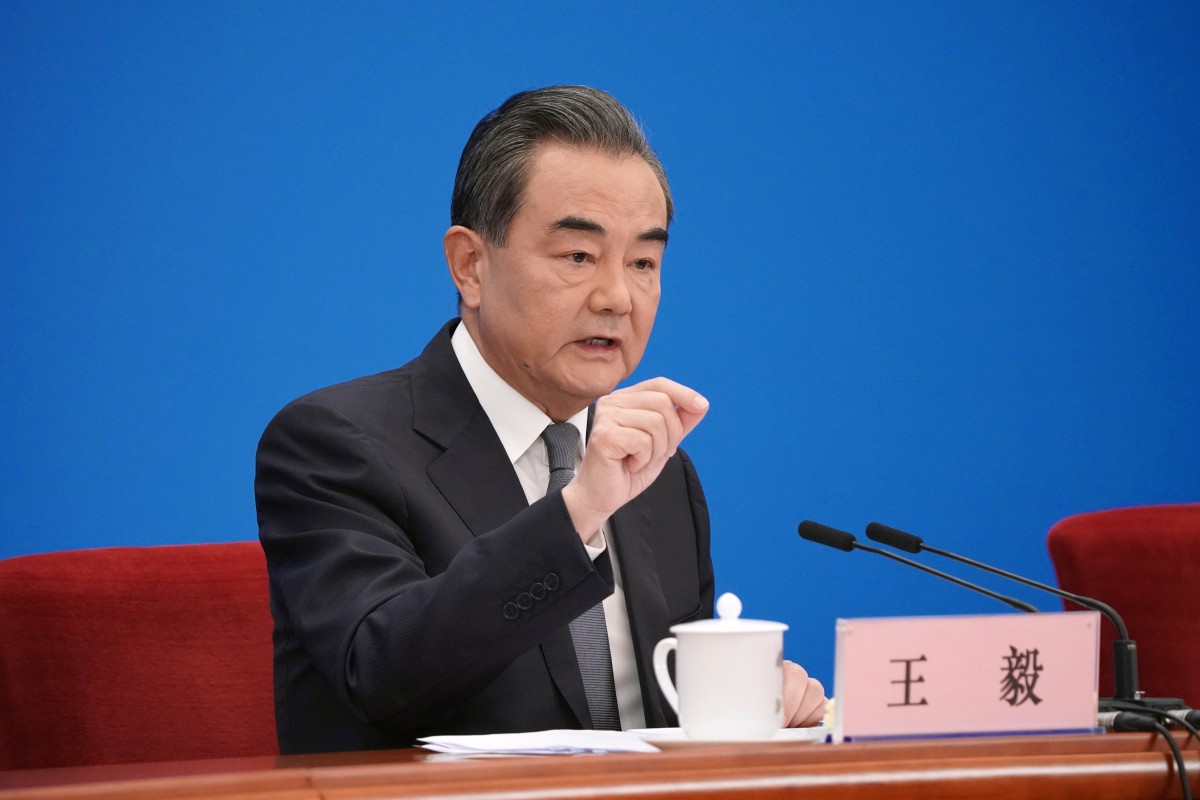
Foreign Minister Wang Yi said China did not want to replace or change the US. Photo: Xinhua

China and the US should try to avoid a new cold war and find new ways to cooperate despite their differences, China’s Foreign Minister Wang Yi said on Sunday.

“We need to be alert to efforts by some political forces in America to hijack China-US relations and who try to push the two countries towards a so-called ‘new cold war’.

“This is a dangerous attempt to turn back the course of history,” Wang told a press conference on the sidelines of the annual parliamentary meetings known as the ‘two sessions’.

Ties between the two countries have further worsened due to escalating tensions over the handling of the Covid-19 pandemic.

Voices calling for decoupling have been on the rise in the US, with some arguing that the two countries are edging towards a new cold war akin to that against the Soviet Union.

Wang called for the two countries to respect each other’s political systems and to find a way to get along despite their differences.

The two nations should step up cooperation on global pandemic control, and coordinate on macro policies to deal with the economic impact.

“China has no intention of changing the United States, much less replacing it. The US should give up the wishful thinking that it can change China.”

“For the benefit of the two peoples, as well as the future and well-being of humankind, China and the US should and must find a way to coexist peacefully despite the differences in system and cultures of the two societies.”

Wang said China will not seek confrontation with the United States, but China is determined to protect its sovereignty, territorial integrity and development.

Source: SCMP
08/07/2019

World cannot shut China out, vice president says, in jab at U.S.

BEIJING (Reuters) – China and the rest of the world must co-exist, Vice President Wang Qishan said on Monday, in an indirect jab at the United States, with which Beijing is trying to resolve a bitter trade war.

Top representatives of the world’s two biggest economies are trying to resume talks this week to try and resolve their year-long trade dispute, which has seen the two countries place increasingly harsh tariffs on each other’s imports.

The Trump administration has accused China of engaging in unfair trade practices that discriminate against U.S. firms, forced technology transfers and intellectual property rights theft. Beijing has denied all the charges.

“China’s development can’t shut out the rest of the world. The world’s development can’t shut out China,” Wang told the World Peace Forum at Beijing’s elite Tsinghua University.

He also warned against “protectionism in the name of national security”, but without mentioning the United States, and urged major powers to make greater contributions to world peace.

China has also been angered by U.S. sanctions against tech giant Huawei Technologies Co Ltd over national security concerns, and U.S. visa curbs on its students and academics.

In his speech, Wang, who is extremely close to Chinese President Xi Jinping and rarely speaks in public, reiterated China’s commitment to opening up.

“Large countries must assume their responsibilities and set an example, make more contributions to global peace and stability, and broaden the path of joint development,” he added.

“Development is the key to resolving all issues,” Wang, who became vice president last year, after having led Xi’s fight to root out corruption, told an audience that included Western diplomats based in Beijing and former European Council President Herman Van Rompuy.

“NOT A RATIONAL ACTION”

The United States should not blame China for the problems it is facing, Vice Foreign Minister Le Yucheng told the forum later.

“Viewing China as the enemy is not a rational action,” the foreign ministry quoted him as saying, adding that China would not put up “high walls” or “decouple itself from any country”.

China has been nervous that the United States is seeking to sever, or at least severely curb, economic links, in what has been called a “decoupling”.

Tariff, trade, finance and science and technology wars are “turning back the clock on history,” Le said. “The consequences will be extremely dangerous.”

The two sides have communicated by telephone since last month’s summit of leaders of Group of 20 major nations in Japan, at which U.S. President Donald Trump and Xi agreed to relaunch stalled talks.

Talks broke down in May, after U.S. officials accused China of pulling back from commitments previously made in the text of an agreement negotiators said was nearly finished.

The countries have also been at loggerheads over issues ranging from human rights to the disputed South China Sea and U.S. support of self-ruled Taiwan, which China claims as its own.

No matter how the international situation or China developed, Vice President Wang said, the country would follow the path of peace, and not seek spheres of influence or expansion.

“If there is no peaceful, stable international environment, there will be no development to talk of.”

Source: Reuters

15/03/2019

Li Keqiang says decoupling from US ‘not realistic’, denies China would ask tech firms to spy

  • Premier refutes spying suggestion, saying it is ‘not how China behaves’ and that Beijing would never require Chinese companies to do so
  • He says ‘the whole world would like to see’ resolution to tariff war with mutually beneficial outcomes
Premier Li Keqiang admitted relations between China and the US had seen some “twists and turns”, particularly over trade. Photo: Simon Song
Premier Li Keqiang on Friday said economic decoupling from the United States was “not realistic”, while refuting claims that Beijing would ever require Chinese tech companies to spy on foreign governments or individuals.
During a news conference in Beijing at the end of the annual legislative meetings, Li admitted relations between China and the US had recently seen “twists and turns”, particularly over trade, but said he hoped ongoing negotiations to resolve the tariff war would deliver mutually beneficial outcomes.
“I believe that result is also what the whole world would like to see,” he said. “As two large economies, China and the US have become closely entwined through years of growing their relationship and years of cooperation. It is neither realistic nor possible to decouple the two economies.”
While the world’s two largest economies have held off on applying further tariffs this year, multiple rounds of discussion in Beijing and Washington have yet to yield a trade deal to resolve the dispute – one the US hopes will be address issues including its trade deficit with China, market access, industrial subsidies, intellectual property protection, forced technology transfers, and cybertheft. Chinese Vice-Premier Liu He spoke by phone with US Trade Representative Robert Lighthizer and Treasury Secretary Steven Mnuchin on Thursday and they made “concrete progress” towards a deal, according to state news agency Xinhua.
But as trade tensions have played out, Washington’s hawks have pushed for a “decoupling” between the two economies or at least a “partial decoupling” in the hi-tech sphere.
Premier Li Keqiang reassures Hong Kong over mainland China’s foreign investment law

Li on Friday also rejected the claim that Beijing had or would mandate Chinese tech companies to assist in spying on foreign governments or individuals, a key concern for countries considering using hi-tech equipment from China in sensitive sectors.

The premier initially sidestepped a question about Chinese technology spying, but later made a point to go back and “very explicitly respond” to it after taking a separate question about China’s economic reform.

“Let me tell you explicitly that this is not consistent with Chinese law. This is not how China behaves,” Li said. “We did not do that, and we will not do that in the future.”

His comments come as the US has been pushing for a ban on the use of Chinese telecoms giant Huawei’s technology in critical 5G networks over national security concerns, with US Secretary of State Mike Pompeo warning European countries in February that using the company’s equipment could hurt their ties with Washington.
In recent months, Huawei has come under growing scrutiny and pressure, with the US levelling serious fraud charges against the company and its executive Sabrina Meng Wanzhou related to alleged violations of US sanctions on Iran. Washington has ordered Meng be extradited from Canada, where she remains awaiting extradition proceedings.
Huawei pleads not guilty to US charges of bank fraud and violating Iran sanctions in case that triggered a global firestorm
Huawei’s founder and president Ren Zhengfei, who is also Meng’s father, has claimed in interviews that he would “definitely” refuse any requests by the Chinese government to hand over user data. But observers have been sceptical that the tech giant would be able to refuse these requests from Beijing, which has responded strongly to the actions taken against Huawei, including with what has been seen as the reciprocal detentions of two Canadians in China – former diplomat Michael Kovrig and businessman Michael Spavor.
Li’s annual press conference on Friday – an event where questions are carefully screened and planned in advance – comes after the conclusion of the yearly gathering for the National People’s Congress, a largely rubber-stamp legislative body. National delegates also voted to approve a new foreign investment law that touched on intellectual property and technology transfer concerns raised by the US, although foreign business bodies warned that the legislation was vague and pushed through quickly in light of the trade war.
As businesses and market watchers look to a proposed summit between Chinese President Xi Jinping and his US counterpart Donald Trump at the Mar-a-Lago estate in Florida to clinch a trade deal, Li stressed that China was seeking cooperation rather than confrontation.
“We need to continue to follow the principles of cooperation before confrontation, mutual respect, equality, and mutual benefit to continue to grow the China-US relationship, including their economic and trade ties,” Li said. “As for their differences and disagreements, we have confidence that people of the two countries have the wisdom and the capability to defuse their differences and manage them properly to pursue steady and sound growth of the US-China relationship.”
Source: SCMP
Law of Unintended Consequences

continuously updated blog about China & India

ChiaHou's Book Reviews

continuously updated blog about China & India

What's wrong with the world; and its economy

continuously updated blog about China & India