Archive for ‘delayed’

09/05/2020

Xinhua Headlines: World’s factory turns to domestic market amid global coronavirus recession

— As the continued global spread of COVID-19 is weighing on the world economy, China’s foreign trade is under considerable downward pressure.

— Many export-oriented companies in China are turning to the domestic market for a lifeline while grappling with dropping overseas orders as major markets remain in the grip of the pandemic.

by Xinhua writers Zhang Yizhi, Li Huiying, Hu Guanghe, Xu Ruiqing

FUZHOU, May 9 (Xinhua) — Walking back and forth between shelves of neatly stacked shoes, some 20 live streamers dashed at the instructions of their followers on the phone, grabbing a shoe now and then from the shelves for a close-up in front of the camera.

At around eight o’clock every night, the supply chain platform 0594 in the city of Putian, east China’s Fujian Province, springs to life as live streamers flock to the exhibition area to sell shoes produced by the local manufacturers, many of which are troubled by the cancellations or delays of overseas orders amid the global coronavirus pandemic.

“To get rid of the excess inventory, many manufacturers in Putian are turning to live streaming to explore the domestic market,” said Chen Xing, general manager of 0594. “We are now cooperating with over 40 manufacturers and there will be more of them joining us in the future.”

The platform is also building an internet celebrity incubator and has so far organized seven rounds of influencer training courses enrolling more than 200 attendees.

Huang Huafang, 39, signed up for the two-day crash course in late March and soon after started her first live streaming session. She works from around 2 p.m. to 10 p.m., attracting over 500 followers and selling more than 20 pairs of shoes every day.

Though she is not a well-known live streamer, she is optimistic about the future. “There is a long way to go, but I believe live streaming is a trend. It is an essential skill for anyone who wants to market online,” said Huang.

A staff sells shoes through live streaming at an e-commerce warehouse in Putian, southeast China’s Fujian Province, May 7, 2020. (Xinhua/Lin Shanchuan)

According to Chen, the platform 0594 sold almost 130,000 pairs of shoes in April alone. As the domestic economic outlook continues to pick up, the sales target of May has been set at 200,000 pairs.

Like manufacturers in Putian, a city with a large number of export-oriented enterprises, many Chinese factories are turning to the domestic market for a lifeline, while grappling with dropping overseas orders as major markets remain in the grip of the pandemic.

ADAPT OR DIE

With decades of experience in manufacturing and developing products for overseas clients, some export-oriented companies in China are rolling out products catering to the domestic market.

After months of gloomy business, Wu Songlin, general manager of Putian-based Hsieh Shun Footwear Co., Ltd., heaved a sigh of relief as trucks loaded with therapeutic shoes tailored to the home market left his factory.

It was the first shipment for the domestic market since Wu and his partners started the company in 2010. In the past, his company only had two clients, one from Europe and the other from Japan. Business used to run smoothly and life was good.

But his factory was on the brink of a shutdown in March when the coronavirus pandemic started to ravage the global economy. No new orders came in and shipments of existing orders were requested to be delayed until June.

People work in a footwear workshop in Putian, southeast China’s Fujian Province, April 27, 2020. (Xinhua/Lin Shanchuan)

“Orders were canceled after completion of production, and our capital flow is stuck in our inventory. The pressure is mounting to keep the factory running,” Wu said. “By the end of June, workers would be left with no work to do as soon as we complete the existing orders.”

After losing almost all their orders from overseas clients, the desperate shoemaker turned to the domestic market. He called one of his old business partners and secured an order for massage footwear, which is selling like hot cakes in the domestic market as health tops the agenda in the time of the novel coronavirus.

The factory produced 10,000 pairs of massage shoes in April, and the number is expected to reach 30,000 in May, enough to keep the production lines running.

Thanks to the company’s quick adaptation, about 200 workers kept their jobs in the factory, while 20 percent were furloughed and the remaining workers were arranged to work in other companies as part of the city’s employee sharing program.

“If domestic orders keep coming in, our operation will hopefully get back to normal by September when the monthly output of massage shoes will reach 90,000,” Wu said. “By then the company will live and thrive without any orders from overseas customers.”

A woman works in a workshop of Hsieh Shun Footwear Co., Ltd. in Putian, southeast China’s Fujian Province, May 7, 2020. (Xinhua/Lin Shanchuan)

But switching to another market is not easy, explained Wu. In the past, export-oriented factories were only in charge of manufacturing, while brands would take care of sales, promotion as well as customer support.

“If you are selling to the domestic market, you need to have your own brand and marketing capacity,” he said. “Working with e-commerce platforms could be one way out, but it’s more important to understand domestic consumers and meet their needs.”

CUSTOMIZE THE FUTURE

For years, many export-focused manufactures have been trying to climb up the value chain and tap the uncharted waters of the domestic market. As the pandemic continues to spread, there is a strong push for them to embrace customized manufacturing.

In an experience store located in downtown Putian, customers line up waiting to have their feet measured on a smart device. After a few seconds, they get their readings on the phone, and a few swipes and clicks later, they place their orders with unique features, colors, and shapes.

Adjacent to the experience store, there is a flexible manufacturing workshop, which gives quick responses to orders and produces shoes following the customized demands of individual buyers.

SEMS, a longstanding sports footwear manufacturer that has established a partnership with several international brands, started to adopt flexible manufacturing years ago in an effort to adapt to the evolving domestic market.

A customer has her feet measured on a smart device in sports footwear manufacturer SEMS in Putian, southeast China’s Fujian Province, May 8, 2020. (Xinhua/Lin Shanchuan)

Customization gives consumers the benefit of products that fit their needs, and at the same time allows factories to utilize improved workflows and technology to maintain high output and omit the process of inventory and distribution, said Zhu Yizhen, the executive vice president of the company.

“Currently we only sell over 100 pairs of customized shoes a day, but we are at the dawn of a new era,” Zhu said. “We hope more companies awaken to the developing trend and join in the practice of mass customization.”

Customer to manufacturer, or C2M, which allows consumers to place orders directly to factories for customized products, has become a buzzword among export-oriented manufacturers hoping to reach domestic consumers amid the pandemic.

Li Junjie, who runs a ceramic flowerpot plant in Fujian’s Dehua County, one of the manufacturing centers of ceramics in China, did not sell a single pot to his overseas customers since the coronavirus outbreak in late January.

The factory used to export 30 percent of its flowerpots to the United States and Spain, but Li managed to make up for the lost deals by selling on domestic e-commerce platforms. Instead of bulk orders placed by foreign clients, domestic consumers tend to purchase customized products in small amounts.

Photo shows the automatic production line of a customized workshop in sports footwear manufacturer SEMS in Putian, southeast China’s Fujian Province, May 8, 2020. (Xinhua/Lin Shanchuan)

With the big data provided by e-commerce platforms, Li can tell which items will be a hit so as to increase their production and develop new products based on a thorough analysis of different consumer groups.

“Our online sales almost doubled over the past year, and we have sold over 100,000 customized pots this year, thanks to the C2M business model,” Li said.

Li’s company is one of many Chinese small and medium-sized enterprises (SMEs) that have benefited from the e-commerce giant Alibaba’s Spring Thunder Initiative, which is aimed at helping export-focused SMEs expand into new markets.

The initiative will also help some SMEs to transform and develop their business in the Chinese market through measures such as resource support, fee reductions, and fast-track processing.

Source: Xinhua

09/05/2020

Delayed South China Sea talks expose China’s complex relationship with neighbours during pandemic

  • Nations may need help from China during virus outbreaks but remain wary of Beijing as adversary in disputed waters
  • Analysts say code of conduct negotiations are too sensitive and important for virtual meetings and may be delayed until coronavirus crisis is resolved
On April 18, the US Navy Ticonderoga-class guided missile cruiser USS Bunker Hill (front) and Arleigh-Burke class guided-missile destroyer USS Barry transit the South China Sea. The presence of both Chinese and American navy ships in the area in recent weeks worries Southeast Asian nations. Photo: US Navy
Negotiations between China and its Southeast Asian neighbours for a South China Sea
code of conduct have been postponed as the nations involved put their efforts into containing the Covid-19 pandemic, creating uncertainty about whether the two sides can work together amid rising tensions in the contested territory.
Southeast Asian nations are increasingly caught in a dilemma whether to maintain relations with Beijing during the pandemic while also fearing that tensions over the disputed waters are spiralling out of control. Both Chinese and United States navies are sending vessels to the area more frequently.
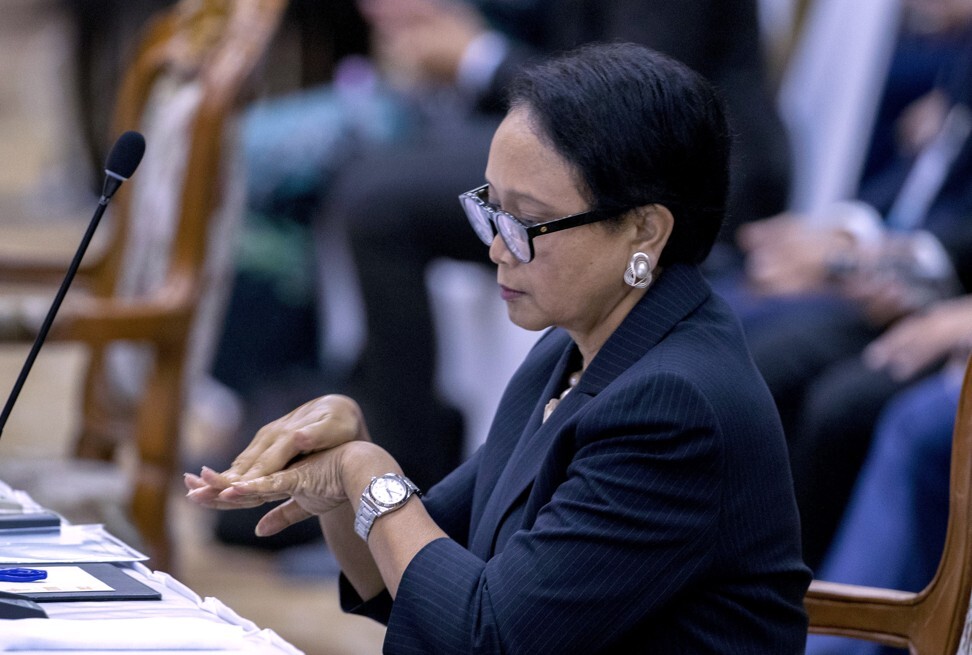
Indonesian Foreign Minister Retno Marsudi expressed concern over recent activities in the South China Sea, noting that they might potentially escalate tensions at a time when global collective effort to fight Covid-19 was essential.

Speaking on Wednesday, she called on all parties to respect international law, particularly the United Nations Convention on the Law of the Sea.

“While negotiation of the code of conduct is being postponed due to Covid-19, Indonesia calls on all relevant parties to exercise self-restraint and to refrain from undertaking action that may erode mutual trust and potentially escalate tension in the region,” she said.
Indonesia's Foreign Minister Retno Marsudi. Photo: AP
Indonesia’s Foreign Minister Retno Marsudi. Photo: AP
Calls for a binding code of conduct surfaced in 1995 when China occupied Mischief Reef
, a maritime feature claimed by the Philippines. China did not agree to start talks until 1999, and subsequent negotiations led to a non-binding Declaration on Conduct in 2002.
The Association of Southeast Asian Nations (Asean) and China agreed in 2018 on a draft code laying the foundations for conduct in the disputed waters. At that time, Chinese Premier Li Keqiang said China hoped to complete the negotiation by the end of 2021, a move he said could show China and Asean could jointly maintain regional peace.
Named and claimed: is Beijing spoiling for a new fight in the South China Sea?
27 Apr 2020

But tensions over the South China Sea have not calmed and, in fact, have surged in recent months with both Beijing and Washington seen to be using the Covid-19 pandemic to create a stronger presence there.

This year, the US has conducted four freedom of navigation operations in the South China Sea and China has scrambled air and sea patrols to expel US vessels.

The confrontation between Beijing and Southeast Asian nations has also intensified. Last month, a Vietnamese fishing boat sank after a collision with a Chinese coastguard vessel near the Paracel Islands, known in China as the Xisha Islands, and in Vietnam as the Hoang Sa Islands.
On Saturday, the 35th escort fleet of the Chinese navy also conducted drills in the Spratly Islands chain – known as Nansha Islands in China – after completing an operation in the Gulf of Aden, off Somalia. Analysts said the drill aimed to boost far-sea training for combat ships and boost protection against piracy for Chinese merchant ships.

Collin Koh, a research fellow at the S. Rajaratnam School of International Studies, based at Nanyang Technological University in Singapore, said the code of conduct talks had been delayed because of the pandemic, but Beijing was consolidating its position in the South China Sea amid the outbreak.

“So it’s doing what it can now to consolidate and further enhance its position before talks restart, and by then these moves will raise Beijing’s leverage in the negotiations with its Asean counterparts,” he said.

“The current situation gives it a window of opportunity amid this interlude on the talks, to further advance its physical hold in the South China Sea, especially while Asean parties have their hands full on the pandemic”.

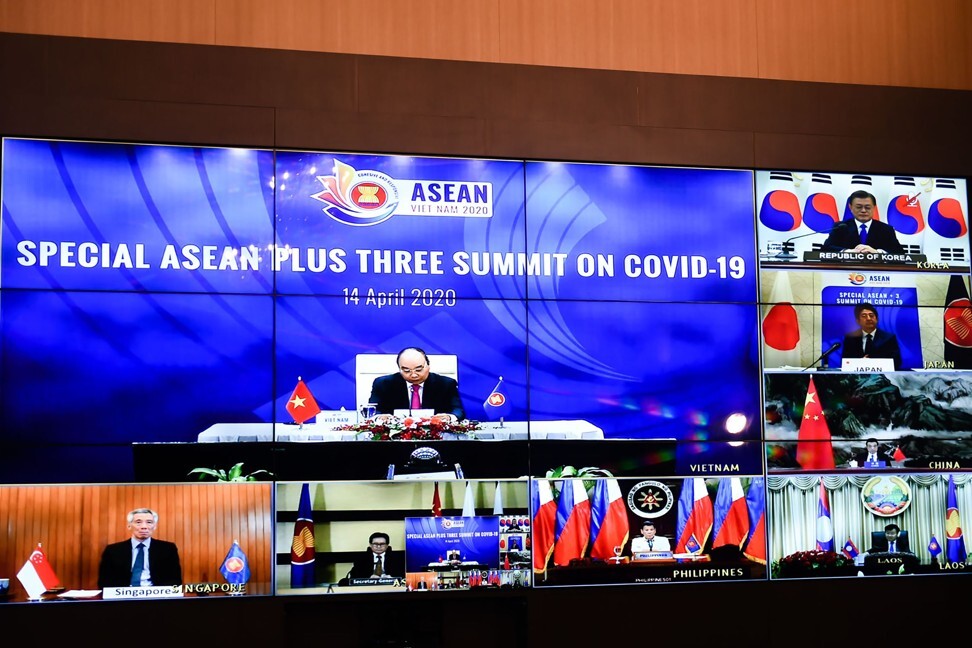
Asean nations have turned their attention to coping with coronavirus outbreaks in their own countries. On April 14, a live video conference for the special Asean Plus Three Summit on the coronavirus pandemic was held in Hanoi. Photo: AFP
Kang Lin, a researcher with Hainan University, said progress for the code of conduct would still go ahead, but it might be affected as face-to-face meetings between officials were disrupted.
“The negotiations involves multiple departments, such as diplomacy, maritime affairs, fisheries and even oil and gas-related departments,” he said, adding that those discussions might go online and might not be as effective.
“It is not easy to predict to what extent it will affect next year's goals. If the pandemic cannot be eliminated in the first half of next year, it may be longer than the three-year period we had previously scheduled,” he said.
Richard Heydarian, an academic and former Philippine government adviser, said video-conference meetings would be inadequate for negotiations about the future of the South China Sea.
“The problem with the negotiation of the code is that these are very sensitive, difficult negotiations. I don't think you can really do it just online, these are things that are done in the corridors of power,” he said. “It’s close to impossible to have that right now with the suspension of all international meetings in the Asean.”

Heydarian said Southeast Asian nations hoped to get help from China to contain the pandemic, but were showing unease about Beijing.

“I think there is a lot of resentment building against China,” he said. “There is also a lot of desperation to get assistance from China and, at the same time, complete helplessness with the fact that it is very hard to conduct any important extended international meeting on the level of Asean and beyond under current circumstances.”

Chinese Foreign Ministry spokesman Hua Chunying said on Thursday that China would push forward negotiations on the code of conduct, and hoped the code would be useful for peace and stability over the South China Sea.

Source: SCMP

05/05/2020

China launches manned spacecraft prototype with new Long March 5B rocket

  • Modified version of country’s most powerful rocket carries next-generation capsule designed to take astronauts to its planned space station
  • It will be able to launch and land with three crew members and up to 500kg of cargo, according to state media
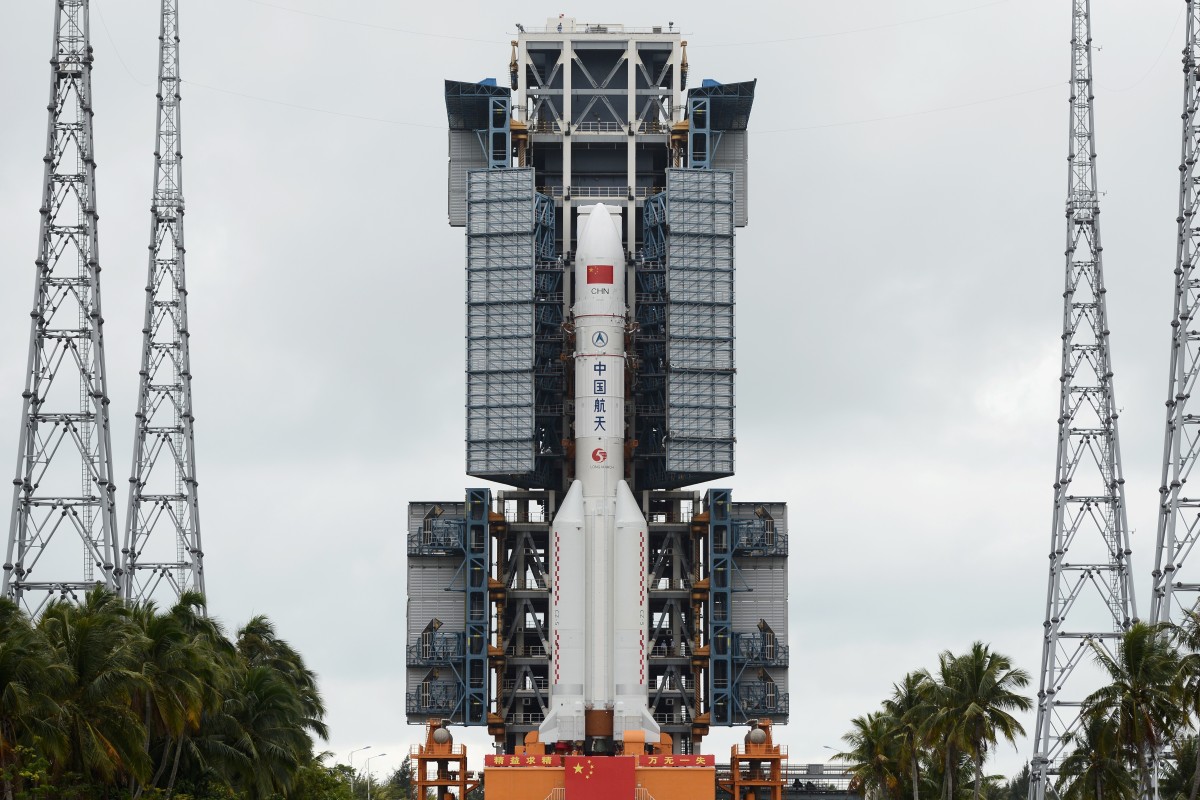
China launched a new version of its heavy-lift Long March 5 rocket on Tuesday. Photo: Reuters

China successfully launched a prototype of its next-generation manned spacecraft – without astronauts – along with a new version of its heavy-lift Long March 5 rocket on Tuesday, its space agency said.

The Long March 5B rocket was launched into low-Earth orbit from the Wenchang Satellite Launch Centre on Hainan Island in the country’s south.

The launch marks a significant step forward for China’s two big space exploration ambitions – building a space station and a mission to Mars.

A modified version of China’s most powerful rocket, the Long March 5B is 53.7 metres (176 feet) tall. It will carry the next-generation crew capsule prototype designed to replace the Shenzhou spacecraft, to transport astronauts to its planned space station in low-Earth orbit.

China aims to launch the core module of that space station designed for three crew members, the Tianhe, in 2021. Beijing has been planning to build its own space station for decades as an alternative to the International Space Station, from which China has been excluded by the United States over security concerns.
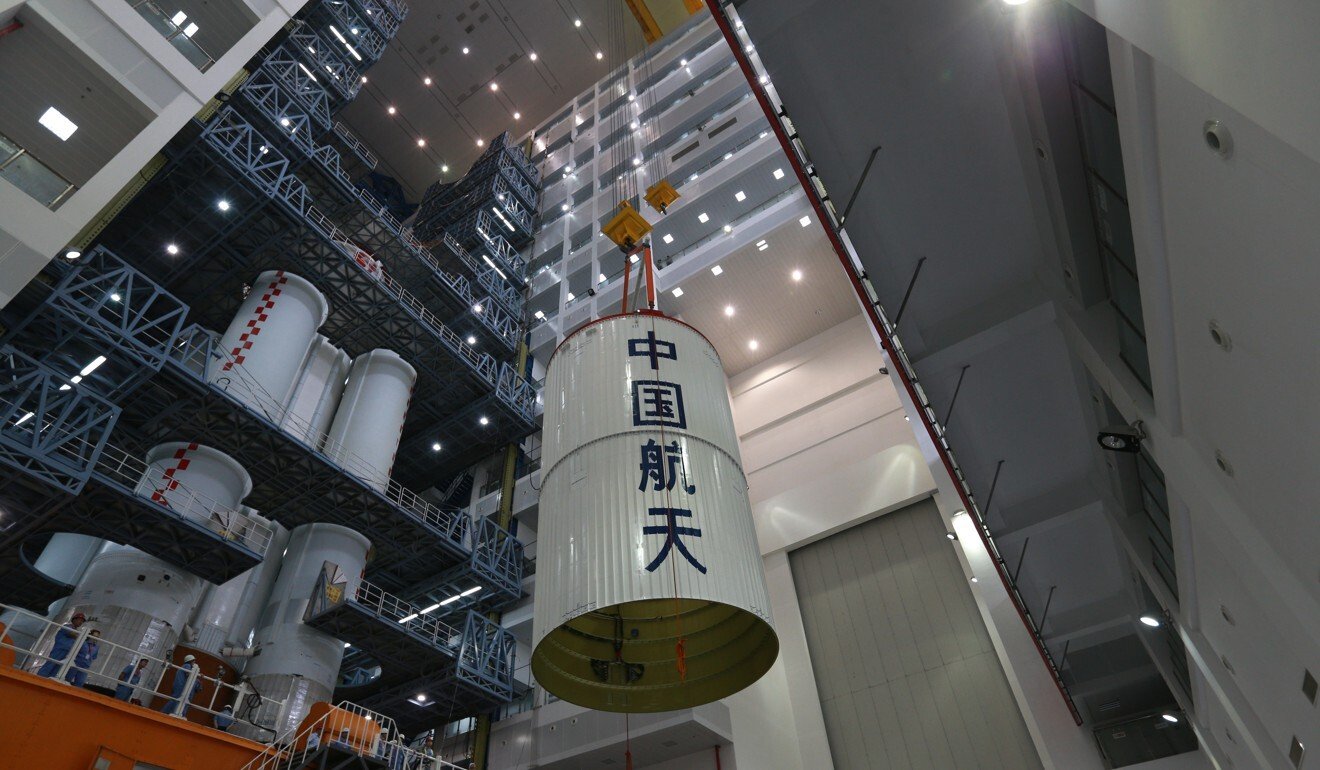
China’s space station project has been delayed by problems with its heavy-lift rockets. Photo: Xinhua
The prototype capsule has a different configuration to Shenzhou’s and it will be able to launch and land with three astronauts on board as well as up to 500kg of cargo, according to state news agency Xinhua. That will mean it can be used to transport research specimens and hardware from the space station back to Earth.

While the Shenzhou can ferry three astronauts, the new capsule design will be able to accommodate up to six crew members and, unlike the Shenzhou, it will be capable of carrying them to the moon, according to Chinese media reports.

Its systems, performance in orbit and parachute deployment are among the areas that will be put to the test during the launch.

Why China’s next Long March 5 rocket mission will be about restoring national pride

14 Dec 2019

The long-anticipated space station project has been delayed by problems in the development of heavy-lift rockets to carry the modules. In 2017, an oxygen supply problem caused the failure of the second Long March 5 launch, and it plunged into the Pacific Ocean shortly after take-off. But in December it successfully carried a Shijian-20 satellite into orbit, while the liquid oxygen-liquid hydrogen engines used in both the Long March 5 and 5B rockets passed testing in January.

China’s other space ambitions include a Mars probe, and landing astronauts on the moon within the next decade. For the Mars mission, the unmanned orbiter and rover Tianwen-1 will be launched by the Long March 5 and it is expected to take up to seven months for the probe to reach the red planet. China would be the third country to do so – after the United States and the Soviet Union.

Zhang Kejian, head of the China National Space Administration, said China was on track to launch the mission this year, with July the likely launch date.

Source: SCMP

02/05/2020

China plans to send Uygur Muslims from Xinjiang re-education camps to work in other parts of country

  • Inmates who have undergone compulsory re-education programme to be moved to other parts of China under job placement scheme delayed by Covid-19 outbreak
  • Critics have said the camps are a move to eradicate cultural and religious identity but Beijing has defended them as way of boosting job opportunities and combating Islamic radicalisation
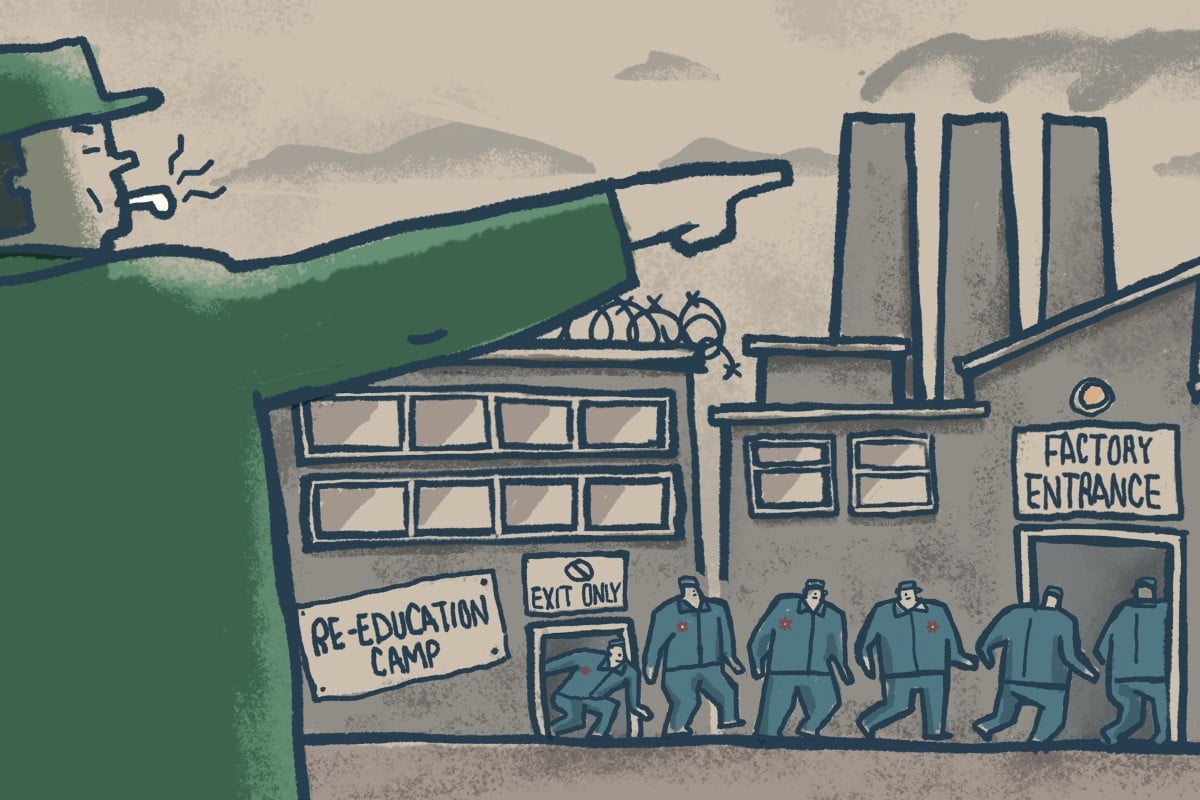
Illustration by Perry Tse

The Chinese government has resumed a job placement scheme for tens of thousands of Uygur Muslims who have completed compulsory programmes at the “re-education” camps in the far-western region of Xinjiang, sources said.

The plan, which includes a quota for the numbers provinces must take, was finalised last year but disrupted by the outbreak of Covid-19.

The delay threatens to undermine the Chinese government’s efforts to justify its use of internment camps in Xinjiang.

Critics have said these camps were part of the measures designed to eradicate the ethnic and cultural identity of Uygurs and other Muslim minorities and that participants had no choice but to undertake the re-education programme.

Beijing has repeatedly dismissed these criticisms and said the camps are to give Uygurs the training they need to find better jobs and stay away from the influence of radical fundamentalism.
First Xinjiang, now Tibet passes rules to promote ‘ethnic unity’
17 Feb 2020

Now with the disease under control, the Chinese government has resumed the job placement deal for other provinces to absorb Xinjiang labourers, sources said.

Despite the devastating impact of the disease on its economy and job markets, the Chinese authorities are determined to go ahead with the plan, which they believe would

“demonstrate the success of Xinjiang’s re-education centres policy”

, a source said.

“Excellent graduates were to be taken on as labourers by various inland governments, in particular, 19 provinces and municipalities,” said the source. It is unclear what constitutes “excellent graduates”.

Some sources earlier said that the programme may be scaled back in light of the new economic reality and uncertainties.

But a Beijing-based source said the overall targets would remain unchanged.

“The unemployment problem in Xinjiang must be resolved at all costs, despite the outbreak,” the source said.

The South China Morning Post has learned that at least 19 provinces and cities have been given quotas to hire Muslim minorities, mostly Uygurs, who have “graduated” from re-education camps.

As early as February, when the daily number of infections started to come down outside Hubei province, China already begun to send Uygur workers to their new jobs.

A photo taken in February showed thousands of young Uygurs, all wearing face masks and with huge red silk flowers pinned to their chests, being dispatched to work in factories outside their hometowns.

By the end of February, Xinjiang alone has created jobs for more than 60,000 Uygur graduates from the camps. A few thousand were also sent to work in other provinces.

Many have been employed in factories making toys and clothes.

Xinjiang’s new rules against domestic violence expand China’s ‘extremism’ front to the home

7 Apr 2020

Sources told the Post that the southern city of Shenzhen – China’s hi-tech manufacturing centre – was given a target last year to eventually resettle 50,000 Uygurs. The city is allowed to do this in several batches, with 15,000 to 20,000 planned for the first stage.

Shaoguan, a less developed Guangdong city where a deadly toy factory brawl between Uygurs and Han Chinese broke out in 2009, was also asked to take on another 30,000 to 50,000 Uygur workers.
In Fujian province, a government source also said they had been told to hire “tens of thousands of Xinjiang workers”.
“I heard the first batch of several thousands would arrive soon. We have already received official directives asking us to handle their settlement with care,” said the source.

He said the preparation work includes providing halal food to the workers as well as putting in place stronger security measures to “minimise the risks of mass incidents”. It is not known whether they will be given access to prayer rooms.

There are no official statistics of how many Uygurs will be resettled to other provinces and the matter is rarely reported by the mainland media.

But in March, Anhui Daily, the province’s official newspaper, reported that it had received 1,560 “organised labourers from Xinjiang”.

The Uygur workers on average could earn between 1,200 yuan (US$170) to 4,000 yuan (US$565) a month, with accommodation and meals provided by the local authorities, according to Chinese media reports.

However, they are not allowed to leave their dormitories without permission.

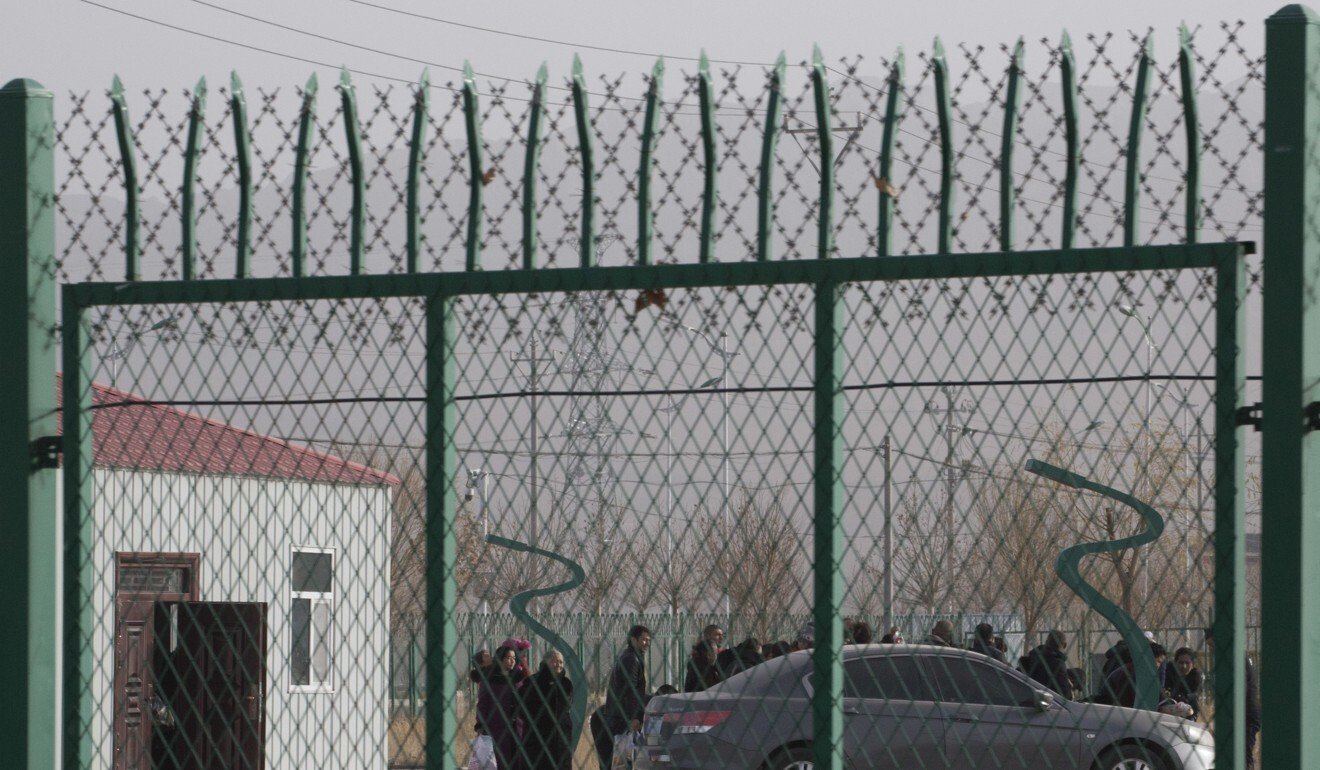
The UN has estimated that up to a million Muslims were being held in the camps. Photo: AP
Xinjiang’s per capita disposable income in 2018 was 1,791 yuan a month, according to state news agency Xinhua. But the salary level outside the region’s biggest cities such as Urumqi may be much lower.
The official unemployment rate for the region is between 3 and 4 per cent, but the statistics do not include those living in remote rural areas.
Mindful of the potential risks of the resettlement, Beijing has taken painstaking efforts to carefully manage everything – from recruitment to setting contract terms to managing the workers’ day-to-day lives.
Local officials will go to each Uygur workers’ home to personally take them to prearranged flights and trains. On arrival, they will be immediately picked up and sent to their assigned factories.
US bill would bar goods from Xinjiang, classifying them the product of forced labour by Uygurs
12 Mar 2020

Such arrangements are not unique to Uygurs and local governments have made similar arrangements for ethnic Han workers in other parts of China.

After screening them for Covid-19, local governments have arranged for workers to be sent to their workplaces in batches. They are checked again on arrival, before being sent to work.

China is accelerating such placement deals on a massive scale to offset the impact of the economic slowdown after the outbreak.

Sources told the South China Morning Post that the job placement deal was first finalised by governments in Xinjiang and other provinces last year.

The aim is to guarantee jobs for Uygur Muslim who have “completed vocational training” at the re-education camps and meet poverty alleviation deals in the region, one of the poorest parts of China.

The training they receive in the camps includes vocational training for various job types such as factory work, mechanical maintenance and hotel room servicing. They also have to study Mandarin, Chinese law, core party values and patriotic education.

Xinjiang’s massive internment camps have drawn widespread international condemnation.

The United Nations has estimated that up to 1 million Uygur and other Muslim minority citizens are being arbitrarily detained in the camps, which Beijing insists are necessary to combat terrorism and Islamic radicalisation.

Late last year, Xinjiang’s officials announced that all the inmates of these so-called vocational training centres had “graduated” and taken up employment.

Before this labour placement scheme was introduced, it was extremely difficult for Uygurs to find jobs or live and work in inland regions.

The 2009 brawl at the factory in Shaoguan was one of the factors that triggered a deadly riot in Xinjiang’s capital Urumqi, that left 192 people dead and more than 1,000 wounded.

Muslim ethnic minorities, Uygurs in particular, have been subjected to blatant discrimination in China and the situation worsened after the 2009 clashes.

Earlier this month, the Australian Strategic Policy Institute released a report saying more than 80,000 Uygurs had been moved from Xinjiang to work in factories in nine Chinese regions and provinces.

It identified a total of 27 factories that supplied 83 brands, including household names such as Google, Apple, Microsoft, Mitsubishi, Siemens, Sony, Huawei, Samsung, Nike, Abercrombie and Fitch, Uniqlo, Adidas and Lacoste.

‘Psychological torture’: Uygurs abroad face mental health crisis over plight of relatives who remain in Xinjiang

11 Mar 2020

The security think tank concluded that the Chinese government had transferred Uygur workers “under conditions that strongly suggest forced labour” between 2017 and 2019, sometimes drawing labourers directly from re-education camps.

The report also said the work programme represents a “new phase in China’s social re-engineering campaign targeting minority citizens”.

Workers were typically sent to live in segregated dormitories, underwent organised Mandarin lessons and ideological training outside working hours and were subject to constant surveillance, the researcher found.

They were also forbidden from taking part in religious observances, according to the report that is based on open-source documents, satellite pictures, academic research and on-the-ground reporting.

Chinese foreign ministry spokesman Zhao Lijian criticised the report saying it had “no factual basis”.

Source: SCMP

20/04/2020

China sees higher 2020 soybean, pork imports aid industry challenges

BEIJING/SHANGHAI (Reuters) – China expects to import more soybeans and pork this year following the novel coronavirus outbreak and African swine fever, which has decimated its pig herds.

Soybean imports are forecast at 92.48 million tonnes this year, rising to 96.62 million tonnes in 2025 and 99.52 million tonnes in 2029, an official from the agriculture ministry told a video conference on the outlook for agriculture released on Monday.

Pork imports this year are seen rising to 2.8 million tonnes, a 32.7% increase from the previous year.

China is a key buyer and consumer of soybeans and pork globally, and typically imports millions of tonnes of soybeans per year to crush for meal to feed its livestock.

The African swine fever outbreak, however, had slashed China’s pig herd by over 40% last year, reducing supplies in the world’s biggest pork consumer.

Combined with the coronavirus outbreak, which hit the transport of pigs and delayed the restart of slaughtering plants, prices of China’s favourite meat rose to record levels in February.

China has been increasing pork imports in recent months to make up for the drop in domestic supply.

Despite the expected surge in imports, China’s 2020 pork consumption is forecast to fall to 42.06 million tonnes, down 5.6% year-on-year, hit by high prices and a fall in consumer demand due to the coronavirus outbreak, according to the agriculture ministry.

In line with the slowing consumption, China’s slaughtered pig herd this year will fall 7.8% year-on-year to 501.49 million heads. Pork output this year will also decline to 39.34 million tonnes from 2019, but will rebound to around 54 million tonnes in 2022.

In the longer term, however, pork imports are expected to gradually fall, the ministry forecast, while beef and mutton imports are set to increase in the next decade.

Meanwhile, China’s domestic soybean output is seen at 18.81 million tonnes in 2020, a 3.9% gain from the previous year, while crushing volumes were pegged at 85.98 million tonnes.

Soybean consumption will increase steadily and continue to rely mainly on imports in the next 10 years, said a ministry official.

The ministry also said China’s corn acreage and output are both set to increase in 2020, with production forecast to reach over 260 million tonnes this year, while annual rice output is expected to hold steady above 200 million tonnes per year in the next 10 years.

Source: Reuters

10/04/2020

China encourages export goods sales domestically as virus batters global trade

BEIJING (Reuters) – China will promote the sales of export products in domestic markets, as foreign trade faces unprecedented challenges due to the coronavirus pandemic, an assistant commerce minister said on Friday.

As the coronavirus spreads to almost all of China’s trading partners, the world’s second-largest economy is set to reach a grim milestone for full year growth, with the pace of expansion likely to be the slowest since the Cultural Revolution ended in 1976. And, the export sector is facing millions of job losses and factory shutdowns.

“Due to the rapid spread of the epidemic in the world, foreign demand has slumped and the biggest difficulty facing foreign trade companies is the plunge in orders,” said Ren Hongbin, the assistant minister at the Ministry of Commerce.

He said firms across the board have had their orders cancelled or delayed, and new orders are “very hard to sign”.

“The uncertainty about the pandemic has become the biggest uncertainty for foreign trade development.”

Forecasters expect China’s 2020 growth could be nearer the 2.0% mark – the slowest in over 40 years – due to the sweeping impact of the pandemic both at home and overseas. The economy grew 6.1% last year.

China’s overseas shipments fell 17.2% in January-February from the same period a year earlier, marking the steepest fall since February 2019. Imports sank 4% from a year earlier.

Among the government measures to support the sector, China is accelerating efforts to build online trade fairs and guiding exporters to work with e-commerce retailers for sales in domestic markets and coordinating with its trading partners to stabilise supply chains, said Ren.

The Canton Fair, China’s oldest and biggest trade fair due to take place online, will feature live-streaming services for participants, Li Xingqian, another commerce ministry official, told the same briefing. The fair was originally scheduled to begin on April 15, but was postponed due to the coronavirus outbreak.

China is willing to boost trade relations with other countries, including the United States, under the new circumstances, said Ren, adding that Beijing hopes to work together with Washington to promote bilateral trade.

Both countries have been engaged in a near two-year long trade war with tit-for-tat tariffs on each other’s goods, before negotiators called a truce with an interim trade deal in January.

Source: Reuters

15/07/2019

Chandrayaan-2: India space launch delayed by technical problem

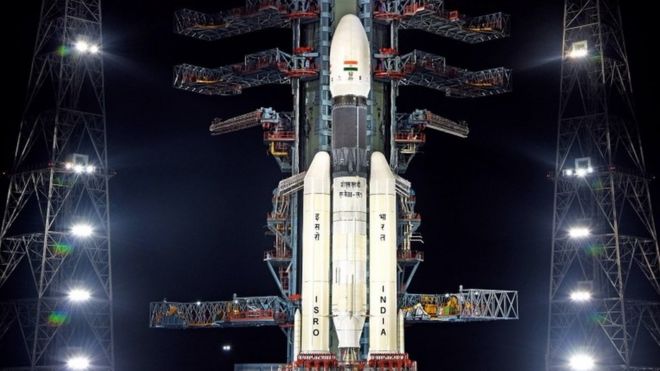
The rocket that will carry the Chandrayaan-2 satelliteImage copyright EPA
Image caption The rocket weighs as much as a fully-loaded jumbo jet

The launch of India’s second lunar mission has been halted less than an hour before the scheduled blast-off, due to a technical problem.

The countdown stopped 56 minutes before the launch after a “technical snag was observed in launch vehicle system,” India’s space agency said.

The satellite had been scheduled for launch at 02:51 local time on Monday (21:21 GMT Sunday) from Sriharikota space station on India’s eastern coast.

A new launch date will follow soon.

What is this mission all about?

India hopes the $150m mission, Chandrayaan-2, will be the first to land on the Moon’s south pole.

It will focus on the lunar surface, searching for water and minerals and measuring moonquakes, among other things.

If successful, India will become the fourth country to make a soft landing on the Moon’s surface.

Only the US, China and the former Soviet Union have been able to do so.

India’s Prime Minister, Narendra Modi has championed the country’s space programmes, but critics would like to see poverty at home tackled first.

Presentational white space

The chief of the Indian Space Research Organisation (Isro), K Sivan, said this was “the most complex space mission ever to be undertaken by the agency”.

If the launch had gone to plan, the lander and rover would have been expected to touch down in early September.

India’s space agency is yet to give more details on why the launch was delayed and how it will affect the timeline.

The country’s first lunar mission in 2008 – Chandrayaan-1 – did not land on the lunar surface, but it carried out the first and most detailed search for water on the Moon using radars.

How will it get to the Moon?

Chandrayaan-2 (Moon vehicle 2) will attempt a soft landing near the little-explored south pole of the Moon.

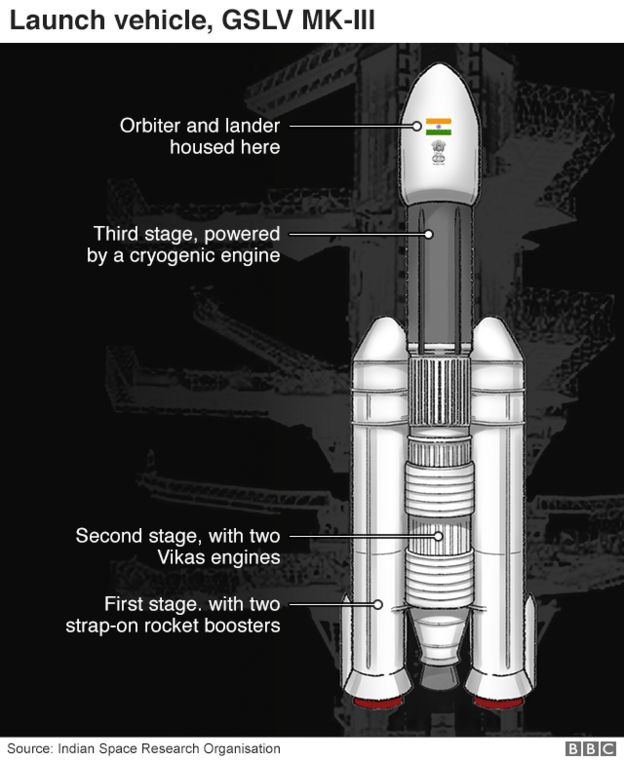
India is using its most powerful rocket, the Geosynchronous Satellite Launch Vehicle Mark III (GSLV Mk-III), in this mission. It weighs 640 tonnes (almost 1.5 times the weight of a fully-loaded 747 jumbo jet) and at 44 metres (144ft) is as high as a 14-storey building.

Graphic showing the launch vehicle with different parts labelled
The spacecraft weighs 2,379kg (5,244lb) and has three distinct parts: an orbiter, a lander and a rover.

The orbiter, which has a mission life of a year, will take images of the lunar surface, and “sniff” the tenuous atmosphere.

The lander (named Vikram, after the founder of Isro) weighs about half as much, and carries within its belly a 27kg Moon rover with instruments to analyse the lunar soil. In its 14-day life, the rover (called Pragyan – wisdom in Sanskrit) can travel up to a half a kilometre from the lander and will send data and images back to Earth for analysis.

“India can hope to get the first selfies from the lunar surface once the rover gets on its job,” Dr Sivan said.

Presentational grey line

A new frontier for India’s space programme

By science writer Pallava Bagla

A soft landing on another planetary body – a feat achieved by just three other countries so far – would be a huge technological achievement for Isro and India’s space ambitions.

It would pave the way for future Indian missions to land on Mars and an asteroid. More importantly, it would open up the possibility of India sending astronauts to the Moon. India hopes to carry out a crewed space flight by 2022.

India also wants to assert itself as a space power to be reckoned with – and national pride is riding high as it aims to hoist its flag on the surface of the Moon.

A successful mission to the Moon would also be a win for India’s ambitious space agency, which has had a string of successes recently.

Media caption Is India a space superpower?

In 2014, it successfully put a satellite into orbit around Mars, becoming only the fourth nation to do so. In 2017, India created history by successfully launching 104 satellites on a single mission, overtaking the previous record of 37 satellites launched by Russia in 2014.

All eyes are on Isro again. Global interest in India’s frugal Moon mission is peaking, according to Simonetta Di Pippo, director of the UN office of Outer Space Affairs.

“The mission’s studies of lunar topography, mineralogy, elemental abundance, the lunar exosphere, and signatures of hydroxyl and water ice will contribute to scientific progress for all of humankind,” she says.

The Indian space community is nervous and Dr Sivan says “there is churning in his stomach”.

“Unknown-unknowns can kill a mission, [although] no stone has been left unturned to understand all the complexities”.

Presentational grey line

How long is the journey to the Moon?

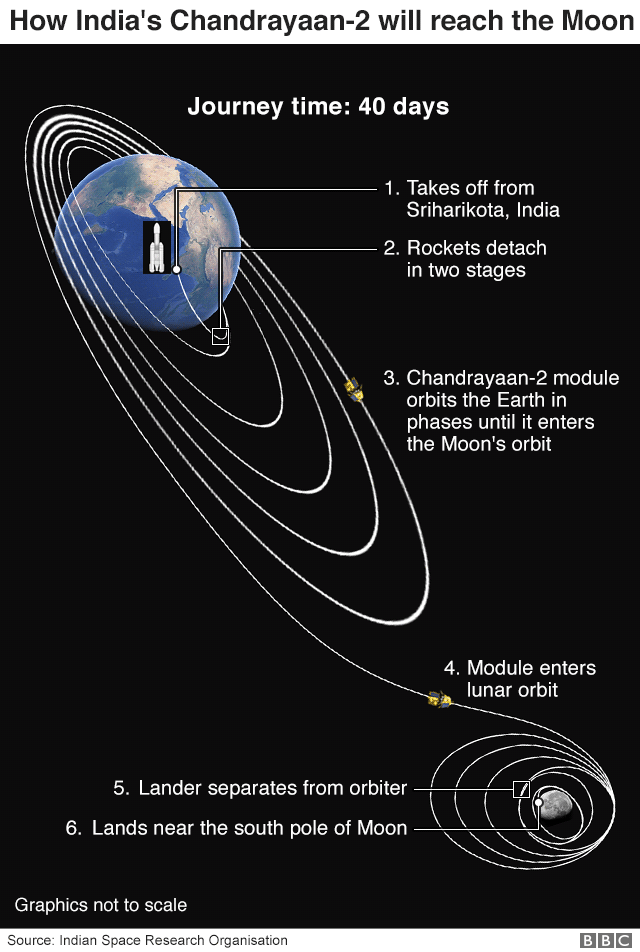
The launch is only the beginning of a 384,000km (239,000-mile) journey – the robotic craft is expected to land on the Moon some 54 days later.

Isro chose a circuitous route to take advantage of the Earth’s gravity, which will help slingshot the satellite towards the Moon. India does not have a rocket powerful enough to hurl Chandrayaan-2 on a direct path.

“There will be 15 terrifying minutes for scientists once the lander is released and is hurled towards the south pole of the Moon,” Dr Sivan says.

Graphic: How India's Chandrayaan-2 will reach the moon
He explains that those who had been controlling the spacecraft until then will have no role to play in those crucial moments. The actual landing, he adds, is an autonomous operation dependent on all systems performing as they should. Otherwise, the lander could crash into the lunar surface.

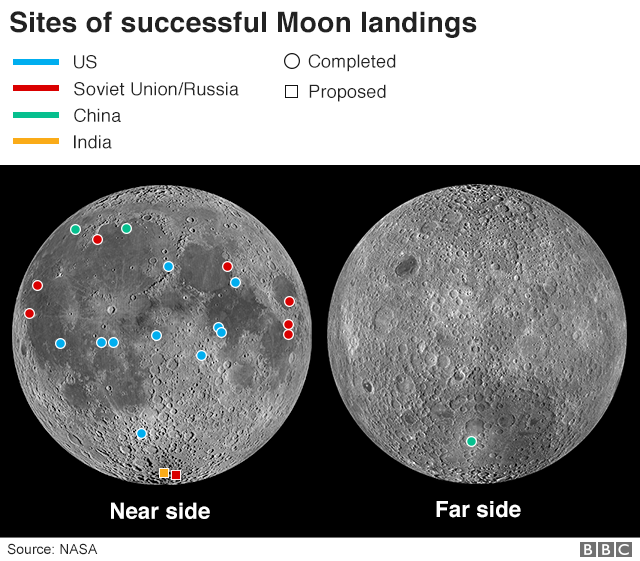
Earlier this year, Israel’s first Moon mission crash-landed while attempting to touch down.

Site of successful moon landings graphic showing where other countries have landed on the moon

Who is on the team?

Nearly 1,000 engineers and scientists have worked on this mission. But for the first time, Isro has chosen women to lead an interplanetary expedition.

Two women are steering India’s journey to the Moon. While programme director Muthaya Vanitha has nurtured Chandrayaan-2 over the years, it will be navigated by Ritu Karidhal.

“Women power is powering India’s Moon ambitions,” Dr Sivan said, adding that at Isro, “women and men are all equal. Only talent matters – not the gender.”

Source: The BBC

Law of Unintended Consequences

continuously updated blog about China & India

ChiaHou's Book Reviews

continuously updated blog about China & India

What's wrong with the world; and its economy

continuously updated blog about China & India