Archive for ‘demand’

30/09/2019

Go China! Big screen turns patriotism into big box office hits as 70th anniversary celebrations take off

  • Three films that opened on Monday morning rake in US$76.6 million by midday
  • Palme d’Or winner Chen Kaige heads bill with ensemble that has movie-goers in tears
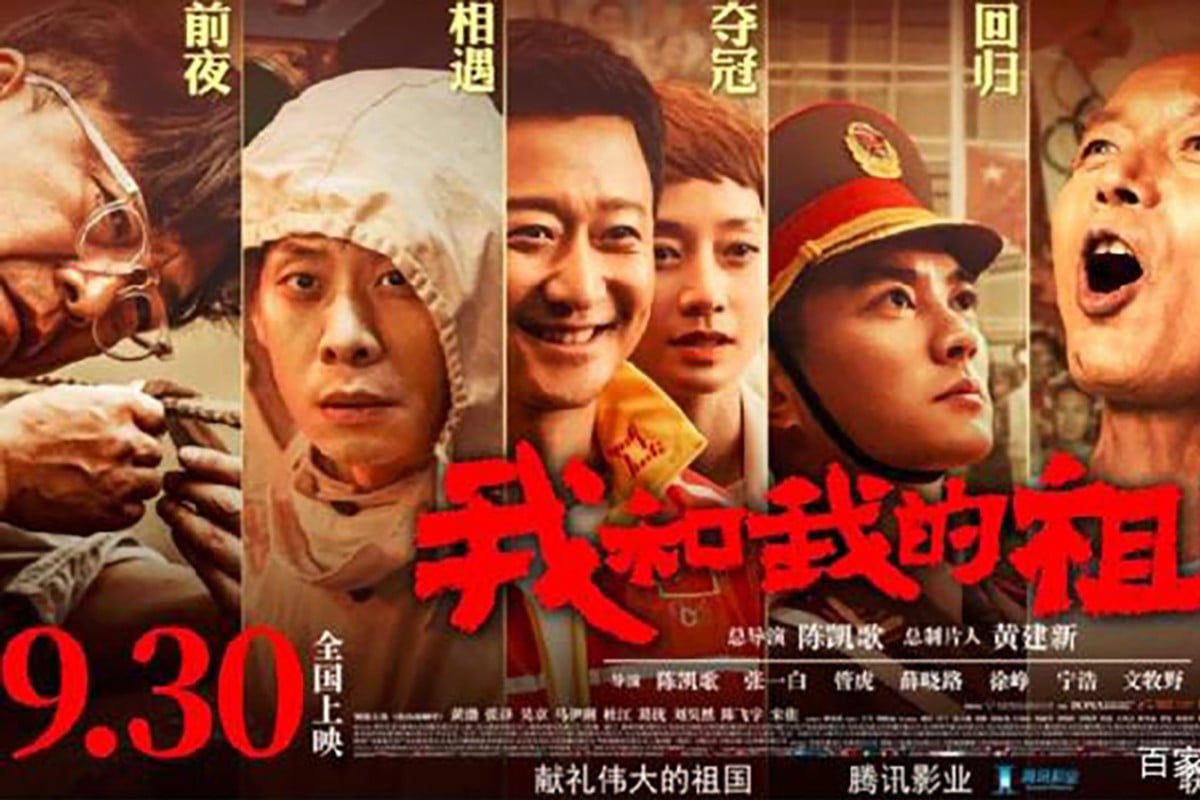
My People, My Country looks at seven events in the past 70 years through the eyes of seven Chinese directors. Photo: Baidu

Three films that paid tribute to the People’s Republic of China on the eve of its 70th anniversary grossed a total of 546 million yuan (US$76.6 million) at the box offices hours after opening on Monday, Maoyan Entertainment, China’s largest movie ticketing app, said.

My People, My Country, consisting of seven short stories by seven directors led by Cannes Palme d’Or winner Chen Kaige, recounted major events since 1949. It took in 225 million yuan.

Milestones including the detonation of China’s atomic bomb in 1964; the handover of Hong Kong from the UK to China in 1997, and the staging of the Summer Olympics in Beijing in 2008, brought back many memories and stirred feelings of national pride, film-goers said.

“I went to see the movie today and saw many primary school students with their parents. Tears welled in my eyes, and I felt touched and proud at the same time. Go China!” one Weibo user wrote.
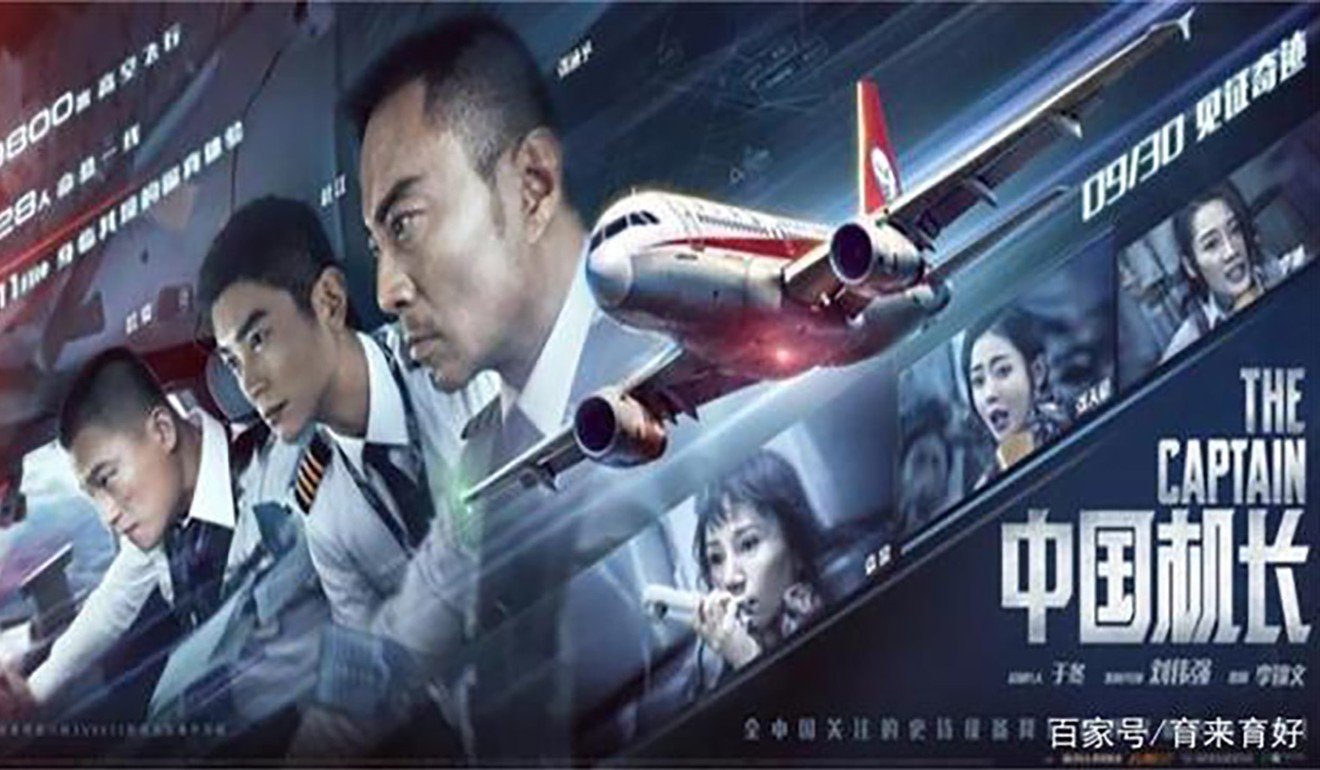
True-life drama The Captain has proved to a big screen hit with mainland cinema-goers. Photo: Baidu

“This movie used directors of commercial movies, and most of those born in the 1960s and 1970s lived through these moments. I think young people will bring their parents to see the film,” another Weibo user wrote.

True-life drama The Captain, directed by Hong Kong director Andrew Lau Wai-Keung, ran in second with a box office take of 175 million yuan by noon on Monday. The film was based on events in May 2018, when the cockpit window of a Sichuan Airlines flight was shattered at 30,000 feet over the Tibetan Plateau in western China. The decompression pulled the co-pilot halfway out of the cabin as the pilot fought to land the flight safely.

Big-budget film The Climbers, directed by Hong Kong’s Daniel Lee Yan-Kong and featuring stars such as Wu Jing and Zhang Ziyi, retraced the steps of two generations of Chinese mountaineers who scaled Mount Everest by the perilous North Ridge in 1960 and 1975. The film posted earnings of 146 million yuan.

Tencent’s homage to modern China tops gaming charts on eve of 70th anniversary celebrations
Patriotic feelings have been running high this week as the celebration of the 70th anniversary draws near.

My People, My Country’s theme song, Me and My Mother Country, an oldie recorded by Hong Kong’s Faye Wang, has been heard in shops, restaurants and workplaces all across the mainland.
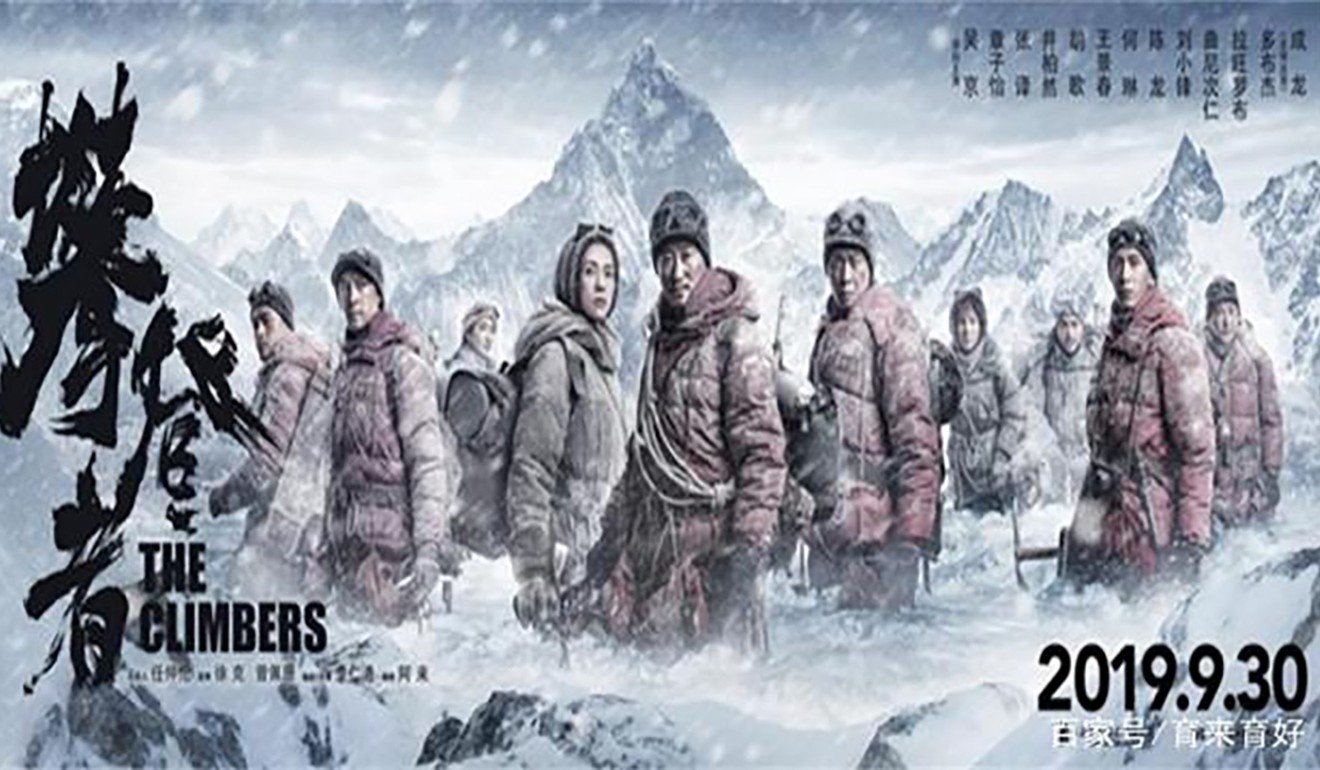
The Climbers was directed by Hong Kong’s Daniel Lee Yan-Kong. Photo: Baidu

Last week, 200 million WeChat users responded to a campaign by internet company Tencent to add a national flag or Happy National Day sticker to their social media profile picture, The Beijing News reported. Demand was so heavy Tencent’s servers were overwhelmed for a short time.

Source: SCMP
12/09/2019

Hong Kong protesters sing and boo China anthem

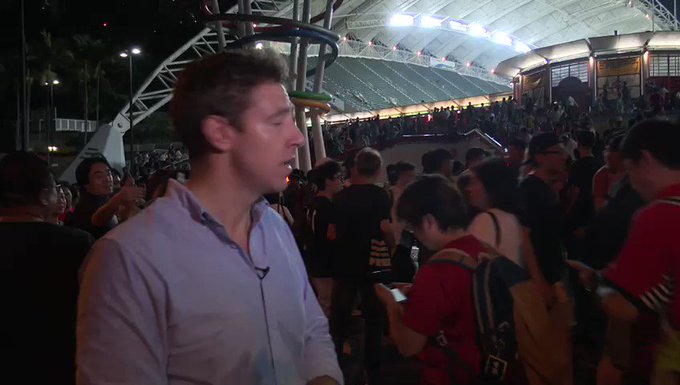
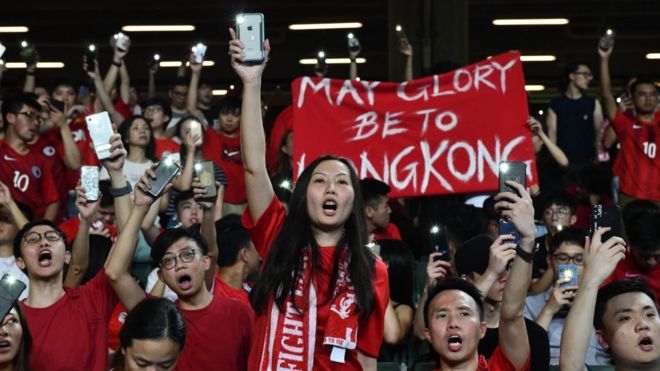
Football fans hold up their phones and shout during a protest at the end of the World Cup qualifying match between Hong Kong and Iran at Hong Kong Stadium on September 10, 2019Image copyright GETTY IMAGES
Image caption Protesters sang their new rallying cry at a stadium on Tuesday night

Hong Kong’s protest movement made its presence felt in a sports stadium and shopping malls on Tuesday.

Fans attending a football match drowned out the pre-game Chinese national anthem with loud booing.

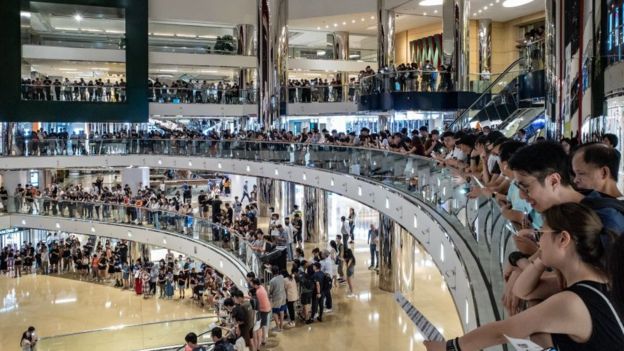
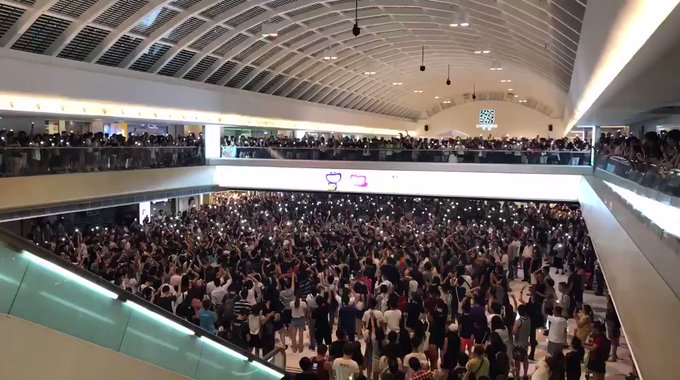
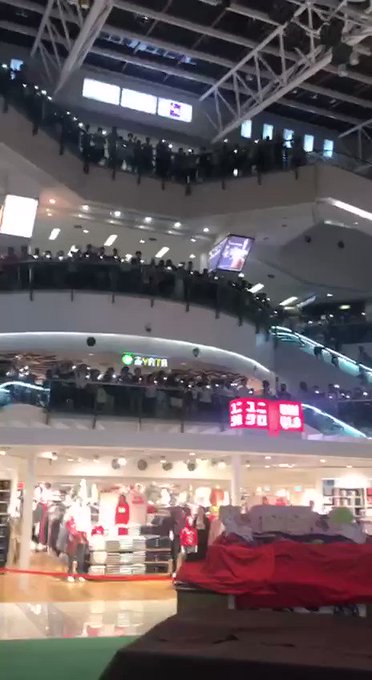
Protesters have also staged flash events in shopping malls, singing Glory to Hong Kong which has become an unofficial anthem of the movement.

The protesters won a major concession last week when the extradition bill which sparked the unrest was scrapped.

But this has failed to end the unrest as protesters continue to demand full democracy and an investigation into allegations of police abuses.

On Tuesday night, thousands of protesters gathered in shopping malls across Hong Kong chanting slogans and singing Glory to Hong Kong.

Residents and protesters sing songs and shout slogans as they gather at a shopping mall after business hours in Tai Koo districtImage copyright GETTY IMAGES
Image caption Many protesters flooded shopping malls

In the popular shopping district of Mongkok, a sea of protesters dressed in black were seen congregating across the different levels of one mall.

Another video showed protesters chanting “Go Hong Kong” – a phrase that has been used frequently as a sign of encouragement.

Shopping malls have been the scene of clashes in recent weeks, with one incident in July seeing riot police fight battles with protesters inside a mall in the district of Sha Tin.

But the recent events have played out peacefully.

Glory to Hong Kong was written by a local musician in response to calls for an anthem for protesters.

The lyrics include lines such as “Do you feel the rage in our cries? Rise up and speak up” and “persevere, for we are as one”.

The new rallying cry has joined other popular songs used by the protest movement, including Do You Hear the People Sing? from musical Les Miserables and the Christian hymn Sing Hallelujah to the Lord.

It was also heard at the Hong Kong v Iran football match on Tuesday at Hong Kong Stadium.

The 2022 Fifa World Cup qualifier saw thousands of protesting booing when the Chinese national anthem played before the start of the game.

The jeering, which could be heard from outside the stadium, was intended as a clear “message” to Beijing that they do not want to be part of China in the future, says the BBC’s Nick Beake who was at the game.

It’s not the first time people in Hong Kong have been heard booing the Chinese anthem – though it is not clear how long they might be able to do this.

In 2017 China passed a law making it illegal to disrespect the anthem, but the law has yet to be passed in Hong Kong.

‘Too little, too late’

Hong Kong, formerly a British colony, returned to Chinese rule in 1997.

Under the “one country, two systems” rule, the city is granted a high level of autonomy, an independent judiciary and rights such as freedom of speech.

But those freedoms – the Basic Law – expire in 2047 and it is not clear what Hong Kong’s status will then be.

There has been growing anti-mainland sentiment in recent years, and anger at what many feel is increasing mainland interference in Hong Kong affairs.

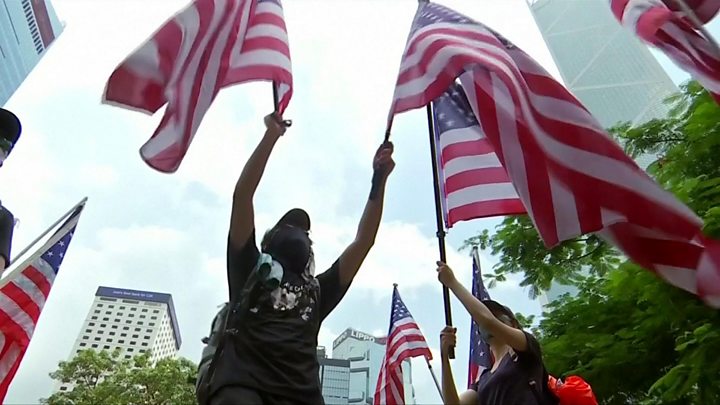
Media caption Protesters sang the US anthem outside the consulate

This reached a tipping point when the Hong Kong parliament proposed a new law that would have enabled suspects in Hong Kong to be extradited to China.

Hundreds of thousands of people marched on the streets in protest of the law, demanding that it be abandoned. The government initially suspended in June, and then finally dropped earlier this week – almost three months after protests first begun.

But protesters have said this is “too little, too late”, and their demands have evolved into calls for a much wider set of reforms, including a call for universal suffrage.

Source: The BBC

30/07/2019

Reckitt cuts sales target as China infant formula demand slows

LONDON (Reuters) – Reckitt Benckiser (RB.L) cut its full-year revenue target after reporting lower than expected second-quarter sales in its last quarter under long-time chief executive Rakesh Kapoor, hurt by a surprise slowdown in demand for infant formula in China.

Shares of the British household goods maker, which had risen the previous day to near their highest level for the year, fell as much as 5.7% in early trade.

The Durex condom and Lysol disinfectant maker said it now expects full-year like-for-like sales growth of between 2% and 3%, down from its previous target of 3% to 4%.

Reckitt, which maintained its “broadly flat” operating margin target, said slowing birth rates over the past two years and increased competition had led to market share losses for its Enfamil infant nutrition products in China, its biggest market for baby food.

The company is also recovering from supply chain disruptions in China, after technical issues at a baby formula factory in the Netherlands, which supplies the Asian market, prevented it from supplying retailers with formula in the third quarter of 2018.

The disruption forced mothers to turn to rival products and in part helped rival Danone (DANO.PA), which last week reported strong infant nutrition sales in China as its strategy to focus on more premium products paid off.

For Reckitt, the slowdown resulted in a surprise 1% drop in like-for like sales in its health business, even as sales of its over-the-counter products, such as Mucinex cough medicine, rebounded after several quarters of decline.

Analysts were expecting Reckitt’s Health business, which also sells Scholl foot products and Nurofen tablets, to rise 1.3%.

“Within Health, Infant and child nutrition was a big negative surprise,” Bernstein analyst Andrew Wood said, adding he expects the business to grow in the third quarter as it faces an easier comparison with last year.

DISAPPOINTING PERFORMANCE

Overall like-for-like sales were flat in the second quarter, missing the 1.9% growth analysts on average had expected, according to a company supplied consensus.

Net revenue rose 2% to 3.08 billion pounds against analysts’ average estimate of 3.13 billion.

The second-quarter report is the last under Chief Executive Rakesh Kapoor, who in September hands over to PepsiCo executive Laxman Narsimhan.

Kapoor said on a media call he was disappointed by the company’s performance in the first half but was “confident growth would be second-half weighted.”

Kapoor, CEO for the past eight years, said he was bullish that increased investments behind its brands and in medical channels, as well as new products such as Mucinex Night Shift and Enfagrow Pro Mental, and its expansion into new cities in China would help drive that growth.

He also said a plan to split the group into two business units – one for health and one for hygiene and home products – was on track for completion in mid to late 2020.

Still, analysts said the new CEO has a tough task.

“The patchy half-year figures mean the incoming CEO Laxman Narasimhan has a difficult job on his hands to try and put the business back on track, as well as decide the strategic future direction of the group,” investment firm AJ Bell said.

Reckitt shares were down 3% at 6,469 pence by 0830 GMT and were among the biggest losers in the FTSE .FTSE index.

Source: Reuters

28/07/2019

Vietnam renews demand for ‘immediate withdrawal’ of Chinese ship in disputed South China Sea

  • Hanoi says it has sent several messages to Beijing that a Chinese survey ship vacate the waters located in its exclusive economic zone
  • ‘Vietnam resolutely and persistently protects our sovereign rights … by peaceful means on the basis of international laws,’ a foreign ministry spokesperson said
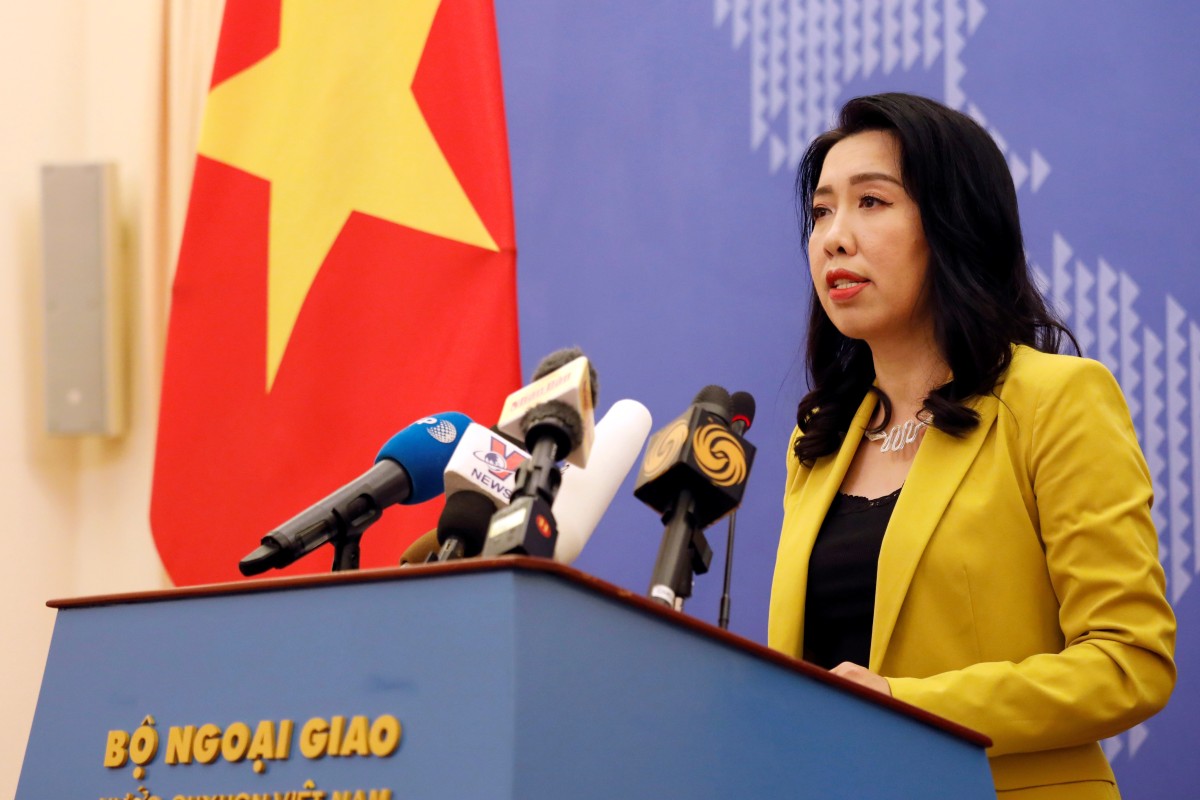
Vietnamese foreign ministry spokeswoman Le Thi Thu Hang. Photo: Reuters
Vietnam on Thursday called for the “immediate withdrawal” of a Chinese ship in the 
South China Sea

, as the stand-off over the disputed waters intensified.

Beijing last week issued a new call for Hanoi to respect its claims to the resource-rich region – which has historically been contested by Vietnam, as well as Taiwan, the Philippines, Malaysia and Brunei.
Hanoi responded by saying it had sent several messages to Beijing insisting that a Chinese survey ship vacate its waters, and doubled down on Thursday with new demands for the vessel’s removal.
“Vietnam has had several appropriate diplomatic exchanges … requesting immediate withdrawal from Vietnam’s exclusive economic zone,” a foreign ministry spokesperson told reporters, while refusing to disclose the ship’s precise location.
“Vietnam resolutely and persistently protects our sovereign rights … by peaceful means on the basis of international laws,” Le Thi Thu Hang added.
The ship, owned by the government-run China Geological Survey, begun research around the contested Spratly Islands on July 3, according to the US-based Center for Strategic and International Studies (CSIS).

Before it was spotted, a Chinese coastguard vessel also patrolled near Vietnamese supply ships in a “threatening manner”, CSIS said.

China has not confirmed the presence of its ships in the area.

China’s neighbours boost coastguards as tensions rise in South China Sea

Beijing invokes its so-called nine-dash line to justify its claim to historic rights to the waterway, and has previously built up artificial islands as well as installed airstrips and military equipment in the region.

The line runs as far as 2,000km (1,240 miles) from the Chinese mainland to within a few hundred kilometres of the Philippines, Malaysia and Vietnam.

In 2014 Beijing moved an oil rig into waters claimed by Hanoi, sparking deadly anti-China protests across Vietnam.

The latest stand-off in the sea prompted a swift rebuke from the United States over the weekend, calling for an end to China’s “bullying behaviour”.

US accuses China of acting like a bully in the South China Sea

“China’s repeated provocative actions aimed at the offshore oil and gas development of other claimant states threaten regional energy security,” the US State Department said Saturday.

The US has long called for freedom of navigation in the South China Sea, and on Thursday said it sailed a warship through the Taiwan Strait

.
Source: SCMP
09/12/2018

China’s November export, import growth shrinks, showing weak demand

BEIJING (Reuters) – China reported far weaker than expected November exports and imports, showing slower global and domestic demand and raising the possibility authorities will take more measures to keep the country’s growth rate from slipping too much.

November exports only rose 5.4 percent from a year earlier, Chinese customs data showed on Saturday, the weakest performance since a 3 percent contraction in March, and well short of the 10 percent forecast in a Reuters poll.

Analysts say the export data showed that the “front-loading” impact as firms rushed out shipments to beat planned U.S. tariff hikes faded, and that export growth is likely to slow further as demand cools.

The customs data showed that annual growth for exports to all of China’s major partners slowed significantly.

Exports to the United States rose 9.8 percent in November from a year earlier, compared with 13.2 percent in October.

To the European Union, shipments increased 6.0 percent, compared with 14.6 percent in October. Exports to South Korea fell from a year earlier, while in October they rose 7.7 percent.

SLOWEST IMPORT GROWTH SINCE 2016

Import growth was 3 percent, the slowest since October 2016, and a fraction of the 14.5 percent seen in the poll. Imports of iron ore fell for a second time, reflecting waning restocking demand at steel-mills as profit margins narrow.

“The sluggishness in imports and exports is in full swing,” said Wang Jun, chief economist of Zhongyuan Bank in Beijing.

The soft imports “show a relatively significant pullback in domestic demand”, he added.

In recent months, Chinese exports had expanded robustly, which economists said reflected front-loading of cargoes before a now-postponed plan to hike U.S. tariffs of $200 billion of Chinese goods to 25 percent from 10 percent on Jan. 1.

The November trade numbers came out less than a week after Presidents Donald Trump and Xi Jinping agreed to a 90-day truce delaying that tariff hike as they negotiate a trade deal. November’s China numbers might add a sense of urgency.

Stirring fears of a reignition of trade tension, the daughter of Huawei Technologies’ founder, a top executive at the Chinese technology giant, was arrested in Canada on Dec. 1 and faces extradition to the United States, threatening to drive a wedge between the U.S. and China.

TALKS ‘GOING VERY WELL’

U.S. President Donald Trump on Friday sounded an optimistic note about trade negotiations with China as his top economic advisers downplayed friction from the arrest of Meng Wanzhou.

“China talks are going very well,” Trump said on Twitter, without providing any details.

In a note, analysts at Haitong Securities in Shanghai said “Growth in shipments of Chinese goods on U.S. 200 billion tariff list has started to pull back, indicating that frontloading effects may be starting to recede.”

“Now with U.S. and China agreeing not to escalate trade tensions any longer, China will start purchasing U.S. agricultural goods, which may narrow China-U.S. trade surplus in the future,” they said.

China’s November trade surplus with the United States was a record $35.55 billion. The October surplus was $31.78 billion. But China’s imports from the U.S. in November fell 25 percent from a year earlier, while the annual decline in October was only 1.8 percent.

For trade with all countries, China’s surplus was $44.74 billion for November, compared with forecasts of $34 billion and October’s surplus of $34.02 billion.

On Thursday, the U.S. reported that its global trade deficit in October jumped to a 10-year high, and that the deficit with China surged 7.1 percent to a record $43.1 billion.

THE WEAKER YUAN

Economists say one factor helping keep up Chinese exports this year is that the yuan CNY=CFXS has weakened more than 5 percent against the dollar, helping to make Chinese products more competitive abroad.

Jonas Short, head of the Beijing office of brokerage Everbright Sun Hung Kai, said the weaker yuan “should boost industrial exports over the coming months. Typically there is a six-month lag between the value of industrial export orders and currency movements.”

Economists in recent months have penciled in a deterioration in China’s export outlook in 2019, factoring in higher U.S. tariffs on a wider range of Chinese goods.

Chinese policymakers are expected to offer more policy support and deliver more support measures if domestic and external conditions continue to deteriorate.

China’s central bank has cut the amount of cash that banks must hold as reserves four times this year, as policymakers seek to steady the slowing economy amid the trade war with the United States.

The government aims for growth of around 6.5 percent this year, compared with 2017’s 6.9 percent pace.

Yang Yewei, an analyst at Southwest Securities in Beijing, said that as global demand cools, “domestic growth-boosting measures should be more effective”.

07/12/2018

China Watchers Demand Action on Harassment of New Zealand Professor

Anne-Marie Brady, a professor at the University of Canterbury in Christchurch, New Zealand, said she had been harassed and intimidated for publishing research critical of the Chinese Communist Party.CreditCreditUniversity of Canterbury

WELLINGTON, New Zealand — More than 160 China experts from around the world have signed a letter urging New Zealand’s government to protect an academic who said she was the subject of harassment and intimidation for publishing research critical of the Chinese Communist Party.

The letter, published Thursday on the Czech website Sinopsis and signed by 169 scholars, researchers, journalists, commentators and human rights advocates, is the latest effort by scholars to ramp up pressure on Western governments to confront China’s political interference beyond its borders.

The New Zealand police and the country’s intelligence agency, along with Interpol, are investigating the case of Anne-Marie Brady, a professor at the University of Canterbury in the city of Christchurch. She said she had been subjected to a yearlong harassment campaign in which her home was burglarized, her office broken into twice and her car sabotaged.

Ms. Brady said the only items stolen from her home were electronic devices linked to her China scholarship, with the thief or thieves ignoring cash and newer electronics used by other family members.

Law of Unintended Consequences

continuously updated blog about China & India

ChiaHou's Book Reviews

continuously updated blog about China & India

What's wrong with the world; and its economy

continuously updated blog about China & India