Archive for ‘Denmark’

04/04/2020

Mass lockdowns in Europe may have helped save 59,000 lives, says study

  • Researchers from Imperial College in London looked at how 11 countries had responded to the crisis and estimated how many lives had been saved by intervention
  • Some of the worst affected countries such as Italy and Spain would have seen tens of thousands more deaths, according to the model
Empty streets outside the Colosseum in Rome. Photo: AFP

Mass lockdowns and widespread social distancing may have prevented 59,000 Covid-19 deaths, according to a new model from Imperial College in London.

A team of researchers – including Neil Ferguson, whose projections helped inform the British government’s response to the outbreak and Samir Bhatt – estimated that tens of thousands of lives had been saved in 11 countries as a result of measures such as case isolation, school closures, bans on mass gatherings as well as local and national lockdowns.

The measures had a “substantial impact in reducing transmission” for countries with more advanced epidemics, with an estimated 38,000 deaths averted in Italy and 16,000 in Spain, but it is “too early to be sure” about similar reductions for countries in the earlier stages of the outbreak, researchers said.

Most countries in the model – Austria, Belgium, Denmark, France, Germany, Norway, Sweden, Switzerland and the United Kingdom – began their interventions between March 12 and 14.

“While we cannot determine which set of interventions have been most successful, taken together, we can already see changes in the trends of new deaths,” the researchers said.

“We note that substantial innovation is taking place, and new, more effective interventions or refinements of current interventions, alongside behavioural changes will further contribute to reductions in infections.”

The report, published on Monday, also estimated that between 7 and 43 million people had been infected in the 11 countries by late March – somewhere between 1.88 per cent and 11.43 per cent of the population – and said a large number of cases had probably gone unreported.

On average, the proportion of the population infected in the assessed countries was 4.9 per cent, with the highest estimates in Spain and Italy, and the lowest in Germany and Norway.

The coronavirus that causes Covid-19 first began to spread late last year in central China, but has since become a devastating global pandemic, with the most confirmed cases in the United States, Italy, Spain, Germany, France and mainland China.

Life under Italy’s lockdown: the hard lessons other countries must learn

2 Apr 2020

A separate study by Ferguson and other researchers, including Imperial College epidemiologist Azra Ghani, published on Monday in The Lancet found that the overall case fatality ratio for Covid-19 was lower than estimates for the severe acute respiratory syndrome (Sars) and Middle East respiratory syndrome (Mers) coronaviruses, but “substantially higher” than those of recent influenza pandemics such as the H1N1 influenza in 2009.

“With the rapid geographical spread observed to date, Covid-19 therefore represents a major global health threat in the coming weeks and months,” the researchers said.

“Our estimate of the proportion of infected individuals requiring hospitalisation, when combined with likely infection attack rates (around 50–80 per cent), show that even the most advanced health care systems are likely to be overwhelmed.

“These estimates are therefore crucial to enable countries around the world to best prepare as the global pandemic continues to unfold.”

Italy ‘still proud to be part of EU’ amid stronger ties with China and coronavirus pandemic

2 Apr 2020

The study also found that the risk of death increased significantly for individuals in older age groups, although they noted early results indicate children are not at a lower risk of infection compared with adults.

Using data from China, researchers estimated the overall case fatality ratio to be at 1.38 per cent, with a lower ratio of 0.32 per cent for under-60s, compared with 6.4 per cent for over-60s and rising to 13.4 per cent for people who were over 80.

“It is clear from the data that has emerged from China that case fatality ratio increases substantially with age,” they said.

The age gradient was also observed in cases outside China, where the fatality ratio was estimated at 1.4 per cent for people under the age of 60, compared with 4.5 per cent for those 60 and over.

Source: SCMP

31/03/2020

Coronavirus latest: New York begs for help; Indonesia bans foreigners entry; Italy extends lockdown

  • US death toll passes 3,000 as New York’s hospitals are pushed to breaking point
  • Italy extends lockdown as cases exceed 100,000; UN Security Council votes by email for first time
The USNS Comfort passes the Statue of Liberty as it enters New York Harbour on Monday. Photo: Reuters

Harsh lockdowns aimed at halting the march of the coronavirus pandemic extended worldwide Monday as the death toll soared toward 37,000 amid new waves of US outbreaks.

The tough measures that have confined some two-fifths of the globe’s population to their homes were broadened. Moscow and Lagos joined the roll call of cities around the globe with eerily empty streets, while Virginia and Maryland became the latest US states to announce emergency stay-at-home orders, followed quickly by the capital city Washington.

In a symbol of the scale of the challenge facing humanity, a US military medical ship sailed into New York to relieve the pressure on overwhelmed hospitals bracing for the peak of the pandemic.

France reported its highest daily number of deaths since the outbreak began, saying 418 more people had succumbed in hospital.

Spain, which announced another 812 virus deaths in 24 hours, joined the United States and Italy in surpassing the number of cases in China, where the disease was first detected in December.

On Tuesday, mainland China reported a rise in new confirmed coronavirus cases, reversing four days of declines, due to an uptick in infections involving travellers arriving from overseas.

Mainland China had 48 new cases on Monday, the National Health Commission said, up from 31 new infections a day earlier.

All of the 48 cases were imported, bringing the total number of imported cases in China to 771 as of Monday.

There was no reported new case of local infection on Monday, according to the National Health Commission. The total number of infections reported in mainland China stood at 81,518 and the death toll at 3,305. Globally, more than 760,000 have been infected, according to official figures.

Here are the developments:

Hospital ship arrives in New York

New York’s governor issued an urgent appeal for medical volunteers Monday amid a “staggering” number of deaths from the coronavirus, saying: “Please come help us in New York, now.”

The plea from Governor Andrew Cuomo came as the death toll in New York State climbed past 1,200 – with most of the victims in the big city – and authorities warned that the crisis pushing New York’s hospitals to the breaking point is just a preview of what other cities across the US could soon face.

Cuomo said the city needs 1 million additional health care workers.

“We’ve lost over 1,000 New Yorkers,” he said. “To me, we’re beyond staggering already. We’ve reached staggering.”

The governor’s plea came as a 1,000-bed US Navy hospital ship docked in Manhattan on Monday and a field hospital was going up in Central Park for coronavirus patients.

New York City reported 914 deaths from the virus as of 4:30pm local time Monday, a 16 per cent increase from an update six hours earlier. The city, the epicentre of the US outbreak, has 38,087 confirmed cases, up by more than 1,800 from earlier in the day.

Coronavirus field hospital set up in New York’s Central Park as city’s health crisis deepens

Gloom for 24 million people in Asia

The economic fallout from the coronavirus pandemic will prevent almost 24 million people from escaping poverty in East Asia and the Pacific this year, according to the World Bank.

In a report released on Monday, the Washington-based lender also warned of “substantially higher risk” among households that depend on industries particularly vulnerable to the impact of Covid-19. These include tourism in Thailand and the Pacific islands; manufacturing in Vietnam and Cambodia; and among people dependent on “informal labour” in all countries.

The World Bank urged the region to invest in expanding conventional health care and medical equipment factories, as well as taking innovative measures like converting ordinary hospital beds for ICU use and rapidly trining people to work in basic care.

Billionaire blasted for his Instagram-perfect isolation on luxury yacht

31 Mar 2020

Indonesia bans entry of foreigners

Indonesia barred foreign nationals from entering the country as the world’s fourth-most populous country stepped up efforts to contain the spread of the coronavirus pandemic.

The travel ban, to be effective soon, will also cover foreigners transiting through the country, Foreign Minister Retno Marsudi said after a cabinet meeting in Jakarta Tuesday. The curbs will not apply to holders of work permits, diplomats and other official visitors, she said.

The curbs on foreign citizens is the latest in a raft of measures taken by Indonesia to combat the deadly virus that’s sickened more than 1,400 people and killed 122. President Joko Widodo’s administration previously banned flights to and from mainland China and some of the virus-hit regions in Italy, South Korea and Iran. The president on Monday ordered stricter implementation of social distancing and health quarantine amid calls for a lockdown to contain the pandemic.

Indonesia has highest coronavirus mortality rate in Southeast Asia

First US service member dies

The first US military service member has died from the coronavirus, the Pentagon said on Monday, as it reported another sharp hike in the number of infected troops.

The Pentagon said it was a New Jersey Army National Guardsman who had tested positive for Covid-19 and had been hospitalised since March 21. He died on Saturday, it said.

Earlier on Monday, the Pentagon said that 568 troops had tested positive for the coronavirus, up from 280 on Thursday. More than 450 Defence Department civilians, contractors and dependents have also tested positive, it said.

US military has decided to stop providing more granular data about coronavirus infections within its ranks, citing concern that the information might be used by adversaries as the virus spreads.

The new policy, which the Pentagon detailed in a statement on Monday, appears to underscore US military concerns about the potential trajectory of the virus over the coming months – both at home and abroad.

School to resume in South Korea … online

South Korean children will start the new school year on April 9 with only online classes, after repeated delays due to the outbreak of the new coronavirus, the government said Tuesday.

Prime Minister Chung Sye Kyun said that despite the nation’s utmost efforts to contain the virus and lower the risk of infection, there is consensus among teachers and others that it is too early to let children go back to school.

The nation’s elementary schools, and junior and senior high schools were supposed to start the new academic year in early March, but the government has repeatedly postponed it to keep the virus from spreading among children.

The start was last postponed until April 6, but has now been delayed three more days to allow preparations to be made for online classes.

The nation now has 9,786 confirmed cases in total, with 162 deaths.

Italy extends lockdown as cases exceed 100,000

Italy’s government on Monday said it would extend its nationwide lockdown measures
against a coronavirus outbreak, due to end on Friday, at least until the Easter season in April.
The Health Ministry did not give a date for the new end of the lockdown, but said it would be in a law the government would propose. Easter Sunday is April 12 this year. Italy is predominantly Roman Catholic and contains the Vatican, the heart of the church.

Italians have been under lockdown for three weeks, with most shops, bars and restaurants shut and people forbidden from leaving their homes for all but non-essential needs.

Italy, which is the world’s hardest hit country in terms of number of deaths and accounts for more than a third of all global fatalities, saw its total death tally rise to 11,591 since the outbreak emerged in northern regions on February 21.

The death toll has risen by 812 in the last 24 hours, the Civil Protection Agency said, reversing two days of declines, although the number of new cases rose by just 4,050, the lowest increase since March 17, reaching a total of 101,739.

Deadliest day in Italy and Spain shows worst not over yet

28 Mar 2020
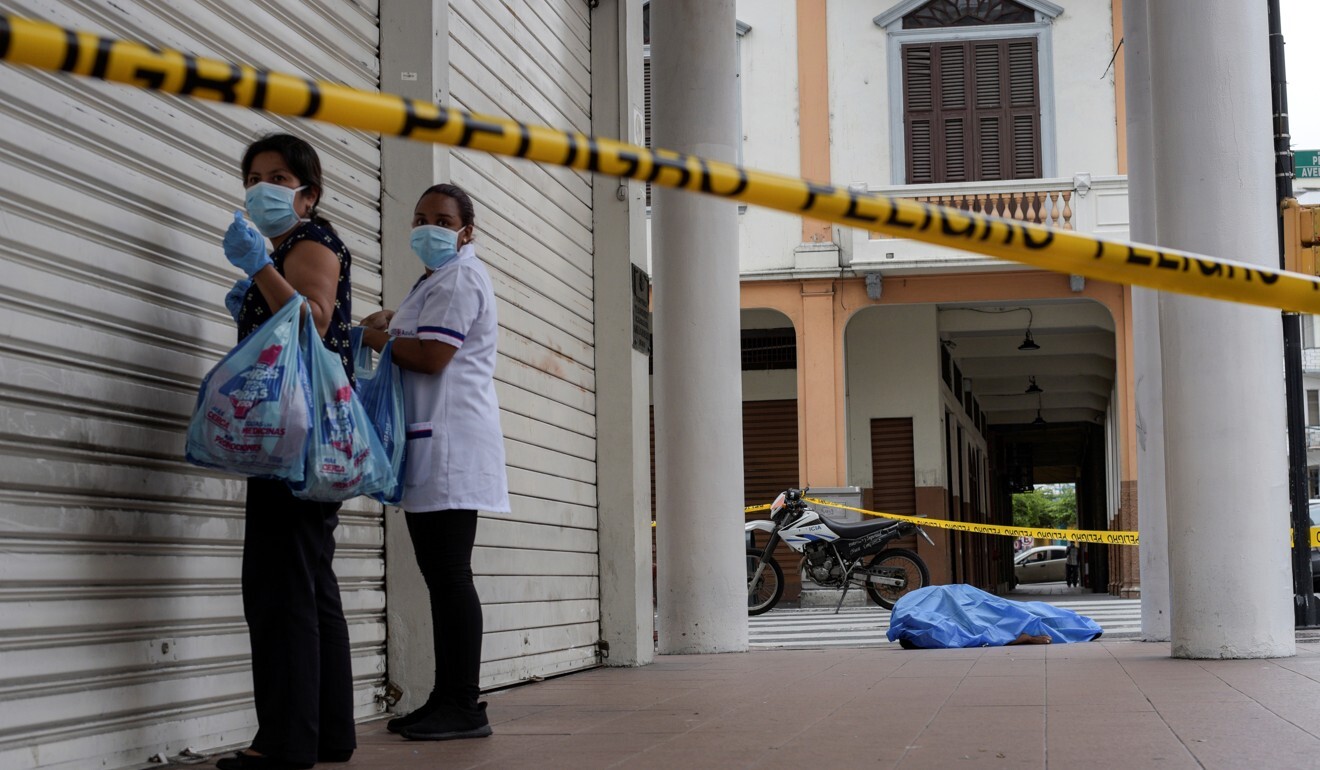
Women stand near the body of a man who died on the sidewalk in Guayaquil, Ecuador. Photo: Reuters

Ecuador struggles to collect the dead

Ecuadorean authorities said they would improve the collection of corpses, as delays related to the rapid spread of the new coronavirus has left families keeping their loved ones’ bodies in their homes for days in some cases.

Residents of Guayaquil, Ecuador’s largest city, have complained they have no way to dispose of relatives’ remains due to strict quarantine and curfew measures designed to prevent spread of the disease. Last week, authorities said they had removed 100 corpses from homes in Guayaquil.

But delays in collecting bodies in the Andean country, which has reported 1,966 cases of the virus and 62 deaths, were evident midday on Monday in downtown Guayaquil, where a man’s dead body lay on a sidewalk under a blue plastic sheet. Police said the man had collapsed while waiting in line to enter a store. Hours later, the body had been removed.

More than 70 per cent of the country’s coronavirus cases, which is among the highest tallies in Latin America, are in the southern province of Guayas, where Guayaquil is located.

Panama to restrict movement by gender

The government of Panama announced strict quarantine measures that separate citizens by gender in an effort to slow the spread of the novel coronavirus.

From Wednesday, men and women will only be able to leave their homes for two hours at a time, and on different days. Until now, quarantine regulations were not based on gender.

Men will be able to go to the supermarket or the pharmacy on Tuesdays, Thursdays and Saturdays, and women will be allowed out on Mondays, Wednesdays and Fridays.

No one will be allowed to go out on Sundays. The new measures will last for 15 days.

Police in Kenya use tear gas to enforce coronavirus curfew

Remote vote first for UN Security Council

The UN Security Council on Monday for the first time approved resolutions remotely after painstaking negotiations among diplomats who are teleworking due to the coronavirus pandemic.

The Security Council unanimously voted by email for four resolutions, including one that extended through April 2021 the expiring mandate of UN experts who are monitoring sanctions on North Korea, diplomats said.

The UN mission in Somalia was also prolonged, until the end of June, and the mission in Darfur until the end of May – two short periods decided due to uncertainty over the spread of the pandemic.

The Council also endorsed a fourth resolution aimed at improving the protection for peacekeepers.

The resolutions are the first approved by the Security Council since it began teleworking on March 12 and comes as Covid-19 rapidly spreads in New York, which has become the epicenter of the disease in the United States.

Congo ex-president dies in France

Former Republic of Congo president Jacques Joaquim Yhombi Opango died in France on Monday of the new coronavirus, his family said. He was 81.

Yhombi Opango, who led Congo-Brazzaville from 1977 until he was toppled in 1979, died at a Paris hospital of Covid-19, his son Jean-Jacques said. He had been ill before he contracted the virus.

Yhombi Opango was an army officer who rose to power after the assassination of president Marien Ngouabi.

Yhombi Opango was ousted by long-time ruler Denis Sassou Nguesso. Accused of taking part in a coup plot against Sassou Nguesso, Yhombi Opango was jailed from 1987 to 1990. He was released a few months before a 1991 national conference that introduced multiparty politics in the central African country.

When civil war broke out in Congo in 1997, Yhombi Opango fled into exile in France. He was finally able to return home in 2007, but then divided his time between France and Congo because of his health problems.

‘When I wake I cry’: France’s nurses face hell on coronavirus front line

31 Mar 2020

EU asks Britain to extend Brexit talks

The European Union expects Britain to seek an extension of its post-Brexit transition period beyond the end of the year, diplomats and officials said on Monday, as negotiations on trade have ground to a halt due to the coronavirus pandemic.

Europe has gone into a deep lockdown in a bid to curb the spread of the disease, with more than 330,000 infections reported on the continent and nearly 21,000 deaths.

In Britain, Prime Minister Boris Johnson and his health minister have both tested positive for the virus and the prime minister’s senior adviser Dominic Cummings – one of the masterminds behind Britain’s departure from the EU earlier this year – was self-isolating with symptoms.

London and the EU have been seeking to agree a new trade pact by the end of the year to kick in from 2021, even though the bloc has long said that such a time frame was extremely short to agree rules on everything from trade to security to fisheries.

The pyramid of Khufu, the largest of the Giza pyramid complex. Photo: Reuters

Great Pyramid in Egypt lights up in solidarity

Egypt’s famed Great Pyramid was emblazoned Monday evening with messages of unity and solidarity with those battling the novel coronavirus the world over.

“Stay safe”, “Stay at home” and “Thank you to those keeping us safe,” flashed in blue and green lights across the towering structure at the Giza plateau, southwest of the capital Cairo.

Egypt has so far registered 656 Covid-19 cases, including 41 deaths. Of the total infected, 150 reportedly recovered.

Egypt has carried out sweeping disinfection operations at archaeological sites, museums and other sites across the country.

In tandem, strict social distancing measures were imposed to reduce the risk of contagion among the country’s 100 million inhabitants.

Tourist and religious sites are shuttered, schools are closed and air traffic halted.

Myanmar braces for ‘big outbreak’ after migrant worker exodus from Thailand
30 Mar 2020

Saudi king to pay for all patients’ treatment

Saudi Arabia will finance treatment for anyone infected with the coronavirus in the country, the health minister said on Monday.

The kingdom has registered eight deaths among 1,453 infections, the highest among the six Gulf Arab states.

Health Minister Tawfiq Al Rabiah said King Salman would cover treatment for citizens and residents diagnosed with the virus, urging people with symptoms to get tested.

“We are all in the same boat,” he told a news conference, adding that Crown Prince Mohammed bin Salman was overseeing containment efforts “night and day”.

Denmark eyes gradual reopening after Easter

Denmark may gradually lift a lockdown after Easter if the numbers of coronavirus cases and deaths remain stable, Prime Minister Mette Frederiksen said on Monday.

The Nordic country, which has reported 77 coronavirus-related deaths, last week extended until after Easter a two-week lockdown to limit physical contact between its citizens that began on March 11.

The number of daily deaths slowed to five on Sunday from eight and 11 on Saturday and Friday respectively. Denmark has reported a total of 2,577 coronavirus infections.

“If we over the next two weeks across Easter keep standing together by staying apart, and if the numbers remain stable for the next two weeks, then the government will begin a gradual, quiet and controlled opening of our society again, at the other side of Easter,” Frederiksen said.

Source: SCMP

19/12/2019

Shanghai parents hit refund brick wall after Lego learning centre closures

  • Families appeal to city authorities and toy company for help to recover fees already paid for classes
  • Four outlets shut their doors in aftermath of contract dispute
Families in Shanghai are appealing to authorities for help to recover money paid for lessons at closed Lego Education Learning Centres. Photo: Weibo

Hundreds of Shanghai parents are appealing to Danish toy company Lego for help after four of its authorised learning centres suddenly closed their doors, leaving families tens of thousands of yuan out of pocket.

Shanghai Jixiao Information Science and Technology, which ran three Lego Education Learning Centres in the city, said in an online statement on Monday that it was left with no choice but to close the centres after Lego Education in China ended its agreement with its Chinese partner, Beijing-based Semia.

The closure of the centres – the Ruihong, Jinqiao and Haiwaitan branches – came just weeks after the Lego centre in Nanxiang shut down.

Semia was authorised by Lego Education to operate learning branches across mainland China and authorisation third parties to do as well, according to Shanghai-based Jfdaily.com.

Rachel Wang, a mother of a six-year-old boy, said that in various online forums about 650 families had reported losing a combined 5.2 million yuan (US$742,000) in prepaid classes at the three stores. Another 130 families whose children were enrolled at the Nanxiang store were seeking 900,000 yuan in refunds, she said.

Wang said the parents had appealed to the Shanghai municipal government to pressure Lego to look at the case.

“We are planning to sue the learning centre, and in the meantime we hope Lego Group can pay attention to this case and help us. Many of the parents chose these centres as we saw on Lego’s website they were listed as among the company’s authorised stores,” she said.

“We are angry and very disappointed with Lego.

“It made a lot of money in China because we trusted it.”

Lego and Tencent will develop games and videos for kids in China

20 Sep 2019

Tao Lina said everything appeared fine when he took his five-year-old daughter to the Haiwaitan centre on Sunday.

“But the next day, we were told that the store had closed. I was so surprised,” Tao said.

“We had never heard of Semia and we were not aware of its existence. We all thought that the learning centres was franchised directly by Lego.”

He said he had paid for 144 classes at the centre and his daughter had attended about 60 of them, each costing 160 yuan. Tao said he hoped his daughter could continue attending the classes – which use Lego products to teach children about subjects such as robotics – but had not been able to contact the centre’s managers.

Shanghai Jixiao said the termination of the Semia-Lego Education agreement had scared off parents, cutting cash flow and forcing it to close the centres.

In its online statement, the company said its troubles started in September, when it received a lawyer’s letter from both Semia and Lego Education.

“It required us to promise not to use the [Lego Education] logo after December 31, 2019 and to stop teaching Lego courses after August of next year,” Shanghai Jixiao said.

On October 11, Lego Education said on WeChat that it had terminated its cooperation with Semia. Most of the 137 Lego learning centres in China would be allowed to use the Lego brand until December 31 and continue teaching Lego courses until July 31 next year.

But after the announcement, many parents sought refunds, causing a cash-flow crisis for the Shanghai company.

Shanghai Jixiao also said that the lawyer’s letter sent in September required all learning centres to sign an agreement absolving Semia of all responsibility.

If it signed the agreement, it would have three months to change the brand and products, which Shanghai Jixiao said was impossible. If it did not sign it, it would have to stop using the Lego brand at once.

Shutting the centres down was the only option after their various efforts, including joint appeals with other mainland learning stores to Lego, visiting Lego headquarters in Denmark and calling Lego’s executives, were unsuccessful, the Shanghai company said.

Chinese teens put to the information age test in global Pisa education study
5 Dec 2019

It offered two mobile phone numbers for parents to contact them but the phones were powered off on Wednesday and Thursday.

Lego did not respond to a request for comment from the South China Morning Post.

But on Wednesday, Lego said it ended the contract with Semia to improve the company’s learning centres, adding that it had no business relations with the closed stores, Thepaper.cn reported.

A manager at Semia’s franchising department identified only as Wei was quoted by Jfdaily.com as saying that the authorisation contract for the three stores owned by Shanghai Jixiao actually ended between October 2018 and February this year.

“They were waiting for us to renew the authorisation contract with Lego, but we failed to reach an agreement with Lego. So these learning centres lost their authorisation,” she was quoted as saying.

Wei said all the authorised stores operated independently.

“Legally speaking, their problems should be solved by themselves,” she said, adding that she could not contact Shanghai Jixiao’s owner either.

There are 19 Lego Education branches across Shanghai, according to Lego Education’s WeChat account.

Market regulation authorities in Pudong and Huangpu districts had started to look at the case, Jfdaily.com reported.

Source: SCMP

19/09/2019

China to tap pork reserves as swine fever hits industry


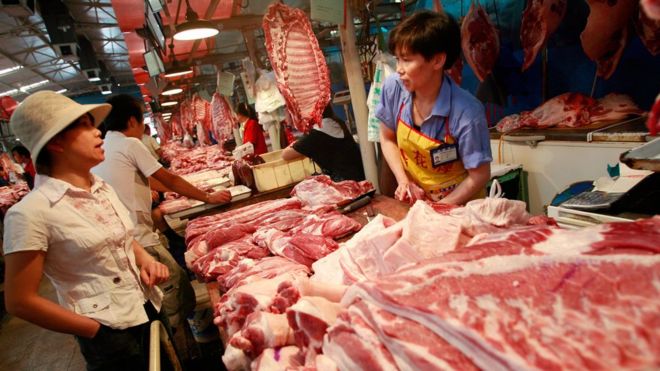
A customer shops for pork at at butcher in ChinaImage copyright GETTY IMAGES

China is set to release pork supplies from its central reserves as it moves to tackle soaring prices and shortages caused by an outbreak of swine fever.

A state-backed body will auction 10,000 tonnes of frozen pork from its strategic reserves on Thursday.

China, the world’s biggest producer and consumer of pork, has struggled to control the spread of the disease.

Beijing has slaughtered more than 1 million pigs in a bid to contain the incurable pig virus.

The highly contagious disease is not dangerous to humans, but has hit China’s crucial pig-farming industry and driven up costs for consumers.

Pork prices jumped 46.7% in August on a year earlier, official figures showed.

In a bid to stabilise prices, a state-backed group that manages the pork reserves will auction imported frozen pork from countries including Denmark, France, the US and UK.

Only 300 tonnes will be sold to each bidder at the auction.

Pork is used widely in Chinese festivals, and the auction comes as the country prepares to celebrate a week-long national holiday for the 70th anniversary of the People’s Republic of China.

Julian Evans-Pritchard, senior China economist at Capital Economics, said the auction would provide slight relief to the industry but would not do much to contain prices.

“In itself, I don’t think it will be able to prevent pork prices from rising further unless they manage to get the disease under control,” he said.

Beijing created its strategic pork reserve in 2007 but the size of the stockpile is not known.

Capital Economics estimates that at most, the stockpile would hold four days’ worth of pork supplies to feed China.

How has swine fever hit China’s pork industry?

Pork is one of China’s main food staples and accounts for more than 60% of the country’s meat consumption. The industry produced close to 54 million tonnes of pork last year.

About 1.2 million pigs have been culled in China in an effort to halt the spread of swine fever since August 2018, according to data from the Food and Agriculture Organization, a UN agency.

In April, Rabobank estimated Chinese pork production would fall by up to 35% this year due to swine fever.

The supply shortage has sent pork prices soaring and has eaten into household incomes.

That poses a fresh challenge for the Chinese economy, which is already facing a slowdown and a trade war between Beijing and Washington.

Source: The BBC

11/09/2019

China aims to become self-sufficient in pork production despite African swine fever

  • Agriculture ministry says long-term goal is achievable despite the loss of a third of domestic livestock owing to impact of disease
  • Observers believe foreign producers will never be able to produce enough to satisfy the world’s largest market for the meat
A pork vendor sleeps at a stall at a Beijing wholesale market. Photo: Simon Song

China will continue to strive for self-sufficiency in pork production although its farming industry has suffered a devastating blow after African swine fever wiped out about one-third of its hog herds, officials said on Wednesday.

Yu Kangzhen, a vice-minister for agriculture, said it was unrealistic for China to pin its hope on imports in meeting the country’s demand for pork.

Last year, China consumed about half of the world’s pork but more than 95 per cent was sourced from domestic supplies, which have taken a serious hit this year due to swine fever.

The disease is deadly for pigs, although not for humans, and there is currently no cure or vaccine.

“Even at its highest level, imports accounted for about 2 per cent of China’s domestic production,” said Yu at a press conference in Beijing.

“So from the statistics alone, we can see that we must adhere to the principle of self-sufficiency if we are to meet our demand for meat, and this also explains why we have put forward a 95 per cent self-sufficiency target.”

According to Yu, the total global trade in pork last year was 8 million tonnes – less than 15 per cent of China’s total production of 54 mi

Peng Shaozong, an official from the pricing department of the National Development and Reform Commission (NDRC), expressed confidence that foreign suppliers would be interested in filling any gaps in the Chinese market.

“Imports are guided by the market. If there is money to be made [in selling to China], they will definitely come,” said Peng on the sidelines of the press conference.

Pan Chenjun, from agribusiness bank Rabobank, said China’s pork production was expected to continue to fall in the coming year, putting pressure on the country’s US$140 billion pork industry.

In July, China’s pig population had fallen by 32.2 per cent from a year earlier, and was down 9.4 per cent compared with the previous month, according to latest government figures.

However, Pan said the government’s 95 per cent self-sufficiency target was in line with market realities.

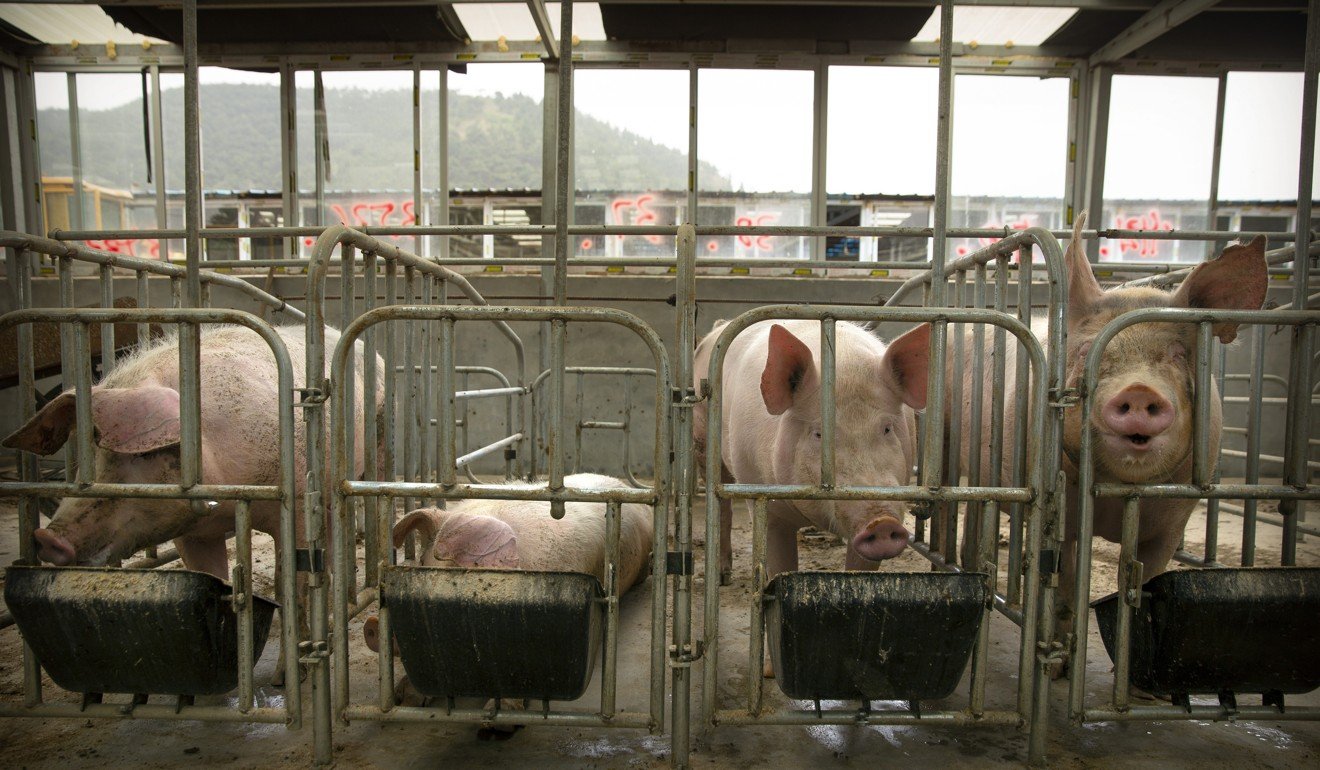
China’s domestic pig stocks have fallen by a third. Photo: AP

“In any case, the 95 per cent [self-sufficiency] goal is reasonable, as China’s pork market size is too big, and imports, despite rising this year, still represent just a small part,” Pan said.

Although China’s domestic shortfall may offer a windfall to foreign suppliers, they must obtain government approval before they could sell to China.

On Monday, Beijing approved imports from 25 Brazilian meat factories, bringing the country’s total number to 89.

On Wednesday, Danish officials completed a three-day trip to China, saying they expected to increase pork exports to China.

Danish food minister Mogens Jensen attended the opening of a new meat processing facility near Shanghai operated by Danish Crown.

China imported 230,000 tonnes of pork from Denmark in 2018, according to the country’s foreign ministry.

On Tuesday, the Chinese State Council issued a new set of guidelines to support the industry, outlining measures such as increased subsidies to boost domestic production in the face of worsening pork shortages that have sent prices to record highs.

The consumer price index released on Tuesday reinforced the bleak picture of a tight market supply as the data showed that pork prices rose by 46.7 per cent in August compared with a year earlier, almost double the 27 per cent rise witnessed in July.

Prices of pork are one of the major indicators used by Chinese citizens to gauge their well-being and, at the moment, that well-being is being eroded rapidly.

According to NDRC, China has already spent a total of 3.23 billion yuan (US$454 million) in subsidies so far this year to tackle the pork shortage crisis.

“As much as 1.1 billion yuan has been newly added under the budget of the central government, with the focus on supporting western provinces in the Yangtze River basin to carry out farm improvement works to control pollution and reduce livestock and poultry waste,” Peng from the NDRC said.

However, a report published by research firm Gavekal Dragonomics on Wednesday cautioned that the government’s plans to soften the blow on the industry might not be effective.

“As the overhaul of pig-raising practices to eliminate the disease would take years even if the government was moving more aggressively, high prices and pork shortages are going to persist,” the report said.

Source: SCMP
01/09/2019

Did China’s growing presence in Arctic prompt Donald Trump’s offer to buy Greenland?

  • US president likely had Beijing ‘on his mind’ when he made his audacious offer, diplomat says
  • Proposal ‘could be interpreted as a very clear signal’ to China and Denmark that the US sees Greenland as part of an exclusive strategic zone, academic says
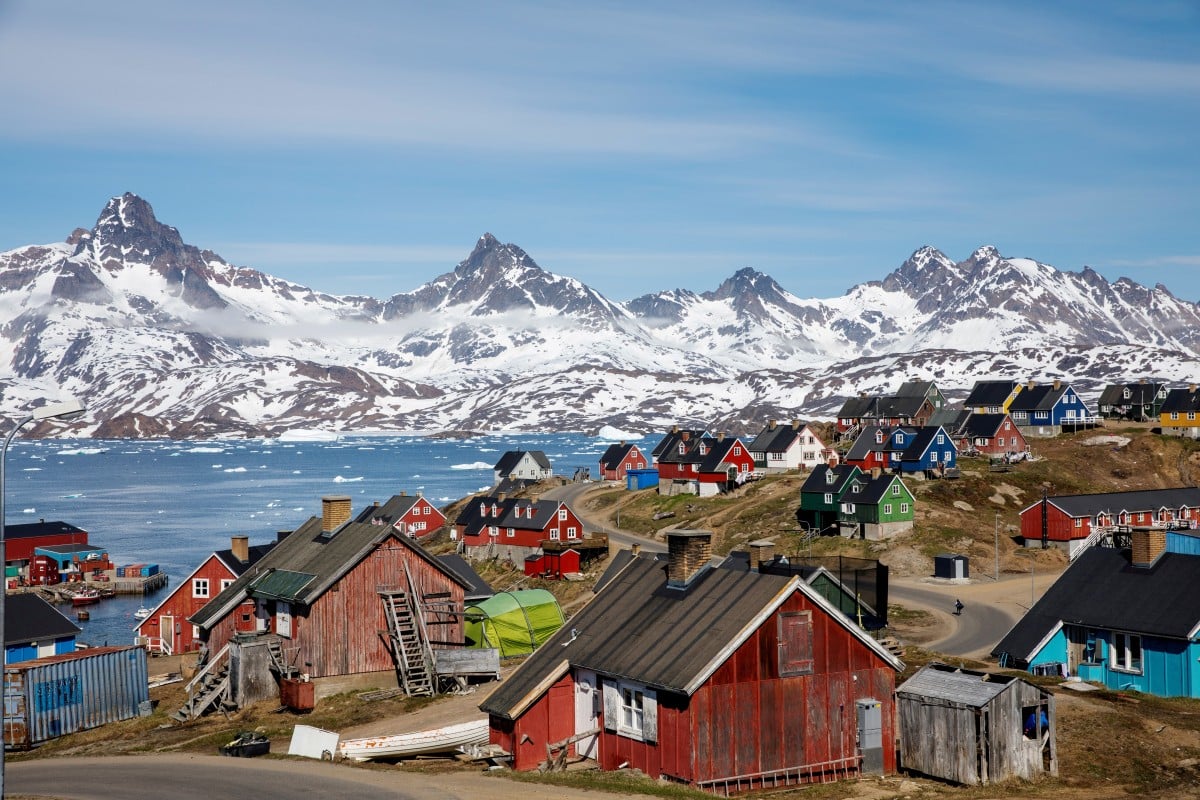
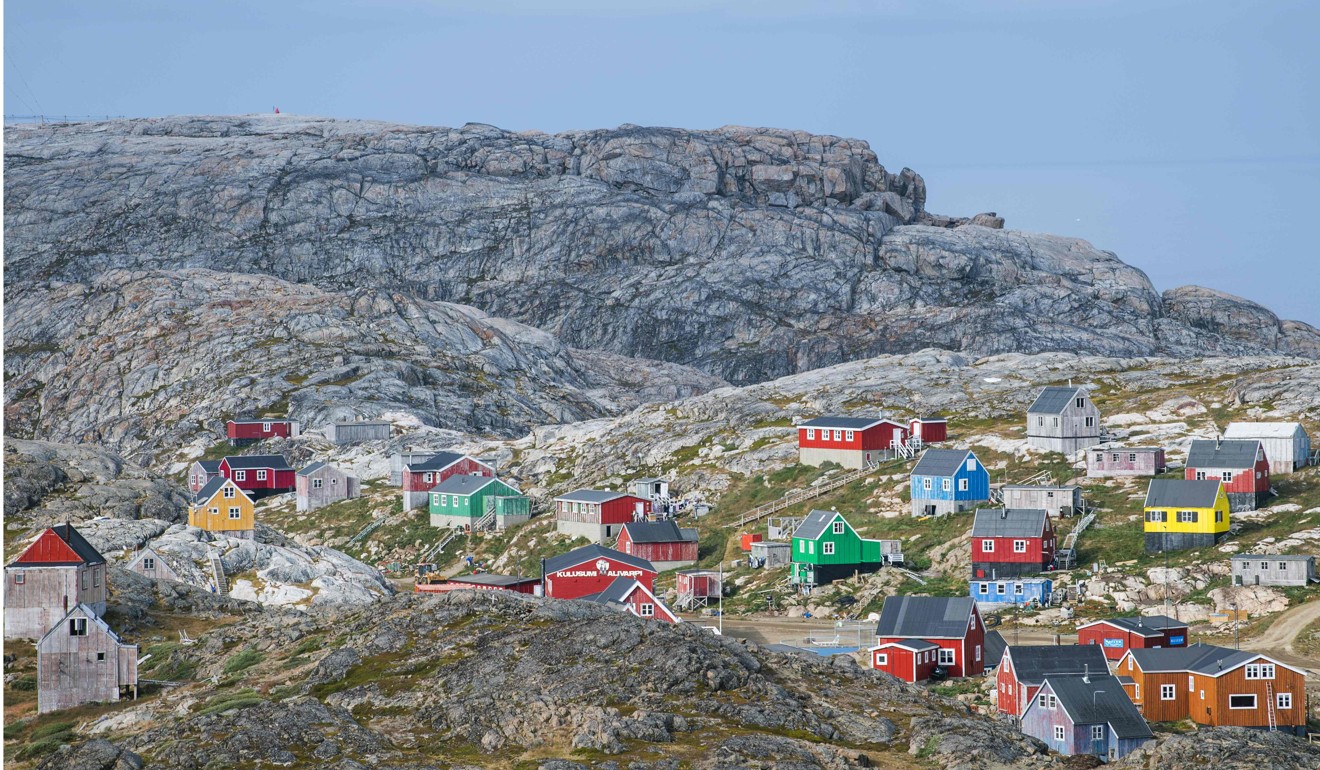
China has been building closer ties with Greenland in recent years. Photo: Reuters

US President Donald Trump’s eyebrow-raising idea to buy Greenland from Denmark last month epitomised what analysts say is Washington’s fear of the growing interplay of Chinese money, Russian aggression and Arctic political division.

Of all the countries involved in the region, Denmark is feeling the most heat, and not just because Trump recently cancelled a trip and called its Prime Minister Mette Frederikse “nasty” for describing his plan to buy the world’s largest island “absurd”.

Over the past few years, both of Denmark’s self-ruled governments – Greenland and the Faroe Islands – have increasingly turned to China for commercial deals, adding weight to Beijing’s growing strategic influence in the vast area that forms the common backyard of Europe, North America and Russia.

Russia seeks Chinese support in developing Arctic shipping routes

Greenland is of particular concern to the White House and the Pentagon as it is home to the US Thule Air Force Base, located far above the polar circle and which served as the first line of defence during the cold war.
Nowadays, the island is also strategically important for the US ballistic missile early warning system, as the shortest route from Europe to North America goes via the ice-cloaked, resource-rich territory.

“Though it’s difficult to tell the motivations of President Trump, he likely had China on his mind with his Greenland offer,” said a Beijing-based diplomat, who asked not to be named.

The US was likely to step up its presence in Greenland in the future, the person said.

In May, US Secretary of State Mike Pompeo accused China and Russia of introducing a strategic power struggle into the Arctic region and described Beijing’s behaviour there as aggressive.

When Greenland signalled an interest in engaging a Chinese state-owned company to build two airports in 2017 – the island’s prime minister flew to Beijing to appeal for financial backing – Copenhagen stepped in amid US pressure, reluctantly agreeing to finance the projects from the public coffers.

Denmark’s reluctance stems from a long-standing mistrust between Copenhagen and Greenland, as the island’s quest for economic development is viewed by the Danes as an attempt to shore up capital to push for a future independence movement.

“There is no doubt that the US foreign and security policy community is becoming far more interested in Greenland as a strategic asset,” said Andreas Bøje Forsby, a researcher at the University of Copenhagen’s Nordic Institute of Asian Studies.

“Proposing to buy Greenland could be interpreted as a very clear signal to both China and Denmark that Greenland is part of an exclusive American strategic zone,” he said.

Danish Prime Minister Mette Frederikse described Donald Trump’s plan to buy Greenland as “absurd”. Photo: Reuters

The government of the Faroe Islands – an archipelago located between Scotland, Norway and Iceland – has a similar readiness to engage with China but for a different purpose.

Unlike Greenland, there are no immediate political movements calling for independence from Denmark, making its overall relationship with Copenhagen more amiable.

This month, the Faroese government will open a liaison office in Beijing, located within the Danish embassy.

“Our top priority is to have a free-trade agreement with China,” Sigmundur Isfeld, the first head of the Faroe Islands’ representation to Beijing, said.

US defence report flags China’s expanding military reach in the Arctic

With Norway – a key competitor of the Faroes in the fishing and export industries – eyeing a similar arrangement with China, the time was ripe to clinch a deal, he said.

“It is a challenge for us … we need to get in the game.”

Although part of Denmark, the Faroe Islands are not part of the European Union and therefore have to form separate trade agreements with other countries.

“For example, there is an EU-Japan economic partnership agreement. It covers all EU nations, but it does not cover the Faroe Islands,” Isfeld said.

Trade between Greenland and China totalled US$126 million in 2108. Photo: AFP

China, for its part, has sought to exert its economic and cultural influence on the Faroes, which has a population of about 52,000 people.

Huawei

, the embattled Chinese telecoms giant, has been working with the islands’ main telecoms provider for four years and is said to be finalising a plan for 5G upgrades across the archipelago.

Beijing also helped fund a project for a Chinese-Faroese dictionary.
With a population of about 56,000 people, Greenland is one of China’s smallest trading partners. In the first seven months of 2019, trade between the two was US$126 million, with Chinese imports of fish accounting for the bulk of the total.
The Greenland government’s annual political and economic report for 2019 said that strong demand for metals from China had contributed to mineral and mining projects in the country, though China’s transition to a less mineral-intensive economy could spell trouble for the future of the sector.
The island’s gross domestic product is expected to grow by 3 per cent this year, according to the report, with seafood – principally cod, halibut and prawns – set to continue to be its chief export.
The end of the Arctic as we know it
China’s attempts in recent years to expand its involvement in Greenland have run into roadblocks.
In 2016, a Chinese mining company expressed interest in taking over an abandoned marine station in Grønnedal, an offer that the Danish government turned down the following year. A Chinese state-owned construction company had also offered to build airports in Greenland, but withdrew its offer this year.
Also this year, China expanded its involvement in exporting from Kvanefjeld, one of the world’s largest deposits of rare earths and uranium, by creating a joint venture to process and export the resources.
Beijing has made clear its strategic ambitions in the region. Early last year, it unveiled its Polar Silk Road strategy, plotting the course for its future development goals in the region – including scientific, commercial, environmental preservation and resource extraction efforts.
It also aligned its Arctic interests with its Belt and Road Initiative. Chinese companies are encouraged to invest in building infrastructure along the routes and conduct commercial trial voyages to gauge feasibility.
Putin boasts of nuclear icebreaker fleet as he outlines Arctic expansion plans

Anders Rasmussen, a former Danish prime minister and erstwhile Nato secretary general, said in an article published in Atlantic magazine last month that with melting ice caps opening the Arctic Sea to shipping, Arctic sea lanes “will likely become another flashpoint of renewed competition among the great powers as climate change alters our world”.

It was a situation he said he found “regrettable, but inevitable”.

“Both China and Russia are interested in getting a foothold in Greenland, to expand their influence in the Arctic region,” Rasmussen said. “Instead of being a source of contention,

Greenland should serve to highlight how many interests the United States and Denmark have in common.”

Source: SCMP

19/05/2019

Shanghai Bund’s historic buildings saved from demolition … for now

  • Experts win reprieve for two out of three heritage houses but fear their success is only temporary
  • Authorities plan public cultural facilities for the site
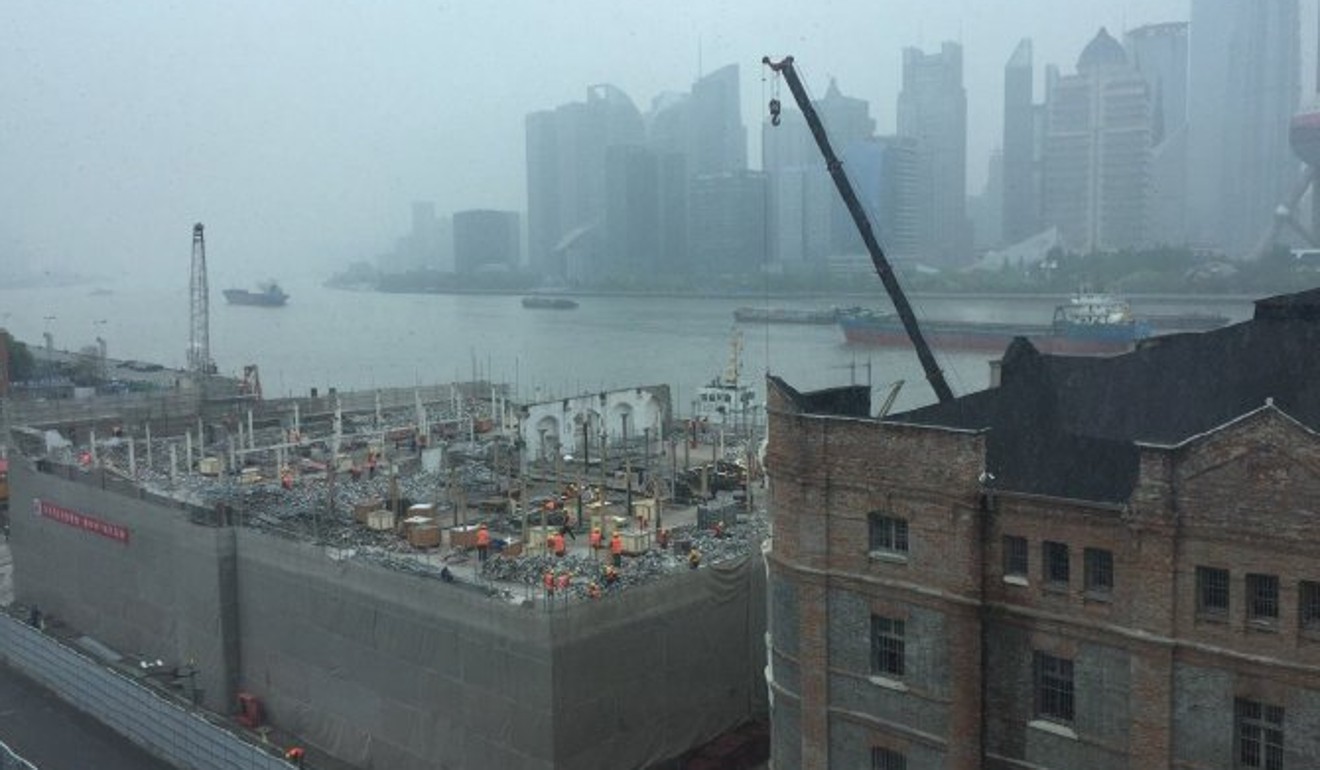
The historic buildings on Shanghai’s Bund in the 1930s. One of the three structures has already been demolished but authorities have temporarily suspended plans to knock down the other two. Photo: Handout
Two historic buildings on Shanghai’s famous Bund have temporarily escaped demolition after a group of experts appealed to the government to conserve the heritage sites, but the intervention was too late to save a third.
About 15 architecture, history and culture experts based in Shanghai banded together to write an article on social media app WeChat last month, calling on the city’s government to “protect the city’s memories” by preserving three houses on Huangpu Road.
A few days after the article was published one of the buildings was demolished as part of a plan to build public cultural facilities on the site. But authorities suspended work on the other two and are considering removing only the interior structure while preserving the external walls, according to the group.
The houses, which date back to 1902, witnessed the city’s boom in the first half of the 20th century when it became one of the world’s most important, and famous, ports, the experts said.
The demolition project on The Bund, Shanghai has been suspended, but not before one of the three historic buildings was demolished. Photo: Urban China magazine

All three of the properties originally belonged to Japanese shipping company Nippon Yusen Kaisha Group and were later used as storage facilities for Japan’s military forces during the second world war, according to Yu Hai, a sociologist from Shanghai’s Fudan University.

“These buildings, along with the nearby Yangzijiang port on the Huangpu River, represented Shanghai’s wharf culture and port culture,” Yu said. “They are historically significant as they witnessed Shanghai grow prosperous through shipping and trade industries about a century ago.”

Although the two remaining buildings are safe for now, the experts argue their interiors are also worth preserving.

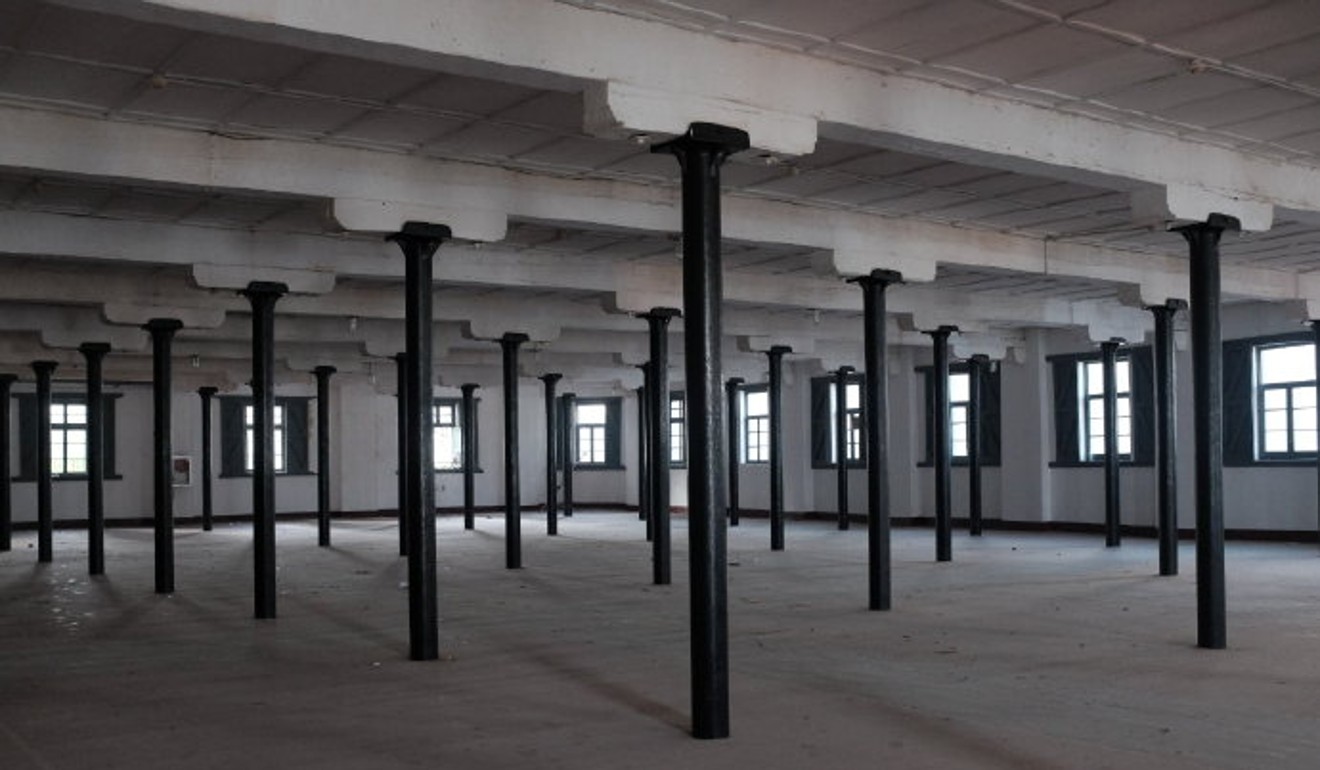
Liu Gang, an architecture professor at Shanghai’s Tongji University, said the properties featured big wooden beams supported by black iron pillars, which were prominent architectural features of industrial buildings dating back to the 19th century.

“We guess it was hard to move these giant beams with vehicles at the beginning of the 20th century. Quite possibly they were transported on the river. We guess that the wood was chopped down and processed in places across the Pacific [from North America] and shipped to Shanghai.”

In the WeChat article, Liu called for the protection of the interior structure of the buildings. “Without solid research, we cannot simply take them down to be replaced by new ones.”

Yu agreed, saying: “The building with a new inside structure would be a fake and this plan will destroy historical heritage.”

Experts say the interiors of the historic buildings are also worth preserving. Photo: Urban China magazine

Huangpu Road, where these houses sit, is rich with history. It features the Garden Bridge of Shanghai – the city’s first steel bridge, built in 1907 – and was once home to the consulates of the United States, Russia, Japan, Germany, Denmark and the Austro-Hungarian empire.

Other notable landmarks on the road include the Astor House Hotel, built in 1846, where Charlie Chaplin, Albert Einstein and George Bernard Shaw stayed in the 1920s and 1930s. The hotel is still there.

“History happened here,” Yu said. “But it’s a pity that most of the old buildings in this area no longer exist.”

Despite their success in winning a stay of execution for the two buildings, the experts are cautious in their expectations.

“The demolition work was suspended, but that does not mean they have accepted our proposals. We are not optimistic,” Yu said.

About two weeks ago as part of their effort to save the buildings, Yu and three other scholars approached officials from Shanghai’s Planning and Natural Resources Bureau, the government body behind the demolition project.

“Officials emphasised the difficulties of keeping the completeness of the old buildings and we just pointed out the damage to their historical values,” Yu said.

The Shanghai bureau did not immediately reply to a request for comment.

Shanghai nightclub king opens new art space – in disused oil tanks
Appeals by the public to conserve historical buildings have generally not been successful. Shenyuli, a typical Shanghai residential community built in the 1930s, was included in the city’s protected list of historical buildings in 2004.
The listing was not enough to prevent its demolition eight years later to make way for a public green land space.
Three years ago, the Shanghai government announced it was suspending the planned demolition of a former sex slavery station used by Japanese soldiers during the second world war, following media reports and a public outcry.
However, the building was later demolished, according to Su Zhiliang, history professor from Shanghai Normal University and a researcher on sex slavery, who predicts a similar outcome for this latest conservation effort.
“I think the government is just using the same tactic to postpone their plan. After the public’s attention is over, they will continue demolishing,” Su said.
Source: SCMP

Law of Unintended Consequences

continuously updated blog about China & India

ChiaHou's Book Reviews

continuously updated blog about China & India

What's wrong with the world; and its economy

continuously updated blog about China & India