Archive for ‘departments’

28/03/2020

Why China’s digital divide, exposed by coronavirus crisis, is not going away any time soon

  • Mainland China’s coronavirus outbreak exposed a huge digital divide, with some students from poorer regions lacking resources for online learning
  • Access to the internet is not considered a daily necessity at China’s policy level, unlike in European countries such as Norway and Iceland

Chinese children attend a computer class in Beijing to learn how to properly use the internet. Those in poorer parts of the country lack sufficient access to the internet, as the switch to online teaching during the coronavirus outbreak in China showed. Photo: AFP

The coronavirus outbreak in mainland China highlighted the huge digital divide that exists between richer and poorer regions.

When schools shut and online learning was made compulsory, many students living in remote areas found they didn’t have sufficient internet access.

There were 1.6 billion mobile phone subscribers in China in 2019, with many people having more than one subscription, and optical fibre and 4G covered 98 per cent of the population, according to official data.

These figures fail to show the large regional disparity between the country’s rich and poor provinces, says Jack Chan Wing-kit, associate professor of the school of government at Sun Yat-sen University in Guangzhou province.

“In poor areas, a family [often] has to share one mobile phone among all members,” says Chan, who has done extensive research on China’s social problems.

It is easier for service providers to offer blanket coverage in densely populated cities where most people live in high-rise buildings, Chan explains.

“In rural areas, people live in bungalows that are widely spread out. It is not economically efficient for phone service providers like China Mobile to install transmission stations there, which explain their spotty coverage,” he says.

While the universal social security net in China covers people including the old and disabled, access to the internet is not considered a daily necessity at the policy level. That’s unlike European countries such as Norway and Iceland, who see the internet as a basic human right and ensure their entire populations have proper access to it.

Though some wealthier coastal cities within the Pearl River Delta recently conducted local surveys to identify less-well-off households and handed out tablet computers, inland provinces in central and western China cannot afford these measures, Chan says.

The Chinese government does not encourage [the setting up of] charities – Erwin Huang, founder of WebOrganic and EdFuture

Philanthropic efforts could help address this problem, as shown by Hong Kong’s experience in tackling the digital divide.

About 900,000 kindergarten, primary and secondary students in the city have been affected by school suspensions that are likely to last until at least April 20.

While families of disadvantaged students have received support from the government through Comprehensive Social Security Assistance and other welfare schemes, many children still lack digital resources as their parents don’t see it as a priority, says Erwin Huang, founder of both WebOrganic, a charity promoting computer access to such youngsters, and education alliance EdFuture.

That has left it up to charities to make sure all students have enough resources at home for online learning, Huang says. For instance, this month EdFuture worked with local mobile service provider SmarTone to give out free phone data SIM cards lasting two months to 10,000 students.

“It’s for those who live in subdivided flats and those who have to go to McDonald’s for Wi-fi access,” says Huang, who is also associate professor of engineering at the Hong Kong University of Science and Technology.
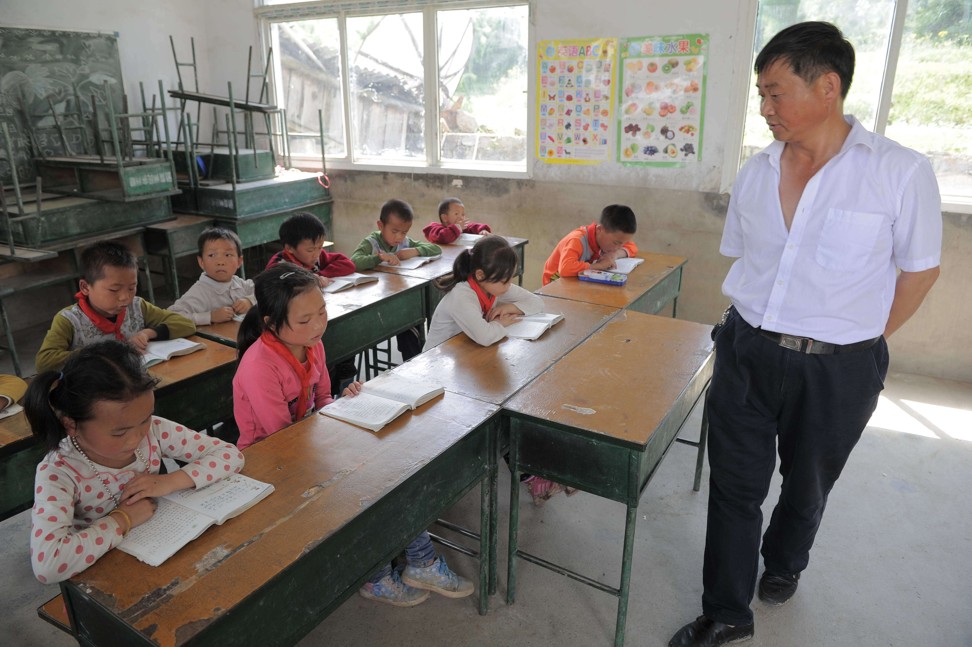
Many students in China’s poorer regions have been left at a disadvantage by the shift to online learning. Photo: Getty Images
The Hong Kong Jockey Club also recently launched a HK$42 million (US$5.4 million) scheme to provide free mobile internet data to 100,000 underprivileged primary- and secondary-school students to help with online learning while schools are closed.

Huang says while such charities help fill gaps in the provision of digital resources in Hong Kong, a similar philanthropic culture is lacking in China.

“The Chinese government does not encourage [the setting up of] charities,” he says.

Huang initiated several digital resources projects in China after the Sichuan earthquake in 2008, but says frequent media reports of scandals involving charities such as China’s Red Cross have made it harder for NGOs to operate in the country, with the government preferring to provide social services through its own departments.

Source: SCMP

29/09/2019

China expands access to public services for travellers from Hong Kong and Macau

  • New system to enable businesses and government agencies to verify mainland-issued travel permits
The new system is expected to expand access to the public transport system on the mainland. Photo: Roy Issa

Hong Kong and Macau residents and “overseas Chinese” may soon be able to have full access to public services on the mainland using their China-issued travel documents, state news agency Xinhua reported.

Xinhua reported on Wednesday that the National Immigration Administration was putting a platform in place to enable government agencies and businesses to verify mainland-issued travel permits for Hong Kong and Macau residents.

“As soon as the platform becomes operational, these overseas travellers can, from October, have access to 35 public services, ranging from transport, to finance, education, communications, medical care and accommodation,” the report said.

According to the report, “overseas travellers” cover Hong Kong and Macau residents and ethnic Chinese living overseas.

But it did not say why the new measures did not apply to people from Taiwan.

The administration did not respond to requests for comment on Thursday.

Will Hong Kong anti-government protests ruin city’s role in Beijing’s Greater Bay Area plan? Depends on whom you ask

The new measure appears to be part of a long-term strategy by Beijing to foster closer ties between the mainland and Hong Kong and Macau.

In the last few years, the central government has launched a host of incentives for Hong Kong and Macau residents and businesses, including opportunities in the Greater Bay Area development plan in southern China.

Ivan Zhai, executive director of the Hong Kong Chamber of Commerce in China-Guangdong, welcomed the new measure.

“If such an arrangement can be fully implemented, Hong Kong businesspeople who operate on the mainland will be thrilled,” Zhai said.

The Hong Kong business community has long lobbied for relaxation over areas such as train ticketing and hotel registration.

Zhai said that although Hong Kong and Macau residents could now book high-speed train tickets with their mainland-issued travel permits, there were few ticket machines that could automatically read the permits, complicating the process.

“There are also hotels on the mainland that can only entertain guests with Chinese identity cards and currently Hong Kong travellers can only go to hotels that are authorised to accept the mainland-issued travel permits,” he said.

China’s regulator relaxes currency conversion rules throughout Shenzhen, sharpening city’s edge in Greater Bay Area

According to the report, there will be stiff penalties for departments or businesses misusing information collected through the platform.

Zhai said Hong Kong businesspeople who travelled to the mainland often were more likely to be concerned about convenience than the risk of invasion of privacy.

“If you are a frequent traveller in China, you would have expected that the relevant departments of the Chinese government already have information about you anyway,” he said.

Source: SCMP

06/03/2019

Xi stresses strategic resolve in enhancing building of ecological civilization

(TWO SESSIONS)CHINA-BEIJING-XI JINPING-NPC-PANEL DISCUSSION (CN)

Chinese President Xi Jinping, also general secretary of the Communist Party of China (CPC) Central Committee and chairman of the Central Military Commission, attends a panel discussion with his fellow deputies from Inner Mongolia Autonomous Region at the second session of the 13th National People’s Congress in Beijing, capital of China, March 5, 2019. (Xinhua/Xie Huanchi)

BEIJING, March 5 (Xinhua) — President Xi Jinping on Tuesday stressed efforts to maintain strategic resolve in enhancing the building of an ecological civilization and to protect the country’s beautiful scenery in the northern border areas.

Xi, also general secretary of the Communist Party of China (CPC) Central Committee and chairman of the Central Military Commission, made the remarks when attending a panel discussion with his fellow deputies from Inner Mongolia Autonomous Region at the second session of the 13th National People’s Congress, China’s national legislature.

The president called for intensified protection of the ecological system, urging people to fight resolutely against pollution.

The Party’s theory on an ecological civilization has been constantly enriched and improved since the 18th CPC National Congress in late 2012, Xi said.

All localities and departments should earnestly implement the Party’s arrangement and requirements for building an ecological civilization, pushing it to a new level, Xi said.

Building Inner Mongolia into an important shield for ecological security in northern China is a strategic position set with full consideration of the country’s overall development and a major responsibility the region must shoulder, Xi said.

Fundamentally speaking, environmental protection and economic development are closely integrated and complement each other, Xi said.

In the Chinese economy’s transition from the phase of rapid growth to a stage of high-quality development, pollution control and environmental governance are two major tasks that must be accomplished, he added.

The country should explore a new path of high-quality development that prioritizes ecology and highlights green development, Xi said.

With its diversified natural forms including forests, grasslands, wetlands, rivers, lakes and deserts, Inner Mongolia features a comprehensive ecological system formed over a long period of time. Integrated measures should be taken in ecological protection and rehabilitation in the region, he said.

Xi underlined a resolute and effective fight to prevent and control pollution, saying prominent environmental issues the people are strongly concerned about must be addressed properly.

Source: Xinhua

Law of Unintended Consequences

continuously updated blog about China & India

ChiaHou's Book Reviews

continuously updated blog about China & India

What's wrong with the world; and its economy

continuously updated blog about China & India