25/01/2020
- Teams from Shanghai, Guangdong – including experts who helped tackle Sars – arrive in Wuhan to lend their support
- Tencent, JD.com, Lenovo among raft of private firms offering financial aid to those battling deadly outbreak
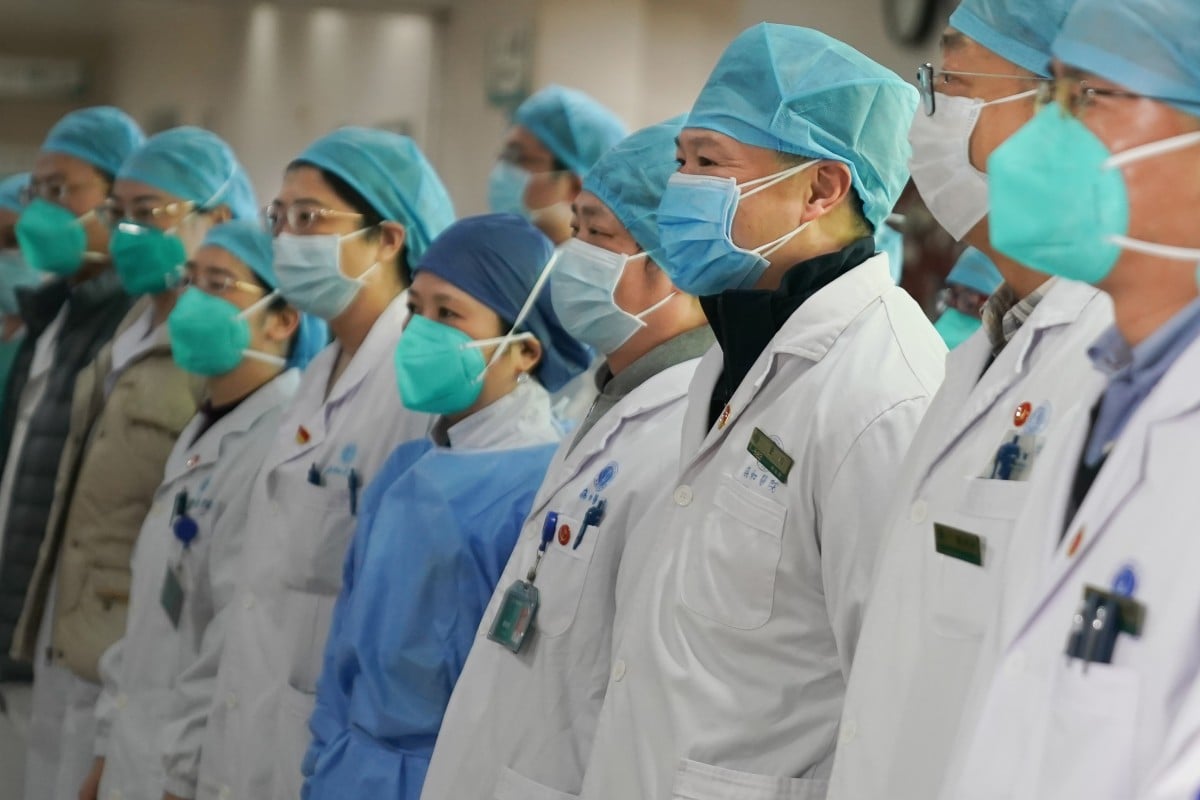
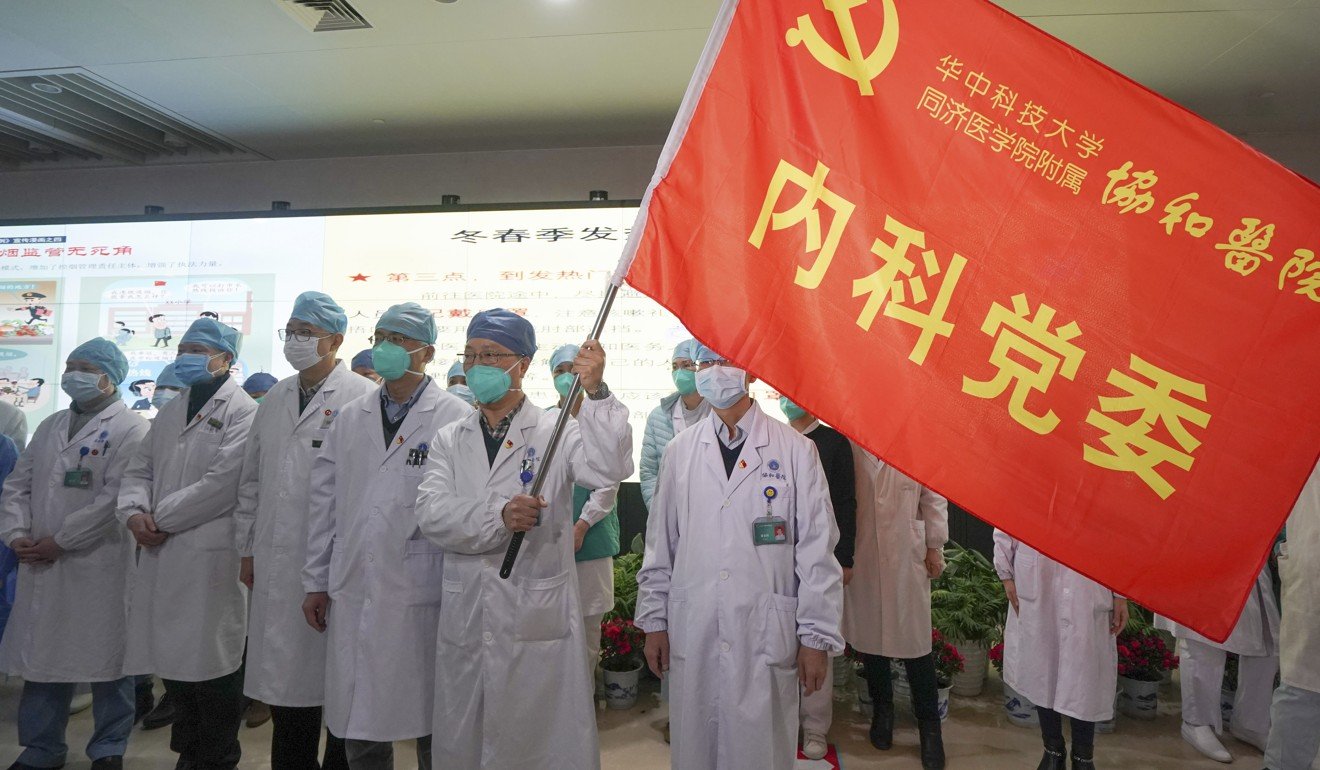
Doctors and nurses from across China are being dispatched to help tackle the coronavirus epidemic in Hubei province. Photo: Xinhua
Chinese authorities and private enterprises are stepping up their support for embattled medical teams in Hubei province as they continue to fight the
coronavirus epidemic, while neighbouring governments ramp up their efforts to prevent its further spread.
Hospitals across Wuhan – the city at the centre of the outbreak – have been overwhelmed by the flood of patients and doctors are becoming increasingly frustrated at the lack of support, both in terms of supplies and personnel, they have received.
But national bodies say they are responding to the crisis.
On Saturday, China’s National Health Commission (NHC) said that six medical teams comprising 1,230 staff had been set up and dispatched to help fight the deadly virus in Hubei.
Three medical units from Shanghai, Guangdong and the armed forces had already arrived in the province, it said, though did not make clear if they were in addition to or part of the six teams.
Chen Dechang, a doctor from Ruijin Hospital in Shanghai who is among those sent to Hubei, said it was important there were more medical staff on the scene.
“We can help save more patients in the intensive care unit if we are on the front line,” he said.
Authorities in Shanghai have also sent 81 ECMO (extracorporeal membrane oxygenation) life-support machines to Jinyintan Hospital, which is one of the designated facilities treating patients in Wuhan.
The ECMO technique – which involves removing blood from a person’s body, removing the carbon dioxide and oxygenating red blood cells before pumping them back into the patient – has already been used on one critically ill patient at Wuhan University’s Zhongnan Hospital, according to Shanghai-based news outlet Thepaper.cn.
Though the report did not say how effective the treatment had been.
Medical teams in Wuhan have been under huge pressure since the outbreak began. Photo: Xinhua
The team from Guangdong comprised 42 doctors and 93 nurses, the NHC said. The deployment came after a group of current and former medical staff from Southern Medical University in Guangzhou – who had helped tackle the Sars (severe acute respiratory syndrome) outbreak in 2002-03 – signed a petition saying they were willing to help in Wuhan.
“We are a team of experienced practitioners who fought Sars,” they said in the petition, a copy of which was posted on the social media accounts of Communist Party mouthpiece People’s Daily.
“We cannot back away from our responsibility to help 17 years later as people are facing the outbreak of a new coronavirus. We are willing to be deployed to the front line to make our contributions.”
A team of 135 doctors from Chongqing arrived in Wuhan on Friday evening, the NHC said, without elaborating.
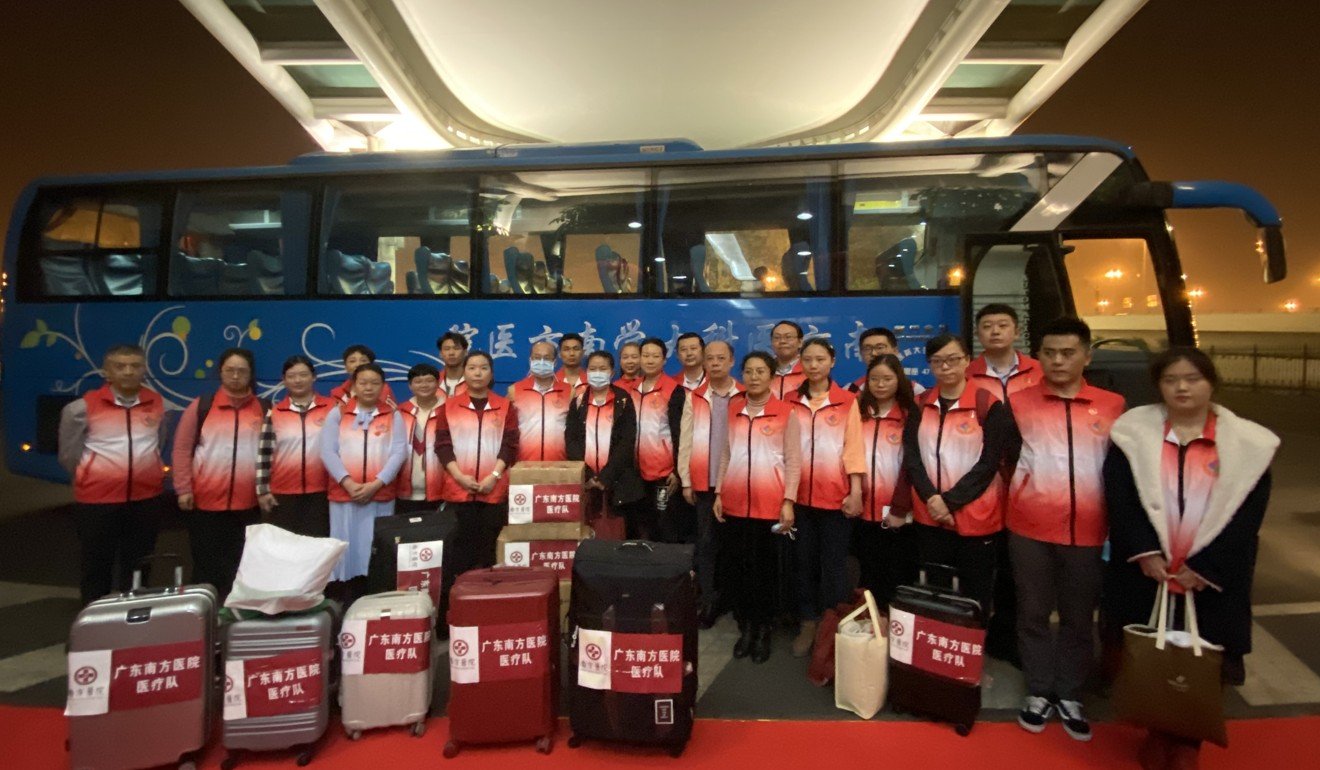
A medical team from Guangdong province prepares to travel to Wuhan. Photo: Xinhua
As well as the wave of medical support, several private companies said they had provided financial support to help fight the epidemic.
According to Chinese media reports, Shanghai Ocean Forest Assets has donated 10 million yuan (US$1.4 million) to the cause, while Shanghai-based asset management firm, Jinglin Assets is coordinating efforts to buy urgently needed medical supplies from South Korea and Japan.
Shenzhen’s Fantasia Holdings said it would donate 6 million yuan and send medical supplies, including surgical masks, to Wuhan, while tech giant Tencent said it would donate 300 million yuan from its charity. E-commerce platform JD.com said it had donated 1 million surgical masks and 60,000 other medical items.
Chinese smartphone manufacturer Xiaomi said on Friday it had sent a first batch of medical equipment – masks and thermometers worth more than 300,000 yuan – to Wuhan, while tech firm Lenovo said on Saturday it would donate all of the IT equipment required by the new specialist treatment centre being built in the city.
Authorities set a target to have the 1,000-bed facility up and running within six days of starting construction.
Aside from the support from the private sector, state lender China Development Bank on Friday issued a 2 billion yuan emergency loan to Wuhan, while a day earlier, China’s finance ministry said it had allocated 1 billion yuan to authorities in Hubei to help tackle the epidemic.
Across the country, authorities have introduced a number of measures to help prevent the further spread of the coronavirus, including the closure of all cinemas in Shanghai.
Wuhan residents stockpile food, medical supplies
25 Jan 2020
Also on Saturday it was reported that Liang Wudong, a doctor at Xinhua Hospital in Wuhan, had become the first medical professional to die after treating people infected with the virus.
Liang, 62, was suspected of having contracted the virus last week and had been transferred to Jinyintan Hospital for treatment. He died at 7am on Saturday, Thepaper.cn reported.
According to official figures, 41 people have been killed by the coronavirus and there have been more than 1,280 confirmed cases. The vast majority are in the Chinese mainland, but there have also been confirmed cases in Hong Kong, Macau, Taiwan and eight other countries, including the United States and Europe.
Tens of millions of people in cities across Hubei are effectively on lockdown after the introduction of travel bans to help control the spread of the virus.
Source: SCMP
Posted in China, China Development Bank, chinese authorities, Chongqing, coronavirus, coronavirus epidemic, deploys, doctors and nurses, ECMO (extracorporeal membrane oxygenation) life-support machines, ECMO technique, Europe, Guangdong, help fight, Hong Kong, Hubei, hubei province, Japan, JD.com, Jinglin Assets, Jinyintan Hospital, Lenovo, Macau, money, National Health Commission (NHC), People’s Daily, pledge, private enterprises, private firms, Ruijin Hospital, SARs, Shanghai, Shanghai Ocean Forest Assets, Shenzhen’s Fantasia Holdings, smartphone manufacturer, South Korea, Southern Medical University, supplies, Taiwan, Teams, TENCENT, Uncategorized, United States, Wuhan, Wuhan University, Xinhua Hospital, Zhongnan Hospital |
Leave a Comment »
12/09/2019
- Military stresses combat readiness and war mentality in production released just weeks before 70th anniversary of the People’s Republic
China’s air force shows a more assertive side in a new propaganda video. Photo: Handout
The Chinese air force has ramped up its combat rhetoric in its latest propaganda video, with pilots warning enemies in English and top brass stressing the need for crisis mode.
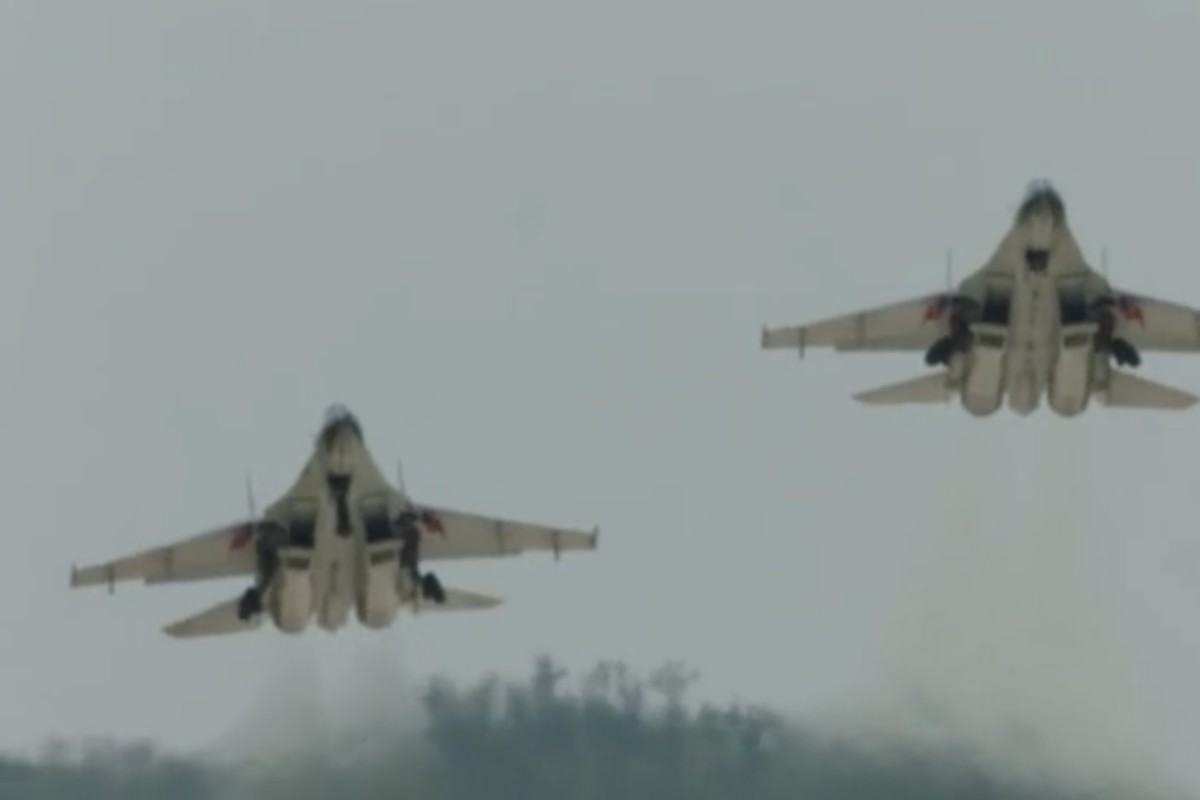
The four-minute video was posted on the Ministry of National Defence’s website on Wednesday and begins with two J-20 stealth fighters taking off from an unidentified airbase.
At least three missile-carrying J-11 jets are then shown make low passes and various aerobatics at sea.
After that, a pilot shouts in English: “This is the PLA Air Force speaking. You are about to enter Chinese airspace. Leave immediately. Leave immediately.”
The video also features members of an elite brigade called the “Eagles of Liaoning province”, a frequent winner of PLA Air Force competitions.
PLA Air Force formation ‘a sign of stealth fighter mass production’ in China
Brigade member Bai Long, a J-20 fighter pilot, says the team have a higher calling.
“Winning over enemies is more important than winning competitions,” Bai says.
Also featured is Wang Hai, a 93-year-old combat veteran from the Korean war, who encourages air force personnel to fear nothing during combat.
“You cannot do anything if you are not brave enough. You can’t be a pilot if you fear death,” Wang says.
Wang Yongtong, a brigade commander, is also quoted as saying that the Chinese air force is using war games to strengthen its combat readiness.
“We will meticulously prepare for war and improve our combat capacity to resolutely safeguard national sovereignty, security and interests,” he says.
The video’s release comes just a few weeks before China marks the 70th anniversary of the founding of the People’s Republic with a massive military parade showcasing its military weapons.
It also underlines China’s increasingly assertive efforts to defend its interests.
On Wednesday, China hit out at Canada for sending a warship to traverse the Taiwan Strait.
And in late July, South Korea claimed that two Chinese warplanes entered South Korea’s air defence identification zone, a claimed denied by the Chinese foreign ministry.
And in late January, a Chinese surveillance plane crossed the Sea of Japan and the East China Sea via the Tsushima Strait, prompting the Japanese air self-defense force to scramble fighter jets.
Posted in 70th anniversary, Aerobatics, air defence identification zone, airbase, brigade commander, canada, China alert, Chinese air force, Chinese foreign ministry, Chinese warplanes, deploys, Eagles of Liaoning province, East China Sea, English, fighter jets, founding of the People’s Republic, interests, J-20 stealth fighters, Japanese air self-defense force, Korean War, mass production, massive military parade, military weapons, Ministry of National Defence, national sovereignty, PLA Air Force, safeguard, scramble, Sea of Japan, security, South Korea, stealth fighter, surveillance plane, Taiwan Strait, Tsushima Strait, Uncategorized, veteran, video rallying cry, warship |
Leave a Comment »
27/07/2019
- Aircraft could also be used to counterbalance Japanese and US military activities in the region, analysts say
China’s J-20 stealth fighter has gone into service in the Eastern Theatre Command. Photo: PLA Air Force
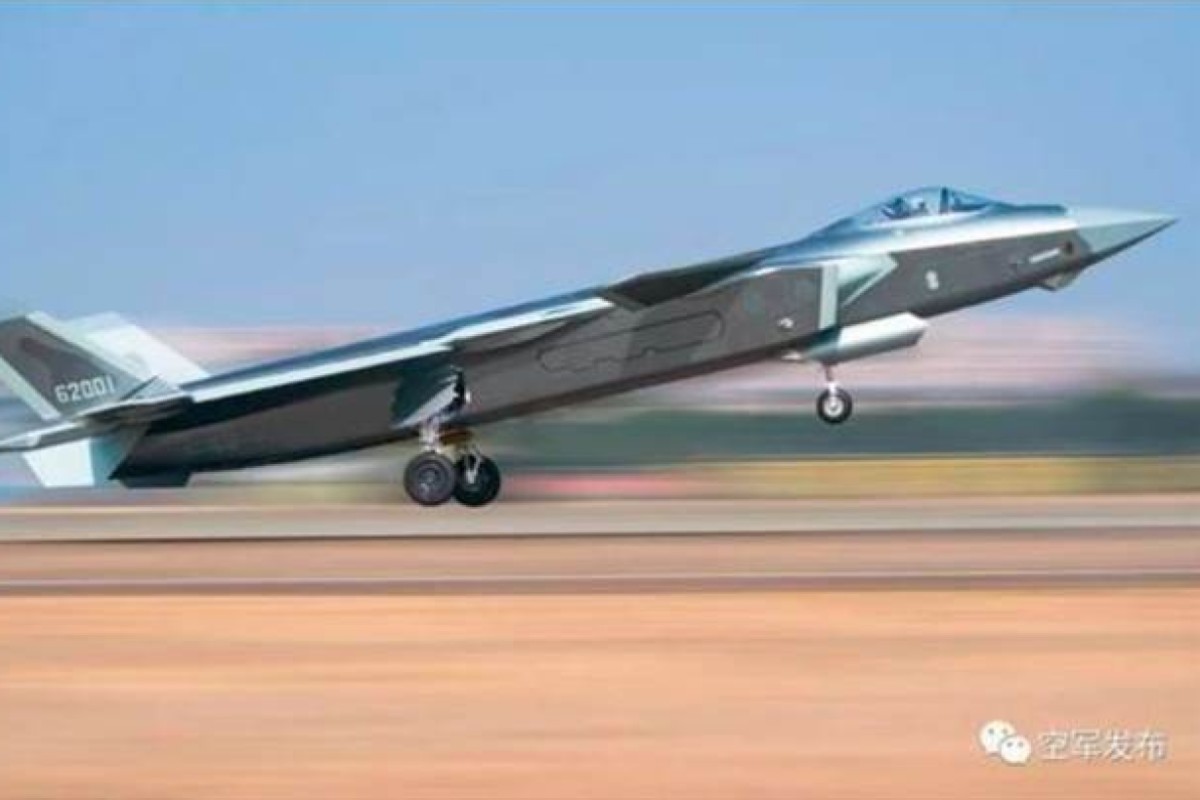
China’s J-20 stealth fighter has been officially deployed to the country’s Eastern Theatre Command, suggesting it will be focused on the Taiwan Strait and military activities between Japan and the United States, observers said.
The People’s Liberation Army Air Force posted a photo on its social media account this week showing the fifth-generation fighter tagged with the number 62001, designating the aircraft as part of a frontline unit.
Chinese media reported that the stealth fighter had entered the Eastern Theatre Command, which encompasses Taiwan.
Collin Koh, a research fellow at the S Rajaratnam School of International Studies at Nanyang Technological University in Singapore, said the aircraft appeared to have two missions.
“The unit turning operational in Eastern Theatre Command is precisely aimed at Taiwan,” Koh said.
“And to challenge US military activities in Taiwan Strait, besides posing a threat to the median line that Taiwan’s air force patrols along.”
US Air Force gears up for aggressor drills to simulate combat with China’s J-20 fifth-generation fighters
The photo’s release came as China issued a defence white paper, highlighting the risks from “separatist forces”.
In the document, the military said it faced challenges from pro-independence forces in Taiwan but would always defeat those fighting for the island’s independence. It also said there were risks from separatists in the autonomous regions of Tibet and Xinjiang.
A day after the paper was released, an American warship sailed through the Taiwan Strait.
The J-20 is expected to enter mass production this year. If the aircraft was declared ready to go into active operations, it would signal China was a “greater threat” and had “greater capability” in the Pacific, General Charles Brown, the US Air Force’s Pacific commander, said in May.
Brown said US efforts to counter those developments included increasing deployments of next-generation F-35 jets and continuing overflights of strategic areas such as the South China Sea.
China’s J-20 stealth jet may be ready this year, US commander says
According to the US Defence Intelligence Agency, fielding the J-20 would add to what was already the region’s biggest air force and world’s third-largest.
China had more than 2,500 aircraft, including 1,700 combat fighters, strategic bombers, tactical bombers and multi-mission tactical and attack aircraft, in service, the agency said in a report earlier this year.
China’s J-20 fighter was part of a modernisation effort that had been “closing the gap with Western air forces across a broad spectrum of capabilities, such as aircraft performance, command and control and electronic warfare”, the report said.
Macau-based military expert Antony Wong Dong said that in addition to Taiwan, the J-20 fighter could also be used to counterbalance military activities by the United States and Japan.
But Wong added that the Chinese military was still exploring how best the fighter could be used.
“It will take a few years for the aircraft to be fully deployed and to mature. Right now, it’s still in the exploration stage,” he said.
Source: SCMP
Posted in American warship sailed through the Taiwan Strait., China alert, combat fighters, deploys, Eastern Theatre Command, J-20 stealth fighter, Japan, Japanese military activities, keep tabs, Macau, multi-mission tactical and attack aircraft, next-generation F-35 jets, PLA Air Force, S. Rajaratnam School of International Studies, Singapore’s Nanyang Technological University, South China Sea, strategic bombers, tactical bombers, Taiwan, Taiwan Strait, Tibet, Uncategorized, United States, US Air Force, US Air Force’s Pacific commander, US Defence Intelligence Agency, US military activities, Xinjiang |
Leave a Comment »



 CHINDIA ALERT: You'll be living in their world, very soon