Chindia Alert: You’ll be Living in their World Very Soon
aims to alert you to the threats and opportunities that China and India present. China and India require serious attention; case of ‘hidden dragon and crouching tiger’.
Without this attention, governments, businesses and, indeed, individuals may find themselves at a great disadvantage sooner rather than later.
The POSTs (front webpages) are mainly 'cuttings' from reliable sources, updated continuously.
The PAGEs (see Tabs, above) attempt to make the information more meaningful by putting some structure to the information we have researched and assembled since 2006.
“Doctors and nurses are people who saved me from cancer and gave me strength in the darkest time. I need to return the favour,” says Li Yan, a food delivery rider based in Beijing.
Mr Li was diagnosed with lymph cancer in 2003, when he was just 17 years old. He recovered from the disease and has been full of gratitude ever since for the medical workers who nursed him back to health. With China in a national lockdown, food delivery firms found themselves in hot demand providing meals for residents stuck at home to prevent the spread of the coronavirus.
As a delivery rider for Meituan, one of China’s biggest food delivery firms, Mr Li saw an opportunity to repay the medical professionals he admires by providing them with food and drinks as they worked tirelessly on patients across the city. “Given my past experience, I felt I needed to do something for them in return during the virus outbreak,” he adds.
Beijing is a city of 21 million residents, and Mr Li covers its Tongzhou district, where there are a handful of hospitals with fever clinics, one of which is a designated hospital for Covid-19 treatment. “Many might have concerns delivering for the hospital, but I’ve chosen to deliver for them more often. I just think of the local residents and medical workers who need us. I can’t leave them being hungry. It’s not for money.”
Before the outbreak in China, he delivered more than 50 orders on an average day. But during the first ten days after the coronavirus outbreak in late January, the number of orders dropped to less than 20, as some restaurants were closed. The outbreak also coincided with the Chinese New Year period which is normally a low season.
“By mid-February when the situation was brought more under control, and people’s concerns and fears gradually began to ease, orders started to be restored. I can deliver over 40 orders a day now.”
Image copyright LI YAN
During this time, Meituan brought in a contactless delivery option which allowed food to be dropped off at designated points to avoid contact between customers and riders. “When I called customers to explain, some initially didn’t understand and wanted to cancel the order. But gradually people grew more understanding and began to welcome the contactless approach.”
Empty streets
China was in lockdown for more than two months, although restrictions are now beginning to be lifted. It will still take time before a sense of normalcy returns.
“I remember when the coronavirus first broke out, it was hazy for a few days in Beijing. Streets were empty and stores were closed. An ambulance or a delivery rider occasionally drove by. It felt like I was living in a different world.”
Mr Li says restaurants have started to re-open and people have begun coming back to work in the office since mid-February. Orders are still lower than normal but are improving.
“I miss the hustling Beijing which used to filled with traffic, the days when I could smell car exhaust when I stop at crossroads, the times when I had to walk all the way up to the 6th floor to deliver food, and even times when I was late for a delivery.”
Image copyright LI YAN
When the virus first broke out, face masks and alcohol disinfectant were the most ordered items along with supermarket groceries. “Grains, rice, cooking oil, vegetables, fruits, and solid, packaged food that lasts long. Orders often came in big sizes and transaction prices at around 200 yuan [£23; $28] to 300 yuan on one order.”
Being a food delivery rider, Mr Li feels he can not only give back to the medical community but to the city’s vulnerable too.
“I once received an order that came with a note saying the customer is a 82-year-old who lives alone and couldn’t get downstairs to pick up the food so the rider needs to enter the residential community and deliver food to the door. I had to spend some time communicating with security and finally was allowed in. The door was open when I arrived, and I put the bowl of wontons [a type of dumpling] on the table.”
Tips have increased from happy customers during the pandemic as a result. “Many more send me thank-you notes in the Meituan app and tell me to take care.”
Image copyright LI YAN
Keeping clean
Mr Li has a new routine now which involves lots of disinfecting and temperature checks. “I get my temperature checked dozens of times everyday now, before entering shopping malls, at restaurants, and returning home to the residential compound I live in. I also bring with me disinfectant sprays, a towel in my scooter and use disposable gloves when delivering to areas with reported confirmed cases.”
While he’s providing a vital service, is Mr Li worried about the risk of infection? “I did have worries when the virus spread and was at its worst time here but I feel like I’ve already been there, given what I went through in the fight against cancer.
“I’ve learnt to take things easy, look at the bright side of things and always seek strength in a dark time. As long as I take sufficient precautions, masks, gloves, disinfectants and everything, and follow advice from disease control experts, I think the possibility of getting the virus is pretty low.”
And with a seven-month pregnant wife at home, Mr Li is looking forward to happier times.
SEOUL (Reuters) – Makers of soju, South Korea’s national drink and one of the world’s best selling spirits, are jumping into the fight on the largest outbreak of coronavirus outside China by sharing their stockpiles of alcohol with makers of sanitisers.
Disinfectants, such as hand sanitisers, are flying off the shelves, along with medical-grade masks, as infections in South Korea have surged past 5,000 in just over a month since its first patient was diagnosed.
South Korean soju makers have responded to soaring ethanol demand for sanitisers by donating the alcohol that goes into the drink, a distilled spirit with 17% to 20% alcohol by volume traditionally based on rice, but now often wheat or potatoes.
“Ethanol demand for disinfection has grown while supply is limited…we have decided to provide it,” an official of Daesun Distilling, based in the southeastern city of Busan, told Reuters.
To banish the virus, the company has pledged to donate 32 tonnes of ethanol for use in disinfecting buildings and public places in Busan and southeastern Daegu, the city at the centre of South Korea’s outbreak.
“We plan to keep donating until the coronavirus outbreak is stabilised and to donate 50 tonnes more,” added the official, who sought anonymity as he was not authorised to speak to media.
South Koreans drink an average of about 12 shots of soju each week, media say, citing industry figures. Ethanol for alcoholic drinks can be produced by fermentation or distillation, typically from grains and plants.
The chemical can also be made from petrochemical feedstock.
Whether used for liquor or disinfection, both have the same chemical structure and can break apart the virus particle, said Lee Duckhwan, a chemistry professor at Sogang University in Seoul, the capital.
“If there’s any difference, that is the liquor tax imposed on ethanol produced by liquor makers,” Lee said.
The virus fears boosted February sales of soaps and hand sanitisers, including those with an alcohol base, to four times the level a year ago, data from a major retailer Lotte Mart shows. Shares of ethanol producers also jumped.
Following Daesun Distilling, Hallasan Soju, based on the resort island of Jeju, also provided 5 tonnes of ethanol to authorities on Tuesday, a company official said.
MANILA (Reuters) – The Philippines on Tuesday allowed Filipino workers to travel to Hong Kong and Macau, relaxing the travel ban it imposed on China and its special administrative regions to control the spread of the coronavirus.
The Philippines announced its decision before Hong Kong reported that a Filipina domestic helper became its 61st case of coronavirus in the country.
There are more than 180,000 Filipinos in Hong Kong, many working as helpers, according to the Philippines Labour Ministry.
The Philippines had imposed a travel ban on China and its special administrative regions Hong Kong and Macau. It later included Taiwan in the ban, but lifted it a few days after.
There was no immediate comment from Philippine officials on how the latest development in Hong Kong will affect its decision to relax its travel restriction.
The Philippines also said it would allow foreign spouses or children of Filipinos and holders of diplomatic visas travelling from China, Macau and Hong Kong to enter the country but they will be subjected to a 14-day quarantine.
Initially, only Filipinos and holders of permanent resident visas travelling from these areas were allowed entry.
Recruiters have appealed to the government to exempt Filipino workers from the travel ban because many of them are breadwinners. They could also lose their visas if they failed to report for work on time, the Society of Hong Kong Accredited Recruiters of the Philippines has said.
In 2019, Filipino workers in Hong Kong sent home $801 million in foreign exchange remittances, central bank data showed.
Filipinos leaving for Hong Kong and Macau for study and employment will be required to sign a declaration that they know the risks of going there, health officials said.
The Philippine government also said it will repatriate Filipino crew and passengers from the quarantined cruise ship Diamond Princess who wish to come home.
The cruise ship, owned by Carnival Corp and carrying some 3,700 passengers and crew, has been quarantined in Yokohama since Feb. 3, after a man who disembarked in Hong Kong before it travelled to Japan was diagnosed with the virus.
The Philippine Foreign Ministry said 35 of the 538 Filipinos onboard had tested positive for the coronavirus, including the eight new cases, who are all crew members.
In the Philippines, there have been three confirmed cases of coronavirus, including one death.


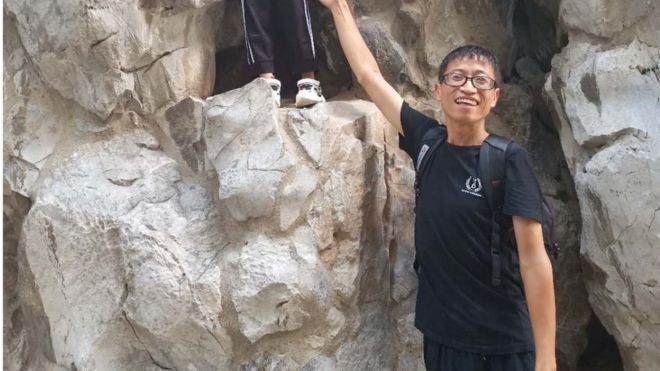 Image copyright LI YAN
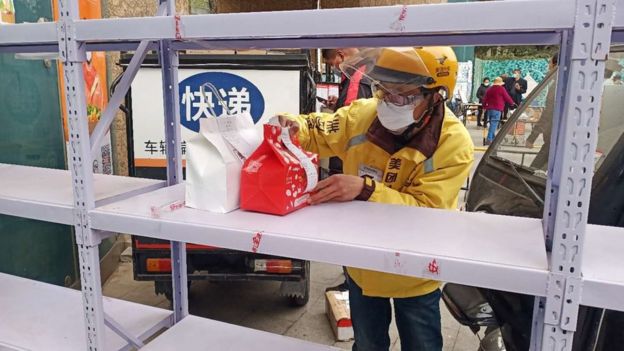 Image copyright LI YAN
 Image copyright LI YAN
 Image copyright LI YAN
 CHINDIA ALERT: You'll be living in their world, very soon