26/04/2020
- City at centre of outbreak finally able to declare itself clear of disease after months in lockdown and thousands of deaths
- Risk of infection remains, however, with some patients testing positive for coronavirus that causes disease without showing symptoms
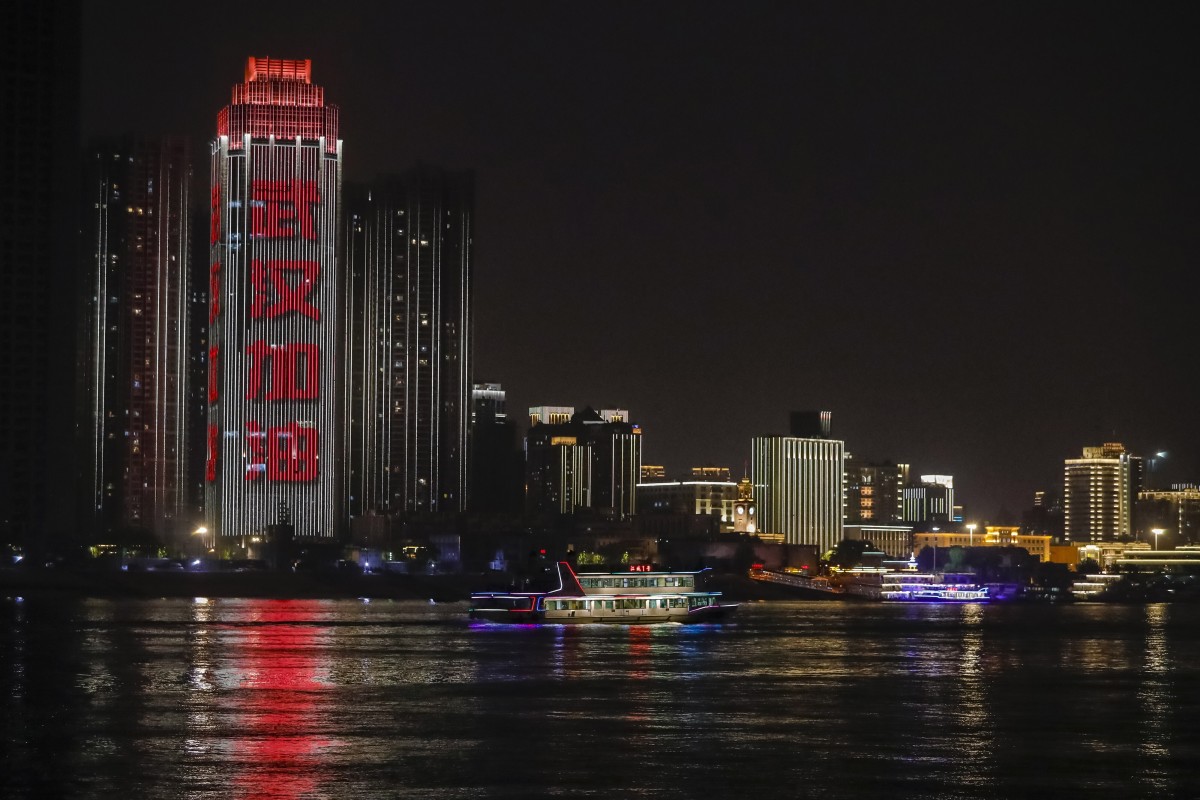
Ferries and other public transport services resumed in Wuhan last week. Photo: Xinhua
The city of Wuhan, the initial epicentre of the coronavirus pandemic, no longer has any Covid-19 patients in hospital after the last 12 were discharged on Sunday.
Their release ended a four-month nightmare for the city, where the disease was first detected in December. The number of patients being treated for Covid-19, the disease caused by a new coronavirus, peaked on February 18 at 38,020 – nearly 10,000 of whom were in severe or critical condition.
“With the joint efforts of Wuhan and the national medical aid given to Hubei province, all cases of Covid-19 in Wuhan were cleared as of April 26,” Mi Feng, a spokesman for the National Health Commission said on Sunday afternoon.
The announcement came only one day after the city discharged the last patient who had been in a severe condition. That patient also was the last severe case in Hubei province.
The last patient discharged from Wuhan Chest Hospital, a 77-year-old man surnamed Ding, twice tested negative for Sars-CoV-2, the virus that causes Covid-19, and was released at noon on Sunday.
“I missed my family so much!” Ding told Changjing Daily.
Another unidentified patient exclaimed as he left the hospital: “The air outside is so fresh! The weather is so good today!”
Wuhan faced a long journey to bring its patient count down to zero.
The city of 11 million, the capital of Hubei province and a transport hub for central China, was put under a strict lockdown on January 23 that barred anyone from entering or exiting the city without official approval for 76 days until it was officially lifted on April 8.
Coronavirus: Wuhan, Los Angeles officials discuss getting back to work after lockdown
22 Apr 2020
Residents were ordered to stay in their apartments as the city stopped public transport and banned private cars from city streets. As the epidemic worsened, more than 42,000 medical staff from across the country were sent to the city and to Hubei province to help ease the burden on the local health care system.
Wuhan was the hardest hit city in China, accounting for 50,333 of the 82,827 locally transmitted Covid-19 cases recorded in China. More than 4,600 died in the country from the disease.
On March 13, the city reported for the first time that there were no new suspected cases of the infection, and five days later there were no confirmed cases.
The number of discharged patients bottomed out at 39.1 per cent at the end of February, gradually climbing to 92.2 per cent by last Thursday.
“Having the patients in the hospital cleared on April 26 marks a major achievement for the city’s Covid-19 treatment,” the Wuhan Health Commission said in a statement.
However, having no severe cases in hospital does not mean all the discharged patients will require no further treatment as they may still need further care.
“Clearing all the severe cases marks a decisive victory for the battle to safeguard Wuhan,” health minister Ma Xiaowei told state broadcaster China Central Television on Saturday.
“Some patients who have other conditions are being treated in specialised hospitals. It has been properly arranged.”
Coronavirus: Chinese writer hit by nationalist backlash over diary about Wuhan lockdown
Ten patients aged between 42 and 85 who have been declared coronavirus-free are still in intensive care at the city’s Tongji Hospital where they are being treated for kidney problems and other complications arising from Covid-19. Some still need ventilators to help them breathe.
These 10 patients are under 24-hour care, with 190 nurses on four-hour rotations. There are other patients in a similar condition in two other hospitals in Wuhan, according to the Hubei Broadcasting and Television Network.
However, the discharge of the last batch of Covid-19 patients does not mean that the risk of infection is gone.
The city reported 20 new cases of people testing positive for Sars-CoV-2, the official name for the coronavirus that causes the disease, but who do not yet show symptoms.
There are 535 such carriers under medical observation. Past data shows some of these asymptomatic carriers will develop symptoms, and so will be counted as Covid-19 patients under China’s diagnosis and treatment plan.
China’s coronavirus infection curve has flattened out with about 694 imported cases of Covid-19 on top of about 800 locally transmitted ones now under treatment.
The national health commission spokesman warned that people still need to be on high alert as the virus is continuing to spread around the globe, with no sign yet of a slowdown.
“[We] must not drop our guard and loosen up. [We] must discover cases in time and deal with them quickly,” Mi said, citing the continued pressure from cases imported by people returning from overseas.
“The next step will be to implement the requirements of the central government and continue to guard against imported cases and a rebound of domestic transmitted cases.”
Source: SCMP
Posted in 10, 10,000, 12, 13, 18, 190, 2020, 22, 23, 24-hour, 26th, 76, 8, 800, able, across the country, after, afternoon, against, air, all cases, announcement, another, Anyone, apartments, approval, April, around the globe, arranged, asymptomatic, banned, barred, bottomed out, breathe, burden, capital, care, carriers, causes, Central China, Central government, centre, Changjing Daily, China Central Television, City, city streets, clear, climbing, complications, condition, conditions, confirmed cases, continuing, coronavirus, Coronavirus pandemic, Country, COVID-19, COVID-19 cases, critical, curve, days, deaths, December, declared, detected, develop, diagnosis and treatment plan, died, discharged, discover, discuss, Disease, domestic, drop, ease, end, ended, entering, epicentre, epidemic, exclaimed, exiting, Family, February, ferries, finally, first time, five days, flattened, four-hour, four-month, free, fresh, from, getting back, given, good, gradually, high alert, Hospital, hospitals, However, Hubei Broadcasting and Television Network, hubei province, implement, imported cases, infection, initial, intensive care, itself, January, joint efforts, kidney problems, last, last week, later, leave, left, lifted, local health care system, locally transmitted, lockdown, longer, loosen up, Los Angeles, March, medical observation, medical staff, million, missed, months, more than, National Health Commission, national medical aid, nearly, negative, new coronavirus, nightmare, no sign, noon, number, nurses, Official, officially, officials, one day, or, ordered, other, our guard, outbreak, outside, overseas, Past data, patients, peaked, People, positive, pressure, private cars, public transport, public transport services, put under, quickly, rebound, recorded, release, released, remains, requirements, residents, resumed, returning, Risk, rotations, Saturday, sent, severe, showing, slowdown, some, specialised, spokesman, spread, statement, stay, stopped, strict lockdown, struggle, Sunday, suspected cases, symptoms, testing, The National Health Commission, their, Thousands, Thursday, to help, to work, Today, Tongji Hospital, transmitted cases, transport hub, treated, twice, Uncategorized, unidentified, ventilators, warned, weather, whom, without, worsened, Wuhan, Wuhan Chest Hospital, Wuhan Health Commission, yet |
Leave a Comment »
31/03/2020
BEIJING, March 31 (Xinhua) — Chinese health authority said Tuesday that no new domestically transmitted cases of the novel coronavirus disease (COVID-19) were reported on the Chinese mainland on Monday.
The National Health Commission received reports of 48 new confirmed cases on the mainland on Monday, all of which were imported.
By the end of Monday, 771 imported cases had been reported, said the commission.
Also on Monday, one death which was in Hubei Province, and 44 new suspected cases, all imported ones, were reported on the mainland.
On Monday, 282 people were discharged from hospitals after recovery, while the number of severe cases decreased by 105 to 528.
The overall confirmed cases on the mainland had reached 81,518 by Monday, including 2,161 patients who were still being treated, 76,052 patients who had been discharged after recovery, and 3,305 people who died of the disease.
The commission said that 183 people were still suspected of being infected with the virus, adding that 19,853 close contacts were still under medical observation. On Monday, 1,199 people were discharged from medical observation.
By Monday, 682 confirmed cases including four deaths had been reported in the Hong Kong Special Administrative Region (SAR), 39 confirmed cases in the Macao SAR, and 306 in Taiwan including five deaths.
A total of 124 patients in Hong Kong, 10 in Macao and 39 in Taiwan had been discharged from hospitals after recovery.
Source: Xinhua
Posted in Chinese health authority, Chinese mainland, COVID-19 cases, discharged, domestic, Hong Kong, hospitals, hubei province, Macao, National Health Commission, recovery, reports, Taiwan, Uncategorized, zero increase |
Leave a Comment »
02/03/2020
WUHAN, March 1 (Xinhua) — The temporary hospital with the most beds in Wuhan, the epicenter of the novel coronavirus outbreak in central China’s Hubei Province, has discharged a total of over 1,000 people as of Sunday, according to local authorities.
The Jianghan temporary hospital, converted from Wuhan International Conference and Exhibition Center, started receiving patients from Feb. 5. It is equipped with 1,564 beds and over 1,100 staff, according to the provincial epidemic prevention and control headquarters.
The hospital has received a total of 1,830 patients, the most in temporary hospitals in Wuhan, by the end of Saturday, and a total of 1,072 patients have been discharged from the hospital as of Sunday, the headquarters said.
As of Friday, Wuhan has over 5,000 spare beds in its 16 temporary hospitals, which were converted from gyms, exhibition centers and other facilities to cope with a shortage of beds amid the coronavirus outbreak.
Source: Xinhua
Posted in discharged, epicenter, exhibition centers, gyms, Hospital, hubei province, Jianghan temporary hospital, largest, novel coronavirus outbreak, Over 1,000, patients, temporary, Uncategorized, Wuhan, Wuhan International Conference and Exhibition Center, Wuhan's |
Leave a Comment »
14/12/2019
NEW DELHI (Reuters) – Violent clashes erupted in Delhi between police and hundreds of university students on Friday over the enactment of a new citizenship law that critics say undermines India’s secular foundations.
The unrest has already led Japanese Prime Minister Shinzo Abe to cancel a planned visit to India from Sunday.
The new law offers a way to Indian citizenship for six minority religious groups from neighbouring Bangladesh, Pakistan and Afghanistan including Hindus and Christians, but not Muslims.
Police fired tear gas and used baton charges to disperse scores of students demonstrating at Jamia Millia Islamia university in the heart of Delhi over the law.
Protesters attacked cars in the capital, and several people were injured and taken to hospital.
Zakir Riyaz, a PhD student in social work, said the new law made a mockery of India’s religious openness.
“It goes against the whole idea of a secular India,” he said, speaking by phone from the Holy Family Hospital in New Delhi where 15 of his fellow students were admitted after being injured in a police baton charge.
Police barricades were knocked down and streets were strewn with shoes and broken bricks. An official at the university dispensary said that more than 100 students had been brought in with injuries but all had been discharged.
Parvez Hashmi, a local politician who went to the protest site to speak to police, said about 50 students had been detained.
Students said it was meant to be a peaceful protest, with them trying to go from Jamia University to Parliament Street to show their opposition to the legislation. But police pushed them back, leading to clashes.
Critics of Prime Minister Narendra Modi’s government say it is promoting a Hindu-first agenda for India and that the citizenship law excluding Muslims showed a deep-seated bias against India’s 170 million Muslims.
Imran Chowdhury, a researcher, said “either give citizenship to refugees of all religions or none at all. The constitution is being tampered with in the name of religion.”
Modi’s ruling Bharatiya Janata Party denies any religious bias but says it is opposed to the appeasement of one community. It says the new law is meant to help minority groups facing persecution in the three nearby Muslim countries.
ABE CANCELS
The United Nations human rights office voiced concern that the new law is “fundamentally discriminatory in nature”, and called for it to be reviewed.
Two people were killed in India’s Assam state on Thursday when police opened fire on mobs torching buildings and attacking railway stations in protest at the new citizenship rules signed into law on Thursday.
Japan’s Prime Minister Shinzo Abe cancelled a trip to Assam for a summit with his Indian counterpart Narendra Modi that had been due to begin on Sunday.
Japan has stepped up infrastructure development work in Assam in recent years, which the two sides were expected to highlight during the summit. Abe had also planned to visit a memorial in the nearby state of Manipur where Japanese soldiers were killed in World War Two.
“With reference to the proposed visit of Japanese PM Abe Shinzo to India, both sides have decided to defer the visit to a mutually convenient date in the near future,” Indian foreign ministry spokesman Raveesh Kumar said in a tweet.
Japan’s Chief Cabinet Secretary Yoshihide Suga said both countries would decide on the appropriate timing for the visit although nothing has been decided yet.
A movement against immigrants from Bangladesh has raged in Assam for decades. Protesters there say granting Indian nationality to more people will further strain the state’s resources and lead to the marginalisation of indigenous communities.
Source: Reuters
Posted in admitted, Afghanistan, agenda, Assam, attacked, Bangladesh, barricades, baton charges, Bharatiya Janata Party, broken bricks, cancel, cancels, capital, cars, Christians, citizenship, citizenship law, clashes, Critics, Delhi, demonstrating, discharged, dispensary, disperse, erupt, erupted, excluding Muslims, fired, foundations, Government, heart, Hindu-first, Hindus, Holy Family Hospital, Hospital, India, India’s, injured, injuries, Jamia Millia Islamia university i, Jamia University, Japan, Japanese, Japanese Prime Minister, Japanese Prime Minister Shinzo Abe, Japanese soldiers, Law, legislation, Manipur, minority groups, minority religious groups, mockery, Muslims, new, New Delhi, Openness, opposition, Pakistan, Parliament Street, People, planned visit, PM, Police, Prime minister, Prime Minister Narendra Modi’s, Prime Minister Shinzo Abe, promoting, protesters, religious, religious bias, secular, shoes, Social work, streets, strewn, students, tear gas, Uncategorized, undermines, United Nations human rights office, university students, unrest, used, violent clashes, visit, World War Two |
Leave a Comment »





 CHINDIA ALERT: You'll be living in their world, very soon