Archive for ‘dogs’

02/04/2020

Shenzhen becomes first Chinese city to ban eating cats and dogs

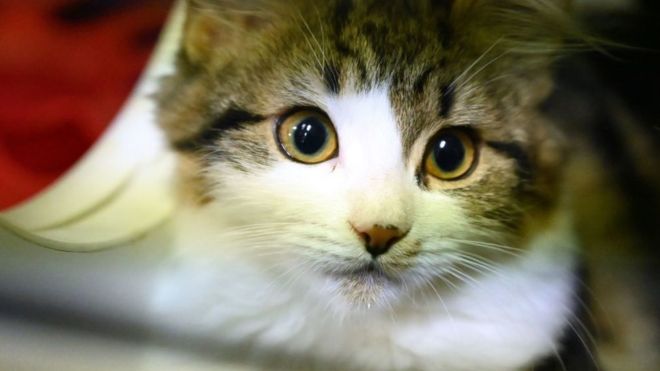
A cat waiting to be adopted looks out of its cage at the Royal Society for the Prevention of Cruelty to Animals (RSPCA)Image copyright GETTY IMAGES
Image caption Most Chinese people don’t actually consume dogs and cats and never plan to

Shenzhen has become the first Chinese city to ban the sale and consumption of dog and cat meat.

It comes after the coronavirus outbreak was linked to wildlife meat, prompting Chinese authorities to ban the trade and consumption of wild animals.

Shenzhen went a step further, extending the ban to dogs and cats. The new law will come into force on 1 May.

Thirty million dogs a year are killed across Asia for meat, says Humane Society International (HSI).

However, the practice of eating dog meat in China is not that common – the majority of Chinese people have never done so and say don’t want to.

“Dogs and cats as pets have established a much closer relationship with humans than all other animals, and banning the consumption of dogs and cats and other pets is a common practice in developed countries and in Hong Kong and Taiwan,” the Shenzhen city government said, according to a Reuters report.

“This ban also responds to the demand and spirit of human civilization.”

Animal advocacy organisation HSI praised the move.

“This really could be a watershed moment in efforts to end this brutal trade that kills an estimated 10 million dogs and 4 million cats in China every year,” said Dr Peter Li, China policy specialist for HSI.

However, at the same time as this ruling, China approved the use of bear bile to treat coronavirus patients.

Bear bile – a digestive fluid drained from living captive bears – has long been used in traditional Chinese medicine.

The active ingredient, ursodeoxycholic acid, is used to dissolve gallstones and treat liver disease. But there is no proof that it is effective against the coronavirus and the process is painful and distressing for the animals

Brian Daly, a spokesman for the Animals Asia Foundation, told AFP: “We shouldn’t be relying on wildlife products like bear bile as the solution to combat a deadly virus that appears to have originated from wildlife.”

Banner image reading 'more about coronavirus'
Banner

A wildlife market

In February, Chinese authorities banned the trade and consumption of wild animals.

The move came after it emerged that a market in Wuhan selling wild animals and wildlife meat could have been the starting point for the outbreak of the new coronavirus, providing the means for the virus to travel from animals to humans.

News of this led the Chinese government to crack down strongly on the trade and on the markets that sold such products.

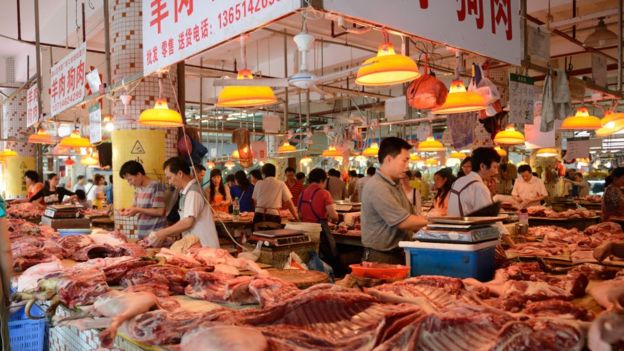
Covered market in ShenzhenImage copyright GETTY IMAGES
Image caption File photo of a wet market in China

There are now close to one million confirmed cases of the virus worldwide, and more than 47,000 deaths, according to a Johns Hopkins University tally.

In China alone, there are 81,589 confirmed cases and 3,318 deaths, said the National Health Commission.

Scientists and researchers are still no closer to finding out what the source of the virus is and how it could have spread to humans.

Source: The BBC

23/12/2019

Tesco Christmas card factory in China denies ‘forced labour’

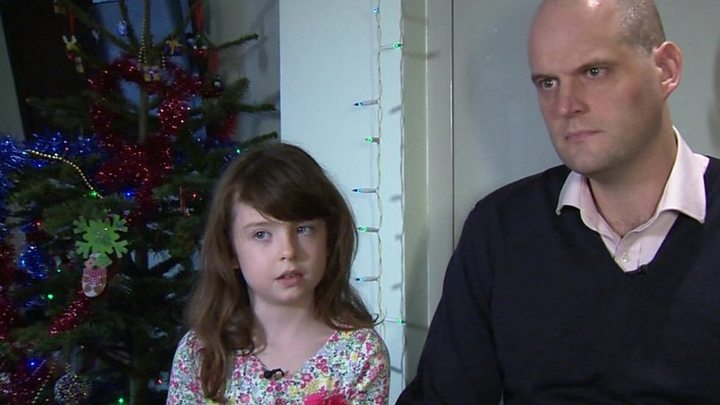
The card opened by Florence Widdicombe
Image caption The pack of cards cost £1.50 from Tesco

A factory in China has denied it used forced labour after a six-year-old girl found a message from workers inside a Tesco charity Christmas card.

The card supplier, Zhejiang Yunguang Printing, told China’s Global Times it had “never done such a thing”.

Tesco halted production at the factory on Sunday over the message, allegedly written by prisoners claiming they were “forced to work against our will”.

The Chinese foreign ministry said the allegation was “a farce”.

Speaking to the nationalist newspaper Global Times on Monday, a spokesman for the card supplier said: “We only became aware of this when some foreign media contacted us. We have never done such a thing.

“Why did they include our company’s name?”

The message – first reported by the Sunday Times – was found by Florence Widdicombe, who was writing cards to her school friends. She found that one of them – featuring a kitten with a Santa hat – had already been written in.

In block capitals, it said: “We are foreign prisoners in Shanghai Qingpu prison China. Forced to work against our will. Please help us and notify human rights organisation.”

The message in the card asked whoever found the message to contact Peter Humphrey, a British journalist who was himself imprisoned there four years ago.

Chinese foreign ministry spokesman Geng Shuang told reporters on Monday the allegation was “a farce” created by Mr Humphrey.

“Shanghai’s Qingpu prison has no such foreign prisoners undergoing forced labour,” Mr Shuang said.

Zhejiang Yunguang Printing’s factory manager, Shu Yunjia, told the BBC it had not outsourced any of its work to the Qingpu prison.

Media caption Florence Widdicombe was writing the cards last Sunday when she discovered the message

Florence, from Tooting in south London, said she was writing her “sixth or eighth card” when she saw “somebody had already written in it”.

“It made me feel shocked,” she said, adding that when it was explained to her what the message meant she felt “sad”.

Tesco added that it would de-list Zhejiang Yunguang if it was found to have used prison labour.

A Tesco spokeswoman said: “We were shocked by these allegations and immediately halted production at the factory where these cards are produced and launched an investigation.”

The supermarket said it has a “comprehensive auditing system” to ensure suppliers are not exploiting forced labour.

The factory in question was checked only last month and no evidence of it breaking the ban on prison labour was found, it said.

Sales of charity Christmas cards at the company’s supermarkets raise £300,000 a year for the British Heart Foundation, Cancer Research UK and Diabetes UK.

Tesco has not received any other complaints from customers about messages inside Christmas cards.

‘Very bleak life’

The message in the card urged the recipient to contact Peter Humphrey, who was formerly imprisoned at Qingpu on what he described as “bogus charges that were never heard in court”.

After the Widdicombe family sent him a message via Linkedin, Mr Humphrey said he then contacted ex-prisoners who confirmed inmates had been forced to work.

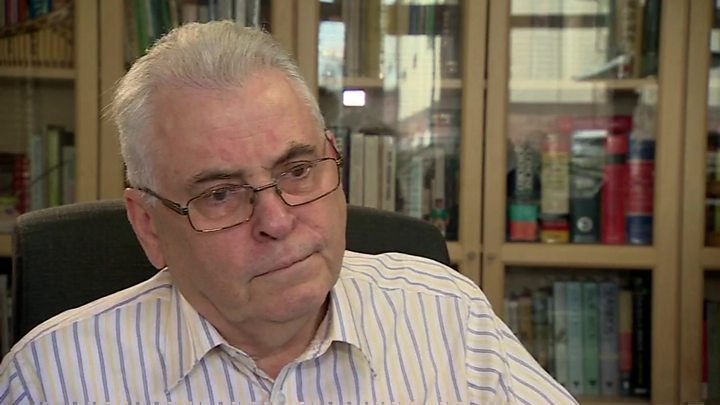
Media caption Peter Humphrey: “I think I know who it was but I will never disclose the name”

Mr Humphrey told the BBC that the cell block of foreign prisoners has about 250 people in it, who are living a “very bleak daily life” with 12 prisoners per cell.

He added that when he was in there, manufacturing labour work was voluntary – to earn money to buy soap or toothpaste – but that work has now become compulsory.

Mr Humphrey told the BBC: “I spent two years in captivity in Shanghai between 2013 and 2015 and my final nine months of captivity was in this very prison in this very cell block where this message has come from.

“So this was written by some of my cellmates from that period who are still there serving sentences.

“I’m pretty sure this was written as a collective message. Obviously one single hand produced this capital letters’ handwriting and I think I know who it was, but I will never disclose that name.”

It is not the first time that prisoners in China have reportedly smuggled out messages in products they have been forced to make for Western markets.

In 2012, Julie Keith from Portland, Oregon, discovered an account of torture and persecution by a prisoner who said he was forced to manufacture the Halloween decorations she had purchased.

And in 2014, Karen Wisinska from Co Fermanagh in Northern Ireland, found a note on a pair of Primark trousers reading: “Our job inside the prison is to produce fashion clothes for export. We work 15 hours per day and the food we eat wouldn’t even be given to dogs or pigs.”

Under the UN’s guidance for human rights and prisons, prisoners “should not be subordinated merely to making a profit either for the prison authorities or for a private contractor”.

The standard minimum rules for the treatment of prisoners state: “Prison labour must not be of an afflictive nature.”


Source: The BBC

06/08/2019

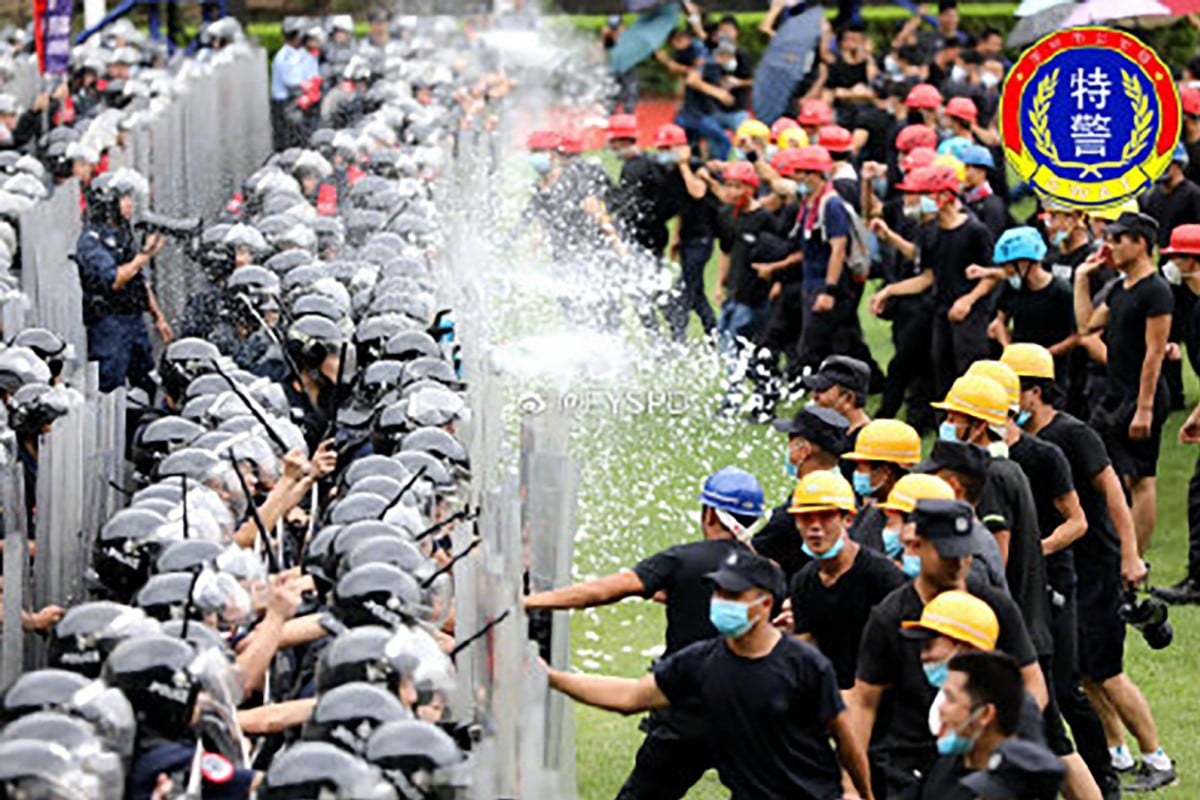
Chinese police mass 12,000 anti-riot officers in Shenzhen for drill

  • Security forces shown tackling ‘demonstrators’ wearing black shirts
  • ‘Anti-mob’ tactics prepare forces for the 70th anniversary of the People’s Republic
Shenzhen police broadcast live footage of a security exercise involving 12,000 officers rehearsing anti-riot drills. Photo: Weibo
More than 12,000 police officers assembled in Shenzhen in the southern Chinese province of Guangdong on Tuesday for a drill that included anti-riot measures similar to those seen on the streets of Hong Kong.
The drill was part of security preparations for the 70th anniversary of the People’s Republic of China on October 1, Shenzhen police said on the force’s Weibo newsfeed.

“A drill will be held to increase troop morale, practise and prepare for the security of celebrations, [and] maintain national political security and social stability,” police said.

China mobilises 190,000 police officers to prepare for 70th anniversary celebrations

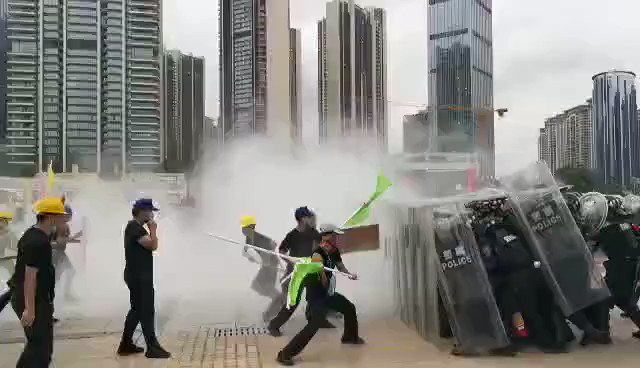
In live videos of the police drills shown on the Yizhibo network, officers in body armour, helmets and shields confronted groups of people in black shirts and red or yellow construction safety helmets – similar to those worn by Hong Kong protesters – who were holding flags, banners, batons and wooden boards.

“The practice is complete with mature anti-mob tactics. The police forces can present an anti-mob formation, which is flexible, suitable for different situations, with accurate aim and effective control,” a narrator said during the live broadcast.

As the drill escalated and more “rioters” were deployed, police fired tear gas and smoke covered the training ground.

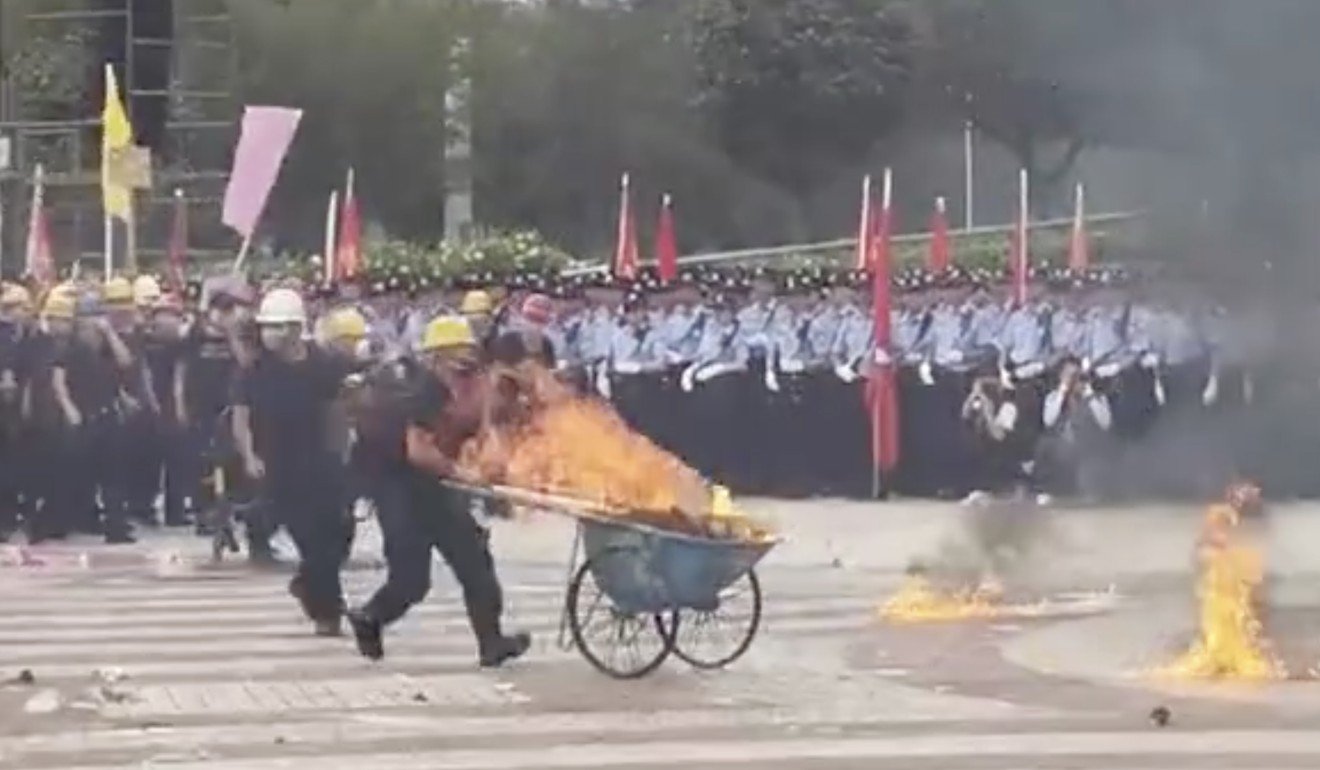
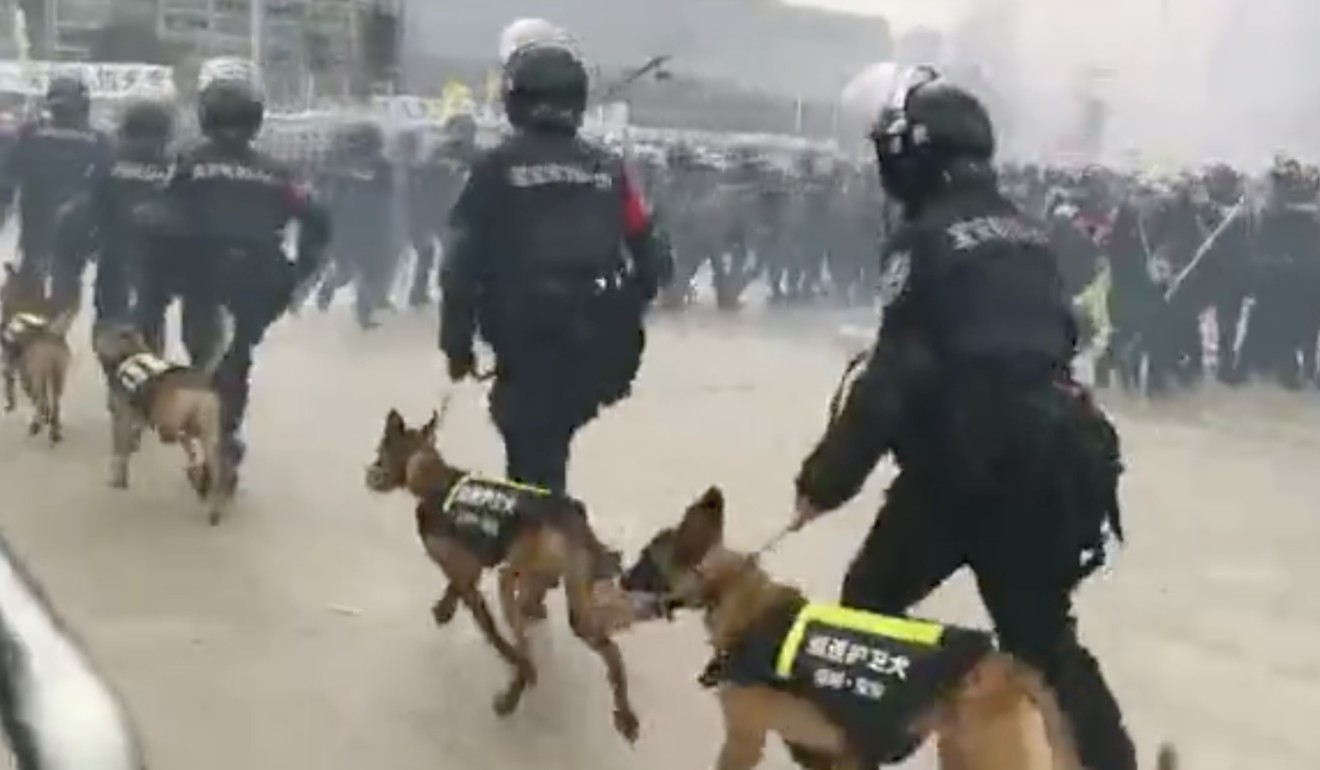
A few minutes later, the rioters fired home-made gas bombs then set bogies alight and drove them at the police lines. The officers changed formations and pressed the rioters, making arrests. Police handlers and their dogs were also on the scene.

A blazing bogie is driven towards police lines during Shenzhen police’s anti-riot exercise. Photo: Weibo

Other drills included anti-smuggling and search-and-rescue exercises involving personnel from the People’s Liberation Army.

The drill was presented as preparation for the 70th anniversary celebrations but it came amid continued violence in the streets of Hong Kong and two incidents of the Chinese national flag being thrown into Victoria Harbour.

Hong Kong has been engulfed in two months of turmoil stemming from opposition to the now-suspended extradition bill.

Police handlers and their dogs were deployed against people dressed like Hong Kong demonstrators. Photo: Weibo

“Is this hinting at Hong Kong?” a commenter on the Shenzhen police Weibo thread asked.

“We are doing drills today, and they can enter into real practice in Hong Kong in the future. We can send thousands of anti-mob squads over and strike hard at the radical traitors, those Hong Kong independence supporters,” another user said.

Since protests escalated in Hong Kong, Beijing has reiterated its “unflagging support” for embattled Hong Kong Chief Executive Carrie Lam Cheng Yuet-ngor and her administration to take lawful action to restore order, and warned that the city was entering “a most dangerous phase” with violence on the streets.

Source: SCMP

07/07/2019

In drought-hit Delhi, the haves get limitless water, the poor fight for every drop

NEW DELHI (Reuters) – In this teeming capital city of more than 20 million people, a worsening drought is amplifying the vast inequality between India’s rich and poor.

The politicians, civil servants and corporate lobbyists who live in substantial houses and apartments in central Delhi pay very little to get limitless supplies of piped water – whether for their bathrooms, kitchens or to wash the car, dog, or spray a manicured lawn. They can do all that for as little as $10-$15 a month.

But step into one of the slum areas in the inner city, or a giant disorganized housing estate on the outskirts and there is a daily struggle to get and pay for very limited supplies of water, which is delivered by tanker rather than pipe. And the price is soaring as supplies are fast depleting.

India’s water crisis is far from even-handed – the elite in Delhi and most other parts of the country remain unaffected while the poor scramble for supplies every day. Prime Minister Narendra Modi’s official residence and those of his cabinet are in central Delhi, as are those of most lawmakers.

That may help to explain why it took until this week for Modi to call for a massive water conservation program, the first big initiative by the government despite years of warnings about dry reservoirs and depleted water tables, policy makers and water industry experts said.

Telecom sales representative Amar Nath Shukla, who lives in a giant unauthorized housing sprawl on the south side of Delhi, says he is now paying 700 rupees ($10) for a small tanker to bring him, his wife and three school-age children 2,000 liters of water, their weekly quota.

A year ago, Shukla would buy two of the rusty, oval-shaped tankers a week for 500 rupees each but he cut back to one as the price climbed 40 percent.

“Why should a densely populated settlement get so little of water and why should the sparsely-populated central district of New Delhi receive so much of extra supply?” asked Shukla.
More than 30 other residents Reuters spoke to in his Sangam Vihar district also complained about the quality of water.
“Until last year I was drinking the water sold by a few local suppliers but then I fell ill and the doctor asked me to buy water bottles made by only big, reputed companies,” said Dilip Kumar Kamath, 46, waving a prescription which listed abdominal pain and stomach infection as his ailments.

WATER GANGS

Delhi’s main government district and the army cantonment areas get about 375 liters of water per person per day but residents of Sangam Vihar on average receive only 40 liters for each resident per day. The water comes from boreholes and tankers under the jurisdiction of the Delhi water board, run by the city government.

But residents say some of the boreholes have been taken over by private operators associated with criminal gangs and local politicians. These gangs also have a major role in providing private tankers, which are all illegal, making people liable to price gouging.

And all this when temperatures, and demand, are soaring. Delhi was the second driest it has been in 26 years in June, and recorded its highest ever temperature for the month at 48 degrees Celsius on June 10.

Monsoon rains reached the capital on Thursday, more than a week later than usual, with only a light drizzle.

Most private tanker operators in Delhi either illegally pump out fast depleting ground water or steal the water from government supplies, various government studies show.

In Delhi, nearly half of the supply from the Delhi water board either gets stolen with the connivance of lowly officials or simply seeps out via leaky pipes, several studies show.

The board’s 1,033 tanker fleet is well short of the city’s requirements. Hundreds of private water tankers are operating this summer, though there are no official numbers.

WATER WARS

The water scarcity is even more acute in the Bhalswa Dairy locality of northwestern Delhi, more than 30 km (20 miles) from Sangam Vihar. The water from a couple of community taps and hand pumps are too toxic to use, forcing people to queue up for a government tanker that comes just once a day.

As a result, fights frequently break out when people, mostly can-carrying women and children, sprint towards the arriving tanker. Last year, at least three people were killed in scuffles that broke out over water in Delhi.

“Fights over water supplies have gone up since May and these fights now constitute almost 50% of our daily complaints,” said a police official at the Bhalswa Dairy Police station, who declined to be named.

Some tanker operators have also started selling bottled water, underlining concerns over the quality of water in their tanks and how costs for ordinary people can mount, said the police official.

Nearly 200,000 people living in the Bhalswa area are vulnerable to liver-related disease such as jaundice and hepatitis, said Kamlesh Bharti, president of non-governmental organization Kamakhya Lok Sewa Samiti, which works in the areas of health and education.

The Bhalswa area is next to a big waste landfill, which has contaminated both surface and groundwater in the area.

According to UK-based charity WaterAid, about 163 million people in India, roughly 12 percent of the population, do not have access to clean water close to their homes, the most of any country.

Almost all middle-class residents in the city have either water purifiers at home or they buy big cans of water from Bisleri, India’s top bottled water brand, Coca-Cola Co (KO.N) or PepsiCo Inc (PEP.O).

Bottled water suppliers reported a nearly three-fold jump in sales in India between 2012 and 2017, according to market research company Euromonitor.

India’s dependence on groundwater and the country’s failure to replenish aquifers have exacerbated the crisis, said V.K. Madhavan chief executive of WaterAid.

Both individual households and myriad industries mostly use fresh water and the reuse and recycling of water “is almost an alien concept” in the country, Madhavan said.

Still, Delhi authorities said the plan to build three dams in the upper reaches of the Yamuna river, which passes through the city, would help Delhi overcome the shortage.

It will take 3-4 years to construct them, said S. K. Haldar, a top official of the Central Water Commission.

But issues such as land acquisition, resettlement and environmental clearances could make such an aggressive timetable untenable, Madhavan said.

Source: Reuters

21/06/2019

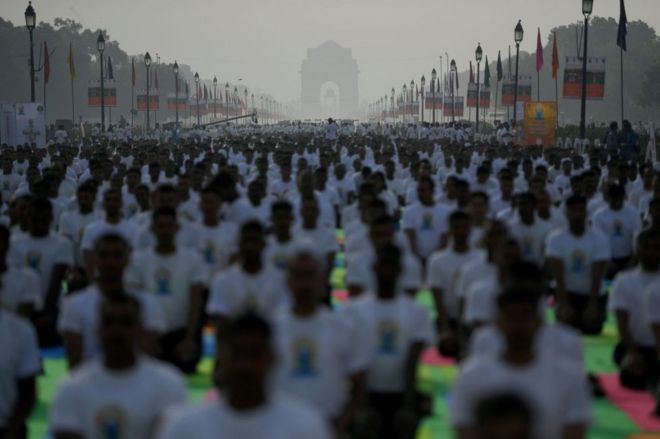
Yoga Day: Thousands of Indians celebrate the day

Indian yoga practitioners participate in a mass yoga session on International Yoga Day in New Delhi on June 21, 2019.Image copyright GETTY IMAGES

Indians across the country celebrated the fifth international yoga day on Friday.

Temperatures are soaring in many cities, including the capital Delhi, but that didn’t stop people from gathering outdoors and stretching and bending their way through at least an hour of yoga.

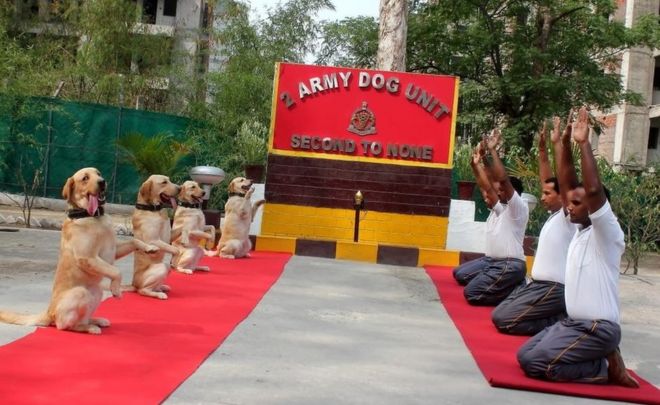
And everyone joined in – even the dog unit of the Indian army!

Dogs doing yoga with Indian armyImage copyright @SPOKESPERSONMOD/TWITTER

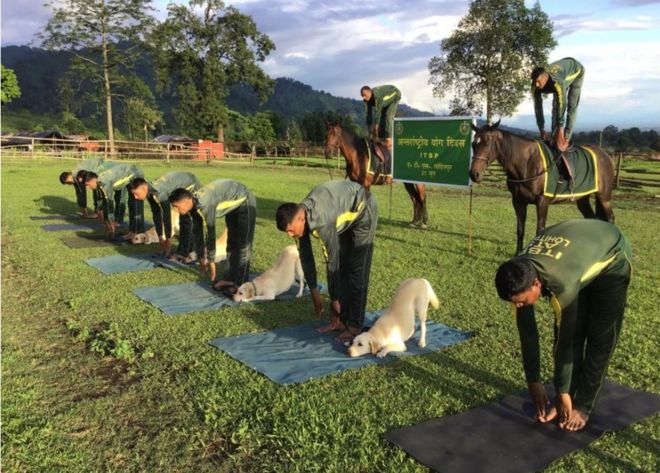
The Indo-Tibetan border police – and their dogs and horses – were not about to be outdone. They practised what they called yoga, doga and hoga.

And they were luckier than many of their counterparts – they got to practise their yoga in cooler climes, along India’s scenic Himalayan border.

Dogs and horses doing yoga alongside Indo-Tibetan border policeImage copyrightI TBPOFFICIAL

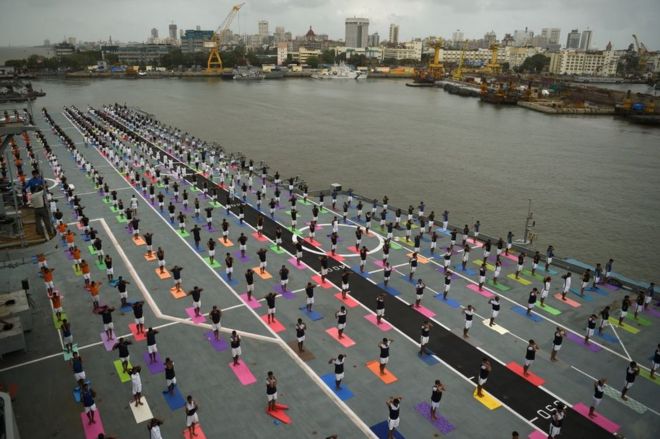
Among those who did yoga in more hostile climates were the armed forces on board the naval aircraft carrier INS Viraat which is docked off the coastline of sweltering Mumbai city.

Indian Armed Forces personnel take part in a yoga sesssion to mark International Yoga Day on the Indian Navy aircraft carrier INS Viraat anchored at the Mumbai harbour on June 21, 2017Image copyright GETTY IMAGES

In Gujarat, the soldiers got a little more creative with their yoga.

Source: The BBC

Law of Unintended Consequences

continuously updated blog about China & India

ChiaHou's Book Reviews

continuously updated blog about China & India

What's wrong with the world; and its economy

continuously updated blog about China & India