Archive for ‘domestic flights’

25/03/2020

Coronavirus: Wuhan to ease lockdown as world battles pandemic

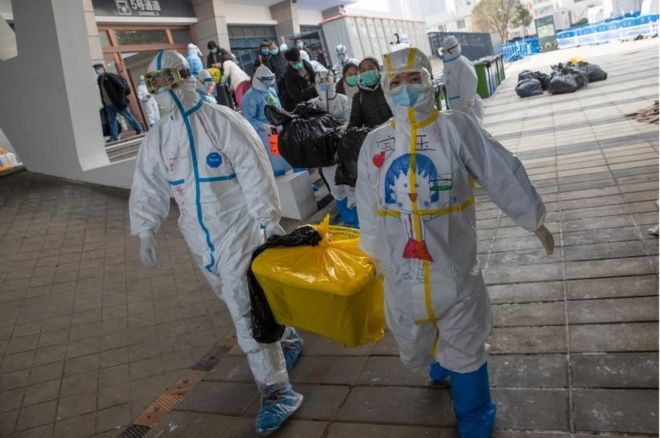
Medical staff clean up the empty hospital after all patients were discharged at Wuchang Fangcang hospital, a temporary hospital set up at Hongshan gymnasium to treat people infected with the coronavirus and Covin-19 disease, in Wuhan, Hubei Province, China, 10 March 2020 (issued 11 March 2020)Image copyright EPA
Image caption Wuhan has been sealed off since mid-January

The lockdown in Wuhan, the Chinese city where the global coronavirus outbreak began, will be partially lifted on 8 April, officials say.

Travel restrictions in the rest of Hubei province, where Wuhan is located, will be lifted from midnight on Tuesday – for residents who are healthy.

A single new case of the virus was reported in Wuhan on Tuesday following almost a week of no reported new cases.

Countries around the world have gone into lockdown or imposed severe curbs.

The UK is getting to grips with sweeping new measures to tackle the spread of coronavirus, including a ban on public gatherings of more than two people and the immediate closure of shops selling non-essential goods.
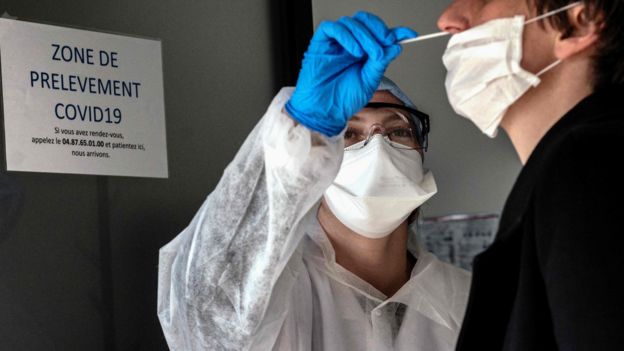
A person is tested for the Covid-19 virus in Villeurbanne, France (23 March 2020)Image copyright AFP
Image caption The WHO has urged the G20 group of nations to boost production of protective equipment

Meanwhile, health experts say Americans must limit their social interactions or the number of infections will overwhelm the health care system in the US.

Spanish soldiers helping to fight the coronavirus pandemic have found elderly patients in retirement homes abandoned and, in some cases, dead in their beds, the defence ministry has said.

An ice rink in Madrid is to be used as a temporary mortuary for Covid-19 victims.

The World Health Organization (WHO) has warned that the pandemic is accelerating, with more than 300,000 cases now confirmed. It is urging countries to adopt rigorous testing and contact-tracing strategies.

Wuhan has been shut off from the rest of the world since the middle of January. But officials now say anyone who has a “green” code on a widely used smartphone health app will be allowed to leave the city from 8 April.

Earlier, the authorities reported a new case of coronavirus in Wuhan, ending a five-day run of no reported new cases in the city.
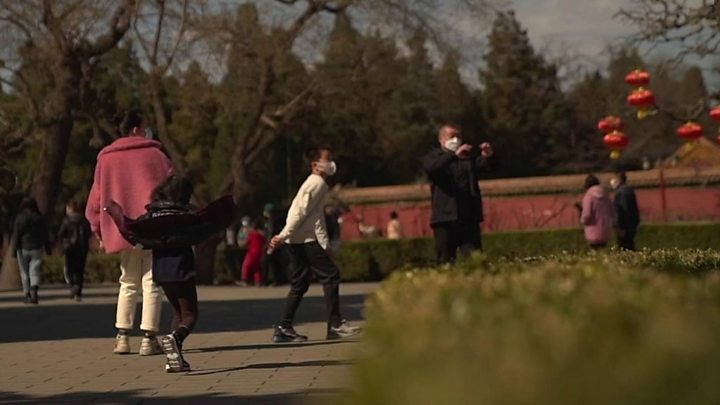
Media caption Coronavirus: People in Beijing begin to head outdoors

It comes after health officials there confirmed that they were not counting cases of people who were positive but had not been admitted to hospital or did not show any symptoms of the disease.

Official government figures say there have been 78 new cases reported on the Chinese mainland in the last 24 hours. All but four of them were caused by infected travellers arriving from abroad.

This so-called “second wave” of imported infections is also affecting countries like South Korea and Singapore, which had been successful in stopping the spread of disease in recent weeks.

South Korea has been seeing a drop in its daily tally of new cases. On Tuesday it reported its lowest number since 29 February.

Presentational grey line

China looks to repair its reputation

By Robin Brant, BBC News, Shanghai

China considers itself to be – very nearly – a “post corona” country.

In the last week we’ve heard Wuhan medics warning the UK and others that they need to do more to protect frontline health workers, citing the mistakes they made early on when some treated patients without wearing proper protective clothing.

But there’s also been reporting in state media of the reported death toll in Italy surpassing that in China. This has been combined with some commentary from prominent media figures that has appeared distasteful, almost triumphalist.

At the same time there is a panic about the threat of a second wave from imported cases – travellers arriving from abroad. This has fuelled the view – right or wrong – that some other countries aren’t taking the threat seriously because they aren’t doing what China did. (Almost all the cases in Beijing that have been made public are of Chinese nationals returning home).

Meanwhile, well away from senior leaders, there are some high-profile diplomatic figures using international-facing social media to spread theories that the US may have weaponised and dumped the virus in China. Or that Italy had cases that may have been Covid-19 earlier than China. China is sowing seeds of doubt and questioning assumed truths as it looks to repair its reputation.

Presentational grey line
Banner image reading 'more about coronavirus'
Banner

What’s the latest from around Asia?

  • Almost all of India with its 1.3bn people is under lockdown. Buses, trains and other forms of public transport are suspended. On Monday, the authorities said domestic flights would also stopped. The country has reported 485 cases and nine people have died. Prime Minister Narendra Modi will address the nation again this evening.
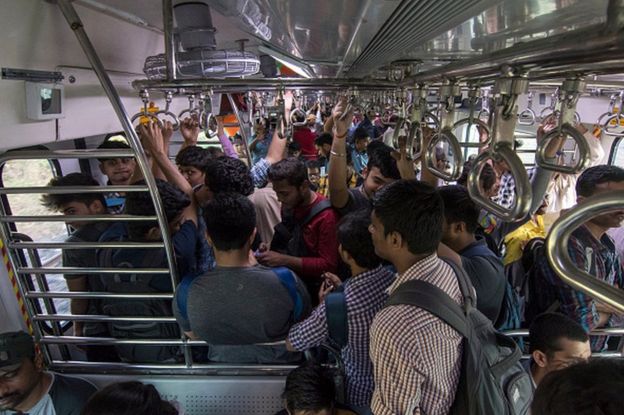
People travel in Central Railway's first air-conditioned EMU local train, on January 30, 2020, in Mumbai, India.Image copyright GETTY IMAGES
Image caption Mumbai’s suburban train network carries eight million passengers a day
  • Neighbouring Pakistan has almost twice as many confirmed cases – 878 as of Monday evening. Sweeping restrictions are in place although the government has stopped short of imposing a nationwide lockdown. However, several provinces have announced them independently. The army is being brought in to help enforce the restrictions.
  • Bangladesh, which has reported 33 cases and three deaths, is also deploying its armed forces to help maintain social distancing and boost Covid-19 preventive measures. The soldiers will also monitor thousands of quarantined expatriate returnees. Across South Asia, there are concerns that the actual number of cases could be much higher than is being reported.
  • Indonesia, which has 49 confirmed Covid-19 deaths – the highest in South-East Asia – has converted an athlete’s village built for the 2018 Asian Games into a makeshift hospital for coronavirus patients. A state of emergency was declared in Jakarta on Monday.
  • In Thailand, a month-long state of emergency which will include curfews and checkpoints will begin on Thursday. The government has been criticised for failing to take strong action so far. Four people have died and nearly 900 tested positive.
  • Talks between the Japanese PM and the International Olympic Committee are expected this evening.
  • The most populous country that was without a case until now – Myanmar – has announced two cases.

Europe’s battle against virus intensifies

UK Prime Minister Boris Johnson announced on Monday night that, with immediate effect, “people will only be allowed to leave their home…for very limited purposes”. They include shopping for basic necessities, taking one form of exercise per day, fulfilling any medical need, or travelling to work if working from home is impossible.
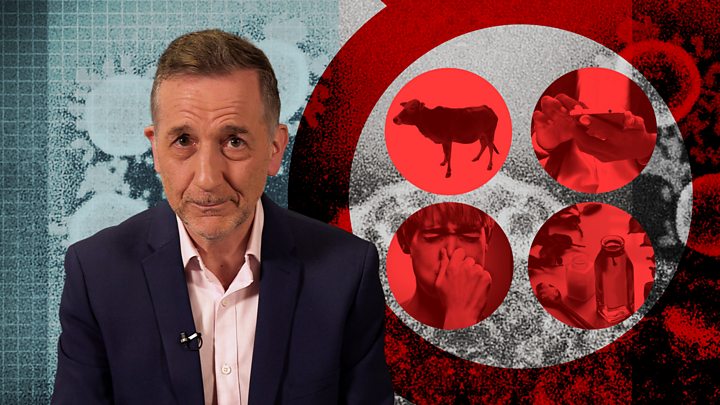
Media caption Reality Check tackles misleading health advice being shared online

The number of people who have died in the UK rose to 335 on Monday.

In Italy, the worst-hit country in the world, the authorities said 602 people with Covid-19 had died in the past 24 hours, bringing the total death toll there to 6,077.

But the daily increase in cases was the smallest since Thursday, raising hope that the stringent restrictions imposed by the government were starting to have an effect.

Spain, however, said on Tuesday that its death toll had risen by 514 to 2,696. Nearly 40,000 are infected, about 5,400 of them healthcare workers.
Source: The BBC

25/03/2020

Coronavirus: India enters ‘total lockdown’ after spike in cases

People panicked after the prime minister said everyone should “forget about” leaving their homes for any reason

India’s Prime Minister Narendra Modi has imposed a nationwide lockdown in an attempt to slow the spread of the coronavirus.

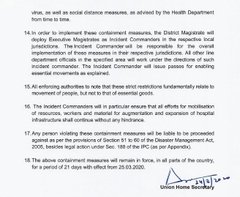
The restrictions came into force at midnight local time (18:30 GMT) and will be enforced for 21 days.

“There will be a total ban on venturing out of your homes,” Mr Modi said in a televised address.

He appealed for people not to panic – but crowds quickly mobbed stores in the capital, Delhi, and other cities.

Correspondents say it is not clear how – or even if – people will now be allowed out to buy food and other essentials.

The new measures follow a sharp increase in cases in recent days. There have been 519 confirmed cases across India and 10 reported deaths.

India – which has a population of 1.3bn – joins a growing list of countries that have imposed similar measures.

Nearly 400,000 people have tested positive for the virus worldwide, and around 17,000 have died.

Banner image reading 'more about coronavirus'
Banner

“The entire country will be in lockdown, total lockdown,” Mr Modi said on Tuesday.

He added: “To save India, to save its every citizen, you, your family… every street, every neighbourhood is being put under lockdown.”

Mr Modi warned that if India does not “handle these 21 days well, then our country… will go backwards by 21 years”.

“This is a curfew,” he said. “We will have to pay the economic cost of this but [it] is the responsibility of everyone.”

Media caption We explain why staying in is a matter of life and death

Mr Modi later warned that panic-buying would only spread the disease. He said the government would ensure supplies.

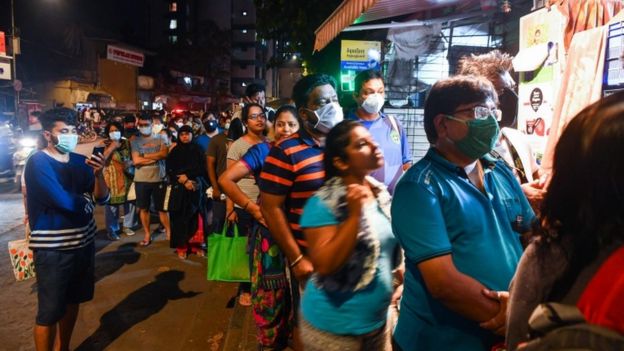
But in Delhi and the financial capital, Mumbai, people fearing shortages quickly thronged shops and pharmacies.

“I have never witnessed such a chaos in my life,” the owner of one store in the Shakarpur district of Delhi said, quoted by the Press Trust of India.

“All our stocks, including rice, flour, bread, biscuits, edible oils, have been sold out.”

Police in the busy city of Ghaziabad, in Uttar Pradesh state, patrolled the streets with megaphones to tell residents to stay indoors.

People line up outside a store in Mumbai on March 24, 2020.Image copyright AFP
Image caption People in Mumbai rushed to stock up on essentials following Mr Modi’s address

Under the new measures, all non-essential businesses will be closed but hospitals and other medical facilities will continue to function as normal. Schools and universities will remain shut and almost all public gatherings will be banned.

Anyone flouting the new rules faces up to two years in prison and heavy fines.

In his address, Prime Minister Modi also:

  • Stressed that the 21-day lockdown was “very necessary to break the chain of coronavirus”
  • Emphasised the seriousness of the situation and said that even developed countries had faced problems in combating it
  • Said that “social distancing was the only way to stop” the virus spreading
  • Announced that nearly $2bn (£1.8bn) would be made available to boost the country’s health infrastructure
  • Called on people not to “spread rumours” and to follow instructions

His announcement came after several Indian states introduced measures of their own, such as travel restrictions and the closure of non-essential services.

India has already issued a ban on international arrivals and grounded domestic flights. The country’s rail network has also suspended most passenger services.

Presentational grey line
Analysis box by Rajini Vaidyanathan, South Asia correspondent

Many parts of India, including cities such as Delhi and Mumbai, are already under tight restrictions. But this move extends those provisions to every corner of the country.

An earlier one-day curfew, which was seen as a trial, was flouted by many.

Mr Modi called on Indians to clap and cheer the emergency services from their balconies on Sunday. But many misunderstood the call and congregated in the streets as they danced and chanted.

“It’s impossible to fathom the cost that India may have to pay if such irresponsible behaviour continues,” Mr Modi warned at the time. “Social distancing is the only option to combat coronavirus.”

The implications of a total lockdown in India are huge, not just economically, but socially.

This is a nation where community is everything. Going to worship at a temple, mosque or church is an essential part of daily life for so many.

This is a seismic cultural shift but – like the rest of the world facing similar restrictions – a necessary one.Presentational grey line

What’s the latest from around Asia?

  • Neighbouring Pakistan has almost twice as many confirmed cases – 878 as of Monday evening. Sweeping restrictions are in place although the government has stopped short of imposing a nationwide lockdown. However, several provinces have announced them independently. The army is being brought in to help enforce the restrictions
  • Bangladesh, which has reported 33 cases and three deaths, is also deploying its armed forces to help maintain social distancing and boost Covid-19 preventive measures. The soldiers will also monitor thousands of quarantined expatriate returnees. Across South Asia, there are concerns that the actual number of cases could be much higher than is being reported.
  • Indonesia, which has 49 confirmed Covid-19 deaths – the highest in South East Asia – has converted an athlete’s village built for the 2018 Asian Games into a makeshift hospital for coronavirus patients. A state of emergency was declared in Jakarta on Monday
  • In Thailand, a month-long state of emergency which will include curfews and checkpoints will begin on Thursday. The government has been criticised for failing to take strong action so far. Four people have died and nearly 900 tested positive
  • The most populous country that was without a case until now – Myanmar – has announced two cases

And what about the rest of the world?

  • Elsewhere, governments are continuing to work to stem the spread of the virus which has now affected more than 190 countries worldwide
  • More than 2.6 billion people are in lockdown now India has introduced its new measures, according to a tally by the AFP news agency
Media caption Reality Check tackles misleading health advice being shared online
  • Europe remains at the epicentre of the pandemic. On Tuesday, the death toll jumped by 514 in a single day in Spain and other European countries also reported sharp increases
  • Italy is the worst affected country in the world in terms of deaths. The virus has killed almost 7,000 people there over the past month
  • The UK, meanwhile, is spending its first day under tight new restrictions. Prime Minister Boris Johnson announced unprecedented measures on Monday and ordered the immediate closure of shops selling non-essential goods
  • And in the US, New York’s governor has said the federal government is not sending enough equipment to combat the crisis. The state has been hit especially hard by the virus
  • The World Health Organization (WHO) has warned that the US has the potential to become the new epicentre of the pandemic
  • In other developments, Japanese Prime Minister Shinzo Abe said the International Olympic Committee has agreed that the 2020 Tokyo Olympics should be postponed by a year
  • Source: The BBC
26/09/2019

Beijing Daxing airport – world’s largest terminal – takes flight

  • Visually spectacular and with the latest technology, the Chinese capital’s second international airport is open for business
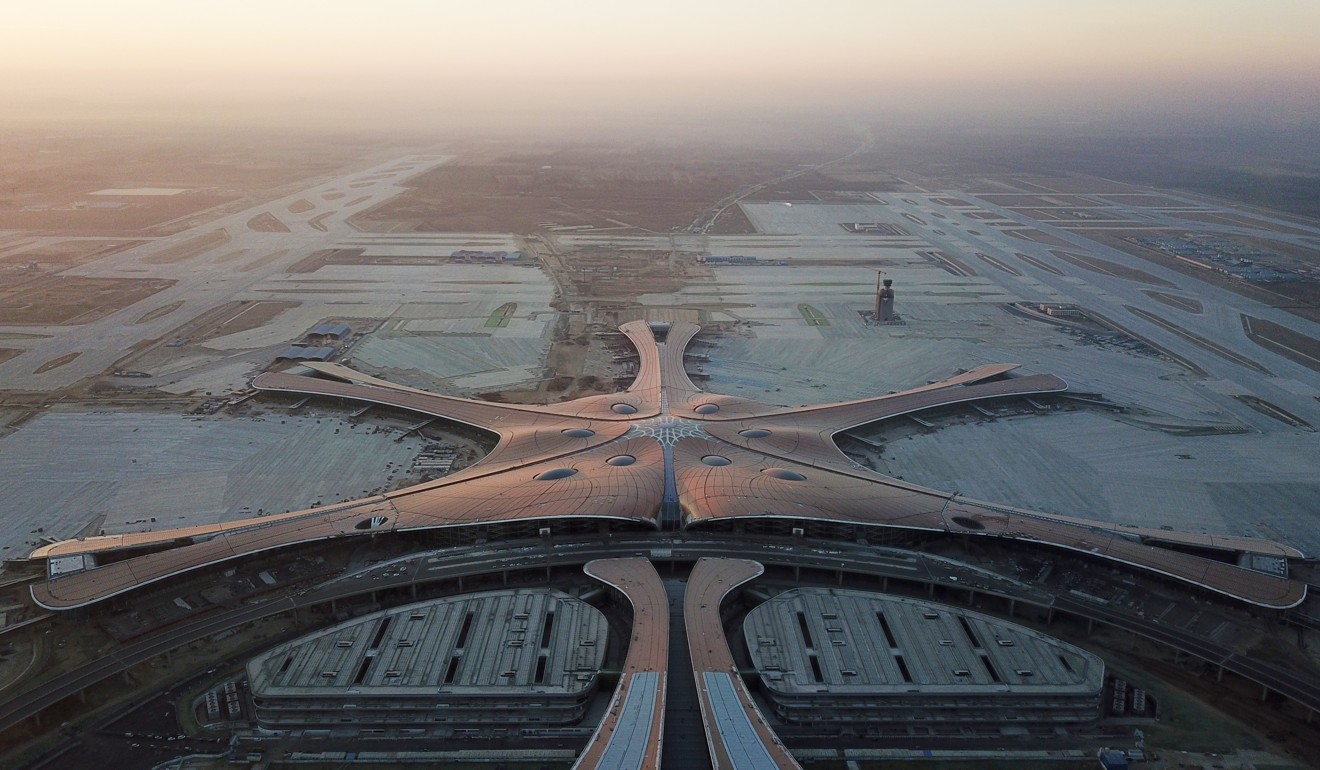
The terminal building at Beijing Daxing International Airport, which has officially opened. Photo: Xinhua

At 4.23pm on Wednesday a China Southern Airlines A380 left Beijing for Guangzhou – on the first commercial flight out of the world’s latest and largest airport terminal at Daxing, five years after construction began on the ambitious project.

The 80 billion yuan (US$11 billion) Beijing Daxing International Airport was officially opened by Chinese President Xi Jinping on Wednesday morning.

China Southern Airlines, the mainland’s largest carrier, has 40 per cent of the flight slots at the new airport. It is one of 16 airlines which will be operating out of Beijing Daxing International Airport, the visually spectacular new facility at the southern end of the Chinese capital.

Six other flights, including China Eastern Airlines for Shanghai and Air China for Chengdu, took off before 5pm in the afternoon. These domestic airlines will have part of their operations moving to Daxing for the upcoming winter-spring season, according to the mainland’s aviation authority. No Hong Kong airlines were listed.

British Airways has announced its whole operation will be moved to Daxing, while some foreign airlines, such as Ethiopian Airlines, Polish Airlines, Malaysia Airlines, Royal Air Maroc and Finnair, will operate at both airports.

Spanning 47 sq km (18 square miles) – almost 50 per cent larger than the city of Macau – Daxing, with its 700,000 square metre (7.5 million sq ft) terminal is a spectacular sight. Its futuristic shape, resembling a giant hexagonal starfish or – as some internet users have dubbed it – an alien base, not only handles more aircraft, it also keeps passengers’ walks

From the centre of the security check to the furthest end gate in each wing is about 600 metres (1,970 feet), or less than an eight-minute walk.

Beijing’s new 7-runway, star-shaped Daxing airport opened by Xi Jinping
According to Xinhua, more than 70 restaurants, tea shops and coffee houses will operate in the airport, along with 36 international brands, including Louis Vuitton, Gucci and Bottega Veneta.

Daxing is designed to take pressure off the overcrowded Beijing Capital International Airport (BCIA) and, by 2021, is expected to handle 45 million passengers a year, rising to 72 million by 2025.

Located at the south of the capital, 46km (28.5 miles) from the central Tiananmen Square, the airport was once frowned upon for its less than optimal location, with its southern end at the border with Hebei province. But it may not be as time-consuming for travellers as originally thought.

The design of the airport means passengers will walk a much shorter distance to the check-in and security check.Hu Haiqing, China Southern Airlines

Hu Haiqing, deputy general manager of China Southern Airlines’ operation control centre, told Global Times that “although Daxing is further away from downtown Beijing than the Capital airport, there are still some advantages, especially for our airline”.
With most of its bases in the south of the country, China Southern Airlines flights to Daxing will be 10 to 15 minutes shorter than to the Capital airport. A further 15 to 20 minutes taxiing time will also be saved, thanks to its position in the new airport.
“The design of the airport also means passengers, once they leave their car or train, will walk a much shorter distance to the check-in and security check,” Hu said.
According to Xinhua, Daxing’s design also makes transit much quicker, with transfers between international and domestic flights up to 90 minutes shorter than from the Capital airport.
The futuristic shape of Daxing airport not only handles more aircraft, it also keeps passengers’ walks to a minimum. Photo: Xinhua

Public transport will be the quickest way to reach the new airport from downtown Beijing – 20 minutes from West Beijing railway station once the Beijing-Xiongan high-speed rail officially opens. The airport express service will also take passengers from Caoqiao station to the airport in 19 minutes.

There is no underground rail service or airport express connecting the Capital airport in the north with Daxing, but passengers can change trains at Caoqiao for downtown Beijing or other stations which connect with BCIA’s airport express service.

Waiting times at the new airport will be greatly reduced by the use of facial recognition technology for self-service check-in and smart security checks, according to Wang Hui, manager of Daxing’s terminal management department.

The technology does away with the need for a paper boarding pass and passengers can check-in, with or without luggage, and go through the security check by themselves.

Beijing is the window for China to go global … Daxing airport makes it possible to open more global routes.China Eastern Airlines pilot

“The airport has more than 400 self-service check-in kiosks, which means more than 80 per cent of check-ins will be self-service. That shortens each passenger’s queuing time to no more than 10 minutes,” Wang told Global Times.
“The smart security check channels are able to handle 260 passengers per hour, 40 per cent faster than using traditional means,” he said.
The opening of Daxing Airport could be a great boost for the mainland – and even the global – aviation industry by easing pressure on the Capital airport and making new routes possible, said a veteran China Eastern Airlines pilot who declined to be named.
5 things we know about Beijing’s new Daxing International Airport
Opening new flight routes from BCIA was almost impossible, he pointed out, because the centre of Beijing was a no-fly zone for security reasons. Daxing airport’s location at the southern end of the city, however, avoided the problem of planes having to bypass the restricted space, leaving room to open more routes for domestic and international flights.
“Beijing is the window for China to go global but the Capital airport’s schedule is saturated and unable to open new routes. Daxing airport makes it possible to open more global routes,” the pilot said.
He said the runway design at Daxing also meant fewer delays, because the four runways of phase one – more than any other airport in China – included one which was perpendicular to the other three, allowing flights to land and take off regardless of wind direction.
Source: SCMP
Law of Unintended Consequences

continuously updated blog about China & India

ChiaHou's Book Reviews

continuously updated blog about China & India

What's wrong with the world; and its economy

continuously updated blog about China & India