04/04/2020
- Lockdown may have been lifted, but shops, bars and restaurants remain empty in Beijing, showing struggle facing economic recovery
- Controls have been returning in other parts of China, where cinemas and tourist attractions shut amid fears of new wave of infections
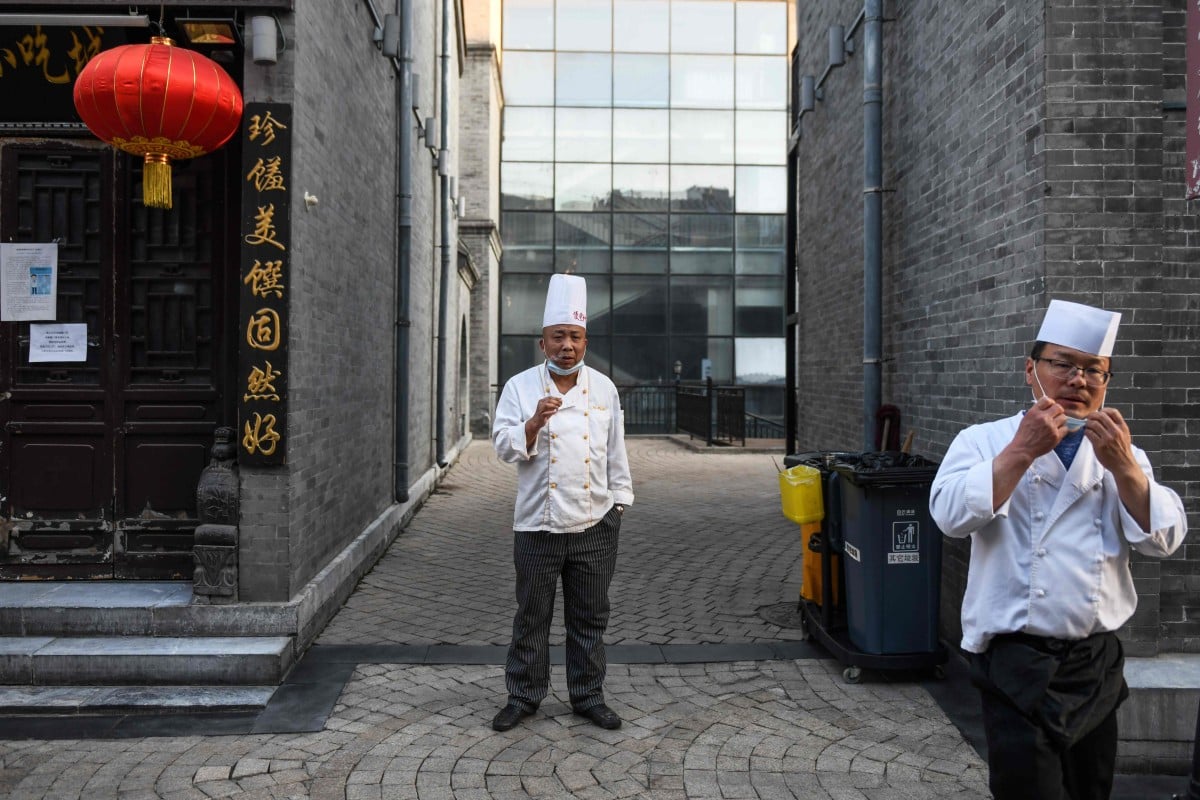
The nearly two month-long lockdown has changed the consumption behaviour of Chinese residents, many of whom have turned to home cooking to cut their spending. Photo: AFP
China’s urban lockdown may have eased, but deserted streets and stores in the capital Beijing this week suggest that for the services sector, the impact of the coronavirus outbreak could be deeper and longer than expected.
Many restaurants, cafes and pubs remained closed in the city, where vigilance remains high about a second wave of infections. Among those that were open, there were few customers to be seen.
The usually crowded Wangfujing shopping street was quiet on Wednesday, with just a few shoppers patronising what is usually the heartbeat of the city’s commerce and tourism. There were more staff than consumers at the Apple store, while everyone wore a mask. Shops along the pedestrianised zone closed their doors before sunset, but many did not open at all.
In a downtown food court, a handful of people dined during what would usually be the lunch rush hour, each restricted to their own small table to maintain social distancing, in great contrast with the usual frantic dash for seats.
Coronavirus: What impact will the economic fallout from the Covid-19 pandemic have on you?
While China has largely stemmed the domestic spread of Covid-19, threats of imported cases, with the virus having infected over one million people worldwide, and asymptomatic carriers continue to hamper the recovery in China’s
A survey published on Friday showed that in March, sentiment among small service sector firms remained depressed. The Caixin / Markit services purchasing managers’ index (PMI) was 43.0 for last month, with a number below 50 meaning the sector is shrinking. “There are too few people now. We only sold about a hundred bowls of noodles, that was just half of our normal level,” said one Beijing street vendor, who had also cut many items from the menu due to insufficient demand.
A bookstore in the city centre held an official opening ceremony after a soft opening followed by a two and a half month-long forced shutdown, but received only four visitors on a morning, one of which was the South China Morning Post reporter. All four were required to go through a body temperature check and write down their personal contact details before entering.
Service sector workers said the situation was surreal and that they were worried that there was no end in sight.
“I have never seen KFC look like this,” said an employee of the fast food chain restaurant at Wangfujing, pointing to the virtually empty dining hall.
A grocer at a nearby food market continually shook her head when talking about the decline in customers, but said she felt lucky that she could come back to Beijing from her hometown before the 14-day mandatory quarantine requirement was imposed on February 14.
This situation is not restricted to Beijing. When the Chinese government reopened around 500 cinemas nationwide in March, each one attracted on average
per day.
Now, many places across China are reimposing controls amid fears of a new spike in infections, the same fear leading people to stay home instead of going to those venues which have reopened.
Shanghai has closed tourist attractions while Sichuan has again closed karaoke lounges. Cinemas have also been reclosed across the country.
President Xi Jinping said during a visit to Hangzhou last Sunday that China must remain alert. “If you want to watch a movie, rather than going to a cinema, you can watch it online,” Xi said.
Services account for 60 per cent of China’s economy and the majority of employment. The slowness of the sector’s recovery is placing huge pressure on the world’s second
at a time when manufacturers are seeing export orders nosedive.
Liang Zhonghua, chief macro analyst at Zhongtai Securities, a brokerage, said that China’s damaged consumption alone could drag economic growth down by 4.5 per cent in the second quarter.
“(Chinese) residents’ fear of the epidemic is not over,” he wrote in a note this week.
Beijing’s malls still empty after coronavirus lockdown lifted
In Beijing all travellers entering the city are required to undergo a 14-day quarantine, while mass gatherings are still forbidden.
The containment measures have stopped many migrant workers from getting back to
, if they still exist. Many local residents still choose to work from home, even though authorities had been trying to encourage people to go out and spend money.
On April 1, the traffic flow on Beijing’s subway system was 3.05 million passengers a day, less than a third of the level a year ago, according to the operator, while car traffic was still about 15 per cent less than it was last year, government data showed.
I will keep cooking for myself, even when everything goes back to normal, it is much healthier and cheaper – Beijing resident
The nearly two month-long lockdown has changed the consumption behaviour of Chinese residents, many of whom have turned to home cooking to cut their spending.
“I will keep cooking for myself, even when everything goes back to normal, it is much healthier and cheaper,” said a Beijing lawyer whose family name is Li.
The effect of this behavioural shift is borne out in the 17.9 per cent drop in retail sales in the capital over the first two months of the year, only slightly better than the nationwide drop of 20.5 per cent.
Beijing businesses have clubbed together to issue some 150 million yuan in
to lure customers in since March 18. But with more economic hardship ahead, businesses and consumers alike are hunkering down for the storm.
Source: SCMP
Posted in bars, Beijing, cafes, Caixin / Markit services, Caixin/Markit Manufacturing Purchasing Managers’ Index (PMI), capital, China’s, chinese government, cinemas, consumption behaviour, coronavirus, coronavirus outbreak, customers, deserted shops, deserted streets, downtown, export orders, food court, food market, grocer, handful of people, Hangzhou, home cooking, karaoke lounges, KFC, lockdown, lunch rush hour, mandatory quarantine, manufacturers, nosedive, President Xi Jinping, pubs, purchasing managers’ index (PMI), residents, restaurants, second wave, services sectors, Shanghai, shopping street, shops, Sichuan, Social distancing, south china morning post, stores, tourist attractions, Uncategorized, urban lockdown, vigilance, Wangfujing, Zhongtai Securities |
Leave a Comment »
19/11/2019
- Every morning and night for the past four years, businessman Zhong Congrong has been on the streets of Chongqing to stop people dropping their litter
- Admired as a welfare champion, the 54-year-old says he has been beaten and insulted for his cause
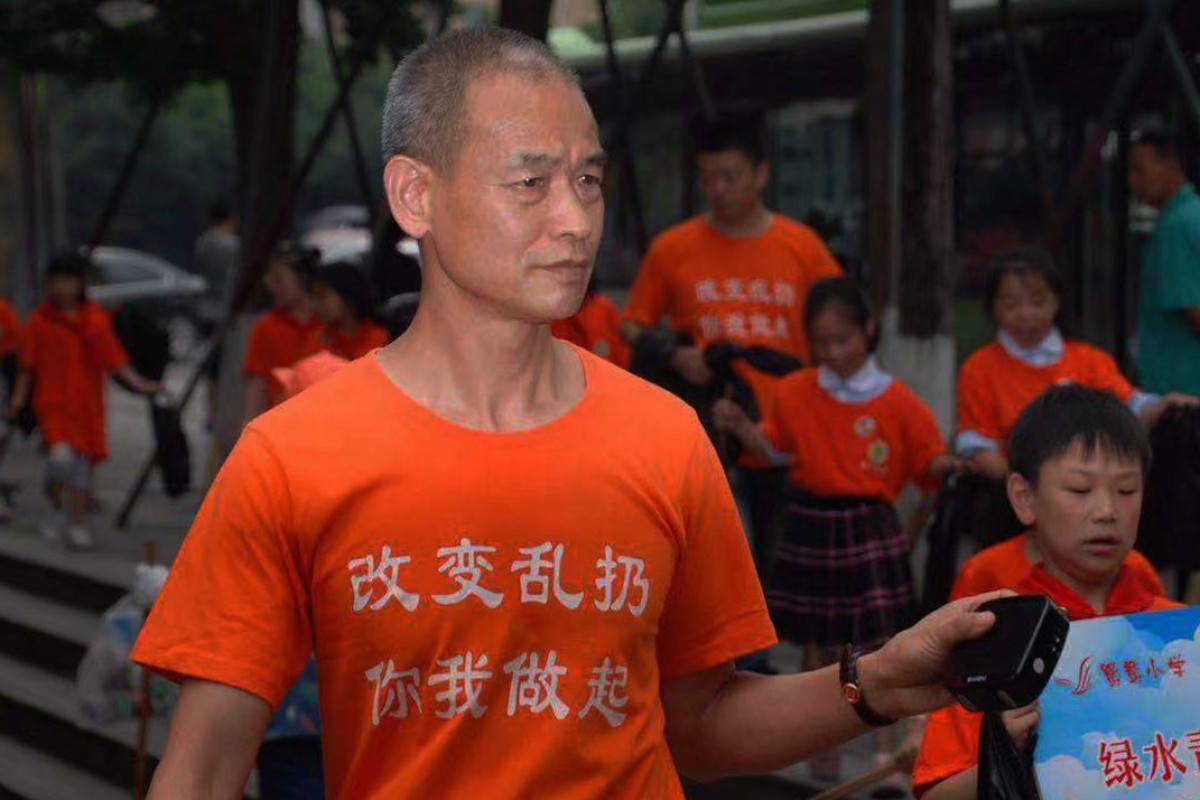
Zhong Congrong is a familiar figure on the streets of his hometown. Photo: Handout
Zhong Congrong owns three businesses in southwestern China which together are worth more than 100 million yuan (US$14.3 million), but he prefers to risk being labelled as an environment “nut” who wants to clean up Chongqing.
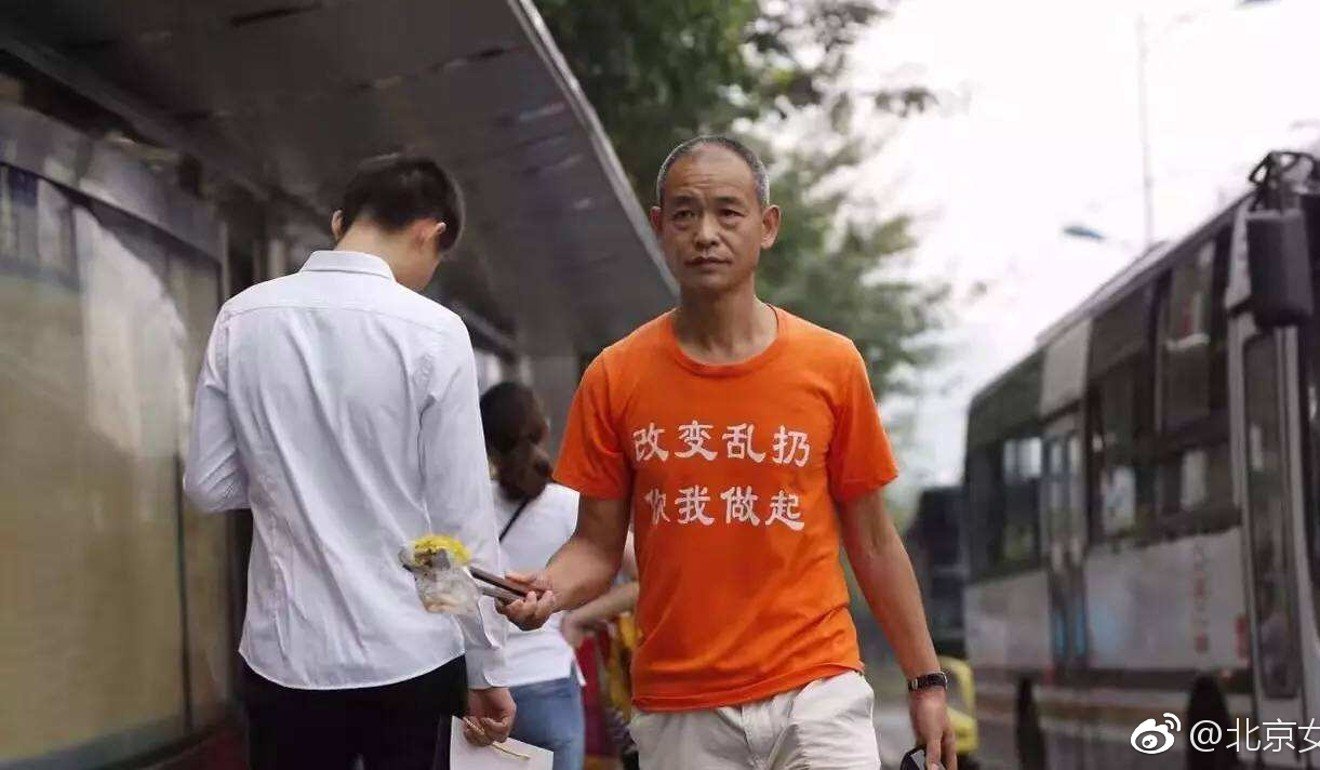
Every morning after breakfast and each evening after supper, the entrepreneur pulls on an orange T-shirt, gets into his Mercedes-Benz SUV and heads downtown. For one or two hours, he walks the streets, picking scraps of rubbish off the road and talking to passers-by about littering.
“It is my mission to change people’s bad habits and to raise their awareness of protecting the environment,” said Zhong, who has been on this mission for four years. It has brought the 54-year-old civic rewards, earned him a bruising or two from people who do not want to listen to his message and it nearly cost him his marriage.
Throughout it all, he has remained a persistent voice for the environment in the city of more than 30 million people and, as some of them have learned, he refuses to give up.
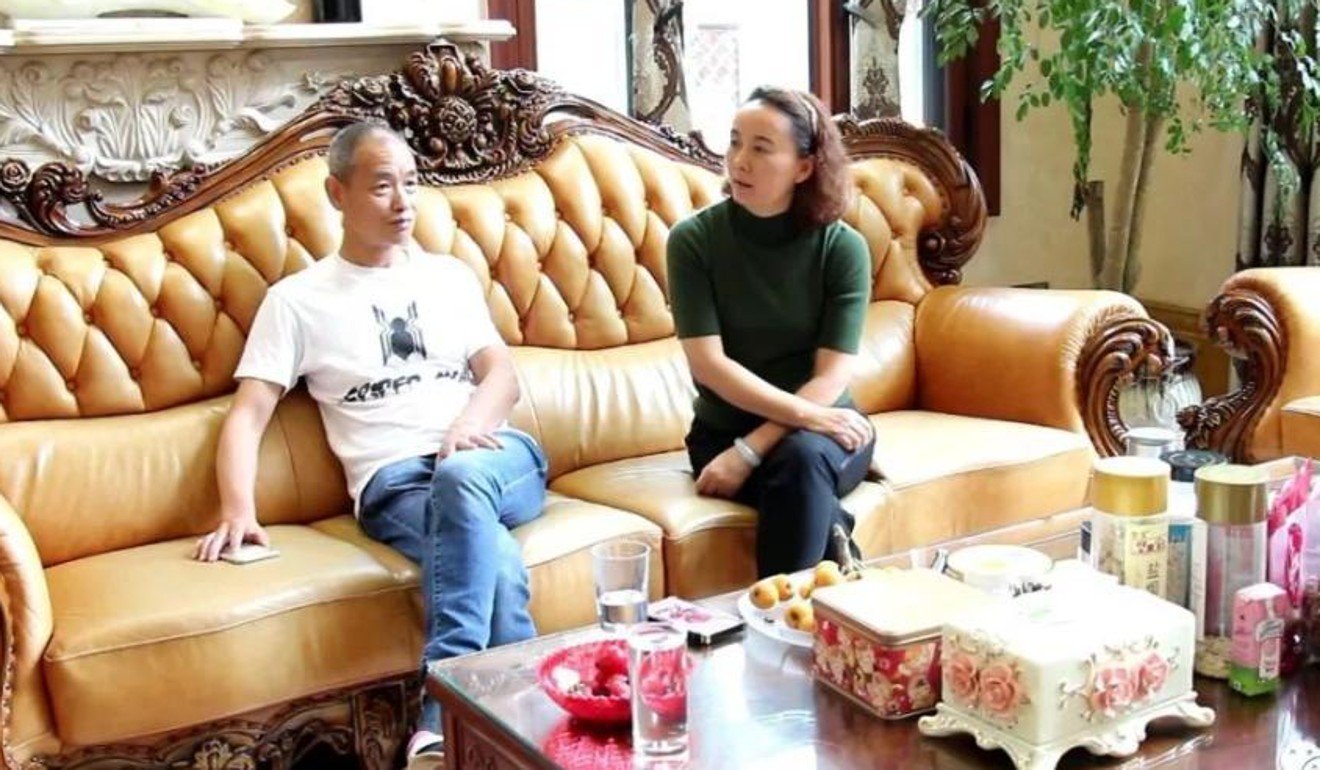
Yang Zuhui (right) has come to admire Zhong Congrong’s dedication to his litter picking mission, but she fears for her husband’s safety. Photo: Weibo
On mainland China, cities have banned littering and some hit offenders with fines as high as 200 yuan. However, the rules are rarely obeyed and feebly enforced, and while there are plenty of dustbins in public places, litter is still a nuisance.
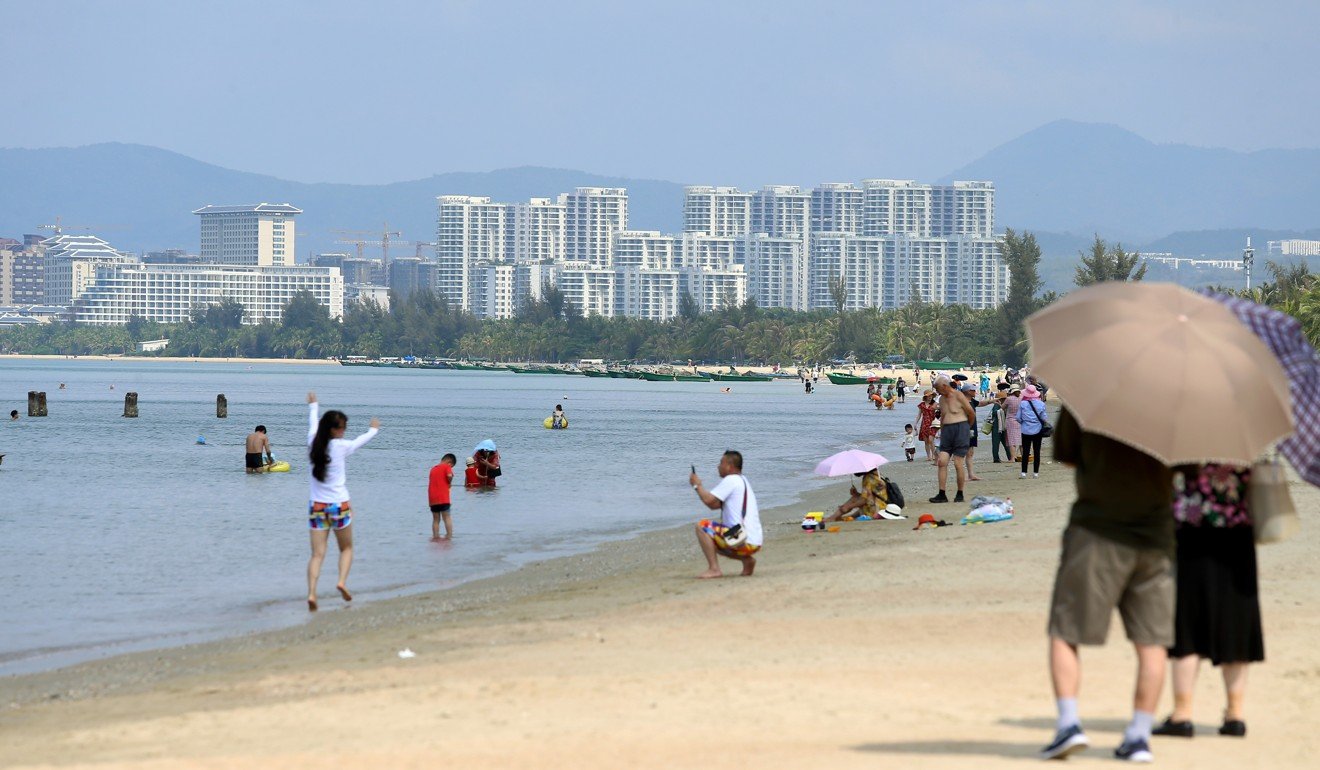
Zhong said his mission started in 2015 after he met a woman in her 70s in Sanya, the southern coastal city on the South China Sea island of Hainan. He was struck by how dedicated she and her husband were when they went litter picking each day.
“They are retired professors from a prestigious university in Beijing,” Zhong said. “I chatted a lot with her and I asked her, ‘What’s the point of collecting rubbish every day? You clean up the beach today, but tomorrow new rubbish appears’.”
The way to solve the problem was to teach people to not litter, she told him, but she said she “dared not” try to do that. Zhong said that encounter gave him his purpose and he would dare to change attitudes.
Shanghai recycling scheme slips up on 9,000 tonnes of waste
Back home, Zhong watched and learned – concluding that customers of restaurants and fast food businesses tended to be the people who dropped rubbish most.
“Perhaps it’s because when people dine in restaurants, they throw their rubbish wherever they like. Going outside, they keep on doing it,” he said.
“People in shopping malls are generally more civilised.”
Zhong says his mission began in 2015 during a holiday on the island of Hainan. Photo: Dickson Lee
While on patrol, Zhong makes himself easy to see in an orange T-shirt that bears his clean-up message. His tools include a metal pincer for picking up tissue paper, plastic bags, drinks bottles, nappies and other everyday detritus and putting it into bins.
He also carries a voice recorder that sends out an appeal to restaurant customers: “To protect our environment and not to affect our kids’ healthy growing up, dear friends, please don’t throw rubbish.”
Can China sort its household waste recycling problem by 2020?
Zhong said that at first he felt afraid and self-conscious when he stood in front of a crowd of diners with his green gospel. But time and practise taught him he had almost nothing to fear, he said.
One of the bigger challenges is getting through to the many people who do not listen to him and refuse to dispose of their rubbish the right way.
“It’s normal that our society has various kinds of people and I need to face this reality,” Zhong said. “I was prepared in my mind that I would be called ‘nut’ since this is such an arduous but fruitless cause.”
He tackles the problem with his usual persistence, so argument and persuasion is all part of the job. When Zhong insists the rule breakers take their rubbish and bin it, some ignore him and others walk away – but he is ready with an answer.
“I tell them, ‘If you don’t pick it up, I guarantee that you will lose face today. I will let passers-by see and hear what a humiliating thing you have done. Everybody will then condemn you and you will be embarrassed’,” he said.
When people tell him what they do is none of his business, Zhong replies that what he is doing is in the public interest.
Sometimes there is a heavier price. Zhong said he once watched several men in their 20s throw rubbish onto the road from their car. He set off after them in his SUV. He waylaid them and asked them to clean up after themselves – the men refused, swore at him and beat him up. Their day ended in a police station.
Zhong said he hoped his work would bring “positive energy” to the employees of his vehicle components and packaging materials companies, but his mission was not about business prestige.
However, last year, he was named as one of the top 10 public welfare figures of Chongqing by the municipal government, while his family was honoured as a Chinese good family by the semi-governmental All-China Women’s Federation, a women’s rights organisation established in 1949.
Street cleaner who found US$22,000 in rubbish refuses to accept a reward
There were trials for Zhong closer to home – his wife, Yang Zuhui, did not support his mission at first and threatened to divorce him.
“It’s OK that you picked up trash on the street and you were just another cleaner there,” she told him in an interview with Hunan Television in 2017. “But what worried me was that you tried to persuade others – physical violence [against him] was inevitable.”
She also said: “My husband is not very tall and, on many occasions, he was at a disadvantage and got beaten up. I am worried about his personal safety.”
Zhong impressed his daughter’s schoolfriends with an inspiring speech. Photo: Weibo
But two years ago, their 10-year-old daughter helped change Yang’s attitude towards her husband’s mission after a school outing.
After lunch that day, Zhong gave the adults and children who had left rubbish behind one of his lectures.
His daughter, who was embarrassed by Zhong’s speech, came to appreciate him when classmates told her: “Your father is awesome. He is like a hero who protects the Earth.”
Yang was won over because she knew her husband was a determined man and once he decided on a course of action would not change his mind.
Their son – who is in his 20s and has returned to Chongqing after studying in France – always stands by his father, Zhong said.
“My son told me that environmental voluntary work normal abroad and it is respected,” he said.
Going out to collect rubbish has become part of Zhong’s life, he said.
“In the evening, if I stay at home, my wife and daughter will ask me ‘Why don’t you go to pick up rubbish?’”
He said it was important to go litter picking every day because the more he did it the more people he could influence.
“By breaking the littering habit, Chinese people can stand tall when they travel abroad,” Zhong said.
Source: SCMP
Posted in abroad, Admired, All-China Women's Federation, beaten, Beijing, break, bruising, businessman, cause, China’s, Chinese people, Chongqing, civic rewards, civilised, concluding, customers, dirty job, downtown, dropping, Entrepreneur, Every morning and night, fast food, four years, France, habit, Hainan, Hunan Television, insulted, learned, litter, marriage, Mercedes-Benz SUV, millionaire, orange T-shirt, People, personal safety, prestigious university, professors, reputation, restaurants, retired, Risks, Sanya, Shanghai, shopping malls, South China Sea, stand tall, stop, streets, travel, Uncategorized, watched, welfare champion, Zhong Congrong |
Leave a Comment »
26/09/2019
- Visually spectacular and with the latest technology, the Chinese capital’s second international airport is open for business
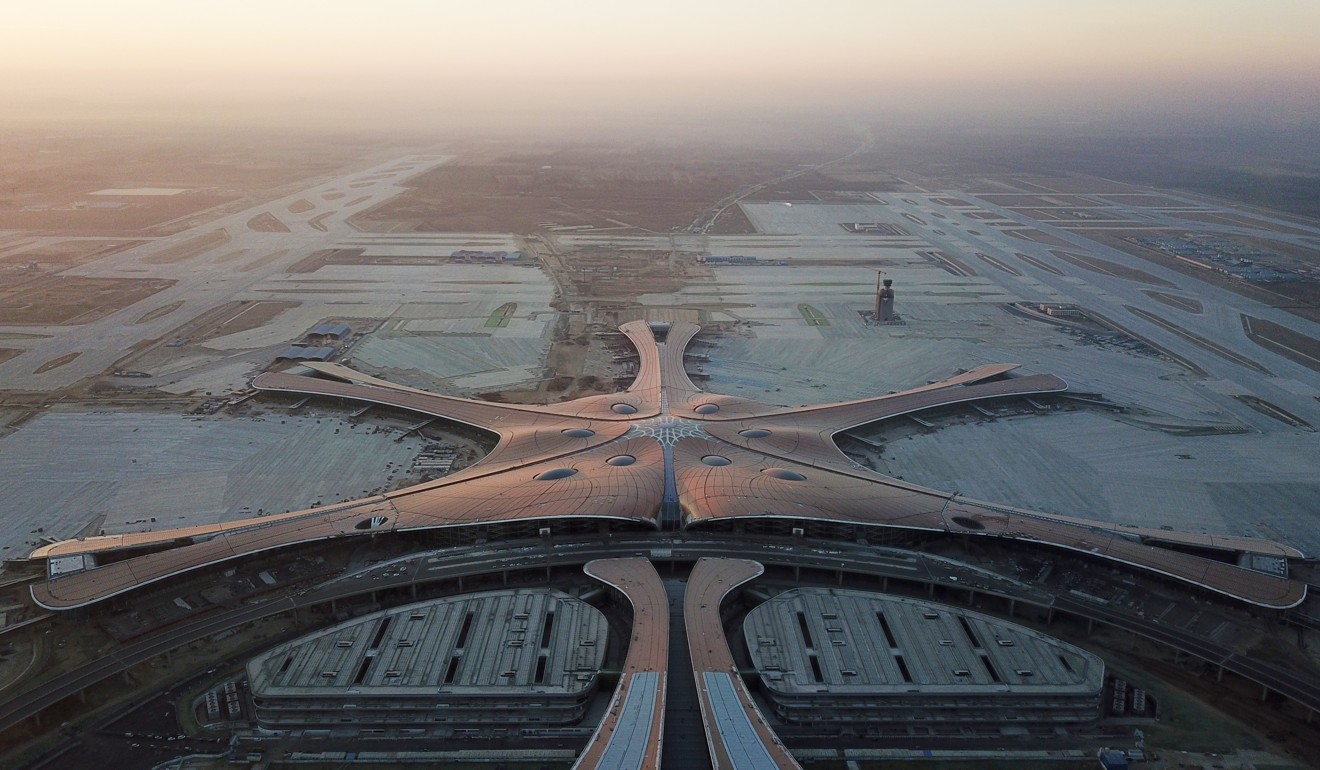
The terminal building at Beijing Daxing International Airport, which has officially opened. Photo: Xinhua
At 4.23pm on Wednesday a China Southern Airlines A380 left Beijing for Guangzhou – on the first commercial flight out of the world’s latest and largest airport terminal at Daxing, five years after construction began on the ambitious project.
The 80 billion yuan (US$11 billion) Beijing Daxing International Airport was officially opened by Chinese President Xi Jinping on Wednesday morning.
China Southern Airlines, the mainland’s largest carrier, has 40 per cent of the flight slots at the new airport. It is one of 16 airlines which will be operating out of Beijing Daxing International Airport, the visually spectacular new facility at the southern end of the Chinese capital.
Six other flights, including China Eastern Airlines for Shanghai and Air China for Chengdu, took off before 5pm in the afternoon. These domestic airlines will have part of their operations moving to Daxing for the upcoming winter-spring season, according to the mainland’s aviation authority. No Hong Kong airlines were listed.
British Airways has announced its whole operation will be moved to Daxing, while some foreign airlines, such as Ethiopian Airlines, Polish Airlines, Malaysia Airlines, Royal Air Maroc and Finnair, will operate at both airports.
Spanning 47 sq km (18 square miles) – almost 50 per cent larger than the city of Macau – Daxing, with its 700,000 square metre (7.5 million sq ft) terminal is a spectacular sight. Its futuristic shape, resembling a giant hexagonal starfish or – as some internet users have dubbed it – an alien base, not only handles more aircraft, it also keeps passengers’ walks
From the centre of the security check to the furthest end gate in each wing is about 600 metres (1,970 feet), or less than an eight-minute walk.
Beijing’s new 7-runway, star-shaped Daxing airport opened by Xi Jinping
According to Xinhua, more than 70 restaurants, tea shops and coffee houses will operate in the airport, along with 36 international brands, including Louis Vuitton, Gucci and Bottega Veneta.
Daxing is designed to take pressure off the overcrowded Beijing Capital International Airport (BCIA) and, by 2021, is expected to handle 45 million passengers a year, rising to 72 million by 2025.
Located at the south of the capital, 46km (28.5 miles) from the central Tiananmen Square, the airport was once frowned upon for its less than optimal location, with its southern end at the border with Hebei province. But it may not be as time-consuming for travellers as originally thought.
The design of the airport means passengers will walk a much shorter distance to the check-in and security check.Hu Haiqing, China Southern Airlines
Hu Haiqing, deputy general manager of China Southern Airlines’ operation control centre, told Global Times that “although Daxing is further away from downtown Beijing than the Capital airport, there are still some advantages, especially for our airline”.
With most of its bases in the south of the country, China Southern Airlines flights to Daxing will be 10 to 15 minutes shorter than to the Capital airport. A further 15 to 20 minutes taxiing time will also be saved, thanks to its position in the new airport.
“The design of the airport also means passengers, once they leave their car or train, will walk a much shorter distance to the check-in and security check,” Hu said.
According to Xinhua, Daxing’s design also makes transit much quicker, with transfers between international and domestic flights up to 90 minutes shorter than from the Capital airport.
The futuristic shape of Daxing airport not only handles more aircraft, it also keeps passengers’ walks to a minimum. Photo: Xinhua
Public transport will be the quickest way to reach the new airport from downtown Beijing – 20 minutes from West Beijing railway station once the Beijing-Xiongan high-speed rail officially opens. The airport express service will also take passengers from Caoqiao station to the airport in 19 minutes.
There is no underground rail service or airport express connecting the Capital airport in the north with Daxing, but passengers can change trains at Caoqiao for downtown Beijing or other stations which connect with BCIA’s airport express service.
Waiting times at the new airport will be greatly reduced by the use of facial recognition technology for self-service check-in and smart security checks, according to Wang Hui, manager of Daxing’s terminal management department.
The technology does away with the need for a paper boarding pass and passengers can check-in, with or without luggage, and go through the security check by themselves.
Beijing is the window for China to go global … Daxing airport makes it possible to open more global routes.China Eastern Airlines pilot
“The airport has more than 400 self-service check-in kiosks, which means more than 80 per cent of check-ins will be self-service. That shortens each passenger’s queuing time to no more than 10 minutes,” Wang told Global Times.
“The smart security check channels are able to handle 260 passengers per hour, 40 per cent faster than using traditional means,” he said.
The opening of Daxing Airport could be a great boost for the mainland – and even the global – aviation industry by easing pressure on the Capital airport and making new routes possible, said a veteran China Eastern Airlines pilot who declined to be named.
5 things we know about Beijing’s new Daxing International Airport
Opening new flight routes from BCIA was almost impossible, he pointed out, because the centre of Beijing was a no-fly zone for security reasons. Daxing airport’s location at the southern end of the city, however, avoided the problem of planes having to bypass the restricted space, leaving room to open more routes for domestic and international flights.
“Beijing is the window for China to go global but the Capital airport’s schedule is saturated and unable to open new routes. Daxing airport makes it possible to open more global routes,” the pilot said.
He said the runway design at Daxing also meant fewer delays, because the four runways of phase one – more than any other airport in China – included one which was perpendicular to the other three, allowing flights to land and take off regardless of wind direction.
Source: SCMP
Posted in Air China, Aircraft, airport express, airport express service, alien base, announced, aviation authority, aviation industry, Beijing, Beijing Capital International Airport (BCIA), Beijing-Xiongan high-speed rail, both airports, Bottega Veneta, British Airways, capital, car, Chengdu, China Eastern Airlines, China Eastern Airlines pilot, China Southern Airlines, Chinese capital, Chinese President Xi Jinping, coffee houses, Daxing airport, domestic flights, downtown, Finnair, giant hexagonal starfish, Global Times, Guangzhou, Gucci, Hebei province, international, kiosks, largest carrier, latest technology, Louis Vuitton, Macau, mainland, Malaysia Airlines, new airport, paper boarding pass, passenger’s queuing time, passengers’ walks, Polish Airlines, public transport, quickest way, restaurants, Royal Air Maroc, second international airport, self-service check-in, Shanghai, smart security checks, takes flight, tea shops, Tiananmen Square, Train, transfers, transit, Uncategorized, underground rail service, Visually spectacular, West Beijing railway station, whole operation, world’s largest terminal, Xinhua |
Leave a Comment »





 CHINDIA ALERT: You'll be living in their world, very soon