Archive for ‘draconian’

28/04/2020

Coronavirus: China’s capital city struggles to get back to normal amid continued outbreak worries

  • Beijing’s Chaoyang district remains the last high-risk area in China, with virus preventive measures continuing to impact on travel and shopping plans
  • China faces the dilemma of preventing a re-emerge of the pandemic, while also pushing to get its economy back to normal
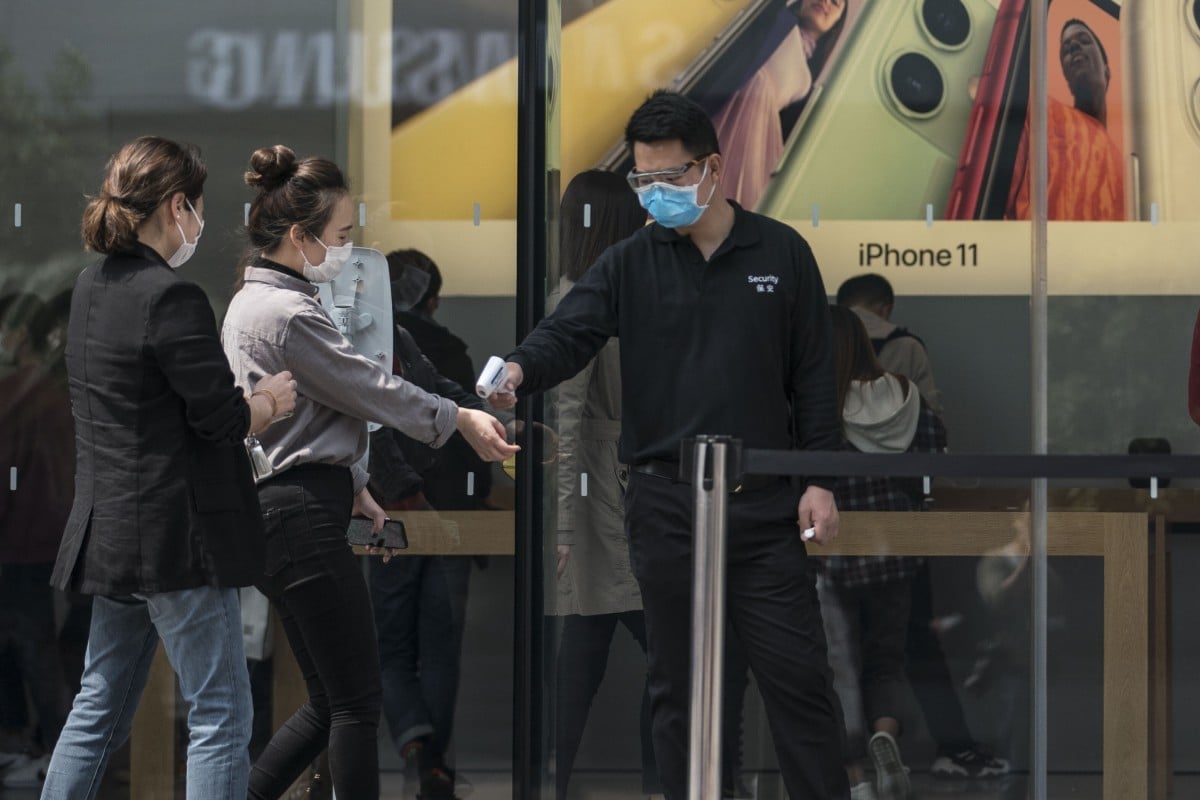
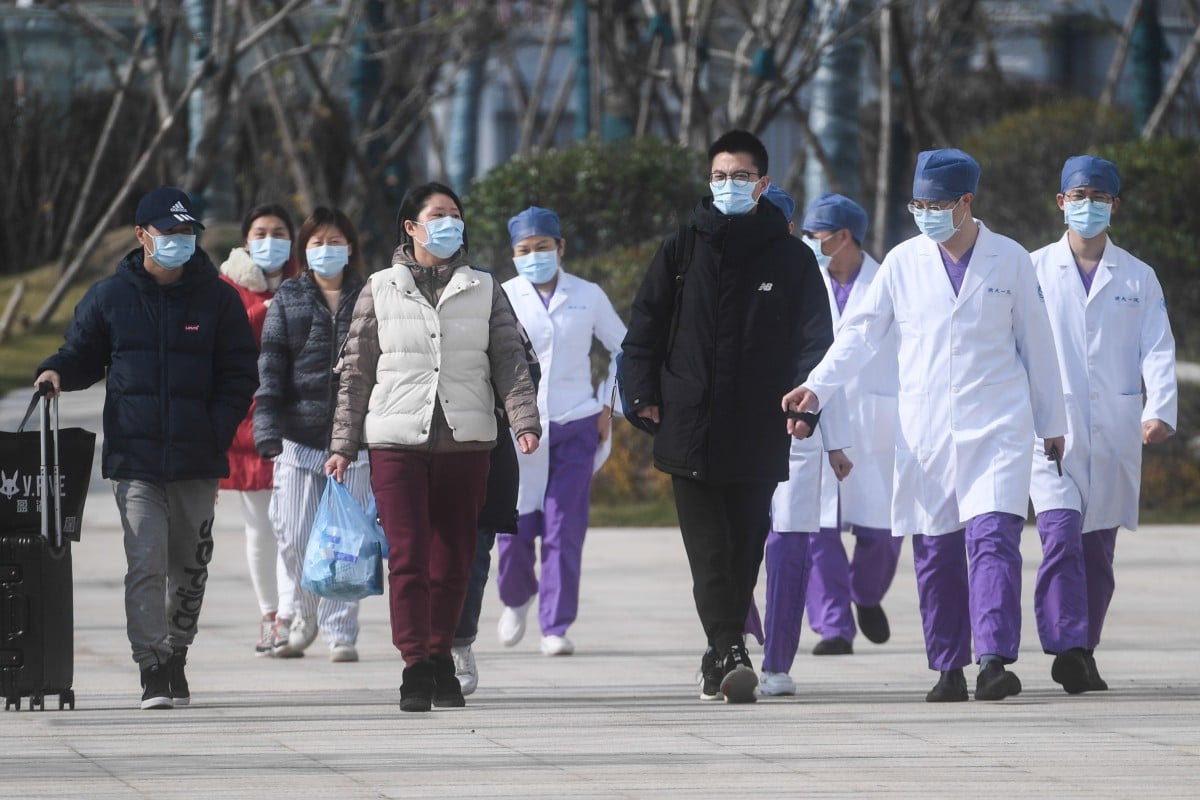
China’s continued pandemic prevention measures, coupled with still hesitant consumer demand, will inevitably lead to persistent limitations on the nation’s economic recovery, analysts said. Photo: Bloomberg

After nearly three months of being quarantined by herself in Beijing, Mary Zhao was looking forward to the upcoming long weekend at the start of May to be able to finally reunite with her parents.

But Zhao was forced to abandon her plan for the Labour Day holidays as Beijing’s upmarket Chaoyang district, where she lives, remains the only high-risk zone for coronavirus in the entire country.

If she travelled the five hours by car, or two hours via bullet train, to the neighbouring Hebei province, she would first have to undergo a 14-day quarantine before seeing her parents. Her parents would also have the same two week quarantine to look forward to once they returned home if they came to visit their daughter in Beijing.

These strict controls to prevent a re-emergence of the coronavirus outbreak are making a return to normal life impossible for many, and mean the final economic and social cost

 from China’s draconian preventive measures could be much larger than expected.
Wuhan declares ‘victory’ as central Chinese city’s last Covid-19 patients leave hospital
It underscores the dilemma facing China’s leaders on how to balance the need to

restart the economy

and to avoid a fresh outbreak. On the surface, China may be able to declare victory as even Wuhan, the city where the virus was first detected, announced that the last Covid-19 patient had left hospital on Sunday. But fears of a renewed outbreak have kept the country’s cinemas and most schools closed, with travel between provinces discouraged.

China’s national borders also remain largely closed, with flights being cut to a minimum, and a mandatory 14-day quarantine for every arrival. In the number of places where new cases have been reported, quarantine requirements have been tightened, including Harbin and a few other cities near the border with Russia.
Chaoyang, the home to one of Beijing’s main business districts and most foreign embassies, changed its risk rating to high from low in the middle of April after three new cases were reported, dealing a fresh blow to the district’s

struggling businesses,

and forcing many of the 3.5 million residents to cancel their travel plans.

On the outskirts of Beijing, near Beijing Capital International Airport, returning migrant workers to Picun village were ordered to stop at entrance and could only be escorted inside by their landlord, with many villages and residential compounds remaining closed to outsiders.

In the high-end shopping district of Guomao, some shops also remain closed as there are few potential customers, while over in the popular Sanlitun area, metal barriers restrict access and temperature checkpoints are still required.

The landmark Apple Store in the popular Taikoo shopping centre is open, but with limited customers allowed inside, there are long queues outside. Customers are required to scan a QR code to check their movements over the last few days before entering.

Coronavirus: More schools reopen in China for students preparing for university entrance exams
“Why do I have to spend 20 minutes just to get into the Apple Store? The sun has almost melted me down,” one visitor complained to the security guards at the front of the shop.

China’s continued pandemic prevention measures, coupled with still hesitant consumer demand, will inevitably lead to persistent limitations on the nation’s economic recovery, analysts said.

Ernai Cui, an economist at research firm Gavekal Dragonomics, said on Monday that China’s cautious approach to lifting restrictions “points to a weak second quarter for consumer services”, adding additional pressure to the economic recovery.Mao Zhenhua, a researcher at the China Institute of Economics at Renmin University, said China’s preventive measures will inevitably be a drag on production, employment and exports.

Source: SCMP
27/03/2020

China’s Xi offers Trump help in fighting coronavirus as U.S. faces wave of new patients

BEIJING/SHANGHAI (Reuters) – Chinese President Xi Jinping told U.S. President Donald Trump during a phone call on Friday that he would have China’s support in fighting the coronavirus, as the United States faces the prospect of becoming the next global epicentre of the pandemic.

The United States now has the most coronavirus cases of any country, with 84,946 infections and 1,259 deaths. Hospitals in cities like New York and New Orleans struggle to cope with the wave of patients.

Xi’s offer of assistance came amid a long-running war of words between Beijing and Washington over various issues including the coronavirus epidemic.

Trump and some U.S. officials have accused China of a lack of transparency on the virus, and Trump has at times called the coronavirus a “China virus” as it originated there, angering Beijing.

In the call, Xi reiterated to Trump that China had been open and transparent about the epidemic, according to an account of the conversation published by the Chinese foreign ministry.

Trump said on Twitter that he discussed the coronavirus outbreak “in great detail” with Xi.

“China has been through much & has developed a strong understanding of the virus,” Trump said. “We are working closely together. Much respect!”.

The World Health Organization has said the United States, which saw 17,099 new coronavirus cases and 281 deaths in the past 24 hours, is expected to become the epicentre of the pandemic.

CHINA CUTS FLIGHTS

Like U.S. hospitals now, China’s medical system struggled to contain the coronavirus just two months ago, but draconian city lockdowns and severe travel restrictions has seen China dramatically ease the epidemic.

Mainland China on Friday reported its first local coronavirus case in three days and 54 new imported cases, as Beijing ordered airlines to sharply cut international flights, for fear travellers could reignite the coronavirus outbreak.

The 55 new cases detected on Thursday were down from 67 a day earlier, the National Health Commission said on Friday, taking the tally of infections to 81,340. China’s death toll stood at 3,292 as of Thursday, up by five from a day earlier.

The central province of Hubei, with a population of about 60 million, reported no new cases on Thursday, a day after lifting a lockdown and reopening its borders as the epidemic eased there.

The commercial capital of Shanghai reported the most new imported cases with 17, followed by 12 in the southern province of Guangdong and four each in the capital Beijing and the nearby city of Tianjin.

Shanghai now has 125 patients who arrived from overseas, including 46 from Britain and 27 from the United States.

In effect from Sunday, China has ordered its airlines to fly only one route to any country, on just one flight each week. Foreign airlines must comply with similar curbs on flights to China, although many had already halted services.

About 90% of current international flights into China will be suspended, cutting arrivals to 5,000 passengers a day, from 25,000, the civil aviation regulator said late on Thursday.

From Saturday, China will temporarily suspend entry for foreigners with valid visas and residence permits, in an interim measure, the foreign ministry added.

Before the new curbs, foreign nationals made up about a tenth of the roughly 20,000 travellers arriving on international flights every day, an official of China’s National Immigration Administration said last week.

As commercial flights dwindle, Chinese students from wealthy families are paying tens of thousands of dollars to fly home on private jets.

International demand for chartered and private flights into China increased 227% in March from a year earlier, said Shanghai-based private jet service provider iFlyPlus.

Notably, requests for flights from the United States to China rose 10-fold in late March, iFlyPlus told Reuters.

Source: Reuters

06/02/2020

Coronavirus: Zhejiang adopts draconian quarantine measures to fight disease

  • Some residents of the coastal Chinese province are being locked inside their homes while others must present a ‘passport’ to go out every two days for supplies
  • Weddings and funerals discouraged as ‘unessential’ venues are also shut down
Cured coronavirus patients leave hospital in Hangzhou, one of four cities in the eastern Chinese province of Zhejiang which has adopted draconian quarantine measures for its residents. Photo: Xinhua
In the Chinese coastal province of Zhejiang, some 560km (350 miles) east of where the new coronavirus originated, at least four cities have introduced measures that mirror the draconian rules established by Hubei province – epicentre of the outbreak – to keep the virus from spreading.
Authorities in Zhejiang, which neighbours the port city of Shanghai, have closed “unessential” public venues, banned funerals and weddings, limited the number of times people can go out and quarantined families at home, sometimes by locking them in.
In the Zhejiang cities of Wenzhou, Hangzhou, Ningbo and Taizhou – which have a combined population of more than 30 million – each household is being issued a “passport”, usually a piece of paper that carries one’s name, home address and an official stamp. Only one person per household is permitted to leave their home every two days.
The rules were announced on state media and the governments’ social media accounts, and families have already received their “passports”.
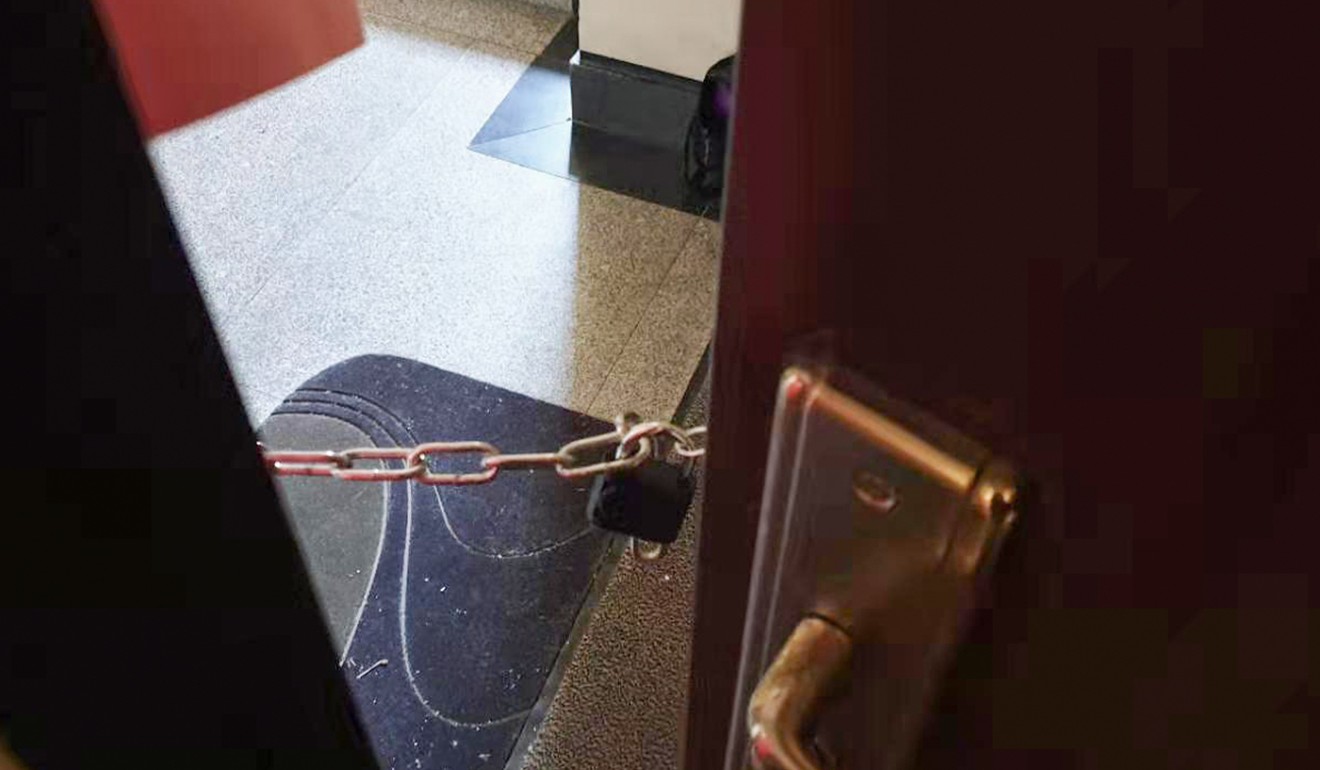
Some people have been locked inside their homes, including Allen Li and his family in Hangzhou. Photo: Handout
To enforce the new travel rules, community officers have been stationed at the entrance of some residential compounds. Every time a resident leaves their compound, an officer at the entrance marks the time and date on the “passport”. People from the same household are then barred from going out again for the next two days.
With 954 coronavirus patients, the province of Zhejiang is the hardest hit region outside Hubei, which has about 19,665 of the more than 28,000 total cases.

Hangzhou, the provincial capital and home to some of China’s biggest tech companies, has reported 151 confirmed cases. The port city of Wenzhou has reported 396 cases.

Yao Gaoyuan, mayor of Wenzhou, said in an interview with CCTV on February 2 that the city had decided to impose the restrictions to contain the spread the coronavirus. “This could reduce the transmission to the greatest extent possible,” he said.

One neighbourhood in Wenzhou introduced a mobile technology system to enforce the stay-at-home rules, according to the state-run Wenzhou Daily, with residents using their phones to scan a QR code at the checkpoints every time they leave the compound. Only those who have not been out for two days will be allowed through.

In Hangzhou, the government on Tuesday banned all weddings and demanded that funerals, which traditionally involve family gatherings and banquets, be held frugally.

All public venues deemed “unessential” were ordered to close. Underground train services are running at 30-minute intervals. Factories need special permission to resume work during the extended Lunar New Year holiday.

Some families have also been confined to their homes because they have travelled to places with large numbers of confirmed cases.

No, the coronavirus can’t be kept away by saltwater gargling or cow dung

6 Feb 2020

Allen Li, 26, who is now living with his parents in Hangzhou, said the family had been told to stay home for 14 days after they returned from Wenzhou.

Community workers put up a sign saying “quarantined at home, no visitors allowed” on their door. On Wednesday, they locked the flat with a metal chain from the outside despite the family’s protest.

“We argued with them, but they said it’s a decision from above,” Li said. “We understand we should not go out. But this is not humane. What if there’s a fire at our home at midnight, and we can’t get anyone to unlock it?”

China scrambles to deliver food to coronavirus epicentre Wuhan amid lockdown
Some social media users have applauded such measures as ways to contain the virus, but others have criticised the quarantine as essentially “house arrest”.
Wuhan party official apologises for failures in coronavirus outbreak
6 Feb 2020

Some Hangzhou residents have complained online that they were barred from entering their rented homes after having spent the Lunar New Year holiday elsewhere.

The coronavirus was first reported in December in Wuhan, the provincial capital of Hubei that has been sealed off since January 23.

In a sign of the rising fear of contagion, regional authorities across China have imposed travel restrictions on residents that mirror the draconian measures in Hubei province.

But officials said about 5 million people had already travelled out of the city during the Lunar New Year travel season, contributing to the spread of the virus to other Chinese provinces and at least 24 countries.

Source: SCMP

Law of Unintended Consequences

continuously updated blog about China & India

ChiaHou's Book Reviews

continuously updated blog about China & India

What's wrong with the world; and its economy

continuously updated blog about China & India