Archive for ‘eating’

02/04/2020

Shenzhen becomes first Chinese city to ban eating cats and dogs

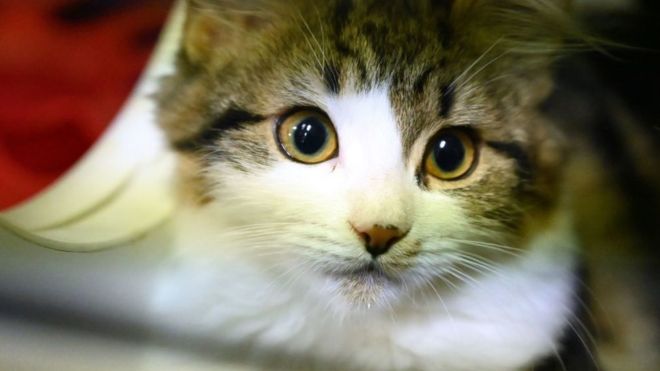
A cat waiting to be adopted looks out of its cage at the Royal Society for the Prevention of Cruelty to Animals (RSPCA)Image copyright GETTY IMAGES
Image caption Most Chinese people don’t actually consume dogs and cats and never plan to

Shenzhen has become the first Chinese city to ban the sale and consumption of dog and cat meat.

It comes after the coronavirus outbreak was linked to wildlife meat, prompting Chinese authorities to ban the trade and consumption of wild animals.

Shenzhen went a step further, extending the ban to dogs and cats. The new law will come into force on 1 May.

Thirty million dogs a year are killed across Asia for meat, says Humane Society International (HSI).

However, the practice of eating dog meat in China is not that common – the majority of Chinese people have never done so and say don’t want to.

“Dogs and cats as pets have established a much closer relationship with humans than all other animals, and banning the consumption of dogs and cats and other pets is a common practice in developed countries and in Hong Kong and Taiwan,” the Shenzhen city government said, according to a Reuters report.

“This ban also responds to the demand and spirit of human civilization.”

Animal advocacy organisation HSI praised the move.

“This really could be a watershed moment in efforts to end this brutal trade that kills an estimated 10 million dogs and 4 million cats in China every year,” said Dr Peter Li, China policy specialist for HSI.

However, at the same time as this ruling, China approved the use of bear bile to treat coronavirus patients.

Bear bile – a digestive fluid drained from living captive bears – has long been used in traditional Chinese medicine.

The active ingredient, ursodeoxycholic acid, is used to dissolve gallstones and treat liver disease. But there is no proof that it is effective against the coronavirus and the process is painful and distressing for the animals

Brian Daly, a spokesman for the Animals Asia Foundation, told AFP: “We shouldn’t be relying on wildlife products like bear bile as the solution to combat a deadly virus that appears to have originated from wildlife.”

Banner image reading 'more about coronavirus'
Banner

A wildlife market

In February, Chinese authorities banned the trade and consumption of wild animals.

The move came after it emerged that a market in Wuhan selling wild animals and wildlife meat could have been the starting point for the outbreak of the new coronavirus, providing the means for the virus to travel from animals to humans.

News of this led the Chinese government to crack down strongly on the trade and on the markets that sold such products.
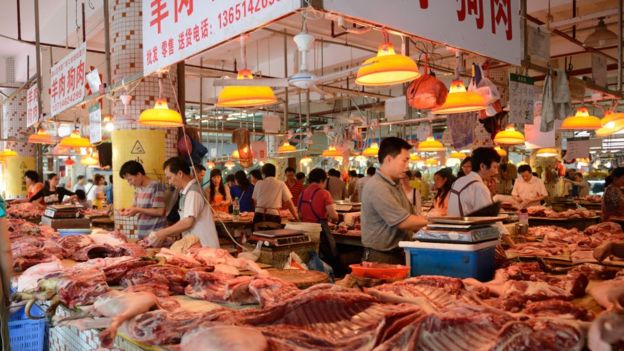
Covered market in ShenzhenImage copyright GETTY IMAGES
Image caption File photo of a wet market in China

There are now close to one million confirmed cases of the virus worldwide, and more than 47,000 deaths, according to a Johns Hopkins University tally.

In China alone, there are 81,589 confirmed cases and 3,318 deaths, said the National Health Commission.

Scientists and researchers are still no closer to finding out what the source of the virus is and how it could have spread to humans.

Source: The BBC

13/02/2020

Coronavirus: dim sum off the menu as Guangzhou bans eating in restaurants

  • Elderly resident says he can’t recall this happening in his city before, not even during the Cultural Revolution
  • Outbreak is expected to deal a heavy blow to businesses, especially smaller eateries, with some already forced to close
Residents can still get takeaway meals in Guangzhou, but they have been encouraged to order online and have them delivered. Photo: He Huifeng
Guangzhou is home to more than 15 million people and a busy trading port, and has been known as China’s most open city since the 1600s. For locals, going to restaurants for yum cha, or “drinking tea”, and dining on dim sum is an important part of the city’s history and culture – a tradition that has been carried through many generations.

“Even in the ‘three years of natural disasters’ [from 1959 to 1961, when China was in the grip of a famine] I remember there were still restaurants open,” He said. “I was really shocked [by the ban]. I guess the epidemic situation must be severe, otherwise Guangzhou definitely wouldn’t introduce this measure.”

China’s Hubei province reports huge spike in coronavirus cases, rising 10-fold from previous day
Many people in Guangzhou and across the country went back to work on Monday after an extended Lunar New Year break – another measure to try to stop the virus from spreading – with the government keen for businesses to return to normal operations.

The ban on dining in applies to restaurants, but employees can continue to have meals at their company canteens. And while residents can still get takeaways from restaurants, they have been encouraged to do this online, and have their meals delivered, rather than collecting their orders.

Group gatherings have also been banned in the city, and according to Nanfang Daily, some 126 banquets that would have involved more than 90,000 people have been cancelled by authorities already. The authorities did not say how long the measures would be in place.

Guangzhou is not the only city in Guangdong province to bring in a ban on dining in restaurants – Futian district in Shenzhen, Xiangzhou in Zhuhai, Foshan and Zhongshan have all taken the same step.

Beijingers gradually return to work as China’s fight against deadly coronavirus continues
In Guangzhou, while residents try to adapt, businesses are expecting to take a hit. One of the city’s top hotels said the virus outbreak could have a severe impact on the industry.

“Now we will focus on promoting takeaways for local customers. They can order our meals through apps providing online takeaway ordering services,” said Fion Liang, director of sales and marketing at The Garden Hotel. “As for guests staying in the hotel we will deliver meals to their rooms.”

To work or not to work: the difficult coronavirus question facing China

13 Feb 2020

She said the outbreak did not have a big impact on the hotel’s business in January, because the situation only became severe at the end of the month.

“The impact was definitely much bigger in February. If the epidemic continues to be severe throughout February, the occupancy rate of our rooms will be in the single digits this month,” Liang said. “[Most] hotels in Guangzhou are in the same situation.”

The outbreak is expected to deal a heavy blow to restaurants in the city, especially smaller eateries, and some have already been forced to close. June Zhao, the owner of dumpling restaurant Xi Xi, decided to shut down on Wednesday – the day the eat-in ban was announced.

Prospects had been good for the restaurant – it also sold books and alcohol in the evenings, and its trendy decor drew a young crowd.

“We had just started making money last winter and we were looking forward to earning more over the Lunar New Year holiday. But then the coronavirus came, our turnover fell to several hundred yuan a day, and we lost hope,” she said. “The new ban makes this situation worse – takeaway is not a good choice for dumplings, especially in winter. The losses will continue if we stay open.”

Coronavirus: major cities given power to seize private property

13 Feb 2020

The ban has also interrupted daily routines. Freelance cameraman Cony Yu, 28, usually spends some of his working day at cafes, but that is no longer possible. “[Now] I don’t have a comfortable place to sit aside from my home – even the parks have all been closed,” Yu said.

China disinfects entire cities to fight coronavirus outbreak, some twice a day
In the southern tech hub of Shenzhen, dining in has also been banned in central Futian district. Zhu Hao, a financial analyst based in the district, has been working from home for a week and ordering takeaway food every day. But he has to collect it from the gate at his residential compound, where security staff check the temperature of anyone entering or leaving.
He is losing patience with the restrictions. “I want to eat out. I want beef hotpot, coconut chicken, Korean barbecue and seafood,” he said.
In other Shenzhen districts, many restaurants and shopping centres have been temporarily closed or can only provide takeaway meals – including fast food chains such as McDonald’s and Starbucks.
Other places have strict rules for customers. At a bread shop, customers must register their ID and phone numbers and have their temperatures checked before they can enter. And for now, all hotpot restaurants have been closed.
Source: SCMP
20/05/2019

The Indian Dalit man killed for eating in front of upper-caste men

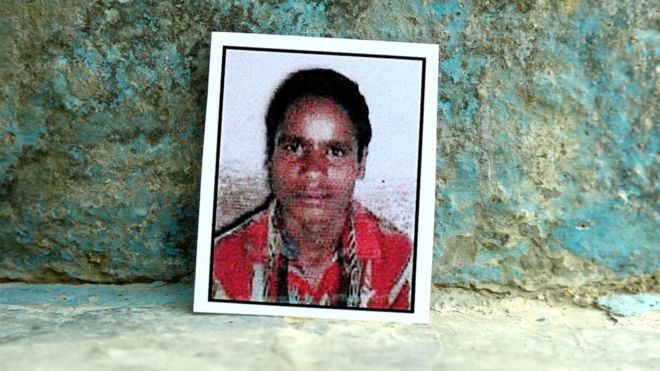
Jitendra
Image caption Jitendra was a carpenter and the only breadwinner in his family

A helpless anger pervades the Dalit community in the remote Indian village of Kot.

Last month, a group of upper-caste men allegedly beat up a 21-year-old Dalit resident, named Jitendra, so badly that he died nine days later.

His alleged crime: he sat on a chair and ate in their presence at a wedding.

Not even one of the hundreds of guests who attended the wedding celebration – also of a young Dalit man – will go on record to describe what happened to Jitendra on 26 April.

Afraid of a backlash, they will only admit to being at a large ground where the wedding feast was being held.

Only the police have publicly said what happened.

The wedding food had been cooked by upper-caste residents because many people in remote regions don’t touch any food prepared by Dalits, who are the bottom of the rigid Hindu caste hierarchy.

“The scuffle happened when food was being served. The controversy erupted over who was sitting on the chair,” police officer Ashok Kumar said.

The incident has been registered under the Scheduled Castes and Scheduled Tribes (Prevention of Atrocities Act) – a law meant to protect historically oppressed communities.

Dalits, formerly known as untouchables, have suffered public shaming for generations at the hands of upper-caste Hindus.

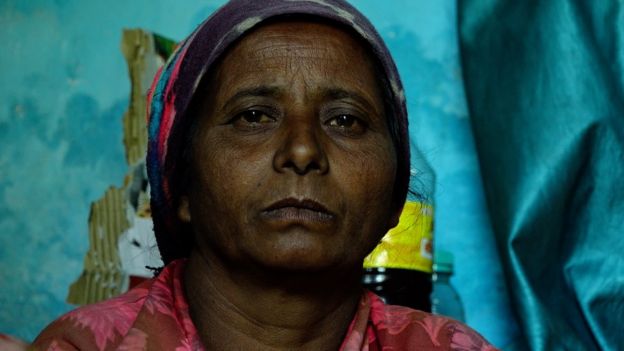
Geeta Devi
Image caption Geeta Devi says she found her son dead outside their home

Dalits continue to face widespread atrocities across the country and any attempts at upward social mobility are violently put down.

For example, four wedding processions of Dalits were attacked in the western state of Gujarat within a week in May.

It is still common to see reports of Dalits being threatened, beaten and killed for seemingly mundane reasons.

The culture that pervades their community is visible everywhere – including in Kot, which is in the hilly northern state of Uttarakhand.

Local residents from the Dalit community allege that Jitendra was beaten and humiliated at the wedding.

They say he left the event in tears, but was ambushed again a short distance away and attacked again – this time more brutally.

Jitendra’s mother, Geeta Devi, found him injured outside their dilapidated house early the next morning.

“He had been perhaps lying there the entire night,” she said, pointing to where she found him. “He had bruises and injury marks all over his body. He tried to speak but couldn’t.”

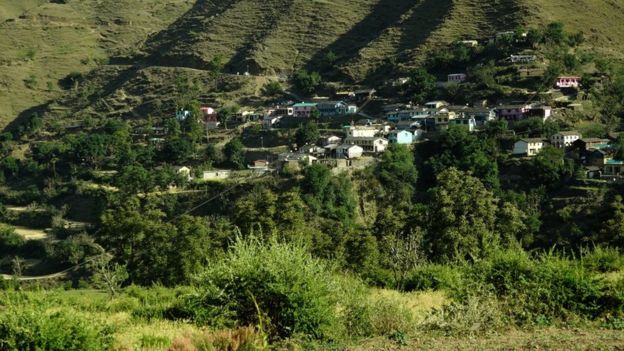
Kot village in Uttarakhand state
Image caption Dalits are outnumbered by upper-caste families in the village

She does not know who left her son outside their home. He died nine days later in hospital.

Jitendra’s death is a double tragedy for his mother – nearly five years ago her husband also died.

This meant that Jitendra, who was a carpenter, became the family’s only breadwinner and had to drop out of school to start working.

Family and friends describe him as a private man who spoke very little.

Loved ones have been demanding justice for his death, but have found little support among the community.

“There is fear. The family lives in a remote area. They have no land and are financially fragile,” Dalit activist Jabar Singh Verma said. “In surrounding villages too, the Dalits are outnumbered by families from higher castes.”

Of the 50 families in Jitendra’s village, only some 12 or 13 are Dalits.

Dalits comprise almost 19% of Uttarakhand’s population and the state has a history of atrocities committed against them.

Police have arrested seven men in connection with Jitendra’s death, but all of them deny any involvement.

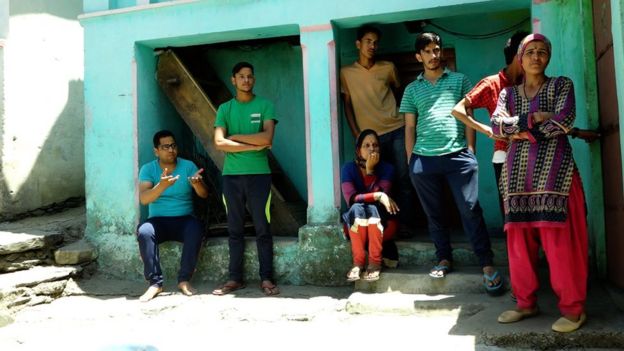
Group of upper-caste residents in the village
Image caption Upper-caste villagers deny discriminating against the Dalit community

“It’s a conspiracy against our family,” said a woman whose father, uncles and brothers are among the accused. “Why would my father use caste slurs at a Dalit’s marriage?”

“He must have been embarrassed that he got beaten and popped dozens of pills that led to his death,” another local upper-caste person said.

But the Dalits in the village, who are livid over Jitendra’s death, hotly deny these claims.

They say Jitendra suffered from epilepsy, but insist there is no chance that he overdosed on his medication.

Apart from these expressions of anger, local Dalit families have largely remained silent.

“It is because they are economically dependent on families from the higher castes,” activist Daulat Kunwar said.

“Most Dalits are landless. They work the fields of their wealthy upper caste neighbours. They know the consequences of speaking out loud.”

Jitendra’s family has already experienced some of these consequences – Geeta Devi says they are under pressure to stop pushing for the truth.

“Some men came over to our house and tried to scare us,” she said. “There is no one to support us but I will never give up our quest for justice.”

Source: The BBC

Law of Unintended Consequences

continuously updated blog about China & India

ChiaHou's Book Reviews

continuously updated blog about China & India

What's wrong with the world; and its economy

continuously updated blog about China & India