Archive for ‘africa’

31/07/2019

China and US court Asean members to strengthen Indo-Pacific ties as trade war enters second year

  • China’s Wang Yi and US’ Mike Pompeo at summit in Thailand to sell their visions of future for Southeast Asia
  • Analysts expect pragmatism from Asean as world’s two biggest economic powers play diplomatic game
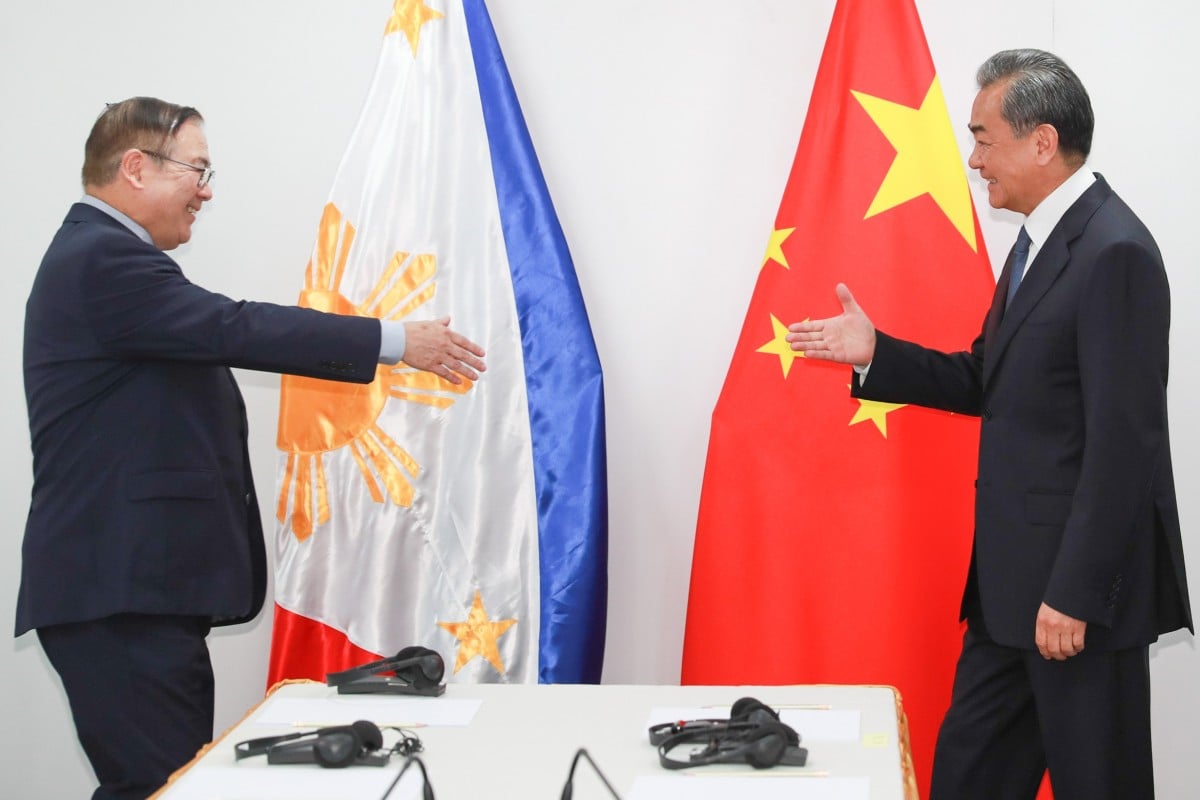
Chinese Foreign Minister Wang Yi (right) greets his Philippine counterpart Teodoro Locsin at the Asean meeting in Bangkok, Thailand. Photo: Xinhua
China and the United States are on a mission to strengthen ties with allies and expand their influence in Southeast Asia this week as their trade war enters a second year.
US Secretary of State Mike Pompeo arrived for a meeting of the Association of Southeast Asian Nations (Asean) in Bangkok on Wednesday to promote the US-led Indo-Pacific strategy, while Chinese Foreign Minister Wang Yi touched down a day earlier to advance Beijing’s Belt and Road Initiative.
The US Department of State said Pompeo’s trip was aimed at deepening Washington’s “long-standing alliances and vibrant bilateral relations with these countries, and [to] reaffirm our commitment to Asean, which is central to our vision for the Indo-Pacific region”.
In Beijing on Wednesday, Chinese foreign ministry spokeswoman Hua Chunying said that while their meeting was yet to be set, Wang and Pompeo were expected to meet and talk “frankly” about bilateral relations.
“I think that it is indeed necessary for China and the United States to maintain communication, as the two countries face many situations,” Hua said. “The issues would be communicated frankly”.

The Indo-Pacific strategy is a military and economic framework to contain China’s expansion into the Pacific and Indian oceans, and give an alternative to Beijing’s flagship belt and road development programme.

En route to Thailand, Pompeo said that after a stalled start to US Indo-Pacific policy during the Barack Obama administration, Washington’s strategy was well on its way to bearing fruit for the US and its allies.

South China Sea tensions, US-China trade war loom over Asean summit

“We have watched these coalitions build out,” he said.

Pompeo dismissed claims that China’s sphere of influence among Asean members was growing, saying such speculation was “not factually accurate”.

“[Asean countries] are looking for partners that are going to help them build out their economies and to take good care of their people,” he said, pledging greater engagement from President Donald Trump’s administration.

Pompeo was expected to sit down on Friday with his South Korean and Japanese counterparts to consolidate their trilateral alliance in the region.

He was also expected to hold talks with Thai Foreign Minister Don Pramudwinai that day.

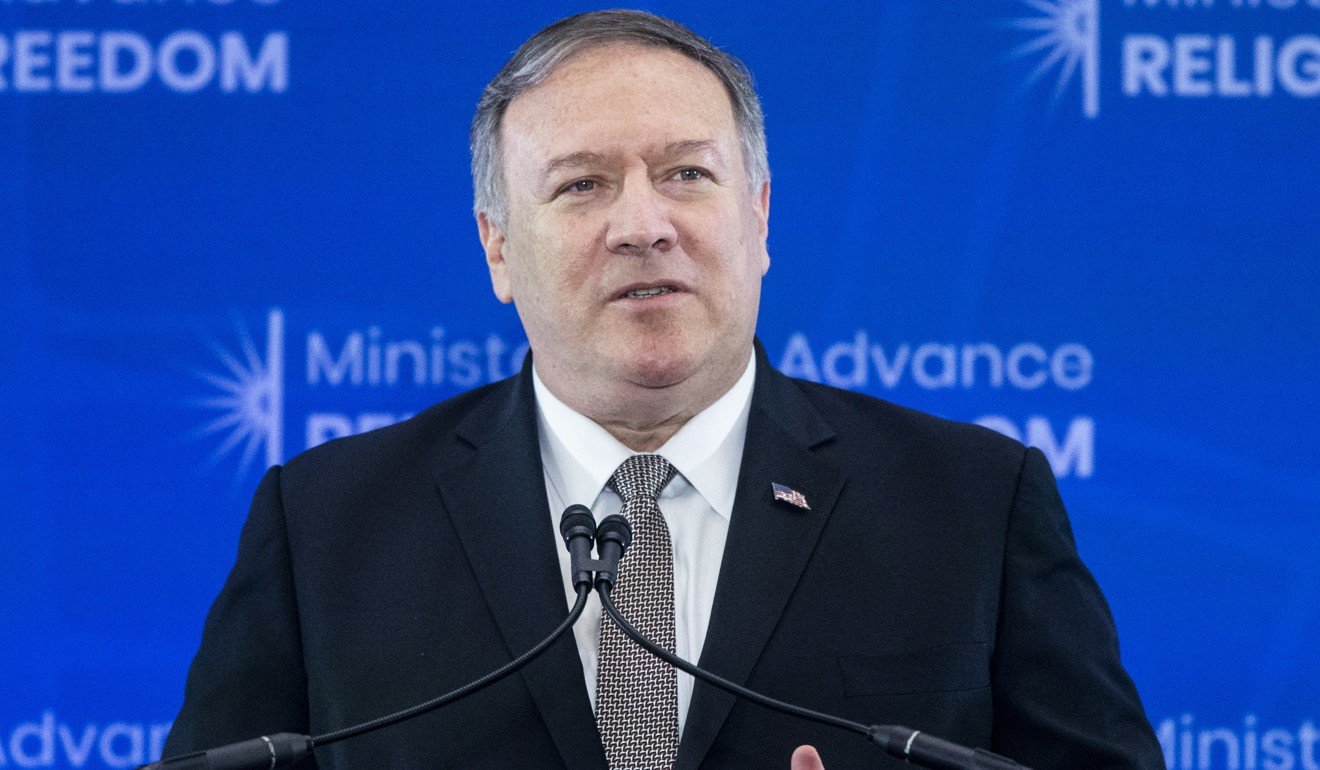
US Secretary of State Mike Pompeo is expected to meet Chinese Foreign Minister Wang Yi at Asean in Thailand. Photo: EPA-EFE

Meanwhile, Wang launched his belt and road pitch to his Cambodian, Philippine and Indonesian counterparts after he arrived in Thailand for the gathering, which ends on Saturday.

The belt and road projects are largely commercial and aimed at strengthening land and sea infrastructure linking Asia, Europe and Africa. But they raised suspicion in the West that they are aimed at eroding the US-led world order.

During his meeting with Philippine Foreign Affairs Secretary Teodoro Locsin, Wang said: “China is willing to have high-level exchanges with the Philippines, to deepen the mutual trust, and promote the Belt and Road Initiative [in the Philippines] … to accelerate the development of regional infrastructure.”

Can China’s trade boost with Asean help get the Regional Comprehensive Economic Partnership over the line?

This year’s Asean forum was taking place as countries were more receptive to Chinese initiatives, in part due to the unpredictability of the US administration, according to Rajeev Ranjan Charturvedy, a visiting fellow at the S. Rajaratnam School of International Studies at Nanyang Technological University in Singapore.

“Policy uncertainties under the Trump administration have already pushed some Asean countries towards China in ways that would have seemed unlikely a few years ago,” Charturvedy said.

Analysts said Trump’s “America first” approach shaped his Asean policy. The president had vowed to apply “punishments” to countries – including Asean member states – for contributing to the US trade deficit.

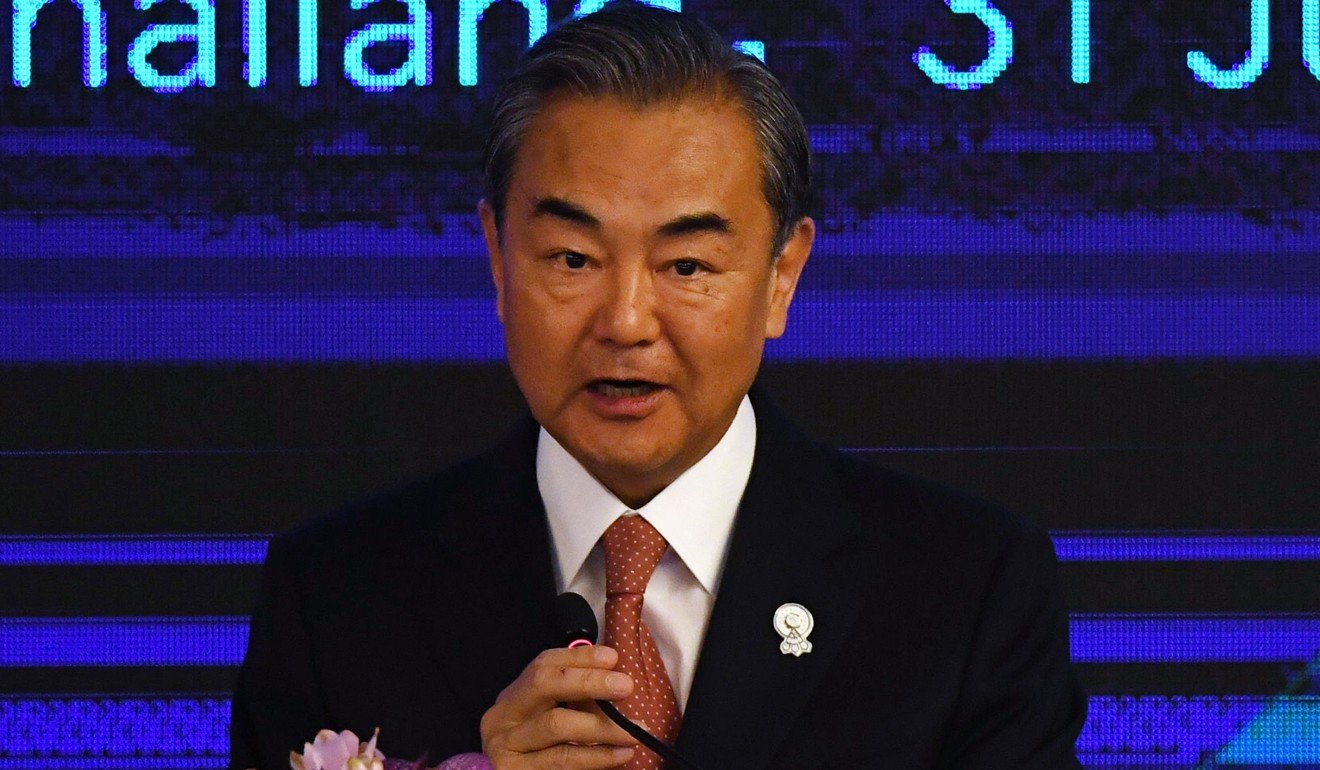
Chinese Foreign Minister Wang Yi is talking to Asean counterparts at a time when they are receptive to China’s proposals, an analyst says. Photo: AFP

Trump was absent at the Asean summit in Singapore last year, leading to concerns that Washington’s commitment to Asia was declining.

Charturvedy said the Asean forum’s focus was about building constructive regionalism, but China’s attitudes to security could pose a challenge.

“[However] Asean countries clearly hope not to be forced to choose between the US and Chinese offers. Rather, they would like more freedom of choice while accommodating for a larger role for China in the region,” he said.

Clarita Carlos, a professor of political science at the University of the Philippines, suggested that Asean members would be pragmatic during the forum.

Robert Lighthizer warns Vietnam over trade deficit with US

They would try to find their own balance between the two major powers – as countries rather than a bloc – to try to maximise each state’s interests and advantages, Carlos said.

“Vietnam has a love-hate relationship with China, especially as a winner in the ongoing US-China trade war,” she said. “Singapore has close relations with China. There are also ups and downs in the relationship with China for Brunei, Malaysia and Indonesia.”

Source: SCMP

30/07/2019

Fight against terrorism, extremism in Xinjiang should be supported, respected: Chinese FM

BEIJING, July 29 (Xinhua) — The attempt of some Western countries to tarnish the image of the Xinjiang Uygur Autonomous Region is doomed to fail, and the fight against terrorism and extremism in Xinjiang should be supported and respected, a Chinese foreign ministry spokesperson said Monday.

Recently, ambassadors from 50 countries to the United Nations Office at Geneva (UNOG) have sent a joint letter to the President of the UN Human Rights Council (UNHRC) and the High Commissioner for Human Rights to voice their support for China’s position on issues related to Xinjiang.

The 50 ambassadors, who are from countries including Russia, Pakistan, Saudi Arabia, Algeria and Cuba, have collectively stated for the first time that the counter-terrorism and de-radicalization measures, including the establishment of vocational education and training centers, have effectively safeguarded basic human rights in Xinjiang, spokesperson Hua Chunying told a press briefing.

According to media reports, 24 members of the UNHRC have previously signed a letter criticizing China’s position on relevant issues.

“The 24 members, with a total population of no more than 600 million, are all developed Western countries, none of them being an Islamic or developing country. While of the 50 countries that support China are from Asia, Africa, Latin America and Europe, with a total population of nearly 2 billion, 28 are members of the Organization of the Islamic Cooperation, and their population is more than twice that of the 24 members that criticized China,” Hua said. “So it’s obvious who is right and who is wrong on the matter of Xinjiang,” she added.

Hua said many of the ambassadors who supported China’s Xinjiang policy have visited Xinjiang and witnessed the truth.

As the ambassadors pointed out, those who had visited Xinjiang found what they saw and heard was completely different from what was described in Western media reports, according to Hua.

“The ambassadors also appreciated China’s achievements in human rights, believed that Xinjiang’s establishment of vocational education and training centers, as well as other counter-terrorism and de-radicalization measures, effectively guaranteed basic human rights and urged relevant countries to stop their unfounded accusations against China,” said the spokesperson.

“This fully shows that the international community has its fair judgment on the development of Xinjiang,” said Hua, adding that attempt to smear Xinjiang and put pressure on China in the name of “human rights” will never succeed.

Pointing out that the current problem in Xinjiang is the issue of counter-terrorism and extremism rather than religious and human rights issues, Hua said the counter-terrorism and de-radicalization struggle in Xinjiang deserve support, respect and understanding.

“Faced with severe threats of terrorism and extremism, the Xinjiang Uygur Autonomous Region has taken a series of counter-terrorism and de-radicalization measures according to law, including the establishment of vocational education and training centers,” said Hua, adding that those measures have turned the situation around.

“In almost three years, not a single violent or terrorist incident took place in Xinjiang. The region now enjoys social stability and unity among all ethnic groups. People there are living a happy life with a stronger sense of fulfillment and security. They endorse the government’s policies and measures wholeheartedly,” said the spokesperson.

Noting that many of the 24 countries that denounce China’s Xinjiang policy have been victims of terrorism, Hua said relevant people and officials from these 24 countries are welcome to visit Xinjiang to learn about Xinjiang’s counter-terrorism and de-radicalization experience.

Hua said China is working with all parties to ensure that multilateral human rights mechanisms stick to the purposes and principles of the UN Charter. Human rights issues should be dealt with in an objective, fair and non-selective way. “We need to advance international human rights cause in a sound manner through constructive dialogue and cooperation.”

“We resolutely oppose any country’s act of using the Human Rights Council and other mechanisms to interfere in other countries’ internal affairs and wantonly criticize, smear and pressure others. We urge the relevant countries to correct their mistakes at once, not to politicize the relevant issue or practice double standards, and stop meddling in other countries’ domestic affairs,” she added.

Source: Xinhua

27/07/2019

Ambassadors from 50 countries voice support for China’s position on issues related to Xinjiang


GENEVA, July 27 (Xinhua) — Ambassadors from 50 countries to the United Nations Office at Geneva (UNOG) have co-signed a letter to the President of the UN Human Rights Council (HRC) and the High Commissioner for Human Rights to voice their support for China’s position on issues related to its Xinjiang Uygur Autonomous Region.

Earlier on July 12, a number of ambassadors in Geneva sent the joint letter to show their support for China, and as of Friday evening, more ambassadors had joined, the Chinese Mission to the UNOG revealed.

In a statement issued on Friday night, the Chinese mission said that some other countries had also expressed their support in separate letters or press statements.

In the joint letter, the ambassadors commend China for its economic and social progress, effective counter-terrorism and de-radicalization measures, and strong guarantee of human rights.

They appreciate the opportunities provided by China for diplomatic envoys, officials of international organizations, and media professionals to visit Xinjiang, and point to the contrast between Xinjiang in the eyes of those who have visited it and the one portrayed by some western media.

The ambassadors also urge a certain group of countries to stop using uncorroborated information to make unfounded accusations against China.

“I was surprised that some people call these vocational training and education centers concentration or internment camps,” Vadim Pisarevich, deputy permanent representative of Belarus to the UNOG, told Xinhua.

“They’re nothing of the kind. They look like ordinary educational facilities and even I said that they are more than this because they provide life skills training to the students,” Pisarevich said.

They are “very useful institutions for addressing the problems of terrorism, extremism and separatism,” he said.

“Terrorism and extremism are an intractable challenge across the world. In the face of its grave threat, Xinjiang Uygur Autonomous Region responded with a number of lawful steps, including setting up vocational education and training centers, to prevent and combat terrorism and extremism,” the Chinese Mission to the UNOG said in its statement.

“Facts speak louder than words, and justice cannot be overshadowed. The great diversity of countries co-signing the letter — from Asia, Africa, Latin America, and Europe, especially the OIC (Organization of Islamic Cooperation) — makes it clear that the international community has drawn a fair conclusion about Xinjiang’s human rights achievement and counter-terrorism and de-radicalization outcome,” the statement said.

“Those that seek to use human rights as an excuse to slander and pressure China have only themselves to deceive,” it added.

“We oppose any attempt to use human rights issues as a cover for interference in a country’s internal affairs. We urge those who are doing so to change course, refrain from politicization and double standards, and stop interfering in the internal affairs of other countries under the pretext of human rights,” it said.

At a press conference on Friday, China’s Ambassador to the UNOG Chen Xu also rebuked some Western nations for slandering China over Xinjiang, noting that China doesn’t accept these “groundless accusations.”

Jamshed Khamidov, head of Tajikistan’s mission in Geneva, said his government opposes any attempts to use the Human Rights Council for particular political purposes, and efforts should be made to avoid any politicization of the Human Rights Council.

“We know the situation in the Xinjiang region. We know how much the government of China is doing … and what kind of measures were implemented in this region to support its peace, security and development,” he said.

In visits to the vocational training and education centers in Xinjiang’s Urumqi and Kashi, Zenon Mukongo Ngay, head of the Democratic Republic of Congo’s mission in Geneva, said he was impressed with the “level of development” in Xinjiang and how the people in the centers receive education for getting a job.

The Chinese mission also said that together with all parties, China is committed to promoting the healthy development of the international human rights cause by encouraging multilateral human rights institutions to stick to the purpose and principles of the UN Charter, handle human rights issues in an objective, impartial and non-selective manner, and engage in constructive dialogues and cooperation.

Source: Xinhua

22/07/2019

Cambodia denies deal to allow armed Chinese forces at its naval base

WASHINGTON (Reuters) – China will be able to place armed forces at a Cambodian naval base under a secret pact between the two nations, the Wall Street Journal said on Sunday, although Cambodian officials denied such a deal had been struck.

The agreement, reached this spring but not made public, gives China exclusive access to part of Cambodia’s Ream Naval Base on the Gulf of Thailand, the Journal said, citing U.S. and allied officials familiar with the matter.

Such an arrangement would boost China’s ability to assert contested territorial claims and economic interests in the South China Sea, challenging U.S. allies in Southeast Asia.

Chinese and Cambodian officials denied such a pact existed, the Journal said.

“This is the worst-ever made up news against Cambodia,” Cambodian Prime Minister Hun Sen told the pro-government news site Fresh News on Monday.

“No such thing could happen because hosting foreign military bases is against the Cambodian constitution.”

Cambodian defence ministry spokesman Chhum Socheat told Reuters the report was “made up and baseless”.

In Beijing, foreign ministry spokesman Geng Shuang said, “As I understand it, the Cambodia side denied this.”

But he declined to respond to repeated questions whether China also denied the report.

“China and Cambodia are traditionally friendly neighbours,” Geng told a news briefing.

“We have cooperated in various areas. Our cooperation is open, transparent, and mutually beneficial and equal. I hope the relevant parties do not overinterpret it.”

Hun Sen’s strongest regional ally, China has poured billions of dollars in development assistance and loans into Cambodia through two-way frameworks and its Belt and Road initiative.

The initiative, unveiled by Chinese President Xi Jinping in 2013, aims to bolster a sprawling network of land and sea links throughout Asia, the Middle East, Europe and Africa.

It has attracted a flood of Chinese commercial ventures in Cambodia, including casinos and special economic zones.

This month the U.S. Defense Department suggested China may be attempting to gain a military foothold in Cambodia, in a letter to Cambodia asking why the nation had turned down an offer to repair a naval base.

In a statement, the State Department urged Cambodia to reject such an arrangement, saying the nation had a “constitutional commitment to its people to pursue an independent foreign policy”.

It added, “We are concerned that any steps by the Cambodian government to invite a foreign military presence in Cambodia would threaten the coherence and centrality of the Association of Southeast Asian Nations in coordinating regional developments, and disturb peace and stability in Southeast Asia.”

Cambodia denied reports last November that China had been lobbying it since 2017 for a naval base that could host frigates, destroyers and other vessels of the People’s Liberation Army Navy.

Source: Reuters

29/06/2019

Belt and Road Economic Information Partnership to build info bridge

BEIJING, June 28 (Xinhua) – Set to build an “information bridge” for the Belt and Road Initiative (BRI) construction, attendees of the Belt and Road Economic Information Partnership (BREIP) in Beijing believed it would reduce the “information deficit” between countries.

The partnership, designed to eliminate information asymmetry in implementing the BRI, offers demonstration, guidance and services to participants of the BRI, and create a new platform for international cooperation.

The platform of BRInfo, operated and maintained by China Economic Information Service (CEIS) under Xinhua News Agency, allows BREIP members to share information and conduct cooperation.

Alfred Schipke, IMF Senior Resident Representative for China, said it would be important to strengthen policy frameworks and foster capacity development in China and in partner countries.

“The effective sharing of information will be more and more important. Here, the BREIP could be a key platform,” Schipke said.

New commercial opportunities will surely be created with information from professional institutions and needs of enterprises brought together, so as to promote mutual understanding, said Liu Zhengrong, vice president of Xinhua News Agency.

The BREIP, offering news service and information assurance, has provided a platform of news and economic information for countries and regions to expand cooperation, noted Marat Abulkhatin, first deputy chief editor of TASS Russian News Agency.

Domestic information reports growing significance now in global market, and under the BRInfo mechanism, news agencies can help to further eliminate information asymmetry, said Raphael Juan, director of markets at Brazilian CMA News Agency.

Polish government and enterprises look forward to better understanding different market situations and making better decisions with the economic information shared on the BREIP, said Ryszard Marcin Nizewski, product director with Polish Press Agency.

The BRI has made great contributions to international trade and the international economy, and its achievements have far exceeded expectations. It is believed that the BREIP will also become a multi-faceted cooperation tool, according to Dzmitry Prymshyts, deputy director for Research and Innovation of the Institute of Economics of the National Academy of Sciences of Belarus.

This platform could decrease the “information deficit” between countries while growing into a timely, objective and solid source of information, Prymshyts said.

The BREIP, established in Beijing on Thursday, was initiated by Xinhua News Agency and co-founded by more than 30 institutions including well-known news agencies, information service providers, research institutions, chambers of commerce and associations from more than 20 countries and regions in Asia, Europe, Africa, Latin America and Oceania.

Source: Xinhua

28/06/2019

Xinhua Headlines: China-Africa trade expo to forge closer economic partnership

Xinhua Headlines: China-Africa trade expo to forge closer economic partnership

Justin Yifu Lin, former senior vice president and chief economist at the World Bank, delivers a speech at the China-Africa Economic and Trade Expo in Changsha, central China’s Hunan Province, June 27, 2019. (Xinhua/Xue Yuge)

by Xinhua writers Cao Kai, Chu Yi, Yang Jian and Zhang Yujie

CHANGSHA, June 27 (Xinhua) — The first China-Africa Economic and Trade Expo opened Thursday in Changsha, capital of central China’s Hunan Province, in a move to forge closer economic ties between the largest developing country and the largest developing continent.

The three-day event has attracted more than 10,000 guests and traders, including those from 53 African countries, according to the organizing committee.

Chinese President Xi Jinping has sent a congratulatory letter.

The expo, announced at the Beijing Summit of the Forum on China-Africa Cooperation (FOCAC) last September, was established to provide a platform for deepening economic and trade cooperation between the two sides, he stressed.

It is hoped that the two sides will strengthen coordination to better implement the eight major initiatives put forward at the Beijing summit of the FOCAC, actively explore new paths for cooperation, open up new points of growth for collaboration, and promote China-Africa economic and trade cooperation to a new level, Xi said.

“Industrial development and free trade amongst ourselves will foster faster growth for our mutual benefit,” said Ugandan President Yoweri Museveni at the opening ceremony. “This Forum should, among others, enable us to devise ways of turning these rays of hope into a reality.”

Hailing the long-term friendship with Africa, Chinese Vice Commerce Minister Qian Keming said at the expo that bilateral trade and economic cooperation should be practical and concrete to meet the development needs of African countries in areas such as infrastructure and talent cultivation.

China saw 3 percent year-on-year growth of foreign trade with African countries in the first five months this year, hitting 84.8 billion U.S. dollars. China’s direct investment to the continent has increased by 1.5 billion U.S. dollars in the past five months, up 20 percent year on year, according to Qian.

According to Assome Aminata Diatta, Senegal’s Minister of Trade and SMEs, China is an ideal partner for Africa to improve its capacity building when China is seeking higher-quality growth driven by innovation.

Bringing modern production lines to Africa, especially in the special economic zones, will likely provide tens of millions of jobs for Africa, accelerate its industrialization and improve the trade structure between China and Africa, Diatta said.

China has set a good example for other developing countries, especially those in Africa which, having a lot in common with China, may benefit from mutual complementarity in the area of development, said Justin Yifu Lin, former senior vice president and chief economist at the World Bank.

The experience, wisdom and programs that China will offer are very good reference for African countries that are now eager to work themselves out of poverty and pursue development, Lin said.

After the opening ceremony, 13 cooperation projects involving eight African countries were signed, worth a total of more than 2.5 billion U.S. dollars.

Conferences, seminars, forums and exhibitions focusing on agriculture, trade, investment and infrastructure construction will be held during the expo, with experts sharing views on closer bilateral exchanges.

The expo will feature exhibition areas covering more than 40,000 square meters, including national pavilions and display areas for enterprises that showcase the achievements and opportunities of China-Africa economic and trade cooperation.

TRADE AND INVESTMENT

With the theme “Win-Win Cooperation for Closer China-Africa Economic Partnership,” the expo, which will become a biennial event, will open a new chapter in the history of bilateral trade.

“Nigeria has a lot of non-oil products of high quality and we want China to buy more,” Uduak M. Etokowoh, an official with the Nigerian Export Promotion Council, told Xinhua.

Nigerian gemstones, Namibian oysters, Kenyan coffee and tea as well as South African wine are attracting many Chinese visitors at the expo.

“We used to export leather materials to Italy and Spain, who now have a wobbling economy,” said Nigerian businessman Mustapha Tijjani Garo. “We are now looking east for the market.”

China has been the largest trading partner of Africa for ten consecutive years. In 2018, trade volume between China and Africa amounted to 204.2 billion U.S. dollars, up 20 percent year on year.

China’s imports of non-resource products from Africa have increased significantly. In 2018, China’s imports from Africa went up 32 percent year on year, with the imports of agricultural products up 22 percent.

“Namibian oysters are selling well in Beijing, Shanghai and Guangzhou,” said Rinouzeu Katjingisiua. “We are hoping to find more partners here.”

For Chinese businessmen, with mounting pressure on labor-intensive industries as cost is surging and industrial upgrading is urgently needed, Africa is a great destination.

Wang Lianfang, owner of Qiqihar Quanlian Heavy Forging Company Ltd. based in northeast China’s Heilongjiang Province, set up an assembling plant in Senegal two years ago to find new markets amid slump domestic demand on agriculture machinery.

“Africa has strong demand,” said Wang, who is selling seeders, tractors and harvesters in the west African country.

“The output is expected to reach 2 billion yuan (291 million U.S. dollars) within 5 years,” said Wang, adding that the company has been working hard for survival in the past three years.

The transfer of labor-intensive industries from China can also give a strong push to Africa’s industrialization and modernization. It will expedite the economic take-off of Africa in the same way as how the industrial transfer had benefited China, Justin Yifu Lin said.

AGRICULTURE AND POVERTY REDUCTION

With abundant resources, a large population and a vast market, Africa is still the poorest continent and falls behind in the overall context of development and is battling poverty and hunger.

For 11 years, paddy land has been Hu Yuefang’s battlefield in Madagascar to fight against poverty.

“Madagascar can reach the self-sufficiency in rice as long as 15 percent of its rice planting area belongs to hybrid varieties,” Hu Yuefang said, adding that the average yield of hybrid rice produced by Chinese technologies in Africa is two to three times more than that of local ones.

Buried in the field all day, the 61-year-old agriculture expert from Yuan Longping High-tech Agriculture Co. Ltd. (LPHT) has been on the frontier of closer agriculture cooperation between the two sides.

He said though he could not come to the scene, he expected fruitful results from the inaugural expo to help tackle challenges and bring shared benefits to China and Africa.

China took deliberate steps using the agriculture sector to transform its economy by setting up favorable agricultural policies, the experience of which can be learned by us to accelerate our development, according to Ugandan Minister of Agriculture Vincent Bamulangaki Ssempijja at the expo.

“We strongly believe that by working together with our Chinese friends through joint venture businesses, investment arrangements and win-win cooperation, the majority of African countries can quickly eradicate poverty,” he said.

Hunger has long been bothering African countries. To help relieve the grain shortage, Chinese agricultural enterprises and experts, like Yuan, have been devoted to the continent for years, sharing China’s wisdom and experience.

“We put red flags on the map to show our steps in promoting hybrid rice in Africa in recent years, which have covered nearly 20 countries in southeastern, western and northern parts of the continent,” said Yao Zhenqiu, LPHT’s deputy general manager.

Guided by Yuan Longping, China’s “Father of Hybrid Rice,” the LPHT expert team has successfully cultivated five kinds of high-yielding hybrid rice seeds suitable for the local soil and climate.

So far, Chinese experts and technicians have carried out more than 300 small-scale projects in nine African countries, promoted 450 agricultural technologies, and trained nearly 30,000 local farmers and technicians, according to Ma Youxiang, an official with China’s Ministry of Agriculture and Rural Affairs, at the expo.

“We will continue to send high-level agricultural experts and vocational education teachers to African countries, to further expand training in Africa and help cultivate more talent in agriculture,” he said.

The World Food Programme (WFP), the food assistance branch of the United Nations, is also taking the expo as an opportunity to meet Chinese business society to tackle food problems in Africa.

WFP will work with China to help Africa achieve the goal of ‘Zero Hunger’, said Qu Sixi, WFP China Representative.

Source: Xinhua

26/06/2019

China, Africa eye a community of shared future via cooperation

CHINA-BEIJING-YANG JIECHI-SOUTH AFRICAN FM-MEETING (CN)

Yang Jiechi, a member of the Political Bureau of the Central Committee of the Communist Party of China (CPC) and director of the Office of the Foreign Affairs Commission of the CPC Central Committee, meets with South African Foreign Minister Naledi Pandor in Beijing, capital of China, June 25, 2019. (Xinhua/Zhang Ling)

BEIJING, June 25 (Xinhua) — China on Tuesday vowed to work with African countries to enhance cooperation based on equality and openness to build a community of shared future.

That came as Chinese State Councilor and Foreign Minister Wang Yi addressed the opening ceremony of the Coordinators’ Meeting on the Implementation of the Follow-up Actions of the Beijing Summit of the Forum on the China-Africa Cooperation (FOCAC).

After reading Chinese President Xi Jinping’s congratulatory letter to the meeting, Wang said the letter fully expressed Xi’s profound friendship toward African countries and their people, and demonstrated the Chinese government’s strong willingness to engage in friendly cooperation.

In delivering on the blueprint for China-Africa cooperation in the new era, China stands ready to work with the African side in implementing promises with concrete and effective actions, and achieving full implementation of consensus and outcomes concluded at the FOCAC Beijing Summit, Wang said.

Wang also called for sticking to the fundamental purpose of building a community of shared future and the development path of jointly constructing the Belt and Road, upholding multilateralism, and safeguarding the common interests of developing countries and emerging markets.

“Any disturbance will not affect our resolve to enhance cooperation, and any difficulty will not hinder our joint advancement in achieving rejuvenation,” he said.

After the opening ceremony, Yang Jiechi, a member of the Political Bureau of the Central Committee of the Communist Party of China (CPC) and director of the Office of the Foreign Affairs Commission of the CPC Central Committee, met with four foreign ministers from African countries, including Nabeela Tunis from Sierra Leone, Simeon Oyono Esono Angue from Equatorial Guinea, Naledi Pandor from South Africa, and Amadou Ba from Senegal.

Also on Tuesday, Wang Yi met with foreign ministers from Zimbabwe, Lesotho, Cote d’Ivoire, Equatorial Guinea, Ghana, Uganda and Libya, and an official on economics from Eritrea.

Source: Xinhua

08/06/2019

Factbox: China, Africa to embrace closer economic, trade ties

BEIJING, June 8 (Xinhua) — China and African countries will see more intimate economic and trade ties as the first China-Africa Economic and Trade Expo will open on June 27 in Changsha, the capital city of Hunan Province.

A total of 53 African countries have confirmed to attend the expo, and international organizations including the United Nations Industrial Development Organization, the World Food Programme and the World Trade Organization will also send representatives to attend the event.

Here are some facts and figures revealing the growing vitality of trade between China and Africa as well as broader economic exchanges.

— China has been the largest trading partner of Africa for 10 consecutive years.

— In 2018, trade volume between China and Africa amounted to 204.2 billion U.S. dollars, up 20 percent year on year.

— China’s imports of non-resource products from Africa have increased significantly. In 2018, China’s imports from Africa went up 32 percent year on year, with the imports of agricultural products up 22 percent.

— China’s exports of mechanical, electrical and high-tech products accounted for 56 percent of its total exports to African countries.

— China has finished the negotiations of a free trade agreement with Mauritius.

— More than 3,700 Chinese enterprises have been set up in Africa by the end of 2018, with combined direct investment over 46 billion dollars.

— China’s financial institutions have established more than 10 branches in Africa.

— South Africa and seven other countries have included the Chinese currency renminbi (RMB), or the yuan, in their foreign exchange reserves.

— China has formed RMB clearing arrangements with Zambia and signed currency swap agreements with four African countries including Morocco.

Source: Xinhua

30/05/2019

China’s top legislator meets Nigerien president

CHINA-BEIJING-LI ZHANSHU-NIGER'S PRESIDENT-MEETING (CN)

Li Zhanshu (R), chairman of the Standing Committee of the National People’s Congress (NPC), meets with Niger’s President Mahamadou Issoufou at the Great Hall of the People in Beijing, capital of China, May 29, 2019. (Xinhua/Pang Xinglei)

BEIJING, May 29 (Xinhua) — China’s top legislator Li Zhanshu met with visiting Nigerien President Mahamadou Issoufou on Wednesday, exchanging views on pushing forward the relationship between the two countries.

Li, chairman of the Standing Committee of the National People’s Congress (NPC), said China stands ready to work with Niger to implement the important consensus made by the two heads of state to lift the bilateral ties to a higher level.

Both the Chinese and African people experienced anti-imperialist and anti-colonial struggles in the past, and both face the task of getting rid of poverty and backwardness and achieving development and prosperity, Li said.

China and Africa have created a new model of South-South cooperation, Li said.

The NPC is willing to strengthen exchanges with the National Assembly of Niger and promote state-to-state friendly cooperation, he said.

Issoufou said Niger thanks China for its long-term support and assistance, and is willing to learn from China’s development experience, actively participate in jointly building the Belt and Road and strengthen pragmatic cooperation.

Source: Xinhua

23/05/2019

Ozone layer: Banned CFCs traced to China say scientists

home insulationImage copyright GETTY IMAGES
Image caption Much of the CFC-11 gas has been used in home insulation

Researchers say that they have pinpointed the major sources of a mysterious recent rise in a dangerous, ozone-destroying chemical.

CFC-11 was primarily used for home insulation but global production was due to be phased out in 2010.

But scientists have seen a big slowdown in the rate of depletion over the past six years.

This new study says this is mostly being caused by new gas production in eastern provinces of China.

CFC-11 is also known as trichlorofluoromethane, and is one of a number of chloroflurocarbon (CFC) chemicals that were initially developed as refrigerants during the 1930s.

However, it took many decades for scientists to discover that when CFCs break down in the atmosphere, they release chlorine atoms that are able to rapidly destroy the ozone layer which protects us from ultraviolet light. A gaping hole in the ozone layer over Antarctica was discovered in the mid 1980s.

Media caption Twenty-five years of ice loss in the Antarctic

The international community agreed the Montreal Protocol in 1987, which banned most of the offending chemicals. Recent research suggests that the hole in the Northern Hemisphere could be fully fixed by the 2030s and Antarctica by the 2060s.

When was the CFC problem discovered?

CFC-11 was the second most abundant CFCs and was initially seen to be declining as expected.

However in 2018 a team of researchers monitoring the atmosphere found that the rate of decline had slowed by about 50% after 2012.

graphic
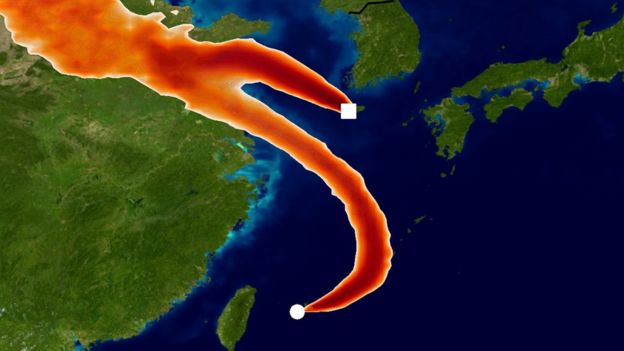
Image caption Monitoring stations in Korea and Japan were key to detecting the mystery sources of CFC-11

That team reasoned that they were seeing new production of the gas, coming from East Asia. The authors of that paper argued that if the sources of new production weren’t shut down, it could delay the healing of the ozone layer by a decade.

What did investigators find on the ground?

Further detective work in China by the Environmental Investigation Agency in 2018 seemed to indicate that the country was indeed the source. They found that the illegal chemical was used in the majority of the polyurethane insulation produced by firms they contacted.

One seller of CFC-11 estimated that 70% of China’s domestic sales used the illegal gas. The reason was quite simple – CFC-11 is better quality and much cheaper than the alternatives.

So what does this latest study show?

This new paper seems to confirm beyond any reasonable doubt that some 40-60% of the increase in emissions is coming from provinces in eastern China.

Using what are termed “top-down” measurements from air monitoring stations in South Korea and Japan, the researchers were able to show that since 2012 CFC-11 has increased from production sites in eastern China.

home insulationImage copyright GETTY IMAGES

They calculated that there was a 110% rise in emissions from these parts of China for the years 2014-2017 compared to the period between 2008-2012.

“This new study is based on spikes in the data on air that comes from China,” lead author Dr Matt Rigby, a reader at the University of Bristol, told BBC Inside Science.

“Using computer simulations of the transport of these gases through the atmosphere we can start to put numbers on emissions from different regions and that’s where we come up with this number of around 7,000 tonnes of extra CFC-11 emissions coming out of China compared to before 2012.

“But from the data, all we just see are the ultimate releases to the atmosphere, we don’t have any information on how that CFC-11 was used or where it was produced, it is entirely possible that it was manufactured in some other region, some other part of China or even some other country and was transported to the place where they are making insulating foams at which point some of it could have been emitted to the atmosphere.”

Where are the rest of the emissions coming from?

The researchers are not sure. It’s possible that the missing emissions are coming from other parts of China, as the monitoring stations just can’t see them. They could also be coming from India, Africa or South America as again there is very little monitoring in these regions.

Does this have implications for climate change?

Yes – the authors say that these CFCs are also very potent greenhouse gases. One tonne of CFC-11 is equivalent to around 5,000 tonnes of CO2.

“If we look at these extra emissions that we’ve identified from eastern China, it equates to about 35 million tonnes of CO2 being emitted into the atmosphere every year, that’s equivalent to about 10% of UK emissions, or similar to the whole of London.”

Will China clampdown on the production?

The Chinese say they have already started to clamp down on production by what they term “rogue manufacturers”. Last November, several suspects were arrested in Henan province, in possession of 30 tonnes of CFC-11.

Clare Perry from the Environmental Investigations Agency (EIA) said that the new findings re-affirmed the need to stamp out production.

“I think with this study, it is beyond doubt that China is the source of these unexpected emissions, and we would hope that China is leaving no stone unturned to discover the source of the CFC-11 production.

“Unless the production of the chemical is shut down it will be near impossible to end the use and emissions in the foam companies.”

The study has been published in the journal Nature.

Source: The BBC

Law of Unintended Consequences

continuously updated blog about China & India

ChiaHou's Book Reviews

continuously updated blog about China & India

What's wrong with the world; and its economy

continuously updated blog about China & India