Archive for ‘demolition’

10/09/2019

Block of flats collapses in southern China after ‘sinking into ground’

  • Residents evacuated from building in Shenzhen as it leans to one side
  • An investigation is launched and utilities in the area are cut off
The building leans to one side after apparently sinking into the ground. Photo: Weibo

Emergency workers sealed off a building in the southern Chinese city of Shenzhen after it collapsed on Wednesday morning, local authorities said.

At around 11.20am, a block of flats in Luohu district suddenly sank into the ground and leaned to one side, the Shenzhen government said on Weibo, China’s equivalent of Twitter.

“Before it happened, the local community office heard noises coming from underground, and evacuated residents. Right now there are no casualties,” the Weibo post said. “The case is being investigated.”

In a short video published by state broadcaster CCTV, a residential building appears to have sunk into the ground and leans on the neighbouring building, with bricks and concrete strewn on the ground.

The area was closed off as police, ambulance crews and firefighters attended the scene.

The authorities also evacuated residents from surrounding buildings, moving them into temporary housing. A panel of experts began to investigate the cause of the collapse, while water, gas and electricity supplies were cut off in the area and construction work was halted as a precaution.

Earlier this month, a stadium in Shenzhen collapsed while demolition work was being carried out, killing three workers and injuring three. The part of the venue that collapsed had previously been used as a basketball court but was being renovated, with most of the interior having been torn down apart from a few pillars supporting the roof.

Source: SCMP

19/05/2019

Shanghai Bund’s historic buildings saved from demolition … for now

  • Experts win reprieve for two out of three heritage houses but fear their success is only temporary
  • Authorities plan public cultural facilities for the site
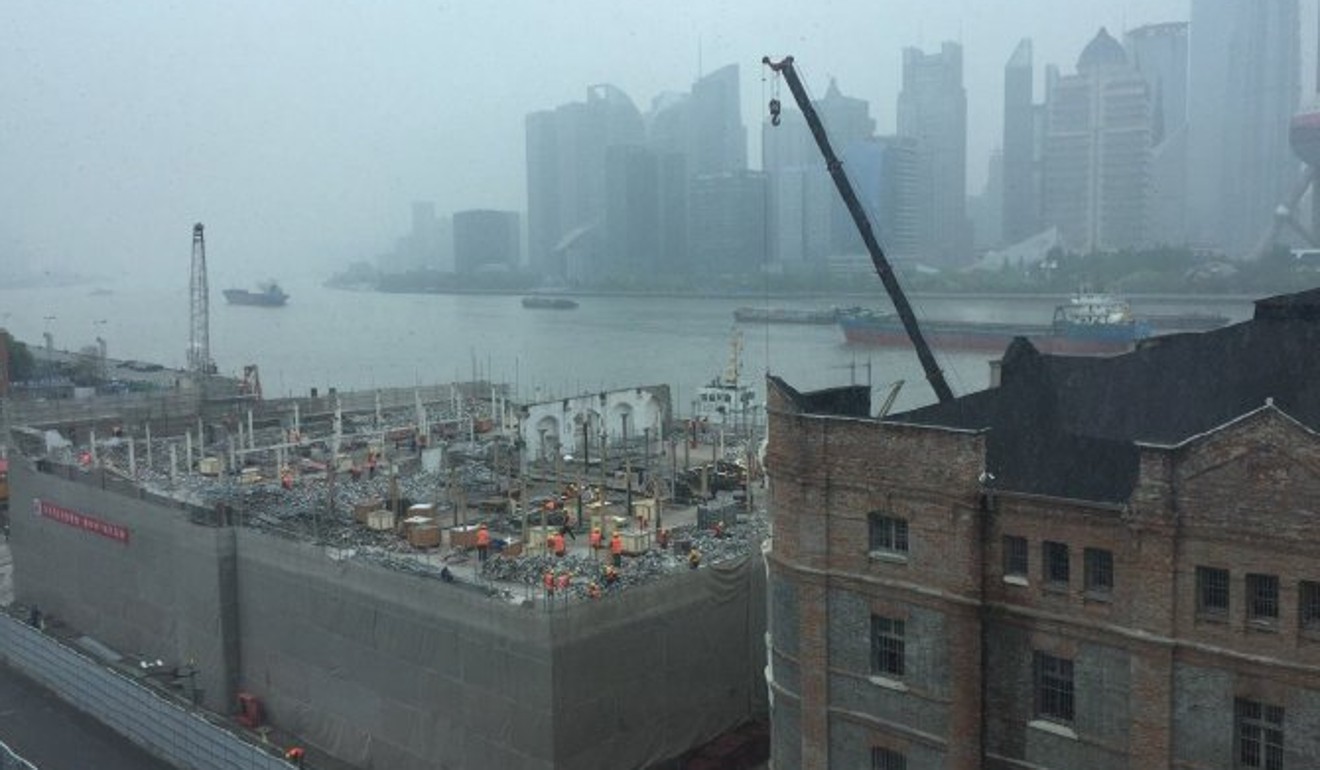
The historic buildings on Shanghai’s Bund in the 1930s. One of the three structures has already been demolished but authorities have temporarily suspended plans to knock down the other two. Photo: Handout
Two historic buildings on Shanghai’s famous Bund have temporarily escaped demolition after a group of experts appealed to the government to conserve the heritage sites, but the intervention was too late to save a third.
About 15 architecture, history and culture experts based in Shanghai banded together to write an article on social media app WeChat last month, calling on the city’s government to “protect the city’s memories” by preserving three houses on Huangpu Road.
A few days after the article was published one of the buildings was demolished as part of a plan to build public cultural facilities on the site. But authorities suspended work on the other two and are considering removing only the interior structure while preserving the external walls, according to the group.
The houses, which date back to 1902, witnessed the city’s boom in the first half of the 20th century when it became one of the world’s most important, and famous, ports, the experts said.
The demolition project on The Bund, Shanghai has been suspended, but not before one of the three historic buildings was demolished. Photo: Urban China magazine

All three of the properties originally belonged to Japanese shipping company Nippon Yusen Kaisha Group and were later used as storage facilities for Japan’s military forces during the second world war, according to Yu Hai, a sociologist from Shanghai’s Fudan University.

“These buildings, along with the nearby Yangzijiang port on the Huangpu River, represented Shanghai’s wharf culture and port culture,” Yu said. “They are historically significant as they witnessed Shanghai grow prosperous through shipping and trade industries about a century ago.”

Although the two remaining buildings are safe for now, the experts argue their interiors are also worth preserving.

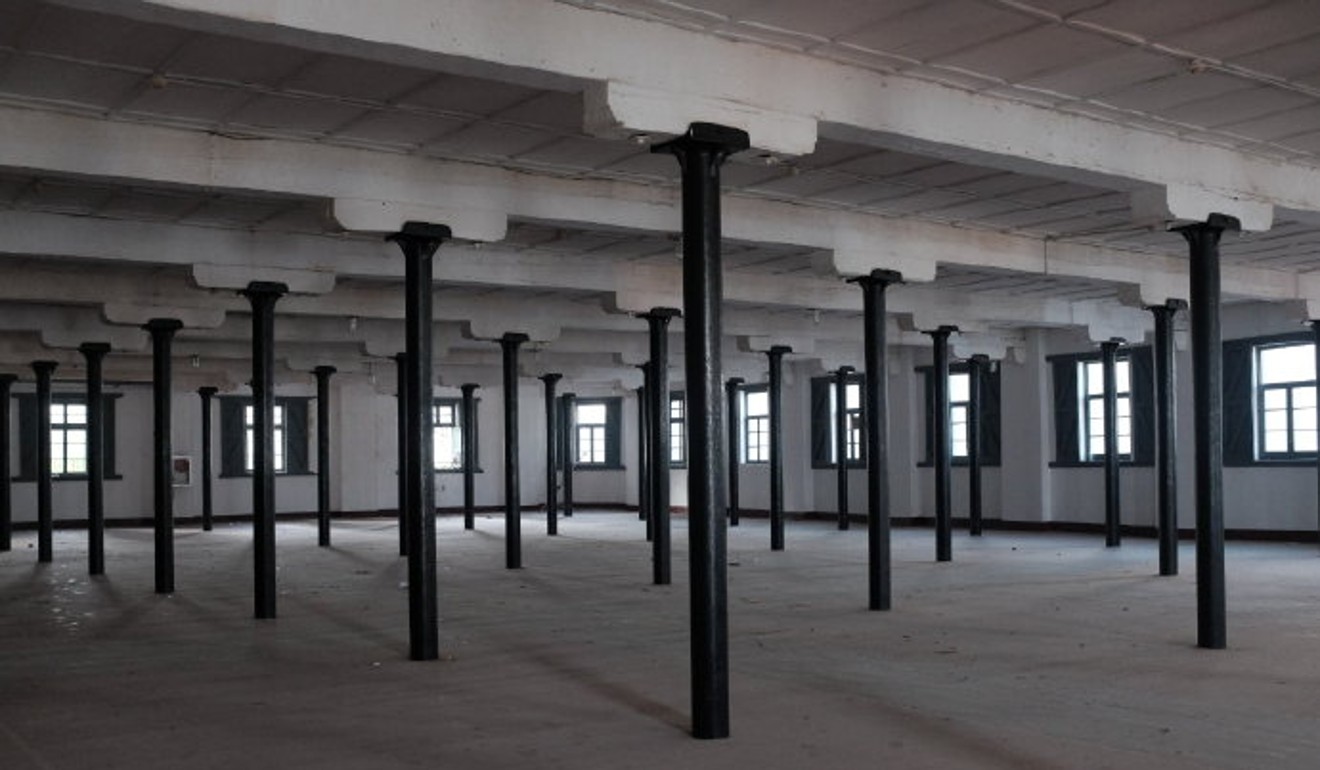
Liu Gang, an architecture professor at Shanghai’s Tongji University, said the properties featured big wooden beams supported by black iron pillars, which were prominent architectural features of industrial buildings dating back to the 19th century.

“We guess it was hard to move these giant beams with vehicles at the beginning of the 20th century. Quite possibly they were transported on the river. We guess that the wood was chopped down and processed in places across the Pacific [from North America] and shipped to Shanghai.”

In the WeChat article, Liu called for the protection of the interior structure of the buildings. “Without solid research, we cannot simply take them down to be replaced by new ones.”

Yu agreed, saying: “The building with a new inside structure would be a fake and this plan will destroy historical heritage.”

Experts say the interiors of the historic buildings are also worth preserving. Photo: Urban China magazine

Huangpu Road, where these houses sit, is rich with history. It features the Garden Bridge of Shanghai – the city’s first steel bridge, built in 1907 – and was once home to the consulates of the United States, Russia, Japan, Germany, Denmark and the Austro-Hungarian empire.

Other notable landmarks on the road include the Astor House Hotel, built in 1846, where Charlie Chaplin, Albert Einstein and George Bernard Shaw stayed in the 1920s and 1930s. The hotel is still there.

“History happened here,” Yu said. “But it’s a pity that most of the old buildings in this area no longer exist.”

Despite their success in winning a stay of execution for the two buildings, the experts are cautious in their expectations.

“The demolition work was suspended, but that does not mean they have accepted our proposals. We are not optimistic,” Yu said.

About two weeks ago as part of their effort to save the buildings, Yu and three other scholars approached officials from Shanghai’s Planning and Natural Resources Bureau, the government body behind the demolition project.

“Officials emphasised the difficulties of keeping the completeness of the old buildings and we just pointed out the damage to their historical values,” Yu said.

The Shanghai bureau did not immediately reply to a request for comment.

Shanghai nightclub king opens new art space – in disused oil tanks
Appeals by the public to conserve historical buildings have generally not been successful. Shenyuli, a typical Shanghai residential community built in the 1930s, was included in the city’s protected list of historical buildings in 2004.
The listing was not enough to prevent its demolition eight years later to make way for a public green land space.
Three years ago, the Shanghai government announced it was suspending the planned demolition of a former sex slavery station used by Japanese soldiers during the second world war, following media reports and a public outcry.
However, the building was later demolished, according to Su Zhiliang, history professor from Shanghai Normal University and a researcher on sex slavery, who predicts a similar outcome for this latest conservation effort.
“I think the government is just using the same tactic to postpone their plan. After the public’s attention is over, they will continue demolishing,” Su said.
Source: SCMP
16/06/2016

In China, One Nail House Doesn’t Get Hammered – China Real Time Report – WSJ

Standoffs between developers and property owners in China are usually grim affairs almost always ending the same way: demolition. One holdout in the southern city Shenzhen is scoring a rare–but perhaps mixed–victory after fending off the bulldozers for more than a dozen years.

Developer Shenzhen Xiafeilong Real Estate has given up knocking down a three-story building belonging to unidentified owners in the city’s Luohu district, according to state-owned China News Service.

Photographs online show the water-stained facade of the three-story building, juxtaposed against newer high-rise apartments that are more than 20-stories high.

Resistance by homeowners to development usually draws sympathy from ordinary Chinese, who often complain that local governments in their zeal for growth and revenues favor developers and ignore property rights. Holdouts like the Shenzhen building have become popular symbols of resistance, known as “nail houses”  because they stick out like nails from a flat surface, such as a razed construction site for example.

“The fact that the government decides you’re going to move and the price you’re going to accept as compensation results in nail houses. It’s a form of negotiation tactic, or sometimes, an act of civil disobedience,” said Michael Cole, a property market observer and founder of real estate website Mingtiandi.com.

Xiafeilong, the developer, couldn’t be reached for comment, nor could the owner or owners of the nail house, who weren’t identified in media reports or in a government statement on the matter.

The three-story building appears to be mostly for residential use, with a computer repair shop at a corner storefront, according to photos and media accounts. A female employee answering the phone at the computer repair shop said she wasn’t aware of any demolition plans or faced any pressure to move.

China News Service said the landlord and the developer spent years on legal battles after they couldn’t agree on compensation for the demolition in 2000.

Xiafeilong initially wanted to build a high-rise apartment and offered the owner an apartment in the new development as compensation, according to Shenzhen Business News. The owner demurred as he wanted cash compensation or another home in a nearby complex, the Shenzhen Business News said in a 2014 article.

In 2013, the space around the nail house became a car park for residents in the surrounding residential towers, China News Service said. The Shenzhen government’s Internet Information Office, in a posting on its official social media account, said the developer realized that the nail house “did not impact its main development, so it simply stopped asking.

”Unlike previous nail-house standoffs, support online was more mixed. Some praised the outcome. “This shows that Shenzhen is civilized, unlike other places,” said a web user on the comments section following pictures of the nail house hosted by Tencent Holdings.

Others, however, saw it as an example of the landlord’s bad timing or greed. Prices for apartments and land in Shenzhen have soared by more than 60% on a year-over-year basis in recent months.

“The nail-house owner has a heart which not content like a snake that wants to swallow an elephant,” said another web-user. “Why could other parties come to an agreement but not you?

”A hotpot restaurant owner in a nearby building said it’s a blow to the neighborhood. “It would be better to demolish the building and build something modern so that it can drive more economic development in the area. Right now it’s an eyesore,” said the shop owner, who declined to give his name.

The government’s Internet Information Office gave its own assessment, citing an unidentified–and perhaps fictitious–web user: “The owner of the nail-house weeps in the toilet.”

Source: In China, One Nail House Doesn’t Get Hammered – China Real Time Report – WSJ

10/12/2012

* Defiant villager leaves developers stumped over gravesite

Having seen the success of ‘nail house’ resisters in gaining better compensation, we now have ‘nail graves’. Wonder what will come next.

SCMP: “A villager refusing to concede to a property developer’s demands to move a family gravesite off a piece of land left construction workers no choice but to dig around the grave, leaving behind a bizarre sight that has since spread on social media.

china-society-property-nail_grave_wh426_32901317.jpg

The solitary grave, which now sits on a mound of earth 10 metres off the ground in the middle of a construction site in Taiyuan, Shanxi province, has been given the term “nail grave” by netizens.

The term is a play on “nail house”, which was coined by developers for homes belonging to people – “stubborn as nails” – who refused to move even after being offered compensation.

Media reports speculate that developers had offered to pay about one million yuan (US$160,400) to move the grave and headstone.

The construction site, which once served as a public graveyard for local villagers, is giving way to a residential complex expected to be completed in April.

Since construction started in 2009, most villagers had already moved their family’s graves after compensation agreements with the developer.

In the face of China’s rapid economic development, Chinese property developers have been meeting much greater public resistance to what many see as forced land-grabs. Most are compensated with amounts less than their property’s net worth.

“Nail graves are an inevitable product of our country’s progress…the souls of the dead can not rest in peace,” wrote one blogger on Sina Weibo, China’s main microblogging site.

Although China has long encouraged cremation due to an alleged shortage of land for burials, ancestors are traditionally held in deep respect and many in the countryside continue to construct tombs in accordance with culture.

A similar incident occurred last month when authorities from the city of Zhoukou, Henan province, were forced to stop a campaign to clear graves for farmland after the demolition of more than two million tombs sparked an outcry across the country.”

via Defiant villager leaves developers stumped over gravesite | South China Morning Post.

22/11/2012

* Lone stand against wrecking ball

Even China cannot stop the determined individual protester. But this situation highlights the many protests against inadequate compensation for having to move home. The interesting thing about this post is that the source is China Daily, a state-sponsored news website.

China Daily: “An isolated five-floor building is standing in the middle of a new road that will soon be open in Wenling, Zhejiang province, the People’s Daily reported.

Lone stand against wrecking ball

A family from Xiazhangyang village insists on living on the isolated building, because they are not satisfied with the relocation compensation offered by the government, the neighbors said, according to the captions of the photos taken on Wednesday.

To guarantee their safety, neighboring rooms next to them are being kept from demolition, though the neighbors all moved out.

The road, which leads to the Wenling Railway Station, hasn’t been put into use yet.”

via Lone stand against wrecking ball[1]|chinadaily.com.cn.

Law of Unintended Consequences

continuously updated blog about China & India

ChiaHou's Book Reviews

continuously updated blog about China & India

What's wrong with the world; and its economy

continuously updated blog about China & India