Chindia Alert: You’ll be Living in their World Very Soon
aims to alert you to the threats and opportunities that China and India present. China and India require serious attention; case of ‘hidden dragon and crouching tiger’.
Without this attention, governments, businesses and, indeed, individuals may find themselves at a great disadvantage sooner rather than later.
The POSTs (front webpages) are mainly 'cuttings' from reliable sources, updated continuously.
The PAGEs (see Tabs, above) attempt to make the information more meaningful by putting some structure to the information we have researched and assembled since 2006.
India’s CO2 emissions have fallen for the first time in four decades – and not just as a result of the country’s coronavirus lockdown.
Falling electricity use and competition from renewables had weakened the demand for fossil fuels even before the coronavirus hit, according to analysis by the environmental website, Carbon Brief. However, it was the sudden nationwide lockdown in March that finally tipped the country’s 37-year emissions growth trend into reverse.
The study finds that Indian carbon dioxide emissions fell 15% in March, and are likely to have fallen by 30% in April.
Virtually all of the drop-off in power demand has been borne by coal-fired generators, which explains why the emissions reductions have been so dramatic.
Coal-fired power generation was down 15% in March and 31% in the first three weeks of April, according to daily data from the Indian national grid.
But even before India’s sudden coronavirus lockdown, the demand for coal was weakening.
The study finds that in the fiscal year ending March 2020, coal deliveries were down by around 2%, a small but significant reduction when set against the trend – an increase in thermal power generation of 7.5% a year set over the previous decade.
Indian oil consumption shows a similar reduction in demand growth.
Image copyright GETTY IMAGESImage caption The nationwide lockdown finally tipped a 37-year emissions growth trend into reverse
It has been slowing since early 2019.
And, once again, the trend has been compounded by the impact of the Covid-19 lockdown measures on the transport industry.
Oil consumption was down 18% year-on-year in March 2020.
Meanwhile, the supply of energy from renewables has increased over the year and has held up since the pandemic struck.
This resilience the renewables energy sector shows in the face of the sudden reduction in demand caused by coronavirus is not confined to India.
Media caption Delhi smog disappears during India’s lockdown
According to figures published by the International Energy Agency (IEA) at the end of April, the world’s use of coal was down 8% in the first quarter of the year.
By contrast, wind and solar power saw a slight uptick in demand internationally.
A key reason that coal has taken the brunt of the fall in electricity demand is that it cost more to run on a day-to-day basis.
Once you have installed a solar panel or a wind turbine, operating costs are very low and, therefore, tend to get priority on electricity grids.
Image copyright GETTY IMAGESImage caption India’s use of coal has plummeted, in line with that of other countries
Thermal power stations – those powered by coal, gas or oil – by contrast, require you to buy fuel in order to generate power.
But analysts warn that the decline in fossil fuel use may not last.
They say when the pandemic subsides, there is a risk that emissions will soar again as countries attempt to kick-start their economies.
The US has already started to relax environmental regulations and the fear is other nations could follow suit.
However, the analysis from Carbon Brief suggests there are reasons to think India could buck this trend.
The coronavirus crisis has brought the long-brewing financial troubles in the Indian coal sector to a head, and the Indian government is finalising a relief package which could top 900bn rupees ($12bn; £9.6bn).
But, at the same time, the government is talking about supporting renewable energy as part of the recovery.
Image copyright GETTY IMAGESImage caption Renewables have the economic edge in India, offering far cheaper electricity than coal
Renewables have the economic edge in India, offering far cheaper electricity than coal.
The report claims that new solar capacity can cost as little 2.55 rupees per kilowatt hour, while the average cost for electricity generated from coal is 3.38 rupees per hour.
Investing in renewables is also consistent with the country’s National Clean Air Programme, launched in 2019.
Environmentalists hope the clean air and clear skies Indians have enjoyed since lockdown will increase public pressure on the government to clean up the power sector and improve air quality.
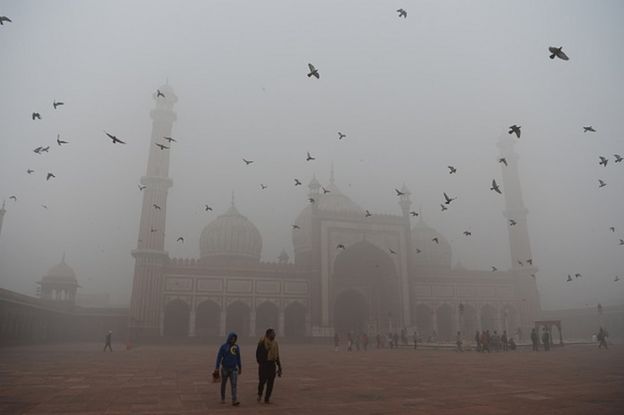
Image copyright GETTY IMAGESImage caption Delhi’sair quality has improved remarkably during the shutdown
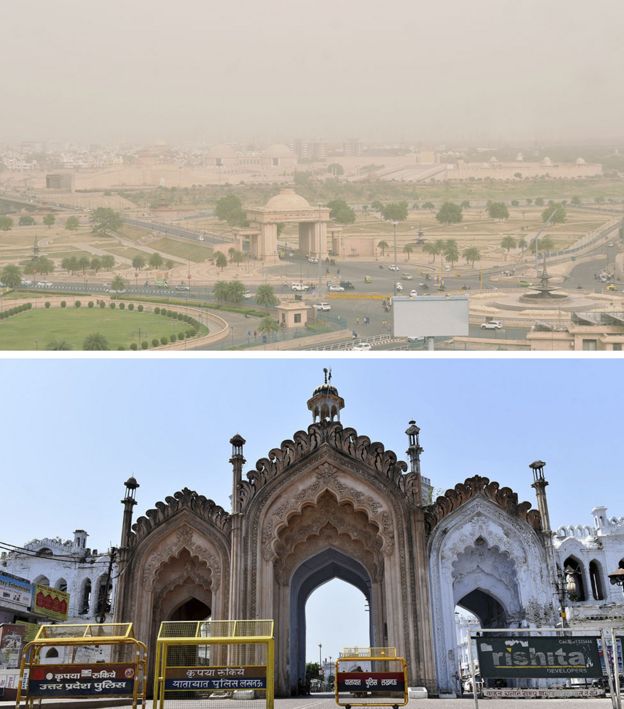
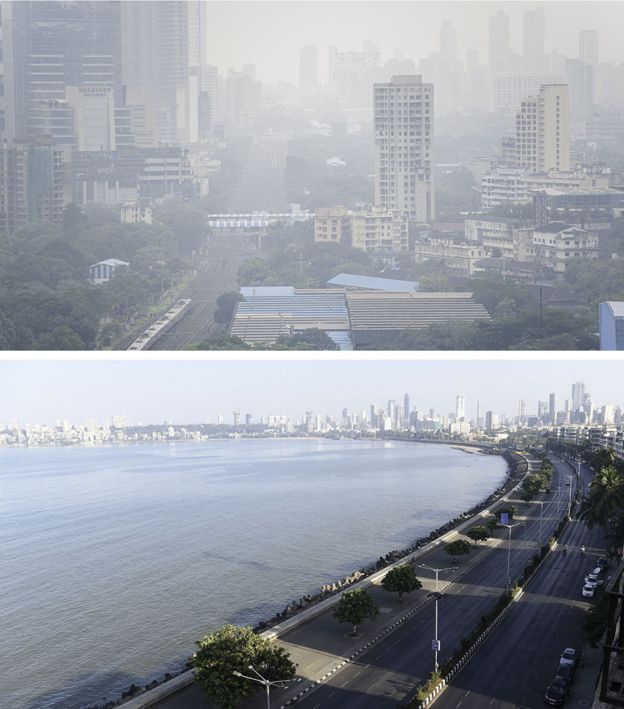
When India shut down last month and suspended all transport to contain the spread of coronavirus, the skies over its polluted cities quickly turned an azure blue, and the air, unusually fresh.
As air pollution plummeted to levels unseen in living memory, people shared pictures of spotless skies and even Himalayan peaks from cities where the view had been obscured by fog for decades.
On one social messaging group, a resident of the capital, Delhi, which regularly records some of the foulest air in the world, celebrated the city’s “alpine weather“. Politician and author Shashi Tharoor wrote that the “blissful sight of blue skies and the joy of breathing clean air provides just the contrast to illustrate what we are doing to ourselves the rest of the time”.
Media caption India coronavirus lockdown cleans up Ganges river
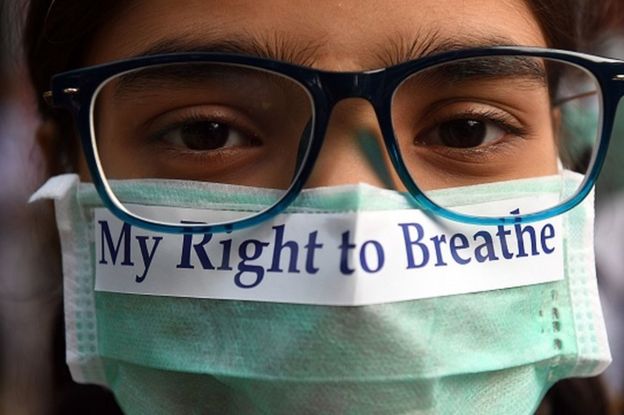
Less than six months ago, Delhi was gasping for breath. Authorities said air quality had reached “unbearable levels”. Schools were shut, flights were diverted, and people were asked to wear masks, avoid polluted areas and keep doors and windows closed.
Delhi and 13 other Indian cities feature on a list of the world’s 20 most polluted. It is estimated that more than a million Indians die every year because of air pollution-related diseases. Industrial smoke, vehicular emissions, burning of trash and crop residue, and construction and road dust are the major contributors.
As urban Indians gazed at the skies and breathed clean air inside their homes, researchers hunkered down to track data on how the grinding lockdown – now extended to 3 May – was impacting air pollution across the country.
Image copyright GETTY IMAGESImage caption Lucknow is another city on the top 20 world’s most polluted list
“This was an unprecedented opportunity for us to take a close look at how air pollution levels have responded to an extraordinary development,” Sarath Guttikunda, who heads Urban Emissions, an independent research group that provides air quality forecasts, told me.
Dr Guttikunda and his team of researchers looked at the data spewed out by the 100-odd air quality monitoring stations all over India. They decided to concentrate on the capital Delhi and its suburbs – a massive sprawl called the National Capital region, where more than 20 million people live. Last winter, air pollution here had reached more than 20 times the World Health Organization’s safe limit.
Image copyright HINDUSTAN TIMESImage caption The financial capital Mumbai also seems very different
The deadliest particle in Delhi’s foul air is the tiny but deadly PM 2.5, which increases the likelihood of respiratory and cardiovascular diseases. They primarily come from combustion – fires, automobiles and power plants.
Urban Emissions found the levels of PM 2.5 in Delhi during the lockdown plummeted to 20 micrograms per cubic metre with a 20-day average of 35.
To put this into context, between 2017 and 2019, the monthly average of PM 2.5 in the capital was up to four times higher. (The national standard is set at 40, and the WHO has an annual average guideline of just 10 micrograms per cubic metre.)
“If 35 is the average lowest available PM2.5 with limited local emissions, it means that at least 70% of the pollution is locally generated,” Mr Guttikunda told me.
Media caption India coronavirus lockdown cleans up Ganges river
His study also found a marked dip in PM 10, caused mainly by road and construction dust, and nitrogen dioxide, which comes mainly from vehicular emissions, and nearly 90% of vehicles are off the road.
“The current crisis has shown us that clear skies and breathable air can be achieved very fast if concrete action is taken to reduce burning of fossil fuels,” says Sunil Dahiya, of the Centre for Research on Energy and Clean Air, which has also been tracking air pollution levels during the lockdown.
But will this prompt change? After all, urban Indians’ and the media’s panic and outrage during the deadly winter pollution every year soon gets lost in the fog of summer heat and concerns over monsoon rains and droughts.
“We don’t yet have a democratic demand for clean air,” Arunabha Ghosh, Chief Executive Officer of the Council on Energy, Environment and Water, a leading climate think tank, told me. Orders to clean up the air have almost always come from the courts, responding to pleas by NGOs.
Image copyright GETTY IMAGESImage caption Pollution in Delhi peaks during winter
However, Dr Ghosh still hopes that “the experience of blue skies and fresh air could be a trigger to create a democratic demand for clean air in India”.
Crises often trigger life changing reforms. A fatal four-day “pea-souper” that engulfed London in 1952 and killed thousands provoked the passing of the Clean Air Act to reduce the use of smoky fuels.
China tried to clean up its air several times before hosting marquee international events – like the Beijing Olympics in 2008, the World Expo in Shanghai and the Guangzhou Asian Games in 2010 – before sliding back to grey, smoky skies.
But many believe the 2014 Apec meeting in Beijing, when China hosted 21 heads of Asia-Pacific economies, was a turning point. The rare blue skies over Beijing spawned the phrase ‘Apec blue‘. In a rush to clean its air, China introduced a set of far-reaching measures. Over the next four years, this resulted in a 32% drop in average pollution across major Chinese cities.
So could a lockdown to prevent the spread of a pandemic, which has imperilled the health and livelihoods of millions, trigger similar policy changes to clean up India’s air?
Image copyright GETTY IMAGESImage caption The movement for clean air has been sporadic and mainly pushed by NGOs
Could it move to a shift in reducing traffic on the road by asking people to work from home in shifts now that millions have experienced clean air for the first time in years? (Facing energy shortages after the loss of the Fukushima nuclear power plant, Japan unleashed a Cool Biz campaign to cut down air conditioning in workplaces and reduce carbon emissions by asking office workers to shed their suits.)
Or can India use some of the money from an inevitable stimulus to help kick-start the economy go towards helping green industries? Renewables, experts say, creates more jobs than coal: India has already created nearly 100,000 jobs in solar and wind energy firms.
Can the country use the windfall revenues accruing from the steep decline in oil prices – most of India’s oil is imported – to provide rebates to polluting factories to set up much-needed emission control equipment?
“We have to learn lessons to deploy the economic recovery from the pandemic. We need growth, jobs and sustainable development,” says Dr Ghosh. Cleaning up the air could be the key. For too long, India – and Indians – have ignored their right to breathe easy.
What’s more, if China can reduce air pollution by 32% in four-and-a-half years, why can’t India pledge to reduce pollution by 80% in 80 cities by 2027, which is our 80th anniversary of Independence? asks Dr Ghosh.
World’s largest coal consumer shows little sign of ending its dependency even though it is also the biggest market for renewable energy sources
UN climate summit is meeting to discuss ways to limit future warming, but hopes are fading that China will commit to further curbs on emissions
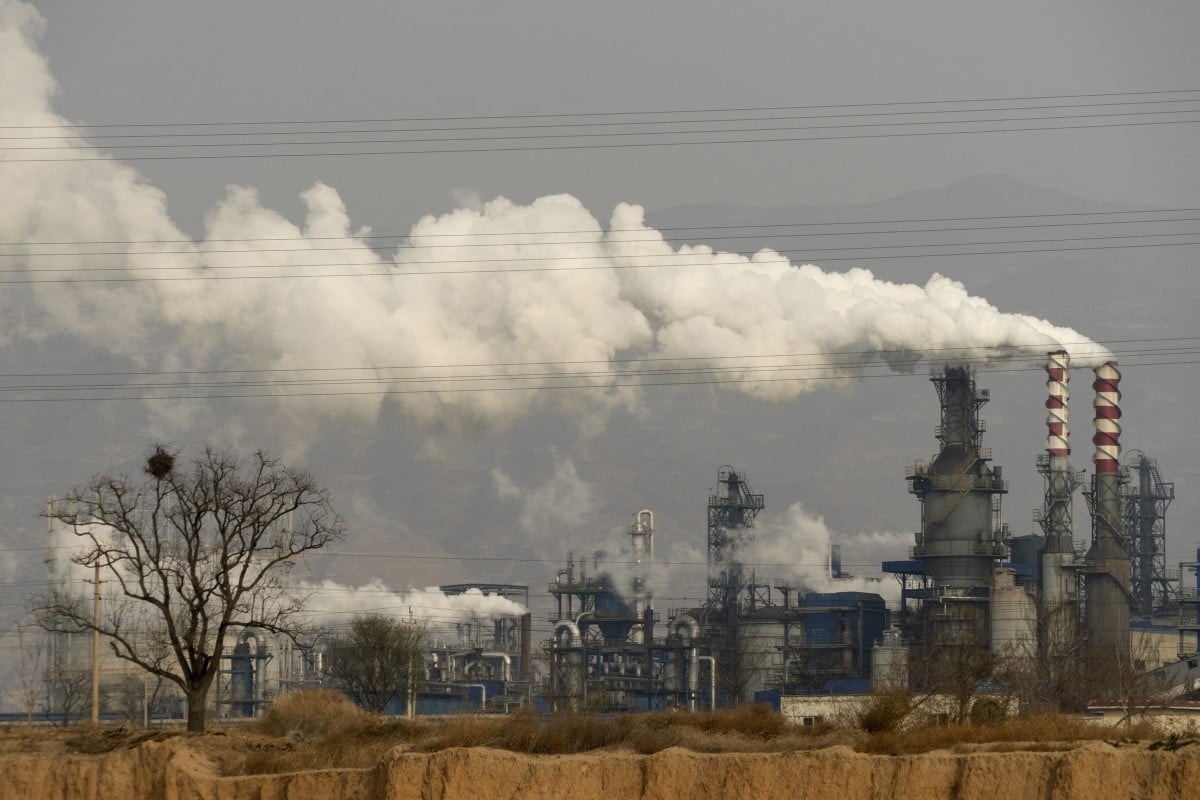
China now accounts for around 30 per cent of the world’s carbon emissions. Photo: AP
As world leaders gather in Spain to discuss how to slow the warming of the planet, the spotlight has fallen on China – the top emitter of greenhouse gases.
China burns about half the coal used globally each year. Between 2000 and 2018, its annual carbon emissions nearly tripled, and it now accounts for about 30 per cent of the world’s total.
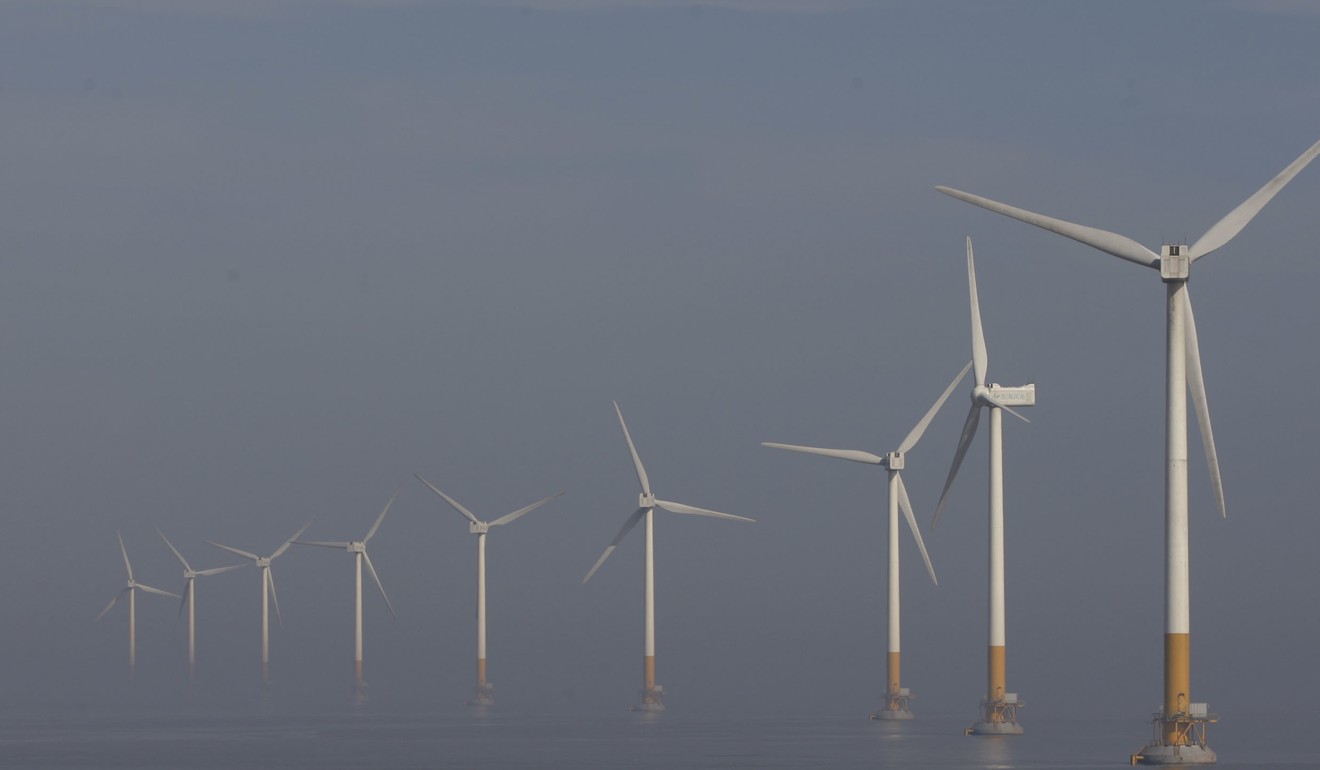
Yet it is also the leading market for solar panels, wind turbines and electric vehicles, and it manufactures about two-thirds of solar cells installed worldwide.
“We are witnessing many contradictions in China’s energy development,” said Kevin Tu, a Beijing-based fellow with the Centre on Global Energy Policy at Columbia University. “It’s the largest coal market and the largest clean energy market in the world.”
That apparent paradox is possible because of the sheer scale of China’s energy demands.
Pollution alarm as tourism businesses contaminate home of China’s hairy crab
But as China’s economy slows to the lowest level in a quarter century – around 6 per cent growth, according to government statistics – policymakers are doubling down on support for coal and other heavy industries, the traditional backbones of China’s energy system and economy. At the same time, the country is reducing subsidies for renewable energy.
At the annual United Nations climate summit, this year in Madrid, government representatives will put the finishing touches on implementing the 2015 Paris Agreement, which set a goal to limit future warming to 1.5 to 2 degrees Celsius above pre-industrial levels.
Nations may decide for themselves how to achieve it.
China had previously committed to shifting its energy mix to 20 per cent renewables, including nuclear and hydroelectric energy.
Climate experts generally agree that the initial targets pledged in Paris will not be enough to reach the goal, and next year nations are required to articulate more ambitious targets.
Hopes that China would offer to do much more are fading.
Recent media reports and satellite images suggest that China is building or planning to complete new coal power plants with total capacity of 148 gigawatts – nearly equal to the entire coal-power capacity of the European Union within the next few years, according to an analysis by Global Energy Monitor, a San Francisco-based non-profit.
China is the world’s leading market for wind turbines and other renewables – but is still a major source of emissions. Photo: Chinatopix via AP
Meanwhile, investment in China’s renewable energy dropped almost 40 per cent in the first half of 2019 compared with the same period last year, according to Bloomberg New Energy Finance, a research organisation. The government slashed subsidies for solar energy.
Last week in Beijing, China’s vice-minister of ecology and environment told reporters that non-fossil-fuel sources already account for 14.3 per cent of the country’s energy mix. He did not indicate that China would embrace more stringent targets soon.
“We are still faced with challenges of developing our economy, improving people’s livelihood,” Zhao Yingmin said.
As a fast-growing economy, it was always inevitable that China’s energy demands would climb steeply. The only question was whether the country could power a sufficiently large portion of its economy with renewables to curb emissions growth.
Many observers took hope from a brief dip in China’s carbon emissions between 2014 and 2016. Today the country’s renewed focus on coal comes as a disappointment.
“Now there’s a sense that rather than being a leader, China is the one that is out of step,” said Lauri Myllyvirta, lead analyst at the Centre for Research on Energy and Clean Air in Helsinki.
He notes that several developed countries – including Germany, South Korea and the United States – are rapidly reducing their reliance on coal power.
After climbing sharply for two decades, China’s emissions stalled around 2013 and then declined slightly in 2015 and 2016, according to Global Carbon Budget, which tracks emissions worldwide.
This dip came as Chinese leaders declared a “war on pollution” and suspended the construction of dozens of planned coal power plants, including some in Shanxi.
Pollution scandal near China nature reserve at Tengger desert’s edge
At the same time, the government required many existing coal operators to install new equipment in chimneys to remove sulphur dioxide, nitrous oxide and other hazardous substances. About 80 per cent of coal plants now have scrubbers, said Alvin Lin, Beijing-based China climate and energy policy director for the Natural Resources Defence Council, a non-profit.
As a result, the air quality in many Chinese cities, including Beijing, improved significantly between 2013 and 2017. Residents long accustomed to wearing face masks and running home air-filter machines enjoyed a reprieve of more “blue sky days,” as low-pollution days are known in China.
In the past three years, China’s carbon emissions have begun to rise again, according to Global Carbon Budget.
The coming winter in Beijing may see a return of prolonged smog, as authorities loosen environmental controls on heavy industry – in part to compensate for other slowing sectors in the economy.
The UN Climate Change Conference is taking place in Madrid this month. Photo: AFP
Permits for new coal plants proliferated after regulatory authority was briefly devolved from Beijing to provincial governments, which see construction projects and coal operations as boosts to local economies and tax bases, said Ted Nace, executive director of Global Energy Monitor.
“It’s as though a boa constrictor swallowed a giraffe, and now we’re watching that bulge move through the system,” said Nace. In China, it takes about three years to build a coal plant.
The world has already warmed by 1 degree Celsius. All scenarios envisioned by the Intergovernmental Panel on Climate Change for holding planetary warming to around 1.5 degrees Celsius involve steep worldwide reductions in coal-power generation.
In that effort, other countries rely on Chinese manufacturing to hold down prices on solar panels. wind turbines and lithium-ion batteries.
“China has a really mixed record. On the one hand, it’s seen rapidly rising emissions over the past two decades,” said Jonas Nahm, an energy expert at Johns Hopkins University.
“On the other hand, it’s shown it’s able to innovate around manufacturing – and make new energy technologies available at scale, faster and cheaper.”
Compact plants proposed to ease pollution but backers must win over wary public
China is exploring the idea of using small nuclear power plants to phase out coal- and gas-fired heating generators in smog-afflicted northern China. Photo: Reuters
China plans to build a pilot small-scale nuclear reactor that could replace coal or gas to heat towns and cities in its colder northern regions, an official with the state-owned developer in charge of the project said on Monday.
The small heating reactor was planned for the city of Jiamusi in northeastern Heilongjiang province, one of two proposed units with a combined capacity of 400 megawatts, Wang Xujia, a senior engineer with the State Power Investment Corp, said on the sidelines of an industry conference.
“The project is still under central government review for approval,” Wang said, adding that the developer aimed to put the project into operation by 2024.
China has been exploring the use of small nuclear reactors – less than a fifth of the size of a standard reactor – as alternative heating systems in smog-prone northern regions.
The state provides heating throughout northern China from November to March, using predominantly coal- or gas-fired boilers.
State-owned China National Nuclear Corp (CNNC) has already conducted trial runs for a “district heating reactor” (DHR) design, which it says can supply heat to 200,000 urban households.
China-built nuclear reactors may enjoy home advantage as delays and costs stymie foreign competitors
The DHR model consists of a reactor core immersed in a water-filled tank. It is estimated to require investment of 1.5 billion yuan (US$217 million) and take three years to build, making it cheaper and quicker to construct than conventional reactors.
However, while the various designs will use only a fraction of the radioactive material of a conventional nuclear plant, officials acknowledge the biggest challenge is convincing the public the reactors are safe and reliable.
“The planned project in Jiamusi will be located in a remote area of the city which undermines its economic efficiency, but since it is just a demonstration project we just want to complete one first and show it to the public,” Wang said.
China aims to raise total nuclear capacity to 58 gigawatts by the end of next year, but it has not launched any new conventional reactors in more than three years.
China expected to miss target for 2020 nuclear capacity
After Japan’s Fukushima accident in 2011, China conducted a root-and-branch safety review and decided it would only use the most advanced “third generation” technology for any new projects.
However, those technologies – including Westinghouse’s AP1000 and the Areva-developed EPR – have proved to be expensive, complex and prone to long construction delays.
In a bid to broaden its options, the country is developing smaller units and plans to launch its first “small modular reactor” on the island province of Hainan at the end of this year.
China also planned to launch floating nuclear reactors with the aim of developing a fleet of ship-mounted nuclear generators that could be deployed on islands in Southeast Asia, Song Danrong, a reactor designer at CNNC, told Monday’s conference.
This article appeared in the South China Morning Post print edition as: Pilot nuclear reactor may replace coal in north
After brief pause, China rushes to build more nuclear power plants
China General Nuclear Power and rival China National Nuclear plan to build four more reactors on mainland
Under draft rules, nuclear power projects in China will need local support
URUMQI, March 2 (Xinhua) — Farmers at a small village in western Xinjiang hardly had any days off this winter. Production at a walnut processing factory is going full throttle to meet demand.
Yusup Tursun and his wife are walnut farmers in Kupchi Village in Yecheng County on the edge of the Taklimakan Desert. The couple has been hired by a new walnut processing facility in the village, with the husband a quality inspector and his wife working part-time cracking nuts.
As a main base for walnut production, Yecheng has over 38,000 hectares of high-quality thin-shell walnut groves.
“It used to be quite difficult to sell the walnuts. The factories, with so many products, have made it easier for the sales,” Yusup said.
Seven companies make products from the nuts — walnut milk, walnut candies and edible oil. The shells are made into coloring agent and pollutant-absorbing carbon.
Diversity in the walnut products pushed the industry output to a new high of 2 billion yuan (about 299 million U.S. dollars). Three in every five people work in the walnut industry in Yecheng, where 550,000 people live.
Across Xinjiang, processing facilities are established to add value to agricultural products. Transport and logistical services are improved to boost the sales of Xinjiang’s signature agricultural products such as Hami melons, Korla pears and Turpan grapes.
UP THE VALUE CHAIN
Xinjiang is also moving up the value chain in two of its traditional industries — cotton and coal.
As one of the main cotton production bases in China, Xinjiang holds sway in the textile industry. By making full use of its cotton resources and geographical advantages as a portal for opening up, the region no longer sees itself as just a production base for raw materials. Starting from 2014, China’s leading garment and apparel makers including Ruyi Group, HoDo Group, and Huafu Fashion Co. Ltd invested in the region and built factories.
These factories have produced added benefits and created jobs for the local people. Xinjiang produces 1.5 million tons of yarn and over 40 million ready-made garments every year. More than 400,000 people work in the industry.
In the eastern part of the coal-rich Junggar Basin, workers have found that the snow is cleaner than before. The Zhundong Economic Technological Development Park, about 200 km west of Urumqi, is home to China’s largest coal field.
A stringent environmental requirement is applied to the park, said Ren Jianpin, director of the management committee of the park. Coal enterprises are required to control coal dust, install equipment to recycle water and coal slags are processed into construction materials, he said.
The park is focused on boosting high-end industries in aluminum and silicon materials, which generate more value and have less impact on the environment, he said.
GOING HI-TECH
Last year, a large-scale bio-based plant went into operation in Usu City to turn corn into nylon. The Cathay Industrial Biotech, a Shanghai-based biotech company, is the investor.
Nylon is usually made from petroleum, and the use of crops such as corn and wheat to make recyclable and environment-friendly nylon has promising business prospects, said Wang Hongbo, vice general manager of the company’s Usu branch.
The Usu branch will have an annual output of 100,000 tons of bio-based polyamide, and it is expected to boost the development of downstream industries in the future, he said.
The oil-rich city of Karamay has also received a hi-tech boost as cloud computing firms eye the dry and cold weather in the area. Karamay is home to many key state-level projects and IT-industry leaders, including a global cloud service data center for Huawei, data centers for the China National Petroleum Corp. (CNPC) and China Mobile.
Xinjiang is making new breakthroughs in precision machining, new materials, manufacturing and textiles.
Data from the regional statistics bureau show that the value added of the hi-tech manufacturing in Xinjiang rose by 32.1 percent year-on-year in 2018.
FURTHER OPENING UP
As a core area on the Silk Road Economic Belt, Xinjiang has maintained solid growth momentum in foreign trade. Foreign trade volume between Xinjiang and 36 countries and regions along the Belt and Road (B&R) totaled about 291.5 billion yuan (43.5 billion U.S. dollars) in 2018, up 13.5 percent year on year.
Economic observers say that there is still much room for Xinjiang to scale up its processing trade to raise the level of imports and exports.
Xinjiang will further develop an export-oriented economy in 2019 and participate in economic exchanges with neighboring countries, according to the regional government’s work report released in January.
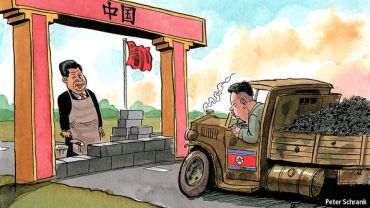
China is to stop importing coal, iron, iron ore and seafood from North Korea.
The move is an implementation of UN sanctions, which were imposed in response to North Korea’s two missile tests last month.
China accounts for more than 90% of North Korea’s international trade.
Beijing had pledged to fully enforce the sanctions after the US accused it of not doing enough to rein in its neighbour.
Economic impact
The UN approved sanctions against Pyongyang earlier this month that could cost the country $1bn (£770m) a year in revenue, according to the figures provided to the Security Council by the US delegation.
Although China’s coal imports from North Korea totalled $1.2bn last year, the figure will be much lower this year because China had already imposed a ban in February, experts said.”China has already imported its quota of coal under sanctions for 2017. So no net impact there, and North Korean exports to other countries are minimal,” said David Von Hippel, from the Nautilus Institute -a think tank based in Oregon -who has researched North Korea’s coal sector.
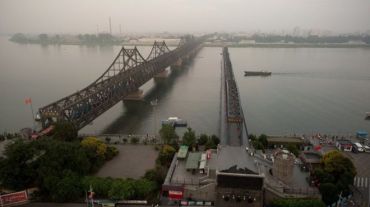
North Korean labourers work beside coal mound near the Yalu River
The sanctions might have more of an impact on iron and seafood, experts said.
Although they are both much smaller sources of export revenue for North Korea, the two industries have seen a rise in exports this year.
Iron ore exports grew to $74.4m in the first five months of this year, almost equalling the figure for all of 2016. Fish and seafood imports totalled $46.7m in June, up from $13.6m in May.
The sanctions do not apply to the growing clothing assembly industry in North Korea.Mr Von Hippel said in gross terms, it is nearly as large as coal, but in reality it is worth much less because North Korea has to import the inputs.
Trade and security tensions
The sanctions come against a backdrop of increased tensions between the US and North Korea, as well as heightened trade tensions between the US and China.
After weeks of heated rhetoric between the US and North Korea, on Tuesday North Korea’s leader Kim Jong-un has decided to hold off on a strike towards the US territory of Guam, state news agency KCNA reported.
The apparent pause in escalating tensions comes after US President Donald Trump warned of “fire and fury like the world has never seen” if Pyongyang persisted with its threats.
On Monday, the US President Donald Trump ordered a trade probe into China’s alleged theft of US intellectual property, which the Chinese state press saw as an attempt to force China to act more decisively on North Korea.
Officially, the US has denied any link between the two issues, although the president had previously suggested he might take a softer line on China in exchange for help on North Korea.
FEW television dramas boast a plot as far-fetched as the one that has unfolded in North-East Asian geopolitics over the past two weeks. Days after North Korea tested a ballistic missile on February 12th, two women assassinated the half-brother of Kim Jong Un, North Korea’s leader, by throwing chemicals in his face at a Malaysian airport. The alleged killers said they were duped into taking part, believing the attack was a prank for a TV comedy. Malaysian police suspect that a North Korean diplomat in Malaysia may have been among the organisers, several of whom are thought to have fled to Pyongyang.
Amid such skulduggery, China’s announcement on February 18th that it would suspend imports of coal from North Korea, from the next day to the end of this year, seemed a little mundane. But China’s state-controlled media played up the decision. Global Times, a newspaper in Beijing, said the move would make it harder for North Korea to exploit international differences over the imposition of UN sanctions aimed at curtailing its nuclear programme. China appeared to be signalling to the world that it was ratcheting up pressure on its troublesome friend, as the Americans have long insisted it should.
Or it may just be posturing. On February 21st China’s foreign ministry softened the message somewhat. It said imports were being suspended because China had already bought as much coal from North Korea this year as it was allowed to under the UN’s sanctions, to which China gave its approval last March. But North Korea-watchers doubt that China could have imported its yearly quota of 7.5m tonnes in a mere six weeks. It had not appeared likely to reach its annual limit until April or May. And exceeding that cap had not been expected to matter much to China. In 2016 it imported about three times the permitted amount, using a loophole that allows trade if it helps the “livelihood” of ordinary North Koreans.
Advancing the date of the suspension, if that is what happened, would certainly have sent a strong message to North Korea, which depends on coal exports for much of its foreign currency. Announcing the move so publicly, and unexpectedly, will have shown to North Korea that China is ready to take the initiative instead of waiting to be prodded by America, as it usually does when North Korea offends.
The test of an intermediate-range missile will have rattled China. It suggested that North Korea has learned how to fire such weapons at short notice, from hard-to-detect mobile launchers. The murder of Kim Jong Nam may have been an even bigger blow. Mr Kim had been living on Chinese soil in the gambling enclave of Macau, probably under Chinese government protection. Some Chinese officials may have hoped that Mr Kim, who favours economic opening, would one day replace his half-brother. With his death “you lose one option”, says Jia Qingguo of Peking University. It has reminded China that North Korea’s dictator is doggedly determined to rule in his own way, regardless of China’s or anyone else’s views.
Growing frustration with North Korea is evident in China’s more relaxed attitude towards criticism of its neighbour. In 2013 an editor of a Communist Party-controlled publication was fired for arguing in an article that “China should abandon North Korea.” These days, academics often air that idea. Debate about North Korea now rages openly online, largely uncensored (except when people use it as a way of attacking their own regime, jokingly referred to as “West Korea”). The murder of Kim Jong Nam unleashed a torrent of ridicule towards his country by Chinese netizens. China still sees North Korea as a useful buffer against America’s army deployed in the South. But it increasingly regards the North as a liability as well, says Mr Jia.In America’s court?
China would clearly like its tough-sounding approach to encourage President Donald Trump to rethink his country’s strategy for dealing with North Korea. America has been reluctant to enter direct talks because the North has blatantly cheated on past deals—knowing that China would continue to prop it up. With China more clearly on America’s side, the Americans would have greater confidence, Chinese officials hope. Mr Trump has previously said he would be happy to have a hamburger with Mr Kim and try to persuade him to give up his nukes. The trouble is, Mr Kim sees those weapons as the one thing that guarantees the survival of his odious regime.
Nearly a third of the surface water in Shanxi, China‘s biggest coal producing province, is so polluted that it cannot be used by humans, the local environmental watchdog said in a notice on Wednesday.
The Shanxi Environmental Protection Bureau said in a report that 29 out of the 100 surface water sites tested in the first three quarters of 2016 were found to be “below grade five“, which means that pollution levels are so high that the water has “lost functionality”.
China’s water is graded into five categories. Grade three and above is deemed safe for direct human contact, while grades four and five can only be used in industry and agriculture.
While there have been slight improvements compared to the first half of the year, Shanxi is still falling behind its targets, the bureau said.It said 11 sites had shown improvements compared to last year, but eight had deteriorated, including five spots in the major coal-producing city of Datong, which were found to have fallen “below grade five” over the period.
According to the Ministry of Environmental Protection‘s latest analysis of water quality on major rivers published this week, 22 percent of samples from 146 sites nationwide was found to be grade four or worse.
Shanxi produced 944 million tonnes of coal last year, more than a quarter of the national total, and decades of overmining in the province have damaged underground water tables and contaminated ground water supplies.
India is one of the largest producers of coal in the world and more than half of its commercial energy needs are met by coal.
But unregulated mining has caused serious health and environmental issues, and led to growing conflicts between elephants and humans.
In the coal-rich central state of Chhattisgarh, for example, fly ash has caused respiratory problems and serious illnesses like tuberculosis among people, but their troubles don’t end there.
Forests are being cleared for coal mining and wild elephants are entering villages in search of food and attacking people.
Photojournalist Subrata Biswas has documented the fallout of India’s dependence on coal.
“As thousands of acres of forest land are destroyed to mining, foraging elephants attracted by the crops in the fields often enter villages, resulting in an alarmingly high number of human-elephant conflict situations,” says Biswas.
Officials estimate elephants have been responsible for 8,657 incidents of property damage and 99,152 incidents of crop damage in Chhattisgarh between 2005 and 2014.
Image copyrightSUBRATA BISWAS
“We were sleeping when the elephants broke into our room. Somehow we managed to escape but I fractured my left leg when a large part of the wall fell on my leg. My husband saved my life,” says Rujri Khalkho, 70, whose home was damaged by a herd of wild elephants almost a year ago.
A compensation of 10,000 rupees ($149; £114) has not been enough to repair her house or pay for her medical care.
Image copyrightSUBRATA BISWAS
Deaths of elephants due to electrocution have become common in the state.In Dharamjaigarh, the most affected area, officials have recorded 30 elephant and 75 human deaths so far.
Image copyrightSUBRATA BISWAS
In 2009, Kanti Bai Sau, 40, lost her home and farm to an open-cast coal mine.
She was promised compensation of 200,000 rupees ($2,980; £2,290) and a job to a family member, but received neither. Her son died last year of respiratory complications.
“There is no fresh air to breath, fresh water to drink. Coal has usurped everything here.”
Image copyrightSUBRATA BISWAS
“We lived next to this mine for almost 10 years and watched helplessly as our wells went dry, forests disappeared and fields become unproductive,” says Girja Bai Chauhan.
“We have lost almost eight acres of our fields to the mine and authorities haven’t fulfilled a single promise they made while acquiring land. They sent us into a dark future and unhealthy environment to live and breathe in.”
Image copyrightSUBRATA BISWAS
Pipelines carry fly ash slurry from a local thermal power power plant in Korba to a fly ash pond.
Environment activists say that every year approximately 50 million tonnes of fly ash is generated by power plants in Chhattishgarh but not even the half of this amount have been reutilized to reduce the pollution from fly ash.
Fly ash is known to contain trace elements such as arsenic, barium and mercury among others, and unlined ponds like this could be polluting groundwater by leaching.
Image copyrightSUBRATA BISWAS
“The ash is everywhere. When the wind blows, everything is coated with a layer of white grey ash. The road, ponds, our houses, sometimes even our spectacles get coated with a fine layer of the ash,” says Biswas.
Image copyrightSUBRATA BISWAS
Rohit Rathia, 55, suffers from tuberculosis.He lives in a village next to an open cast mine where lung diseases such as coal workers’ pneumoconiosis (CWP), silicosis and tuberculosis have become common ailments.
WHEN the number of strikes plummets, something significant is usually going on. Strikes in China’s mining, iron and steel industries have fallen from more than 40 in January to four a month or fewer between May and August, according to China Labour Bulletin, an NGO based in Hong Kong. The explanation seems to be that China is backtracking on plans for the restructuring of state-owned firms in these sectors.
In February the government announced that it would redeploy 1.8m people, or 15% of the workforce, in the bloated and debt-laden coal, iron and steel industries. Just after that, a huge strike over unpaid wages by coal miners in the north-east dramatised the risks of trying to force through massive lay-offs and plant closures. So local officials have dragged their feet. According to the national planning authority, in the first seven months of the year provincial governments achieved only 38% of their full year’s targets for coal production cuts.
Fear of unrest is not the only explanation. Commodity prices have rebounded slightly this year, so local authorities are playing a game of chicken, keeping mines and factories open and hoping the neighbours will close theirs, so they themselves will be the ones to gain from higher prices. China itself is not benefiting.


 Image copyright GETTY IMAGES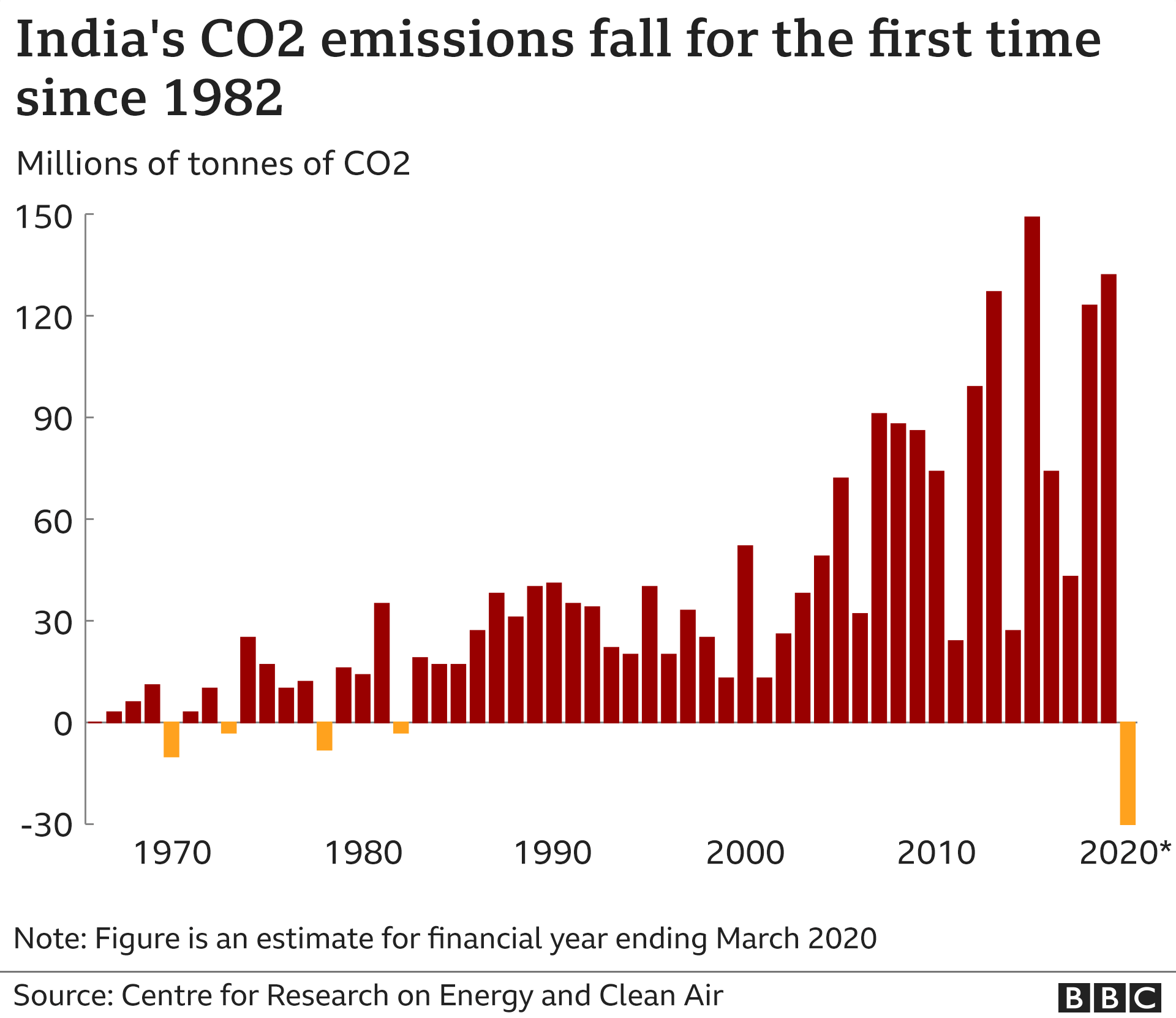
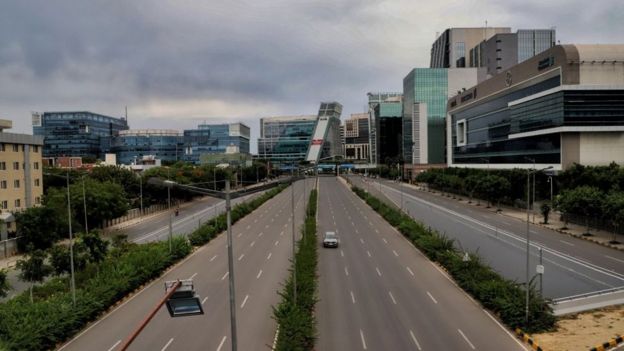 Image copyright GETTY IMAGES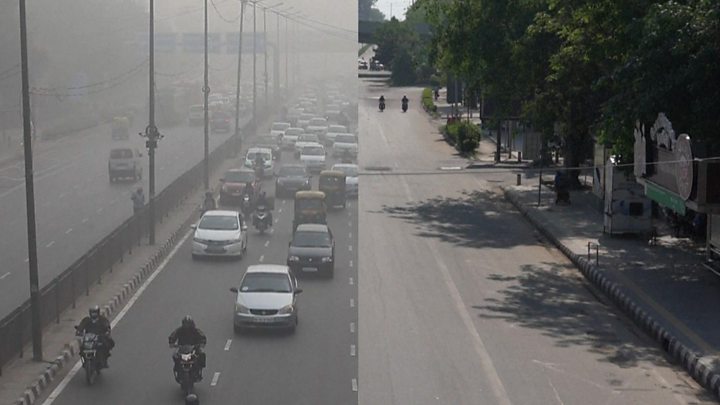
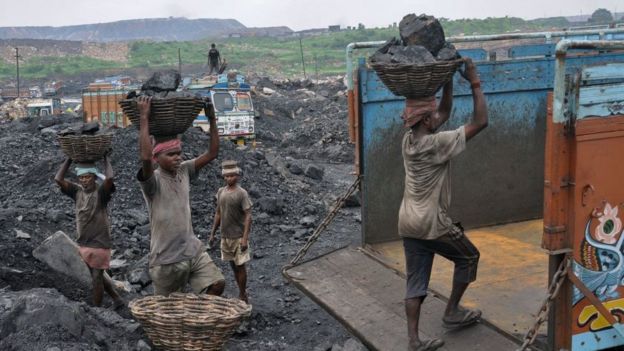 Image copyright GETTY IMAGES
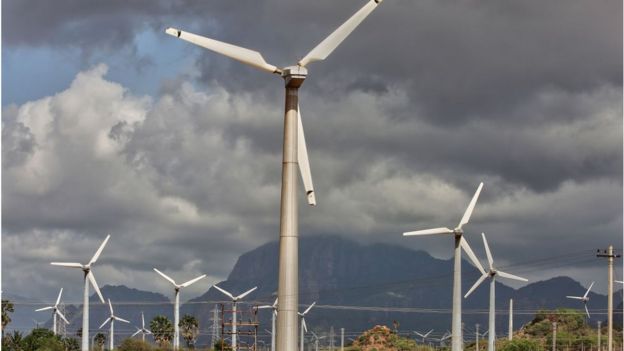 Image copyright GETTY IMAGES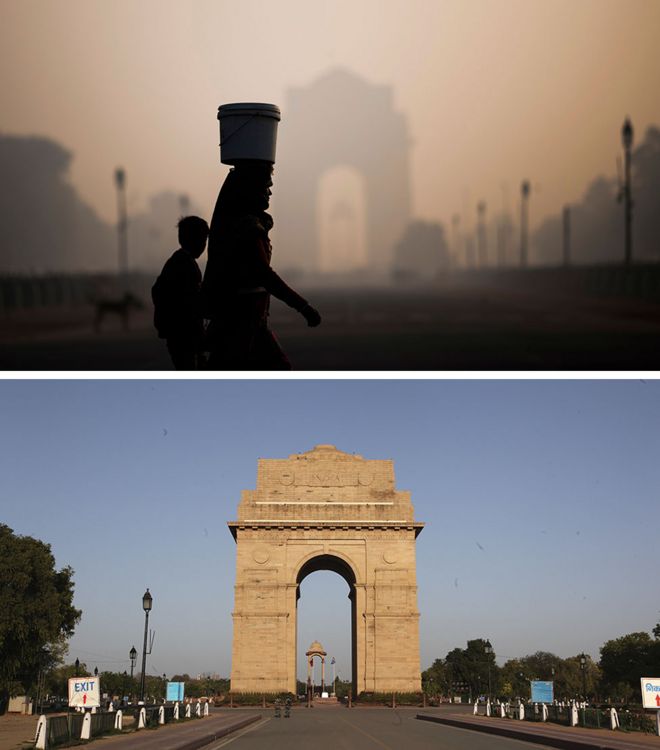








 CHINDIA ALERT: You'll be living in their world, very soon