Archive for ‘Environment’

16/11/2016

China’s top coal province says 29 percent of water unsuitable for humans | Reuters

Nearly a third of the surface water in Shanxi, China‘s biggest coal producing province, is so polluted that it cannot be used by humans, the local environmental watchdog said in a notice on Wednesday.

The Shanxi Environmental Protection Bureau said in a report that 29 out of the 100 surface water sites tested in the first three quarters of 2016 were found to be “below grade five“, which means that pollution levels are so high that the water has “lost functionality”.

China’s water is graded into five categories. Grade three and above is deemed safe for direct human contact, while grades four and five can only be used in industry and agriculture.

While there have been slight improvements compared to the first half of the year, Shanxi is still falling behind its targets, the bureau said.It said 11 sites had shown improvements compared to last year, but eight had deteriorated, including five spots in the major coal-producing city of Datong, which were found to have fallen “below grade five” over the period.

According to the Ministry of Environmental Protection‘s latest analysis of water quality on major rivers published this week, 22 percent of samples from 146 sites nationwide was found to be grade four or worse.

Shanxi produced 944 million tonnes of coal last year, more than a quarter of the national total, and decades of overmining in the province have damaged underground water tables and contaminated ground water supplies.

Source: China’s top coal province says 29 percent of water unsuitable for humans | Reuters

06/10/2016

Chinese people optimistic about the future, says Pew survey – BBC News

At a time of Brexit and talk of a wall between the United States and Mexico, it seems the Chinese are embracing international engagement.

They think their country’s power is rising, that their living standards will keep improving, that corruption is being cleaned up and that air pollution should be fixed even if it means slowing down economic growth.

These are the views which have emerged from a broad survey from Washington-based the Pew Research Center.

Elsewhere there is fear and uncertainty. Here optimism trumps all.

When asked about economic globalisation, 60% of people said it is a good thing and only 23% think it is bad for China.

While some China watchers are warning that this country’s mounting local government debt could mean that a hard landing is on the way, Chinese people don’t appear to share this pessimism.

Nearly 90% of respondents amongst this group of 3,154, interviewed face-to-face in China earlier this year, think that the state of their country’s economy is either “very good” or “somewhat good”.

GETTY IMAGES – Chinese people seem to remain optimistic

Looking into the future things will apparently get even better: 76% of people think the economy will improve over the next 12 months, 70% said their personal financial situation will improve and eight out of 10 people believe that their children will have a better standard of living than they do.

Bread and butter issues

It’s not that people are without concerns.

“Corrupt officials” is at the top of the table when it comes to people’s worries (83% said this was a “very big” or “moderately big” problem) and yet here too we see optimism.

Some 64% of them said that President Xi Jinping‘s massive anti-corruption drive would improve the situation over the next five years.

Running down the concern list, an alarmingly high number of people see income inequality and the safety of food and medicine as “very big” problems.

This should give the Chinese Communist Party pause for concern.

If you enjoy monopoly power on the basis that you are delivering “socialism with Chinese characteristics” then a small group of ultra-rich driving around in their sports cars and showing off their wealth while most struggle to pay the rent is surely at odds with your central message.

Then, if ordinary Chinese people can’t even trust the food and medicine they are giving their children, the possibility for social unrest over bread and butter issues is looming large.

The environment also emerges as a massive challenge with water and air pollution at the front of people’s minds.

Air pollution is so bad in China that half of those polled said their country should fight air pollution harder even if it means sacrificing economic growth.

GETTY IMAGES – Emissions from coal-powered industries, cars and heating systems generate the smog

Only 24% saw air deterioration as a necessary price to pay.

When it comes to the war of ideas in the top echelons of power here, those ministers in favour of tougher environmental protection measures could do worse than table this research.

A “major threat” to China?

The South China Sea and other geo-strategic tensions offer some of the most bleak opinions.

Nearly six out of 10 people think that territorial pressures with neighbours could lead to military conflict; 77% say their way of life needs to be protected from “foreign influence” (up by 13 percentage points since 2002) and only 22% say China should help other nations.

Regarding relations with rival superpower the United States people views are complex and, at times, seemingly contradictory.

Around half of Chinese respondents rated the US favourably but more than half think that Washington is trying to prevent China from becoming an equal power.

About 45% said that US power and influence poses a “major threat” to China. In fact the US came in at number one as the top international threat to the country.

GETTY IMAGES – More than half of Chinese people think that Washington is trying to prevent China from becoming an equal power

It’s interesting that some would see the Obama administration’s so-called “pivot to Asia” as a greater threat than say jihadist extremist groups just across the western border promoting bloody conflict in China’s vast Muslim region of Xinjiang.

Either way, whatever the perceived threat, China is seen as becoming ever more important and with ever more power at its disposal.Information is being controlled here ever more tightly – whether it is coming from the traditional media or sources online – so some analysts will see these views as the inevitable result of messages being delivered to the Chinese people by their government.

This may the be case but, in a world where politicians in various countries are accused of exploiting people’s fear and insecurity, could it be that a quarter of the globe’s population are going around with a smile on their dial because every day they look out the window and to them it just gets better and better?

Source: Chinese people optimistic about the future, says Pew survey – BBC News

03/10/2016

India joins Paris Climate Change Agreement, submits instrument of ratification at UN headquarters – Times of India

With the US, China and now India signing the accord, other nations should not hesitate to join them. On any case, thes three account for the vast majority of the pollution, so even if no one else signs up, its good news for Mother Gaia.

India formally joined the Paris Climate Change Agreement by submitting its instrument of ratification+ at UN headquarters in New York on Sunday – the birth anniversary of Mahatma Gandhi.

The instrument of ratification was deposited by India’s permanent representative to the UN, Syed Akbaruddin.

By putting Gandhi seal on the climate deal, the country will now urge the global community to adopt ‘Gandhian way of life’ (shun extravagant lifestyles) to reduce their carbon footprints and protect the earth from adverse impact of climate change.

India will articulate its point vigorously during the next climate conference (COP22) at Marrakech in Morocco, beginning November 7.

“India had led from front to ensure the inclusion of climate justice and sustainable lifestyles in the Paris Agreement+ . We will put across this view based on Gandhian lifestyle in Morocco”, said environment minister Anil Madhav Dave.

Spelling out next course of action after India formally joined the Agreement, Dave said, “It is important that apart from emission cuts, we also focus on measures that involve broader participation. People in developed countries live extravagant lifestyles with high carbon footprint.

“Simple everyday changes in lifestyles, when practiced by a large number of people around the globe, collectively will make a huge impact”.

Source: India joins Paris Climate Change Agreement, submits instrument of ratification at UN headquarters – Times of India

30/09/2016

The human and animal costs of India’s unregulated coal industry – BBC News

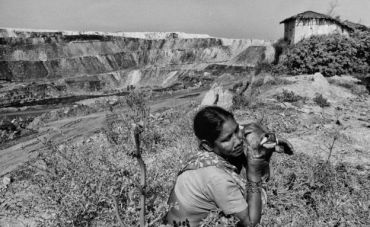
India is one of the largest producers of coal in the world and more than half of its commercial energy needs are met by coal.

But unregulated mining has caused serious health and environmental issues, and led to growing conflicts between elephants and humans.

In the coal-rich central state of Chhattisgarh, for example, fly ash has caused respiratory problems and serious illnesses like tuberculosis among people, but their troubles don’t end there.

Forests are being cleared for coal mining and wild elephants are entering villages in search of food and attacking people.

Photojournalist Subrata Biswas has documented the fallout of India’s dependence on coal.

“As thousands of acres of forest land are destroyed to mining, foraging elephants attracted by the crops in the fields often enter villages, resulting in an alarmingly high number of human-elephant conflict situations,” says Biswas.

Officials estimate elephants have been responsible for 8,657 incidents of property damage and 99,152 incidents of crop damage in Chhattisgarh between 2005 and 2014.

Image copyrightSUBRATA BISWAS

“We were sleeping when the elephants broke into our room. Somehow we managed to escape but I fractured my left leg when a large part of the wall fell on my leg. My husband saved my life,” says Rujri Khalkho, 70, whose home was damaged by a herd of wild elephants almost a year ago.

A compensation of 10,000 rupees ($149; £114) has not been enough to repair her house or pay for her medical care.

Image copyrightSUBRATA BISWAS

Deaths of elephants due to electrocution have become common in the state.In Dharamjaigarh, the most affected area, officials have recorded 30 elephant and 75 human deaths so far.

Image copyrightSUBRATA BISWAS

In 2009, Kanti Bai Sau, 40, lost her home and farm to an open-cast coal mine.

She was promised compensation of 200,000 rupees ($2,980; £2,290) and a job to a family member, but received neither. Her son died last year of respiratory complications.

“There is no fresh air to breath, fresh water to drink. Coal has usurped everything here.”

Image copyrightSUBRATA BISWAS

“We lived next to this mine for almost 10 years and watched helplessly as our wells went dry, forests disappeared and fields become unproductive,” says Girja Bai Chauhan.

“We have lost almost eight acres of our fields to the mine and authorities haven’t fulfilled a single promise they made while acquiring land. They sent us into a dark future and unhealthy environment to live and breathe in.”

Image copyrightSUBRATA BISWAS

Pipelines carry fly ash slurry from a local thermal power power plant in Korba to a fly ash pond.

Environment activists say that every year approximately 50 million tonnes of fly ash is generated by power plants in Chhattishgarh but not even the half of this amount have been reutilized to reduce the pollution from fly ash.

Fly ash is known to contain trace elements such as arsenic, barium and mercury among others, and unlined ponds like this could be polluting groundwater by leaching.

Image copyrightSUBRATA BISWAS

“The ash is everywhere. When the wind blows, everything is coated with a layer of white grey ash. The road, ponds, our houses, sometimes even our spectacles get coated with a fine layer of the ash,” says Biswas.

Image copyrightSUBRATA BISWAS

Rohit Rathia, 55, suffers from tuberculosis.He lives in a village next to an open cast mine where lung diseases such as coal workers’ pneumoconiosis (CWP), silicosis and tuberculosis have become common ailments.

Source: The human and animal costs of India’s unregulated coal industry – BBC News

29/09/2016

China punishes coal, steel companies for violating pollution, safety rules | Reuters

China’s state planner has punished hundreds of coal and steel companies by forcing them to close or cut output for violating environmental and safety regulations, the latest effort to crack down on the country’s heavily polluting industries.

The National Development and Reform Commission (NDRC) forced two steel companies to shut completely, 29 firms to halt production and another 23 to curb output, it said in a statement on Thursday. The closures and curbs followed a nationwide inspection of more than 1,000 steel makers in the world’s top producer.

Among more than 4,600 coal mines inspected, the NDRC has revoked safety certificates for 28 coal mines and forced another 286 coal mines to halt production, it added.

The planner did not identify or name the companies, or give details on how the companies broke the rules and how long the penalties will be in place.

Beyond the safety and environment rules, the NDRC also listed other infractions such as violations of energy consumption rules or quality standards.

The statement reflects the government’s continued push to force ageing mills and mines to comply with tough new pollution rules by meeting emission standards and installing appropriate monitoring equipment.

China’s unwieldy coal and steel industries are considered two of the biggest sources of pollution in the country.

The government is targeting coal output cuts of 500 million tonnes in the next three to five years.

Source: China punishes coal, steel companies for violating pollution, safety rules | Reuters

29/09/2016

This Map Shows the Severity of India’s Pollution Problem – India Real Time – WSJ

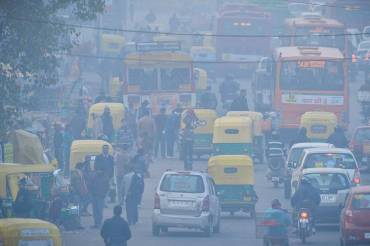
A new map from the World Health Organization shows just how bad India’s air pollution problem is.

The interactive map, which shows the average levels of dangerous particulate matter in the air that can lodge in lungs and cause diseases, was made by the WHO in conjunction with the U.K.’s University of Bath.

It shows that 92% of the world’s population live in places where air quality is worse than the WHO’s recommended limits.Researchers used satellite data as well as information from ground stations to create the map. WHO data released in May showed that the city of Gwalior was India’s most polluted city, coming second in the world to Zabol in Iran.

The map plots levels of particulate matter smaller than 2.5 micrometers in the air. The darker the red on the map, the higher the concentration. The PM2.5 pollutants, which come from dust, soot and smoke, can penetrate deep into the lungs and increase the risk of heart and lung diseases including asthma and lung cancer.

The map paints a dark swathe of red across northern India, meaning that the annual average PM2.5 levels are above 70. The country gets progressively lighter in color toward the south, indicating lower pollution levels. But not one spot of the country is green–indicating healthy air.

A man sifted through trash at a massive garbage site in New Delhi, Sept. 27, 2016. PHOTO: SAJJAD HUSSAIN/AGENCE FRANCE-PRESSE/GETTY IMAGES

India’s capital, New Delhi, is the 11th worst polluted in the world, with an annual average PM2.5 measurement of 122. Mumbai is another hotspot, with an average PM.2.5 level of 63.

The World Health Organization said that worldwide, around 3 million people a year die of causes linked to exposure to outdoor air pollution and that nearly 90% of those deaths occur in low- and middle-income countries.

In India, air pollution comes from a number of sources, including the burning of trash, the use of coal for cooking, factories and exhaust fumes. In some parts of the country, like Delhi, dust storms exacerbate the problem. The Delhi government has made efforts to reduce car use, but experts say more needs to be done.

“Fast action to tackle air pollution can’t come soon enough,” Flavia Bustreo, assistant director general at WHO said in the report. “Solutions exist with sustainable transport in cities, solid waste management, access to clean household fuels and cook-stoves, as well as renewable energies and industrial emissions reductions.”

Source: This Map Shows the Severity of India’s Pollution Problem – India Real Time – WSJ

27/09/2016

What India’s Decision to Ratify Paris Climate-Change Pact Means – India Real Time – WSJ

India’s announcement that it would ratify the 2015 global agreement on climate change increases the chances that the pact will go into effect this year.

Source: What India’s Decision to Ratify Paris Climate-Change Pact Means – India Real Time – WSJ

27/06/2016

China city shuts down waste burning plant over protests | Reuters

A city in central China is shutting down a waste incineration project, it said, after thousands of people protested against the plant over fears it will damage the environment and residents’ health.

Photos posted on social media, which could not be verified by Reuters, showed dozens of riot police marching in the city of Xiantao, located in Hubei province in central China.

About 10,000 people protested in Xiantao on Sunday, the state-backed Global Times reported, citing a local resident, even after the local government said it planned to suspend the project on Sunday morning.

Another resident told Reuters by phone on Monday that the protests continued, and several protesters were injured in clashes with riot police.

“There are hundreds of police here because of the demonstrations,” said the resident, who declined to give his name because of the sensitivity of the matter.

The city government called on residents to refrain from taking “extreme actions” and spreading rumors in a statement on its official microblog.

Tens of thousands of “mass incidents” – the usual euphemism for protests – happen in China each year, spurred by grievances over issues such as corruption, pollution and illegal land grabs, unnerving the stability-obsessed ruling Communist Party.

Last June, thousands of people protested in Jinshan, about 60 km (37 miles) from China’s commercial hub of Shanghai, against plans to build a chemical plant in the district.

A Xiantao official said that the planned plant’s emissions of dioxin, a toxic compound, would have been in line with European Union standards, state media reported.

Source: China city shuts down waste burning plant over protests | Reuters

18/06/2016

New App Promises to Tell Indian Farmers When to Sow Crops – India Real Time – WSJ

Monsoon season in India has just begun, but farmers in Andhra Pradesh, a southeastern coastal state of India, won’t need to look to the skies to know when to sow their crops.

A new mobile application launched earlier this month and developed by a local agriculture research institute, Microsoft India and the state government tells farmers in the state which week is perfect for sowing seeds, the health of their soil and other indicators.

The app uses rainfall data collected from farms in 13 districts in Andhra Pradesh over 45 years to give farmers a sense of when to start planting, Suhas P. Wani, director of Asia research at the International Crops Research Institute for Semi-Arid Tropics or ICRISAT, a research organization in Hyderabad said.Farmers are asked to register a mobile number with the state government, choose a language–currently limited to the regional Telugu and English–and enter details of the village, district or sub-district.

The advice received could vary from farmer to farmer and from village to village, Mr. Wani said. “The app has crop-specific information such as 10 years of groundnut sowing progress data” to guide farmers who grow specific crops, he added.

He said that constant data on crop yield was being collected on a monthly basis by field officers and sent for evaluation to provide regular forecasts to farmers.

A weather button shows the temperature and rainfall as well as fertilizer recommendations for the day and projection for the next seven days. Additionally, a farmer can get weather alerts for extreme conditions like hailstorms or unseasonal rains that impact crop yields.

Andhra Pradesh logged the highest number of farmer suicides in the country last year. At least 58 farmers took their own lives in the state, according to an agriculture ministry report.

But not every farmer can afford to invest in expensive smartphone technology.

So far, most of the farmers have requested to be sent the information via SMS message. Mr. Wani said once registered, farmers can get the predicted sowing date through SMS. “The main idea behind the application is to help farmers reduce losses by telling when to sow seeds or spray the plants,” he said.

The application will be rolled out in other Indian states next year, based on feedback from farmers in the state, he added.

Source: New App Promises to Tell Indian Farmers When to Sow Crops – India Real Time – WSJ

18/06/2016

Study Finds China’s Ecosystems Have Become Healthier – China Real Time Report – WSJ

China’s skies may be toxic, and its rivers fetid and prone to sudden infestations of pig carcasses. But according to a new study, the country’s environmental battle has also been making quiet, measurable progress.

The paper, a collaboration between U.S. and Chinese researchers published in this week’s issue of Science, found that China’s ecosystems have become healthier and more resilient against such disasters as sandstorms and flooding. The authors partly credit what they describe as the world’s largest government-backed effort to restore natural habitats such as forests and grasslands, totaling some $150 billion in spending since 2000.

“In a more and more turbulent world, with climate change unfolding, it’s really crucial to measure these kinds of things,” says Gretchen Daily, a Stanford biology professor and a senior author on the paper.

The study didn’t examine air, water or soil quality, all deeply entrenched problems for the country.

Beijing’s investments in promoting better ecosystem protection were triggered after a spate of disasters in the 1990s. In particular, authors note, two decades after China started to liberalize its economy, rampant deforestation and soil erosion triggered devastating floods along the Yangtze River in 1998, killing thousands and causing some $36 billion in property damage.

The government subsequently embarked on an effort to try to forestall such environmental catastrophes. According to the study, in the decade following, carbon sequestration went up 23%, soil retention went up 13% and flood mitigation by 13%, with sandstorm prevention up by 6%.

The paper also involved authors from the Chinese Academy of Sciences and the University of Minnesota, among other institutions. Data was collected by remote sensing and a team of some 3,000 scientists across China, said Ms. Daily, who praised the “big-data” approach to tracking the quality of China’s ecosystems.

“The whole world is waking up to the need to invest in natural capital as the basis for green growth,” she said.

Reforestation was one particular bright spot, she said. Under the country’s founding father, Mao Zedong, China razed acres of forests to fuel steel-smelting furnaces. To reverse the trend–and combat creeping desertification in the country’s north — the country embarked on a project in 1978 to build a “Great Green Wall” of trees. Today, authorities say that 22% of the country is covered by forest, up 1.3 percentage points compared with 2008.

The authors note that the study has limits. While China has reported improving levels of air quality in the past year, urban residents still choke under regular “airpocalypses.” The majority of Chinese cities endure levels of smog that exceed both Chinese and World Health Organization health standards.

“You can plant trees till the end of time,” says Ms. Daily. “But they’ll never be enough to clean up the air.”

Source: Study Finds China’s Ecosystems Have Become Healthier – China Real Time Report – WSJ

Law of Unintended Consequences

continuously updated blog about China & India

ChiaHou's Book Reviews

continuously updated blog about China & India

What's wrong with the world; and its economy

continuously updated blog about China & India