Chindia Alert: You’ll be Living in their World Very Soon
aims to alert you to the threats and opportunities that China and India present. China and India require serious attention; case of ‘hidden dragon and crouching tiger’.
Without this attention, governments, businesses and, indeed, individuals may find themselves at a great disadvantage sooner rather than later.
The POSTs (front webpages) are mainly 'cuttings' from reliable sources, updated continuously.
The PAGEs (see Tabs, above) attempt to make the information more meaningful by putting some structure to the information we have researched and assembled since 2006.
India Inc. is finally starting to report the kind of growth one would expect from companies in the world’s fastest-growing large economy.
India’s biggest companies have been stuck in a rut for the last two years even though the country surpassed even China in terms of gross domestic product growth and it voters picked a prime minister who pledged to boost business.
Last quarters’ earnings suggested things may at last be looking up.In the three months ended June, the net profit of companies in the benchmark index, the S&P BSE Sensex, rose 7% compared to a year earlier. While a few companies still haven’t announced results yet, so far it looks like the highest growth for Sensex companies in two years.
Take out the earnings at banks–which are being hurt as the Reserve Bank of India forced them to write off more soured loans–and the profit picture is even prettier. Profit at the non-financial Sensex companies jumped 15% during the quarter, according to data from broker Motilal Oswal Securities Ltd.
While the outlook on global demand is gloomy, hurting exporters and software companies, local demand is strong and getting stronger.
“The earnings growth mostly came from companies focused on domestic demand rather than companies relying on global markets,” said Vivek Mahajan, head of research at Aditya Birla Money.
Companies selling products to people in India can expect even more demand later this year as above-average monsoon rains bolster farmers’ incomes and government employees receive a massive wage hike, he said.
Sectors such as cement, consumer goods, and auto makers are going to be big beneficiaries of the rising consumer demand.
The country could create sustainable economic conditions in five ways, such as promoting acceptable living standards, improving the urban infrastructure, and unlocking the potential of women.
Twenty-five years ago, India embarked on a journey of economic liberalization, opening its doors to globalization and market forces. We, and the rest of the world, have watched as the investment and trade regime introduced in 1991 raised economic growth, increased consumer choice, and reduced poverty significantly.
Now, as uncertainties cloud the global economic picture, the International Monetary Fund has projected that India’s GDP will grow by 7.4 percent for 2016–17, making it the world’s fastest-growing large economy. India also compares favorably with other emerging markets in growth potential. (Exhibit 1).
The country offers an attractive long-term future powered largely by a consuming class that’s expected to more than triple, to 89 million households, by 2025.Exhibit 1
Liberalization has created new opportunities. The challenge for policy makers is to manage growth so that it creates the basis for sustainable economic performance. Although much work has been done, India’s transformation into a global economic force has yet to fully benefit all its citizens. There’s a massive unmet need for basic services, such as water and sanitation, energy, and health care, for example, while red tape makes it hard to do business. The government has begun to address many of these challenges, and the pace of change could accelerate in coming years as some initiatives gain scale.
From our vantage point, India has an exciting future. In the new McKinsey Global Institute report India’s ascent: Five opportunities for growth and transformation, we look at game-changing opportunities for the country’s economy and the implications for domestic businesses, multinational companies, and the government. The five areas we focus on by no means provide a comprehensive assessment of India’s prospects, but we believe they are among the most significant trends. Foreign and Indian businesses would do well to recognize these opportunities and reflect on how to exploit them.
1. From poverty to empowerment:
Acceptable living standards for allThe trickle-down effect of economic liberalization has lifted millions of Indians from indigence in the past two decades. The official poverty rate declined from 45 percent of the population in 1994 to 22 percent in 2012, but this statistic defines only the most dismal situations. By our broader measure of minimum acceptable living standards—spanning nutrition, water, sanitation, energy, housing, education, and healthcare—we find that 56 percent of Indians lacked the basics in 2012.
The country will need to address these gaps to achieve its potential. The task is certainly within India’s capacity, but policy makers will have to promote an agenda emphasizing job creation, growth-oriented investment, farm-sector productivity, and innovative social programs that help the people who actually need them. The private sector has a substantial role to play both in creating and providing effective basic services.
2. Sustainable urbanization:
Building India’s growth enginesBy 2025, MGI estimates, India will have 69 cities with a population of more than one million each. Economic growth will center on them, and the biggest infrastructure building will take place there. The output of Indian cities will come to resemble that of cities in middle-income nations (Exhibit 2).
In 2030, for example, Mumbai’s economy, a mammoth market of $245 billion in consumption, will be bigger than Malaysia’s today. The next four cities by market size will each have annual consumption of $80 billion to $175 billion by 2030.Exhibit 2To achieve sustainable growth, these cities will have to become more livable places, offering clean air and water, reliable utilities, and extensive green spaces. India’s urban transformation represents a huge opportunity for domestic and international businesses that can provide capital, technology, and planning know-how, as well as the goods and services urban consumers demand.
3. Manufacturing for India, in India
Although India’s manufacturing sector has lagged behind China’s, there will be substantial opportunities to invest in value-creating businesses and to create jobs. India’s appeal to potential investors will be more than just its low-cost labor: manufacturers there are building competitive businesses to tap into the large and growing local market. Further reforms and public infrastructure investments could make it easier for all types of manufacturing businesses—foreign and Indian alike—to achieve scale and efficiency.
4. Riding the digital wave:
Harnessing technology for India’s growthTwelve powerful technologies will benefit India, helping to raise productivity, improving efficiency across major sectors of the economy, and radically altering the provision of services such as education and healthcare. These technologies could add $550 billion to $1 trillion a year of economic value in 2025, according to our analysis, potentially creating millions of well-paying, productive jobs (including positions for people with moderate levels of formal education) and helping millions of Indians to enjoy a decent standard of living.
5. Unlocking the potential of Indian women: If not now, when?
Our research suggests that women now contribute only 17 percent of India’s GDP and make up just 24 percent of the workforce, compared with 40 percent globally. In the coming decade, they will represent one of the largest potential economic forces in the country. If it matched the progress toward gender parity of the region’s fastest-improving country, we estimate that it could add $700 billion to its GDP in 2025. Movement toward closing the gender gap in education and in financial and digital inclusion has begun, but there is scope for further progress.
Public-sector efforts to address the five areas are under way. The government is attempting to improve the investment climate and accelerate job creation—India’s ranking on the World Economic Forum’s Global Competitiveness Report climbed to 55 in 2015–16, from 71 a year earlier. Officials are moving to make the government more efficient, using technology that can leapfrog traditional bottlenecks of a weak infrastructure. One billion Indian citizens, for example, are now registered under Aadhaar, the world’s largest digital-identity program and a potent platform for delivering benefits directly to the poor.
Realizing India’s promise will require national, state, and local leaders to adopt new approaches to governance and the provision of services. To meet the people’s aspirations, these officials will also need new capabilities. The requirements include private sector–style procurement and supply-chain expertise, deep technical skills for planning portfolios of infrastructure investments, and strong project-management capabilities to ensure that large capital projects finish on time and on budget. Training will be needed to help staff members use digital technologies to automate and reengineer processes, manage big data and advanced analytics, and improve interactions among citizens through digitized touchpoints, online-access platforms, portals, and messaging and payment platforms. The government could acquire these capabilities by adopting quality-oriented procurement policies and taking advantage of secondments from the private sector. For businesses, India represents a sizable market but will require a granular strategy and a locally focused operating model.
No single report can capture all the changes taking place in the country, but we have tried here to identify the most significant trends. Foreign and Indian businesses should consider how their strategies will be influenced by them. Policy makers should focus on helping all stakeholders to capitalize on them. By any measure, the challenge is daunting, but success could give a historic boost to India’s economy.
China is now an equal or even bigger driver of export growth in neighbouring economies than the US and EU combined, marking a significant shift in the economic pecking order since the 2008 global financial crisis.
That’s according to research by Deutsche Bank AG economists who weighed up the influence of the US and China over the rest of Asia through the prism of export growth, as well as the currency and bond markets.China committed to free trade, market reforms, says senior official
In Taiwan and Indonesia, for example, the growth of China’s gross domestic product (GDP) dominates the US and European Union’s as a source of export demand. In other economies, the trading giants are equally important.
“This is noticeably different from the pre-crisis years when China was much less important –- bordering on irrelevance – as an engine of growth in the region,” Deutsche analysts led by Asia-Pacific chief economist Michael Spencer wrote in a note.
After a rocky start to the year, China has been aided in its growth prospects by a record surge in credit in the first quarter. Key indicators for May are expected to show that the economy is continuing to find its footing and growth is on track to hit the Communist Party’s goal of 6.5 per cent to 7 per cent for 2016.
The International Monetary Fund in April upgraded its China growth forecasts by 0.2 percentage point for this year and next, following signs of “resilient domestic demand” and growth in services that offset weakness in manufacturing.
China needs market-driven interest rate system to help yuan become global currency: economists
Beyond the pace of GDP growth, China’s currency gyrations are also increasingly important across the region. While the dollar still drives volatility in most Asian currencies, the yuan is as least as important for fluctuations in the Malaysian ringgit and South Korean won and is growing in significance for other exchange rates, except the Philippines peso.
“Asia is far from being a ‘yuan bloc’, but idiosyncratic shocks to the yuan cannot be ignored,” according to the Deutsche analysts.
The People’s Bank of China (PBOC) surprised traders this week by setting the reference rate at weaker-than-expected levels, helping send the currency to its biggest declines in four months versus a trade-weighted basket that includes the yen and the euro. The rate’s fixing had become more predictable since early February after the PBOC pledged greater transparency and the yuan increasingly tracked moves in the dollar against major currencies. That was after a sudden weakening of the yuan in January fuelled fears of a devaluation and triggered global market turmoil. During the subsequent three months, the central bank adopted a more market-based system to set the rate and said the basket would play a bigger role.
China cooling imports are sending a huge chill across the global economy
But the US still dominates in the bond markets, and moves in Treasury yields continue to steer Asian bond trading. And even if Asia central banks don’t match rate tightening by the US Federal Reserve, financial conditions in the region may tighten if US yields increase.
“We find only weak evidence that fluctuations in Chinese yields have any impact on other countries’ bond markets,” the analysts said.
Indian companies are posting their best earnings results since Prime Minister Narendra Modi swept to power two years ago, giving the clearest sign yet that India’s fast, but patchy, economic growth is becoming more broad-based.
Though headline growth figures make India one of the world’s fastest growing economies, weak private investment and low capacity utilization rates have painted a less rosy picture.
Going by India Inc’s surge in profit growth in the first three months of the year, however, the outlook really does seem to be brightening, as benefits feed through from lower interest rates and government spending in infrastructure and defense.
On Tuesday, India will release gross domestic product data for the January-March quarter. Year-on-year growth of 7.5 percent is forecast by a Reuters survey economists, slightly faster than the previous quarter’s 7.3 percent.
“Macro indicators are suggesting that at the ground level the economy is gaining momentum,” said Dhiraj Sachdev, a fund manager at HSBC Asset Management in Mumbai.
“That has also been validated in terms of better corporate earnings in many of the sectors.”
Operating profits for 289 companies that have reported results so far leapt 25.5 percent year-on-year in the March quarter, compared with 1.7 percent growth in the previous quarter, according to Thomson Reuters data.
It is Indian firms’ best showing since the April-June quarter in 2014.
Put alongside the 6.8 percent decline in earnings that data provider Factset reckons companies in the S&P 500 suffered during the same quarter, India’s corporates have some things going in their favor.
India’s broader National Stock Exchange share index .NSEI has surged around 17 percent from a near 2-year low on Feb. 29, outperforming a 7 percent gain by the Asia-Pacific MSCI index excluding Japan .MIAPJ0000PUS.
This week, Morgan Stanley upgraded Indian equities to “overweight” from “equalweight” citing rising dividends, and prospects of a simpler country-wide sales tax, lower interest rates and benign monsoon among its reasons.
China has set an economic growth target of between 6.5% and 7% for 2016 and an average of at least 6.5% over the next five years, goals that acknowledge slowing momentum in the world’s second-largest economy but which still could be difficult to reach.
As WSJ’s Mark Magnier reports:
By adopting a range for the first time in two decades, China has given itself more flexibility in a system where hitting goals set far in advance, regardless of conditions on the ground, remains politically important.
The targets released here on Saturday at the opening of the National People’s Congress, China’s annual parliament, weren’t a surprise given that senior officials from President Xi Jinping on down had flagged them in recent months.
But they underscore that the government continues to prioritize stability, as output in the world’s second-largest economy downshifts faster than expected.
Last year, China’s economy grew 6.9%, its slowest pace in 25 years, compared with the 2015 target of about 7%. This year could bring a new quarter-century low, as traditional growth engines continue to lose traction.
The government unveiled a fire-fighting budget on Monday that seeks to win back support among rural voters for Prime Minister Narendra Modi‘s government and sustain growth against a grim global backdrop – all without borrowing more.
Finance MinisterArun Jaitley‘s third budget marked a strategic shift by addressing rural distress in a country of 1.3 billion, where two-fifths of families rely on farming and are reeling from two years of drought.
At the same time it hiked public investment in India’s woeful infrastructure by 22.5 percent, while taking further steps to revive corporate investment that Modi needs to create new jobs for India’s burgeoning workforce.
“We have a shared responsibility to spend prudently and wisely for the people, especially for the poor and downtrodden,” the 63-year-old finance minister told lawmakers in his 100-minute address.
India holds several state elections this year, including in the farming state of West Bengal, with the country’s most populous state, Uttar Pradesh, going to the polls in 2017. A strong showing will be vital to Modi’s chances of a second term.
Despite commanding a large majority in parliament’s lower house, Modi’s government has failed to pass several key measures since sweeping to power almost two years ago, raising doubts over the impact of its reform agenda.
Jaitley called Asia’s third-largest economy a bright spot in a gloomy global landscape, and reiterated a forecast that it would grow by 7.6 percent in the fiscal year that is drawing to a close.
India will release data on Monday showing it remains one of the fastest growing economies in the world, but economists are struggling to reconcile that rosy picture with ground realities like weak exports, investment, and flat corporate order books.
The median estimate from a Reuters poll of economists put GDP annual growth at 7.3 percent in the quarter through December, just below 7.4 percent in July-September.
If the data comes in line with expectations, it would be faster than 6.8 percent growth posted by China in the same quarter.
However, very few economists are ready to take the official data at face value, reckoning that it overestimates the pace of expansion in Asia’s third-largest economy.
“There are inconsistencies between the picture presented by new GDP series and many other tried and trusted real activity indicators,” said Rupa Rege Nitsure, group chief economist, L&T Finance Holdings, Mumbai.
Until a year ago, India was struggling to break out of the longest stretch of below 5 percent growth in a quarter of a century. But a change made a year ago to the method GDP is calculated transformed the lumbering South Asian giant overnight into one of the fastest growing major economies.
Yet, merchandise exports have been falling for the past 13 months. Rural spending is subdued on weak wage growth and two successive droughts.
Corporate order books are flat. While finished goods inventory to sales ratio is showing no improvement, raw material inventory to sales ratio has worsened.
With factories running nearly 30 percent below their capacity, firms are not in a hurry to invest in new plants and machinery. Festering problem of bad loans, meanwhile, has impeded credit flow and delayed full transmission of interest rate cuts.
There are some encouraging signs, however. Robust growth in indirect tax receipts suggest a nascent revival in manufacturing sector. Foreign direct investment is up. Low inflation, thanks largely to a crash in global commodity prices, has helped bolster urban demand.
As China’s economic growth slows and the manufacturing and industrial sectors face declines, many companies are trying to determine whether or where they can tap into more growth.
The old drivers of the economy, including the middle class and the export sector, are out. What’s in for China’s so-called “new normal” is the upper-middle class and the service sector.
Affluent shoppers under the age of 35 and Internet surfers will push China’s consumer market up to $6.5 trillion in sales by 2020, an increase of 54% from 2015, according to consultancy the Boston Consulting Group. Upper-middle class households, defined as those making between $24,001 and $46,000 in annual income, will double to 100 million in population by 2020 and account for 30% of all urban households in the country.
Consumption is not isolated from the slowdown, but China hasn’t stopped shopping, consultancy The Boston Consulting Group said in a recent report. Consumption growth this year is poised to outpace GDP growth, which economists expect to range between 6% and 6.6%, BCG said.
Angus Deaton, the economist who won a Nobel Prize this week, has spent much of his career trying to measure poverty and progress in India and China.
He won the Royal Swedish Academy of Sciences award in economics by devising systems to understand consumption and poverty using household surveys and number crunching.
“Deaton’s focus on household surveys has helped transform development economics from a theoretical field based on aggregate data to an empirical field based on detailed individual data,” the academy said.
His decadeslong deep dive into data on the poor, their spending habits and their health gave him a surprisingly upbeat assessment of human progress, largely owed to the great strides that have been made in China and India. His book, “The Great Escape: Health, Wealth, and the Origins of Inequality,” documented why the world is a better place to live than it used to be.
A recent World Bank report suggested that more than one billion people might have been lifted out of extreme poverty already this century. Most of that progress was in China and India.
Here are a few of the things Mr. Deaton said in his book about the massive shifts in China and India that are changing the world.
On what China and India have taught us … “China and India are the success stories; rapid growth in large countries is an engine that can make a colossal dent in world poverty.”
On infant mortality in India and China … “India’s decline in infant mortality has been remarkably steady–not at all responsive to changes in the rate of growth–and the absolute decline from 165 out of every 1,000 babies dying in the early 1950s to 53 in 2005-10, is actually larger in absolute numbers than the decline in China, from 122 to 22.”
On how Chinese and Indian bodies have evolved with the economy… “Indian children are still among the skinniest and shortest on the planet but they are taller and plumper than were their parents or grandparents … Indians too are now growing taller decade by decade, though not as quickly as happened in Europe, or indeed as is now happening in China, where people are growing at about (the now familiar figure of) a centimeter every decade. Yet the Indian escape is only half as fast–about half a centimeter a decade–and that figure is for men; Indian women are growing too, but at a much slower rate, so that it takes them sixty years to grow a centimeter.”
On a better measure showing how China and India have lifted the world … “Although China and India are only two countries, their rapid growth at the end of the century meant that around 40% of the world’s population lived in countries that were growing very rapidly … (Thus) the average country grew at 1.5% a year in the half century after 1960, but the average person lived in a country that was growing at 3%.”
On how long the miracle can continue … “At least over the past half-century the fast-growing countries in one decade have tended not to repeat their performance in the next or subsequent decades. Japan used to be the place that had perpetually high growth, until it didn’t any more. India, now one of the most rapidly growing countries, seemed capable of only slow growth for much of its existence, not to speak of the half-century that preceded its independence, when there was no growth at all. China is the current long-run superstar, but by historical standards the longevity of its growth spurt is extremely unusual.”
On the difficulty of defining poverty … “In India, as in any country where a substantial fraction of the population is poor, there are millions of people who are close to poverty, either just above or just below the line … We don’t really know where the line should be, yet its precise position makes a huge difference. To put it more brutally, the truth is that we have little idea what we are doing.”
India will continue to be the world’s fastest growing big economy and expand its lead on China over the next two years, the World Bank said Wednesday.
The bank expects global growth to slow this year, only to rebound next year. However, it expects India’s gross domestic product expansion to accelerate to 7.4% this calendar year, 7.8% next year and 8.0% in 2017.
Over the same three years, the multi-lateral lender predicts China’s growth to slow from 7.1% this year to 7.0% in 2016 and 6.9% the year after that.
While, India’s GDP expansion was faster than China’s during the third quarter of last calendar year and the first quarter of this year, it looks as if 2015 will be the first full calendar year India has outpaced China in decades.
Much of India’s progress on paper has more to do with a radical and controversial rejigging of how it calculates GDP, economists say.
To continue to outpace China—and improve the lives of India’s own billion-person populace—the South Asian nation needs to work harder to revamp its economy and build infrastructure, the World Bank said.
“To the extent that credible reform agendas boost investor sentiment, they will also help create a virtuous cycle of stronger investment (including foreign investment) and output growth in the short term,” the bank said in its Global Economic Prospects Report. “If, however, reforms stall, this could result in significantly lower investment and growth than projected in the baseline.”
Meanwhile the other three BRICS countries—Brazil, Russia and South Africa—do not seem to be living up to the hype from the days that acronym was created. The World Bank predicts that the Brazilian and Russian economies will both shrink this year while South Africa’s will only expand by 2%. Things will improve for the three economies in the next two years but even then, they will each only see their GDPs expand by 2.5% or less in 2017.


 India’s biggest companies have been stuck in a rut for the last two years even though the country surpassed even China in terms of gross domestic product growth and it voters picked a prime minister who pledged to boost business.
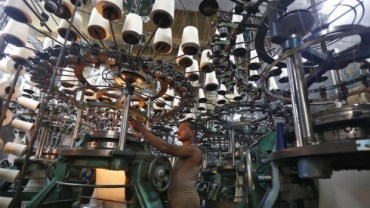
 Workers at an IKEA carpet-making facility in Bhadohi, India, August 26, 2015. PHOTO: VIVEK SINGH FOR THE WALL STREET JOURNAL
 Liberalization has created new opportunities. The challenge for policy makers is to manage growth so that it creates the basis for sustainable economic performance. Although much work has been done, India’s transformation into a global economic force has yet to fully benefit all its citizens. There’s a massive unmet need for basic services, such as water and sanitation, energy, and health care, for example, while red tape makes it hard to do business. The government has begun to address many of these challenges, and the pace of change could accelerate in coming years as some initiatives gain scale.
 In 2030, for example, Mumbai’s economy, a mammoth market of $245 billion in consumption, will be bigger than Malaysia’s today. The next four cities by market size will each have annual consumption of $80 billion to $175 billion by 2030.Exhibit 2To achieve sustainable growth, these cities will have to become more livable places, offering clean air and water, reliable utilities, and extensive green spaces. India’s urban transformation represents a huge opportunity for domestic and international businesses that can provide capital, technology, and planning know-how, as well as the goods and services urban consumers demand.




 CHINDIA ALERT: You'll be living in their world, very soon