26/01/2020
(Reuters) – India and Brazil have signed 15 accords aimed at forging closer ties between the two emerging market giants across a range of sectors, especially defence, both countries’ leaders tweeted on Saturday.
Indian Prime Minister Narendra Modi and Brazilian President Jair Bolsonaro took to social media to hail the closer cooperation and agreements struck during Bolsonaro’s official visit to India.
“Several agreements signed in infrastructure, justice, science and technology, agriculture, oil exploration, mining, health, culture and tourism,” Bolsonaro tweeted, adding: “The world’s confidence in Brazil is back!”
For his part, Modi tweeted: “India and Brazil are focussing on expanding cooperation in the defence sector,” adding that the two countries share “immense synergies” on several key issues such as the environment and fighting terrorism.
Separately, Brazil’s foreign minister Ernesto Araujo tweeted that the 15 accords signed by the two countries represent a move “against the structures of globalist thought”.
“Brazil is rising to be a great among the greats,” he tweeted.
Source: Reuters
Posted in accords, agriculture, “immense synergies”, Brazil, Brazil’s foreign minister, Brazilian President, Culture, deepen ties, Defence, Environment, health, India, Indian Prime Minister Narendra Modi, Infrastructure, Jair Bolsonaro, Justice, mining, oil exploration, range of sector, Science, sign, Technology, terrorism, Tourism, Uncategorized |
Leave a Comment »
10/12/2019
Li Zhanshu, chairman of the Standing Committee of the National People’s Congress, holds talks with president of the National Assembly of Sao Tome and Principe Delfim Neves in Beijing, capital of China, Dec. 9, 2019. (Xinhua/Liu Weibing)
BEIJING, Dec. 9 (Xinhua) — China’s top legislator Li Zhanshu held talks on Monday with visiting president of the National Assembly of Sao Tome and Principe Delfim Neves.
Li, chairman of the Standing Committee of the National People’s Congress (NPC), said China is willing to work together with Sao Tome and Principe to firmly support each other on issues concerning each other’s core interests and major concerns, and jointly safeguard the basis of the bilateral relationship of the one-China principle.
The two countries restored diplomatic relations in 2016 and therefore opened a new chapter for friendly cooperation between the two sides.
Li expressed China’s readiness to cement ties with African countries, including Sao Tome and Principe.
He also expected the two countries’ legislative bodies to advance exchanges and coordination.
Neves said Sao Tome and Principe will firmly adhere to the one-China principle, expressing the willingness to enhance cooperation in such areas as energy, infrastructure construction, fishery, health and culture.
Neves agreed to deepen friendly relations with China’s legislative bodies.
Source: Xinhua
Posted in chairman of the Standing Committee of the National People's Congress (NPC), China's top legislator Li Zhanshu, Culture, energy, fishery, health, infrastructure construction, one-China principle, president of the National Assembly, Sao Tome and Principe Delfim Neves, Uncategorized |
Leave a Comment »
25/10/2019
BEIJING, Oct. 25 (Xinhua) — Chinese President Xi Jinping has underlined the important role of traditional Chinese medicine (TCM) in building “Healthy China.”
The country should carry on fine elements in TCM and innovate them, Xi said in a recent instruction, stressing that traditional medicine is a treasure of Chinese civilization embodying the wisdom of the nation and its people.
Xi’s instruction was delivered at a national conference of TCM held Friday in Beijing.
Xi said that equal importance should be placed on traditional Chinese and Western medicines and efforts be made to enable them to supplement each other and prosper together.
He also underlined the efforts to promote TCM internationally and fully develop its unique strength in preventing and treating diseases.
In an instruction also delivered at the conference, Premier Li Keqiang called TCM a great creation of the Chinese nation.
Li stressed promoting talent training, scientific and technological innovation, and research and development of medicines.
He required efforts to promote preservation, innovation and high-quality development of TCM so that it will contribute to the improvement of people’s health and wellbeing.
Addressing the event, Vice Premier Sun Chunlan pledged to thoroughly implement the leaders’ instructions.
People who made outstanding contribution to TCM development were awarded at the conference.
Source: Xinhua
Posted in "Healthy China", Building, Chinese civilization, Chinese President Xi Jinping, embodying, health, important role, medicines, nation, People, Premier Li Keqiang, promoting, research and development (R&D), scientific and technological innovation, talent training, TCM, traditional Chinese medicine (TCM), Uncategorized, underlined, vice premier, Vice Premier Sun Chunlan, wellbeing, Western medicines, wisdom |
Leave a Comment »
02/10/2019
BEIJING, Oct. 2 (Xinhua) — While turning 70 often signals the beginning of a person’s twilight years, for the People’s Republic of China (PRC) it marks a golden age full of hope and vigor.
The PRC celebrated its 70th birthday on Oct. 1. China’s transformation from an agricultural society isolated from the West into the world’s second-largest economy open wide is nothing short of a miracle.
More importantly, it has charted a new path for developing countries to modernize.
Seven decades ago, the war-ravaged country started from scratch. Observers are astonished at China’s large-scale modernization, its reduction of the number of people living in poverty and the sheer volume of its consumer market. Their heads have been turned not only because of the speed of the transition but also by the unique path taken to realize this great transformation.
Reflecting on its past and present, and through experimentation, China has identified and will continue down the right path — socialism with Chinese characteristics.
Reform is the engine of China’s miracle. There is no ready-made solution for the development issues facing China. From creating special economic zones to building free trade pilot zones, from carrying out family-based production contracts to revitalizing state-owned enterprises, China has been one of the most successful countries in piloting reforms over the past decades. Now the reform is more in-depth and more comprehensive in economic, political, cultural, social and ecological sectors.
The Chinese government stresses being effective and responsive to the public interest. Development outlines are far-sighted. For example, the five-year plans are made to deal with comprehensive aspects that concern human development: food, transportation, communication, environment, health and education. These plans are a priority for the government.
Of course these achievements could never have been realized without the leadership of the CPC.
From the people and for the people, the CPC has always upheld its principle of striving for the happiness of the people and the rejuvenation of the nation.
At a life-or-death moment, the CPC shouldered the mission of saving the nation from existential peril. After 28 years of bloody struggle, it led the Chinese people to overthrow the “three mountains” placed on their heads and put an end to the semi-colonial and semi-feudal society of old China. Gone are the days where any attempt to bully China with “fists” or “intimidation” would succeed.
Despite overseas doubts, misunderstandings and predictions that its survival would be short-lived, the CPC has stunned the world with its leadership, innovative theories and ability to unite and organize the people.
It abolished the agricultural tax that had been in place for more than 2,600 years; it established a political system in which people are masters of their own affairs; it did its utmost to help people shake off poverty and keep nearly 1.4 billion people well-off.
No ruling party in the world can match the CPC’s record of adhering to the truth, versing itself in self-reform and self-purification, and turning impossibility into certainty in the face of difficulties and challenges, again and again.
The 70-year journey was never smooth. Trials and hardships abounded. The Chinese people dealt with floods and massive earthquakes and guarded against SARS and financial tsunamis. Yet these twists and turns never blocked China’s way forward but made it more sober, determined and mature.
Today, more than at any other time in history, China is closer to, more confident and more capable of achieving the great rejuvenation of the Chinese nation. However, lofty goals are never easily reached.
The world has been undergoing tremendous changes unseen in a century. Resistant external forces and headwinds still remain. “Zero-sum game” and “superior civilization” mentalities, among others, are prevailing.
The CPC will continue to lead the Chinese people to fight trade bullying, blackmailing and hegemonism. Only the CPC can lead China to emerge as a stronger country.
It all started long ago, and the journey is far from over.
Source: Xinhua
Posted in 70-year journey, agricultural society, agricultural tax, Beijing, blackmailing, bullying, chinese government, communication, comprehensive aspects, consumer market, CPC, cultural, developing countries, earthquakes, ecological, Economic, education, engine, Environment, family-based production contracts, five-year plans, floods, Food, free trade pilot zones, golden age, happiness of the people, health, hegemonism, human development, journey, living in poverty, mentalities, miracle, modernize, New China, old China, People's Republic of China (PRC), political, Reform, rejuvenation of the nation, SARs, scratch, second largest economy, semi-colonial, semi-feudal society, social, special economic zones, started, state-owned enterprises (SOEs), superior civilization, three mountains, transportation, tsunamis, turns 70, Uncategorized, war-ravaged country, witnessing, zero-sum game |
Leave a Comment »
22/09/2019
HEFEI, Sept. 21 (Xinhua) — Chinese top telecom operators have shown their latest achievements in 5G applications at the World Manufacturing Convention 2019 in Hefei, capital of eastern China’s Anhui Province, according to the organizer.
The operators, including China Unicom and China Mobile, showcased 5G applications in education, health and other fields.
“China Unicom has focused on 5G applications in finance. We will also provide 5G communication services for the 2022 Beijing Olympic Winter Games,” said Tao Xian, industry director of China Unicom Anhui branch.
The World Manufacturing Convention 2019 opened Friday in Hefei, setting a platform for industry insiders to showcase cutting-edge technologies and develop business contacts.
The four-day event brings together more than 4,000 representatives from over 60 countries and regions, including senior managers from Global Fortune 500 companies, said the organizing committee.
Source: Xinhua
Posted in 5G applications, Anhui province, Beijing Olympic Winter Game, China Mobile, China Unicom, cutting-edge technologies, education, Finance, Global Fortune 500 companies, health, Hefei, telecom operators, Uncategorized, World Manufacturing Convention |
Leave a Comment »
21/09/2019
BAKU, Sept. 21 (Xinhua) — China and Azerbaijan enjoy promising prospects in co-building the Belt and Road, Chinese Ambassador to Azerbaijan Guo Min said in a recent exclusive interview with Xinhua.
With a sound and steady development of bilateral relations, Guo praised the advantages of the China-proposed Belt and Road Initiative (BRI) for both sides, emphasizing Azerbaijan’s full support for and involvement in the construction of the Belt and Road.
She said Azerbaijan sees the development of relationship with China as a diplomatic priority. “China and Azerbaijan have exchanged frequent high-level visits since the beginning of this year, with mutual political trust deepening even further.”
Azerbaijani President Ilham Aliyev attended the second Belt and Road Forum for International Cooperation held in Beijing in April, said Guo, adding “the leaders of the two countries reached important consensus to further develop bilateral relations and practical cooperation in various fields.”
“Cooperation in trade, energy, transportation, humanities and other fields has yielded fruits,” she said, noting bilateral trade reached 1.5 billion U.S. dollars from January to August, an increase of 104 percent from the same period last year.
“In recent years, the two nations have been promoting cooperation in a number of areas, including education, culture, health, sports and tourism on a continuous basis,” said the ambassador.
The two countries “have exchanged the visits of culture and art figures and held a wide range of film festivals, art exhibitions and other activities to actively promote unity, mutual understanding and friendly exchanges between the people,” according to Guo.
“At the next stage, the two nations should capitalize on the existing potential and focus on more points of interest,” the ambassador said.
She described the deep traditional friendship, high-level mutual political trust and the highly complementary practical cooperation as key foundations and effective guarantees for the stability and improvement of bilateral relations.
“China is willing to work together with Azerbaijan to push Sino-Azerbaijani friendship and cooperation to a new level and benefit the two countries and their peoples,” the ambassador added.
Source: Xinhua
Posted in art exhibitions, Azerbaijan, Azerbaijani President, Belt and Road Forum for International Cooperation (BRF), Belt and Road Initiative (BRI), bilateral trade, China alert, Chinese ambassador, Chinese Ambassador to Azerbaijan, co-building, cooperation, Culture, education, energy, enjoy, film festivals, fruits, health, humanities, Ilham Aliyev, promising prospects, Sino-Azerbaijani friendship and cooperation, sports, Tourism, Trade, transportation, Uncategorized, Xinhua, Xinhua News Agency |
Leave a Comment »
02/09/2019
- Germany welcomes first panda cubs born in the country
- Zoo reports mother and babies doing well and in good health
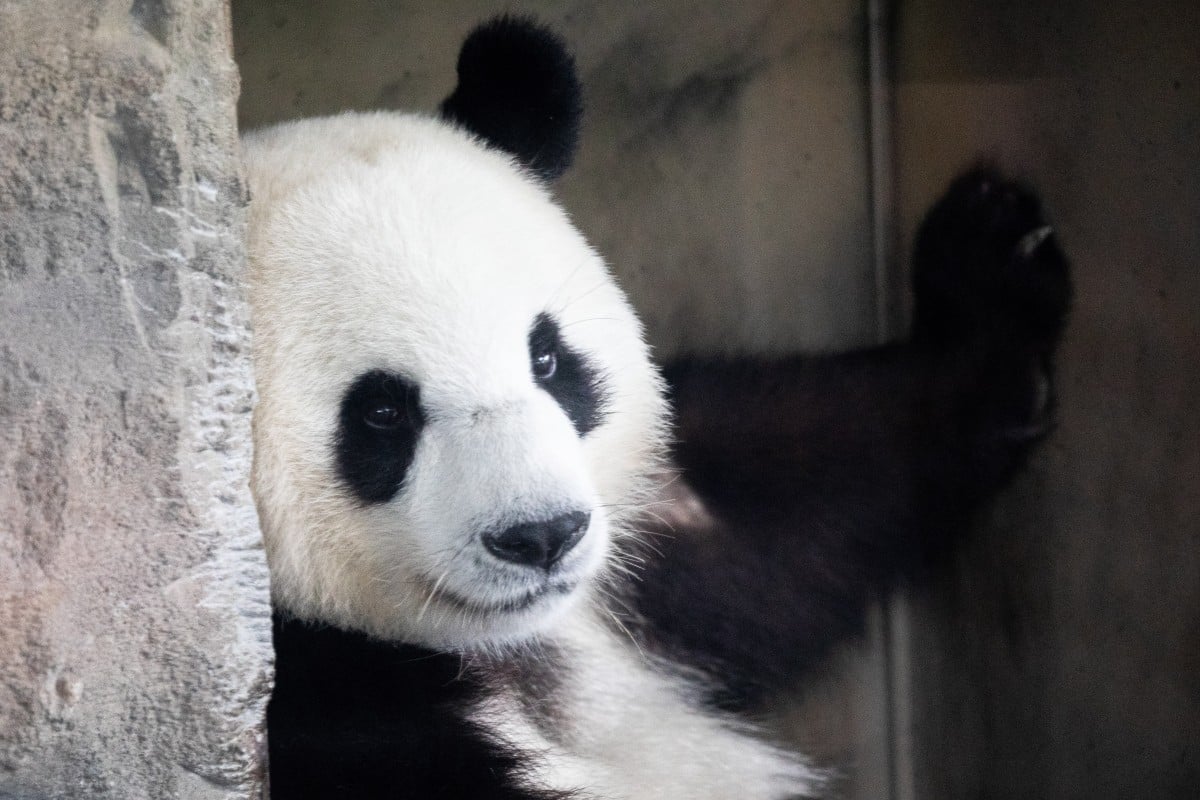
Chinese giant panda Meng Meng has given birth to twins at Berlin zoo, the first pandas to be born in Germany. Photo: EPA-EFE
Berlin zoo is celebrating the safe arrival of panda twins, in the first time that the rare animals have been born in Germany.
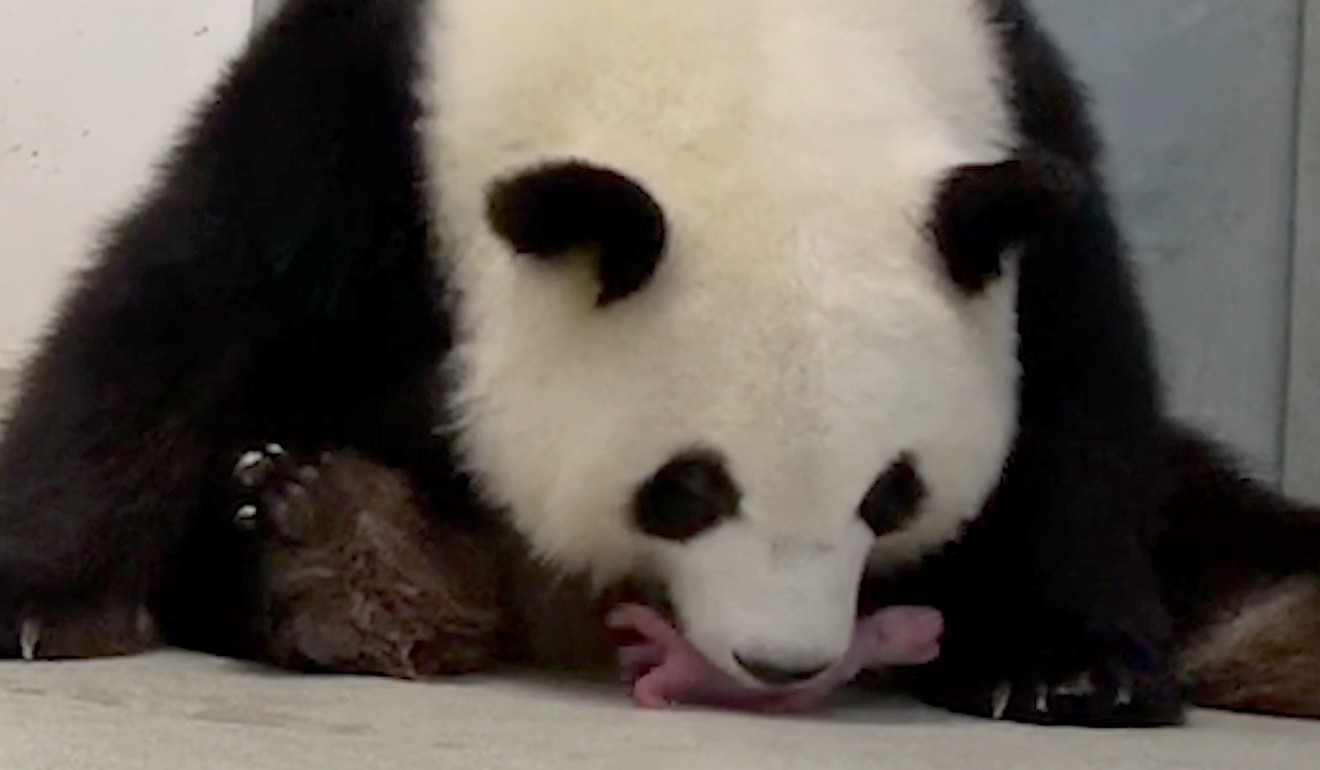
Resident panda Meng Meng delivered her first cub on Saturday evening, with the second baby arriving about an hour later.
The zoo posted a video on Twitter of the new mother guiding one of her pink babies to feed, with the announcement: “Meng Meng became a mom – twice! We are so happy, we are speechless.”
The cubs weighed in at 136 and 186 grams but their genders had not been determined, the zoo said.
Meng Meng guides one of her newborn panda twins to feed. Photo: EPA-EFE
“Meng Meng and her two cubs coped well with the birth and are all in good health,” zoo director Andreas Knieriem said.
At birth, the pink cubs, with their fine white down and disproportionately long tails, bear little resemblance to the adult black and white bears.
The births are particularly rare as it is notoriously hard to breed pandas.
Famed for its “panda diplomacy”, China has sent its national treasure to only about a dozen countries as a symbol of close relations.
The zoo pays US$15 million for a 15-year contract to host them, with most of the money going toward a conservation and breeding research programme in China.
While the cubs are born in Berlin, they remain Chinese and must be returned to China within four years after they have been weaned.
China has previously given three pandas to Germany but the last one, 34-year-old Bao Bao, died in Berlin in 2012, having become the oldest male panda in the world.
About 1,864 pandas remain in the wild in China, up from around 1,000 in the late 1970s, according to the environmental group WWF.
Just over 400 pandas live in zoos around the world, in conservation projects set up with Beijing.
Source: SCMP
Posted in Babies, Berlin, birth, Country, Double happiness, Germany, Giant panda, health, mother, panda cubs, resident panda, twins, Uncategorized, welcomes, well, Zoo |
Leave a Comment »
13/08/2019
BEIJING, Aug. 12 (Xinhua) — “A spring breeze blew into Sijiqing.”
This is how seniors at the Beijing-based nursing home recalled a visit in 2013 by President Xi Jinping, also general secretary of the Communist Party of China Central Committee and chairman of the Central Military Commission.
During the visit to the Sijiqing Home for the Elderly, Xi chatted with senior citizens, asked them about their health, families and lives.
Xi stressed the need to improve the management and service quality of elderly care institutions to ensure that every senior citizen can live a carefree, healthy, comfortable and happy life.
More than five years on, Liu Jinwen, a member of the elderly fashion models team at Sijiqing, said the visit had a great impact on them.
“Senior citizens should maintain a positive outlook on life and spend their old age gracefully,” Liu said. “To that end, we set up the models team to make our lives more ‘beautiful!'”
Liu is just one of the growing number of happy seniors in China.
Under Xi’s leadership, the country has over the past few years formulated a series of measures to boost elderly care and witnessed a marked improvement of the lives of the senior citizens.
BETTER NURSING HOMES
The services at nursing homes are related to the happiness of more than 200 million old people in China, especially the 40 million of them who have lost the ability in full or in part to take care of themselves.
In 2017, a four-year campaign was launched nationwide to boost nursing homes’ service quality. More rules and regulations on the management of elderly care institutions have also been drawn up.
At Sijiqing, a lot of cultural activities were organized. A “Silver Age” college was set up. And the nursing home teamed up with a local hospital to provide fast access for senior citizens to quality medical treatment.
“It’s really convenient now,” said Zhang Jin, a Sijiqing nursing home resident.
IMPROVED COMMUNITY-LEVEL SERVICES
Another field of senior care that has benefited a lot from policy support is community-level services.
Community-based elderly care is important to China’s old-age care system. About 90 percent of the Chinese elderly prefer to spend their later years at home, 6 percent at community-level elderly care centers and only 4 percent at nursing homes, according to statistics.
But community-level elderly care centers also play a key role in providing food and medical services to senior citizens who opt to stay at home.
Liu Jianguo, 86, and his wife are among the people who benefit.
The couple, living in the southeastern city of Fuzhou, go to the community elderly daycare center almost every day.
“My wife and I usually spend the whole day here,” Liu said, praising the center for its environment, facilities and staff.
Across China, all urban communities and more than half of rural communities had established community-based old-age service facilities as of the end of 2018.
In China, a comprehensive elderly care service system is taking shape, meeting the needs of the elderly who prefer to spend later years at home, community-level centers or nursing homes.
Source: Xinhua
Posted in "Silver Age" college, Caring, Chairman of the Central Military Commission, Community-based elderly care, daycare center, elderly, elderly care centers, families, Fuzhou, general secretary of the Communist Party of China Central Committee, health, Hospital, lives, medical treatment, nursing home, nursing homes, old-age care system, President Xi Jinping, resident, senior citizens, Sijiqing, Sijiqing Home for the Elderly, Uncategorized |
Leave a Comment »
25/05/2019
SHENZHEN, May 25 (Xinhua) — A southern Chinese trade hub boasting special links with Hong Kong is hoping the enhanced efforts to build the g will revitalize its tourism industry and local economy.
Chung Ying Street, or “Sino-British Street,” straddles the Hong Kong Special Administrative Region and the mainland city of Shenzhen and has been a special zone where local residents from both sides are allowed to cross the border freely.
It was once a boomtown popular among mainland visitors, who entered with a special permit to snatch duty-free goods from Hong Kong, but fell into decline after travel to Hong Kong was made easier for mainlanders.
The street derived from a small village, which was divided by the “Sino-British” borderline after Hong Kong became a British colony in the 19th century.
Sha Jintao, a 73-year-old resident, remembers how the street became a boomtown as China opened up and tightened links between the mainland and Hong Kong.
“When I was a child, there were only a few farmers and fishermen living on the mainland side of the street, while the Hong Kong side bustled with shops and businesses,” Sha said.
But as Shenzhen rose as a forefront of China’s reform and opening up starting in the late 1970s, the street became the center of changes. New shops and factories propped up with the inflow of Hong Kong investments, and the fancy commodities from its Hong Kong stores wooed in large numbers of mainland tourists.
Historical records show the number of tourists flocking into the 250-meter-long street peaked at 100,000 a day in the 1980s. As many as 89 jewelry stores opened in its heyday and sold 5 tonnes of gold jewelry in half a year.
SURVIVAL CRISIS
The heyday was however short-lived. After Hong Kong returned to the motherland in 1997, the street began to lose its appeal, as shopping in Hong Kong was made much easier for mainland tourists. Its daily visitors dropped below 10,000 after 2003, when mainlanders were allowed to independently travel to Hong Kong.
Many stores closed due to a loss of customers, and some survived by selling fake jewelry, winning the street much notoriety, recalled Sha, who then headed the local neighborhood committee.
Sha said the ephemeral boom was limited to the era when most Chinese had limited access to the outside world, so as the country opened its door wider, the street’s function as a “window” faced an inevitable doom.
“Now with a smartphone, a consumer could easily buy goods from across the globe,” he said, referring to China’s cross-border e-commerce boom. “So if is just for the purpose of shopping, why take the trouble of traveling to the Chung Ying Street?”
The street is now more of a cultural site, dotted with relics and museums displaying its history, but locals are hopeful that the ongoing construction of the Guangdong-Hong Kong-Macao Greater Bay Area will usher in another golden era for their neighborhood.
China has planned to turn the greater bay area, which encompasses Hong Kong, Macao and nine cities in Guangdong Province, into the world’s largest bay area in terms of GDP by 2030.
Earlier this month, the city government of Shenzhen said it will upgrade its ports with Hong Kong to boost the greater bay area development. The Shatoujiao Subdistrict, where the Chung Ying Street is located, was reserved for a new cooperation zone featuring tourism and consumption.
Optimism is running high in the community. New industries like artificial intelligence (AI), health and high-end shipping service have taken root in Yantian District, which administers Shatoujiao, and Sha is buzzing around to connect business people from Hong Kong and Shenzhen.
“Shatoujiao and its Chung Ying Street have boasted the one-of-the-kind advantage in Shenzhen-Hong Kong cooperation. We’ll work hard to turn the blueprint of the greater bay area into a reality here,” said Chen Qing, party secretary of Yantian.
Source: Xinhua
Posted in artificial intelligence (AI), Chung Ying Street, ephemeral boom, GDP, guangdong province, Guangdong-Hong Kong-Macao Greater Bay Area, health, high-end shipping service, Historical records, Hong Kong, Hong Kong Special Administrative Region (HKSAR), Macao, mainland, motherland, rejuvenation, Sha, Shatoujiao, Shen-Hong Kong cooperation, Shenzhen, Sino-British Street, smartphone, Uncategorized, Yantian District |
Leave a Comment »
17/09/2016
A yoga teacher clad in white robes and often seen meditating on the banks of the Ganges is the latest to join the billionaires club in India.
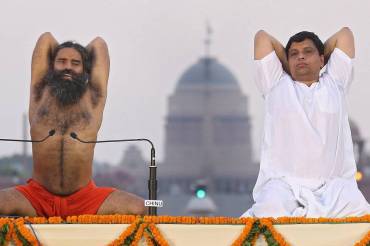
But Acharya Balkrishna is no ordinary yoga teacher. He controls Patanjali Ayurved Ltd., the consumer-products company founded by his guru, Baba Ramdev, and whose Ayurvedic soaps, shampoos and food supplements are increasingly becoming staples in middle-class Indian homes. Indians’ craze for the company’s Ayurvedic formulations has seen Mr. Acharya’s net worth skyrocket to $3.8 billion, according to Hurun’s India Rich List for 2016. That puts him at number 25 in Hurun’s list of richest Indians, ahead of industrialists like Ratan Tata, Adi Godrej and Anand Mahindra.
Such is the demand for Patanjali, which sells creams, cleaners and hair conditioners rooted in Ayurveda, India’s traditional system of medicine, that the world’s biggest consumer-products makers are tweaking their products to compete. India’s traditional system of medicine encourages therapies like yoga and believes everything from the common cold to diabetes can be fixed by certain herbs, foods and oils.
Colgate Palmolive last month launched a toothpaste flavored with basil, clove and lemon. L’Oréal SA in June launched a new range of shampoos infused with eucalyptus, green tea and henna, an Indian herb Patanjali also packs in its shampoo. Unilever PLC recently purchased an Ayurvedic hair-care company.
Mr. Balkrishna is a reclusive figure next to Mr. Ramdev, one of India’s best-known yoga teachers who founded Patanjali in 2006 and has since transformed it into a multi-million dollar consumer goods empire. Mr. Balkrishna controls the business because Mr. Ramdev has sworn off most trappings of wealth.
Messrs. Ramdev and Balkrishna are regularly seen practicing yoga on the banks of the Ganges in Haridwar, the Hindu holy city where Patanjali is based and where they run an ashram.
Ayurveda has produced other billionaires, too. The Burman family which runs Dabur India, another consumer-goods maker that draws inspiration from traditional Indian medicine, is 13th on Hurun’s India rich list.
Mukesh Ambani, the chairman of Reliance Industries, is the richest Indian with a net worth of $24 billion. Dilip Shanghvi, who heads generics-drug maker Sun Pharmaceutical Industries, is second with $18 billion in his kitty.
Source: India’s Craze for Ayurveda Is Producing Billionaires – India Real Time – WSJ
Posted in Culture, Economics, Health, health, India alert, religion, Yoga |
1 Comment »



 CHINDIA ALERT: You'll be living in their world, very soon