Archive for ‘Investment’

29/08/2019

Xi asks China, Uzbekistan to promote quality Belt and Road construction

CHINA-BEIJING-XI JINPING-UZBEK PM-MEETING (CN)

Chinese President Xi Jinping meets with visiting Uzbek Prime Minister Abdulla Aripov at the Great Hall of the People in Beijing, capital of China, Aug. 28, 2019. (Xinhua/Yao Dawei)

BEIJING, Aug. 28 (Xinhua) — Chinese President Xi Jinping met with visiting Uzbek Prime Minister Abdulla Aripov here on Wednesday, calling on the two countries to jointly push forward the high-quality construction of the Belt and Road.

Xi asked Aripov to convey his sincere regards to Uzbek President Shavkat Mirziyoyev.

The key to the constant leap-forward development of China-Uzbekistan relations is that both sides always adhere to the spirit of good-neighborliness, mutual benefit and mutual assistance, according to Xi.

Xi stressed that he attaches great importance to the development of the China-Uzbekistan comprehensive strategic partnership, which is in line with the fundamental interests of the two countries and their peoples.

Hailing the achievements of the fifth meeting of the China-Uzbekistan intergovernmental committee of cooperation, Xi said that the cooperation goals set by the two sides will certainly be realized as long as the bilateral relationship stays on the right track.

Xi called on both countries to further promote the high-quality construction of the Belt and Road, enhance synergy between national development strategies, strengthen connectivity through cross-border roads and railways, expand cooperation in trade, investment, high and new technology, energy and other fields, as well as foster new highlight in people-to-people and cultural exchanges.

China is willing to increase imports of Uzbek quality agricultural products, Xi said, adding that Uzbekistan is welcome to attend the second China International Import Expo as guest of honor later this year.

In addition, Xi said that the two sides should work together to combat the “three evil forces” of terrorism, separatism and extremism, fight against drug trafficking and other transnational organized crimes.

The rejuvenation of the Chinese nation is to seek happiness for the Chinese people and will also benefit world peace and human progress, Xi said, stressing that China will absolutely not follow the old path of “a strong country must seek hegemony.”

China is ready to enhance coordination with Uzbekistan on international affairs, safeguard common interests of the two countries, uphold multilateralism and promote democracy in international relations, Xi said.

He also called on the two countries to work with other members of the Shanghai Cooperation Organization (SCO) to raise the awareness of a community with a shared future and lift cooperation in various fields, so as to promote further development of the SCO and benefit peoples of various countries in the region.

Aripov conveyed President Mirziyoyev’s sincere greetings and lofty respect to President Xi and his warm congratulations on the 70th anniversary of the founding of the People’s Republic of China.

President Mirziyoyev sincerely hopes China will achieve greater prosperity and early national rejuvenation under the leadership of President Xi, according to Aripov.

Calling China “the closest and most reliable neighbor and partner” of Uzbekistan, Aripov said that Uzbekistan will work with China to firmly implement the important consensus reached by the two heads of state.

Mirziyoyev has appointed a special agency to synergize development strategies with the Chinese side, actively promote cooperation with China on the construction of the Belt and Road, and expand people-to-people and cultural exchanges, according to Aripov.

Uzbekistan firmly supports China in safeguarding its sovereignty, security and unity, and will continue to actively work with China to combat the “three evil forces” of terrorism, separatism and extremism, said Aripov.

Aripov is paying an official visit to China from Tuesday to Thursday at the invitation of Chinese Premier Li Keqiang.

Source: Xinhua
25/08/2019

China increases its presence in Russia’s former Central Asian backyard

  • A recent joint exercise in Tajikistan is the latest example of Beijing’s growing security and economic interests in the former Soviet republic
  • Analysts say Moscow may not be happy about China’s growing reach in the lawless, mountainous area and will be keeping an eye on the situation
Chinese and Tajik troops completed a joint exercise earlier this month in the mountainous region of Gorno-Badakhshan. Photo: Xinhua
China is increasing its military and economic presence in parts of central Asia that Russia has traditionally considered its sphere of influence – a development some analysts believe could cause concern in Moscow.
While Russia’s influence remains strong in many former Soviet republics, China is steadily building up its military and economic influence in Tajikistan, particularly in the remote, mountainous areas on its western borders where central government authority is weak.

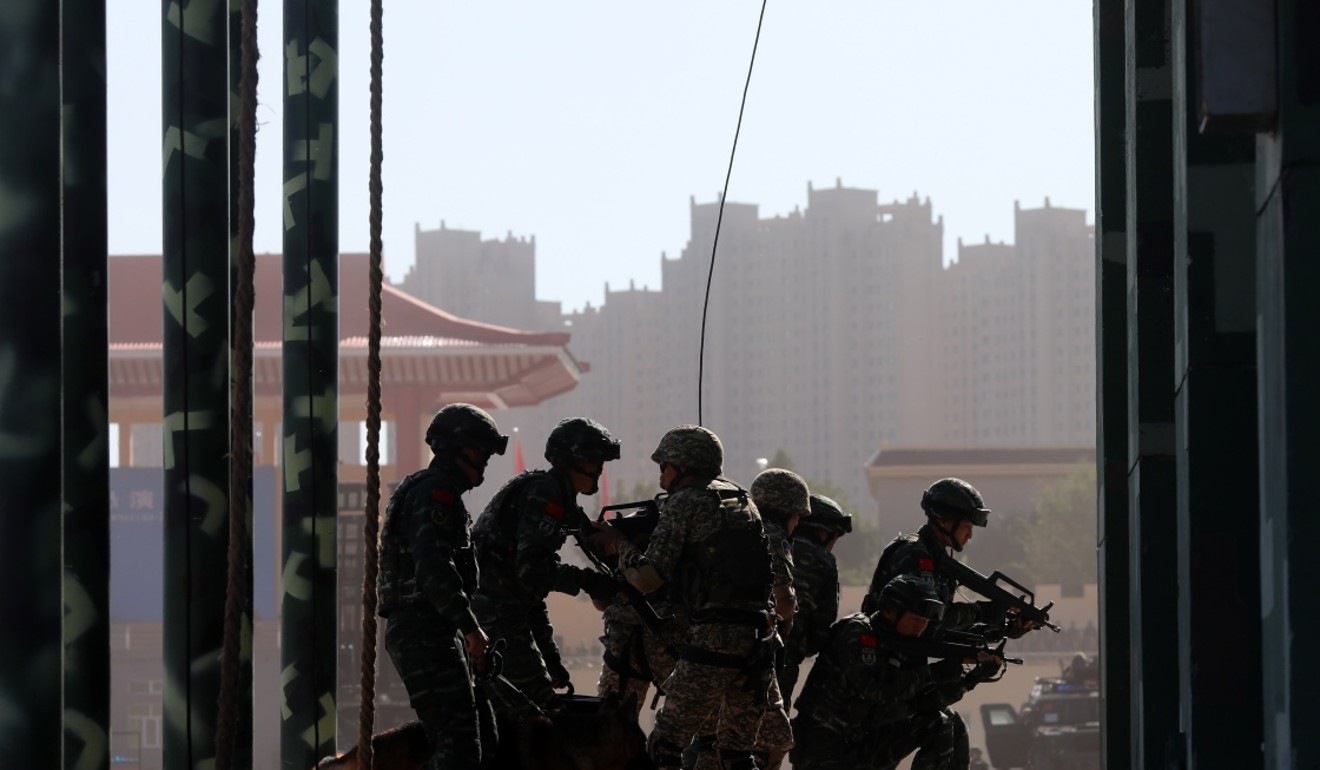
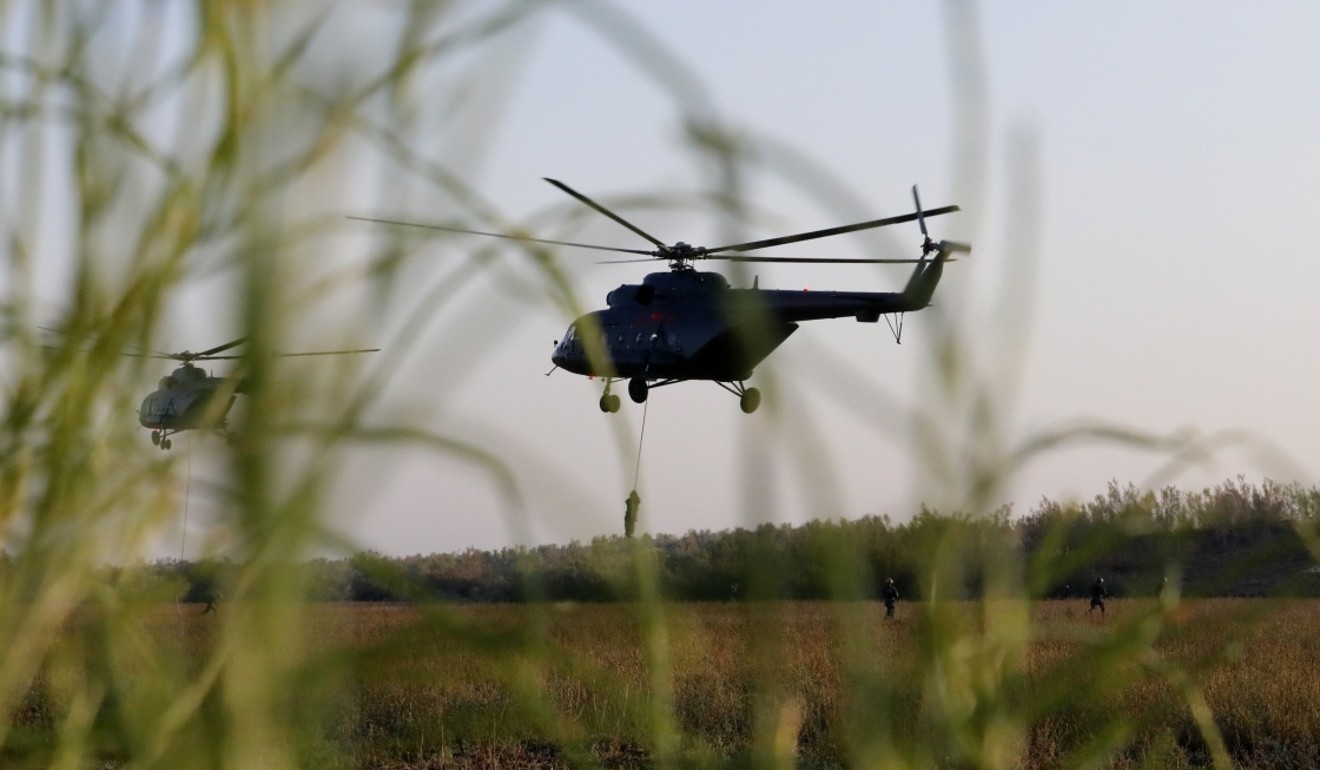
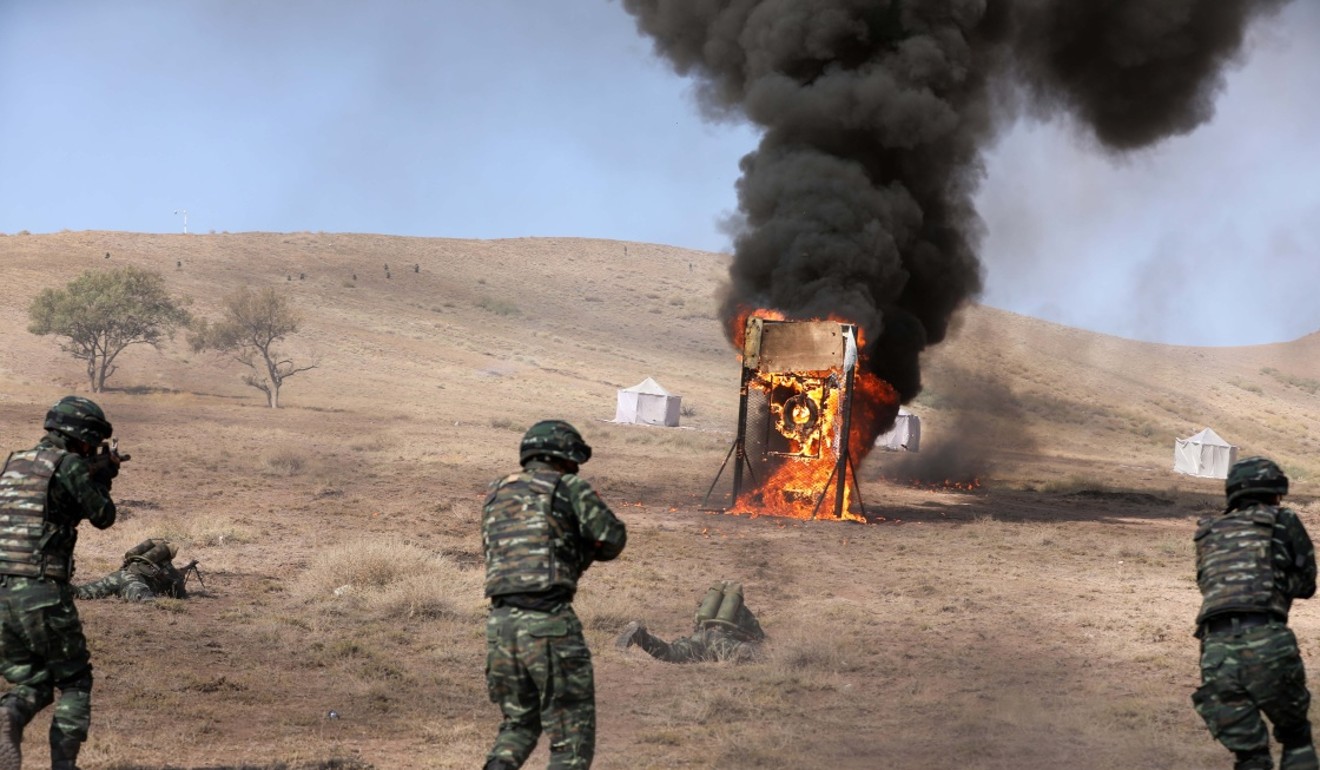
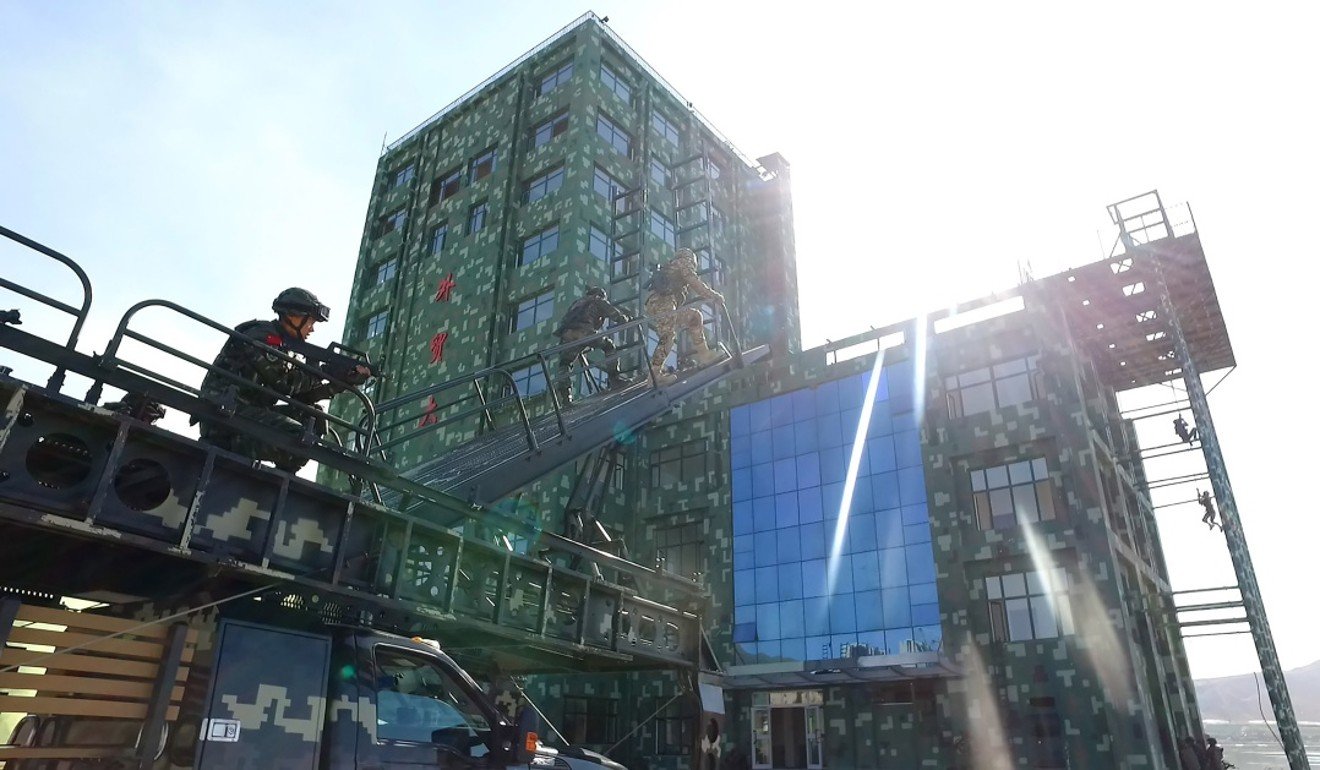
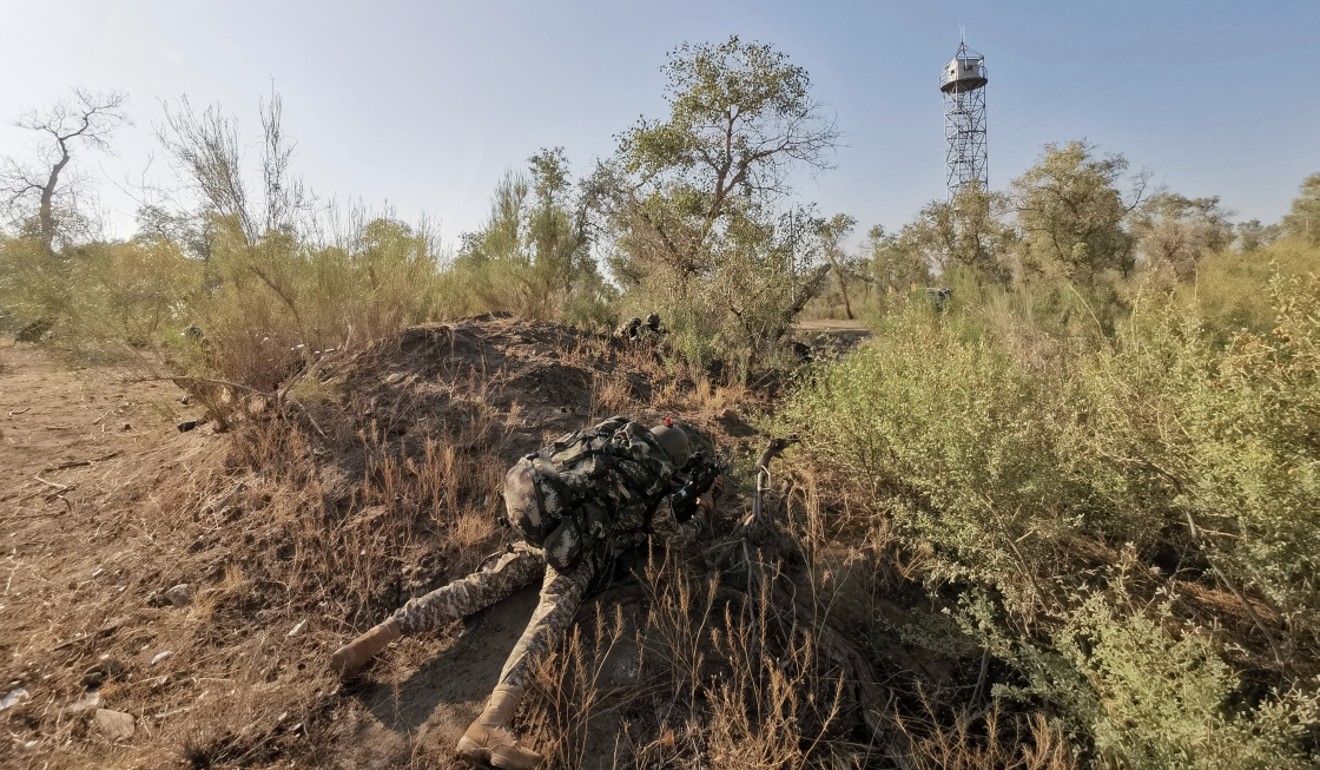
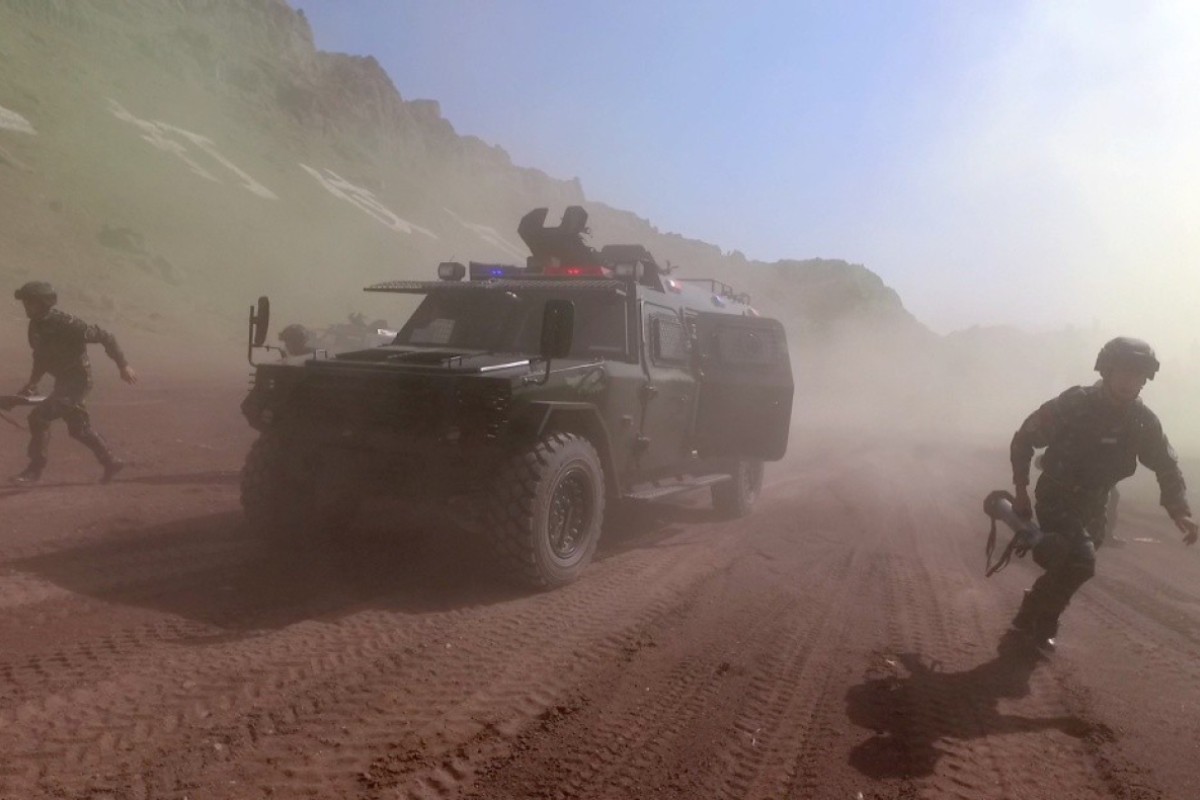
Chinese troops recently concluded a joint drill in eastern Tajikistan involving 1,200 troops from both countries.

The eight-day exercise that finished on August 13 was conducted in the autonomous Gorno-Badakhshan autonomous region, a sparsely populated territory in the high Pamir mountains, which borders China’s Xinjiang region and Afghanistan.
China has been increasing its security presence in the strategically sensitive region. Photo: Xinhua

Although this year’s exercise involved fewer troops than the 10,000 involved in a previous drill three years ago, it tested the use of advanced aerial vehicles and ground reconnaissance technology to monitor the area.

The landlocked country is strategically important for China, which is worried that the porous borders will serve as an entry point for drugs and Islamic militants into Xinjiang, where its deradicalisation strategy has led to the detention of a million Muslim minorities in reeducation camps.

It also sits along the trade routes China hopes to develop under the Belt and Road Initiative – Beijing’s flagship plan to expand its global influence through infrastructure, trade and investment – but the area has long been plagued by lawlessness and outbreaks of violence.

The recent exercise tested aerial surveillance techniques. Photo: Xinhua

Artyom Lukin, a professor of international politics at Far Eastern Federal University in Vladivostok, said Russia was not happy about the deployment of Chinese forces in Tajikistan.

“Russia has traditionally considered Central Asia, including Tajikistan, as its sphere of political-military influence,” he said.

Observers said other Central Asian republics – such as Kazakhstan, Uzbekistan and Kyrgyzstan – are likely to stay within Moscow’s orbit, but China is steadily building closer security ties with Tajikistan.

In February, China’s defence ministry denied that it was building a base and stationing troops in the country, but defended its closer military cooperation with Tajikistan.

The recent training exercise was conducted in an area Russia has long seen as part of its sphere of influence. Photo: Xinhua

China has long-standing security interests in the country and in 2016 it agreed to finance 11 border outposts and a training centre for guards along the Afghan border.

This was part of a deal Beijing made through the Quadrilateral Cooperation and Coordination Mechanism – which also involves Pakistan, Afghanistan and Tajikistan – to strengthen cooperation in combating terrorism and improving security.

China has also overtaken Russia economically, becoming the largest foreign investor in Tajikistan in 2016, accounting for 30 per cent of Tajikistan’s total direct accumulated investments, state news agency Xinhua reported.

Banned Muslim political party blamed for deadly attack on tourists in Tajikistan

China’s direct investment in Tajikistan was worth US$95 million in 2017, according to the latest available figures. China has also grown to become the country’s third largest trading partner with bilateral trade reaching around US$1.5 billion in 2018.

A recent opinion piece published by the Russian state-owned news agency Sputnik suggested China may be “getting carried away” by its investments in the region.

The article suggested that China’s growing presence in the country could lead to a “partial loss” of Tajikistan’s sovereignty and argued that Beijing may want to take control of the border with Afghanistan.

China also has economic interests to protect. Photo: Xinhua

But Lukin said even though this growing involvement may be an irritant for Russia, the strategic partnership between China and Russia will remain strong.

The two countries remain the key players in the Shanghai Cooperation Organisation, an economic and security alliance that includes the Central Asian republics and India and Pakistan.

The two are also keen to cooperate more closely due to their tense relationship with the United States. This year Russian and Chinese armed forces  have stepped up their cooperation, and last week used a UN Security Council debate to criticise the US for pulling out of the Intermediate-Range Nuclear Forces Treaty. Washington defended the move as necessary response to Beijing and Moscow’s build up of arms.

Why Chinese investors are struggling to gain a foothold in Tajikistan

Lukin said: “Moscow no doubt understands that in terms of security, Tajikistan’s border, adjacent to China’s Xinjiang and Afghanistan, is truly a vital concern for Beijing.

“The presence of Chinese troops could actually benefit Russia, because it will be China bearing the costs of policing Tajikistan’s mountainous border areas.”

Stephen Blank, a former professor at the US Army War College and a specialist in Eurasian security, said that while Russia has mostly stayed silent about China’s presence in Tajikistan, it was closely watching the situation.

“What happens in the long run depends on how far China goes to extend its military presence in Central Asia. And if it keeps extending, it may well provoke some expression of concern in Russia beyond the silence that has hitherto been the case,” Blank said.

Chinese troops could play an increasing role in policing the area in future. Photo: Xinhua

“[The recent drills] look like conventional war-fighting exercises as much as anti-terrorist operations and suggest that China may have bigger contingencies than anti-terrorism in mind.”

Mathieu Duchatel, director of the Asia programme at the Institut Montaigne, a French think tank, said both Russia and China share similar concerns about terrorism and drug trafficking in Central Asia.

He said Russia had not objected to the security pact with Pakistan, Afghanistan and Tajikistan because there are more important strategic priorities in China-Russia relations.

“Overall, Russia’s acceptance of a security role for China in Central Asia shows how Russia realistically adjusts to the changing balance of power with China, and is able to avoid a zero-sum game on issues where parallel efforts by China and Russia can serve Russian security interests,” he said.

Source: SCMP

22/07/2019

Chinese state councilor meets UAE FM

CHINA-BEIJING-WANG YI-UAE-MEETING (CN)

Chinese State Councilor and Foreign Minister Wang Yi (R) meets with Minister of Foreign Affairs and International Cooperation of the United Arab Emirates (UAE) Sheikh Abdullah bin Zayed Al Nahyan in Beijing, capital of China, July 21, 2019. (Xinhua/Yan Yan)

BEIJING, July 21 (Xinhua) — Chinese State Councilor and Foreign Minister Wang Yi met with Sheikh Abdullah Bin Zayed Al Nahyan, minister of Foreign Affairs and International Cooperation of the United Arab Emirates (UAE), here Sunday.

Hailing the UAE as China’s important and reliable partner in the Middle East, Wang said China stands ready to work with the UAE to implement the consensus reached by the two countries’ leaders, deepen their partnership under the Belt and Road Initiative, promote cooperation in various fields, enhance people-to-people exchanges, strengthen cooperation on anti-terrorism and law enforcement, and bring the China-UAE comprehensive strategic partnership to higher levels.

Sheikh Abdullah said the UAE is willing to strengthen cooperation with China in trade, investment, energy, culture, education and third-market cooperation, and to work for closer coordination within the United Nations and in regional affairs.

Source: Xinhua

28/01/2019

Sandro-owner SMCP eyes growth and investment in China

PARIS (Reuters) – SMCP, the group behind fashion brands Sandro and Maje, will keep up investments in e-commerce and new stores in China this year and expects sales to grow strongly, countering a simmering Sino-U.S. trade war, the French company’s CEO said.

The retail group – whose affordable luxury brands, which also include Claudie Pierlot, sell dresses in the 200 to 400 euro range – had doubled annual revenues in the past four years to 1 billion euros, with a rapid expansion of its shop network and after breaking into markets such as China

Investors are on edge over signs Chinese shoppers might start spending less on high-end brands due to the Washington-Beijing trade spat, which has already hit their overseas purchases as the yuan falls.

Business in Hong Kong, for instance, a magnet for Chinese consumers, was “a little softer” as a result of currency swings, SMCP’s Chief Executive Daniel Lalonde said in an interview.

But he added that the group was still investing in mainland and greater China, which makes up the bulk of its sales in Asia Pacific, SMCP’s third-biggest region after its French home market and the rest of Europe.

“From our perspective, everything is still intact (in China). Any slowdown in our business is related to the comparison base (…) and we still expect to grow that market over 20 percent in 2019,” Lalonde said. “We’re still confident on the region.”

SMCP, controlled by Chinese retail group Shandong Ruyi, earlier on Monday reported a 8.1 percent increase in fourth-quarter sales at constant currencies, which came in at 276.1 million euros (239.4 million pounds), in line with forecasts.

Momentum in Asia Pacific slowed from the previous three months, but mainland China was particularly strong, the group said.

In France, SMCP had to shut some stores on successive Saturdays in November and early December along with its rivals due to anti-government “yellow vest” protests, costing the firm 4 million euros in lost revenue, Lalonde said.

Its French sales fell 1.9 percent at constant currencies in the fourth quarter, less than expected by some analysts and helped by a spike in online sales.

SMCP’s shares jumped more than 4 percent in early trading but were down 4 percent by 1218 GMT, with European shares more broadly in negative territory following underwhelming industrial data from China.

Source: Reuters

28/01/2019

Chinese envoy calls for more flexible approach in investment treaty talks with EU

BRUSSELS, Jan. 28 (Xinhua) — China and the European Union (EU) could take a more flexible approach by setting phase-based targets in Bilateral Investment Treaty (BIT) negotiations and have some early harvests which would be followed by more to come, the Chinese envoy to the EU has said.

Zhang Ming, head of the Chinese mission to the EU, made the remarks in a recent interview with the Financial Times, according to an edited transcript of the interview provided by the mission on Sunday night.

“The BIT talks is a priority in China-EU relations. Both sides have put in a great deal of effort. Both sides are pushing the talks in good faith,” Zhang said.

Last year, the two sides exchanged the market access offers, which marked big progress and brought the talks into a new phase, he said.

“This year, we hope to make further progress. To conclude the agreement requires both sides to work together in the same spirit. This is a process of making compromise. We hope that our European friends can work together with us,” Zhang said.

“Usually, the negotiating parties tend to set an ultimate goal. Reaching the goal takes quite some time,” he said, proposing that the two sides could set phase-based targets and have some early harvests.

China is now the EU’s second-biggest trading partner while the EU is China’s biggest trading partner.

The two sides launched negotiations for a BIT in 2013 with the aim of providing investors on both sides with predictable, long-term access to each other’s markets, and protecting investors and investments.

Source: Xinhua

08/01/2019

China to expand investment in civil aviation sector in 2019

BEIJING, Jan. 7 (Xinhua) — China’s civil aviation regulator said Monday that the country aimed to expand its fixed-asset investment in the civil aviation sector to 85 billion yuan (about 12.41 billion U.S. dollars) in 2019.

This was compared with 81 billion yuan made in 2018, according to the Civil Aviation Administration of China (CAAC).

Total transport turnover of the country’s civil aviation industry was expected to rise 11.8 percent year-on-year to 136 billion tonne-kilometers in 2019, said Feng Zhenglin, head of the CAAC, at a work conference.

Passenger transport volume as well as cargo and mail transport volume are likely to increase 11 percent and 5.7 percent respectively this year, according to the CAAC.

Feng said the civil aviation industry had made remarkable achievements last year, with the total transport turnover up 11.4 percent year-on-year to 120.64 billion tonne-kilometers.

In 2018, 167 new international flight routes were launched, with 105 of them linking domestic cities with countries along the Belt and Road, taking number of China’s total flight routes to 4,206.

Efforts will be made to push forward the construction of Beijing’s new international airport and ensure its opening to air traffic at the end of September this year, Feng said.

He said as of the end of 2018, 55.49 billion yuan had been invested Beijing Daxing International Airport. The new airport is expected to handle 45 million passengers annually by 2021 and 72 million by 2025.

21/11/2016

U.S.-China Investment Flows Bigger Than Thought – China Real Time Report – WSJ

Would politicians in the U.S. and China be stronger proponents of foreign investment from each other’s nations if the amounts were bigger?

A new study estimates foreign direct investment between the U.S. and China is already two to four times the amount shown by official statistics, and its authors hope the findings will encourage politicians to forge even deeper bilateral links. “We simply did not have a good joint basis for discussion,” said Thilo Hanemann, research director at New York-based Rhodium Group.

With funding by big U.S. businesses and trade groups, Rhodium counted $228 billion in 6,677 U.S. investments into China since 1990, plus 1,200 Chinese investments into the U.S. worth $64 billion. The figures are significantly higher than official numbers produced in each country.

Publication of Rhodium’s “Two-Way Street” comes as investment and trade flows face increasingly skeptical governments in both the U.S. and China. Proponents of open flows express anxiety that, as U.S. president, Donald Trump could favor more protectionism. New policies could mean less business for investment bankers and lawyers who do cross-border deals, plus slower trade and fewer jobs in local communities.

Cool winds were already blowing before Mr. Trump’s surprise election.

Rising trade barriers are blamed for anemic global commerce this year, while cross-border investment is under such threat that Group of 20 leaders in September endorsed guidelines designed to inspire confidence in it. This week, the U.S. Congress was advised by a longtime critic of Beijing, the U.S.-China Economic and Security Review Commission, of an “inherently high risk” in allowing state-run Chinese companies to make acquisitions in the U.S.

A Chinese Foreign Ministry spokesman declined to comment on the commission’s report in a regular briefing Thursday and said the U.S.-China economic relationship is mutually beneficial.

Rhodium argues that the benefits of FDI aren’t widely enough appreciated because the amounts have been underestimated. Its researchers aimed to track every business investment of $1 million or more between the world’s two largest economies over the past quarter century.The researchers found deep impacts throughout China and the U.S., including 1.6 million jobs in China directly resulting from U.S. FDI and U.S. 100,000 due to Chinese money.

The paths into each other’s nations differ, the study determined. Some 71% of U.S. investments into China were greenfield, or new, projects. U.S. companies, including Gap Inc. and International Paper, according to their executives who participated in a launch of the report, initially went to China because it was cheaper. Today they increasingly look at its consumer market. Meanwhile, U.S. business as a whole could do more if permitted into key sectors such as entertainment and energy.

Chinese companies have mostly bought businesses in the U.S. with activity that has been almost all in the past five years, the researchers found. Dealmaking has risen so quickly that China’s flows to the U.S. topped its intake from the U.S. in 2015, with activity increasingly driven by private companies, including financial investors such as Shanghai-based Fosun Group, which also took part in the launch event.

The business community’s near-term anxiety is the election of Mr. Trump, who campaigned on allegations the Sino-U.S. economic relationship has been anything but a two-way street.

Stephen Orlins, president of the National Committee on U.S. China Relations, which sponsored the Rhodium work, predicted the 45th president will adopt open investment policies, saying: “As a business person, he will understand that foreign investment creates jobs in the United States. Trade may be different.”

Source: U.S.-China Investment Flows Bigger Than Thought – China Real Time Report – WSJ

Law of Unintended Consequences

continuously updated blog about China & India

ChiaHou's Book Reviews

continuously updated blog about China & India

What's wrong with the world; and its economy

continuously updated blog about China & India