18/04/2020
- Young people starting out in the jobs market face a hit to their prospects that could endure years after the Covid-19-induced downturn has run its course
- A generation of angry youth raises the spectre of political instability
Freelance filmmaker Anita Reza Zein had grown used to jam-packed production schedules requiring her to put in long hours and run on little sleep. Until Covid-19 struck.
Today, the talented Indonesian is suddenly free. With five projects on hold and many more potentially cancelled, she now spends her time working on a personal project, doing research for her work and occasionally going for a ride on a bicycle.
“I feel calm and patient although I’m jobless. Maybe because it’s still the third week [of social distancing] and I still have enough savings from my previous work,” said the 26-year-old, who is from Yogyakarta. “But I imagine life will become tougher in the next few months if the situation gets worse.”
Like her, millions of youths are now part of a job market in Southeast Asia that has been ravaged by the coronavirus pandemic. They are the unlucky cohort of 2020 whose fortunes have changed so drastically, so quickly.
Freelance filmmaker Anita Reza Zein now spends most of her time at home as her projects have all been frozen due to the spread of Covid-19. Photo: Anita Reza Zein
Just three months ago, many eager graduates were about to partake in a strong economy and possibly land decent pay cheques.
Today, job offers are being withdrawn and hiring halted, leading to a spike in regional youth unemployment in the short term. In the long term, the effects on the Covid-19 cohort could lead to wider social and political problems.
JOB MARKETS SHUT
The virus’ impact on economies and the job market in the region has been swift and devastating. Borders have been slammed shut, workers ordered to stay at home, and thousands of companies closed every week.
The biggest problem is the lack of certainty about how long this will last – the longer the governments keep their countries on lockdown, the worse the economic impact.
In
Indonesia, for example, the virus has caused almost 2.8 million people to lose their jobs, according to the Manpower Ministry and the Workers Social Security Agency. Likewise, in
Malaysia, an estimated 2.4 million people are expected to lose their jobs, going by data from the Malaysian Institute of Economic Research (MIER).
is bracing itself for a 5.3 per cent contraction in GDP for the full year, the worst since the Asian financial crisis in 1997.
“We think about seven million jobs have been lost already, and the figure will hit 10 million if the outbreak drags on for two to three more months,” said Kalin Sarasin, council member and head of the Thai Chamber of Commerce.
Lockdown for 34 million people in capital Jakarta as Indonesia fights surge in coronavirus deaths
For young jobseekers, the outbreak of the Covid-19 pandemic could hurt even more, with companies unwilling to open up new jobs for them.
“My clients who were open to fresh graduates previously have realigned searches [for candidates] who have at least one year of experience, as it’s a lot faster for someone with experience to scale up quickly and contribute,” said Joanne Pek, a recruiter at Cornerstone Global Partners’ Singapore office.
For many small and medium-sized enterprises (SMEs) such as Singapore-based restaurant chain The Soup Spoon, saving jobs – rather than recruiting – is the priority.
“We don’t want to let anyone go during this period, so we’re focused on protecting jobs,” said co-founder and director Benedict Leow, who employs some 250 workers.
THE COVID-19 COHORT
The looming economic downturn could have distinct consequences for the Class of 2020 that will outlast the economic downturn itself.
For one thing, the paucity of jobs could result in the Covid-19 cohort becoming a “lost generation” of sorts, said Achim Schmillen, a senior economist at the World Bank Social Protection and Jobs Global Practice.
“Research from around the globe shows that graduating in a recession can have significant and long-lasting impacts that can affect the entire career. In particular, it can lead to large initial earnings losses which only slowly recede over time,” he said.
Coronavirus: why there’s no quick fix for a Covid-19 vaccine
Economics professor Jeff Borland of the University of Melbourne said that international studies showed that what happened to people when they first entered the labour market would affect them for the rest of their working lives.
“Many international studies have shown that trying to move into employment during a major economic downturn cuts the probability of employment and future earnings for a decade or more.
“Why this occurs is less well-established. Reasons suggested include being forced to take lower-quality jobs, losing skills and losing psychological well-being,” he said in a piece published on The Conversation website.
Malaysia sets up Covid-19 test zones in the capital to hunt for ‘hidden’ coronavirus cases
This could create “lasting scarring” on the graduates this year, said labour economist Walter Theseira.
“If their careers start badly, it would affect their earnings for a number of years because they would lack the same experience as peers who started in a more secure position,” the associate professor of economics at Singapore University of Social Sciences said.
Shrinking salaries and the downsizing of companies mean that graduates might have to seek out professions outside their areas of study to survive, said Grace Lee Hooi Yean, head of the Economics Department at Monash University, Malaysia.
She said youth unemployment in the country, which stands at 11.67 per cent, could rise sharply.
“This looming crisis could trap a generation of educated and capable youth in a limbo of unmet expectations and lasting vulnerability if the graduates are not ready to face reality and adapt to the new challenges,” she said.
How long will a coronavirus vaccine take? A Q&A with Jerome Kim
This is fast becoming the reality for final-year medical student Rebecca K. Somasundaram, who has been left without a job due to the pandemic.
After being offered a residency programme at a top specialist hospital in Kuala Lumpur, she was notified a month ago that her placement had been made void until further notice. This has thrown the 24-year-old’s plans into disarray as she was hoping to enter the workforce soon to pay off her student debts. Her plans to get married next year have also been put on hold temporarily.
“I am in constant talks with the hospital to see if there is any way I can join them soon but seeing how things are unfolding so quickly, I am slowly losing hope,” she said.
Over in Indonesia, the pandemic will trigger job losses on a national scale. To combat this, the government would need to introduce strong fiscal measures and beef up its social protection policies, said the country’s former minister of finance Muhamad Chatib Basri.
Many people on lower incomes tend to work in the extraction industry, such as mining and palm oil, and these are the first industries hit due to the global slowdown.
“The rich will be able to brave the storm, but the poor have no means to do so,” he said.
Singapore migrant workers under quarantine as coronavirus hits dormitories
SPECTRE OF 1997
With partial lockdowns imposed in the capital of Jakarta, more needs to be done to ensure that vulnerable citizens have access to food and financial support.
Without government intervention, economic woes could soon translate into political instability, a scenario last seen in the Asian financial crisis.
In 1997, waves of discontent sparked racial riots in Indonesia that toppled the country’s long-time strongman Suharto, while in Thailand a political crisis created the conditions for populist leader Thaksin Shinawatra to rise.
Rising discontent could have serious implications at the ballot boxes, warned Basri, who said young voters were a key voting bloc for President Joko “Jokowi” Widodo.
Coronavirus: food security, Asia’s next battle in a post-Covid world
In last year’s general elections, Jokowi proved a hit among the lower-educated youth who had benefited from the creation of largely unskilled jobs during his tenure.
“With more young people expected to become unemployed in the coming months, things will only get worse from here,” said Basri, who added that the country’s youth unemployment stood at almost 20 per cent in 2018.
Indonesia, which has 268 million people and is Southeast Asia’s largest economy, had 133 million workers as of last August, according to official data.
Close to 10 per cent or about 12.27 million are university graduates but among this group, about 5.67 per cent or some 730,000 were unemployed. This was higher than the country’s overall unemployment rate at that time, which was 5.28 per cent.
‘Ghosts’ deployed to scare Indonesians into staying home to slow spread of the coronavirus
GETTING IT RIGHT
Economists say, however, that all is not lost. Much will depend on policy and how governments focus on battling the virus on the public health and economic fronts. They point to Singapore, which has launched a robust response to the crisis.
On April 6, the Singapore government announced its third budget in two months to help companies and households tide over the crisis. In all, Singapore’s total stimulus package, which aims to save jobs and keep funds flowing to companies, will cost the government a massive S$59.9 billion (US$42 billion).
The Singapore government was also preparing for a labour market that would be reluctant to hire fresh graduates on a full-time basis, said Theseira.
“There are plans to implement large-scale subsidised traineeships, which may be more palatable to companies which are worried about taking on permanent headcount this year,” he noted. “As the economic situation improves, they can be converted to permanent positions.”
The next coronavirus: how a biotech boom is boosting Asian defences
While jobs were being created for fresh graduates, many would still have to temper their expectations, such as taking jobs with lower starting pay, said DBS Bank economist Irvin Seah.
“There are still some jobs to go around. There are still some companies that may need workers. But they will need to be realistic,” he said.
For instance, despite the downturn, Singapore telco Singtel expects to recruit over 300 fresh graduates for various permanent positions this year, according to Aileen Tan, the company’s Group Chief Human Resources Officer. Many of the new hires will be in new growth areas such as the Internet of Things, analytics and cloud.
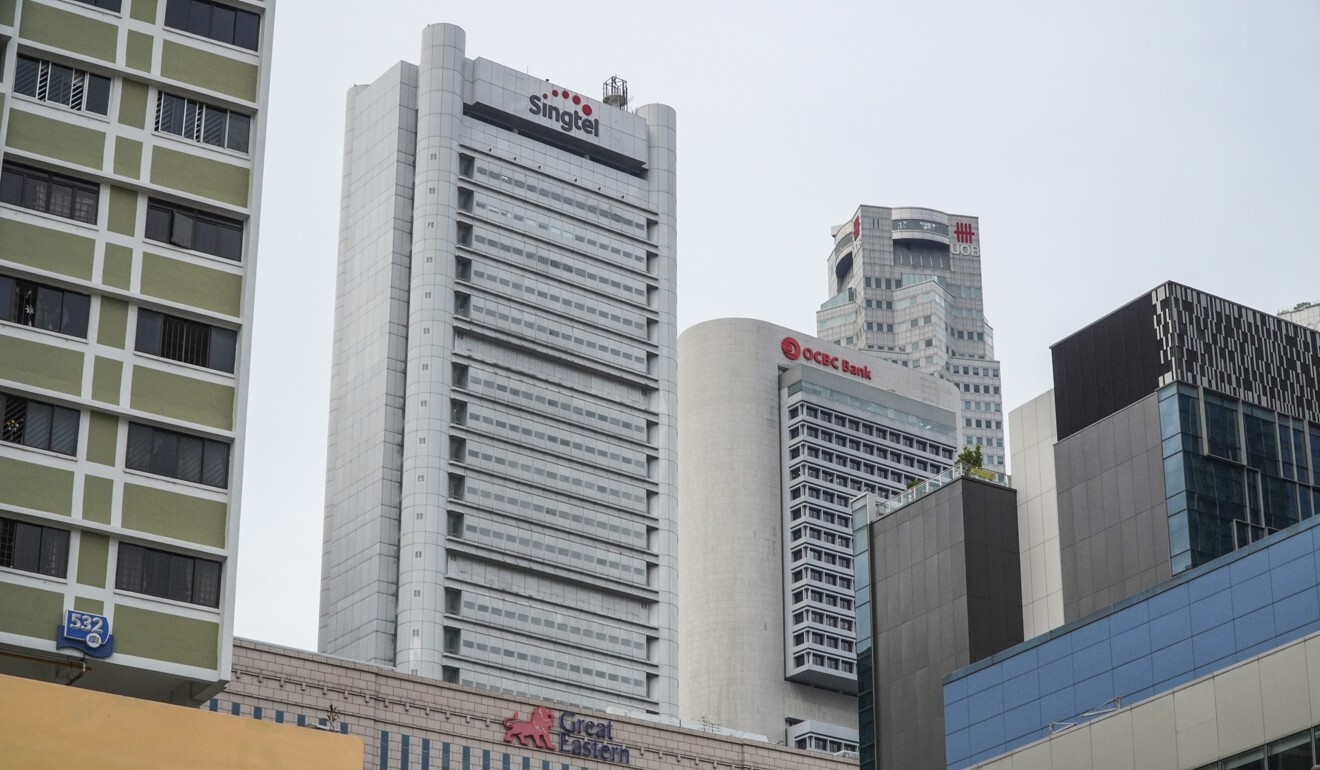
The Singtel Comcentre building in Singapore. Photo: Roy Issa
Other companies that continue to hire include those in tech across the region, including e-commerce giant Shopee, food-delivery service Foodpanda and Amazon.
In Australia, Borland suggested helping young people to remain plugged into the labour market through government-funded paid internships, or even offering them loans to go for further studies and prevent a spell of unemployment.
For now, while some young jobseekers are taking a wait-and-see approach, the reality is hitting hard for others.
Final-year National University of Singapore student H.P. Tan had all but secured a job at a public relations firm last month, after three rounds of interviews.
The Faculty of Arts and Social Sciences undergraduate was rejected via an email from the agency, which said that they could no longer hire after Covid-19 started to drastically cut business.
“When I got that rejection, it was a turning point. I didn’t think I would be directly impacted,” said the 23-year-old.
“I also applied to a few other agencies but the response has been slow, so I am now freaking out at the possibility of not being able to find a job after graduation.”
Source: SCMP
Posted in 1997, 2020, a hit, affect, after, ago, although, Amazon, analytics, angry youth, approach, around the globe, Asian financial crisis, Australia, Bicycle, biggest problem, borders, bracing, cancelled, capital, changed, class, closed, cohort, Comcentre building, companies, contraction, Cornerstone Global Partners’, coronavirus, Coronavirus pandemic, could endure, countries, COVID-19, Covid-19-induced, decent, devastating, dormitories, downturn, drastically, e-commerce giant, eager, earnings losses, Economic, economic downturn, economics professor, economies, Economists, economy, effects, enough, entire career, estimated, every, example, extraction industry, Face, Faculty of Arts and Social Sciences, feel calm, few, filmmaker, five, food and financial support, food-delivery service, Foodpanda, fortunes, free, Freelance, full year, further studies, GDP, generation, gets worse, government's, graduates, graduating, Group Chief Human Resources Officer, grown, growth areas, halted, her, her time, hiring, Home, imagine, impact, impacts, imposed, Indonesia, initial, international studies, internships, Jakarta, jam-packed, job market, JOB MARKETS, job offers, jobless, jobs market, jobseekers, keep, lack of certainty, land, large, lead, leading, life, Likewise, little sleep, loans, lockdown, lockdowns, long hours, long term, long-lasting, longer, lost generation, Malaysia, Malaysian Institute of Economic Research (MIER), Manpower Ministry, many, many more, Maybe, migrant workers, millions, mining, months, National University of Singapore, next, occasionally, office, on hold, ordered, over time, Palm oil, partake, partial, particular, Patient, pay cheques, personal project, political instability, poor, possibly, post-coronavirus, potentially, President Joko “Jokowi” Widod, prevent, previous, priority, production, projects, put in, quarantine, quickly, raises, ravaged, recede, Recession, recruiting, region, regional, requiring, research, rich, ride, run, run its course, saving jobs, savings, schedules, Shopee, short term, showed, shut, significant, since, Singapore, Singapore University of Social Sciences, Singapore-based, Singtel, situation, slammed shut, slowly, small and medium-sized enterprises (SMEs), social and political problems, Social distancing, Southeast Asia, spectre, spell, spends, spike, starting out, stay, storm, strong, struck, suddenly, Suharto, swift, talented, telco, Thai Chamber of Commerce, Thailand, Thaksin Shinawatra, The Conversation, The Soup Spoon, their prospects, third, Thousands, Three, Today, tougher, Uncategorized, under, unemployment, University of Melbourne, unlucky, Until, used to, virus’, wait-and-see, website, week, wider, will last, withdrawn, workers, Workers Social Security Agency, working, World Bank Social Protection and Jobs Global Practice, worse, worst, years, Yogyakarta, young people, youth unemployment, youths |
Leave a Comment »
12/04/2020
- Between January 20 and April 4, PM2.5 levels across the country fell by more than 18 per cent, according to the environment ministry
- But observers say that as soon as the nation’s factories and roads get back to normal, so too will the air pollution levels
Blue skies were an unexpected upside of locking down cities and halting industrial production across China. Photo: AFP
China’s air quality has improved dramatically in recent weeks as a result of the widespread city lockdowns and strict travel restrictions introduced to contain the
. But experts say the blue skies could rapidly disappear as factories and roads reopen under a government stimulus plan to breathe new life into a stalled economy.
According to the Ministry of Ecology and Environment, between January 20 and April 4 the average concentration of PM2.5 – the tiny particles that pose the biggest risk to health – fell by 18.4 per cent from the same period of last year.
Meanwhile, the average number of days with good air quality – determined as when the air pollution index falls below 100 – rose by 7.5 per cent, it said.
Satellite images released by Nasa and the European Space Agency showed a dramatic drop in nitrogen dioxide emissions in major Chinese cities in the first two months of 2020, compared with a year earlier.
According to Nasa, the changes in Wuhan – the central China city at the epicentre of the initial coronavirus outbreak – were particularly striking, while nitrogen dioxide levels across the whole of eastern and central China were 10 to 30 per cent lower than normal.
The region is home to hundreds of factories, supplying everything from steel and car parts to microchips. Wuhan, which has a population of 11 million, was placed under lockdown on January 23, but those
restrictions were lifted on Wednesday
.
Air pollution is likely to return to China’s cities once the lockdowns are lifted. Photo: Reuters
Nitrogen dioxide is produced by cars, power plants and other industrial facilities and is thought to exacerbate respiratory illnesses such as asthma.
The space agency said the decline in air pollution levels coincided with the restrictions imposed on transport and business activities.
That was consistent with official data from China’s National Development and Reform Commission, which recorded a 25 per cent fall in road freight volume and a 14 per cent decline in the consumption of oil products between January and February.
Guangzhou cases prompt shutdown in ‘Little Africa’ trading hub
Liu Qian, a senior climate campaigner for Greenpeace based in Beijing, said the restrictions on industry and travel were the primary reasons for the improvement in air quality.
According to official data, in February, the concentrations of PM2.5, nitrogen dioxide and sulphur dioxide – a toxic gas that comes mostly from industrial burning of coal and other fossil fuels – all fell, by 27 per cent, 28 per cent and 23 per cent, respectively.
“The causes of air pollution are complicated, but the suspension of industrial activity and a drop in public transport use will have helped to reduce levels,” Liu said.
As the epicentre of the Covid-19 pandemic has shifted to the
United States and
, human and industrial activity in China is gradually picking back up, and so is air pollution.
Lauri Myllyvirta, lead analyst with the Centre for Research on Energy and Clean Air in Helsinki, said that levels of nitrogen dioxide pollution, measured both by Nasa satellites and official stations in China, started inching back up in the middle of March and had returned to normal levels by the end of the month.
That coincided with the centre’s findings – published on Carbon Brief, a British website on climate change – that coal consumption at power plants and oil refineries across China returned to their normal levels in the fourth week of March.
How the Wuhan experience could help coronavirus battle in US and Europe
Ma Jun, director of the Institute of Public & Environmental Affairs, a Beijing-based charity, said a stimulus plan to kick-start the economy would have a significant impact on air pollution.
“Once industrial production is fully resumed, so are the emission levels,” he said. “Unless another outbreak happens and triggers another lockdown, which would be terrible, the improvement achieved under the pandemic is unstable and won’t last long.”
After the 2008 financial crisis, Beijing launched a 4 trillion yuan (US$567.6 billion) stimulus package that included massive infrastructure investment, but also did huge damage to the environment. In the years that followed, air pollution rose to record highs and sparked a public backlash.
Even before the
Covid-19 outbreak, China’s economy was slowing – it grew by 6.1 per cent in 2019, its slowest for 29 years – and concerns are now growing that policymakers will go all out to revive it.
“Local governments have been under huge pressure since last year, and there are fears that environmental regulations will be sidelined [in the push to boost economic output],” Ma said.
But Beijing had the opportunity to get it right this time by investing more in green infrastructure projects rather than high-carbon projects, he said.
“A balance between economic development and environmental protection is key to achieving a green recovery, and that is what China needs.”
Source: SCMP
Posted in 20, 2020, 4, air pollution, air quality, April, Asthma, ‘Little Africa’, back, balance, Beijing, blue skies, brought, business activities, car parts, Carbon Brief, cars, charity, China, China’s economy, Chinese cities, climate campaigner, Coal, concentrations, consumption, coronavirus epidemic, coronavirus outbreak, COVID-19, COVID-19 outbreak, Covid-19 pandemic, decline, drop, eastern and central China, environment ministry, Environmental protection, environmental regulations, epicentre, Europe, European Space Agency, everything, exacerbate, expect, factories, February, fossil fuels, get back, green infrastructure projects, green recovery, Greenpeace, Guangzhou, Helsinki, high-carbon projects, Home, Human, hundreds, improvement, industrial activity, industrial burning, industrial facilities, industry, Institute of Public & Environmental Affairs, January, last, levels, local governments, lockdowns, March, microchips, months, NASA, National Development and Reform Commission, Nitrogen dioxide, oil products, PM2.5, PM2.5 levels, policymakers, power plants, primary reasons, public transport, region, respiratory illnesses, restrictions, road freight, roads, shifted, sidelined, slowing, so too, space agency, Steel, supplying, suspension, tiny particles, to normal, toxic gas, trading hub, Transport, travel, Uncategorized, United States, Wednesday, Wuhan |
Leave a Comment »
26/01/2020
(Reuters) – India and Brazil have signed 15 accords aimed at forging closer ties between the two emerging market giants across a range of sectors, especially defence, both countries’ leaders tweeted on Saturday.
Indian Prime Minister Narendra Modi and Brazilian President Jair Bolsonaro took to social media to hail the closer cooperation and agreements struck during Bolsonaro’s official visit to India.
“Several agreements signed in infrastructure, justice, science and technology, agriculture, oil exploration, mining, health, culture and tourism,” Bolsonaro tweeted, adding: “The world’s confidence in Brazil is back!”
For his part, Modi tweeted: “India and Brazil are focussing on expanding cooperation in the defence sector,” adding that the two countries share “immense synergies” on several key issues such as the environment and fighting terrorism.
Separately, Brazil’s foreign minister Ernesto Araujo tweeted that the 15 accords signed by the two countries represent a move “against the structures of globalist thought”.
“Brazil is rising to be a great among the greats,” he tweeted.
Source: Reuters
Posted in accords, agriculture, “immense synergies”, Brazil, Brazil’s foreign minister, Brazilian President, Culture, deepen ties, Defence, Environment, health, India, Indian Prime Minister Narendra Modi, Infrastructure, Jair Bolsonaro, Justice, mining, oil exploration, range of sector, Science, sign, Technology, terrorism, Tourism, Uncategorized |
Leave a Comment »
12/11/2019
MEXICO CITY, Nov. 12 (Xinhua) — China and Latin America sit on the opposite sides of the globe, but the formidably vast Pacific Ocean that separates them did not stop them from sharing a long history of exchanges.
Today, the major developing country in the East is forging an increasingly close partnership with the dynamic region in the Western Hemisphere, especially since Chinese President Xi Jinping took office in 2013, and set into motion what is now known as Xiplomacy.
In the past six years, Xi has visited 11 Latin American and the Caribbean (LAC) countries. On Tuesday, he is setting foot on the region for the fifth time as president, as he arrives in Brazil for the upcoming 11th BRICS summit.
Thanks in no small part to Xi’s push, the time-honored, distance-defying China-Latin America relationship is flourishing with new vitality. China has become the second largest trading partner of Latin America, while the latter is one of the fastest growing sources of exports to China. Two-way trade rose 18.9 percent year on year to 307.4 billion U.S. dollars in 2018.
GRAND VISION
Every time Xi visited Latin America, he reaffirmed China’s commitment to cementing bilateral friendship and expanding win-win cooperation.
His first trip to the region as head of state, in 2013, took him to Trinidad and Tobago, Costa Rica and Mexico. The following year saw him travel to Brazil, Argentina, Venezuela and Cuba.
It was in Brazil that Xi met with leaders from 11 LAC countries, and for the first time laid out his grand vision for building a China-Latin American community with a shared future.
“Let us seize the opportunities presented to us and work together to blaze new trails in building a community of shared destiny for common progress and usher in a bright future for the relations between China and Latin America and the Caribbean,” Xi said in a keynote speech at the first ever China-Latin American and Carribean Countries Leaders’ Meeting in 2014.
He then proposed a “1+3+6” cooperation framework to “promote faster, broader and deeper cooperation between the two sides for real results.”
The “1” refers to “one plan,” the Chinese-Latin American and Caribbean Cooperation Plan (2015-2019), formulated to promote inclusive growth and sustainable development.
The “3” alludes to “three engines” for driving practical cooperation for comprehensive development, namely trade, investment and financial cooperation.
The “6” means the six priority cooperation fields of energy and resources, infrastructure building, agriculture, manufacturing, scientific and technological innovation, and information technologies.
In 2016, Xi visited Ecuador, Peru and Chile. Two years later, he traveled to Argentina for the Group of 20 summit as well as Panama, a Central American country which established diplomatic ties with China in June 2017.
In a landmark speech at the Peruvian Congress in Lima in 2016, Xi expounded the significance of strengthening China-Latin America cooperation.
“With one fifth of the world’s total area and nearly one third of the world’s population, China and Latin America and the Caribbean are crucial forces for world peace and stability,” he said.
China, he added, “will increase sharing of governance experience and improve planning and coordination of macro policies with Latin American and Caribbean states to better synergize our development plans and strategies.”
Besides top-level engagement, Xi also reaches out to local people from all walks of life, in order to keep cementing the China-Latin America friendship and the public support for bilateral cooperation.
While in Costa Rica, Xi visited a family-run coffee plantation and tried some local brew. “I think some more coffee can well be exported to China,” Xi told his hosts with a smile.
Today, Costa Rica exports coffee to the Asian market, along with pork, dairy, pineapples and other high-quality agricultural goods, especially after the inauguration of the China International Import Expo in 2018.
NEW OPPORTUNITIES
With international cooperation within the framework of the Belt and Road Initiative (BRI) gaining steam worldwide, the Xi-proposed vision is creating new opportunities for China-Latin America cooperation.
The BRI, designed to promote common development along and beyond the ancient Silk Road trade routes, comprises the Silk Road Economic Belt and the 21st Century Maritime Silk Road, and the latter is closely connected to Latin America.
For two and a half centuries, from the mid-1500s to the early 1800s, galleons laden with Chinese silk, spices, porcelain and other goods sailed across the ocean to today’s port city of Acapulco on the Mexican Pacific coast.
Latin America is the natural extension of the 21st Century Maritime Silk Road, Xi said in a meeting with visiting Argentine President Mauricio Macri in May 2017.
In a congratulatory message to the second Ministerial Meeting of the China-Community of Latin American and Caribbean States (CELAC) Forum held in Chile on Jan. 22, 2018, Xi stressed that China and LAC countries “need to draw a new blueprint for our joint effort under the Belt and Road Initiative and open a path of cooperation across the Pacific Ocean that will better connect the richly endowed lands of China and Latin America and usher in a new era of China-LAC relations.”
During Xi’s visits, the Chinese president is always dedicated to better aligning the BRI — an open platform for cooperation — with the development plans of LAC countries.
In his meeting with Macri, Xi called for dovetailing the BRI with Argentina’s development strategy, expanding cooperation in such sectors as infrastructure, energy, agriculture, mining and manufacturing, and implementing existing major cooperation projects in hydro-power, railway and other fields.
Similarly, during the state visit to Panama in December 2018, Xi said the National Logistics Strategy of Panama 2030 and the BRI are highly compatible, calling on the two sides to synergize their respective development strategies, boost cooperation and promote connectivity.
So far, 19 LAC countries have signed BRI cooperation agreements with China. China-Latin America cooperation in various areas has effectively promoted local economic and social development, bringing visible and tangible benefits to the Latin American people.
Just as Xi said in his speech at the Peruvian Congress in 2016, “China will share its development experience and opportunities with the rest of the world and welcome other countries to board the express train of its development, so that we can all develop together.”
SOurce: Xinhua
Posted in 11th BRICS summit, 21st Century Maritime Silk Road,, Acapulco, agriculture, ancient silk road, Argentina, Belt and Road Initiative (BRI), Brazil, BRI, Caribbean, Caribbean Cooperation Plan (2015-2019), Caribbean countries, Central American country, Chile, China alert, China International Import Expo, China International Import Expo (CIIE), China-Community of Latin American and Caribbean States (CELAC) Forum, China-Latin American community, compatible, Costa Rica, Cuba, Ecuador, energy, financial cooperation, galleons, globe, Group of 20 summit, hydro-power, information technologies, Infrastructure, infrastructure building, Investment, Latin America, Manufacturing, Mexico, mining, National Logistics Strategy of Panama 2030, opposite sides, Pacific Ocean, Panama, Peru, Peruvian Congress, porcelain, railway, resources, scientific and technological innovation, silk, Silk Road Economic Belt, spices, Tobago, Trade, Trinidad, Uncategorized, Venezuela, Xiplomacy |
Leave a Comment »
11/11/2019
SAO PAULO, Nov. 11 (Xinhua) — Though separated by oceans and continents, China and Brazil have fostered deepening bilateral cooperation over the years, especially in investment, trade and finance.
With the upcoming 11th BRICS summit in Brazil’s capital Brasilia, expectations are high for the development of closer ties between the two countries.
STRENGTHENING INVESTMENT
China and Brazil have bolstered investment ties in recent years, and the Asian country has become Brazil’s largest source of foreign investment.
The two countries are not only deepening cooperation in the traditional areas of agriculture, electricity, mining and infrastructure, but also fostering growth in new areas such as technology innovation and the digital economy.
Last month, Brazilian telecommunications giant Oi put Chinese company Huawei’s 5G technology to the test during a local music festival — the largest trial of the 5G technology in Brazil.
Chinese Internet giant Alibaba’s website AliExpress has become one of Brazil’s most popular cross-border e-commerce platforms. Chinese Internet company Tencent and mobile ride-hailing platform DiDi have also invested in Brazilian companies.
Finally, the participation of Latin American countries — including Brazil — in jointly building the Belt and Road will provide a great opportunity for these countries to enhance investment cooperation with China, said Oliver Stuenkel, an expert of international relations at Brazil’s Getulio Vargas Foundation.
INCREASING TRADE
Although the global economy is facing downward pressure, bilateral trade between China and Brazil has continuously climbed, as both countries are committed to opening up their markets.
China has been Brazil’s largest trading partner and largest export market for a decade. In 2018, bilateral trade hit a record 100 billion U.S. dollars, official data showed.
Cheese bread, Brazil’s favorite breakfast and snack food, is now available at cafeterias in China, thanks to the first China International Import Expo (CIIE) in Shanghai last year.
In May, Brazil’s leading cheese bread maker Forno de Minas shipped its first container of 10 tons of cheese bread to China, supplying cafeterias in Shanghai. Two months later, the bakery shipped a second batch of 18 tons to China.
Brazil is also dedicated to opening up by optimizing its business environment. Li Tie, general manager of the Brazilian branch of BYD, a leading Chinese manufacturer of electric vehicles and batteries, said that the Brazilian government has actively promoted pension and labor law reforms and is planning to carry out tax reforms.
China and Brazil should further enhance their economic and trade relations, which have been fruitful and mutually beneficial, said Sergio Segovia, president of the Brazilian Trade and Investment Promotion Agency.
FINANCIAL COOPERATION
The two countries have enhanced cooperation in the financial sector.
In September, the Brazil government relaxed restrictions on the establishment of financial institutions. Bank XCMG, affiliated to China’s Xuzhou Construction Machinery Group, has become the first foreign bank that was approved by Brazil’s central bank after the release of the new regulation, and the bank’s foreign shareholding ratio is as high as 100 percent.
Wang Yansong, XCMG’s vice president, said that Bank XCMG will carry out financial leasing and other services in Brazil and help companies reduce exchange rate risks and financing costs.
As cross-border trade grows, fin-tech companies from both countries have carried out in-depth cooperation, such as that between Brazilian financial payment company Ebanx and AliExpress, in providing consumers with cross-border payment solutions.
In 2018, Ebanx handled 35 million cross-border transactions related to Chinese merchants, said its co-founder and CFO Wagner Ruiz. He expressed the hope that the company can help Chinese merchants sell more in Latin America in the future.
The BRICS leaders’ meeting is an excellent opportunity for Brazil to deepen business, investment and financial cooperation with China and other BRICS countries, said Marcos Trojan, special secretary for foreign trade and international affairs of Brazil’s Ministry of Economy.
Source: Xinhua
Posted in 11th BRICS summit, 5G technology, agriculture, Alibaba, AliExpress, Belt and Road (B&R), bilateral cooperation, Brasilia, Brazil, Brazilian, China alert, China-Brazil trade, chinese company, continents, Cross-border, DiDi, digital economy, e-commerce platforms, Electricity, Finance, fostered, Huawei's, Infrastructure, Internet giant, Investment, mining, new heights, oceans, Oi, reach, São Paulo, separated, technology innovation, telecommunications giant, TENCENT, Trade, Uncategorized |
Leave a Comment »
04/11/2019
Chinese Vice Premier Han Zheng, also a member of the Standing Committee of the Political Bureau of the Communist Party of China Central Committee, meets with Kazakhstan’s First Deputy Prime Minister Alikhan Smailov, who also co-chaired the 9th meeting of the China-Kazakhstan Cooperation Committee, in Beijing, capital of China, Nov. 4, 2019. (Xinhua/Yan Yan)
BEIJING, Nov. 4 (Xinhua) — Chinese Vice Premier Han Zheng met with Kazakhstan’s First Deputy Prime Minister Alikhan Smailov Monday in Beijing, who also co-chaired the 9th meeting of the China-Kazakhstan Cooperation Committee.
Han, also a Standing Committee member of the Political Bureau of the Communist Party of China Central Committee, said the development of bilateral ties had been healthy and steady to become a model of relations between neighboring countries.
Earlier this year, China and Kazakhstan upgraded their relations to a permanent comprehensive strategic partnership, which Han said marked a new phase of bilateral relations.
The China-Kazakhstan Cooperation Committee, as an intergovernmental mechanism, makes overall planning for, coordinates and guides bilateral cooperation.
Han said since the last meeting of the committee, the two countries had deepened the synergy of their development strategies, accelerated trade, investment and industrial cooperation, strengthened financial cooperation, and continuously enhanced cooperation in security, environmental protection, energy, technology and mining.
Noting the solid foundation, huge potential and broad prospects of bilateral cooperation, Han said the two countries should promote cooperation in industrial capacity, transportation, agriculture and energy.
He called on the two sides to jointly implement the synergy between the Silk Road Economic Belt and Kazakhstan’s “Bright Road” new economic policy, strengthen innovation-driven cooperation and carry out digital industry, blockchain and biotechnology cooperation to create new growth points.
He said the two sides should carry out more facilitation measures to constantly optimize the business environment and guarantee the rights and interests of enterprises from both countries.
Smailov said Kazakhstan is ready to work with China to promote cooperation in trade, finance, energy, agriculture, transportation, logistics and infrastructure to benefit the two peoples.
Source: Xinhua
Posted in "Bright Road", agriculture, Alikhan Smailov, Beijing, biotechnology, blockchain, China-Kazakhstan Cooperation Committee, Chinese Vice Premier Han Zheng, digital industry, energy, Environmental protection, Finance, First Deputy Prime Minister, industrial capacity, Infrastructure, Kazakhstan, logistics, mining, security, Standing Committee member of the Political Bureau of the Communist Party of China Central Committee, Technology, Trade, transportation, Uncategorized |
Leave a Comment »
15/04/2019
BEIJING, April 14 (Xinhua) — Chinese authorities on Sunday unveiled a guideline on reforming the country’s property rights system for natural resource assets.
By 2020, a system featuring confirmed ownership, clarified rights and responsibility, strict protection, smooth transfer and effective supervision should have been basically in place, reads the guideline released by the general offices of the Communist Party of China Central Committee and the State Council.
The efficiency of natural resource development and use, as well as resource protection, should have been significantly enhanced by then, providing strong support for improving ecological civilization, and guaranteeing national ecological security and resource security, the guideline says.
The system should play a fundamental role in strictly protecting resources and promoting ecological functions, and also play a key role in optimizing resource allocation, improving the efficiency of resource development and use, and promoting high-quality development.
China will explore more effective ways to realize the rights and interests of natural resource assets owners by giving play to the decisive role of the market in allocating resources, the guideline reads.
Meanwhile, the country must strengthen government supervision and administration, and promote the reasonable use of natural resources by natural resource rights holders, it says.
The country will improve the legal system for property rights over natural resource assets, protect the rights and interests of property rights holders on an equal footing, and give better play to the role of the property rights system as both an incentive and restraint in promoting ecological progress.
Local governments are encouraged to carry out bold explorations in accordance with local conditions to accumulate sufficient practical experience for reforming the property rights system, according to the guideline.
China will accelerate the formulation of unified classification standards for natural resources, and establish a unified investigation, monitoring and evaluation system.
It will make a balance sheet for natural resource assets, establish a dynamic monitoring system and keep track of changes in all types of natural resources in a timely manner, the document reads.
Efforts will also be made to accelerate the confirmation and registration of natural resource ownerships, with a focus on major ecological space including national parks, key state-owned forests, wetlands and major rivers.
The country will compile and implement a plan for the ecological restoration of natural space, and establish and improve a mechanism of restoration and comprehensive management of mountains, forests, land, lakes and grassland.
China will improve the system of compensation for damages to the ecological environment, with the persons liable taking the responsibility for restoration or compensation, according to the document.
Source: Xinhua
Posted in Asset management, China alert, Communist Party of China Central Committee, guideline, Natural resources, State Council, Uncategorized |
Leave a Comment »
06/03/2019
- Issue a key demand made by US President Donald Trump as part of the ongoing US-China trade war
- China expected to pass new foreign investment law next week during National People’s Congress
Foreign direct investment in China amounted to US$135 billion in 2018, an increase of 3 per cent from a year earlier, according to Chinese government data. Photo: EPA
Beijing will make it illegal to force foreign investors to transfer their technology to Chinese partners while also lowering market barriers for foreign firms to enter the domestic market, a senior economic planning official said on Wednesday, highlighting an effort to lure overseas investment inflows.
China is expected to pass a new law next week intended to protect the interests of foreign investors, both as a response to demands from the United States that have formed part of the ongoing trade war negotiations, and to help shore up economic growth, which slowed last year to its lowest rate in 28 years.
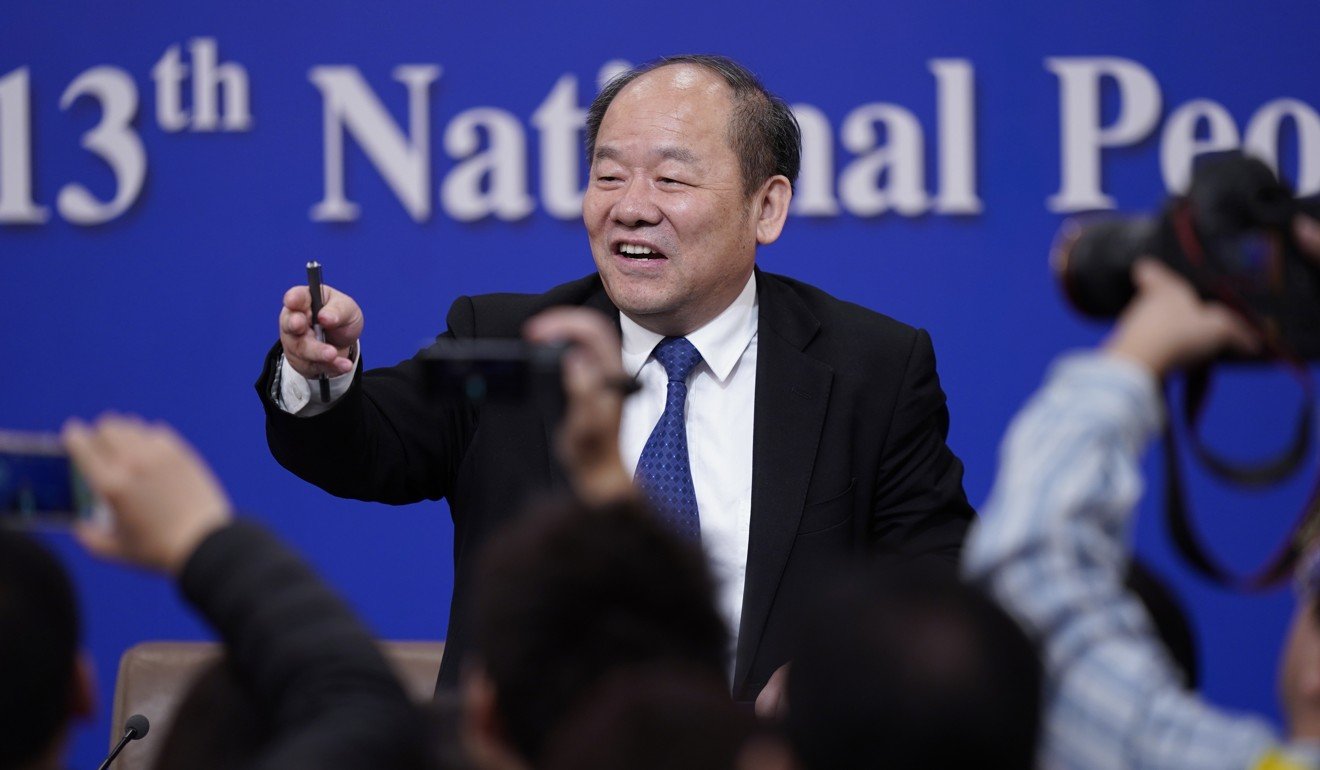
Foreign investors will be allowed to set up ventures in which they have full ownership, instead of being forced into joint ventures with local partners, in more industries, said Ning Jizhe, a vice-chairman of the National Development and Reform Commission, in Beijing on Wednesday during the National People’s Congress.
In addition, China will set up a special task force to facilitate “key” projects like electric-car maker Tesla’s new factory in Shanghai or BASF’s new chemical complex in Guangdong, both of which are solely owned by the foreign company.
China’s leadership has listed foreign investment as one of the six areas that it must “stabilise” in 2019, along with employment, growth, trade, domestic investment and market expectations.
Foreign direct investment in China amounted to US$135 billion in 2018, an increase of 3 per cent from a year earlier, according to Chinese government data.
But foreign investment into the world’s second biggest economy have slowed over last decade, which could deprive China of access to advanced technologies and marginalise the country in the development of future global supply chains.
Beijing is trying to lure more foreign capital and technology to support its plan to upgrade its manufacturing industries and boost the development of new, hi-tech sectors.
“China will roll out more opening-up measures in the agriculture, mining, manufacturing and service sectors, allowing wholly foreign-owned enterprises in more fields,” Ning said.
China law to protect intellectual property, ban forced tech transfer
Since December, China has been rushing to draft legislation for a new foreign investment law, a key clause of which prohibits local government’s from forcing transfer of technology in return for being allowed to conduct business in their jurisdictions.
The National People’s Congress is expected to endorse the new
“After passing the law, the government will take serious measures to obey and implement it,” Ning added.
He said that China will remove market entry restrictions for foreign investors to ensure that domestic and foreign firms “are treated as equals.”
Ning Jizhe, a vice-chairman of the National Development and Reform Commission. Photo: EPA
However, the jury is still out whether Beijing’s promises of fair treatment, market access and protection for intellectual property rights will be enough to generate a steady inflow of hi-tech investment.
The US has long complained that China has been unwilling to implement previous commitments under the World Trade Organisation to open up its market – allegation Beijing denies.
Shen Jianguang, chief economist at JD Digits, an arm of Chinese e-commerce firm JD.com, said restrictions on foreign investment will exist in China despite the government’s promises.
China’s domestic market remains large and attractive for some foreign investors, he said.
“Foreign investors are still very interested in the Chinese market, if the openness of the economy is sufficient,” Shen added.
Source: SCMP
Posted in agriculture, BASF, chemical complex, Chief economist, domestic market, E-commerce, forced technology transfer, foreign investors, Guangdong, illegal, JD Digits, JD.com, Manufacturing, market barriers, mining, National People’s Congress, Ning Jizhe, President Donald Trump, service sectors, Shanghai, Shen Jianguang, Tesla, Uncategorized, US-China trade war, vice-chairman of the National Development and Reform Commission, world trade organisation |
Leave a Comment »
05/07/2017
India’s state-run power utility plans to invest $10 billion in new coal-fired power stations over the next five years despite the electricity regulator’s assessment that thermal plants now under construction will be able to meet demand until 2027.

In the first phase, India’s biggest power producer, NTPC (NTPC.NS), plans to build three new plants with a combined capacity of more than 5 gigawatts (GW), nearly double the capacity of those currently being phased out, five senior company officials said.
The company has not made the investment public because it has not yet received government approval.If approved, the plan could set back efforts by the world’s third-largest greenhouse gas emitter to control carbon output and raise questions about Prime Minister Narendra Modi’s vow to stand by commitments under the Paris climate accord.
The proposal also comes as several coal-fired stations built in the last power boom a decade ago are standing idle due to softer-than-expected demand. State-controlled Coal India (COAL.NS) is struggling to sell its stockpile as a result.
But other indicators indicate demand will pick up, a top NTPC executive said, asking not to be named because the plan had not yet been announced.
“I don’t think (the current) electricity surplus will be there for a long time,” he told Reuters. “We should not fool ourselves.”
More than 300 million of India’s 1.3 billion people are still not hooked up to the grid, according to NITI Aayog, which makes policy recommendations to the government.
As connections improve, the panel reckons, the country’s per-capita power consumption could jump around a third to up to 2,924 kilowatt-hours by 2040 from 2012 levels.
In the next decade, the around 50 GW of capacity from thermal plants due to come online by 2022 will meet demand, the Central Electricity Authority (CEA) said. Additional supplies will come from sources such as solar and wind, it said.
Asked about NTPC’s plan, CEA chairman RK Verma said the commercial decisions of the company were its own affair.
“NTPC is a commercial organization and they must be having their own commercial considerations,” Verma said.For its part, a spokesperson at NTPC would say only: “NTPC takes decisions after consulting both the CEA and the ministry of power.”
THERMAL VS RENEWABLE
Solar power generation capacity in India has more than tripled in three years to more than 12 GW since Modi targeted raising energy generation from renewable sources to 175 GW by 2022, against total installed capacity at the end of May of 330.3 GW.
Around 78 percent of generated power in India at the moment still comes from coal-fired plants, however, making it one of the biggest users of the dirty and cheap fuel in the world.
Carbon dioxide emissions from India’s thermal plants are expected to jump to 1,165 million tonnes by 2026/27 from 462 million tonnes in 2005, the CEA estimates. Emission intensity, measured in carbon dioxide emissions versus GDP, is likely to fall, however.India is undergoing a program to retrofit several coal-fired plants to reduce emissions.
The plants planned by NTPC are “supercritical”, meaning they are 2-3 percent more efficient than conventional plants and therefore have lower emissions.
NTPC’s proposal is likely to be greeted with alarm by environmental activists who are already worried by the CEA’s statement that existing power plants are unlikely to meet India’s emission norms before the Paris deadline of December this year.
“Adding more power plants would aggravate health impacts even further,” said Sunil Dahiya, an energy activist with Greenpeace in New Delhi, when asked about the possibility of new coal-fired plants.NTPC’s proposal is to build plants of two 660 megawatt (MW) units each at Singrauli in central India’s Madhya Pradesh and Talcher in Odisha in the east.
The biggest plant, with a capacity of 2.4 GW in the eastern state of Jharkhand, was close to getting clearance from the environment ministry, one of many steps in the process of getting government approval, one of the senior company officials said.
A plan announced by NTPC last year to generate 10 GW of energy from renewable sources by 2022 was making slow progress due to land acquisition issues, another company official said.
Source: Exclusive: Indian utility bets $10 billion on coal power despite surplus, green concerns | Reuters
Posted in Coal, Economics, India alert |
Leave a Comment »
18/12/2014
Hindalco Industries Ltd. (HNDL), owned by Indian billionaire Kumar Mangalam Birla, is targeting a record $1 billion of aluminum exports by March 31 buoyed by rising U.S. and European demand, people with knowledge of the matter said.
Overseas shipments may triple to as much as 400,000 metric tons in the 12 months ending March 31 from the previous year, said two people, who asked not to be identified because they aren’t authorized to speak to the media. The Mumbai-based company had exported less than half the target as of the middle of last month, the people said.
Stricter emission norms in the U.S. and Europe are prompting vehicle makers to choose the lighter alloy over steel, helping the owner of the world’s largest supplier of aluminum sheets to carmakers boost overseas sales and counter a domestic slowdown. The additional demand will aid Hindalco revive profit growth after five straight quarters of decline and find a market for its new capacity.
via Birla Said to Plan $1 Billion Aluminum Exports: Corporate India – Businessweek.
Posted in Economics, exports, India alert, mining, Natural resources |
Leave a Comment »











 CHINDIA ALERT: You'll be living in their world, very soon