Archive for ‘Economics’

05/09/2014

India’s $33 Smartphone Sales Surge, Setting the Stage for a Shakeup – India Real Time – WSJ

The maker of India’s $33 Mozilla Firefox smartphone says sales of the world’s cheapest smartphone have been strong since it launched last week.

Intex Technologies India Ltd. said it quickly sold out of its first batch of Cloud FX phones–which use Mozilla Corp.’s Firefox operating system—and that it has already had to order another large shipment. It expects to sell 100,000 handsets this month and a total of 500,000 by the end of the year, the company said.

Another super-cheap Firefox-powered smartphone hit the Indian market on Tuesday. India’s Spice Retail Ltd. started selling its Spice Fire One Mi FX1 for about $37. The company did not respond to requests for early sales figures.

The less-than-2,000-rupee price tags make the Firefox mobile operating system smartphones more than 30% cheaper than the least-expensive smartphones which use Google Inc.’s Android operating system.

Other phone sellers say they are also planning Firefox handsets. India’s Karbonn Mobiles says it plans to launch a $41 Firefox smartphone by the end of September. It will be less than half the price of Karbonn’s latest Android phone, making it a “game changer,” said Pardeep Jain, managing director of Jaina Mobiles India Pvt., which  controls the Karbonn brand.

Reviews for the ultralow-cost phones have so far been generally positive. While the phones may lack some functionality and speed, buyers and technology reporters agreed they were still a great deal for the price and a good option for first-time smartphone buyers who use their phones for basic calls, web surfing and social networking.

While Mozilla phones will make smartphones affordable to millions of new users, they will likely get more competition soon on price from Android, the operating system used on most phones from Samsung Electronics and others, analysts said.

Google is expected to launch its Android One low-cost smartphone in the next few weeks.

via India’s $33 Smartphone Sales Surge, Setting the Stage for a Shakeup – India Real Time – WSJ.

05/09/2014

China warns again of dark side of the mooncakes | Reuters

China’s crackdown on corruption, a scourge Communist Party leaders fear threatens their hold on power, is likely to last at least another five years, an official said, warning also against the mid-autumn tradition of handing out mooncakes as gifts.

Freshly-baked mooncakes pass along a conveyor belt at a mooncakes factory in Shanghai September 12, 2013.  REUTERS/Aly Song

Wang Qishan, secretary of China’s anti-corruption watchdog, was quoted as saying the government’s “campaign against extravagance and corruption” would continue for at least five years, the official China Daily said.

Wang’s comments, also reported on television on Thursday, were made in August at a meeting in Beijing.

President Xi Jinping has promised to go after “tigers and flies” in rooting out rampant graft, a campaign that has brought down politicians and company executives in industries including oil, cars and healthcare.

The campaign has also dragged down sales of high-end products from the fiery sorghum-based liquor, baijiu, to mooncakes, both traditional popular gifts for smoothing business and official ties.

Wang criticized the tradition of giving mooncakes as presents around the Mid-Autumn Festival, adding that the practice created opportunities for graft, the China Daily said.

Mooncake sales have taken a steep hit ahead of this month’s festival. In key production regions, sales were half the level of last year, the China Daily said, citing the Wuchuan Association of Mooncakes.

via China warns again of dark side of the mooncakes | Reuters.

05/09/2014

Modi’s first 100 days looked more like Manmohan’s than Vajpayee’s

The new prime minister hasn’t faced a major crisis or unveiled a startlingly new policy.

For the last week, Indian newspapers, channels and websites have been plastered with evaluations of Narendra Modi’s first 100 days. From dedicating entire editions to the 100-day landmark to building complex timelines describing every policy announcement over the last three months (and even comparing what has been achieved to the Bharatiya Janata Party’s campaign promises), there has been so much content that it’s hard to arrive at a conclusion about whether Modi’s Prime Ministership has been good or bad.

That might be expected, considering the scale of the challenge that the new government has set for itself. Alternatively, it might also be surprising: many expected Modi Sarkar to be a hate-it-or-love-it administration, rather than one that would leave people with lukewarm feelings.

Another way to approach the question might be to try and figure out how Modi’s first 100 days will be remembered. The first few months of new governments can often set the tone for what is to come. In hindsight, the trends picked up in the first days are then grafted on to narratives that are applied to entire tenures.

A look back at previous prime ministers might give us an inkling of how this will play out.

via Scroll.in – News. Politics. Culture..

05/09/2014

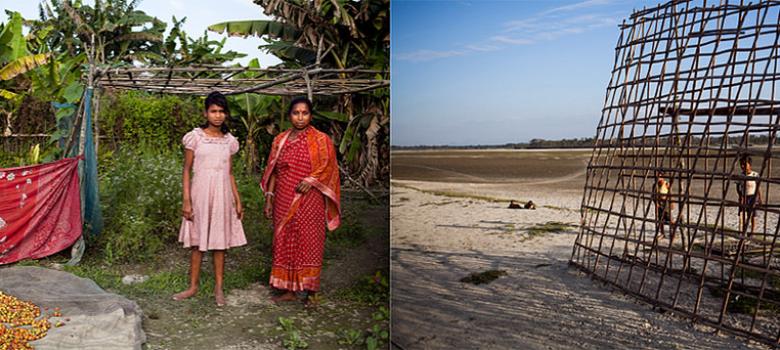
In Assam, villagers struggle to protect their land from the roaring Brahmaputra

Descending from the plateaus of Tibet and flowing through China, India and Bangladesh, the Brahmaputra is one of India’s mightiest rivers, its width running up to 10 kilometers at some places. On its 3,000-kilometer journey, the Brahmaputra provides a livelihood to thousands of communities living on its banks. They depend on it for food, water and farming. In 1950, however, the great earthquake in Assam altered the topography of the river valley and the people of Assam have since been struggling with intense droughts and floods.

Since the earthquake, Assam has witnessed severe cases of river erosion. According to official records, 36 villages, 10 schools, six tea gardens and hundreds of humans and animas have been washed away. The situation has been exacerbated by increasing deforestation and erratic climate changes.

In 2012, floods in Assam displaced over a million people and affected close to 4,500 villages. Today, these villagers from Tinsukia district in Upper Assam are struggling to protect their land and livelihoods from the eroding banks and the rising waters of the mighty Brahmaputra.

via Scroll.in – News. Politics. Culture..

04/09/2014

Businessman caught in Colombia is China’s first economic fugitive extradited from Latin America | South China Morning Post

A businessman from Zhejiang province, who was arrested in Colombia over allegations he fled the mainland after leaving debts totalling millions of yuan, was repatriated to China yesterday.

a-yiwu.jpg

The case is the first time the mainland has extradited an economic fugitive from a Latin American country, China News Service reported.

The 35-year-old suspect, whose surname was given as Wu, was arrested in Colombia on August 28, it said.

He owned a trading company in Yiwu city and reportedly fled China on a flight from Shanghai‘s Pudong International Airport on September 9, 2012.

He had allegedly left unpaid debts totalling more than four million yuan (more than HK$5 million).

Zhejiang police launched an investigation into Wu about a month later, and order for his arrest was issued in December 2012.

After cooperating with Interpol, Zhejiang police discovered in July that Wu was in Colombia, said Ding Pinglian, of the Zhejiang provincial police bureau.

Four police officers were then sent to Colombia to assist with Wu’s arrest and extradition.

Wu is expected to stand trial in Yiwu, China News Service reported.

A total of 11 people suspected of economic crime have been repatriated since the Ministry of Public Security launched a campaign to return fugitives in July, the report said.

The ministry said last month that more than 150 mainlanders suspected of economic crimes were in the United States, which had become the “top destination” for Chinese fugitives.

via Businessman caught in Colombia is China’s first economic fugitive extradited from Latin America | South China Morning Post.

04/09/2014

Water Shortages Will Limit Global Shale Gas Development – Businessweek

If all the world’s theoretically recoverable shale gas could be developed, our supply of clean-burning natural gas would expand 47 percent—lowering both greenhouse gas emissions and energy prices, according to estimates from the Washington-based World Resources Institute.

Shale drilling in China's Sichuan Province

The hitch is that the process for extracting shale gas, called hydraulic fracking, sucks up as much as 25 million liters (6.6 million gallons) of water for each well. A report from WRI (PDF), “Global Shale Gas Development: Water Availability and Business Risks,” released on Tuesday, shows that roughly 38 percent of the world’s shale gas and oil lies buried beneath water-stressed regions. This means that extraction efforts will be difficult and expensive, as well as economically and environmentally risky.

China has the world’s largest estimated deposits of shale gas (1,115 trillion cubic feet), according to studies by the U.S. Energy Information Administration. Yet China is also one of the world’s most naturally water-stressed nations: It is home to a fifth of the world’s population but only 7 percent of its freshwater resources. WRI’s team compared maps of China’s potential shale plays with available water and found that 61 percent of China’s shale lies in arid regions. (China recently slashed in half its mid-term projections for shale gas development, from a goal of over 60 billion cubic meters annually to 30 billion cm by 2020.)

via Water Shortages Will Limit Global Shale Gas Development – Businessweek.

04/09/2014

China Fights Local Budget Corruption With ‘Economic Constitution’ – Businessweek

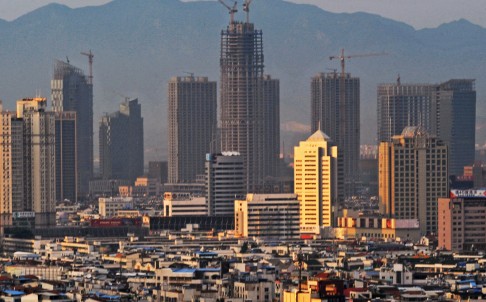
Revising a budget law, as China’s National People’s Congress just did, sure doesn’t sound very sexy. But Sunday’s move is a crucial step toward fixing some of China’s biggest economic challenges: controlling runaway local debt; curbing rampant official corruption, and stemming the spread of socially destabilizing land seizures.

The Shanghai skyline

The amended law that now requires local governments to publicize their annual budgets is so important that some are calling it the “Economic Constitution,” the China Daily reported on Sept. 1. The revision “will prove a milestone in China’s fiscal history, as it will make the government’s collection of taxes and fees and distribution of its fiscal money to become more law-based and transparent,” the English-language paper reports.

Until now, the finances of China’s tens of thousands of counties, townships, and villages have been split into budget and extra-budgetary funds. With much of the financing falling in the murkier off-budget category, “government departments have a great leeway in managing government funds, which can possibly lead to corruption and abuse of public funds,” the newspaper explains.

via China Fights Local Budget Corruption With ‘Economic Constitution’ – Businessweek.

04/09/2014

India and Japan Are a Perfect Fit – India Real Time – WSJ

Indian Prime Minister Narendra Modi’s visit to Japan will generate headlines for the big deals that he does (or doesn’t) conclude with his Japanese counterpart Shinzo Abe. These include civil nuclear cooperation, high-speed rail construction and defense ties.

However, the bilateral relationship ultimately depends on thousands of smaller commercial deals. If the two leaders set the tone and clear away obstacles, the India-Japan partnership can become the driver of Asia’s growth. Mr Modi said on this visit that Japan and India bear a ‘huge responsibility’ to define the path of Asian growth in the 21st century.

The two powers are complementary on several levels, but primarily in the economic realm. Japan has the largest growth problem in the world while India has the largest development problem.

There is no clearer example of this than India’s need for new roads, railways and ports. The Reserve Bank of India has defined India’s key economic problem as a supply-side deficit; demand is abundant, at times rampant, but supply responses are reduced by the unavailability and cost of capital, alongside logistics bottlenecks. The result is higher inflation and lower growth.

Japan can provide the solution in the form of capital and technology. Tokyo is a partner in the $90 billion Delhi-Mumbai Industrial Corridor which will create new “smart cities,” seven of which have started construction. Some 100 more are planned nationwide. This initiative has already yielded the Delhi Metro, built under budget and within schedule with Japanese loans and rolling stock.

via India and Japan Are a Perfect Fit – India Real Time – WSJ.

03/09/2014

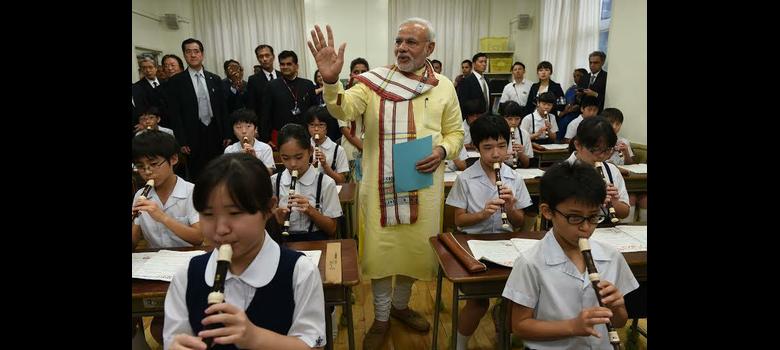
These photos show what Modi did in Japan when he wasn’t attending to business

All prime ministers enjoy spending time abroad, especially if it is while visiting a particularly friendly ally.

Prime Minister Narendra Modi isn’t exactly the jovial type. Sure, he peppers his speeches with a bit of light humour occasionally, but he doesn’t seem like the kind of person who would enjoy a comedy night on television. So what could possibly make him really happy? The same thing that makes heads of states happy all over the world: leaving their own countries to visit friendly allies.

And by any measure, it seems like Modi managed to have a blast in Japan (even if no nuclear deal was signed). Since he also happens to be the Selfie Era Prime Minister, every moment of this fun journey was documented and promptly tweeted by the prime minister’s official twitter account.

more photos from:  http://scroll.in/article/677092/These-photos-show-what-Modi-did-in-Japan-when-he-wasn’t-attending-to-business

03/09/2014

Jaitley’s biggest tasks lie ahead: big-bang reforms and restructuring the Finance Ministry

The finance minister has had to tackle inflation, India’s stance in the WTO and easing regulatory hurdles. That was the easy part.

Even before the general election ended in May, it was clear that if the Narendra Modi-led Bharatiya Janata Party formed the government, Arun Jaitley would head one of the important ministries on Raisina Hill, the area of Lutyen’s Delhi that houses some of the most important government buildings.
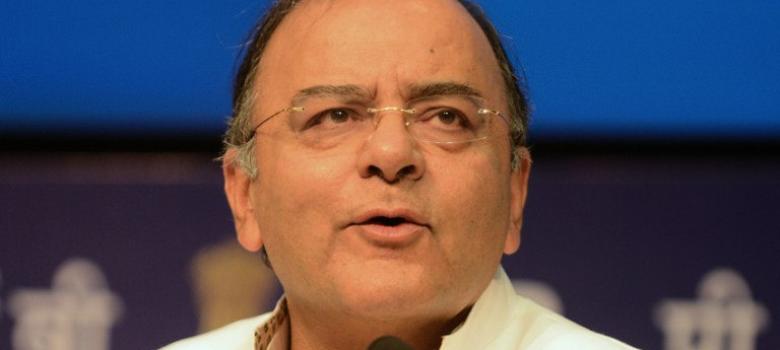
But Jaitley’s move to North Block, the part of the Hill housing the finance ministry, was not easy. Contesting his first Lok Sabha election, he lost the race in Amritsar to the Congress candidate by nearly one lakh votes, raising questions within the party about his eligibility to be granted a key ministry. Jaitley, who has also been given charge of the defence ministry, is a man with as many detractors as admirers in New Delhi and within his own party.

Often teased in Delhi circles as the only Congresswala in the BJP, Jaitley was seen by many as an obvious choice for the crucial portfolio of finance. He got the job because he has a shrewd strategic mind and knows how to work Delhi. In addition, the BJP needed someone who had the nerves to handle a ministry that was practically in the ICU despite valiant, though sometimes questionable, efforts by his predecessor and friend, the Congress’s P Chidambaram.

Both Prime Minister Narendra Modi and Jaitley had only a few days to present their first budget to a Parliament and nation that had been promised big-bang economic reforms. As Jaitley presented the Modi government’s first budget on July 12, many who had expected major reforms were left disappointed even though some praised it for pointing in the right direction.

As a member of the Federation of Indian Chambers of Commerce and Industry said, this was a “benefit of the doubt” budget because of the short period in which Jaitley and his team had to think things over. The real test will come in 2015.

Huge challenges

A change in government is not the only factor that drives ministerial reform. The bureaucracy also needs to endorse the new policies. In getting the bureaucracy on board, Jaitley’s team in North Block has faced plenty of challenges, such as the minister’s inability to address the thorny issue of retrospective taxation.

Other things that kept Jaitley busy as soon as he took over were controlling inflation, India’s stance on subsidies at the WTO and making it easier to do business by removing regulatory hurdles. But the enormity of reforms needed to transform the Indian economy and pushing its growth rate to more than 6% require willpower and the stomach to take politically unpopular measures, especially in sectors such as power.

“There are three or four sectors where we just cannot continue doing business as usual,” said Pratap Bhanu Mehta, president of the New Delhi-based Centre for Policy Research. “In areas such as energy we are too dependent on imports and on carbon-intensive energy sources. If we are not on an alternative energy path soon, which means low carbon and technologically efficient [forms], we could be out of the development game in 15 to 20 years.”

It is the support system for business that requires key changes. Foreign industry remains bullish on India but has made its displeasure known over the slow progress on issues such as foreign direct investment, land acquisition and retrospective taxation.

On the domestic front, many industrialists have asked for a revitalised subsidy regime, one in which the government gives subsidies wherever required instead of using them as a populist measure to get votes. At the same time, as a vital component of the global economy, India could find it increasingly difficult to persist with its subsidy regime even if it makes sense on the domestic front.

Back to the drawing board

Globalisation and climate change will become central to India’s economic story. The Asian Developmental Bank concluded in a recent report that South Asian economies such as India could lose 1.8% of their GDP by 2050 and 8.8% of their GDP by the end of the century to climate change.

via Scroll.in – News. Politics. Culture..

Law of Unintended Consequences

continuously updated blog about China & India

ChiaHou's Book Reviews

continuously updated blog about China & India

What's wrong with the world; and its economy

continuously updated blog about China & India