Chindia Alert: You’ll be Living in their World Very Soon
aims to alert you to the threats and opportunities that China and India present. China and India require serious attention; case of ‘hidden dragon and crouching tiger’.
Without this attention, governments, businesses and, indeed, individuals may find themselves at a great disadvantage sooner rather than later.
The POSTs (front webpages) are mainly 'cuttings' from reliable sources, updated continuously.
The PAGEs (see Tabs, above) attempt to make the information more meaningful by putting some structure to the information we have researched and assembled since 2006.
Image copyrightGETTY IMAGESImage captionMore and more people want to see the world’s tallest peak
China has closed the base camp on its side of Mount Everest to visitors who don’t have climbing permits.
Authorities have resorted to the unusual move to deal with the mounting waste problem at the site.
The ban means tourists can only go as far as a monastery slightly below the 5,200m (17,060ft) base camp level.
More people visit the mountain from the southern side in Nepal, but over the past years numbers have been rising steadily on the Chinese side as well.
The Chinese base camp, located in Tibet, is popular as it is accessible by car – whereas the Nepalese camp can only be reached by a hike of almost two weeks.
The world’s highest peak has been struggling with escalating levels of rubbish for years, as the number of visitors rises.
The Chinese Mountaineering Association says 40,000 visited its base camp in 2015, the most recent year with figures. A record 45,000 visited Nepal’s base camp in 2016-7 according to Nepal’s Ministry of Forests and Soil Conservation.
Image copyrightGETTY IMAGESImage captionTourists are still allowed to go as far as the Rongbuk monastery
Ordinary tourists will only be banned from areas above Rongbuk monastery, which is around 5,000m above sea level, according to China’s state news agency Xinhua.
Mountaineers who have a permit to climb the 8,848m peak will still be allowed to use the higher camp.
In January, authorities announced that they would limit the number of climbing permits each year to 300.
On Chinese social media, claims have spread in recent days that its base camp will be permanently closed to tourists – but Xinhua cited officials denying that.
Image copyrightGETTY IMAGESImage captionThe temperature and high altitude make clean-up efforts on Everest a tough task
The official announcement about the closure was made in December, on the website of the Tibetan authorities.
It stated that three clean-up operations last spring had collected eight tonnes of waste, including human faeces and mountaineering equipment climbers had left behind.
This year’s clean-up efforts will also try to remove the bodies of mountaineers who have died in the so-called death zone above 8,000m, where the air is too thin to sustain life for long.
Due to the cold and high altitude, these bodies often remain on the mountain for years or even decades.
LHASA, Feb. 14 (Xinhua) — Mount Qomolangma National Nature Reserve in China’s Tibet Autonomous Region has banned ordinary tourists from entering its core zone to better conserve the environment of the world’s highest mountain.
But for travelers who have a climbing permit, the mountaineering activities will not be affected, according to the reserve which was set up in 1988.
Covering an area of around 33,800 square km including a 10,312-square km core zone, the reserve is home to one of the world’s most vulnerable ecosystems.
Recently, a report went viral online claiming the Qomolangma base camp was “permanently closed due to heavy pollution.” But local authorities denied the claim.
Kelsang, deputy director with the reserve’s administration, said ordinary tourists are banned from areas above Rongpo Monastery, around 5,000 meters above sea level. A new tent camp will be set up nearly two km away from the original one.
Between each April and October, villagers from Dingri County usually set up black tents at the foot of Mount Qomolangma, providing tourists accommodation as a means of earning money.
Though ordinary visitors can’t go beyond the monastery, it won’t affect them from appreciating the mountain.
“The new tent camp for ordinary tourists can still allow them to clearly see the 8,800-meter-plus mountain,” Kelsang said.
Travelers who have a climbing permit can go to the base camp at an altitude of 5,200 meters. Kelsang said the mountaineering activities have been approved by the regional forestry department.
Decades after the epic climb to the world’s peak, Tibetans at the foot of Mount Qomolangma have conquered poverty by receiving professional and amateur mountaineers and tourists, who have also posed an environmental challenge to the mountain.
To conserve the environment surrounding Mount Qomolangma, China carried out three major clean-ups at an altitude of 5,200 meters and above last spring, collecting more than eight tonnes of household waste, human feces and mountaineering trash.
This year, the clean-up will continue, and the remains of mountaineering victims above 8,000 meters will be centrally dealt with for the first time.
Meanwhile, the number of people who stay at the base camp will be kept under 300.
Currently, there are 85 wildlife protectors in the reserve, and 1,000 herders have part-time jobs patrolling and cleaning up garbage.
“These measures aim to strike a balance between various demands such as environmental protection, local poverty relief, mountaineering and education,” said Wang Shen, county chief of Dingri at the mountain foot.
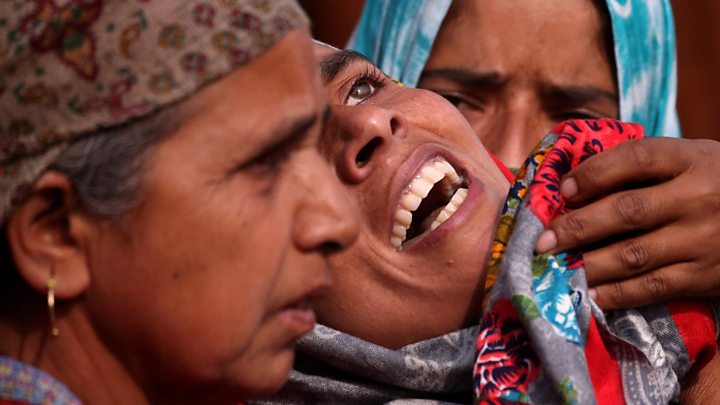
India has said it will ensure the “complete isolation” of Pakistan after a suicide bomber killed 46 soldiers in Indian-administered Kashmir.
Federal Minister Arun Jaitley said India would take “all possible diplomatic steps” to cut Pakistan off from the international community.
India accuses Pakistan of failing to act against the militant group which said it carried out the attack.
This is the deadliest attack to hit the disputed region in decades.
Both India and Pakistan claim all of Muslim-majority Kashmir but only control parts of it.
An insurgency has been ongoing in Indian-administered Kashmir since the late 1980s and there has been an uptick in violence in recent years.
How will India ‘punish’ Pakistan?
India says that Jaish-e-Mohammad, the group behind the attack, has long had sanctuary in Pakistan and accuses its neighbour of failing to crack down on it.
It has called for global sanctions against the group and has said it wants its leader, Masood Azhar, to be listed as a terrorist by the UN security council.
Although India has tried to do this several times in the past, its attempts were repeatedly blocked by China, an ally of Pakistan.
Mr Jaitley set out India’s determination to hold Pakistan to account when speaking to reporters after attending a security meeting early on Friday.
He also confirmed that India would revoke Most Favoured Nation status from Pakistan, a special trading privilege granted in 1996.
Pakistan said it was gravely concerned by the bombing but rejected allegations that it was in any way responsible.
But after Prime Minister Narendra Modi said in a speech that those behind the attack would pay a “heavy price”, many analysts expect more action from Delhi.
After a 2016 attack on an Indian army base that killed 19 soldiers, Delhi said it carried out a campaign of “surgical strikes” in Pakistan-administered Kashmir, across the de facto border. But a BBC investigation found little evidence militants had been hit.
However analysts say that even if the Indian government wants to go further this time, at the moment its options appear limited due to heavy snow across the region.
How did the attack unfold?
The bomber used a vehicle packed with explosives to ram into a convoy of 78 buses carrying Indian security forces on the heavily guarded Srinagar-Jammu highway about 20km (12 miles) from the capital, Srinagar.
“A car overtook the convoy and rammed into a bus,” a senior police official told BBC Urdu.
It stands as the deadliest militant attack on Indian forces in Kashmir since the insurgency began in 1989.
The bomber is reported to be Adil Dar, a high school dropout who left home in March 2018. He is believed to be between the ages of 19 and 21.
Soon after the attack Jaish-e-Mohammad released a video, which was then aired on the India Today TV channel. In it, a young man identified as Adil Dar spoke about what he described as atrocities against Kashmiri Muslims. He said he joined the banned group in 2018 and was eventually “assigned” the task of carrying out the attack in Pulwama.
He also said that by the time the video was released he would be in jannat (heaven).
Dar is one of many young Kashmiri men who have been radicalised in recent years. On Thursday, main opposition leader Rahul Gandhi said that the number of Kashmiri men joining militancy had risen from 88 in 2016 to 191 in 2018.
India has been accused of using brutal tactics to put down protests in Kashmir – with thousands of people sustaining eye injuries from pellet guns used by security forces.
What’s the reaction?
“We will give a befitting reply, our neighbour will not be allowed to de-stabilise us,” said Prime Minister Modi.
Mr Gandhi and two former Indian chief ministers of Jammu and Kashmir all condemned the attack and expressed their condolences.
The attack has also been widely condemned around the world, including by the US and the UN Secretary General.
The White House called on Pakistan to “end immediately the support and safe haven provided to all terrorist groups operating on its soil”.
Pakistan said it strongly rejected any attempts “to link the attack to Pakistan without investigations”.
What’s the background?
There have been at least 10 suicide attacks since 1989 but this is only the second suicide attack to use a car.
Prior to Thursday’s bombing, the deadliest attack on Indian security forces in Kashmir this century came in 2002, when militants killed at least 31 people at an army base in Kaluchak near Jammu, most of them civilians and relatives of soldiers.
The latest attack also follows a spike in violence in Kashmir that came about after Indian forces killed a popular militant, 22-year-old Burhan Wani, in 2016.
More than 500 people were killed in 2018 – including civilians, security forces and militants – the highest such toll in a decade.
India and Pakistan have fought three wars and a limited conflict since independence from Britain in 1947 – all but one were over Kashmir.
Who are Jaish-e-Mohammad?
Started by cleric Masood Azhar in 2000, the group has been blamed for attacks on Indian soil in the past, including one in 2001 on the parliament in Delhi which took India and Pakistan to the brink of war.
Most recently, the group was blamed for attacking an Indian air force base in 2016 near the border in Punjab state. Seven Indian security personnel and six militants were killed.
It has been designated a “terrorist” organisation by India, the UK, US and UN and has been banned in Pakistan since 2002.
However Masood Azhar remains at large and is reportedly based in the Bahawalpur area in Pakistan’s Punjab province.
India has demanded his extradition from Pakistan but Islamabad has refused, citing a lack of proof.
NEW DELHI (Reuters) – A hotel that caught fire in the Indian capital on Tuesday, killing 17 people, passed safety checks 14 months ago, but an investigation has revealed breaches of regulations, such as faulty alarms, prompting a mass reinspection of other hotels.
Poorly enforced regulations lead to thousands of deaths in fires across India every year and officials in New Delhi say an overstretched fire service is hampering safety efforts.
The Hotel Arpit Palace passed a fire safety check in December 2017, but a copy of the initial police investigation seen by Reuters showed several breaches of fire regulations, including a lack of signs to guide guests to exits and fire alarms that did not work.
Delhi’s fire service, which is responsible for safety inspections as well as fighting fires, is now reviewing certificates issued to more than 1,500 hotels in one of India’s tourist hubs, a senior fire official told Reuters.
But stretched resources mean the re-inspection process could take months.
“Fire officers have to do a lot of work,” said Vipin Kental, Delhi’s chief fire officer. “We have to be inspectors and fight fires. We do not have the manpower.”
The city has around 1,700 firefighters, he said, which is less than an eighth of the number in New York, a city with less than half of Delhi’s population.
PREVENTABLE TRAGEDY
The fire is believed to have begun on the hotel’s first floor, spreading quickly through wood-panelled corridors, police say. Among the dead were members of a wedding party from Kerala and a two Buddhist pilgrims from Myanmar.
“From the outside, the building looked intact, but inside everything was completely charred,” a police officer told Reuters.
Two of the 17 died after jumping out of windows in desperation after failing to find emergency exits, added the officer, who declined to be named as he is not authorised to talk to the media.
“Fire preparedness is a matter of shockingly low priority in most parts of the country,” said an editorial in the Indian Express, one of the country’s leading newspapers.
A 2018 study by India’s home ministry that found the country had just 2,000 of more than 8,500 fire stations it needs.
More than 17,000 people died in fires in 2015, according to data from the ministry, the last year for which figures are available, one of the largest causes of accidental death in India.
Fire safety is an issue for shanty towns and some of the country’s most expensive real estate.
A day after the Arpit Palace disaster, more than 250 makeshift homes were destroyed in a slum in Paschim Puri, a poor area of New Delhi, though no one was killed.
In 2017, 14 people were killed during a birthday party at a high-end bar in India’s financial capital Mumbai.
In several upscale neighbourhoods in Delhi, police shut hundreds of shops and restaurants last year for trading on floors meant for residential use, though many continue to operate illegally, residents say.
By the boarded-up Arpit Palace in the Karol Bagh area of New Delhi, wires from adjacent hotels still trail across the street, though staff there told Reuters they were complying with fire regulations.
Adding to the safety problems, poorly paid staff in the hotel and restaurant industries are often unable to help guests when fires break out, Kental said.
“They are not trained. They don’t know what to do in the event of a fire,” he said.
Foreign Secretary Vijay Gokhale told the high commissioner that Pakistan must take “immediate and verifiable action” against the Jaish-e-Mohammed terror group that has claimed responsibility for Thursday’s attack in Kashmir.
India on Friday summoned Pakistan envoy Sohail Mahmood to lodge a strong protest over the suicide bombing in south Kashmir’s Pulwama by Pakistan-based terror group Jaish-e-Mohammad (JeM).
Foreign Secretary Vijay Gokhale told the high commissioner that Pakistan must take “immediate and verifiable action” against the Jaish-e-Mohammed terror group that has claimed responsibility for Thursday’s attack in Kashmir.
A Jaish suicide bomber on Thursday rammed a car packed with explosives into a CRPF convoy on the Jammu-Srinagar highway. The CRPF has confirmed 38 deaths in the suicide bombing, counted among the bloodiest in Kashmir. Initial reports, quoting security officials, had said 44 jawans were feared to have been killed in the attack.
The foreign secretary also told Pakistan that it must “immediately stop” groups or individuals linked to terrorism operating from its territories.
In the hours after Thursday’s attack, New Delhi had issued a strong statement that accused Pakistan of giving “full freedom” to the terror group to operate and expand its terror infrastructure to carry out attacks in India and elsewhere with impunity.
Islamabad responded with a two-line statement that said it had “always condemned heightened acts of violence” in Kashmir. Pakistan also said it will “strongly reject any insinuation by elements in the Indian government and media circles that seek to link the attack to the State of Pakistan without investigations”.
Foreign Secretary Gokhale rejected this statement by the Pakistan foreign office.
LONDON, Feb. 12 (Xinhua) — China and UK should keep the long-term interests and larger picture in mind, look at each other’s development as opportunities, respect each other’s sovereignty, security and right to development, handle our differences properly and enhance strategic mutual trust, Chinese Ambassador to Britain Liu Xiaoming has said.
The Chinese diplomat made the remarks while attending the Chinese New Year Dinner by the Cities of London and Westminster Conservative Association on Monday night.
“If we compare China-UK relations to a building, it could not stand tall without a solid foundation. This foundation is the mutual confidence between our two countries,” he said.
Recalling that the world economy is under downward pressure, with surging protectionism and unilateralism making things doubly difficult. Against this situation, Liu said it is all the more important that China and the UK advocate free trade, oppose protectionism and promote open cooperation.
“We hope that the UK would continue to provide a fair, transparent and non-discriminatory business environment for Chinese companies. We hope you will make successful Chinese companies such as Huawei feel welcome here in Britain, and convince them that the UK is a trustworthy place to put their money,” said the Chinese ambassador.
Liu said both China and the UK are known for their profound cultural heritage and important contribution to the progress of human civilization.
“I hope that in the new year our two countries will continue to enhance cultural and people-to-people exchanges, and deepen mutual understanding and strengthen friendship.”
The ambassador also hoped that people from all walks of life in both China and UK will join hands to cement the foundation for a solid and magnificent edifice of bilateral relations.
British Prime Minister Theresa May sent a congratulatory message to the event, saying that it is an important moment to recognize the contribution of the Chinese community in London and across the whole of the United Kingdom.
“The Chinese community’s expanding business expertise, scientific inquiry and cultural heritage and traditions are of immense value to our country – not least here in London, where the vibrancy of Chinatown stands as a strong beacon for the Chinese community and a reminder of all that they have contributed to our society,” she said.
BEIJING, Feb. 11 (Xinhua) — China will continue to work vigorously to reduce poverty and lift no less than ten million people out of poverty in 2019, to lay a solid foundation for winning the battle against poverty, the State Council’s executive meeting chaired by Premier Li Keqiang decided on Monday.
The year 2018 saw China launch its three-year actions in fighting the battle against poverty. Premier Li Keqiang vowed to reduce the poor population by ten million each year in all his government work reports over the past five years. He gave specific instructions on ways to push forward this work and to better manage the poverty alleviation funds.
According to the progress update at the Monday meeting, 13.86 million people were lifted out of poverty in 2018, thanks to the dedicated efforts by local authorities and competent departments in implementing the decisions made by the Communist Party of China Central Committee and the State Council.
Figures from the State Council Leading Group Office of Poverty Alleviation and Development show that the new approach of poverty relief by developing emerging industries in poor areas such as e-commerce, photovoltaics and country tourism has paid off. Infrastructure development in poor areas has been accelerated. Some 208,000 kilometers of rural roads were built or renovated in 2018. New progress was made in upgrading the power grid in poor areas. And 94 percent of the poor villages are now covered by broadband internet services.
“We must strive to meet the poverty alleviation target for this year. Making poverty history by 2020 is the solemn commitment our Party and government have made to the people. We must fulfill this commitment by ensuring full delivery of all related policies and consolidating the progress we have made,” Li said.
It was decided at the meeting that efforts will be intensified this year to help the deeply poor areas. Increase in the poverty alleviation fund under the central government budget will be mainly channeled to these areas. Projects under the 13th Five-Year Plan that help enhance the weak links of poor areas will be prioritized.
The meeting urged to stick to current standard, and the cross-regional pairing arrangements for poverty alleviation will be enhanced. The difficulties poor people face in meeting the five essential needs of food, clothing, compulsory education, basic healthcare and a place to live will be tackled down to every household.
Counties that have emerged from poverty and their populations shall remain eligible for related policy incentives by 2020, the final-stage year in fighting poverty. Records of those who fall back into poverty and the newly discovered poor will be promptly established to provide them support. The meeting urged to cut the poor population by another ten million this year to lay a solid foundation for winning the final battle against poverty.
“We must strictly enforce the poverty criteria involving the five essential needs of food, clothing, compulsory education, basic healthcare and a place to live,” Li said, “Every penny of the poverty alleviation funds must be used effectively and transparently.”
Passengers are seen at the station hall of Nanchangxi Railway Station in east China’s Jiangxi Province, Feb. 10, 2019. Railway trips in China reached 60.3 million during the week-long Spring Festival holiday from Feb. 4 to Feb. 10, data from the national railway operator showed Monday. (Xinhua/Peng Zhaozhi)
BEIJING, Feb. 11 (Xinhua) — Railway trips in China reached 60.3 million during the week-long Spring Festival holiday from Feb. 4 to Feb. 10, data from the national railway operator showed Monday.
On Feb. 10, some 12.6 million passenger trips were made by rail, up 4.4 percent year on year, according to the China Railway Corporation (CRC).
Hundreds of millions of Chinese went back to their hometowns to celebrate the Chinese Lunar New Year with their families. The annual travel rush around the festival, known as “chunyun,” often puts the country’s transportation system to the test.
This year’s Spring Festival travel rush started from Jan. 21 and will last till March 1, with railway trips expected to hit 413 million in total, up 8.3 percent.
XINING, Feb. 9 (Xinhua) — Clean energy powers the economy of northwest China’s Qinghai Province as China seeks to reduce coal consumption to improve its energy mix.
By the end of 2018, the total installed power generating capacity in Qinghai reached nearly 28 million kilowatts, with clean energy contributing to 86 percent, according to the State Grid Qinghai Electric Power Company.
The installed solar power generating capacity reached 9.6 million kilowatts and that of wind power hit 2.7 million kilowatts. The hydropower capacity reached 11.9 million kilowatts, the company said.
Qinghai started to invest heavily in solar energy in 2009. And in the past few years, it started to build two 10 million kilowatts renewable power generating bases.
Qinghai, rich in solar and wind power, has 100,000 square kilometers of desertified land suitable for the construction of solar and wind farms.
Local authorities have been encouraging more local consumption of the clean energy-generated electricity and pushing to transmit more to other regions.
Last year, the grid transmitted 10 billion kwh of such electricity to other regions. So far this year, the firm has signed deals with regions like Shanghai, Chongqing, Henan and Jiangsu to send them 7 billion kwh of electricity.
HONG KONG, Feb. 6 (Xinhua) — Benefiting from the Hong Kong section of the Guangzhou-Shenzhen-Hong Kong Express Rail Link and the Hong Kong-Zhuhai-Macao Bridge, China’s Hong Kong Special Administrative Region (SAR) witnessed a record high of tourist arrivals last year.
Data released by the Hong Kong Tourism Board showed that the overall tourist arrivals soared to around 65.1 million in 2018, up 11.4 percent from that of 2017. Among the overall growth, visitor arrivals from the mainland saw a rise of 14.8 percent to 51 million.
As the cross-border infrastructure further ties up the Hong Kong SAR and the mainland, Hong Kong will further promote tourism in the Guangdong-Hong Kong-Macao Greater Bay Area (Greater Bay Area), said tourism industry insiders.
“From the latter half of 2017, Hong Kong began to see an upturn in tourism, and witnessed a continuous increase in the number of tourists in 2018,” said Yiu Si-wing, member of the Legislative Council of the HKSAR.
“Since the operation of the Express Rail Link and the bridge, we see an apparent growth in visitor arrivals to Hong Kong.” Yiu pointed out.
He viewed tourists from the mainland as the driving force to push Hong Kong’s visitor arrivals to a new high. “It takes less time and fewer procedures for those visitors to Hong Kong via the Express Rail Link than before when they need to transfer to Hong Kong after first arriving at Shenzhen,” said Yiu.
Cross-border infrastructure has facilitated the transportation between the mainland and Hong Kong by integrating the SAR into the national high-speed railway network.
An increasing number of tourists traveled by the Express Rail Link to Hong Kong, and to meet their demand for in-depth tour, new routes featuring natural and cultural characteristics have been introduced, said Ng Hi-on from China Travel Service.
The Hong Kong Tourism Board has promoted “Old Town Central” and “Hong Kong Neighborhoods” as tailored tours for travelers to experience Hong Kong.
Besides, tourists can enjoy festivals and events in Hong Kong, such as night parade, horse racing and flower markets.
Cruise tour is another product the Hong Kong Tourism board has promoted. After the launch of the Express Rail Link in September 2018, the Dream Cruises company introduced a “rail cruise” route in November, welcoming more than 1,000 tourists from Hubei and Yunnan provinces and Guangxi Zhuang Autonomous Region to Hong Kong for a land-sea trip.
Tourism in the Greater Bay Area has huge potential, as cities in the area can work with one another to develop multi-destination travel with cross-border infrastructure, according to Anthony Lau, the executive director of the Hong Kong Tourism Board.
Yiu said that travelers can travel through cities in the Greater Bay Area via transport links and the tour pattern enriches their trip.
He called for more efforts by Guangdong Province, and the Hong Kong and Macao SARs to forge closer bonds so as to build the Greater Bay Area into a tourism brand.


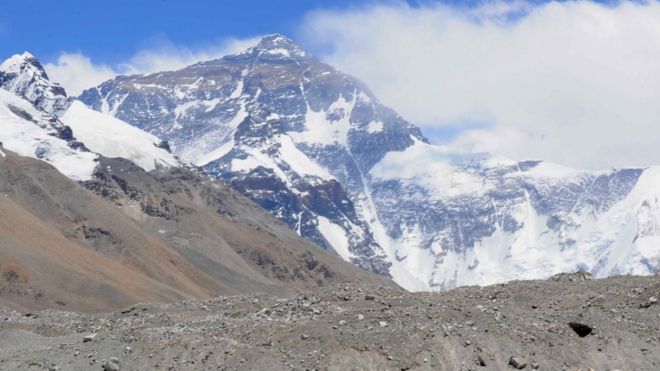 Image copyrightGETTY IMAGES
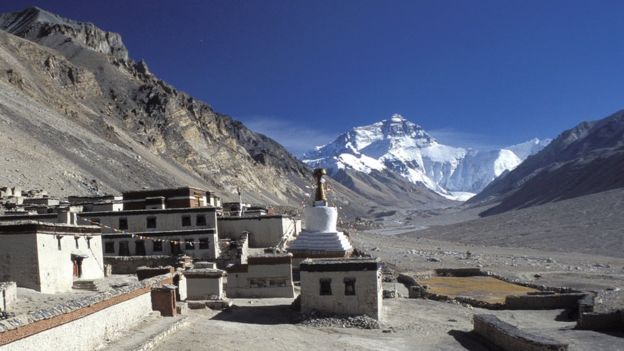 Image copyrightGETTY IMAGES
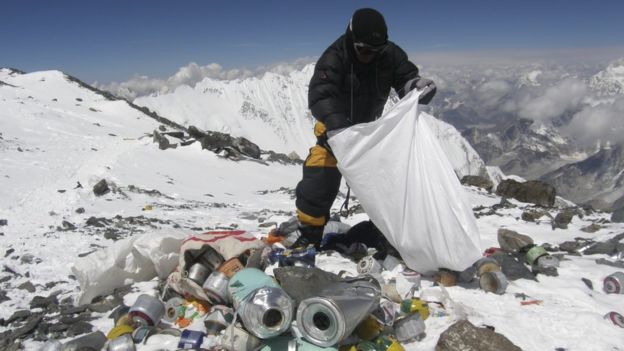 Image copyrightGETTY IMAGES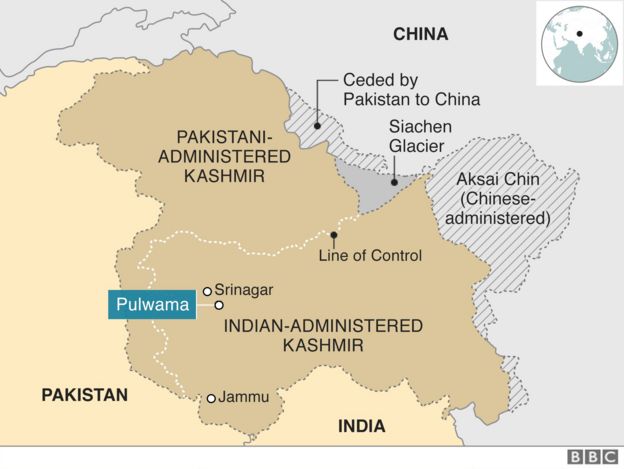


 CHINDIA ALERT: You'll be living in their world, very soon