Chindia Alert: You’ll be Living in their World Very Soon
aims to alert you to the threats and opportunities that China and India present. China and India require serious attention; case of ‘hidden dragon and crouching tiger’.
Without this attention, governments, businesses and, indeed, individuals may find themselves at a great disadvantage sooner rather than later.
The POSTs (front webpages) are mainly 'cuttings' from reliable sources, updated continuously.
The PAGEs (see Tabs, above) attempt to make the information more meaningful by putting some structure to the information we have researched and assembled since 2006.
India’s global army of expatriates–which does everything from writing software in Silicon Valley to building skyscrapers in in Qatar–is the world’s most generous when it comes to number of dollars sent home, but this year they have become a bit stingy.
Recently released World Bank estimates predict the Desi diaspora will send home $65.45 billion this year. While that is just above remittances into China ($65.17 billion) and tens of billions beyond any other country, it is a 5% decline from last year.
The last time India saw a bigger slide in remittances was back in 2004 when remittances fell 11%.
Globally, remittances are expected to edge up about 1% this year, the World Bank predicted, so why is India underperforming?
The main problem is that many of the Gulf Cooperation Council countries have been struggling with the decline in oil prices. That has meant they are hiring fewer Indians, providing fewer perks to their international employees and in some countries even restricting the number of foreigners that can be hired.
“This year the South Asia region would see a decline of 2.3% in remittances to the region due mainly to the impact of declining oil prices and labor market nationalization policies on remittances from GCC countries,” the report said. “Moving forward remittance growth in the region is expected to remain subdued.”
Some parts of the southern state of Kerala and other regions in India that depend on remittances are already starting to feel the pain from the decline in oil riches.
The World Bank expects remittance growth to return, expanding 2.2% in South Asia next year and 2.3% the year after that. Globally remittance growth will likely be stuck below 4% for years, the bank said.
“Remittances continue to be an important component of the global economy, surpassing international aid. However this ‘new normal’ of weak growth in remittances could present challenges for millions of families that rely heavily on these flows. This, in turn, can seriously impact the economies of many countries around the world bringing on a new set of challenges to economic growth,” said Augusto Lopez-Claros, Director of the World Bank’s Global Indicators Group.
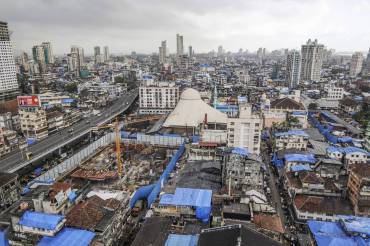
A fatal building collapse in southern China has highlighted a practice that more than once has produced death traps: structures built with little oversight by villagers on former farmland.
Such slapped-together buildings have tended to grow even more precarious as they age and as extra floors are added.
Four six-story buildings in a suburban area of Wenzhou, a city on China’s southern coast, collapsed Monday morning, claiming at least 22 lives, according to the state-run Xinhua News Agency, which cited local authorities. Six survivors were pulled from the building before the rescue was called off, Xinhua said.
The buildings were close to industrial parks of Wenzhou, a hub for light manufacturing including shoemaking, and most residents were migrant workers.The buildings were several decades old and erected by villagers, according to an article by the Wenzhou Daily that the local government reposted on its official website Tuesday. It said investigations were under way but an initial analysis showed that the collapse was likely caused by the buildings’ low quality and shaky foundation, a problem made worse by continuous rainfall in the past few days.
It used to be common practice in the 1980s and 1990s for residents outside China’s urban area to build houses with their own hands, often on what had been farmland. Over the years, floors were added without approval, leaving tottering buildings crumbling under the extra weight.
As cities have grown to incorporate such areas, local governments have tried to get rid of these “towns within cities,” tearing down the aging and shoddily built structures. The Wenzhou government had targeted much of the complex of the recent collapse for demolition, some of which had already started.
It wasn’t the first collapse of villager-built housing. Two years ago, a building under construction by local farmers in Xian in western China collapsed, killing five people.
Some online commenters pointed out that photos of the buildings involved show that more floors had been added to the original construction. The state-run newspaper Beijing News quoted a Wenzhou resident as saying that it was common for self-built buildings in the area to have additional floors.
The practice of adding floors has sometimes been a way for the owners of buildings targeted for demolition to extract more compensation from the government, which bases amounts to pay out to residents on the size of the living areas.
Another building collapse in Xian in 2011, which claimed seven lives, was caused by illegal additions the building’s owner had made to get more compensation, according to the local government. The owner was detained by the local police.
That tragedy came months after the Xian government rolled out new regulations to forbid compensation for illegal additions to a building. The local government said at the time that more than 50 cases of “self-built” building collapses had caused 69 deaths since 2007.
It was unclear whether the owners of the collapsed buildings in Wenzhou, who weren’t identified by the local government, will be held legally responsible for the casualties.
The Wenzhou collapse prompted calls for more regulation. “If relevant departments are still indifferent in face of self-built houses in such a disastrous state,” read one commentary by Beijing News on Tuesday, “then similar tragedies will be repeated.”
In 2011, we tried our hand at predicting the ways in which, in the decade to come, Chinese consumers would change their preferences and behaviors.
This article takes stock of those predictions.
Why check in now? One reason is we’re about halfway to 2020. Another is a comprehensive new McKinsey survey, which follows nearly ten years of previous research that includes interviews with more than 60,000 people in upward of 60 cities in China. Along the way, we’ve bolstered our own team’s data on consumer preferences and behavior with a number of complementary analyses and models, including McKinsey’s macroeconomic and demographic studies of Chinese urbanization and income development. We’ve also interviewed academics to draw out the major trends shaping the course of the Chinese economy, such as its rapidly aging population, the growing independence of women in society, and the postponement of critical life milestones, such as marrying and having children.
We’ve done it all with the abiding belief that companies getting ahead of the trends can build their brands and offerings to fit a rapidly evolving set of consumer needs in China. Deeper and more nuanced understanding of Chinese consumers can help reveal fresh opportunities—for new entrants and incumbents alike—and signal those areas where established players may need to be more wary.
Looking back nearly five years on, it is plain that Chinese consumers are evolving along many, though not all, of the lines we’d predicted. While geographic differences persist, Chinese consumers are, on the whole, more individualistic, more willing to pay for nonnecessities and discretionary items, more brand loyal, and more willing to trade up to more expensive purchases—even as their hallmark pragmatism endures.
Evolving geographic differences
Much of the research we described five years ago highlighted the vast differences we found among consumers in China’s various cities and regions. Just as it was then, generalizing about Chinese consumers continues to be almost as difficult (and maybe as foolish) as it is to generalize about European consumers.
We predicted these differences would remain—and even grow more significant, especially in the consumption patterns and tastes that relate to discretionary items. To help companies better tailor their go-to-market approach, we grouped most cities in China into clusters based on their similarities, including their geographic proximity and the transportation infrastructure that connects them.
As the economic structure in each of the 22 biggest city clusters has evolved—and as each of them has been affected differently by the recent slowdown of China’s economy—significant differences, for instance, in consumer confidence, do indeed persist between these clusters.
For instance, some 70 percent of consumers in the Fuzhou–Xiamen city cluster, which lies on the coast across from Taiwan, said in our latest report that they are confident their income will significantly increase over the next five years. In that same report, the Byland–Shandong city cluster, which lies on the coast between Beijing and Shanghai, was comparatively pessimistic, with only 33 percent of its consumers expressing such confidence.
Furthermore, when our latest survey compared the consumers in the Shanghai area to those around Beijing and Hangzhou, certain spending attitudes also showed marked differences. For example, brand loyalty increased much faster in Shanghai (24 percent increase in three years versus just 7 percent in Beijing and 9 percent in Hangzhou), as did the willingness to pay for better or healthier products.
Despite geographic differences, there are broad similarities among Chinese consumers. These mirror the general trends economists have found among consumers around the world as economies develop. The general tendency is for consumers, as they earn more, to spend a lower percentage of their income on food, a little more on healthcare, and even more on travel and transportation, as well as on recreational activities. It was no great stretch then, in our report five years ago, to predict a significant shift in consumption from necessities and seminecessities into discretionary categories.
Sure enough, our new survey shows Chinese consumers following the anticipated pattern. When we asked how they plan to increase spending as their income increases, dramatically fewer consumers said they will increase it on food (46 percent in the latest survey, compared to the 76 percent who said they would do so three years earlier).
Responses trended slightly up for healthcare products (from 16 percent to 17 percent), and increased for travel (from 14 percent to 23 percent) and leisure (from 17 percent to 25 percent).
Aspirational trading up
In our previous predictions, we also argued that as the income of Chinese consumers grew, they would aspire to improve their quality of life by not only spending more on discretionary items, but also by shifting their spending to more expensive items in the same categories.
In necessity categories such as food, for example, we predicted consumers would be willing to spend more for healthier versions of the same products—for instance, that olive oil would grow much faster than less healthy (and less expensive) oils. In semi-necessity categories like apparel, we predicted people would buy more special-occasion and premium brands. We anticipated that the strongest beneficiaries of these changes would be in the more discretionary and aspirational categories, such as skincare and automotive. So what has happened so far?
Premium categories have really accelerated. Comparing cosmetics purchases between 2011 and 2015, 44 percent of consumers have traded up their purchases, compared with 4 percent who traded down. Even for rice, 25 percent of consumers traded up versus 3 percent who traded down. Automotive was not included in our survey, but sales data from the Traffic Management Bureau of the Ministry of Public Security in China suggest significant trading up. In 2011, 51 percent of the renminbi spent on cars by Chinese consumers were for autos cheaper than 100,000 RMB. These sales accounted for only 43 percent of the market. Cars selling for 100,000 to 250,000 RMB grew twice as fast with a compound annual growth rate (CAGR) of 19 percent versus 9 percent. And cars with price tags between 250,000 and 400,000 RMB grew the fastest of all, with 23 percent CAGR.
Emerging senior market
In 2011, we observed a big generational difference between consumers in their late 50s and early 60s, who were very conservative spenders, and all of the age cohorts younger than them.
We predicted that by 2020, as the needs of consumers over the age of 55 changed along with their economic confidence, their spending habits would follow suit, making this age group worth pursuing by consumer-product companies. If anything, we underestimated the speed and force with which this trend would unfold.
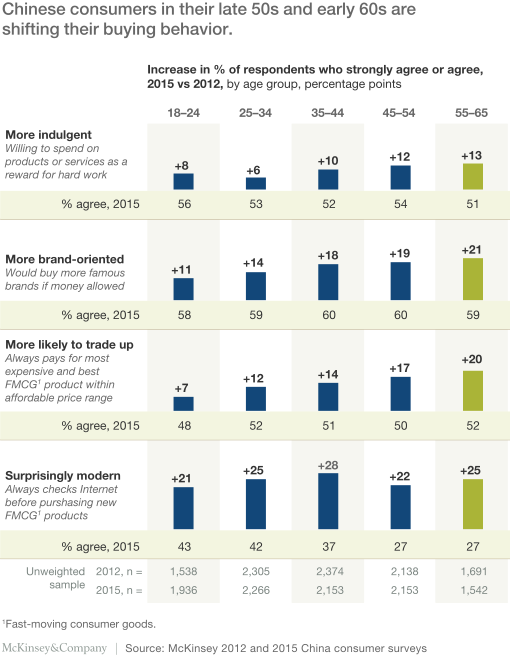
By 2015, the 55–65 age group had started to shift even faster than the rest of the population. For example, 52 percent of the people in this age group showed a preference for premium products, compared to just 32 percent in 2012. They leaped from being the most conservative age group to the one most likely to trade up. Similarly, the preference for famous brand names among these older buyers jumped by more than 20 percent, fully closing the previous difference among cohorts. As Exhibit 1 shows, these older consumers don’t shy away from indulgences, and they have grown more likely to use the Internet to research their purchases, even if they still do so less often than younger consumers.
Exhibit 1
That said, the upper age group has remained more pragmatic and cost conscious than any other age group, as we discuss in the following section.
The still-pragmatic consumer
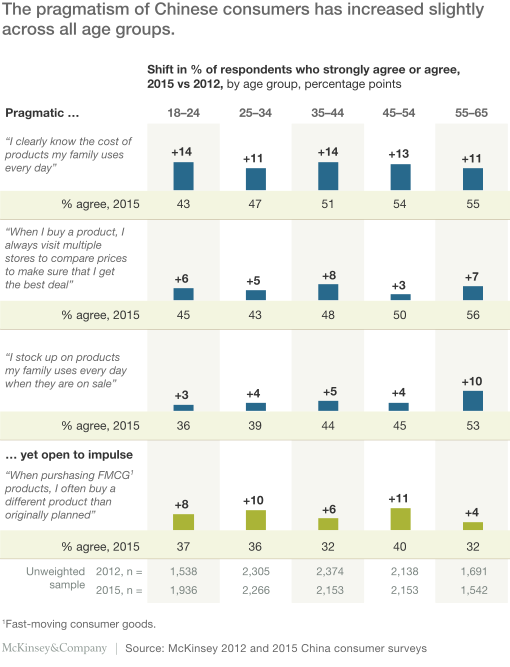
Back in 2011, even as we were predicting changes in the behavior and preferences of Chinese consumers, we also saw ways in which their essential pragmatism would likely stay the same. For instance, we anticipated that impulse buying would remain lower than in other countries and that value for money would continue to be an important consideration when choosing products and services. Interestingly, Chinese consumers across all age groups have, in some ways, become even more pragmatic. They’re now even more likely to compare prices across multiple stores, to be more price aware, and to stock up on promotions. That said, they’re now willing to buy more often on impulse (Exhibit 2).
Exhibit 2
The individual consumer
We also predicted that as Chinese consumers aspire to a better life and trade up their purchases, they would become more discerning and gradually more individualistic. This would lead, for example, to a shift toward more healthy choices, more user-friendly products, and products and brands that better fit their personality. This could be a big opportunity for niche brands—and a threat to the mass-market brands that had won big in previous years by using scale and ubiquitous availability, supported by the trust gained by heavy advertising.
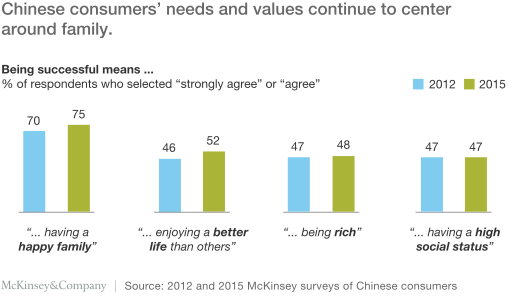
Our latest research certainly shows a decrease in consumption in categories deemed less healthy and a willingness to spend significantly more on health and more environmentally conscious categories. It also shows consumers are more likely to spend more to indulge themselves and more likely to try new technology. While their consumption choices have become more individualistic, though, it is important to note that family values continue to be at the top of their priorities (Exhibit 3).
Exhibit 3
One area our predictions missed, however, was by anticipating that consumers, as they became more individualistic in their choices, might focus less on basic product reliability and safety. Perhaps in part because of a number of more recent food scandals, however, consumers seemed more concerned with these issues in 2015 than they were before.
The increasingly loyal consumer
When our team first started researching Chinese consumers, nearly ten years ago, many of us were surprised by their fickle attitude toward brands. Fewer than half of consumers tended to stick with their favorite brands, compared, for example, with almost three quarters of US consumers.
As we debated this tendency while making our predictions, we wondered if, in the clash between pragmatism and individualism, brand loyalty would stay low, increase, or even decline. Ultimately, we decided it would increase as the emotional benefits of brands became more important to consumers and as increased choice and availability of branded products (online and off) would allow consumers to optimize for price and convenience without changing choices too often.
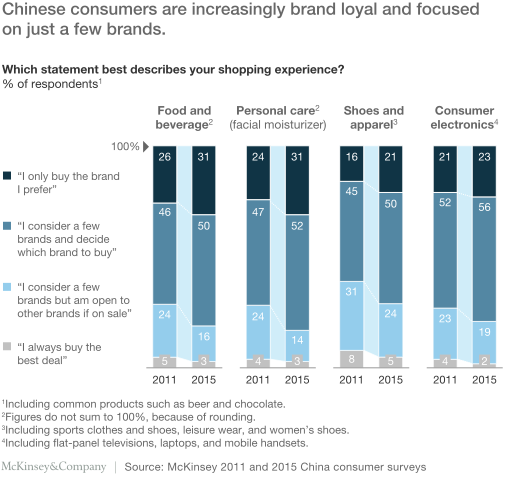
Our recent research confirmed the changes we anticipated. Consumers are now significantly less likely to buy a brand that is not already among their favorites, continuing the upward trend we observed in 2011 (Exhibit 4).
Exhibit 4
The modern shopper
Our 2011 predictions were bullish on e-commerce, predicting that Chinese consumers would adapt their channel choices even faster than has occurred in developed markets.
We estimated that by 2020, online consumer-electronics purchases would jump to 40 percent, from about 10 percent. More mainstream categories would rise to 15 percent, and some categories, such as groceries (now below 1 percent), could reach about 10 percent. These changes are occurring even as the enduring pragmatism and diligence of the Chinese consumer continue to be in place. Our latest research shows that consumers of all age groups are much more likely to collect information online, even on fast-moving consumer goods, than they were just three years ago.
In 2015, online food and beverages sales (excluding fresh) reached 7.2 percent: reaching our predicted 10 percent in five years looks very likely. The online share of consumer-electronic purchases, meanwhile, has reached a whopping 39 percent in 2015, and it now looks possible that by 2020 it will be about 50 percent of overall sales.
Looking from today’s perspective at our 2011 predictions, it is impressive to see the evolution of Chinese consumers—even as their most characteristic traits endure. Certainly, we’ll check in on their progress as we get ever closer to the year 2020. Making predictions may be difficult, especially about the future—as US Baseball Hall of Famer Yogi Berra famously observed. But they can still provide valuable foresight for executives.
Indians are acquiring a strong taste for soybean oil thanks to lower prices, fueling a surge in imports at a helpful time for a global market struggling with a glut of the commodity.
India’s imports of soybean oil have quadrupled in the last five years to more than 4 million metric tons this year, according to data compiled by the country’s vegetable oils industry body. India’s soybean oil imports are expected to rise over the next 10 years by as much as 40%, the U.S. Department of Agriculture estimated in May.
Soybean oil, produced by crushing soybeans, is used in everything from cooking oil to cookies and lipstick.
In India, they are favored for cooking samosas, dosas and curries, but the relatively high price of soy oil was a deterrent for many consumers in the country. India’s gross domestic product per capita grew 6.9% from a year earlier to $6,200 in 2015, but remained much lower than the U.S. with GDP per capita of $55,800, according to U.S. estimates.
India dethroned China two years ago as the world’s largest importer of soy oil. Some Indian consumers who have switched to soy oil cited the steep drop in prices—35% since 2012. Prices of palm oil, its main rival used widely in restaurants and by poorer Indians, have mostly been moving sideways.
“Demand from India will certainly play a role in absorbing excess soy-oil supplies,” said Vamsi Krishna Kona, a trader at Inditrade Derivatives & Commodities.
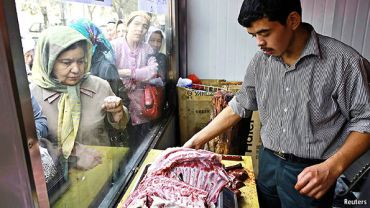
CHINA’S cities abound with restaurants and food stalls catering to Muslims as well as to the many other Chinese who relish the distinctive cuisines for which the country’s Muslims are renowned.
So popular are kebabs cooked by Muslim Uighurs on the streets of Beijing that the city banned outdoor grills in 2014 in order to reduce smoke, which officials said was exacerbating the capital’s notorious smog (the air today is hardly less noxious).
Often such food is claimed to be qing zhen, meaning “pure and true”, or halal, prepared according to traditional Islamic regulations. But who can tell? Last year angry Muslims besieged a halal bakery in Xining, the capital of Qinghai province, after pork sausages were found in the shop’s delivery van. There have been several scandals in recent years involving rat meat or pork being sold as lamb. These have spread Muslim mistrust of domestically produced halal products.
In response, some local governments have introduced regulations requiring food purporting to be halal to be just that (though not going into detail of what halal means, such as the slaughter of animals with a knife by a Muslim). Earlier this year, however, the national legislature suspended its work on a bill that would apply such stipulations countrywide.
There is much demand for one. Local rules are often poorly enforced. Advocates of a national law say a lack of unified standards is hampering exports to Muslim countries. According to Wang Guoliang of the Islamic Association of China, the country’s halal food industry makes up a negligible 0.1% of the global market.
The government began drafting a national halal law in 2002. But Muslim communities in China have varying definitions of the term. Work on the bill was slow. Each year, during the legislature’s annual session in March, Muslim delegates called for faster progress. But there were opponents, too. Some scholars argued that the government should not regulate on matters relating to religious faith. Others said that by giving in to the Muslims’ demands, China would encourage them to press for more concessions and ultimately form their own enclaves run by sharia.
Such views may have given pause to China’s leaders. In April, at a high-level meeting on religious affairs, President Xi Jinping said religion should be prevented from interfering with the law. That month Wang Zhengwei, a Muslim official who had been pushing for halal legislation, was removed from his post as the head of the State Ethnic Affairs Commission.
Also in April, the Communist Party chief of Ningxia urged officials to “sharpen [their] vigilance” against the use of halal labels on products such as toilet paper, toothpaste and cosmetics. And the government of Qinghai province ordered the inspection of Muslim-only toilets and hospital rooms, as well as shops catering to Muslims, to make sure that halal symbols were being used only on food. Xinjiang, the far-western region that is home to the Uighurs, recently introduced an anti-terrorism law threatening punishment of those who “overextend” halal rules. Officials clearly worry that those who do so might be the same sort of people who embrace jihad.
Ismael An, a Muslim writer, says this is overreacting. “Supporters of the halal law are not the so-called extremists, because real extremists don’t make demands through legislation,” he says. On the internet, however, a small but vocal group of Islamophobes has been calling for a boycott of halal-certified products. They say the price of such goods factors in payments to Islamic groups that grant the certificates—they do not want to give the religion even indirect support. Ironically, it is the non-Muslim love of Muslim food that will ensure the campaign will not succeed.
Vodafone Group Plc (VOD.L) was the biggest spender in an Indian mobile phone spectrum auction that raised a total $9.9 billion for the government, as carriers competed to boost subscribers in the world’s fastest-growing internet services market.
The proceeds of the auction, which ended on Thursday after five days of bidding, helped India raise about 658 billion rupees ($9.87 billion).
That figure was well below the $84 billion worth of spectrum on offer however, as carriers shunned the priciest category of airwaves, snapping up less than half of the total on offer.
Yet given the vast volume available, no one had expected the priciest spectrum – that offers deeper reach – to be bought now, as data demand in India is still in its infancy and data costs in the ultra-competitive market are falling, making it harder for carriers to justify big cash outlays.
JPMorgan earlier on Thursday had projected the auction would generate between $8 billion and $12 billion.The government had budgeted for 646 billion rupees ($9.7 billion) as revenue from the auction in the current fiscal year ending March. It will receive some 320 billion rupees upfront, as carriers are allowed to make payments in instalments.
Vodafone, which in recent months injected $7.2 billion in its Indian unit, the market’s No.2, bought spectrum worth more than $3 billion, according to a source with knowledge of the matter.
Market leader Bharti Airtel (BRTI.NS) bought $2.13 billion worth, while No. 3 player Idea Cellular (IDEA.NS) spent $1.92 billion at the auction.
The three rivals, which together hold more than 60 percent of the Indian market of a billion-plus mobile subscriptions, are being challenged by new entrant Reliance Jio Infocomm, backed by India’s richest man Mukesh Ambani.Reliance Jio, which has the most 4G airwaves across India’s 22 telecoms zones, last month launched services with free voice calls and cut-rate data prices, triggering a price war. It bought spectrum worth $2.05 billion.
Although among India’s top three, Vodafone and Idea lag Bharti and Jio in terms of 4G presence, and were seen beefing up their high-speed data networks by aggressively bidding in the latest spectrum sale.
Idea said on Thursday it had been able to complete its mobile broadband footprint in all 22 service areas after the latest auction. Vodafone was yet to give details.The government found no takers for the best-quality and the priciest 700 megahertz airwaves, offered for the first time.
Carriers instead purchased spectrum in the 1800 and 2300 bands that can also handle 4G traffic.
All seven carriers including Reliance Communications (RLCM.NS) and Tata Teleservices that participated in the auction bought some spectrum, Telecoms Minister Manoj Sinha told reporters on Thursday.
The auction was India’s largest by spectrum volume.
At a time of Brexit and talk of a wall between the United States and Mexico, it seems the Chinese are embracing international engagement.
They think their country’s power is rising, that their living standards will keep improving, that corruption is being cleaned up and that air pollution should be fixed even if it means slowing down economic growth.
Elsewhere there is fear and uncertainty. Here optimism trumps all.
When asked about economic globalisation, 60% of people said it is a good thing and only 23% think it is bad for China.
While some China watchers are warning that this country’s mounting local government debt could mean that a hard landing is on the way, Chinese people don’t appear to share this pessimism.
Nearly 90% of respondents amongst this group of 3,154, interviewed face-to-face in China earlier this year, think that the state of their country’s economy is either “very good” or “somewhat good”.
GETTY IMAGES – Chinese people seem to remain optimistic
Looking into the future things will apparently get even better: 76% of people think the economy will improve over the next 12 months, 70% said their personal financial situation will improve and eight out of 10 people believe that their children will have a better standard of living than they do.
Bread and butter issues
It’s not that people are without concerns.
“Corrupt officials” is at the top of the table when it comes to people’s worries (83% said this was a “very big” or “moderately big” problem) and yet here too we see optimism.
Some 64% of them said that President Xi Jinping‘s massive anti-corruption drive would improve the situation over the next five years.
Running down the concern list, an alarmingly high number of people see income inequality and the safety of food and medicine as “very big” problems.
If you enjoy monopoly power on the basis that you are delivering “socialism with Chinese characteristics” then a small group of ultra-rich driving around in their sports cars and showing off their wealth while most struggle to pay the rent is surely at odds with your central message.
Then, if ordinary Chinese people can’t even trust the food and medicine they are giving their children, the possibility for social unrest over bread and butter issues is looming large.
The environment also emerges as a massive challenge with water and air pollution at the front of people’s minds.
Air pollution is so bad in China that half of those polled said their country should fight air pollution harder even if it means sacrificing economic growth.
GETTY IMAGES – Emissions from coal-powered industries, cars and heating systems generate the smog
Only 24% saw air deterioration as a necessary price to pay.
When it comes to the war of ideas in the top echelons of power here, those ministers in favour of tougher environmental protection measures could do worse than table this research.
A “major threat” to China?
The South China Sea and other geo-strategic tensions offer some of the most bleak opinions.
Nearly six out of 10 people think that territorial pressures with neighbours could lead to military conflict; 77% say their way of life needs to be protected from “foreign influence” (up by 13 percentage points since 2002) and only 22% say China should help other nations.
Regarding relations with rival superpower the United States people views are complex and, at times, seemingly contradictory.
Around half of Chinese respondents rated the US favourably but more than half think that Washington is trying to prevent China from becoming an equal power.
About 45% said that US power and influence poses a “major threat” to China. In fact the US came in at number one as the top international threat to the country.
GETTY IMAGES – More than half of Chinese people think that Washington is trying to prevent China from becoming an equal power
It’s interesting that some would see the Obama administration’s so-called “pivot to Asia” as a greater threat than say jihadist extremist groups just across the western border promoting bloody conflict in China’s vast Muslim region of Xinjiang.
Either way, whatever the perceived threat, China is seen as becoming ever more important and with ever more power at its disposal.Information is being controlled here ever more tightly – whether it is coming from the traditional media or sources online – so some analysts will see these views as the inevitable result of messages being delivered to the Chinese people by their government.
This may the be case but, in a world where politicians in various countries are accused of exploiting people’s fear and insecurity, could it be that a quarter of the globe’s population are going around with a smile on their dial because every day they look out the window and to them it just gets better and better?
While India may be known for its oppressive pollution, poverty and bureaucracy, it’s a better place to be sent to work than China or even the United States according to a recent survey.
An HSBC report that tried to break down what it’s like to be an expatriate in different countries this week surprisingly ranked India ahead of the world’s two biggest economies.
In its HSBC Expat Explorer 2016 report based on an online survey of 27,000 expats this year, the bank ranked India 26th out of 45 countries. While that is on the bottom half of the rankings, the U.S. did worse at 30th as did China at 34th.
How is that possible?
One factor was the Indian economy. Even though it is decades behind China and the U.S. it is still the fastest growing major economy in the world right now. That means globe-trotting executives and entrepreneurs don’t feel like they have been relegated to the backwaters when they work in India.
“More than half (51%) of expats in India believe the country is a good place for them to progress their career, compared with 42% across Asia-Pacific,” said the report, which ranked India 10th for “entrepreneurship,” better than China which got the 16th rank. India was also rated by expats as “a good place to start a business,” about 7% more than China in the region.
“Expats in India are also able to save more, with 44% saying that living there has accelerated their progress towards making longterm savings and investments, compared with 39% across the region,” said the report.
More important for the rankings this year though was family and friends.
The expats who responded to the HSBC survey gave India much higher marks in terms of ease of integrating with the locals as well as cost of raising children.
Of course the report also showed how India continues to underperform in many areas including quality of life and safety.India’s overall ranking slipped this year. Last year it was 17th out of 39 countries just below the U.S. but still better than China.
“The slight drop in India’s ranking is due to a range of factors, for example, expat parents in India have reported that the country is more expensive to bring up a child than last year,” said the bank when asked about India’s lower ranking this year.
Why did India, China and the U.S. perform worse than last year? That’s because they faced new competition from 6 other countries which were not a part of last year’s survey, including Norway and Austria which were ranked 6th and 7th in 2016.
On the top of the rankings this year was Singapore, New Zealand and Canada.
Dr Shashi Tharoor, MP speaks eloquently on why, in his view, Britain owes a huge debt to India for its 200 years of colonisation. If this notion interests you – regardless of whether you agree with it or not – I urge you to watch this short video from You Tube – Dr Shashi Tharoor. You will not be disappointed.
Like hundreds of thousands of people across India, Sujitha‘s journey from an under-developed village in India’s south to the outskirts of the city of Chennai (Madras), has transformed her life.
“My native place is a small village called Kizhattur. There is not even proper transport over there,” says Sujitha. “Because I grew up in that situation, I knew that I had to study hard and find a job.”
And she did just that – albeit against the wishes of her family who wanted her to marry and settle down.Sujitha secured a diploma and when Renault-Nissan advertised a position for a junior engineer five years ago, she jumped at the opportunity.”I can’t even imagine what I would be doing if I did not work in this factory. Perhaps I would be in the village doing small jobs on the farm,” she says. “I would just about make ends meet.”
Nissan and Renault are two of several international carmakers that have set up shop outside Chennai in the last 10 years.
Nearly a fifth of all cars made in India are produced in the area around Chennai in Tamil Nadu state
Today the area, known as the “Detroit of Asia”, is a thriving manufacturing hub where cars are produced for export as well as for the domestic market.India makes about 24 million vehicles a year, nearly a fifth of them in this region of Tamil Nadu state.
“We have seen a number of other car manufacturers establish plants in the state and that has helped us attract and help local suppliers relocate and set up in Tamil Nadu itself,” says Colin Macdonald, managing director of Renault-Nissan.
“Since 2010, we had about 15% of our suppliers in the Tamil Nadu area. We are now operating with 60% of our Indian suppliers in Tamil Nadu. So from an employment perspective, this is huge.
“High unemployment
Creating jobs is central to Prime Minister Narendra Modi‘s Make in India campaign, an effort to promote inclusive growth in the country.Modi has promised foreign players he will make it easier to do business in India.
But more than two years after taking power, and after introducing a raft of policies, unemployment rates are at a five-year high.According to a recent government survey, about 77% of Indian households have no regular wage or salaried person, and so for many, life is not improving fast enough.
Domestic market growth
Despite that, success in places like Chennai is a sign that India remains appealing to foreign companies.Now that the area has become an auto hub, cost-effective raw materials can be sourced. With the port less than 100km away, it is easy to import parts and export products back out. Labour is cheap too.
Several car companies have set up shop on the outskirts of Chennai. Workers here are seen at Ford’s plant in Chengalpattu
The growth of the domestic market only adds to India’s appeal.”Today, only 20 in 1,000 people in India own a vehicle but we expect that to grow dramatically in the next five years and we expect the market to be five million cars by 2020, making India the third biggest market on the planet,” says Colin Macdonald.
A matter of pride
For Sujitha Rajendrababu, owning a car one day has become more of a reality than a dream.
“What I had dreamed of becoming in the future was made true by this job. I do not know how to express this.”
The daughter of a farmer, she has already used the money she has earned to buy a fridge, a TV, some jewellery and even a holiday around India. But her ambitions don’t stop there.
“My long-term goal is to become the manager of the stamping shop. I don’t only want to be the manager of the stamping shop, but of this organisation as well.”
And she wants the same for other people just like her.
“A lot of people in my village ask me if I can help them find jobs for their children. That makes me feel proud.”








 CHINDIA ALERT: You'll be living in their world, very soon