Archive for ‘Economics’

03/10/2016

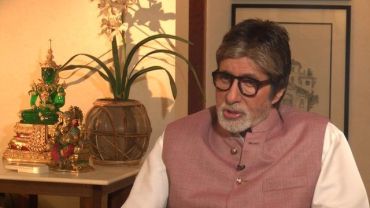
Amitabh Bachchan: ‘If she gets paid more than me, that’s fine’ – BBC News

One of India’s biggest stars, Amitabh Bachchan, says he’s glad people are talking about the gender pay gap.

He recently starred in a film called Pink about feminism and attitudes towards women in India which has caused quite a stir in the country.

He spoke to the BBC’s Yogita Limaye.

Source: Amitabh Bachchan: ‘If she gets paid more than me, that’s fine’ – BBC News

03/10/2016

How Google’s Bicycle-Riding Internet Tutors Are Getting Rural Indian Women Online – India Real Time – WSJ

The internet fails to reach millions of women in the small towns and villages of India, so Google is trying to deliver it to them — by bicycle.

The Alphabet Inc. unit has built an army of thousands of female trainers and sent them to the far corners of the Subcontinent on two-wheelers, hoping to give rural woman their first taste of the web. Each bike has a box full of connected smartphones and tablets for women to try and train on.

The idea is to give people who have never even sent an email a better understanding of how being connected could improve their lives. Families that can afford to be online often chose not to be because they do not see the value. Meanwhile women are sometimes blocked by their families from new technology.

ENLARGEA web trainer who is taking part in Internet Saathi, the joint program of Alphabet, Inc.‘s Google and local philanthropy Tata Trusts, in the village of Habibwala, in Rajastan, India, Sept. 28, 2016. PHOTO: GOOGLE

Bhagwati Kumari Mahawar got her very first taste of the internet just a month ago.

The 19-year-old used a smartphone Google brought to her remote village in the desert state of Rajasthan to search for designs of mehndi, the elaborate henna designs Indian women get on their hands and feet. Then she looked up information on how to sew a blouse.

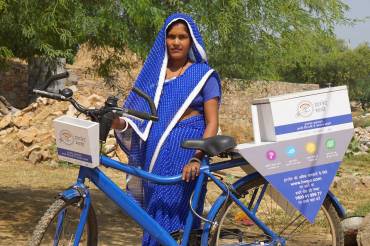
ENLARGEBhagwati Kumari Mahawar in the village of Habibwala, in Rajastan, India, Sept. 28, 2016. PHOTO: GOOGLE

“I really wanted to learn,” she said, sitting in the shade near the Google bicycle and a water buffalo.In the project, called Internet Saathi, Google partnered with local philanthropy Tata Trusts to show women in rural India how to connect to the web.

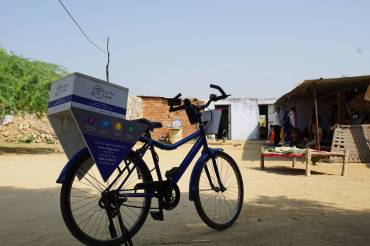
Instructors are trained in how the web works, and then are given bicycles with large boxes on the back containing internet-enabled devices running Google’s Android mobile operating system. The newly equipped “saathis” — or “partners” in Hindi — then cycle from village to village providing instruction to their peers.

“I wasn’t sure if I could do it or not,” said the instructor who helped Ms. Mahwar get online, 30-year-old Kamla Devi Mahawar, who is unrelated to her pupil.

She never used the web until she began her Saathi training ten months earlier, but since then has enjoyed showing women how to search for information like recipes and stitching guides, and showing them how to use voice queries if they are unable to type in text.

ENLARGEWomen look at cell phones as part of Internet Saathi, the joint program of Alphabet, Inc.’s Google and local philanthropy Tata Trusts, in the village of Habibwala, in Rajastan, India, Sept. 28, 2016. PHOTO: NEWLEY PURNELL/THE WALL STREET JOURNAL

In a demonstration, she sat on the ground while half a dozen women circled around her, watching as she searched for images of nearby temples and forts. Some women want to learn how to use Facebook Inc.’s WhatsApp messaging service, while others simply want to make phone calls, she said.

Since the program’s launch last year, about 9,000 guides have helped reached 1 million women, Google said, noting that the program fits its mission of helping expand internet access globally.

India is an increasingly important commercial market for the Mountain View, Calif. search titan given its nascent internet economy.

While the country is home to more than 1.2 billion people, consultancy McKinsey & Co. reckons some one billion people still lack regular web access. More online consumers in the years ahead could mean more users of Google’s services, like its search engine, email and Android.

A bike used by an instructor who teaches women how to use the web, part of Internet Saathi, the joint program of Alphabet, Inc.’s Google and local philanthropy Tata Trusts, in the village of Habibwala, in Rajastan, India, Sept. 28, 2016. PHOTO: GOOGLE

Last week, at an event in New Delhi, Google executives said they are expanding their efforts to reach Indians with products and features like a new version of its YouTube app designed to work even on India’s often sluggish mobile networks.

Asked how her work with others could be made easier, Ms. Mahwar, the trainer, was quick to point out that better web connectivity is key.

“The internet doesn’t work half the time,” she said. Fixing that “would help a lot.”

Source: How Google’s Bicycle-Riding Internet Tutors Are Getting Rural Indian Women Online – India Real Time – WSJ

03/10/2016

India tax amnesty draws $9.8bn in asset declarations — FT.com

Modi government claims progress in fulfilling election vow to crack down on ‘black money’

A four-month amnesty for tax evaders in India has resulted in the declaration of hidden assets worth nearly $10bn, the government has said, as it seeks to fulfil an election pledge to crack down on illicit “black money”.

The Income Declaration Scheme, which ran from June through September, allowed citizens to report assets previously undeclared to the tax authorities, without risk of prosecution. A charge of 45 per cent was to be levied on the assets declared under the scheme — one of the most conspicuous initiatives in Prime Minister Narendra Modi’s drive to tackle widespread corruption that is seen as a significant drag on the economy.

Arun Jaitley, finance minister, told reporters at the weekend that assets worth Rs652.5bn ($9.8bn) had been declared under the scheme, implying a boost to government revenue of Rs294bn. The amnesty attracted 64,275 declarations, with the average amount declared standing at Rs10.2m. Mr Jaitley cited this to rebut prior fears that the initiative might not elicit a response from wealthy Indians.

New Delhi had not publicly stated a revenue target, but some media reports had said officials were aiming to uncover about Rs1tn in previously undeclared assets.

The initiative followed a similar one launched in 1997 that yielded revenue of Rs97.6bn, but Mr Jaitley said that the latest drive was firmer in its treatment of evaders, arguing that the previous effort had allowed them to make payments based on unduly low valuations of their assets.$9.8bnA

mount of assets declared under India’s four-month tax amnesty

Only about 4 per cent of Indian adults pay income tax, according to the government’s latest economic survey. While the annual income of most Indians is below the Rs250,000 threshold beyond which income tax is due, the slender income tax base also reflects the extent of economic activity that occurs through informal transactions beyond the oversight of tax officials. Such activity amounts to about 20 per cent of gross domestic product, according to a recent report by analysts at Ambit Institutional Equities. That report argued that heightened official scrutiny of domestic transactions had encouraged tax evaders to keep money in cash, hitting demand for formal banking services as well as for property and gold — asset classes commonly used to launder money. Liases Foras, a property research company, estimated in 2014 that 30 to 40 per cent of Indian real estate transactions involved an illicit cash payment.

Firm progress in reducing tax evasion would boost the credibility of Mr Modi’s government, which made this a key part of its 2014 election manifesto. $343bnEstimated amount of assets Indians sent abroad illicitly between 2002 and 2011Central to the drive has been the pursuit of funds concealed in offshore accounts, of which Mr Modi pledged before his election “to bring back every rupee … and use it for the welfare of the poor”.

The US-based group Global Financial Integrity has estimated that Indians sent $343bn of assets abroad illicitly between 2002 and 2011.Last year India’s parliament passed a law imposing criminal penalties for the illicit concealment of overseas assets. This year the government scrapped a treaty with Mauritius under which investments from the island state were exempted from capital gains tax: an arrangement that had been criticised for allowing wealthy Indians to “round-trip” illicit funds back into the country.

Source: India tax amnesty draws $9.8bn in asset declarations — FT.com

03/10/2016

India joins Paris Climate Change Agreement, submits instrument of ratification at UN headquarters – Times of India

With the US, China and now India signing the accord, other nations should not hesitate to join them. On any case, thes three account for the vast majority of the pollution, so even if no one else signs up, its good news for Mother Gaia.

India formally joined the Paris Climate Change Agreement by submitting its instrument of ratification+ at UN headquarters in New York on Sunday – the birth anniversary of Mahatma Gandhi.

The instrument of ratification was deposited by India’s permanent representative to the UN, Syed Akbaruddin.

By putting Gandhi seal on the climate deal, the country will now urge the global community to adopt ‘Gandhian way of life’ (shun extravagant lifestyles) to reduce their carbon footprints and protect the earth from adverse impact of climate change.

India will articulate its point vigorously during the next climate conference (COP22) at Marrakech in Morocco, beginning November 7.

“India had led from front to ensure the inclusion of climate justice and sustainable lifestyles in the Paris Agreement+ . We will put across this view based on Gandhian lifestyle in Morocco”, said environment minister Anil Madhav Dave.

Spelling out next course of action after India formally joined the Agreement, Dave said, “It is important that apart from emission cuts, we also focus on measures that involve broader participation. People in developed countries live extravagant lifestyles with high carbon footprint.

“Simple everyday changes in lifestyles, when practiced by a large number of people around the globe, collectively will make a huge impact”.

Source: India joins Paris Climate Change Agreement, submits instrument of ratification at UN headquarters – Times of India

03/10/2016

China’s Yuan Just Joined An Elite Club Of IMF Reserve Currencies

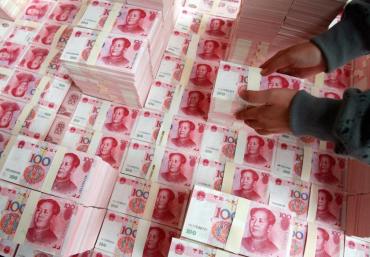
China’s yuan joins the International Monetary Fund’s basket of reserve currencies on Saturday in a milestone for the government’s campaign for recognition as a global economic power.

The yuan joins the U.S. dollar, the euro, the yen and British pound in the IMF’s special drawing rights (SDR) basket, which determines currencies that countries can receive as part of IMF loans. It marks the first time a new currency has been added since the euro was launched in 1999.The IMF is adding the yuan, also known as the renminbi, or “people’s money”, on the same day that the Communist Party celebrates the founding of the People’s Republic of China in 1949.

“The inclusion into the SDR is a milestone in the internationalization of the renminbi, and is an affirmation of the success of China’s economic development and results of the reform and opening up of the financial sector,” the People’s Bank of China said in a statement.

China will use this opportunity to further deepen economic reforms and open up the sector to promote global growth, the central bank added.

The IMF announced last year that it would add the yuan to the basket, so actual inclusion is not expected to impact financial markets. But it puts Beijing’s often opaque economic and foreign exchange policy in the international spotlight as some central banks add yuan assets to their official reserves.

Critics argue that the move is largely symbolic and the yuan does not fully meet IMF reserve currency criteria of being freely usable, or widely used to settle trade or widely traded in financial markets. U.S. Republican presidential nominee Donald Trump has said he will formally label China a currency manipulator if he wins November’s election.

China stunned investors by devaluing the currency last year and the yuan has since weakened to near six-year lows, adding to worries about already feeble global growth.

Some China watchers also fear that Beijing’s commitment to further market opening and financial sector reforms will fade after its diplomatic success, despite repeated reassurances from Beijing it will continue with the process.

U.S. Treasury Secretary Jack Lew said on Thursday the yuan was “quite a ways” from true global reserve currency status. The new IMF status recognizes the “enormous” change in China in the last 10 years that had made the yuan more open, but Beijing still had work to do to make its currency and its economy more market-driven, he said. “Being part of the SDR basket at the IMF is quite a ways away from being a global reserve currency,” he said.

Capital Economics said inclusion of the currency in the IMF’s SDR basket will have minimal impact on foreign demand for yuan assets, so “offers little support” for the currency.“

If anything, the risk is that official intervention to keep the renminbi stable ahead of its inclusion will subsequently be paired back, allowing for renewed deprecation,” it said in a research note.

The IMF on Friday fixed the relative amounts of the five currencies in the basket for five years, based on their average exchange rates over the past three months.

Source: China’s Yuan Just Joined An Elite Club Of IMF Reserve Currencies

03/10/2016

How has India changed a year after Dadri beef lynching? – BBC News

It has been a year since a Muslim man in northern India was lynched over rumours that his family had slaughtered a cow and eaten beef.

Hindus consider cows to be sacred, and for many, eating beef is taboo. The slaughter of cows is also banned in many Indian states.But Mohammad Akhlaq’s death sparked widespread outrage and contributed to changing the social and political discourse of the country. The BBC’s Ayeshea Perera looks at some of the most significant things that happened in India following his death.

The ‘intolerance’ furore

Image copyright AFP: The government began to be haunted by allegations of intolerance

Perhaps the largest fallout of Mohammad Akhlaq’s death in Uttar Pradesh state was the accusation of “intolerance” that began to haunt Prime Minister Narendra Modi’s ruling Hindu nationalist BJP.

Critics of the BJP have often accused it of being Hindu majoritarian in its outlook and of being hostile to ethnic and religious minorities, particularly Muslims. And this incident only strengthened those voices.

The fact that Mr Modi did not immediately condemn the incident, choosing to remain silent even as state party leaders jumped to the defence of the accused, caused even more anger.

It prompted an unprecedented movement by writers and poets who had been celebrated by the government – they started returning their prestigious Sahitya Akademi awards to protest at intolerance in India. More than 40 writers from all across the country returned their awards and were soon joined by a group of film makers who said they would not be “guilty of flattening diversity” in the country.

Leading writer Nayantara Sehgal, a niece of India’s first prime minister Jawaharlal Nehru, wrote that “… India’s culture of diversity and debate is now under vicious assault… The prime minister remains silent about this reign of terror. We must assume he dare not alienate evil-doers who support his ideology.

“But “intolerance” was not limited to returning awards – it found its way into popular discourse as well. Bollywood superstar Amir Khan also created a furore when he expressed concern over the “growing intolerance” in India. He was later joined by fellow star Shah Rukh Khan who said he “respected” people returning awards to protest against intolerance.

Later, the arrest of a student leader from India’s prestigious Jawarhalal Nehru University on sedition charges over a rally condemning the hanging of a man convicted of attacking the Indian parliament also sparked cries of “intolerance” on a massive scale.

The BJP loses Bihar

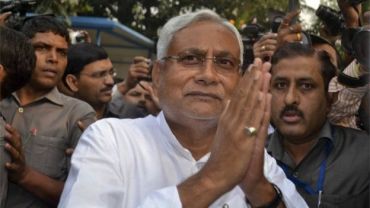
Image copyright AP: Nitish Kumar led an alliance which defeated PM Narendra Modi’s BJP in the Bihar polls

A second outcome that can be linked back to the Dadri killing is that the BJP went on to lose state elections in the neighbouring northern state of Bihar – a poll it was widely expected to win.Incumbent chief minister Nitish Kumar, who was on his second term, had already suffered a crushing defeat to Mr Modi’s party in the 2014 parliamentary elections, and another “Modi wave” was expected to sweep the state elections as well.

But in a masterstroke, Mr Kumar and his allies positioned themselves as a “secular” alliance, in direct opposition to the “communal” BJP.

The fact that Mr Modi and BJP party chief Amit Shah raised the sensitive issue of cow slaughter and consumption of beef during election rallies in the state also did not seem to help.

When Mr Kumar’s party won, it was called a “historic verdict” and hailed as proof that running a poll campaign along religious and ethnic lines would not bring results.

The rise of cow protection vigilante groups

Image copyright MANSI THAPLIYAL: These self styled cow protectors created headlines after they lay in wait for and then badly beat up a number of truck drivers transporting cattle for slaughter

The death of Mr Akhlaq seemed to put new focus on “cow protection” groups who took it upon themselves to ensure that cattle would not be slaughtered or consumed.

Mostly members of militant Hindu groups like the Bajrang Dal, Vishwa Hindu Parishad (World Hindu Council) and Shiv Sena, these self-styled cow protectors created headlines after they lay in wait for and then beat up a number of truck drivers transporting cattle for slaughter.

In another attack, two Muslim woman were beaten up after they were accused of carrying beef. And most significantly, in an incident which led to massive caste unrest, four low-caste Dalit men trying to skin a dead cow were thrashed by vigilantes in the western state of Gujarat.A video of the incident went viral and led to huge protests and an uproar in parliament.

After again being accused of silence, Mr Modi used a radio address almost a full month later to criticise vigilante attacks, saying such people made him “angry”, and any attacks must be investigated.

Eating as an act of defiance

Beef fry is an essential part of the diet in south India’s Kerala stateThe right to eat beef became another huge talking point in

Source: How has India changed a year after Dadri beef lynching? – BBC News

03/10/2016

Furniture Retailing With Chinese Characteristics – China Real Time Report – WSJ

At the opening of Zaozuo’s first furniture store this month in Beijing, a shopper snoozed on a couch while others clambered onto wall-mounted shelves to take selfies perched in chairs.

Welcome to furniture retailing with Chinese characteristics.Online furniture startup Zaozuo Zaohua Zworks Ltd. opened the outlet in an upscale mall after hitting resistance from customers wary of buying bulky items without so much as a feel of the fabric, let alone a bit of shuteye.

Liu Yusi, a 33-year old human-resource executive living in Beijing, said the showroom is a good idea given that buying large pieces of furniture without a test drive can be a leap of faith, although she was a little disappointed there weren’t any beds on display. “Maybe the store is too small,” Ms. Liu said. “But I think a mattress is something you really need to lay on before you decide to buy.”

Zaozuo has tried to distinguish itself from competitors by letting customers vote on the design and style of furniture items at the prototype stage before they’re mass produced, a strategy it says reduces inventory and cuts cost. This is a Chinese adaptation of business models used by the likes of U.S. website Threadless.com — which conducts online polls of crowd-sourced T-shirt designs before producing winning entries – and by crowd-funding sites that have investors vote on ventures they’re willing to fund.

Zaozuo’s customers vote for the designs they’d like to buy. PHOTO: ZAOZUO, DON ARBOUR/THE WALL STREET JOURNAL

The approach has its skeptics. Guangdong Weiyuhua Furniture Co. says it thinks Zaozuo’s voting is a gimmick and questions whether selling furniture online is sustainable. “It targets a few rich people in cities like Beijing or Shanghai,” said company sales manager Li Songzhi. “Traditional furniture companies like ours have real stores all over China.”

With nearly 700 million online users, Chinese consumers are driving explosive growth in the e-commerce sector, undercutting traditional retailers and leaving new online ventures fighting for an edge. Zaozuo co-founders, Stanford business school graduates Shu Wei and Guan Zishan, say China’s struggling manufacturing sector needs a wakeup call as it battles rising debt and excess capacity.“

The old system is not working very well,” said Ms. Shu. “That was the starting point of our business model.”

One potential problem with the company’s voting system is possible voter fraud, says Travis Wu, China research director with consultancy Forrester Research Inc. “In China, everything is a bit tricky, and lots of people try to game the system,” Mr. Wu said. That could see designers tilt results toward their own models, for example, or allow competitors to steer Zaozuo into producing money-losing items, he said.

Another concern: with Zaozuo opening a showroom, it risks driving up costs and undercutting its advantage over traditional furniture makers. Mr. Guan says users must be registered before voting, the company watches carefully for unusual online activity and the new store is not a major investment.

Zaozuo, which attracted several thousand curious shoppers to its store launch on a recent weekend, sees itself inhabiting a competitive space between expensive designer brands and mass marketers like Sweden’s IKEA, a company that attracts its share of showroom lounge lizards. On any given weekend, entire families can be found snoozing on beds in Ikea’s massive showrooms, luxuriating in the air conditioning and enjoying the inexpensive food.

China’s fragmented furniture industry with around 5,000 large companies and combined revenue of 244.5 billion yuan [$37.3 billion] in 2015, up 16.1% increase from the previous year, is tradition-bound and due for a shakeup, say online companies. Internet furniture companies only command a tiny slice of the market but are growing rapidly. Privately held Zaozuo said sales are increasing by 40% annually although it has yet to break even. MZGF Furniture Studio Co., another online firm, said sales have been expanding by as much as 200% year on year in some months.

Zaozuo, which works with 50 Chinese factories and more than 80 European designers, has attracted $17.5 million in venture funding and hopes to eventually go public. Anna Fang, chief executive of venture capital group Zhen Fund, which has invested $1.3 million in Zaozuo, said prospects for the industry are promising but the startup may need to shorten delivery times, which range from three to 35 days. “Ikea can get furniture to you right away,” she added.At its store opening, Zaozuo said it tried to discourage shoppers from getting too comfortable on its furniture. “The customer might be comfortable, but the image is not that good for other customers who can’t feel the fabrics if someone’s sleeping on it,” said Mr. Guan. “Maybe they do it because they’re tired. Shopping can be very tiring.”

Source: Furniture Retailing With Chinese Characteristics – China Real Time Report – WSJ

30/09/2016

Rich province, poor province | The Economist

EARLY in the summer Xi Jinping, China’s president, toured one of the country’s poorest provinces, Ningxia in the west. “No region or ethnic group can be left behind,” he insisted, echoing an egalitarian view to which the Communist Party claims to be wedded.

In the 1990s, as China’s economy boomed, inland provinces such as Ningxia fell far behind the prosperous coast, but Mr Xi said there had since been a “gradual reversal” of this trend. He failed to mention that this is no longer happening. As China’s economy slows, convergence between rich and poor provinces is stalling. One of the party’s much-vaunted goals for the country’s development, “common prosperity”, is looking far harder to attain.

This matters to Mr Xi (pictured, in Ningxia). In recent years the party’s leaders have placed considerable emphasis on the need to narrow regional income gaps. They say China will be a “moderately prosperous society” by the end of the decade. It will only be partly so if growth fails to pick up again inland. Debate has started to emerge in China about whether the party has been using the right methods to bring prosperity to backward provinces.

China is very unequal. Shanghai, which is counted as a province, is five times wealthier than the poorest one, Gansu, which has a similar-sized population (see map). That is a wider spread than in notoriously unequal Brazil, where the richest state, São Paulo, is four times richer than the poorest, Piauí (these comparisons exclude the special cases of Hong Kong and Brasília).

To iron out living standards, the government has used numerous strategies. They include a “Go West” plan involving the building of roads, railways, pipelines and other investment inland; Mr Xi’s signature “Belt and Road” policy aimed partly at boosting economic ties with Central Asia and South-East Asia and thereby stimulating the economies of provinces adjoining those areas; a twinning arrangement whereby provinces and cities in rich coastal areas dole out aid and advice to inland counterparts; and a project to beef up China’s rustbelt provinces in the north-east bordering Russia and North Korea. The central government also gives extra money to poorer provinces. Ten out of China’s 33 provinces get more than half their budgets from the centre’s coffers. Prosperous Guangdong on the coast gets only 10%.

The number, range and cost of these policies suggest the party sees its legitimacy rooted not only in the creation of wealth but the ability to spread it around. Deng Xiaoping’s economic reforms, launched in the late 1970s, helped seaboard provinces, which were then poorer than inland ones, to catch up by making things and shipping them abroad. (Mao had discouraged investment in coastal areas, fearing they were vulnerable to attack.) In the 1990s the coast pulled ahead. Then, after 2000, the gap began to narrow again as the worldwide commodity boom—a product of China’s rapid growth—increased demand for raw materials produced in the interior (see chart).

That was a blessing for Mr Xi’s predecessor Hu Jintao, who made “rebalancing” a priority after he became party chief in 2002. It also boosted many economists’ optimism about China’s ability to sustain rapid growth. Even if richer provinces were to slow down, they reckoned, the high growth potential of inland regions would compensate for that.

But convergence is ending. GDP growth slowed across the country last year, but especially in poorer regions. Seven inland provinces had nominal growth below 2%, a recession by Chinese standards (in 2014 only one province reported growth below that level). In contrast, the rich provincial-level municipalities of Shanghai, Beijing and Tianjin, plus a clutch of other coastal provinces including Guangdong, grew between 5% and 8%. Though there were exceptions, the rule of thumb in 2015 was that the poorer the region, the slower the growth. Most of the provinces with below-average growth were poor.

Of course, 2015 was just one year. But a longer period confirms the pattern. Of 31 provinces, 21 had an income below 40,000 yuan ($6,200) per person in 2011. Andrew Batson of Gavekal Dragonomics, a research firm, says that of these 21, 13 (almost two-thirds) saw their real GDP growth slow down by more than 4 points between 2011 and 2014. In contrast, only three of the ten richer provinces (those with income per person above the 40,000 yuan mark) slowed that much. In 2007 all of China’s provinces were narrowing their income gap with Shanghai. In 2015 barely a third of them were. In other words, China’s slowdown has been much sharper in poorer areas than richer ones.

There are three reasons why convergence has stalled. The main one is that the commodity boom is over. Both coal and steel prices fell by two-thirds between 2011 and the end of 2015, before recovering somewhat this year. Commodity-producing provinces have been hammered. Gansu produces 90% of the country’s nickel. Inner Mongolia and Shanxi account for half of coal production. In all but four of the 21 inland provinces, mining and metals account for a higher share of GDP than the national average.

Commodity-influenced slowdowns are often made worse by policy mistakes. This is the second reason for the halt in convergence. Inland provinces built a housing boom on the back of the commodity one, creating what seemed at the time like a perpetual-motion machine: high raw-material prices financed construction which increased demand for raw materials. When commodity prices fell, the boom began to look unsustainable.

The pace of inland growth was evident in dizzying levels of investment in physical assets such as buildings and roads. Between 2008 and last year, as a share of provincial GDP, it rose from 48% to 73% in Shanxi, 64% to 78% in Inner Mongolia, and from 54% to an astonishing 104% in Xinjiang. In the country as a whole, investment as a share of GDP rose only slightly in that period, to 43%. In Shanghai it fell.

This would be fine if the investments were productive, but provinces in the west are notorious for waste. In the coal-rich city of Ordos in Inner Mongolia, on the edge of the Gobi desert, a new district was built, designed for 1m people. It stood empty for years, a symbol of ill-planned extravagance (people are at last moving in).

Investment by the government is keeping some places afloat. Tibet, for example, logged 10.6% growth in the first half of this year, thanks to net fiscal transfers from the central government amounting to a stunning 112% of GDP last year. Given the region’s political significance and strategic location, such handouts will continue—Tibet’s planners admit there is no chance of the region getting by without them for the foreseeable future.

Tibet is an extreme example of the third reason why convergence is ending. Despite oodles of aid, both it and other poor provinces cannot compete with rich coastal ones. In theory, poorer places should eventually converge with rich areas because they will attract businesses with their cheaper labour and land. But it turns out that in China (as elsewhere) these advantages are outweighed by the assets of richer places: better skills and education, more reliable legal institutions, and so-called “network effects”—that is, the clustering of similar businesses in one place, which then benefit from the swapping of ideas and people. A recent study by Ryan Monarch, an economist at America’s Federal Reserve Board, showed that American importers of Chinese goods were very reluctant to change suppliers. When they do, they usually switch to another company in the same city. This makes it hard for inland competitors to break into export markets.

There are exceptions. The south-western region of Chongqing has emerged as the world’s largest exporter of laptops. Chengdu, the capital of neighbouring Sichuan province, is becoming a financial hub. But by and large China’s export industry is not migrating inland. In 2002 six big coastal provinces accounted for 80% of manufactured exports. They still do.

This contrast is worrying. Though income gaps did narrow after 2000 and only stopped doing so recently, provinces have not become alike in other respects. Rich ones continue to depend on world markets and foreign investment. Poor provinces increasingly depend on support from the central government.

A divergence of views

Officials bicker about this. Mr Xi asserted the Robin-Hood view in Ningxia that regional gaps matter and that redistribution is needed. “The first to prosper,” he said, “should help the latecomers.” But three months earlier, an anonymous “authoritative person” (widely believed to be Mr Xi’s own adviser, Liu He) took a more relaxed view, telling the party’s mouthpiece, the People’s Daily, that “divergence is a necessity of economic development,” and “the faster divergence happens, the better.”

It is unclear how this difference will be resolved, though the money must surely be on Mr Xi. Economically, though, Mr Liu is right. Regional-aid programmes have had little impact on the narrowing of income gaps. More of them will not stop those gaps widening. Socially, a slowdown in poorer provinces should not be a problem so long as jobs are still being created in richer ones, enabling migrants from inland to find work there and send money home. But politically the end of convergence is a challenge to Mr Xi, who has been trying to appeal to traditionalists in the party who extol Mao as a champion of equality. Wasteful and ineffective measures to achieve it will remain in place.

Source: Rich province, poor province | The Economist

30/09/2016

The human and animal costs of India’s unregulated coal industry – BBC News

India is one of the largest producers of coal in the world and more than half of its commercial energy needs are met by coal.

But unregulated mining has caused serious health and environmental issues, and led to growing conflicts between elephants and humans.

In the coal-rich central state of Chhattisgarh, for example, fly ash has caused respiratory problems and serious illnesses like tuberculosis among people, but their troubles don’t end there.

Forests are being cleared for coal mining and wild elephants are entering villages in search of food and attacking people.

Photojournalist Subrata Biswas has documented the fallout of India’s dependence on coal.

“As thousands of acres of forest land are destroyed to mining, foraging elephants attracted by the crops in the fields often enter villages, resulting in an alarmingly high number of human-elephant conflict situations,” says Biswas.

Officials estimate elephants have been responsible for 8,657 incidents of property damage and 99,152 incidents of crop damage in Chhattisgarh between 2005 and 2014.

Image copyrightSUBRATA BISWAS

“We were sleeping when the elephants broke into our room. Somehow we managed to escape but I fractured my left leg when a large part of the wall fell on my leg. My husband saved my life,” says Rujri Khalkho, 70, whose home was damaged by a herd of wild elephants almost a year ago.

A compensation of 10,000 rupees ($149; £114) has not been enough to repair her house or pay for her medical care.

Image copyrightSUBRATA BISWAS

Deaths of elephants due to electrocution have become common in the state.In Dharamjaigarh, the most affected area, officials have recorded 30 elephant and 75 human deaths so far.

Image copyrightSUBRATA BISWAS

In 2009, Kanti Bai Sau, 40, lost her home and farm to an open-cast coal mine.

She was promised compensation of 200,000 rupees ($2,980; £2,290) and a job to a family member, but received neither. Her son died last year of respiratory complications.

“There is no fresh air to breath, fresh water to drink. Coal has usurped everything here.”

Image copyrightSUBRATA BISWAS

“We lived next to this mine for almost 10 years and watched helplessly as our wells went dry, forests disappeared and fields become unproductive,” says Girja Bai Chauhan.

“We have lost almost eight acres of our fields to the mine and authorities haven’t fulfilled a single promise they made while acquiring land. They sent us into a dark future and unhealthy environment to live and breathe in.”

Image copyrightSUBRATA BISWAS

Pipelines carry fly ash slurry from a local thermal power power plant in Korba to a fly ash pond.

Environment activists say that every year approximately 50 million tonnes of fly ash is generated by power plants in Chhattishgarh but not even the half of this amount have been reutilized to reduce the pollution from fly ash.

Fly ash is known to contain trace elements such as arsenic, barium and mercury among others, and unlined ponds like this could be polluting groundwater by leaching.

Image copyrightSUBRATA BISWAS

“The ash is everywhere. When the wind blows, everything is coated with a layer of white grey ash. The road, ponds, our houses, sometimes even our spectacles get coated with a fine layer of the ash,” says Biswas.

Image copyrightSUBRATA BISWAS

Rohit Rathia, 55, suffers from tuberculosis.He lives in a village next to an open cast mine where lung diseases such as coal workers’ pneumoconiosis (CWP), silicosis and tuberculosis have become common ailments.

Source: The human and animal costs of India’s unregulated coal industry – BBC News

29/09/2016

China punishes coal, steel companies for violating pollution, safety rules | Reuters

China’s state planner has punished hundreds of coal and steel companies by forcing them to close or cut output for violating environmental and safety regulations, the latest effort to crack down on the country’s heavily polluting industries.

The National Development and Reform Commission (NDRC) forced two steel companies to shut completely, 29 firms to halt production and another 23 to curb output, it said in a statement on Thursday. The closures and curbs followed a nationwide inspection of more than 1,000 steel makers in the world’s top producer.

Among more than 4,600 coal mines inspected, the NDRC has revoked safety certificates for 28 coal mines and forced another 286 coal mines to halt production, it added.

The planner did not identify or name the companies, or give details on how the companies broke the rules and how long the penalties will be in place.

Beyond the safety and environment rules, the NDRC also listed other infractions such as violations of energy consumption rules or quality standards.

The statement reflects the government’s continued push to force ageing mills and mines to comply with tough new pollution rules by meeting emission standards and installing appropriate monitoring equipment.

China’s unwieldy coal and steel industries are considered two of the biggest sources of pollution in the country.

The government is targeting coal output cuts of 500 million tonnes in the next three to five years.

Source: China punishes coal, steel companies for violating pollution, safety rules | Reuters

Law of Unintended Consequences

continuously updated blog about China & India

ChiaHou's Book Reviews

continuously updated blog about China & India

What's wrong with the world; and its economy

continuously updated blog about China & India