Archive for ‘poverty’

01/09/2017

‘We must send our best to the front line’: Xi Jinping goes all out to rid China of poverty in three years | South China Morning Post

If China success, it will have proven wrong Matthew 26:11: “The poor will always be with you”.

China is going all out in an unprecedented effort to lift its population out of poverty by 2020, while simultaneously strengthening its grip at the grassroots level.
Xinhua has released the full transcript of President Xi Jinping’s remarks in June on the ambitious campaign. The speech contains many specific details regarding how Xi intends to achieve the goal of meeting the basic needs of all of the country’s rural poor in three years.

The transcript was released on the same day as Beijing’s announcement of the October 18 opening date for the 19th Party Congress. Poverty alleviation is expected to be a policy priority for Xi in his second term.
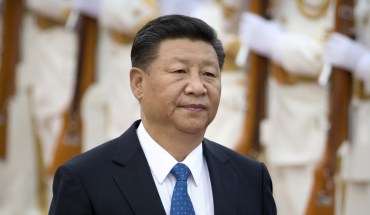
In the June speech, Xi highlighted the importance of combining the building out of the Communist Party’s grassroots apparatus with poverty alleviation.

“We must send our best talents to the front line of the tough battle with extreme poverty,” Xi told cadres while announcing his precise measures aimed at reducing poverty.

Beijing vows to get tough in war on poverty“All levels of government should actively send cadres to station in poor villages in an effort to fortify the party leadership,” he said.

County governments should take the lead in poverty alleviation, Xi said, adding that having stable leadership at the county level was essential. County leaders who perform well in poverty alleviation should be promoted, he said.Xi said the government should precisely identify its poor and the reasons for their poverty to derive appropriate measures to help them.“
The priority for the next stage is to solve the problems of social services, infrastructure and a basic medical services shortage in areas with deep-rooted poverty issues,” Xi said.

He said the government would step up the campaign to move residents from areas with extremely poor living conditions, hire local people to protect forests in ecologically fragile areas, and strengthen assistance to rural poor who suffer with serious illness.

Xi Jinping’s biggest ally returns to the limelight to support Chinese leader’s war against poverty

Meanwhile, Xi also is prepared to strengthen government funding and prioritise land distribution to meet development needs as part of a basket of precise measures aimed at eradicating extreme poverty.

His programme also includes improving public services such as medical care, education, vocational training, transportation and infrastructure to add jobs and develop industries in some of China’s poorest areas.
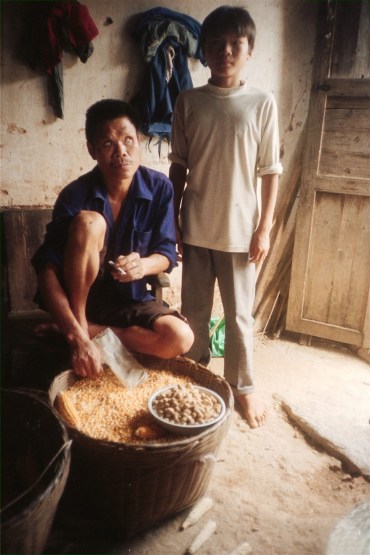
Ever since taking the helm, Xi has researched and travelled extensively to extremely poor areas as poverty reduction is a key political target for the Communist Party and the central government. The official goal is to eliminate poverty, defined as annual income of less than 2,300 yuan (HK$2,728), and build an “all-round well-off society” by 2020 with all resources available.

In China, rural rich get richer and poor get poorer

The 13th Five Year Plan has set important targets for the country on this matter and progress in poverty alleviation would play a role in assessing cadres’ performance.

Shanghai-based political commentator Chen Daoyin said poverty alleviation is close to Xi’s heart as it helps the party to solidify its political support in the grassroots where most of the nation’s population lives.
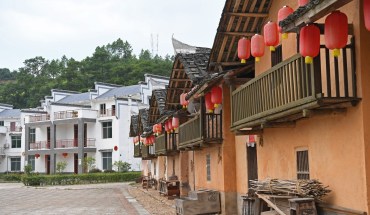
“As his next term begins, one can expect that’s where he will dedicate his power on,” Chen said in an interview.

“Not only it is an easy way out for him to win hearts of the mass but also a way to justify the party’s governance on a grassroots level in order to maintain political stability.

China’s final push to eradicate poverty will be difficult but not impossible if handled in a clean, transparent manner“

China’s poorest takes up the majority of the population and all their problems are about staying warm and fed, which is easy to address compared to the more affluent bunch on the eastern part of the nation,” Chen said.

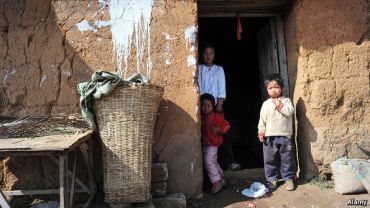
As of last year, China still has more than 55 million people in rural areas who live below the poverty line. Twelve million people were lifted out of poverty last year and another 10 million people would be taken off the rolls this year.
Source: ‘We must send our best to the front line’: Xi Jinping goes all out to rid China of poverty in three years | South China Morning Post

28/04/2017

The last, toughest mile: China’s new approach to beating poverty | The Economist

MOST of Tian Shuang’s relatives are herding goats in the barren hills of Ningxia province, one of the poorest parts of western China. But last year Mr Tian came down to Minning, a small town in the valley, when the local government, as part of an anti-poverty programme, gave him a job growing mushrooms and ornamental plants in a commercial nursery garden. His name, address and income (20,000 yuan a year, or $2,900—six times the minimum wage) are written on a board by its greenhouse door.

Mr Tian’s name is also pinned up on the walls of the town hall, along with those of 409 other people in the area who, without help, would be living below the local poverty line of 3,200 yuan a year (this is about 40% above the national minimum, but still not enough to buy meat more than once a week, or to spend on new clothes). The town lists the problems and requirements of each of its poor people. Thirty-seven are poor because of health problems; 77—including some of Mr Tian’s relatives—live in isolated, inhospitable areas; 95 are physically handicapped, and so on. Also listed is the help given by the government to each person, such as the provision of work, a solar generator or a cow.

Minning is a model town. Its poverty-alleviation scheme was set up by Xi Jinping, China’s president, between 1999 and 2002 when he was governor of Fujian, a wealthy province in the south. (Fujian is twinned with Ningxia as part of a national attempt to spread expertise and money from rich to poor areas.) The system that Minning pioneered is now spreading throughout China. It focuses on poor individuals, and on drawing up specific plans for each, rather than merely helping poor places to develop in the hope that wealth will trickle down to the poorest. Other countries are trying this, too, but China is one of the few developing nations with a bureaucracy big enough and bossy enough to do it well.

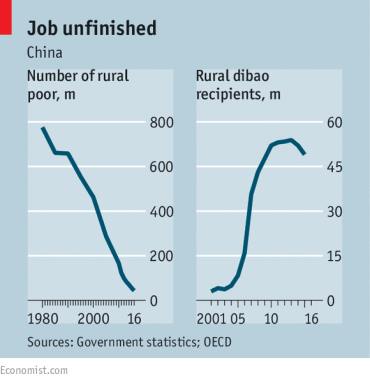
China has been a hero of the world’s poverty-reduction efforts. It has eradicated poverty in cities (by its definition, at least) and reduced the number of rural people below the official poverty line of 2,300 yuan a year at 2010 prices from 775m in 1980 to 43m in 2016 (see chart). Its aim now is to have no one under the line by 2020.Two years ago Mr Xi set this as one of the main jobs of his presidency. He calls it “the baseline task for building a moderately prosperous society” (which the Communist Party wants to create by its 100th birthday in 2021). Politically, poverty reduction matters because, as one party member says, unless China solves the problem of income inequality, the party’s legitimacy will be questioned. The party owes its power to a revolt fuelled by the miseries of the countryside. It does not want to be accused of failing to fulfil its mandate to eliminate them.

But the last stage of poverty reduction will be the most difficult. China’s success so far has been based largely on economic growth, which has generated jobs for the able-bodied. The final stage will be costly and complicated because many of the remaining poor are people who, because of physical or mental disabilities, cannot hold down jobs. A recent government survey found that 46% of China’s poor were poor because of their health.

Targeting individuals will help. By 2014 the government had compiled a “poverty-household registry” of every person and household below the poverty line. The following year it said a personalised poverty-alleviation plan must be drawn up for everyone included. The Philippines and Mexico also have such registries—they can help with monitoring the status of the poor, identifying their needs and (in theory) preventing waste and corruption.

There are signs that China’s is indeed improving its main form of poor relief, which is called “subsistence guarantee”, or dibao. The dibao programme has been notoriously inefficient. Many households that qualify for payments do not receive them because of corruption and bureaucratic failings. A survey by the World Bank found that between 2007 and 2009 just 10% of those that did get the dibao had household incomes below the poverty line (ie, 90% did not qualify for the handouts they were getting). The system is also corrupt. In 2015 an official in Henan province was found to have 267 bank deposit books in the names of extremely poor people, from which he had misappropriated 500,000 yuan of welfare payments.

But this may be changing. Poor people are getting more job training, as in Minning. There has been a crackdown on corruption. Ben Westmore of the OECD, a club mostly of rich countries, recently trawled through household data from five provinces collected by researchers at Peking University. He found that in 2014 about a third of rural households receiving dibao paymentswere below the poverty line—not good, but better than 10%. In Guangdong province in the south, an early starter in its focus on individual needs, more than half of recipients were below the line.

Still, there is a long way to go: most poor households still do not get dibao money. In the sample studied by Mr Westmore, three-quarters of them did not. It hardly helps that the poverty registry and dibao data are kept by different government departments; the two are not linked.

The dibao programme, though financed largely by the national government, is administered locally. This means local areas may set their own poverty lines and benefits. Some thresholds are far below the national minimum, and payments are barely enough to live on. Total dibao spending peaked in 2013 and has been falling since then—partly because governments are getting stingier. China spends a mere 0.2% of GDP on the dibao system, far below comparable programmes elsewhere. Indonesia’s poverty relief costs 0.5% of GDP.

Worse, some poor people are not even included in the registry. In a village of 100 poor households in Shanxi province, only ten families are in it—friends of the party boss. If the registry is flawed, poverty relief is all the more likely to be flawed too.

All these efforts are aimed only at extreme poverty in the countryside. The government claims the urban kind does not exist, ie, that no one in cities has less than 2,300 yuan a year. But that minimum is too low for cities, where living costs are higher. Using more realistic thresholds, Mr Westmore found that urban poverty was actually higher than rural poverty in four of the five provinces covered by the data he used.

At current rates of reduction (more than 10m fewer people annually in extreme poverty), Mr Xi should be able meet his target by 2020. It will be hailed as a great achievement. But huge government effort will still be needed to help the worse-off. It will not be the end of poverty in China.

Source: The last, toughest mile: China’s new approach to beating poverty | The Economist

18/01/2017

This Is Just How Unequal India Is – India Real Time – WSJ

New report from Oxfam highlights how the country’s wealth is concentrated in the hands of a few

Country Percentage of wealth top 1% has
Global

51

Australia

22

Belgium

18

Brazil

48

Canada

26

Denmark

31

France

25

Germany

31

India

58

Italy

25

Mexico

38

Netherlands

24

New Zealand

20

South Africa

42

Sweden

36

U.K.

24

U.S.

42

The richest 1% of Indians hold 58% of the country’s total wealth, according to Oxfam India.

The stark inequality in India is worse than the global data put out by the organization, which show that the richest 1% have more than 50% of the total world wealth, Oxfam said.

It said recently improved data on the distribution of wealth, particularly in countries like India and China, indicate that the poorest half of the world has less wealth was previously thought. Oxfam singled out India repeatedly in the report.

It said that companies are increasingly driven to pay higher returns to their shareholders. In India, the amount of profits corporations share with shareholders is as high as 50% and growing rapidly, the report said.

A family sits atop a pile of hay on a horse cart on a highway near Amritsar, India, Nov. 4, 2016.

The report said the annual share dividends paid by from Zara’s parent company to Amancio Ortega – the world’s second richest man – are equal to around 800,000 times the annual wage of a worker employed by a garment factory in India.

Oxfam said that the combined wealth of India’s 57 billionaires is equivalent to that of the country’s poorest 70%.“India is hitting the global headlines for many reasons, but one of them is for being one of the most unequal countries in the world with a very high and sharply rising concentration of income and wealth,” Nisha Agarwal, chief executive of Oxfam said in a statement.

Oxfam said India should introduce an inheritance tax and raise its wealth levies as well as increasing public spending on health and education. It said it should end the era of tax havens and crack down on rich people and corporations avoiding tax.

Source: This Is Just How Unequal India Is – India Real Time – WSJ

15/10/2015

Nobel Prize Winner Angus Deaton on the Chinese and Indian Miracles – China Real Time Report – WSJ

Angus Deaton, the economist who won a Nobel Prize this week, has spent much of his career trying to measure poverty and progress in India and China.

He won the Royal Swedish Academy of Sciences award in economics by devising systems to understand consumption and poverty using household surveys and number crunching.

“Deaton’s focus on household surveys has helped transform development economics from a theoretical field based on aggregate data to an empirical field based on detailed individual data,” the academy said.

His decadeslong deep dive into data on the poor, their spending habits and their health gave him a surprisingly upbeat assessment of human progress, largely owed to the great strides that have been made in China and India. His book, “The Great Escape: Health, Wealth, and the Origins of Inequality,” documented why the world is a better place to live than it used to be.

A recent World Bank report suggested that more than one billion people might have been lifted out of extreme poverty already this century. Most of that progress was in China and India.

Here are a few of the things Mr. Deaton said in his book about the massive shifts in China and India that are changing the world.

On what China and India have taught us … “China and India are the success stories; rapid growth in large countries is an engine that can make a colossal dent in world poverty.”

On infant mortality in India and China … “India’s decline in infant mortality has been remarkably steady–not at all responsive to changes in the rate of growth–and the absolute decline from 165 out of every 1,000 babies dying in the early 1950s to 53 in 2005-10, is actually larger in absolute numbers than the decline in China, from 122 to 22.”

On how Chinese and Indian bodies have evolved with the economy… “Indian children are still among the skinniest and shortest on the planet but they are taller and plumper than were their parents or grandparents … Indians too are now growing taller decade by decade, though not as quickly as happened in Europe, or indeed as is now happening in China, where people are growing at about (the now familiar figure of) a centimeter every decade. Yet the Indian escape is only half as fast–about half a centimeter a decade–and that figure is for men; Indian women are growing too, but at a much slower rate, so that it takes them sixty years to grow a centimeter.”

On a better measure showing how China and India have lifted the world … “Although China and India are only two countries, their rapid growth at the end of the century meant that around 40% of the world’s population lived in countries that were growing very rapidly … (Thus) the average country grew at 1.5% a year in the half century after 1960, but the average person lived in a country that was growing at 3%.”

On how long the miracle can continue …  “At least over the past half-century the fast-growing countries in one decade have tended not to repeat their performance in the next or subsequent decades. Japan used to be the place that had perpetually high growth, until it didn’t any more. India, now one of the most rapidly growing countries, seemed capable of only slow growth for much of its existence, not to speak of the half-century that preceded its independence, when there was no growth at all. China is the current long-run superstar, but by historical standards the longevity of its growth spurt is extremely unusual.”

On the difficulty of defining poverty …  “In India, as in any country where a substantial fraction of the population is poor, there are millions of people who are close to poverty, either just above or just below the line … We don’t really know where the line should be, yet its precise position makes a huge difference. To put it more brutally, the truth is that we have little idea what we are doing.”

Source: Nobel Prize Winner Angus Deaton on the Chinese and Indian Miracles – China Real Time Report – WSJ

06/10/2015

World Bank estimates show fall in India’s poverty rate – The Hindu

The World Bank has revised the global poverty line, previously pegged at $1.25 a day to $1.90 a day (approximately Rs. 130). This has been arrived at based on an average of the national poverty lines of 15 poorest economies of the world. The poverty lines were converted from local currency into U.S. dollars using the new 2011 Purchasing Power Parity (PPP) data.

The global poverty line, previously pegged at $1.25 a day, has been revised to $1.90 a day (nearly Rs.130).

In its latest report ‘Ending Extreme Poverty, Sharing Prosperity: Progress and Policies’, authors Marcio Cruz, James Foster, Bryce Quillin, and Phillip Schellekkens, note that world-wide poverty has shown a decline under these new estimates.

The latest headline estimate for 2012 based on the new data suggests that close to 900 million people (12.8 per cent of the global population) lived in extreme poverty.

With the Sustainable Development Goals adopted in September, seeking to end all forms of poverty world over, the World Bank Group has set itself the target of bringing down the number of people living in extreme poverty to less than 3 per cent of the world population by 2030.

Source: World Bank estimates show fall in India’s poverty rate – The Hindu

04/04/2015

Poverty in China: Just a little bit richer | The Economist

THE villagers of Dingjiayan subsist on corn, potatoes, sunflowers and the few vegetables they grow. They sell the surplus and buy meat and a few other necessities in the nearby county town of Tianzhen. Its mud-and-brick buildings, and its setting among dusty hills in the north-eastern corner of Shanxi province, offer little to the occasional visitor to distinguish it from countless other parts of China where hard work brings but a meagre living. Yet Tianzhen county, of which Dingjiayan is a part, is one of just 592 areas that the central government designates as “impoverished”.

China’s official threshold for rural poverty is an annual income of 2,300 yuan ($370) per person. But the criteria for classifying a village or county are complex and often revised. They include comparisons of poverty rates and average incomes with those of the province, adjustments for inflation, quotas on the number of villages that may count as poor and a ban on including villages that own collective enterprises, whatever their income level. Though dozens of places have been listed and delisted every few years since the 1990s, the total has remained curiously fixed—at 592.

An “impoverished” designation brings substantial subsidies. But Ding Tianyu, who has lived in Dingjiayan for all his 73 years, says he hardly notices. Most households earn about 10,000 yuan a year, he says, and get a subsidy of 80 yuan for each mu (614 square metres) of land they farm. “I have five mu,” Mr Ding says. “When there is enough rain I am fine, and when I get the subsidy I feel just a little bit richer.”

With bustling shops and a fair number of pricey cars on its roads, Tianzhen’s county town does not, by Chinese standards, feel impoverished. There is little disclosure about how subsidies are used, says a restaurant owner. “We are told a lot of it goes into the local credit union and that we can apply for loans there, but they only lend to people with good connections.”

In 2012, when the list was last updated, Xinshao county in Hunan in south-central China was added. Local officials used the county’s official website to trumpet this “exceptional good tidings” after two years of “arduous efforts” and “untold hardships”. A large roadside board added its “ardent congratulations”. After nationwide criticism, the officials accepted that their words had been badly chosen. But their cheer was understandable: the official designation was worth an extra 560m yuan for the county each year from the central government.

The episode caused many to question the value of the system and the perverse incentives it creates for local governments. A commentary last year in the Legal Daily claimed that many places were misusing the funds and had fudged their figures to qualify as impoverished. Officials from the State Council Leading Group Office of Poverty Alleviation and Development, which manages the list, have acknowledged widespread abuses. In February it banned lavish new buildings and “image projects” in officially designated poor areas.

State television reported on two counties, one in Ningxia and one in Hubei, where local governments spent 100m yuan each on new headquarters. In March, during China’s annual full legislative session, the council’s poverty head, Liu Yongfu, raised a different question about the programme. He told the Southern Metropolis, a newspaper, that hundreds of counties would be taken off the list by 2020. “If a poor area as big as a county still exists, then can Chinese society still be called moderately prosperous?” he asked.

Attainment of a “moderately prosperous society” is a goal that previous Chinese leaders set and that Xi Jinping, the current president, has adopted as well. Much progress has been made since reforms began in earnest in the late 1970s. China claims to have lifted 620m people out of poverty since then. Others may quibble over that number—the World Bank puts it at 500m—but few question the premise that China deserves immense credit for alleviating so much poverty.

Much still remains, however. A little uphill from Dingjiayan sits a smaller village, Dingyuanyao. Its higher elevation means it gets less water, and a resident says most of its 90 residents will clear just 1,000 yuan a year after paying for seeds and fertiliser. Some own motorbikes and televisions, and they are grateful for the basic health insurance they receive. They laugh in unison when asked if they receive subsidies. The arrival of electricity 30 years ago was a vast improvement, they agree. But little has changed in their lives since then.

via Poverty in China: Just a little bit richer | The Economist.

21/01/2015

India’s Poor Are More Upwardly Mobile Than You Think – India Real Time – WSJ

Despite India’s reputation as a country where millions of families are stuck in grinding poverty, a new World Bank report shows that a surpassingly large portion of the South Asian nation’s poor population has been finding its way out of poverty.

The report titled “Addressing Inequality in South Asia,”– which looked at the gaps between the haves and have-nots in India and its neighbors– looked at different income groups and how they changed over the five year period up to March 31, 2010.

Over that period close to 40% of the people that had been classified as poor had clawed their way above the poverty line. Of course, the income mobility went both ways, but was not as bad on the down side. Around 15% of the people that had been previously classified as middle class or just above the poverty line fell into poverty over the five years.

via India’s Poor Are More Upwardly Mobile Than You Think – India Real Time – WSJ.

07/12/2014

China registers 92 million people in poverty – Xinhua | English.news.cn

China has identified 128,000 impoverished villages and 92 million people living in poverty, said a senior poverty alleviation official on Saturday.

According to Liu Yongfu, head of the State Council leading group office of poverty alleviation and development, poverty has declined substantially in China, but the country still has 832 poor counties and districts

About 116,600 work teams with 466,000 cadres were dispatched to the villages for poverty alleviation, he told a seminar in central China’s Hubei Province.

“Almost all underprivileged households have a cadre responsible for poverty alleviation work,” he said.

He pointed out that more work should be done to improve people’s lives in poor areas in all respects, including education, finance and housing.

He also disclosed that in 2015, China will help about 500 impoverished villages through tourism.

Li Jinzao, head of the China’s national tourism administration who attended the seminar, said that China has so far lifted more than 8 million people out of poverty by developing tourism.

Along with overall GDP growth targets, the government is focusing on raising the income of the country’s population with a current goal to double per capita income from the 2010 level by 2020. To expand the safety net for those in poverty, the national poverty line was increased from 206 yuan in 1986 to 2,300 yuan per annum in 2011 (33.5 to 374 U.S. dollars).

via China registers 92 million people in poverty – Xinhua | English.news.cn.

19/10/2014

How Poor Is China? – Businessweek

By one measure, China is set to surpass the U.S. this year in gross domestic product as the world’s largest economy—in terms of purchasing power parity (rather than nominal GDP), says the International Monetary Fund. China also has the world’s second-largest population of ultra-wealthy, with some 7,600 people possessing at least $50 million, according to a report released on Tuesday by Credit Suisse. (The U.S. remains No. 1 in its number of super-rich).

Sifting through trash near Hefei, China

Still, that wealth contrasts with impoverishment. About 82 million Chinese still live in poverty, an official announced at a press conference in Beijing on Tuesday, reported the China Daily.

That figure is according to the Chinese poverty standard of about 2,300 yuan a year, or about $1 a day. Using the international standard of $1.25 a day, set by the World Bank, raises the figure to 200 million, said Zheng Wenkai, vice-minister of the State Council Leading Group Office of Poverty Alleviation and Development. This means that 15 percent of China’s population is impoverished, according to the broader measure.

All told, China has 120,000 villages plagued by poverty. Residents lack electricity, running water, schools, and proper health care, the English-language paper reported. Dire conditions are exacerbated by the fact that most are in remote, often mountainous parts of the country that have inadequate roads.

Poor populations are concentrated in extremely poor contiguous regions with poor living conditions, inadequate infrastructure as well as being afflicted with natural disasters,” the Global Times reported. Last year, China lifted 40 million residents out of poverty, and it plans to bring an additional 10 million out in 2014. China will send resident-assistance teams to the worst hit regions, the official said.

via How Poor Is China? – Businessweek.

29/08/2014

In India, Slum Dwellers Move Into High Rises – Businessweek

Indian developer Babulal Varma’s job requires the human touch. The company he co-founded, Omkar Realtors & Developers, specializes in coaxing Mumbai’s slum dwellers from their hovels, then bulldozing the slum and erecting a mix of luxury condominium towers and free new homes for the slum dwellers on the cleared land. Omkar has completed 12 projects, rehousing 40,000, with 12 more in the works, making it the most successful business in this niche. Mumbai’s slums still house 6.5 million people.

One of Omkar’s luxury high rises, under construction

In one slum several years ago, an old woman wouldn’t leave her home. Omkar was keen to develop the site into a $1 billion complex of six luxury high rises and modern housing nearby for the slum dwellers. As Varma recounts it, he visited her and learned that the woman wanted two free apartments, not one. The woman lived with her two sons and their wives in a 90-square-foot shack. The wives argued constantly. Yet the law regulating slum redevelopment says a family that proves residency since 2000 can get only one new, 269-square-foot home on the same land.

Varma came back with a piece of paper showing a line drawn through the unit they’d be moving into, with a second door cut into the hallway. The wives could live separately, he explained. Agreement came in 45 minutes. “If you can understand their problem, if you can understand their issues, all the issues are very small, like a peanut, but to them this is the biggest thing,” says Varma, who cites karma as his operating philosophy as he sits beside an incense-burning Hindu altar.

By law, Omkar and other developers must secure the consent of 70 percent of a slum’s inhabitants before a project can go forward. Slum dwellers who have lived in the same spot since 2000 hold rights to the land but can sign them over to developers.

Omkar (the long form of the Hindu mantra “om”) contributes to the city’s efforts to get its slum dwellers into the middle class. “There is all-round social upliftment as people move from slums into proper apartments,” says Nirmal Deshmukh, chief executive officer of the Slum Rehabilitation Authority (SRA), which selects the developers for the slum projects.

Since her marriage to a postal worker 13 years ago, Swarangi Pingle had lived in a 90-square-foot bilevel hut with her in-laws, her husband’s two siblings, and her daughter, now 11. On May 1 she and her family became homeowners in the development where Varma persuaded the old woman to go along. Pingle’s home on the top floor of a 23-story building has plenty of ventilation and sunlight. In the slum, Pingle would wait an hour to fill water jugs at the communal tap and for her turn at the common toilet. “This is much better,” she says as she shows off the private bathroom, kitchen sink, and aqua-painted living room. The new homes allow space for children to study, she says: “I may have married into a slum, but my daughter won’t go back to one.”

via In India, Slum Dwellers Move Into High Rises – Businessweek.

Law of Unintended Consequences

continuously updated blog about China & India

ChiaHou's Book Reviews

continuously updated blog about China & India

What's wrong with the world; and its economy

continuously updated blog about China & India