Archive for ‘Retail’

20/11/2013

Indian women in business: has the glass ceiling been shattered? – The New Silk Road, Stephenson Harwood

From: The New Silk Road, Nov 13 to Jan 14; Stephenson Harwood

http://f.datasrvr.com/fr1/413/26346/NSRissue17-interactivePDF-v15.pdf

India is a country of acute contrasts; and perhaps nowhere is the divide more pronounced than in the status of women. In terms of the big milestones, the country has a reputation for leapfrogging others – Indira Gandhi became the world’s second ever female prime minister way back in 1966 (pipped to post by Sirimavo Bandaranaike of Sri Lanka), and women have since served in multiple senior political roles.

They’ve also stormed ahead in the professions (notably medicine and law) and in the international corporate world. One might cite Indra Nooyi, who beat all comers to secure the top job at Pepsi-Co; ot her aptly named Padmasree Warrior, chief technology and strategy officer at Cisco Systems. Meanwhile, a generation of newly-empowered and highly-educated young women are going out to work in larger numbers than before.

Set against these achievements, however, is the increasingly troubling situation facing Indian women more broadly. A recent Reuters Trustlaw investigation – examining a wide variety of measures from male-to-female pay disparity, through female foeticide, to deaths in dowry disputes – ranked India  as the worst country in the G20 to be born female.

Assushma Kapoor, South Asia deputy director for UN Women sums up: “There are two Indias: one where we can see more equality and prosperity for women, but another where the vast majority of women are living with no choice, voice, or rights.”

Although more than two decades of economic liberalisation has opened up opportunities in progressive cities such as New Delhi, Kolkata and Bangalore, large parts of the country – particularly in the north – remain entrenched in feudalism. The upshot, according to The Economist, is that just 29 per cent of Indian women are currently in the workforce, compared with two-thirds of women in China.If deep-rooted changes in social attitudes are needed, who better to lead them than India’s companies? The willingness with which multinational companies (especially in the IT sector) have embraced the female graduates of India’s management schools is surely indicative of their quality. As well as Vanitha Narayan of IBM (profiled overleaf) the managing directors of both CapGemini India and Hewlett-Packard India are women. Female representation at the top of the banking profession is also much higher in India than many other countries.

The sectors in which women are currently thriving at senior levels – FMCG, retail, IT and retail banking – tend to be consumer-centric, says headhunter Ronesh Puri of Executive Access: reflecting the fact that household buying decisions are usually made by women and companies feel the need to ‘connect’. In more labour-intensive industries like mining, oil and gas, and aviation, women are still under-represented – as they are in the west – though that is beginning to change.

Indeed, demand for female directors at Indian companies across the board is growing at an estimated rate of about 10 per cent each year. That’s partly the result of new legislation mandating at least one board for certain classes of companies. But it’s also a response to the growing body of research suggesting a link between business growth and profitability, and gender diversity.Many women in corporate India might protest that there’s a long way to go. But the same is true in virtually every other developed nation. And one thing India is not short of is distinguished role models. Here we profile four inspirational women, who’ve made their mark across very different sectors.

Shubhalakshmi Panse

Chairman and managing director, Allahabad Bank

When Shubhalakshmi Panse’s became the first woman to lead India’s oldest bank last year, it marked the culmination of a near 40-year career at the financial coal-face. It almost never happened. Panse, 59, was pursuing a doctorate in embryology at Pune University when she stumbled across a recruitment advert from the state-owned Bank of Maharashtra. She took the qualifying exams “just for fun”. Having successfully climbed the professional ladder, Panse made the most of a sabbatical in the US in the early 1990s, completing a three-year MBA in twelve months flat before returning to India. The sizeable challenge she was hired to tackle at Allahabad Bank was to turn round the struggling institution in a year, ahead of her retirement next January. Panse admits “networking” isn’t her forte. She credits her success to her work ethic (“my commitment has always been 200 per cent”); and her parents. “We were raised as independent individuals. My mother would say ‘you can do it’.

Ishita Swarup

Founder, Orion Dialog and 99.labels.com

Ishita Swarup knew from an early age that she wanted to do “something of my own” rather than get stuck in “the cog in the wheel syndrome”. After completing her MBA, she joined Cadbury’s Indian brand management team, but stayed in the corporate cocoon just three years before starting the online phone marketing firm, Orion Dialog, in 1994 aged 27. The firm, which numbered Citibank among early clients, caught the rising tide of business process outsourcing. In 2004, Swarup exited in style: selling out to Aegis BPO (part of the Essar group). Still, she’s had much a choppier time with her second big venture, the ecommerce outfit 99.labels.com. Launched in 2009, the site was India’s first ‘flash sales’ shopping portal. But a proliferation of ‘me too’ competition and profitability concerns have dogged the firm and, in May, a big investor pulled out. Swarup hasn’t given up. She’s rejigging the business model and looking for new backers. “Seeing a venture take shape from idea to reality, and then taking it to a growth level, motivates me,” she says. “Making mistakes is part of that process.”

Kiran Mazumdar-Shaw

Founder, Biocon

India’s wealthiest self-made woman started Biocon aged 25 in 1978, out of the garage of a rented house with the bare minimum of capital because she could not get financial backing. The decision to strike out on her own – becoming India’s first biotech entrepreneur – was taken almost by default. She had hoped to get a job at Vijay Mallya’s United Breweries, but was shocked to hear that male colleagues wouldn’t accept her. “That’s when the hard fact hit me. There is a gender bias.” Biocon began life as an enzyme specialist, before moving whole sale into the lucrative bio-pharma sector in the late 1990s, ahead of the great ‘off patent’ bonanza. IN 2004, Mazumdar-Shaw too the company public, Now 60 and worth US$625 million, according to Forbes, she lives in an estate outside Bangalore. “You could be in California”, she said last year. “Then you step outside and see poverty. That’s not a nice feeling.” She has pledged to five away three-quarters of her wealth.

Vanitha Narayanan

Managing director, IBM India

In contrast, one woman who has thrived on corporate life is Vanitha Narayanan, an IBM ‘lifer’ who became responsible this year for all Big Blue’s operations in India and South Asia – one of the company’s fastest-growing regions. With 150,000 people on the payroll, IBM is the largest multinational employer in India. Naraythan, a graduate of the University of Madras, cheerfully admits that, apart from a brief stint in a department store, “IBM is my only job”. She joined the company’s US telecoms group as a trainee after taking an MBA at the University of Houston, and made her name working with just one client, the Southwestern Bell Telephone Company. “It helped me lay a foundation – you respect the industry of your client, and sometimes the client is your best teacher.” That certainly proved true in her case. She went on to become a global vice-president of IBM’s telecom solutions, and in 2006 moved to China to run the Asia Pacific Unit. At 54, Narayanan is modest about her achievements, preferring the word “influence” to power. “She’s no pushover,” says a colleague. “But she can build trust very easily”.

See also:

and:

21/01/2013

* India Agency Clears IKEA’s Investment Proposal

Another step forward in liberalisation.

WSJ: “India’s foreign investment promotion agency has cleared Swedish furniture giant IKEA Group’s proposal to invest nearly $2.0 billion for setting up wholly owned retail stores in the country, Economic Affairs Secretary Arvind Mayaram said Monday.

Mr. Mayaram is also the head of the Foreign investment Promotion Board, the agency which clears foreign direct investments in India.

A spokeswoman for IKEA didn’t immediately comment.

The board had cleared the retail giant’s proposal in November subject to certain conditions. However, IKEA wasn’t happy with the conditions, which prevented it from selling products that it doesn’t brand, including secondhand furniture, textile goods, toys, books and consumer electronics as well as food and beverage items in cafeterias within its stores.

It thereafter wrote to the Indian government, seeking the removal of these conditions.

“Now, the proposal has been cleared in its entirety,” said another official, who didn’t want to be named.

IKEA now needs the approval of the federal cabinet to set up its outlets in India.”

via India Agency Clears IKEA’s Investment Proposal – WSJ.com.

22/12/2012

* Yiwu’s purveyors of Christmas tat give China a dose of ho-ho-ho

This article illustrates extremely well our view that the Chinese mindset is practical, materialistic and down-to-earth. And I am talking about the entrepreneurs at Yiwu City and the shopkeepers embracing the Christmas spirit (or at least the Christmas decorations anyway); as well as the average urbanite who wants to celebrate international festivals whatever the origin and raison d’etre.

The Times: “On Thursday the Ling Guo massage parlour, in the central business district of Beijing, suddenly turned festive.

A vendor hangs Christmas decorations in between Santa Claus dolls at her stall ahead of Christmas at a wholesale market in Wuhan, Hubei province, ChinaAn outsized image of Father Christmas beamed from the window, flanked by a manic array of snowmen, reindeer and present-stuffed stockings. The masseuses greeted customers in Santa hats.

It is not a triumph of Western culture, but of raw Chinese salesmanship, entrepreneurial flair and desperation.

Elsewhere, the festive decorations are up, adorning everything from roadside noodle shops to suburban shopping malls. Where China’s Christmas lights used to be restricted to the big hotels and stores in Beijing and Shanghai, the briskest sales are now to small shops in provincial cities.

“We are absolutely focused more on the Chinese market and we are shifting 2,000 plastic Christmas trees a day domestically,” said Liu Qing, from Yanghang Art and Crafts, who has been part of the all-out push by manufacturers to persuade the Chinese to celebrate someone else’s season of goodwill.

“Our biggest buyers are now from Shandong and Chongqing, which is so different from a couple of years ago,” Mr Liu said. “Chinese people’s living standards have improved so much, so people start going after something more spiritual. Christmas is a lively holiday. The younger generations like it.”

For a growing number of Chinese businesses making Christmas-related goods, domestic sales now represent their single biggest — and often fastest-growing — market. It is an unexpected development in a country that does not celebrate Christmas. Without it, though, hundreds of factories would be driven to bankruptcy because, despite strong sales, Santa’s Chinese elves are working on tiny margins.

The key to the tinsel-strewn, gold-baubled Christmas-ification of China is to be found on the country’s east coast in Yiwu, the acknowledged world hub of yuletide tat — or “ornamental handicrafts” as they are described by the city’s factory owners.

It is from these workshops that Yiwu annually exports about £200 million of plastic trees, self-illuminating angel choirs and every other Christmas decoration conceivable. Other manufacturing centres in China also feed into the great £1.3 billion flow of Christmas exports, but none do it with such determination and concentration as Yiwu.

The problem, however, is that Yiwu became too good at its trade at just the wrong moment. In 2010 the city had 400 companies making Christmas products; now there are more than 750, with about 120,000 workers engaged in making Christmas goods.

The huge jump in capacity and competition coincided with a drop of about 25 per cent in what had traditionally been Yiwu’s strongest markets for its tawdry wares, Europe and the United States. The effect on profits has been harsh. This year labour costs in Yiwu have risen by 15 per cent and material prices have risen by about 10 per cent.

Chen Jinlin, from the Yiwu Christmas Products Industry Association, said that some of his members have suffered 20 per cent to 25 per cent declines in orders. “There are nearly twice as many companies as there were two years ago fighting for pieces of a smaller cake,” he said. “We are encouraging manufacturers to develop new products, especially lower-cost ones, to adjust to the new economic reality.”

But the longer-term answer, said Mr Hu, the sales manager of the Youlide Art & Crafts Company, has to be to look for new markets, China being the most convenient and potentially vast. Many of Yiwu’s Christmas goodsmakers have seen the domestic share of their sales rocket to 20 per cent of the total over one or two years.

They have also changed the way that they look at opportunities abroad: a shift of marketing focus has made Brazil the largest export destination for Yiwu’s Christmas goods, accounting for 12 per cent of the total. A similar drive has proved successful in Russia, where sales of Yiwu’s seasonal goods have tripled in the past year.

“About 80 per cent of our products go to South America, so we’ve had to change things to reflect that,” Mr Hu said. “Brazilians like their artificial Christmas trees in a paler shade of green than the Europeans.””

via Yiwu’s purveyors of Christmas tat give China a dose of ho-ho-ho | The Times.

Related articles

24/11/2012

* No meatballs’ as IKEA hits hurdles in India

India cannot make up its mind, it seems, whether to welcome foreign retailers or not.

Hindustan Times: “Swedish retailer IKEA said Friday it was reviewing sweeping curbs imposed on what it can sell at its planned new stores in India that will reportedly prevent it offering its famed meatballs. India’s foreign investment panel has rejected 15 of IKEA’s 30 product lines, a report said on

Friday, underscoring the regulatory hurdles faced by foreign stores who are eyeing the Indian market with renewed interest.

“We are now internally reviewing the details (of the investment board’s decision),” an IKEA spokeswoman told AFP, adding that she could not confirm the curbs as reported by The Economic Times on Friday.

Among the lines IKEA has been told by the Foreign Investment Promotion Board that it cannot sell are gift items, fabrics, books, toys, consumer electronics and food, the newspaper reported.

The group will, however, be allowed to sell furniture — its core business.

The investment panel also reportedly told IKEA it cannot offer customer financing schemes because that would violate banking regulations, or open cafes and food markets because that would break food policy regulations.

IKEA’s entry into India — it has pledged to invest $1.9 billion in the coming years — is being closely watched by competitors as a test case for how a large foreign corporation negotiates India’s byzantine rules and red tape.

India’s government announced a string of pro-market and investor-friendly reforms in September that relaxed or removed barriers preventing foreign retailers from operating in the country.

IKEA hopes to open 25 of its trademark blue-and-yellow stores in India through a 100-percent owned unit, Ingka Holding, as part of a wider push into emerging markets like China and Russia.

The government initially insisted that IKEA obtain 30 percent of its supplies from small Indian manufacturers that the Swedish retailer feared would not be able to keep pace with demand.

Later the government dropped the demand specifying the size of the supplier, but kept the 30 percent local sourcing requirement.”

via No meatballs’ as IKEA hits hurdles in India – Hindustan Times.

05/10/2012

* Diaoyu islands dispute hammers Japanese car sales in China

If the September drop in sales continues, the future for Japanese cars in China is very bleak indeed. There are lots of competitors both indigenous and foreign that can take up the slack. If Japanese car factories close as a result, the impact on Chinese employment will be non-trivial. So the anti-Japanese sentiment cuts both ways.

South China Morning Post: “Toyota’s sales in China halved last month from August levels, damaged by anti-Japanese sentiment in a row over disputed islands in the East China Sea, the Yomiuri newspaper reported on Friday, citing the carmaker.

Photo

Showroom traffic and sales have plunged at Japanese automakers since violent protests and calls for boycotts of Japanese products broke out across China in mid-September over Japan’s acquisition of a group of disputed islands.

A prolonged sales hit of this scale could threaten profit forecasts at Toyota, Nissan and others as China, the world’s biggest car market, makes up a bigger portion of their global sales. Toyota sold about 75,300 cars in China in August.

As demand evaporates, Toyota, Nissan, Honda and others have been forced to cut back production in recent weeks in a slowing, but still promising Chinese market.

A source told reporters late last month that Toyota’s production cutbacks could extend through November, a move that would almost certainly put the company’s goal of selling 1 million cars in China this year out of reach.

A Toyota spokeswoman in Tokyo declined to confirm the newspaper report, saying the company would announce its Chinese sales for September on Tuesday.

On Thursday, Mazda said its China sales tumbled by more than a third last month from a year earlier, providing the first concrete numbers to point to Japanese automakers’ troubles in China.

via Diaoyus dispute hammers Japanese car sales in China | South China Morning Post.

15/09/2012

* Home Depot closes stores as it shifts focus

Home Depot closes stores as it shifts focusChina Daily: “Home Depot Inc, the largest home-improvement retailer in the United States, said it is closing its remaining seven big box stores in China as it shifts its focus to specialty and online outlets in the world’s second-largest economy.
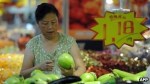
The move will affect about 850 employees, and the company will record an after-tax charge of about $160 million, or 10 cents per diluted share, in the third quarter, it said in a statement issued on Thursday.

Employees of Home Depot gather outside the company’s Xi’an store on Friday as the home-improvement retailer declared that it will close all its seven stores in China. [Photo/China Daily]

“Closing stores is always a difficult decision,” said Frank Blake, the company’s chairman and CEO. “We’ve learned a great deal over the last six years in China, and our new approach leverages that experience.”

The company said it will keep its two recently launched specialty outlets – a paint and flooring store and a home decoration shop – in Tianjin.

It is also in talks with several Chinese e-commerce websites to explore selling its products online, it said, a combination believed to be more adequate to Chinese customers’ needs and shopping preferences.

The Atlanta-based seller of building materials and home-improvement products will also keep its R&D team in China, as well as the 170 workers in its sourcing offices in Shanghai and Shenzhen, the statement said.

Home Depot has 2,249 retail stores in operation globally. Excluding the charges related to the store closures, Home Depot expects its fiscal 2012 diluted earnings per share to rise 19 percent to $2.95 for the year.

The company’s success story in the global market did not translate well in China, where the do-it-yourself home decoration-retailing concept has failed to inspire Chinese homeowners, industry analysts said.

The US company acquired a local peer, The Home Way, in 2006 and took over its 12 outlets in China. However, it has closed five outlets since 2009. The company has also replaced three top executives since its establishment in the country, a move that did not alter its sales decline.

Though specialized home-improvement retail is an upcoming trend, Home Depot arrived in China too early, at a time when the country’s decoration culture and consumption behaviors were not ready for the concept, said Chen Lei, a retail analyst at China Galaxy Securities. Despite the construction boom, the low labor costs made the DIY decoration concept irrelevant, he said.

Chinese homeowners rarely paint houses or lay out wooden floors themselves. Rather, they prefer to hire decoration companies, which often find products with more competitive prices from local building material stores, Chen said.

In addition, the company’s strengths in the United States, including its lower prices due to its global sourcing channels, have been diluted in China.

“You can always find local brands that are cheaper, and consumers in various regions have very different preferences,” Chen said. “Winning the market through a price war is not going to work for a foreign retailer in China.””

via Home Depot closes stores as it shifts focus |Companies |chinadaily.com.cn.

09/08/2012

* China inflation rate dips to a 30-month low in July

BBC News: “China’s inflation dipped to a 30-month low in July, giving policymakers a bigger cushion to boost stimulus measures to spur economic growth.

Consumer prices rose by 1.8% in July, from a year earlier. That was down from a 2.2% growth rate in June and a 3% rise in May.

China has been looking to spur domestic consumption amid a slowing global demand for its exports.

China’s economy grew at its slowest pace in three years in second quarter.

The drop in prices of pork and meat and poultry products, which fell by 18.7% and 6.1% from a year earlier respectively, were the key drivers of the slowdown in the rate of inflation.

China’s economy grew at an annual rate of 7.6% in the April to June period, down from an 8.1% expansion in the previous three months.

There are fears that growth in the world’s second-largest economy may slow further in the coming months.

As a result, Beijing has taken various measures to spur growth.”

via BBC News – China inflation rate dips to a 30-month low in July.

06/08/2012

* Chinese Consumer Products Get More Competitive

WSJ: “Gone are the days when big multinationals in China could easily dominate every consumer segment from toothpaste to laundry detergent.

For years, companies such as Procter & Gamble Co. PG mainly had to worry about counterfeits, as their brands, such as Crest, were the hot items for the newly expanding consumer market.

That isn’t always the case anymore.

Take for instance a Chinese herbal toothpaste for whitening and sensitive gums. It sells for the equivalent of about $8.60, roughly double the price of Crest 3D White Vivid, one of P&G’s pricier brands. Yet the herbal toothpaste’s market share in China grew to 8.8% in 2011 from 1.1% five years ago, according to market research firm Euromonitor International. Over that same period, P&G’s market share in the toothpaste category fell to 19.7% from 20.8%. Toothpaste market share in China for Unilever NV, which sells the Zhonghua brand there, fell to 9.9% from 12%, according to Euromonitor. (In other markets, Unilever produces Close Up and Signal brand toothpastes.)

Industry insiders say losses of a point or two are small enough in the short term for foreign companies to manage. But the Chinese brand, made by Yunnan Baiyao Group Co., one of many local competitors gaining market share at the expense of foreign giants, is a sign of a changing consumer environment, some people say.

“P&G and Unilever will have to fight harder for shelf space and fight harder to differentiate from domestic brands that are now offering a wider range of products and features,” said Ben Cavender, a senior analyst at China Market Research Group.

Chinese companies like Yunnan Baiyao are gaining as they sharpen their branding.”

via Chinese Consumer Products Get More Competitive – WSJ.com.

24/06/2012

* Ikea Applies for Big Indian Investment

WSJ: “Swedish housewares giant IKEA Group asked India for permission to invest €1.5 billion ($1.9 billion) in the country to set up 25 retail stores in coming years, a commitment that provides some relief for New Delhi policy makers who have been trying to boost sagging foreign-investor sentiment.

IKEA’s foray into India, made possible by a policy change last year that allowed some retailers to own 100% of their Indian units, could help transform India’s largely unorganized, $500 billion retail sector. But the company will face significant challenges, including meeting the government’s mandate that it source 30% of inventory from local small-scale industries.

IKEA, which has 290 stores in 26 countries and is known for selling affordable, modern-looking furniture and housewares, said that if the Indian government approves its application it could have a significant effect on the country’s retail sector, “vastly improving availability of high-quality, low-price products not available in India.”

The company announced its decision after its chief executive, Mikael Ohlsson, met with Indian Commerce Minister Anand Sharma on Friday at a conference in St. Petersburg, Russia.”

via Ikea Applies for Big Indian Investment – WSJ.com.

See also: Consumerism grows in India

30/05/2012

* Tainted children’s clothes scandal in China

A finding of cancer-causing chemicals on children’s clothes sparked public fear yesterday, after a report aired on national state broadcaster China Central Television(CCTV).

The station’s Weekly Quality Report investigative programme carried the report, claiming that a recent Beijing Consumer Association test of 63 samples of children’s clothes sold on the mainland revealed that nearly a third failed to meet quality and safety standards.

The association said that problems included excessive levels of formaldehyde and other carcinogenic chemicals.

The investigation began after consumers started complaining that their children had developed skin rashes after wearing the clothes.

From China Daily Mail blogTainted children’s clothes scandal in China.

Law of Unintended Consequences

continuously updated blog about China & India

ChiaHou's Book Reviews

continuously updated blog about China & India

What's wrong with the world; and its economy

continuously updated blog about China & India