Archive for ‘Steel’

12/04/2020

Covid-19 lockdowns brought blue skies back to China, but don’t expect them to last

  • Between January 20 and April 4, PM2.5 levels across the country fell by more than 18 per cent, according to the environment ministry
  • But observers say that as soon as the nation’s factories and roads get back to normal, so too will the air pollution levels
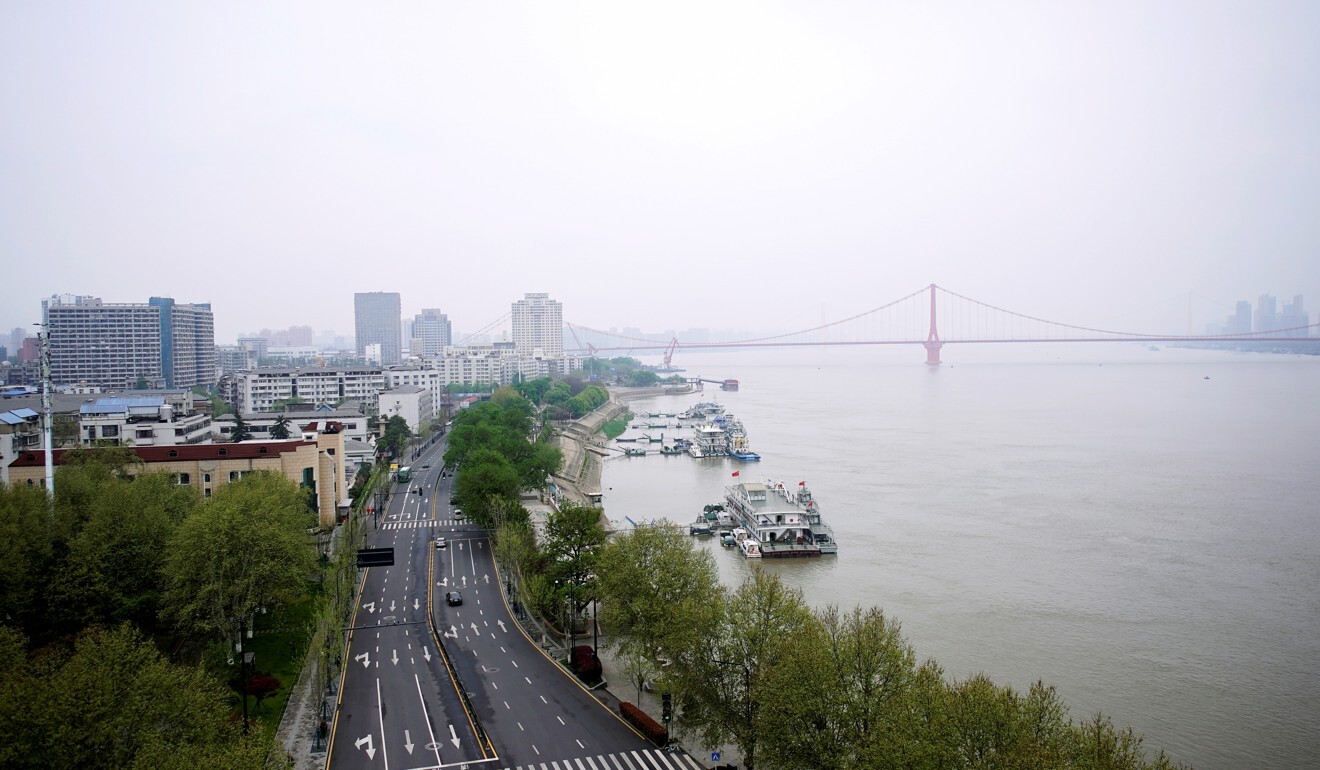
Blue skies were an unexpected upside of locking down cities and halting industrial production across China. Photo: AFP
China’s air quality has improved dramatically in recent weeks as a result of the widespread city lockdowns and strict travel restrictions introduced to contain the

coronavirus epidemic

. But experts say the blue skies could rapidly disappear as factories and roads reopen under a government stimulus plan to breathe new life into a stalled economy.

According to the Ministry of Ecology and Environment, between January 20 and April 4 the average concentration of PM2.5 – the tiny particles that pose the biggest risk to health – fell by 18.4 per cent from the same period of last year.
Meanwhile, the average number of days with good air quality – determined as when the air pollution index falls below 100 – rose by 7.5 per cent, it said.

Satellite images released by Nasa and the European Space Agency showed a dramatic drop in nitrogen dioxide emissions in major Chinese cities in the first two months of 2020, compared with a year earlier.

According to Nasa, the changes in Wuhan – the central China city at the epicentre of the initial coronavirus outbreak – were particularly striking, while nitrogen dioxide levels across the whole of eastern and central China were 10 to 30 per cent lower than normal.

The region is home to hundreds of factories, supplying everything from steel and car parts to microchips. Wuhan, which has a population of 11 million, was placed under lockdown on January 23, but those restrictions were lifted on  Wednesday
.
Air pollution is likely to return to China’s cities once the lockdowns are lifted. Photo: Reuters
Nitrogen dioxide is produced by cars, power plants and other industrial facilities and is thought to exacerbate respiratory illnesses such as asthma.

The space agency said the decline in air pollution levels coincided with the restrictions imposed on transport and business activities.

That was consistent with official data from China’s National Development and Reform Commission, which recorded a 25 per cent fall in road freight volume and a 14 per cent decline in the consumption of oil products between January and February.

Guangzhou cases prompt shutdown in ‘Little Africa’ trading hub

8 Apr 2020

Liu Qian, a senior climate campaigner for Greenpeace based in Beijing, said the restrictions on industry and travel were the primary reasons for the improvement in air quality.

According to official data, in February, the concentrations of PM2.5, nitrogen dioxide and sulphur dioxide – a toxic gas that comes mostly from industrial burning of coal and other fossil fuels – all fell, by 27 per cent, 28 per cent and 23 per cent, respectively.

“The causes of air pollution are complicated, but the suspension of industrial activity and a drop in public transport use will have helped to reduce levels,” Liu said.

As the epicentre of the Covid-19 pandemic has shifted to the United States and

Europe

, human and industrial activity in China is gradually picking back up, and so is air pollution.

Lauri Myllyvirta, lead analyst with the Centre for Research on Energy and Clean Air in Helsinki, said that levels of nitrogen dioxide pollution, measured both by Nasa satellites and official stations in China, started inching back up in the middle of March and had returned to normal levels by the end of the month.

That coincided with the centre’s findings – published on Carbon Brief, a British website on climate change – that coal consumption at power plants and oil refineries across China returned to their normal levels in the fourth week of March.

How the Wuhan experience could help coronavirus battle in US and Europe

10 Apr 2020

Ma Jun, director of the Institute of Public & Environmental Affairs, a Beijing-based charity, said a stimulus plan to kick-start the economy would have a significant impact on air pollution.

“Once industrial production is fully resumed, so are the emission levels,” he said. “Unless another outbreak happens and triggers another lockdown, which would be terrible, the improvement achieved under the pandemic is unstable and won’t last long.”

After the 2008 financial crisis, Beijing launched a 4 trillion yuan (US$567.6 billion) stimulus package that included massive infrastructure investment, but also did huge damage to the environment. In the years that followed, air pollution rose to record highs and sparked a public backlash.

Even before the Covid-19 outbreak, China’s economy was slowing – it grew by 6.1 per cent in 2019, its slowest for 29 years – and concerns are now growing that policymakers will go all out to revive it.
“Local governments have been under huge pressure since last year, and there are fears that environmental regulations will be sidelined [in the push to boost economic output],” Ma said.
But Beijing had the opportunity to get it right this time by investing more in green infrastructure projects rather than high-carbon projects, he said.
“A balance between economic development and environmental protection is key to achieving a green recovery, and that is what China needs.”
Source: SCMP
10/04/2020

China factory gate deflation deepens as coronavirus paralyses global economy

BEIJING (Reuters) – China’s factory gate prices fell the most in five months in March, with deflation deepening and set to worsen in coming months as the economic damage wrought by the coronavirus outbreak at home and worldwide shuts down many countries.

The world’s second-largest economy is trying to restart its engines after weeks of near paralysis to contain the pandemic that had severely restricted business activity, flow of goods and the daily life of people.

Friday’s data from the National Bureau of Statistics suggested a durable recovery was some way off, with China’s producer price index (PPI) falling 1.5% from a year earlier, the biggest decline since October last year. It compared with a median forecast of a 1.1% fall tipped by a Reuters poll of analysts and a 0.4% drop in February.

Headline consumer inflation also eased somewhat last month, partly led by government control measures, while core prices remained benign, leaving more room for monetary easing, some analysts said.

The overall decline in the factory gate gauge was exacerbated by a slump in global oil and commodities prices, which filtered through to crude oil, steel and non-ferrous metal industries, the statistics bureau said in a statement accompanying the data.

“The issue of having more supply than demand, and persistently low oil prices, will intensify deflationary pressures,” said Yang Yewei, a Beijing-based analyst with Southwest Securities.

“Work resumptions on the production side are faster than the repair in demand. Downstream demand is recovering slowly and still remains weak,” he said.

The oil and gas extraction sector had the biggest year-on-year price fall of 21.7%, among the 40 major industrial sectors surveyed, deteriorating sharply from a 0.4% drop in the previous month.

The stringent travel and transport curbs have now been lifted across much of the country including Wuhan, the epicentre of the outbreak where the virus first emerged in late 2019. So far the virus has killed more than 3,300 and infected over 81,000 people in the country.

Analysts expect a deep first-quarter economic contraction in China and have grown increasingly pessimistic about the country’s prospects for 2020 due to the pandemic’s sweeping global impact.

Many economists and policymakers are forecasting a steep global recession this year as numerous countries are forced into lockdowns to contain the spread of the coronavirus, severely curtailing business activity in a major blow to jobs and incomes.

Worldwide, the virus has killed around 95,000 people and infected more than 1.5 million. Policymakers globally have responded to the crisis by launching an unprecedented package of stimulus measures, injecting trillions of dollars to backstop their economies that have been brought to a virtual standstill.

Beijing has also rolled out a series of fiscal and monetary support steps, and sources have told Reuters that policymakers are readying more stimulus in the coming months to stabilise growth and prevent mass unemployment.

China’s consumer prices rose 4.3% from a year earlier in March, compared with a 4.8% gain tipped by a Reuters poll and a 5.2% increase in February, as logistics and transport conditions improved and government price control measures kicked in.

But food prices still rose over 18% from a year earlier, led by a 116.4% jump in pork prices, the data showed. The virus outbreak has pushed up prices of some food items, such as pork and vegetables.

Core inflation – which excludes food and energy prices – remained benign last month at 1.2%,but it still edged up from 1% in February.

Source: Reuters

08/04/2020

Internet giant Tencent pledges to invest in Wuhan as city emerges from coronavirus lockdown

  • Wuhan, where the first cases of the novel coronavirus were detected, is ending a 76-day lockdown
  • A day before the lockdown was fully lifted, Tencent announces a slew of initiatives focused on helping to revive the digital industry in the city
Passengers leaving Wuhan city are pictured at the Hankou Railway Station in Wuhan city, central China's Hubei province, on Wednesday morning, April 08, 2020. Photo: SCMP/Simon Song
Passengers leaving Wuhan city are pictured at the Hankou Railway Station in Wuhan city, central China’s Hubei province, on Wednesday morning, April 08, 2020. Photo: SCMP/Simon Song
A day before China lifted a months-long lockdown of Wuhan city, the initial epicentre of the coronavirus pandemic, Chinese internet giant Tencent Holdings pledged to invest in digital government, online education and artificial intelligence (AI) in the city, among other fields.
“During the epidemic, Tencent has been supporting Hubei and Wuhan’s fight against the virus through funds and technology,” the company best known for its gaming business said in a statement posted on Tuesday on WeChat. “In the future, we will also fully support Wuhan’s post-pandemic reconstruction and continue to support the development of Wuhan’s digital industry.”
China’s major tech companies have played a big role in the fight against the coronavirus, and are now playing their part in the economic recovery of Wuhan and other areas that have suffered under extended travel restrictions and business closures.
Last week, China’s biggest e-commerce services providers Alibaba Group Holding
JD.com

and Pinduoduo each announced their own initiatives to help revive sales of farm goods from Hubei as the province emerges from its months-long lockdown.

Popular mobile payments app Alipay also created a dedicated section for Wuhan merchants to allow users to buy from merchants in the city, and offered loans to small local merchants in need of financial support, according to an Alipay statement. Alipay is operated by Ant Financial, an affiliate of Alibaba, which owns the South China Morning Post.
How tech has helped China in its public health battle with coronavirus
23 Mar 2020

Wuhan, an industrial powerhouse for the steel, semiconductors and automotive sectors, is emerging from an unprecedented lockdown which began on January 23 and prevented people from moving in and out of the city.

Since restrictions began easing gradually in late March, business activity has shown signs of recovery: Tencent’s mobile payment platform WeChat Pay recorded a 162 per cent increase in offline transactions in a 10-day period from March 25, compared to the same period the previous month, according to a separate statement by Tencent on Wednesday.

Searches for “work resumption certificates” – which businesses need to submit to local authorities to prove their staff can safely restart work – also increased 320 per cent on Baidu, China’s biggest search engine, in the past month, Baidu said in a report on Wednesday.

Tencent declined to provide specific details regarding the size of its latest investment in Wuhan or a timeline for its implementation, but said in the statement that it will involve closer cooperation with city authorities in the areas of digital government, education, smart mobility, AI and cybersecurity to help the city with its digital industries.

Among these initiatives, it will push ahead with a plan to build a headquarters focusing on digital industries in Wuhan, specifically digitalisation for the government and smart city initiatives.

It will also establish a base in Wuhan for its online education initiatives, set up an AI lab and cybersecurity academy and build a school focusing on smart mobility in collaboration with Chinese carmaker Dongfeng Motor Corporation, the company said in the statement.

Source: SCMP

24/05/2019

A pollution crackdown compounds slowdown woes in China’s heartland

ANYANG/SANGPO, China (Reuters) – For years, China’s industrial heartland has been cloaked in smog, its waterways choked with pollution pumped from enormous clusters of factories churning out the mountains of cement and steel needed to build the Chinese economy.

Aiming to tackle what has become a huge public health problem, the authorities have cracked down on polluting industries, targeting provinces like Henan, which has a population of 100 million people and hundreds of factory towns.
According to interviews with factory and business owners, and consumers and workers across Henan, that crackdown – conducted with often heavy-handed local enforcement – is crippling the economies of towns and cities that depend on polluting industries.
Manufacturers across Henan have been particularly hard hit by the new environmental regulations, compounding the pressures the province faces from China’s slowing economy and a grinding trade war with the United States.
It also highlights the trade-off China faces between providing a healthier environment for its citizens and maintaining economic growth in a province whose climb from poverty has lagged that of coastal regions.
China does not provide statistics on the costs of the environmental crackdown, but it has said that short-term pain will lead to long-term growth through an economic “upgrade”.
The information office of the State Council, China’s cabinet, did not respond to a faxed request for comment on the economic effects of the new restrictions.
It’s difficult to get a full picture of Henan’s economy from unreliable official figures, as it is for the whole country. Henan’s official growth rate was 7.6% in 2018, higher than the national rate and down 0.2 of a percentage point from 2017.

But the interviews conducted by Reuters across Henan suggest consumers are spending less, cities are struggling to retool their economies and the pollution crackdown is hurting businesses and employment.

STEEL TOWN PAIN

The steel-producing centre of Anyang, which has long had some of the worst air in China, is one place that has been hit hard by the anti-pollution campaign.

The city of more than 5 million people, dominated by the infrastructure and insignia of the state-owned Anyang Iron and Steel Group, has forced local industry to upgrade equipment and curb pollution, and shut down companies that were unwilling or unable to comply.

Li Huifeng, president of Baoshun High-Tech Corporation, a coking coal company founded by his parents in 1983, said the cost of compliance had been painful.

Baoshun’s huge plant, built in the hills in the west of Anyang, was forced to implement production cuts last winter even though it had installed low-emissions equipment that exceeded required standards.

“Last year, business was really good but this year it is full of uncertainties,” said Li. He added that new efficiency guidelines were likely to result in the closure of many producers of coking coal, which is used in steel production.

Li Xianzhong, the owner of the Xinyuan Steel Mill in Anyang’s western outskirts, said he was facing curbs on production as well as spiralling costs because of the new environmental regulations.

According to industry estimates, environmental costs per tonne of steel produced have risen to around 150 yuan per tonne, up from less than 50 yuan per tonne when the war on pollution was launched in 2014.

“All this equipment needs a lot of capital, and after you’ve invested, the operation costs are also higher,” said Li. “If you don’t meet the standards, you aren’t allowed to operate.”

Near the sprawling Anyang steel plant in the city centre, residents and workers complained that the new environmental inspection rules had made it harder to make a living.

Many small workshops, which often use small metalworking furnaces, have also been targeted.

“Before we would just give them a pack of cigarettes or treat them to a meal and you’d then be fine for a year, but now it’s no use,” said a bicycle repairman, identifying himself by his surname Zhang, whose workshop near the plant was shut by inspectors.

Over the past years, Anyang has tried encouraging new and cleaner forms of economic growth. It has shut hundreds of small polluters in sectors like ceramics and cement, and tried to attract industries like solar panels and electric vehicles by offering incentives and building sprawling new industrial parks.

However, it has struggled to compete with numerous Chinese cities making similar bets, especially as China’s economy slows.

And the results of the anti-pollution efforts have been mixed.

Steel still accounts for more than half of Anyang’s economy – unchanged from a decade ago – and the environment is still bad. The taste of brimstone hangs in the air, and the fairy lights festooned on hundreds of cranes on the city’s skyline could only be dimly seen during a recent visit.
Part of the problem, according to Liu Bingjiang, who heads the Ministry of Ecology and Environment’s air pollution office, is that smog is also blowing in from neighbouring industrial regions, undermining local cleanup efforts.
“All these measures, all these plans are in place, but it still can’t solve the smog,” said Li, the steel mill owner.

SHUTTING DOWN THE BOOTMAKERS

The anti-pollution campaign is also hitting much smaller industrial centres.

Sangpo, a dusty two-street village in northeast Henan, used to live off scores of sheepskin processing factories cranking out winter boots modelled on UGG, the American brand with Australian roots.

While the industry was the main employer in the village, that came with a heavy environmental cost: treating the raw sheepskin consumed copious amounts of water and contaminated the local water supply.

Last July, the government moved to close most of the factories, sending dozens of police cars into Sangpo with sirens wailing to enforce the shutdown.

Government inspectors were installed to keep watch at each factory to ensure compliance with the order. Three factory owners were arrested for violating environmental regulations.

During a visit to Sangpo by Reuters, most factories were idle during what should have been peak production season. Hundreds of workers had left town in search of work elsewhere, leaving behind shuttered shopfronts and deserted roads.

“The village is at a tipping point,” said a former factory owner who only wanted to be identified by his surname, Ding. Most businesses were mostly “more dead than alive,” he added.

Before the factories were shut, the village of 6,500 people, mainly from the Hui Muslim minority, had been punching well above its weight.

It achieved national recognition as a thriving model of e-commerce, winning glowing write-ups in national newspapers after it was named in 2015 by the tech giant Alibaba as central China’s very first “Taobao village” – a designation for top rural sellers on the company’s internet retailing platform.

But that all changed last year as China’s pollution crackdown intensified. The top county-level official, factory owners said, held a town hall meeting and threatened to shut everyone down permanently. A deal was made for 19 of the 135 factories to remain.

Those wanting to stay open agreed to upgrade their businesses and invest in equipment to ensure they met water treatment standards. Factories that opted out were shut, their boilers and processing equipment destroyed.

The government of Mengzhou, which oversees Sangpo, declined to comment when reached by phone. But Mengzhou’s mayor said last year that the crackdown was necessary and in accordance with the popular will, according to a statement on the Mengzhou government website.

Sangpo village’s party chief declined to comment when reached via the Chinese messaging app WeChat. Calls to his cellphone went unanswered.

The county government’s plan is to corral remaining factories into a new industrial zone by the end of the year. But remaining business owners are worried about the slow pace of construction and fear they will be forced to shut.

Ding, the former factory owner, said business owners didn’t expect the crackdown – which has also discouraged lending from banks – to be so harsh.

“Everyone in the village was moaning and sighing but no one thought it would be this extreme,” Ding said.  “We are at our wits’ end.”

Source: Reuters

28/02/2017

China voices disquiet over new EU anti-dumping move on steel | Reuters

China expressed concerns on Tuesday over what it said was increasing protectionism after European Union regulators imposed new duties on steel imports from the world’s biggest producer.

The European Commission is seeking to protect EU steelmakers while avoiding tensions with Beijing, which it sees as a possible ally against protectionism and climate change.It imposed definitive anti-dumping duties of between 65.1 percent and 73.7 percent on imports of heavy plate non-alloy or other alloy steel from China on Tuesday, confirming provisional tariffs set in October.

This prompted a statement from China’s Commerce Ministry calling on Europe to treat Chinese companies “fairly and impartially”, adding it was ready to strengthen communication with the EU to tackle issues in the industry.

The companies named in the Commission’s ruling included Nanjing Iron & Steel Co Ltd, Minmetals Yingkou Medium Plate Co Ltd, Wuyang Iron and Steel Co Ltd [WYIAS.UL] and Wuyang New Heavy & Wide Steel Plate Co Ltd.

The EU executive said it acted after an investigation found Chinese companies to be heavily dumping their products on the EU market by selling them at well below half of the price on the producers’ home market.

“The Commission has responded forcefully and quickly to unfair competition, while at the same time ensuring that the rights of all interested parties have been protected,” the Commission said in a statement.

Eurofer, which represents the European steel sector, said the Commission had found clear evidence of dumping.”Tens of thousands of steel jobs have been lost in Europe over the past few years, and dumping, particularly demonstrably from China, has been one of the causes,” it said in a statement.

The EU has strengthened its policy against what it considers unfair competition for its steel industry, and said its new approach had allowed it to decide on trade sanctions more quickly than in the past.

It said on Tuesday it has 41 anti-dumping and anti-subsidy measures in place, 18 of which are on products from China.Also on Tuesday, Europe’s second highest court backed anti-dumping and anti-subsidy duties imposed by the EU nearly four years ago on imports of Chinese solar panels.

Source: China voices disquiet over new EU anti-dumping move on steel | Reuters

Tags:
12/01/2017

Pen power: China closer to ballpoint success – BBC News

It has sent rockets into space, produced millions of the world’s smartphones and built high-speed trains. But until now, one bit of manufacturing had perhaps unexpectedly eluded China: the ballpoint pen.

A year ago Premier Li Keqiang went on national television and bemoaned the failure of his country to produce a good quality version of this seemingly-simple implement.

Locally-made versions felt “rough” compared to those from Germany, Switzerland and Japan, Mr Li complained.

High precisionThe problem was not the body of the pen, but the tip – the tiny ball that dispenses ink as you write.It might be something we take for granted, but making them requires high-precision machinery and very hard, ultra-thin steel plates.

Put simply, China’s steel has not been good enough. And it has struggled to shape its pen tips accurately.

Li Keqiang has held a few pens in his time as Chinese Premier

Without that ability, China’s 3,000 penmakers have had to import this crucial component from abroad, costing the industry a reported 120m yuan ($17.3m; £14.3m) a year.

But according to People’s Daily, the state-owned Taiyuan Iron and Steel Co thinks it has cracked the problem, after five years of research.

The first batch of 2.3-millimetre ballpoint pen tips has recently rolled off its production lines, the paper says.

And once lab tests are completed, it’s expected China could phase out pen tip imports completely within two years.

Symbolic

On one level, whether China can make a great pen is not hugely important in the scheme of things.

High-tech and innovative manufacturing lie at the heart of the central government’s Made in China 2025 programme – designed to help domestic growth.

Relatively low-value items, like ballpoint pens, have not been a priority.

But the pen-conundrum is a symbolic one.

European firms have dominated the ballpoint pen industry at both the top and lower ends of the market

Despite producing more than half of the world’s crude iron and steel, China has still heavily relied on imports for high-grade steel.

It was a failing that Mr Li said highlighted the need to upgrade China’s manufacturing capabilities.

Different culture

“Historically, China has never been able to do precision engineering very well and the ballpoint pen is an example of that,” says Professor George Huang, head of the University of Hong Kong’s department of industrial and mechanical engineering.

“Its parts are so small and very precise, and it’s not easy to solve this problem”

Precision engineering is thriving only in certain sectors such as aerospace and defence where the government has placed a high priority, says Prof Huang.

Even when it comes to smartphones and computers, the high end computer chips are usually imported from Japan and Taiwan.

Prof Huang says that China lacks a culture of excellence in precision engineering.

He uses the Mandarin term “fuzao” which describes something that is not 100% solid or reliable.

“The culture is different from the Japanese and Germans,” he says, who are known for innovation in engineering.”We Chinese are supposed to be craftsmen, but somehow the spirit is not as good.”

Source: Pen power: China closer to ballpoint success – BBC News

24/08/2016

The perils of peace in China’s commodity industries | The Economist

WHEN the number of strikes plummets, something significant is usually going on. Strikes in China’s mining, iron and steel industries have fallen from more than 40 in January to four a month or fewer between May and August, according to China Labour Bulletin, an NGO based in Hong Kong. The explanation seems to be that China is backtracking on plans for the restructuring of state-owned firms in these sectors.

In February the government announced that it would redeploy 1.8m people, or 15% of the workforce, in the bloated and debt-laden coal, iron and steel industries. Just after that, a huge strike over unpaid wages by coal miners in the north-east dramatised the risks of trying to force through massive lay-offs and plant closures. So local officials have dragged their feet. According to the national planning authority, in the first seven months of the year provincial governments achieved only 38% of their full year’s targets for coal production cuts.

Fear of unrest is not the only explanation. Commodity prices have rebounded slightly this year, so local authorities are playing a game of chicken, keeping mines and factories open and hoping the neighbours will close theirs, so they themselves will be the ones to gain from higher prices. China itself is not benefiting.

Source: The perils of peace in China’s commodity industries | The Economist

29/07/2016

China Steels Its Resolve, But ‘Zombies’ Abound – China Real Time Report – WSJ

China’s steel industry is a test case for the nation’s ability to restructure overbuilt parts of the economy, and so far it’s not going very well.

Seven months into 2016, China has cut just 30% of the 45 million tons of steel capacity it has pledged to pare this year. And a Renmin University study found that more than half of China’s steel companies are “zombies.

”They define zombie firms as companies that have received below-market interest rates for two years running — a sign that they are being artificially propped up by their local governments or other government financing. Essentially, they are dependent on cheap financing to stay alive.Steel firms led the list, with 51.4% zombies in the sector, followed by the property sector, with 44.5% zombies and construction with 31.2%.

Renmin economists said local governments long nurtured sectors such as steel with the central government’s blessing. Now that the pressure is on to scale back, they tend to resist central government calls for cuts, given the impact on jobs, local economic growth and officials’ promotions, economists say.

An indication of that resistance is seen in recent data. Despite calls from Prime Minister Li Keqiang on down to turn off blast furnaces and shutter steel production lines, the industry posted record daily crude steel production in June, driven by easy money policies and a speculation-fueled upturn in the property market — which is itself suffering from overcapacity. Industry Vice Minister Fei Feng told reporters this week he didn’t expect a recent rebound in steel prices to last.

“For the purpose of political performance and maintaining stability, local governments continued to give blood to those zombie firms in various forms that were on the brink of bankruptcy,” the Renmin report said, adding that governments should interfere less in how companies operate and accelerate reform of state companies.

Officials have blamed this year’s slow progress on capacity trim on the lengthy negotiations required to allocate those cuts among China’s 28 provincial governments.

China, which accounts for half of global steel production, remains confident it will fulfill capacity cut targets for 2016, industry Vice Minister Feng told reporters, adding that the reductions so far this year are in line with expectations.

In all, China has vowed to cut up to 150 million tons of extraneous steel production over the next five years. Even that goal targets only 10% of the nation’s excess steel capacity, which is currently around 30%, according to industry analysts. This comes as rising exports fuel tension with overseas companies and labor groups alleging that China is selling steel at prices below its cost of production.

Beijing’s counter argument is a bit of a circular one: The problem isn’t that China is making too much steel, but that global demand is inadequate.

A disproportionate number of steelmakers are state-owned enterprises, a group that accounts for some 55% of China’s corporate debt but only produces 22% of economic output, according to International Monetary Fund data. China’s corporate debt hit approximately 145% of gross domestic product in 2015, up from less than 100% in 2007, according to the International Monetary Fund, a level it characterized as “high by any measure.

”Across all sectors, zombie firms make up 7.5% of the 800,000 industrial companies between 2005 and 2013 that Renmin studied, down from a peak of about 30% in 2000 shortly before China embarked on its last serious reform of the state sector. President Xi Jinping has called for state companies to remain a core part of China’s economy.

As companies age, they are increasingly likely to become zombies. About 30% of firms founded more than three decades ago qualify as zombie firms, according to Renmin’s research, compared with just 3% among firms with less than five years’ history.

Source: China Steels Its Resolve, But ‘Zombies’ Abound – China Real Time Report – WSJ

Law of Unintended Consequences

continuously updated blog about China & India

ChiaHou's Book Reviews

continuously updated blog about China & India

What's wrong with the world; and its economy

continuously updated blog about China & India