21/09/2019
BAKU, Sept. 21 (Xinhua) — China and Azerbaijan enjoy promising prospects in co-building the Belt and Road, Chinese Ambassador to Azerbaijan Guo Min said in a recent exclusive interview with Xinhua.
With a sound and steady development of bilateral relations, Guo praised the advantages of the China-proposed Belt and Road Initiative (BRI) for both sides, emphasizing Azerbaijan’s full support for and involvement in the construction of the Belt and Road.
She said Azerbaijan sees the development of relationship with China as a diplomatic priority. “China and Azerbaijan have exchanged frequent high-level visits since the beginning of this year, with mutual political trust deepening even further.”
Azerbaijani President Ilham Aliyev attended the second Belt and Road Forum for International Cooperation held in Beijing in April, said Guo, adding “the leaders of the two countries reached important consensus to further develop bilateral relations and practical cooperation in various fields.”
“Cooperation in trade, energy, transportation, humanities and other fields has yielded fruits,” she said, noting bilateral trade reached 1.5 billion U.S. dollars from January to August, an increase of 104 percent from the same period last year.
“In recent years, the two nations have been promoting cooperation in a number of areas, including education, culture, health, sports and tourism on a continuous basis,” said the ambassador.
The two countries “have exchanged the visits of culture and art figures and held a wide range of film festivals, art exhibitions and other activities to actively promote unity, mutual understanding and friendly exchanges between the people,” according to Guo.
“At the next stage, the two nations should capitalize on the existing potential and focus on more points of interest,” the ambassador said.
She described the deep traditional friendship, high-level mutual political trust and the highly complementary practical cooperation as key foundations and effective guarantees for the stability and improvement of bilateral relations.
“China is willing to work together with Azerbaijan to push Sino-Azerbaijani friendship and cooperation to a new level and benefit the two countries and their peoples,” the ambassador added.
Source: Xinhua
Posted in art exhibitions, Azerbaijan, Azerbaijani President, Belt and Road Forum for International Cooperation (BRF), Belt and Road Initiative (BRI), bilateral trade, China alert, Chinese ambassador, Chinese Ambassador to Azerbaijan, co-building, cooperation, Culture, education, energy, enjoy, film festivals, fruits, health, humanities, Ilham Aliyev, promising prospects, Sino-Azerbaijani friendship and cooperation, sports, Tourism, Trade, transportation, Uncategorized, Xinhua, Xinhua News Agency |
Leave a Comment »
10/09/2019
NANNING, Sept. 9 (Xinhua) — South China’s Guangxi Zhuang Autonomous Region on Monday pledged to enhance cooperation with the Association of Southeast Asian Nations (ASEAN) on artificial intelligence (AI).
Chen Wu, chairman of the regional government, said at the First China-ASEAN AI Summit that Guangxi will actively promote technical cooperation, trade, investment and industrial exchange in the AI sector with the ASEAN countries.
Toward this end, the region will speed up the construction of platforms for infrastructure, information sharing and technical cooperation, among others, Chen said.
Guangxi, which boasts both sea and overland links with ASEAN, is building the China-ASEAN Information Harbour to boost digital cooperation with Southeast Asia.
“The summit has sounded the clarion call for the development of AI and big data industry in Guangxi,” said Wang Jingjing, Guangxi regional director of the Chinese AI firm iFlytek.
Hailing the region’s policy and geographical advantages on ASEAN cooperation, Wang said iFlytek hopes to set up an institute on ASEAN languages in Guangxi to facilitate communication between China and ASEAN countries
Source: Xinhua
Posted in AI, AI industry, AI sector, ASEAN, Association of Southeast Asian Nations (ASEAN), big data industry, China's border region, China-ASEAN Information Harbour, Chinese AI firm, clarion call, cooperation, digital cooperation, First China-ASEAN AI Summit, Guangxi, Guangxi Zhuang Autonomous Region, iFlytek, industrial exchange, Investment, overland links, promote, sea links, Southeast Asia, summit, technical cooperation, Trade, Uncategorized |
Leave a Comment »
03/09/2019
Chinese Vice President Wang Qishan meets with Peruvian Vice President Mercedes Araoz in Beijing, capital of China, Sept. 2, 2019. (Xinhua/Zhang Ling)
BEIJING, Sept. 2 (Xinhua) — Chinese Vice President Wang Qishan met here Monday with Peruvian Vice President Mercedes Araoz, who is in Beijing to attend relevant activities of the Beijing Horticultural Expo.
Wang spoke highly of the current bilateral relationship, saying that China is willing to further advance mutual understanding and trust and deepen cooperation to push the relationship to a higher level.
Araoz congratulated China on the 70th anniversary of the founding of the People’s Republic of China, and said her country is ready to deepen cooperation with China in such areas as trade and economy, investment, agriculture, poverty relief, science, technology and culture.
Source: Xinhua
Posted in agriculture, Beijing, Beijing Horticultural Expo, Chinese Vice President Wang Qishan, Culture, economy, founding of the People's Republic of China (PRC), Investment, Mercedes Araoz, nation’s 70th anniversary, Peruvian Vice President, poverty relief, Science, Technology, Trade, Uncategorized |
Leave a Comment »
29/08/2019
Chinese President Xi Jinping meets with visiting Uzbek Prime Minister Abdulla Aripov at the Great Hall of the People in Beijing, capital of China, Aug. 28, 2019. (Xinhua/Yao Dawei)
BEIJING, Aug. 28 (Xinhua) — Chinese President Xi Jinping met with visiting Uzbek Prime Minister Abdulla Aripov here on Wednesday, calling on the two countries to jointly push forward the high-quality construction of the Belt and Road.
Xi asked Aripov to convey his sincere regards to Uzbek President Shavkat Mirziyoyev.
The key to the constant leap-forward development of China-Uzbekistan relations is that both sides always adhere to the spirit of good-neighborliness, mutual benefit and mutual assistance, according to Xi.
Xi stressed that he attaches great importance to the development of the China-Uzbekistan comprehensive strategic partnership, which is in line with the fundamental interests of the two countries and their peoples.
Hailing the achievements of the fifth meeting of the China-Uzbekistan intergovernmental committee of cooperation, Xi said that the cooperation goals set by the two sides will certainly be realized as long as the bilateral relationship stays on the right track.
Xi called on both countries to further promote the high-quality construction of the Belt and Road, enhance synergy between national development strategies, strengthen connectivity through cross-border roads and railways, expand cooperation in trade, investment, high and new technology, energy and other fields, as well as foster new highlight in people-to-people and cultural exchanges.
China is willing to increase imports of Uzbek quality agricultural products, Xi said, adding that Uzbekistan is welcome to attend the second China International Import Expo as guest of honor later this year.
In addition, Xi said that the two sides should work together to combat the “three evil forces” of terrorism, separatism and extremism, fight against drug trafficking and other transnational organized crimes.
The rejuvenation of the Chinese nation is to seek happiness for the Chinese people and will also benefit world peace and human progress, Xi said, stressing that China will absolutely not follow the old path of “a strong country must seek hegemony.”
China is ready to enhance coordination with Uzbekistan on international affairs, safeguard common interests of the two countries, uphold multilateralism and promote democracy in international relations, Xi said.
He also called on the two countries to work with other members of the Shanghai Cooperation Organization (SCO) to raise the awareness of a community with a shared future and lift cooperation in various fields, so as to promote further development of the SCO and benefit peoples of various countries in the region.
Aripov conveyed President Mirziyoyev’s sincere greetings and lofty respect to President Xi and his warm congratulations on the 70th anniversary of the founding of the People’s Republic of China.
President Mirziyoyev sincerely hopes China will achieve greater prosperity and early national rejuvenation under the leadership of President Xi, according to Aripov.
Calling China “the closest and most reliable neighbor and partner” of Uzbekistan, Aripov said that Uzbekistan will work with China to firmly implement the important consensus reached by the two heads of state.
Mirziyoyev has appointed a special agency to synergize development strategies with the Chinese side, actively promote cooperation with China on the construction of the Belt and Road, and expand people-to-people and cultural exchanges, according to Aripov.
Uzbekistan firmly supports China in safeguarding its sovereignty, security and unity, and will continue to actively work with China to combat the “three evil forces” of terrorism, separatism and extremism, said Aripov.
Aripov is paying an official visit to China from Tuesday to Thursday at the invitation of Chinese Premier Li Keqiang.
Source: Xinhua
Posted in Abdulla Aripov, Belt and Road construction, China alert, China International Import Expo, China International Import Expo (CIIE), China-Uzbekistan intergovernmental committee of cooperation, China-Uzbekistan relations, Chinese premier Li Keqiang, comprehensive strategic partnership, cross-border roads, drug trafficking, energy, extremism, founding of the People's Republic of China (PRC), good-neighborliness, hegemony, high and new technology, Investment, mutual assistance, mutual benefit, President Mirziyoyev, President Xi Jinping, railways, rejuvenation, separatism, Shanghai Cooperation Organization (SCO), Shavkat Mirziyoyev, terrorism, Trade, transnational organized crimes, Uncategorized, Uzbek President, Uzbek Prime Minister, Uzbek quality agricultural products, Uzbekistan |
Leave a Comment »
25/08/2019
- A recent joint exercise in Tajikistan is the latest example of Beijing’s growing security and economic interests in the former Soviet republic
- Analysts say Moscow may not be happy about China’s growing reach in the lawless, mountainous area and will be keeping an eye on the situation
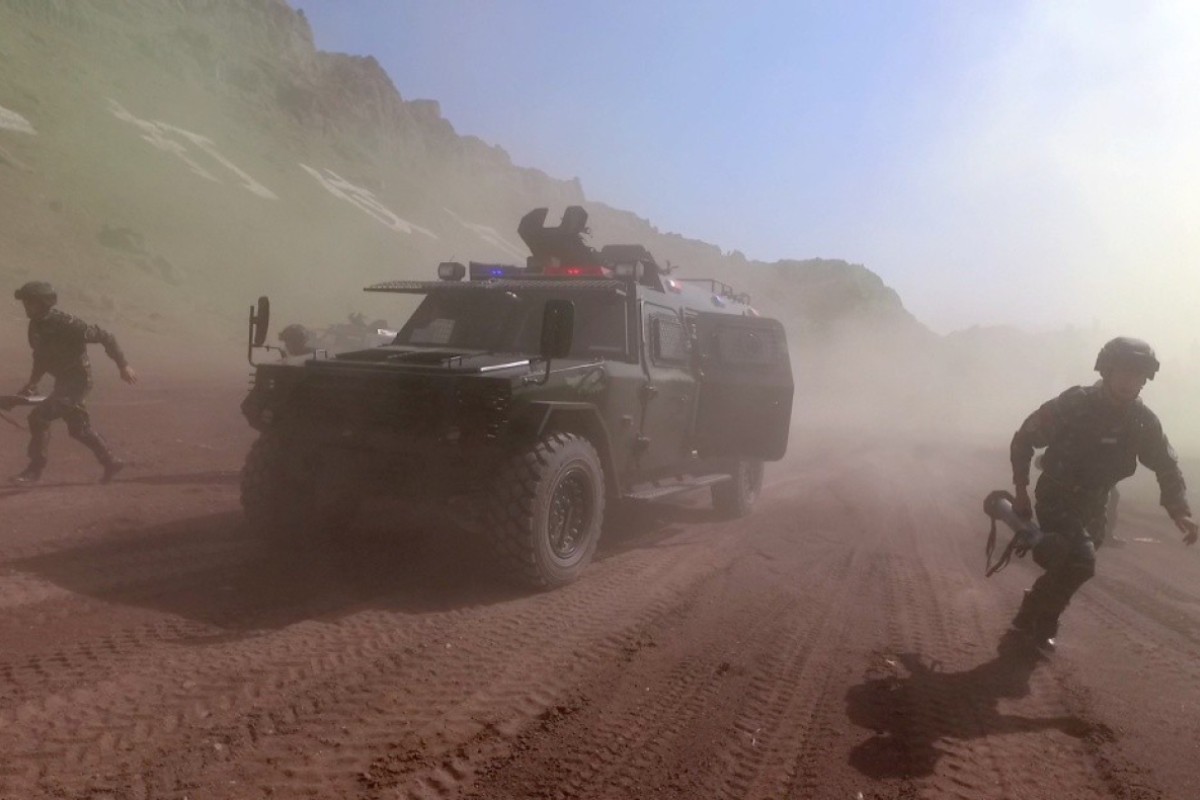
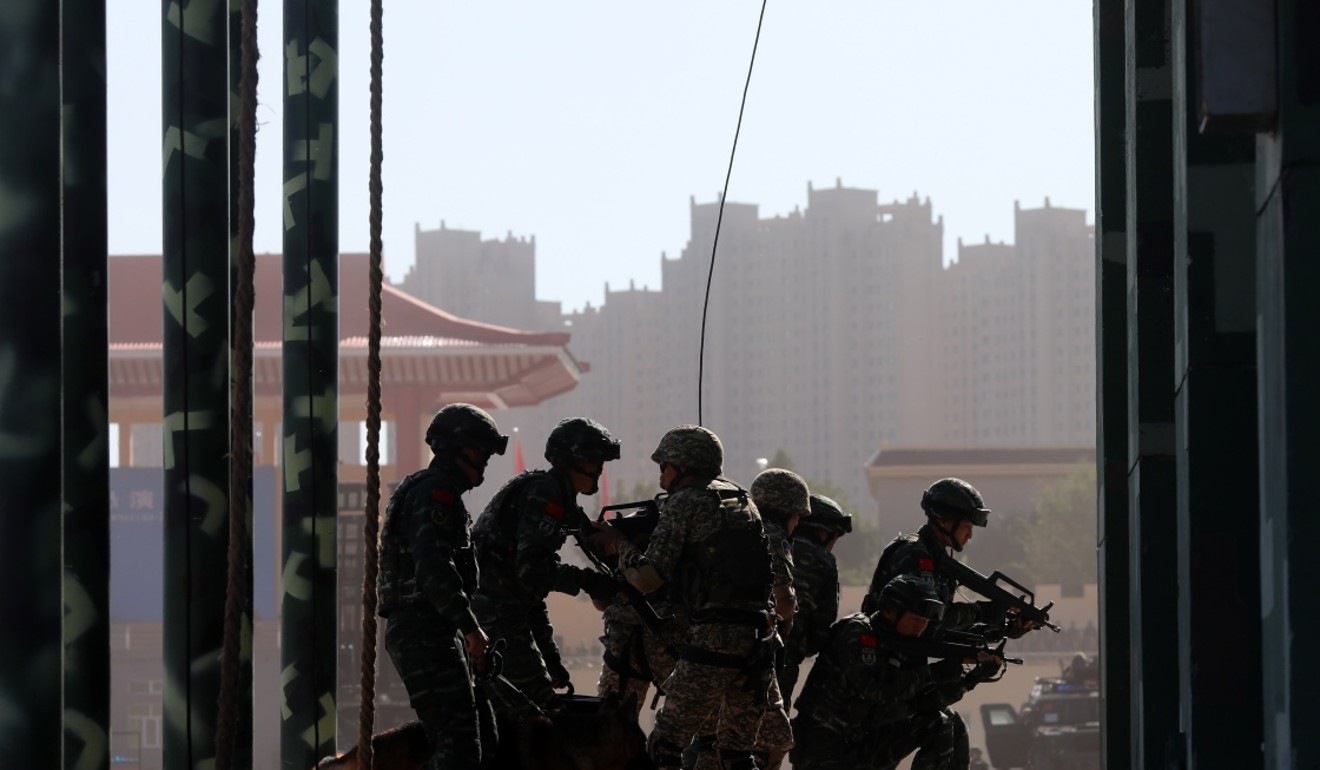
Chinese and Tajik troops completed a joint exercise earlier this month in the mountainous region of Gorno-Badakhshan. Photo: Xinhua
China is increasing its military and economic presence in parts of central Asia that Russia has traditionally considered its sphere of influence – a development some analysts believe could cause concern in Moscow.
While Russia’s influence remains strong in many former Soviet republics, China is steadily building up its military and economic influence in Tajikistan, particularly in the remote, mountainous areas on its western borders where central government authority is weak.
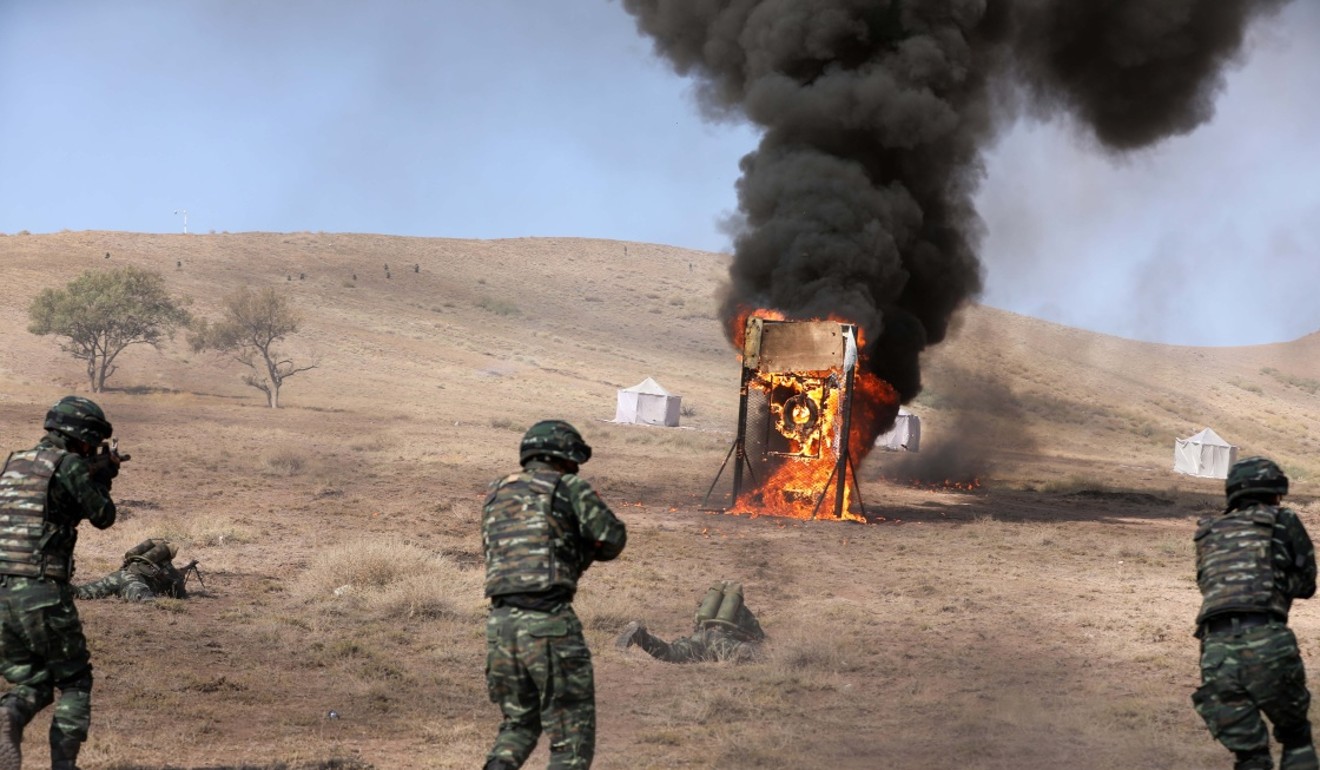
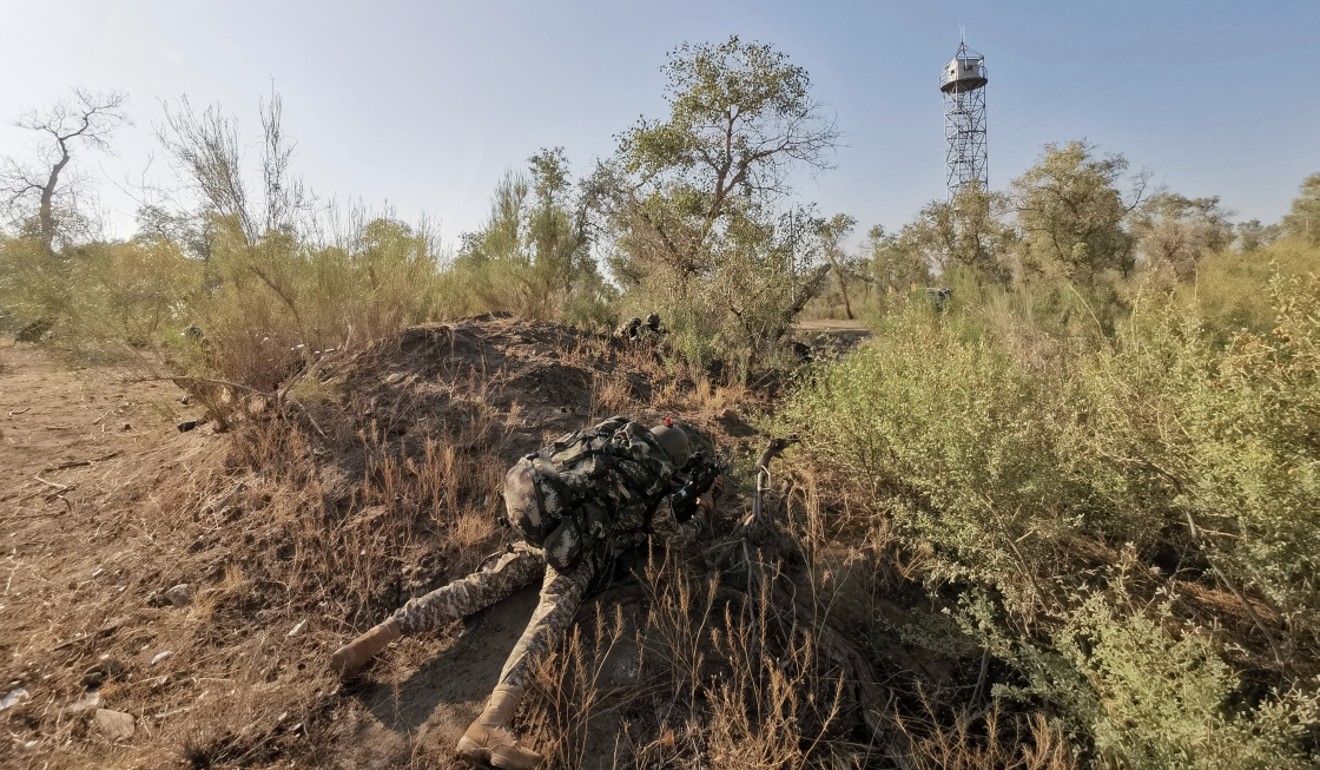
Chinese troops recently concluded a joint drill in eastern Tajikistan involving 1,200 troops from both countries.
The eight-day exercise that finished on August 13 was conducted in the autonomous Gorno-Badakhshan autonomous region, a sparsely populated territory in the high Pamir mountains, which borders China’s Xinjiang region and Afghanistan.
China has been increasing its security presence in the strategically sensitive region. Photo: Xinhua
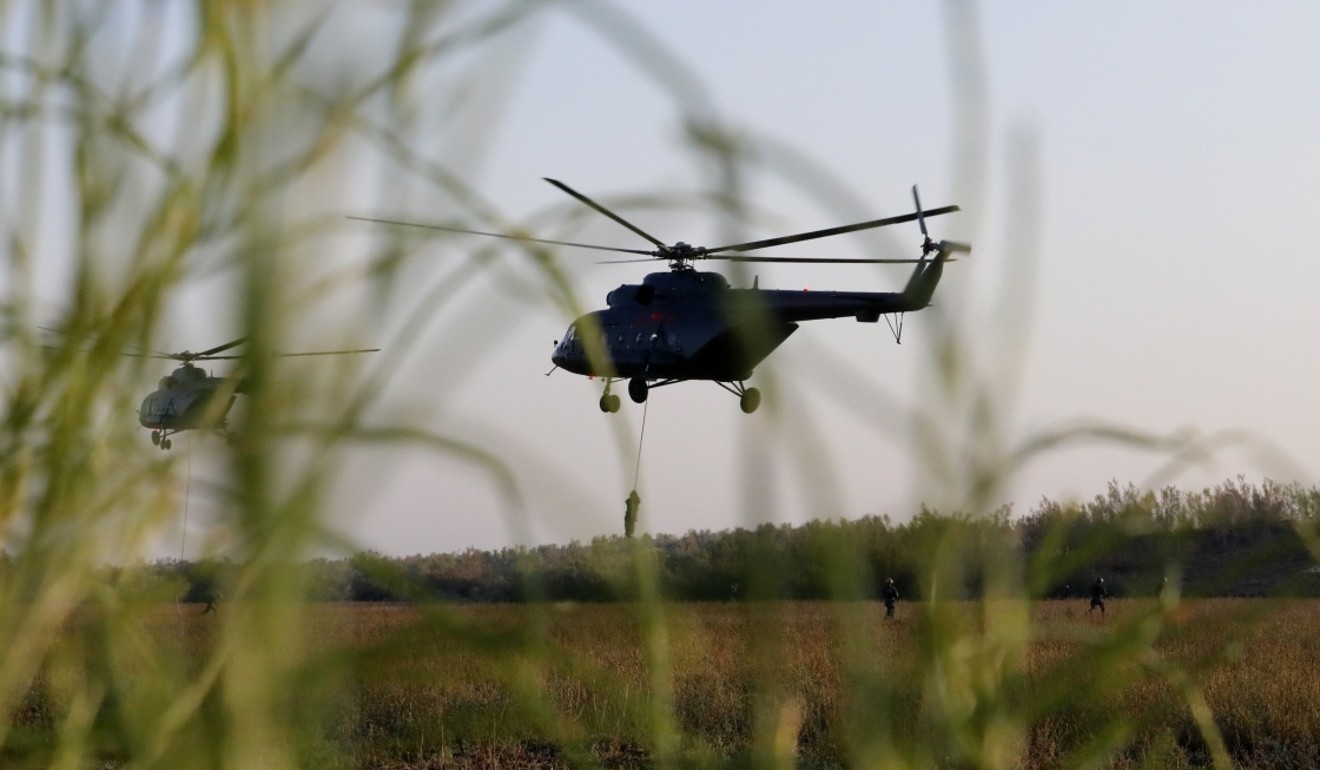
Although this year’s exercise involved fewer troops than the 10,000 involved in a previous drill three years ago, it tested the use of advanced aerial vehicles and ground reconnaissance technology to monitor the area.
The landlocked country is strategically important for China, which is worried that the porous borders will serve as an entry point for drugs and Islamic militants into Xinjiang, where its deradicalisation strategy has led to the detention of a million Muslim minorities in reeducation camps.
It also sits along the trade routes China hopes to develop under the Belt and Road Initiative – Beijing’s flagship plan to expand its global influence through infrastructure, trade and investment – but the area has long been plagued by lawlessness and outbreaks of violence.
The recent exercise tested aerial surveillance techniques. Photo: Xinhua
Artyom Lukin, a professor of international politics at Far Eastern Federal University in Vladivostok, said Russia was not happy about the deployment of Chinese forces in Tajikistan.
“Russia has traditionally considered Central Asia, including Tajikistan, as its sphere of political-military influence,” he said.
Observers said other Central Asian republics – such as Kazakhstan, Uzbekistan and Kyrgyzstan – are likely to stay within Moscow’s orbit, but China is steadily building closer security ties with Tajikistan.
In February, China’s defence ministry denied that it was building a base and stationing troops in the country, but defended its closer military cooperation with Tajikistan.
The recent training exercise was conducted in an area Russia has long seen as part of its sphere of influence. Photo: Xinhua
China has long-standing security interests in the country and in 2016 it agreed to finance 11 border outposts and a training centre for guards along the Afghan border.
This was part of a deal Beijing made through the Quadrilateral Cooperation and Coordination Mechanism – which also involves Pakistan, Afghanistan and Tajikistan – to strengthen cooperation in combating terrorism and improving security.
China has also overtaken Russia economically, becoming the largest foreign investor in Tajikistan in 2016, accounting for 30 per cent of Tajikistan’s total direct accumulated investments, state news agency Xinhua reported.
Banned Muslim political party blamed for deadly attack on tourists in Tajikistan
China’s direct investment in Tajikistan was worth US$95 million in 2017, according to the latest available figures. China has also grown to become the country’s third largest trading partner with bilateral trade reaching around US$1.5 billion in 2018.
A recent opinion piece published by the Russian state-owned news agency Sputnik suggested China may be “getting carried away” by its investments in the region.
The article suggested that China’s growing presence in the country could lead to a “partial loss” of Tajikistan’s sovereignty and argued that Beijing may want to take control of the border with Afghanistan.
China also has economic interests to protect. Photo: Xinhua
But Lukin said even though this growing involvement may be an irritant for Russia, the strategic partnership between China and Russia will remain strong.
The two countries remain the key players in the Shanghai Cooperation Organisation, an economic and security alliance that includes the Central Asian republics and India and Pakistan.
The two are also keen to cooperate more closely due to their tense relationship with the United States. This year Russian and Chinese armed forces have stepped up their cooperation, and last week used a UN Security Council debate to criticise the US for pulling out of the Intermediate-Range Nuclear Forces Treaty. Washington defended the move as necessary response to Beijing and Moscow’s build up of arms.
Why Chinese investors are struggling to gain a foothold in Tajikistan
Lukin said: “Moscow no doubt understands that in terms of security, Tajikistan’s border, adjacent to China’s Xinjiang and Afghanistan, is truly a vital concern for Beijing.
“The presence of Chinese troops could actually benefit Russia, because it will be China bearing the costs of policing Tajikistan’s mountainous border areas.”
Stephen Blank, a former professor at the US Army War College and a specialist in Eurasian security, said that while Russia has mostly stayed silent about China’s presence in Tajikistan, it was closely watching the situation.
“What happens in the long run depends on how far China goes to extend its military presence in Central Asia. And if it keeps extending, it may well provoke some expression of concern in Russia beyond the silence that has hitherto been the case,” Blank said.
Chinese troops could play an increasing role in policing the area in future. Photo: Xinhua
“[The recent drills] look like conventional war-fighting exercises as much as anti-terrorist operations and suggest that China may have bigger contingencies than anti-terrorism in mind.”
Mathieu Duchatel, director of the Asia programme at the Institut Montaigne, a French think tank, said both Russia and China share similar concerns about terrorism and drug trafficking in Central Asia.
He said Russia had not objected to the security pact with Pakistan, Afghanistan and Tajikistan because there are more important strategic priorities in China-Russia relations.
“Overall, Russia’s acceptance of a security role for China in Central Asia shows how Russia realistically adjusts to the changing balance of power with China, and is able to avoid a zero-sum game on issues where parallel efforts by China and Russia can serve Russian security interests,” he said.
Source: SCMP
Posted in aerial surveillance techniques, aerial vehicles, Afghan border, Afghanistan, backyard, Beijing, Belt and Road Initiative, Belt and Road Initiative (BRI), Central Asia, Central Asian, Central Asian republics, China alert, China-Russia relations, Chinese armed forces, combating terrorism, drug trafficking, former, French think tank, Gorno-Badakhshan, ground reconnaissance technology, improving security, increases, India alert, Infrastructure, Institut Montaigne, Intermediate-Range Nuclear Forces Treaty, Investment, Islamic militants, Kazakhstan, Kyrgyzstan, lawlessness, Moscow, Muslim minorities, outbreaks of violence, Pakistan, Pamir Mountains, presence, Quadrilateral Cooperation and Coordination Mechanism, reeducation camps, Russia, Russian armed forces, security and economic interests, Shanghai Cooperation Organisation (SCO), Soviet republic, Tajikistan, terrorism, Trade, UN Security Council debate, Uncategorized, United States, US Army War College, Uzbekistan, Washington, Xinjiang, zero-sum game |
Leave a Comment »
28/07/2019
- Chinese Foreign Minister Wang Yi wraps up tour of Brazil and Chile, as Colombian president heads for Beijing
- Ecuador president tells US Secretary of State Mike Pompeo ‘smaller countries pay when the big ones fight’
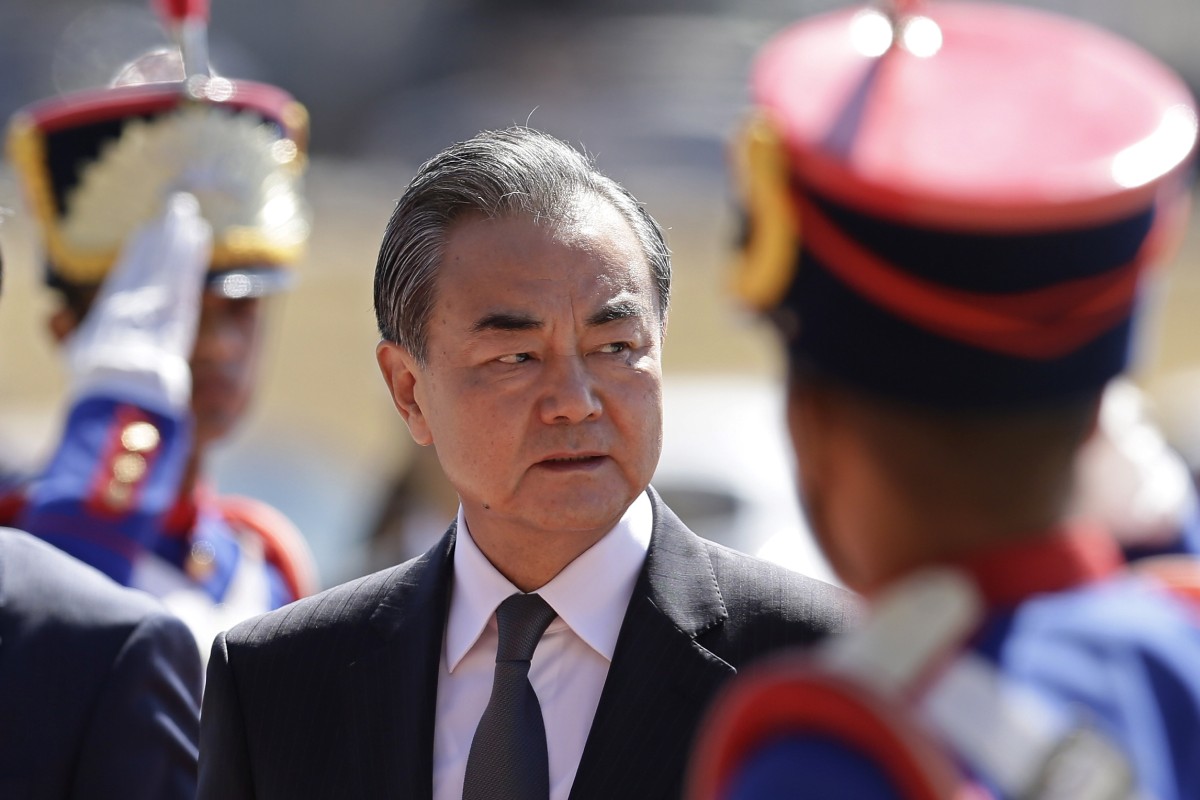
Chinese Foreign Minister Wang Yi is greeted by an honour guard as he arrives at the Itamaraty Palace for a meeting with his Brazilian counterpart Ernesto Araujo on Thursday. Photo: AP
Latin American countries are caught in the middle of a geopolitical tug of war between Beijing and Washington as China boosts its ties in the region in a bid to counterbalance the effects of its trade war with the US.
China’s Foreign Minister Wang Yi wraps up a tour of Latin America on Sunday which began last week in Brazil and ended with an official visit to Chile. He returns to Beijing on the same day Colombia’s President Ivan Duque Marquez arrives for a three-day state visit to China which will include a meeting with Chinese President Xi Jinping.
Wang was in Brazil for the latest summit of foreign ministers from the BRICS countries – an association of emerging countries made up of Brazil, Russia, India, China and South Africa – as well as the third China-Brazil foreign ministers’ comprehensive strategic dialogue with Brazilian Foreign Minister Ernesto Araujo.
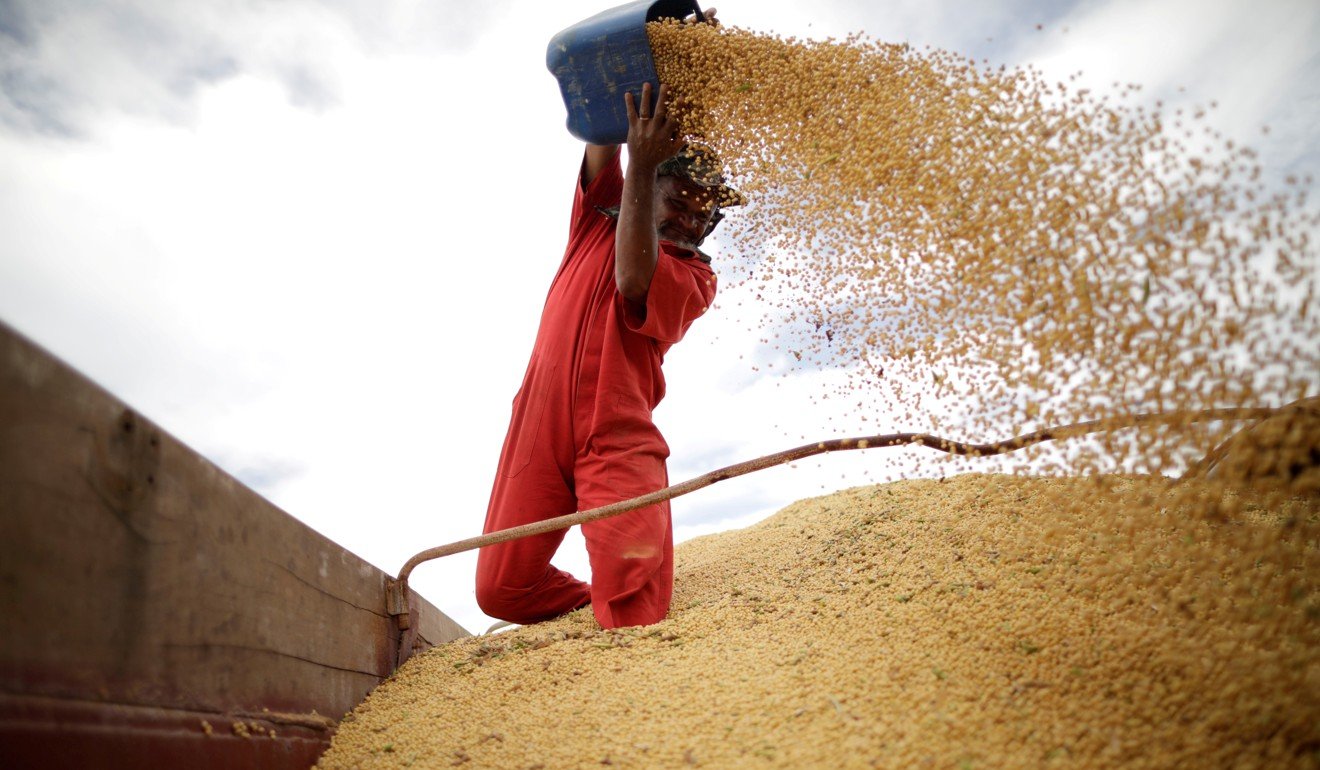
China has overtaken the US as Brazil’s largest trading partner, with Brazilian soybeans – one of the country’s biggest exports – and other agricultural products replacing American imports since the start of the US-China trade war a year ago.
Brazilian soybeans – one of the country’s biggest exports – and other farm products are being sold to China as a result of the trade war. Photo: Reuters
The growing importance of China to Brazil’s economy has created a difficult position for President Jair Bolsonaro, who accused Beijing of trying to buy Brazil during his election campaign, but changed tack on assuming office in January.
In March, Bolsonaro called China his country’s “main partner, politically as well as economically and commercially” and announced plans to travel to Beijing this year, a visit which was confirmed on Tuesday for late October.
China is now Latin America’s second largest trading partner with bilateral trade at US$307.4 billion, growing 18.9 per cent over the previous year, according to China’s ministry of commerce, in a relationship focused on commodity imports, including mining products like copper and energy, as well as soybeans and other agricultural goods.
While the US and China have tentatively agreed to resume talks in Shanghai next week, China and Latin American countries are likely to continue deepening their trade relations as production chains realign as a result of the trade war, according to Gustavo Oliveira, assistant professor of global and international studies at the University of California, Irvine.
“This means Chinese imports of Latin American agricultural and mineral commodities, and Latin American imports of Chinese manufactured products and hi-tech, might contribute to China’s ability to stand its ground against US pressure,” he said.
China in Latin America: partner or predator?
Oliveira said domestic contradictions in most Latin American countries complicated relations with China, as few leaders had the capacity to press or leverage China for much. “Unfortunately, therefore, most in this crop of Latin American leaders are basically placing themselves as junior partners or pawns in the geopolitical tug of war between the US and China.”
US Secretary of State Mike Pompeo put the pressure on Latin American countries over their relationship with China during his four-day tour of the region last weekend, when he visited Argentina, Ecuador, Mexico, and El Salvador.
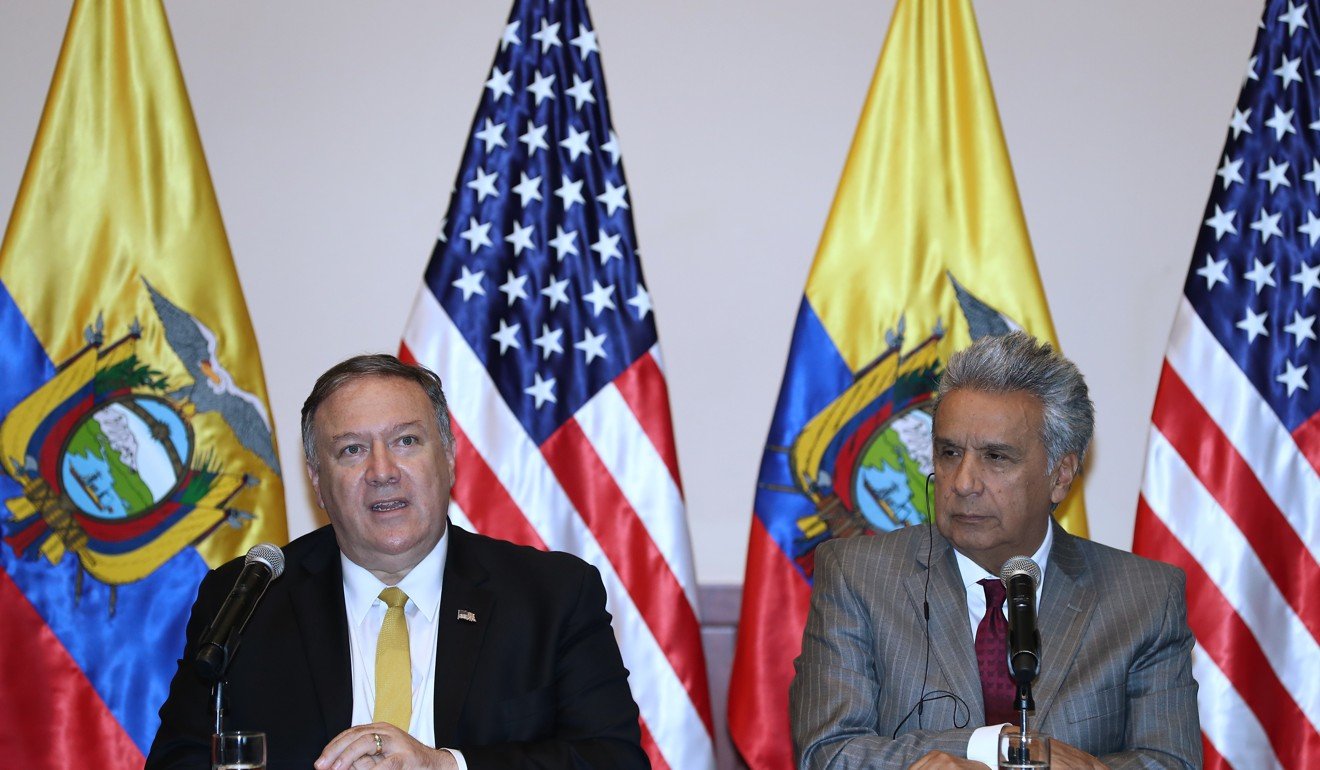
In a joint interview with Pompeo during the visit, Ecuador’s new President Lenin Moreno defended the country’s China ties, and urged Washington and Beijing to resolve their conflicts for the benefit of other nations in the region.
“We hope that the US and China, the greatest powers in the world now, will find agreement easily because, unfortunately, when the big ones are discussing or fighting and have conflicts, the ones that are paying for all of that are the smaller countries,” he said.
“Now, when two elephants fight, the ones who lose are the insects who are of course being crushed by the elephants in the attempt to evade them.”
US Secretary of State Mike Pompeo (left) and Ecuadorian President Lenin Moreno hold a joint press conference during Pompeo’s tour of Latin America on July 20. Photo: EPA-EFE
Pompeo blasted China’s role in the region during a previous tour of South America in April, when he singled out Beijing’s support for President Nicolas Maduro of Venezuela. Maduro is backed by Beijing, Russia and other allies, while the US and many European countries have supported opposition leader Juan Guaido as legitimate president since elections in January.
Speaking from Chile on that tour, Pompeo said Beijing’s calls for non-intervention in Venezuela were “hypocritical” and aimed at protecting Beijing’s investments in the country, as well as debts owed to China by Venezuela.
Pompeo also accused Beijing of “sowing discord” in the region through debt traps. “When China does business in places like Latin America, it often injects corrosive capital into the economic bloodstream, giving life to corruption and eroding good governance,” he said.
Professor Cui Shoujun of Renmin University in Beijing said Washington’s concerns about “debt trap diplomacy” in Latin America reflected concerns that China’s growing involvement in financing infrastructure and development projects would make the region more pro-China.
“China’s interests in Latin America go beyond raw materials extraction,” he said. “The biggest point of tension between the US and China in the region is perhaps that China presents an alternative model for development that is very different from the Western model.”
‘Mr Pompeo, you can stop’: China hits back over Latin America criticism
While the US was drumming up tensions about China across the world, Beijing was not openly retaliating but responding with investment and trade for global partners, said Kevin Gallagher, researcher on China-Latin America ties, and professor at Boston University.
“The US points fingers and makes angry speeches in the region as China cuts investment deals and helps address infrastructure needs,” he said.
“Latin American countries’ governments are rightly keeping their heads down on the broader geopolitical winds, and are getting down to business with their largest trading partner.”
Source: SCMP
Posted in Argentina, Beijing, Boston University, Brazil, Brics countries, Chile, China alert, Chinese foreign minister Wang Yi, Chinese President Xi Jinping, Colombian president, copper, Ecuador, Ecuador president, El Salvador, elephants, energy, Ernesto Araujo, European countries, grows, India alert, influence, insects, Itamaraty Palace, Ivan Duque Marquez, Latin America, Mexico, Mike Pompeo, mining products, President Lenin Moreno, President Nicolas Maduro, Renmin University, Russia, Shanghai, South Africa, soybeans, Trade, tussle, Uncategorized, University of California, Irvine, US, US Secretary of State, Venezuela, Washington |
Leave a Comment »
22/07/2019
Chinese State Councilor and Foreign Minister Wang Yi (R) meets with Minister of Foreign Affairs and International Cooperation of the United Arab Emirates (UAE) Sheikh Abdullah bin Zayed Al Nahyan in Beijing, capital of China, July 21, 2019. (Xinhua/Yan Yan)
BEIJING, July 21 (Xinhua) — Chinese State Councilor and Foreign Minister Wang Yi met with Sheikh Abdullah Bin Zayed Al Nahyan, minister of Foreign Affairs and International Cooperation of the United Arab Emirates (UAE), here Sunday.
Hailing the UAE as China’s important and reliable partner in the Middle East, Wang said China stands ready to work with the UAE to implement the consensus reached by the two countries’ leaders, deepen their partnership under the Belt and Road Initiative, promote cooperation in various fields, enhance people-to-people exchanges, strengthen cooperation on anti-terrorism and law enforcement, and bring the China-UAE comprehensive strategic partnership to higher levels.
Sheikh Abdullah said the UAE is willing to strengthen cooperation with China in trade, investment, energy, culture, education and third-market cooperation, and to work for closer coordination within the United Nations and in regional affairs.
Source: Xinhua
Posted in Belt and Road Initiative (BRI), China-UAE comprehensive strategic partnership, Chinese State Councilor, Chinese State Councilor and Foreign Minister Wang Yi, Culture, education, energy, Investment, Middle East, minister of Foreign Affairs and International Cooperation, Sheikh Abdullah Bin Zayed Al Nahyan, third-market cooperation, Trade, UAE Foreign Minister, Uncategorized, United Arab Emirates (UAE), United Nations |
Leave a Comment »
08/07/2019
- Settlements along the route linking Europe and Asia thrived by providing accommodation and services for countless traders
- Formally established during the Han dynasty, it was a 19th-century German geographer who coined the term Silk Road
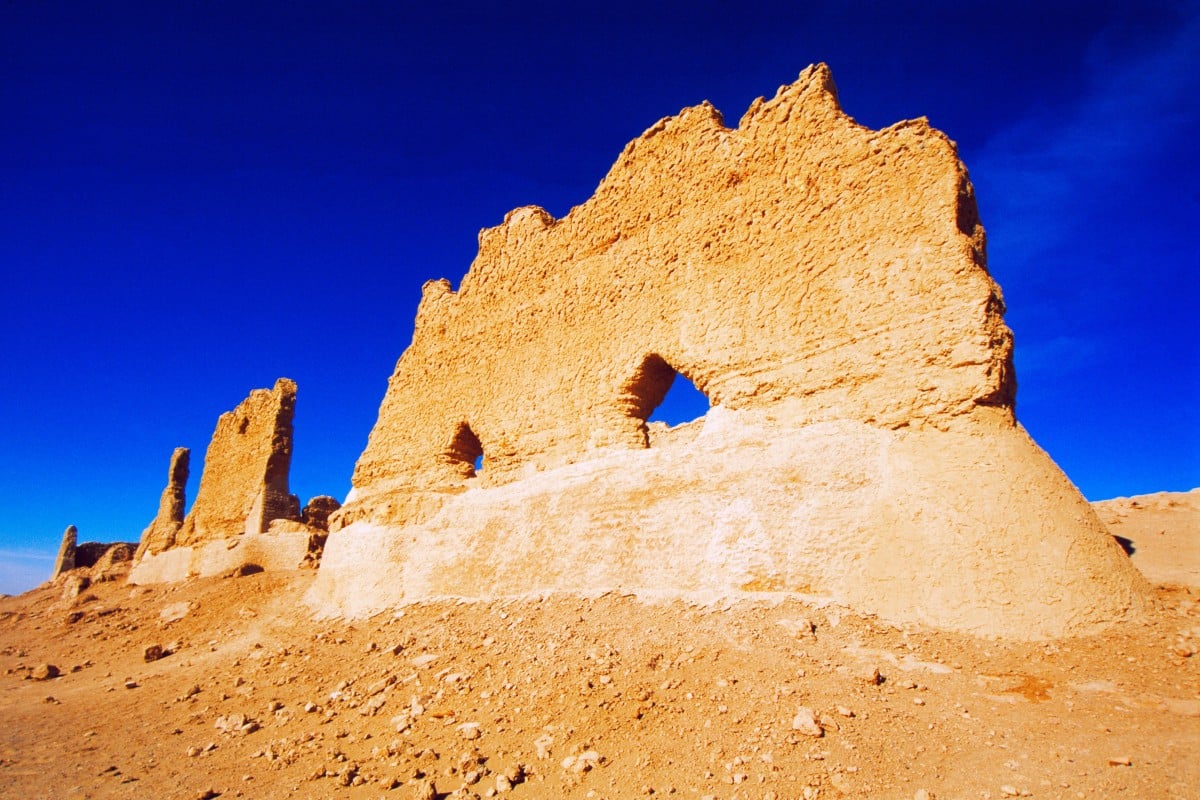
The ruins of a fortified gatehouse and customs post at Yunmenguan Pass, in China’s Gansu province. Photo: Alamy
We have a German geographer, cartographer and explorer to thank for the name of the world’s most famous network of transcontinental trade routes.
Formally established during the Han dynasty, in the first and second centuries BC, it wasn’t until 1877 that Ferdinand von Richthofen coined the term Silk Road (historians increasingly favour the collective term Silk Routes).
The movement of merchandise between China and Europe had been taking place long before the Han arrived on the scene but it was they who employed troops to keep the roads safe from marauding nomads.
Commerce flourished and goods as varied as carpets and camels, glassware and gold, spices and slaves were traded; as were horses, weapons and armour.
Merchants also moved medicines but they were no match for the bubonic plague, which worked its way west along the Silk Road before devastating huge swathes of 14th century Europe.
What follows are some of the countless kingdoms, territories, (modern-day) nations and cities that grew rich on the proceeds of trade, taxes and tolls.
China
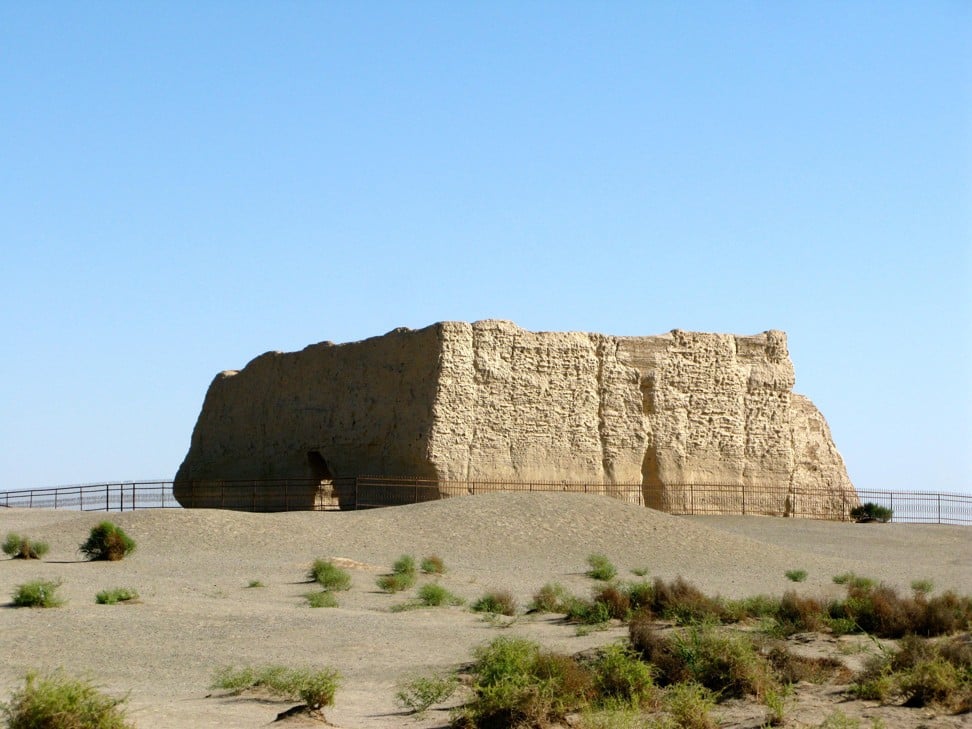
A watchtower made of rammed earth at Dunhuang, a desert outpost at the crossroads of two major Silk Road routes in China’s northwestern Gansu province. Photo: Alamy
Marco Polo worked in the Mongol capital, Khanbaliq (today’s Beijing), and was struck by the level of mercantile activity.
The Venetian gap-year pioneer wrote, “Every day more than a thousand carts loaded with silk enter the city, for a great deal of cloth of gold and silk is woven here.”
Light, easy to transport items such as paper and tea provided Silk Road traders with rich pickings, but it was China’s monopoly on the luxurious shimmering fabric that guaranteed huge profits.
So much so that sneaking silk worms out of the empire was punishable by death.
The desert outpost of Dunhuang found itself at the crossroads of two major Silk Road trade arteries, one leading west through the Pamir Mountains to Central Asia and another south to India.
Built into the Great Wall at nearby Yunmenguan are the ruins of a fortified gatehouse and customs post, which controlled the movement of Silk Road caravans.
Also near Dunhuang, the Mogao Caves contain one of the richest collections of Buddhist art treasures anywhere in the world, a legacy of the route to and from the subcontinent.
Afghanistan
Afghanistan’s mountainous terrain was an inescapable part of the Silk Road, until maritime technologies would become the area’s undoing. Photo: Shutterstock
For merchants and middlemen hauling goods through Central Asia, there was no way of bypassing the mountainous lands we know today as Afghanistan.
Evidence of trade can be traced back to long before the Silk Road – locally mined lapis lazuli stones somehow found their way to ancient Egypt, and into Tutankhamun’s funeral mask, created in 1323BC.
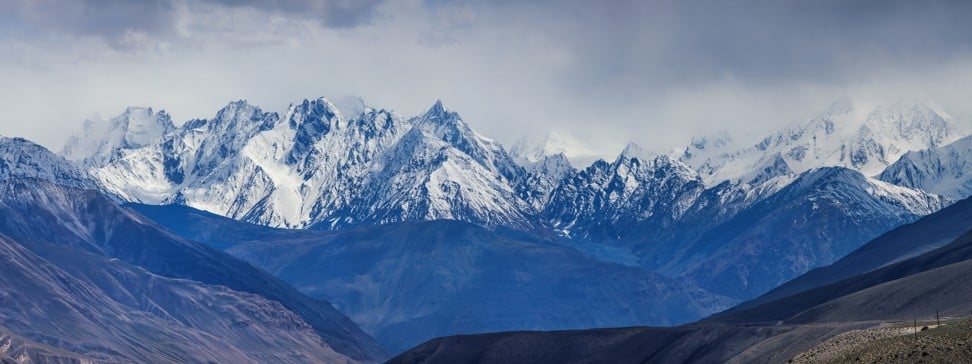
Jagged peaks, rough roads in Tajikistan, roof of the world
Besides mercantile exchange, the caravan routes were responsible for the sharing of ideas and Afghanistan was a major beneficiary. Art, philosophy, language, science, food, architecture and technology were all exchanged, along with commercial goods.
In fact, maritime technology would eventually be the area’s undoing. By the 15th century, it had become cheaper and more convenient to transport cargo by sea – a far from ideal development for a landlocked region.
Iran
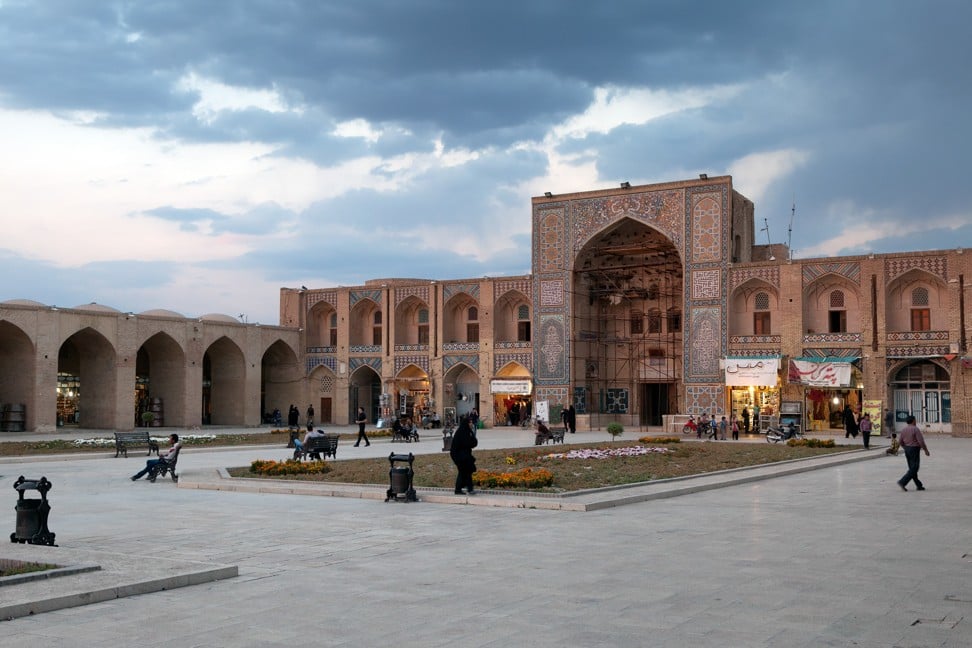
The Ganjali Khan Complex, in Iran. Photo: Shutterstock
Thanks to the Silk Road and the routes that preceded it, the northern Mesopotamian region (present-day Iran) became China’s closest trading partner. Traders rarely journeyed the entire length of the trail, however.
Merchandise was passed along by middlemen who each travelled part of the way and overnighted in caravanserai, fortified inns that provided accommodation, storerooms for goods and space for pack animals.
The good, bad and ugly sides to visiting Chernobyl and Kiev
With so many wheeler-dealers gathering in one place, the hostelries developed into ad hoc marketplaces.
Marco Polo writes of the Persian kingdom of Kerman, where craftsmen made saddles, bridles, spurs and “arms of every kind”.
Today, in the centre of Kerman, the former caravanserai building forms part of the Ganjali Khan Complex, which incorporates a bazaar, bathhouse and mosque.
Uzbekistan
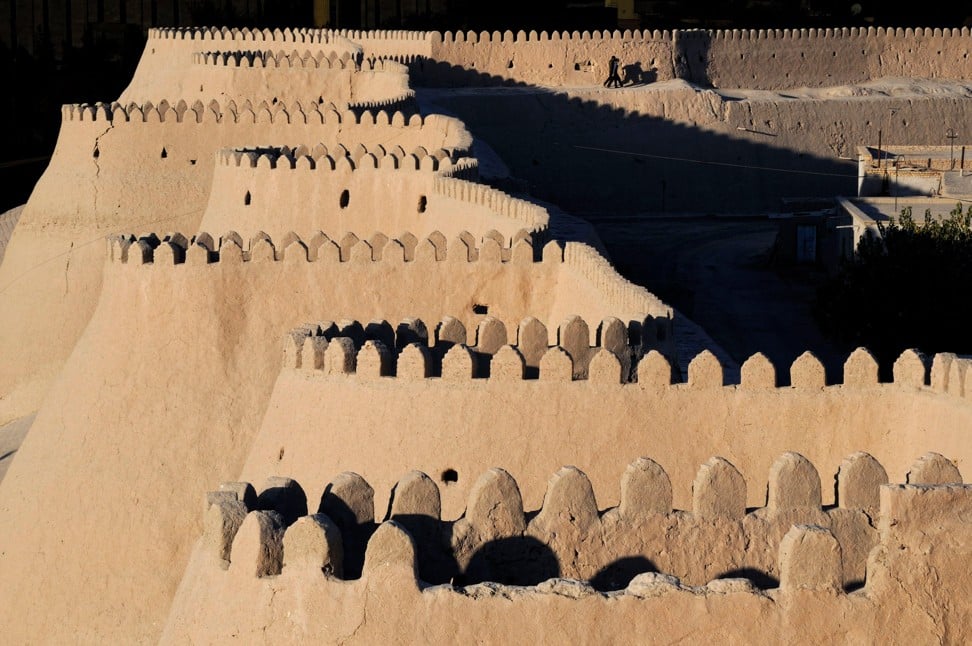
A fort in Khiva, Uzbekistan. Photo: Alamy
The double-landlocked country boasts some of the Silk Road’s most fabled destinations. Forts, such as the one still standing at Khiva, were built to protect traders from bandits; in fact, the city is so well-preserved, it is known as the Museum under the Sky.
The name Samarkand is also deeply entangled with the history of the Silk Road.
The earliest evidence of silk being used outside China can be traced to Bactria, now part of modern Uzbekistan, where four graves from around 1500BC-1200BC contained skeletons wrapped in garments made from the fabric.
Three thousand years later, silk weaving and the production and trade of textiles remain one of Samarkand’s major industries.
Georgia
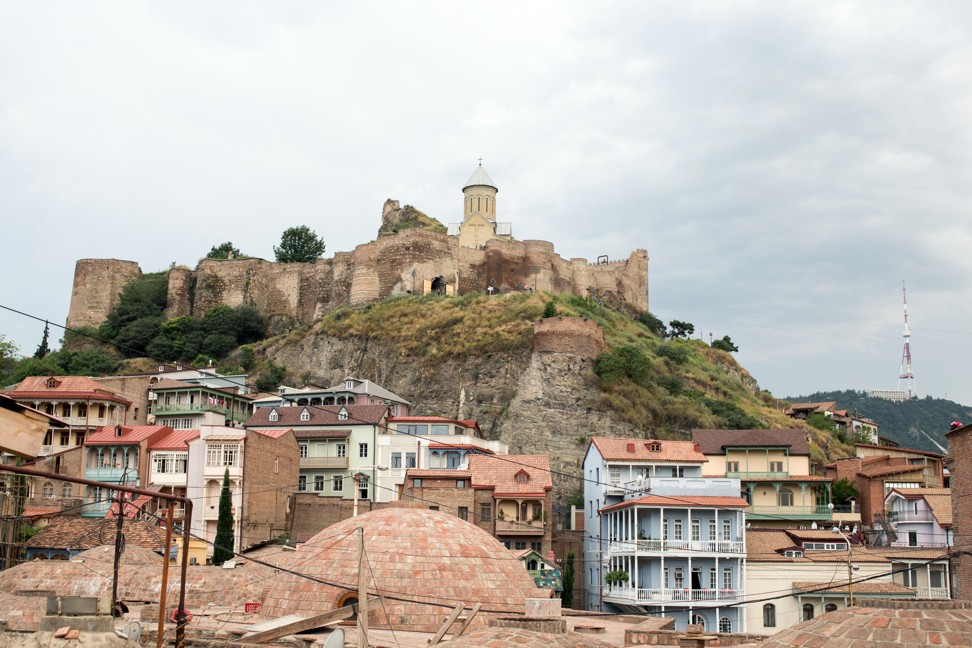
A street in old town of Tbilisi, Georgia. Photo: Alamy
Security issues in Persia led to the opening up of another branch of the legendary trade route and the first caravan loaded with silk made its way across Georgia in AD568.
Marco Polo referred to the weaving of raw silk in “a very large and fine city called Tbilisi”.
Today, the capital has shaken off the Soviet shackles and is on the cusp of going viral.
Travellers lap up the city’s monasteries, walled fortresses and 1,000-year-old churches before heading up the Georgian Military Highway to stay in villages nestling in the soaring Caucasus Mountains.
Public minibuses known as marshrutka labour into the foothills and although the vehicles can get cramped and uncomfortable, they beat travelling by camel.
Jordan
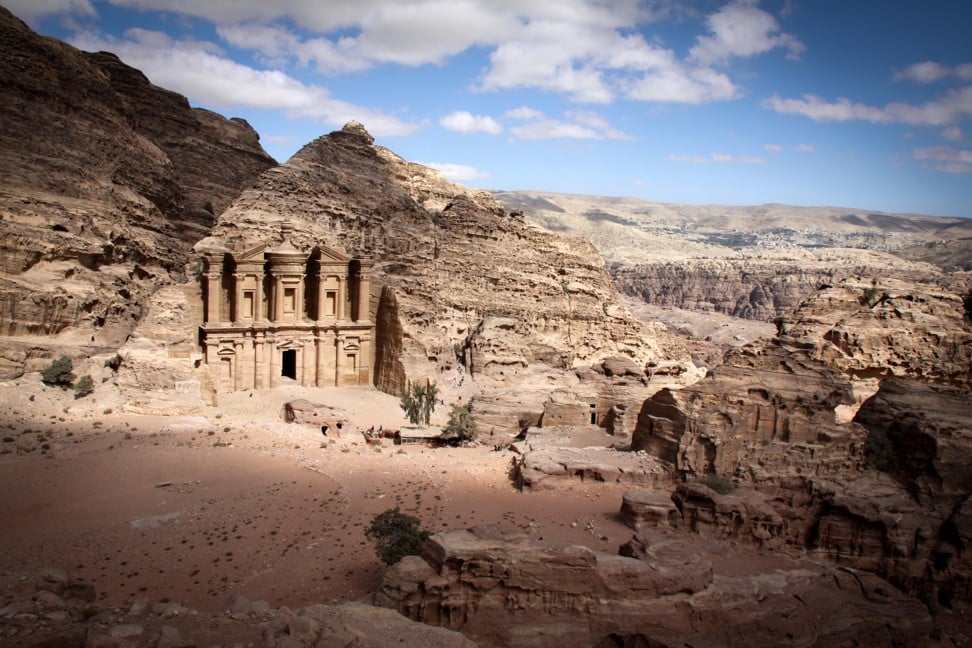
Petra, in Jordan. Photo: Alamy
The location of the Nabataean capital, Petra, wasn’t chosen by chance.
Savvy nomadic herders realised the site would make the perfect pit-stop at the confluence of several caravan trails, including a route to the north through Palmyra (in modern-day Syria), the Arabian peninsula to the south and Mediterranean ports to the west.
Huge payments in the form of taxes and protection money were collected – no wonder the most magnificent of the sandstone city’s hand-carved buildings is called the Treasury.
The Red Rose City is still a gold mine – today’s tourists pay a hefty
. The Nabataeans would no doubt approve.
Venice
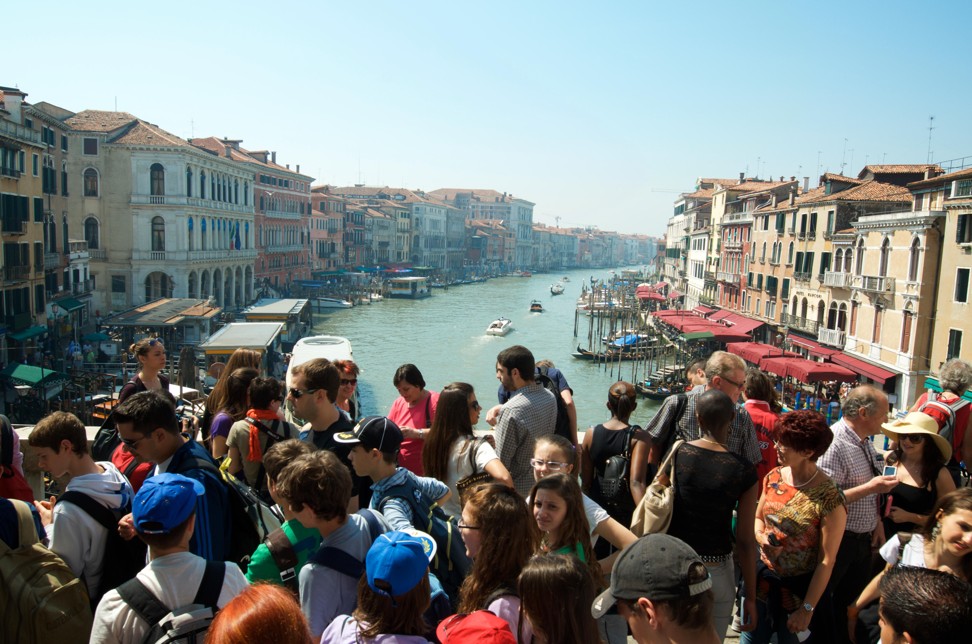
Tourists crowd onto Venice’s Rialto Bridge. Photo: Alamy
Trade enriched Venice beyond measure, helping shape the Adriatic entrepot into the floating marvel we see today.
Besides the well-documented flow of goods heading west, consignments of cotton, ivory, animal furs, grapevines and other goods passed through the strategically sited port on their way east.
Ironically, for a city built on trade and taxes, the biggest problem Venice faces today is visitors who don’t contribute enough to the local economy.
A lack of spending by millions of day-tripping tourists and cruise passengers who aren’t liable for nightly hotel taxes has prompted authorities to introduce a citywide access fee from January 2020.
Two thousand years ago, tariffs and tolls helped Venice develop and prosper. Now they’re needed to prevent its demise.
Source: SCMP
Posted in accommodation, Adriatic, Afghanistan, architecture, armour, arms, Art, Asia, Bactria, bandits, bathhouse, bazaar, Beijing, bridles, bubonic plague, Buddhist art treasures, camels, caravanserai, caravans, carpets, Caucasus Mountains, Chernobyl, cloth of gold, commercial goods, craftsmen, Death, Dunhuang, Egypt, Europe, exchanged, Ferdinand von Richthofen, floating marvel, Food, fort, from China to Italy, funeral mask, Ganjali Khan Complex, Gansu Province, garments, Georgia, Georgian Military Highway, German geographer, glassware, Gold, goods, Great Wall, grew rich, Han Dynasty, horses, hostelries, iran, Jordan, Kerman, Khanbaliq, Khiva, Kiev, languages, lapis lazuli, Marco Polo, maritime technology, marketplaces, marshrutka, medicines, Merchandise, Mesopotamian region, Mogao Caves, Mongol capital, Mosque, Museum under the Sky, Nabataean capital, pack animals, Palmyra, Pamir Mountains, paper, Persian kingdom, Petra, philosophy, punishable, Red Rose City, Rialto Bridge, saddles, Samarkand, Science, Silk Road, Silk Road destinations, silk worms, skeletons, slaves, sneaking, Space, spices, spurs, storerooms, Syria, Tajikistan, Tbilisi, Tea, Technology, towns, Trade, traders, Tutankhamun, Uncategorized, Uzbekistan, Venetian gap-year pioneer, Venice, weapons, Yunmenguan Pass |
Leave a Comment »
01/07/2019
CHANGSHA, June 30 (Xinhua) — The first China-Africa Economic and Trade Expo closed Saturday in Changsha, the capital city of central China’s Hunan Province.
A total of 84 deals worth 20.8 billion U.S. dollars were reached in trade, agriculture, tourism and other fields during the three-day event, which saw 14 activities, including the opening ceremony, seminars, conferences and forums, as well as an exhibition.
Experts, businessmen and officials from China and African countries discussed the new methods of the cooperation between the two sides during the event.
International organizations including the United Nations Industrial Development Organization, the World Food Programme and the World Trade Organization have sent representatives to the expo.
The expo, with an exhibition area of more than 40,000 square meters, attracted over 100,000 guests and traders, including those from 53 African countries, according to the organizing committee.
Source: Xinhua
Posted in agriculture, Changsha, closes, exhibition area, expo, First China-Africa Economic, Trade Expo, Hunan Province, Tourism, Trade, Uncategorized, United Nations Industrial Development Organization, World Food Programme (WFP), World Trade Organization (WTO) |
Leave a Comment »
15/06/2019
Chinese President Xi Jinping (R) meets with his Turkish counterpart Recep Tayyip Erdogan in Dushanbe, Tajikistan, June 15, 2019. (Xinhua/Wang Ye)
DUSHANBE, June 15 (Xinhua) — Chinese President Xi Jinping met his Turkish counterpart, Recep Tayyip Erdogan, here on Saturday, agreeing to promote bilateral cooperation on the sidelines of the fifth summit of the Conference on Interaction and Confidence Building Measures in Asia.
Xi said that he highly values China-Turkey relations and is willing to work with Erdogan to translate bilateral friendship into mutual trust, and constantly open new chapters in promoting the China-Turkey strategic cooperative relationship.
China and Turkey should give each other firm support on issues that touch their respective core interests and major concerns, and step up the anti-terrorism cooperation, Xi said.
Calling Turkey a traditional Silk Road country, Xi said that China stands ready to enhance their mutually beneficial cooperation within the Belt and Road framework.
The Chinese president also called on the two countries, both important members of the Group of 20 (G20), to strengthen their communication and coordination on multilateral arenas such as the G20.
Agreeing with Xi, Erdogan said that Turkey attaches great importance to relations with China, adding that Turkey is willing to strengthen high-level exchanges between the two countries and expand their cooperation in economy, trade, finance, infrastructure construction and other fields.
The Belt and Road Initiative is very important to Turkey, he said, adding that his country is willing to actively participate in its joint construction and cooperation.
Source: Xinhua
Posted in Belt and Road Initiative (BRI), Chinese President Xi Jinping, cooperation, economy, Finance, Group of 20 (G20), Infrastructure, Recep Tayyip Erdogan, Trade, Turkey, Uncategorized |
Leave a Comment »





 CHINDIA ALERT: You'll be living in their world, very soon