Archive for ‘car’

30/08/2019

Costco forced to shut first China store early due to crowds

US retailer Costco was forced to close early on its opening day in China, after the store was swamped with shoppers.

Buyers battled long queues and traffic chaos, before the Shanghai store was shut hours early due to “overcrowding”.

Costco’s push into China comes as other foreign retailers have struggled to compete with local rivals.

It also comes at a time of rising tensions between the US and China over trade.

Costco is a discount warehouse store that sells a range of goods, from fresh foods to household electronics.

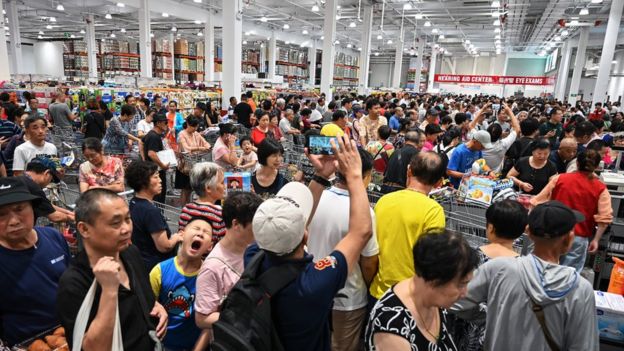
Some customers spent two hours lining up to pay for their purchases, while some had to wait three hours for parking, state news agency Xinhua reported.

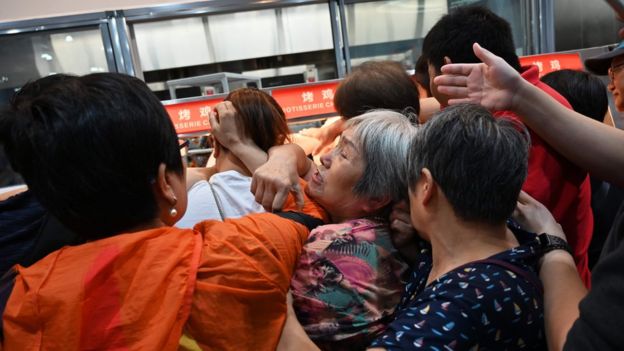
People jostle for cooked chickensImage copyright AFP
Image caption Images from the store show customers caught up in heavy crowds

One video showed people pushing through heavy crowds to get their hands on roast chickens.

“Due to overcrowding in the market, and in order to provide you with a better shopping experience, Costco will temporarily close on the afternoon of August 27. Please avoid coming,” the retailer in a notice on its official app, according to AFP.

People visit the first Costco outlet in China, on the stores opening day in Shanghai on August 27, 2019Image copyright GETTY IMAGES
Image caption Some customers reportedly spent two hours lining up to pay for their goods

Costco has had an online presence in China since 2014, through a partnership with e-commerce giant Alibaba.

The firm’s first store in the country comes as other international retailers battle tough competition in China.

Earlier this year, Amazon said it was downsizing its operations in China and France’s Carrefour agreed to sell 80% of its China business to local retailer Suning.com after a series of losses.

Tesco has struggled to crack the Chinese market.

Costco’s China move also comes at a difficult time for US-China relations.

The world’s two largest economies have been fighting a trade war for the past year, and tensions have escalated with the threat of more tariffs from both sides.

Source: The BBC

09/08/2019

One dead in construction site crane collapse in southwest China

  • Tower falls on car outside the Chengdu worksite, killing motorist
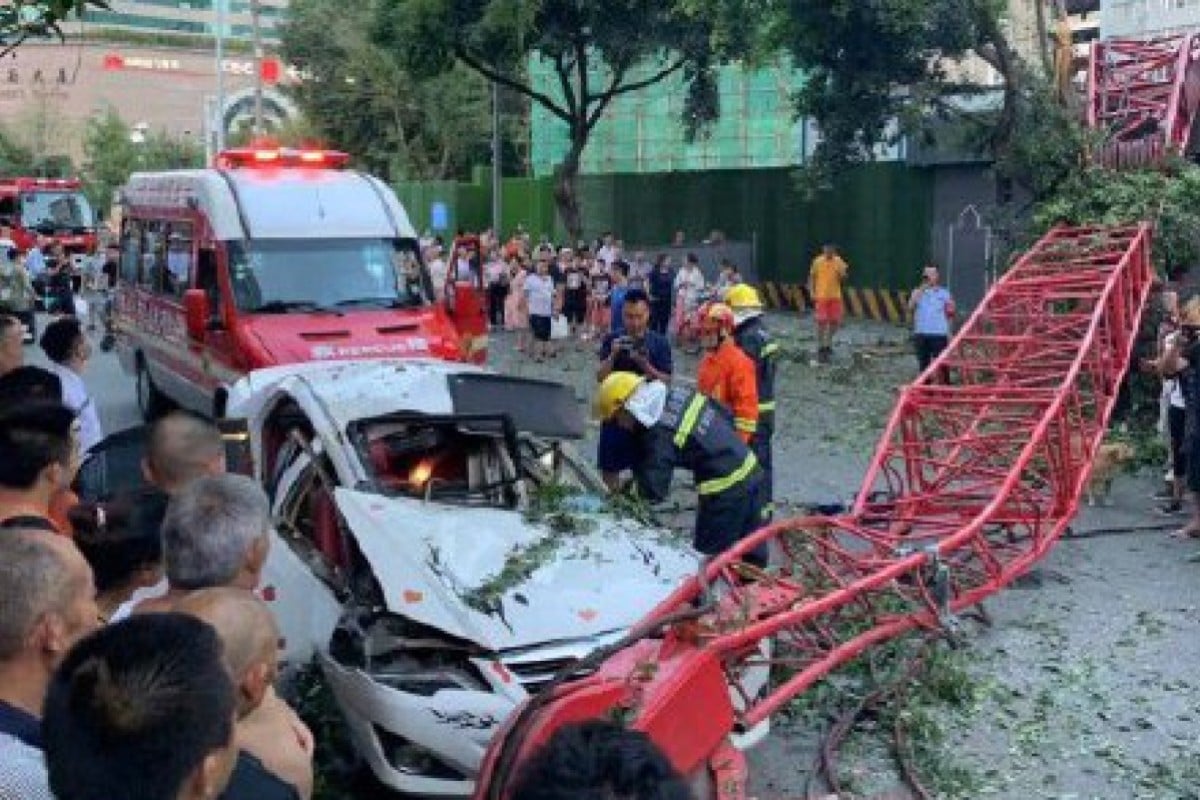
A motorist was killed when a construction crane collapsed in Chengdu on Wednesday. Photo: Weibo
Authorities in southwest China are investigating a crane collapse at a construction site that killed one person and injured another.
The crane collapsed in Chengdu, Sichuan province, at around 7pm on Wednesday, falling onto a car parked near the site and killing the driver, the city’s urban renewal authority said in an online statement. A pedestrian also suffered minor injuries, it said.
Police were investigating the cause of the incident.
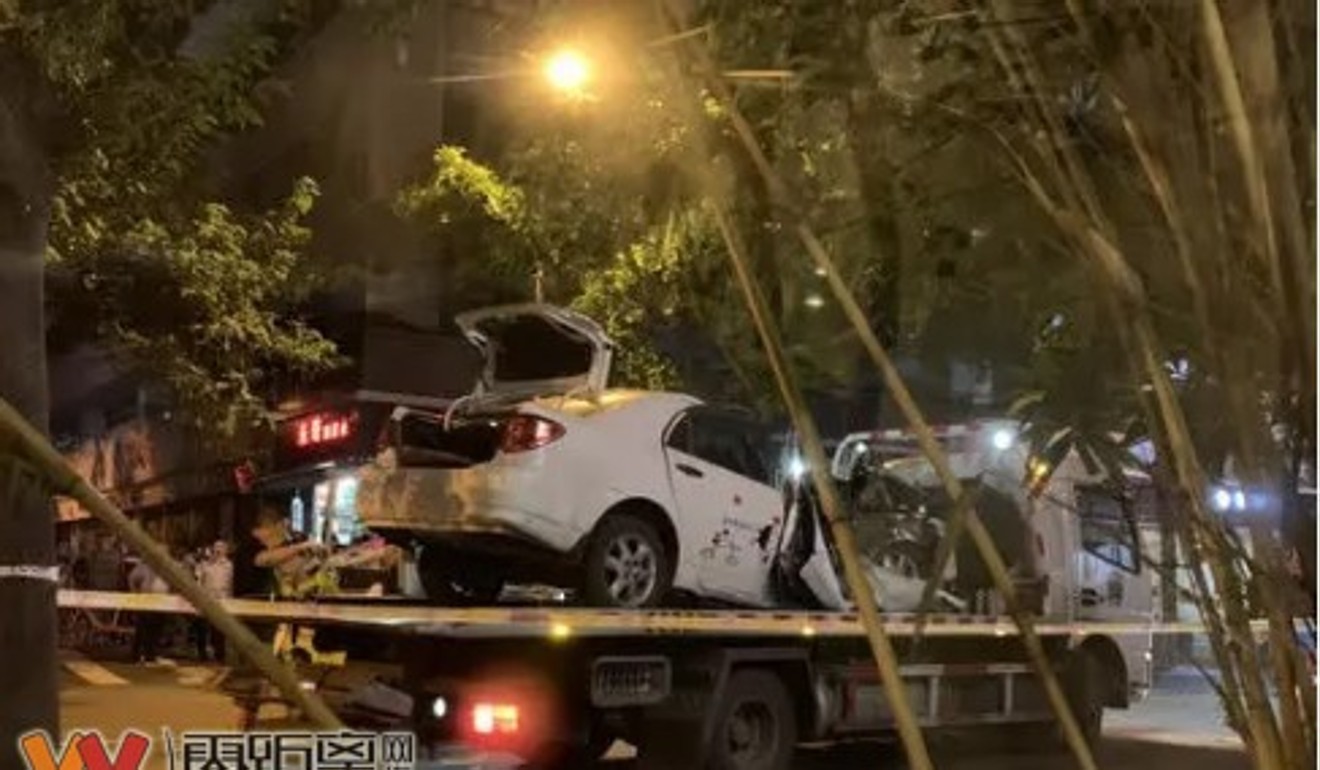
A crane accident at a construction site in Southwest China killed one person and injured another on Wednesday. Photo: Weibo

Photos and footage posted online showed emergency workers and others trying to move the crane off of a white car.

Shanghai-based news outlet ThePaper.cn quoted a witness as saying that the crane fell through the construction site wall and a number of trees.

By 10pm, the car had been towed away and the road reopened for use, according to reports.

In January, four people were killed and one was injured when a crane collapsed in Changsha, Hunan province, state news agency Xinhua reported.

Source: SCMP

08/07/2019

Six dead after freak tornado tears through town in northern China

  • Homes destroyed and trees uprooted as destructive forces rips area apart in 15 minutes
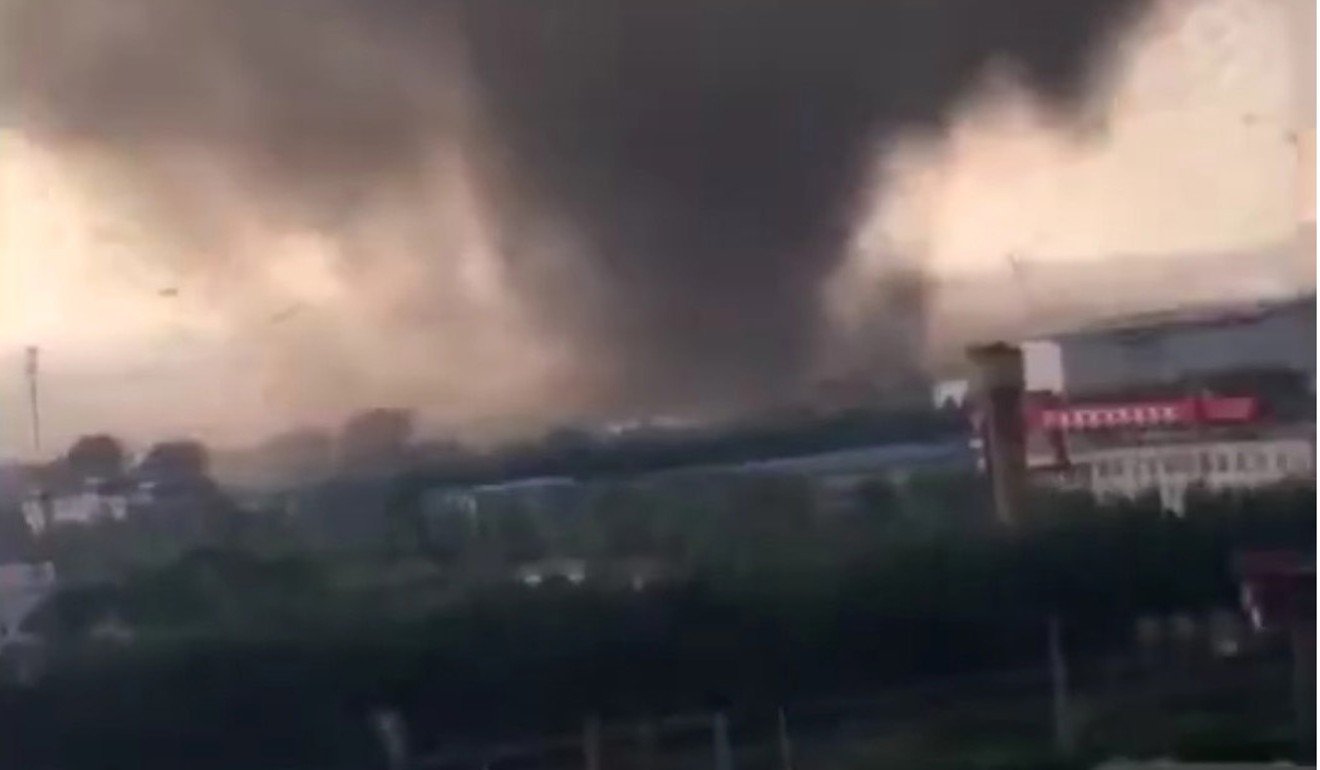
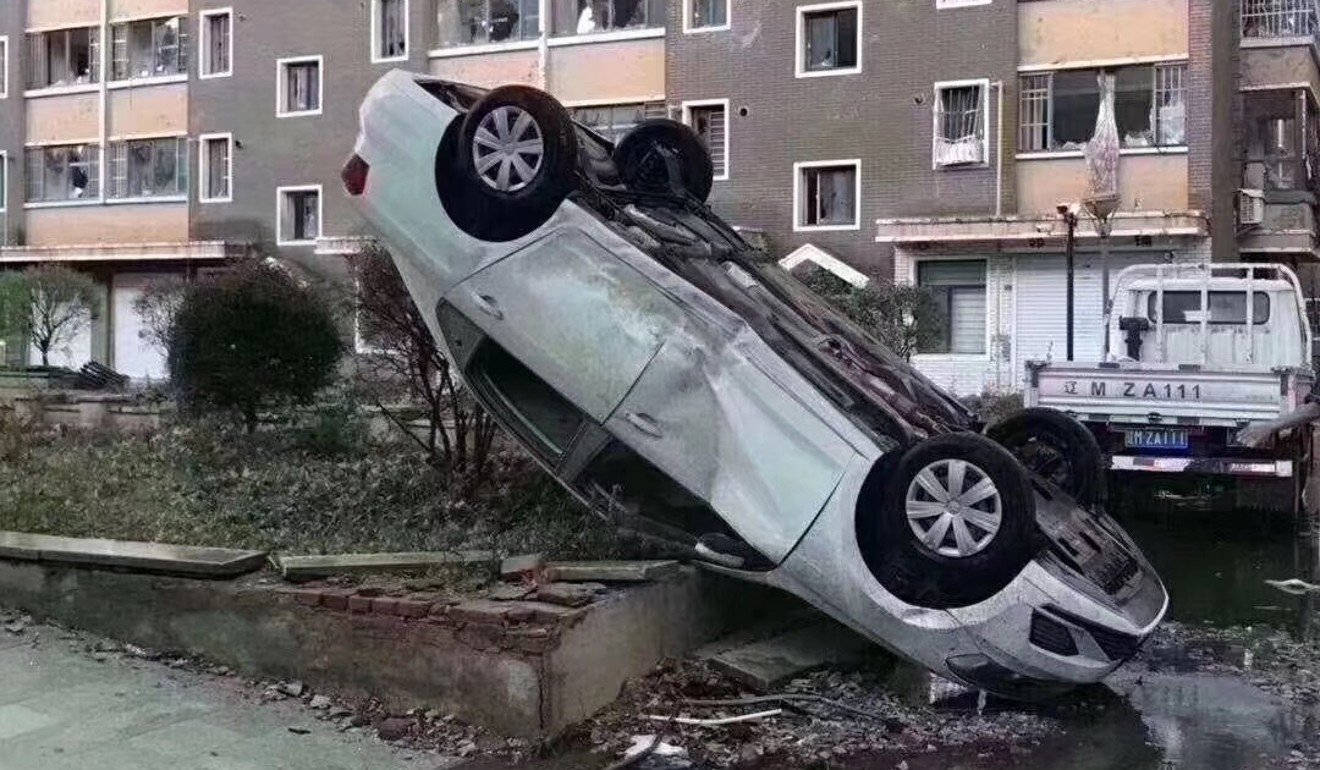
Residents try to pick up the pieces after a deadly tornado destroyed homes and factories in Kaiyuan, Liaoning province, on Wednesday afternoon. Photo: Weibo
At least six people died and 190 were injured when a tornado struck a city in northeastern China on Wednesday, according to police.
The freak tornado formed in Jingouzi township in Kaiyuan, Liaoning province, at about 5pm, reaching speeds of about 23 metres per second before weakening after roughly 15 minutes, state news agency Xinhua reported.
A tornado carves a path of destruction through Kaiyuan in Liaoning province on Wednesday. Photo: Xinhua
It tore through the township, demolishing homes, uprooting trees, and stripping factories of cladding in the city’s economic development zone, according to a Beijing News video posted online.
The Beijing Times website quoted a resident as saying that she saw at least one car tossed into the air and buildings smashed by the tornado.
Kaiyuan in Liaoning province is counting the toll of destruction from a deadly tornado on Wednesday. Photo: Weibo

“Power went off in surrounding areas as the tornado went by. About two or three minutes later there was thunder and then it hailed,” Red Star News quoted a high school student as saying.

Kaiyuan issued an emergency alert and sent about 800 police officers, firefighters and medical personnel to the area.

Two children killed as bouncy castle destroyed by tornado in China
By Thursday, about 210 people had been rescued and some 1,600 evacuated, The Beijing News said. About 10,000 people were also “displaced”.

“There are 63 people in hospital now with 15 in critical condition,” Beijing Times quoted Yu Shuxin, director of Kaiyuan’s emergency management bureau, as saying.

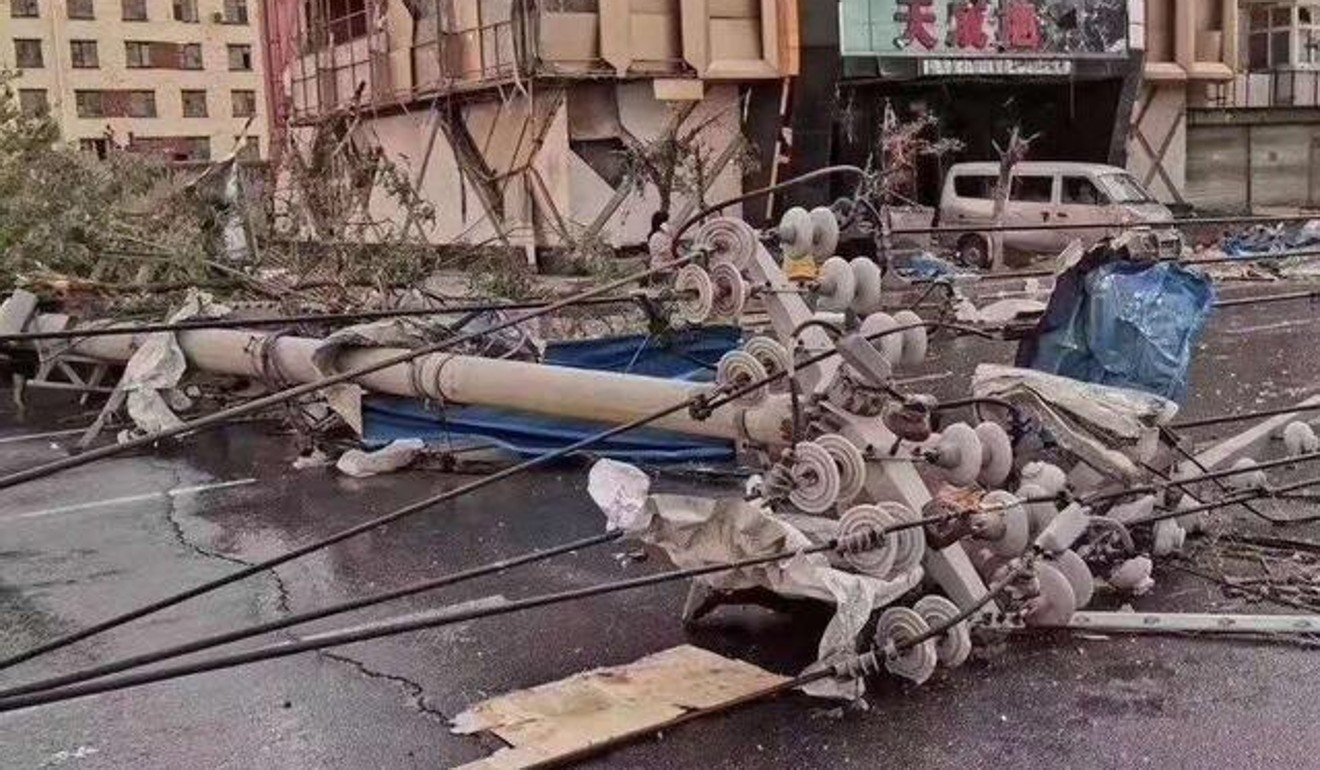
“Communication systems have recovered in most areas. Electricity infrastructure was severely damaged but we’ll try our best to get the power supply back up.”

The wild weather brought down power lines and cut communications in some areas. Photo: Weibo

Tornadoes are so rare in China, particularly the country’s north, that it does not have a specific alarm for it, according to a website backed by the China Meteorological Administration.

In 2016, 99 people died and more than 800 others were injured in a tornado in Funing county, Jiangsu province.

Source: SCMP

03/06/2019

Indian Air Force’s AN-32 aircraft with 13 onboard goes missing

airforce,India,breaking

An AN-32 aircraft of the Indian Air Force with 13 people onboard has gone missing after taking off from Jorhat in Assam.

The aircraft was headed to Mechuka Advance Landing Ground, the landing strip in the eastern Himalayas of Arunachal Pradesh’s West Siang district. The landing strip is about 30-odd km from the nearest point on the India-China border.

The transport aircraft took off from Jorhat at 12.25 pm.

It was in contact with ground agencies for the next 35 minutes. An Indian Air Force official said there had been no contact after 1 pm.

A total of eight crew and five passengers are onboard the aircraft.

News agency ANI said Sukhoi-30 combat aircraft and C-130 Special Ops aircraft had also been deployed on a search mission to locate the IAF aircraft.

Monday’s missing aircraft revived memories of the AN-32 that went missing while flying from Chennai to Port Blair in July 2016.
A massive search mission had been launched to find the 29 people on the transport plane. The IAF had then carried out 200 search sorties to cover over 2 lakh square nautical miles multiple times by these aircraft. The IAF court of inquiry later concluded that it was unlikely that the missing personnel on board the aircraft survived the accident.
Source: Hindustan Times
17/05/2019

Chinese police detain driver after three pedestrians are mowed down at roadside

  • Police in Shenzhen look for clues to accident in driver’s medical records
  • Motorist complains of ‘sudden attack’ at time of accident
Police in Shenzhen, Guangdong province, are investigating a driver’s medical history after a fatal accident on Thursday. Photo: Weibo
Police in southern China have detained a motorist after three people were killed and seven injured in a car accident on Thursday night.
Officers said a car went out of control and struck pedestrians on a road in Nanshan district in Shenzhen, Guangdong province, at about 7.20pm. The 23-year-old driver, surnamed Liu, was taken into custody.
In a statement online, the Shenzhen public security bureau said blood and urine tests showed the driver was sober and drug-free. They said medicine for epilepsy was found in the vehicle.
Two dead, six injured in Japan after bus drives through pedestrians in Kobe

During questioning, Liu told officers he lost control of car because he had had “a sudden attack”, but did not elaborate.

Police said they were examining Liu’s medical records.

In China, people with epilepsy are not allowed to apply for a driving licence, according to regulations from the Ministry of Public Security.

Source: SCMP

03/12/2018

Trump says China agreed to reduce tariffs on US car imports

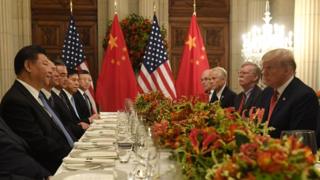
US President Donald Trump, US Secretary of the Treasury Steven Mnuchin and members of their delegation hold a dinner meeting with China's President Xi Jinping and Chinese government representatives, at the end of the G20 Leaders' Summit in Buenos Aires, on December 01, 2018. -Image copyrightGETTY IMAGES

Beijing will “reduce and remove” the 40% tariffs it places on US cars imported into China, US President Donald Trump has said.

China has not commented on President Trump’s announcement, which he made on Twitter without providing details.

The move, if confirmed, would be welcomed by a car industry unsettled by the escalating US-China trade war.

President Trump and Xi Jinping have now agreed to a temporary truce in the bitter dispute.

Over dinner at the G20 summit, they agreed to not increase tariffs for 90 daysto allow for talks.

Failure to strike a deal would have seen tariffs on $200bn worth of Chinese goods rise from 10% to 25% at the start of next year, and would have opened the way for tariffs on additional Chinese goods.

On Monday, China’s foreign ministry said the presidents of China and the US had instructed their economic teams to work towards removing all tariffs following the G20 meeting,

But it didn’t say if that was a plan with specifics or something that was merely desirable.

Asian markets rallied after news of the trade war truce. In China, Hong Kong’s Hang Seng index climbed 2.5% and the Shanghai Composite index jumped 2.6%. Japan’s Nikkei 225 index rose 1%.

The gains spread to Europe, with the UK’s FTSE 100 index, the Cac 40 in France and Germany’s Dax index all up by about 2% in early trade.

The trade war has seen the US and China hit each other with escalating tariffs in an attempt to make their domestically made goods more competitive.

The US says its tariff policy is a response to China’s “unfair” trade practices and accuses it of intellectual property theft.

Since July, the US has hit China with tariffs on $250bn (£195.9bn) worth of goods. China has retaliated with duties on some $110bn of US goods over the same period.

As part of this, the US imposed a 25% tariff on Chinese cars, on top of the 2.5% already in place.

In July, China, which is the world’s largest market for cars, imposed a 40% tariff on US vehicle imports. The rate is much higher than the 15% it places on other trading partners and forced many carmakers to raise prices.

In his tweet, President Trump said Beijing had “agreed to reduce and remove tariffs on cars coming into China from the US”.

He did not provide a new level for the Chinese tariffs, and Beijing did not immediately confirm the statement.

What was agreed at the G20?

In a statement, the White House said US tariffs on Chinese goods would remain unchanged for 90 days, but added: “If at the end of this period of time, the parties are unable to reach an agreement, the 10 percent tariffs will be raised to 25 percent.”

Image captionThe US manufactures cars for export to China, the world’s largest car market

The US said China agreed to “purchase a not yet agreed upon, but very substantial, amount of agricultural, energy, industrial, and other products from the United States to reduce the trade imbalance between our two countries”.

Both sides also pledged to “immediately begin negotiations on structural changes with respect to forced technology transfer, intellectual property protection, non-tariff barriers, cyber intrusions and cyber theft”, according to the White House.

Chinese Foreign Minister Wang Yi told reporters after the talks that “the principal agreement has effectively prevented further expansion of economic friction between the two countries”.

Are tariffs still in place?

Yes. The truce prevents raising tariffs as planned on $200bn worth of Chinese goods.

But it does not remove tariffs that apply to a total of $250bn of Chinese goods targeted since July.

The truce also does not affect the existing duties China has imposed on $110bn of US goods in a tit for tat retaliation.

Will this resolve the dispute?

While the result of the G20 meeting was better than expected, it is unclear how the two countries will manage to resolve their underlying differences.

“There should be no wishful thinking that the truce would end the trade war between the world’s two largest economies,” DBS strategist Philip Wee wrote in a research note.

He said it “remains to be seen if real progress could be achieved during this narrow window to resolve the contentious issues, not just on trade, but also intellectual property”.

Louis Kuijs, head of Asia economics at Oxford Economics, said while the agreement itself was “positive” the next steps remained unclear.

“Whether we will see further de-escalation or whether it is temporary reprieve continues to be very much up to a political decision in Washington DC – that will continue to make this uncertain,” Louis Kuijs, head of Asia economics at Oxford Economics said.

24/05/2017

India’s electric vehicles push likely to benefit Chinese car makers | Reuters

India’s ambitious plan to push electric vehicles at the expense of other technologies could benefit Chinese car makers seeking to enter the market, but is worrying established automakers in the country who have so far focused on making hybrid models.

India’s most influential government think-tank unveiled a policy blueprint this month aimed at electrifying all vehicles in the country by 2032, in a move that is catching the attention of car makers that are already investing in electric technology in China such as BYD and SAIC.

The May 12 report by Niti Aayog, the planning body headed by Prime Minister Narendra Modi, recommends lower taxes and loan interest rates on electric vehicles while capping sales of petrol and diesel cars, seen as a radical shift in policy.

India also plans to impose higher taxes on hybrid vehicles compared with electric, under a new unified tax regime set to come into effect from July 1, upsetting car makers like Maruti Suzuki and Toyota Motor.

The prospect of India aggressively promoting electric vehicles was a “big opportunity”, a source close to SAIC, China’s biggest automaker, told Reuters.

“For a newcomer, this is a good chance to establish a modern, innovative brand image,” the source said, although they added the company would need more clarity on policy before deciding whether to launch electric vehicles in India.

Earlier this year SAIC set up a local unit called MG Motor which is finalising plans to buy a car manufacturing plant in western India. A spokesman at SAIC did not comment specifically on the company’s India plans.

Warren Buffett-backed BYD already builds electric buses in the country, while rival Chongqing Changan has said it may enter India by 2020.

BYD said in a statement the company would have “a lot more confidence” to engage in the Indian market if the government supported the proposed policy. The company said it would look at increasing its investment in India but did not give details on how it would expand its business and market share.

HIGH COSTS

While the Niti Aayog report has not yet been formally adopted, government sources have said it was likely to form the basis of a new green cars policy.

If so, India would be following similar moves by China, which has been aggressively pushing clean vehicle technologies. But emulating China’s success could be tough.Electric vehicles are expensive due to high battery costs, and car makers say a lack of charging stations in India could make the whole proposition unviable.

The proposed policy focuses on electric vehicles, and is likely to also include plug-in hybrids. But it overlooks conventional hybrid models already sold in India, such as Toyota’s Camry sedan, Honda Motor’s Accord sedan and so-called mild hybrids built by Maruti Suzuki.

Hybrids combine fossil fuel and electric power, with mild hybrids making less use of the latter.

In doubling down on electric power India would be shifting away from its previous policy, announced in 2015, that supported hybrid and electric technology.

That could delay investments in India, expected to be the world’s third-largest passenger car market within the next decade, according to industry executives and analysts.

“All these policy changes will affect future products and investments,” said Puneet Gupta, South Asia manager at consultant IHS Markit, adding that most car makers would need to rethink product launches, especially of hybrids.

ECONOMIC GAP

Mahindra & Mahindra is the only electric car maker in India but has struggled to ramp up sales, blaming low buyer interest and insufficient infrastructure.

Pawan Goenka, managing director at Mahindra said the company was working with the government and other private players to set up charging stations in India. Mahindra was also focusing on developing electric fleet cars and taxis, Goenka said.

The cost of setting up a car charging station in India ranges from $500 to $25,000, depending on the charging speed, according to a 2016 report by online journal IOPscience.

While the proposed policy suggests setting up battery swapping stations and using tax revenues from sales of petrol and diesel vehicles to set up charging stations, it does not specify the investment needed or whether the government would contribute.

“For full electric vehicles, the economic gap remains huge and the charging infrastructure needed does not exist,” said a spokesman at Tata Motors. The company makes electric buses and is working on developing electric and hybrid cars.

DELAYED PLANS

Most automakers have focused on bringing in hybrid models that are seen as a stepping stone to electrification. Toyota recently launched its luxury hybrid brand Prius in India, while Hyundai Motor plans to debut its Ioniq hybrid sedan next year.

Maruti’s parent Suzuki Motor, along with Toshiba and Denso, plans to invest 20 billion yen ($180 million) to set up a lithium ion battery plant in India which would support Maruti’s plan to build more hybrids.

But the apparent sharp shift in policymakers’ thinking in favor of electrification is forcing automakers like Toyota and Nissan Motor to seek more clarity before finalising future products for India, while Hyundai may delay new launches.

Toyota, the world’s No. 2 carmaker by sales, had planned to have a hybrid variant for all its vehicles in India, but the company’s future launches would now depend on the new policy, said Shekar Viswanathan, vice chairman of its Indian subsidiary.

Nissan, which plans to launch a hybrid SUV later this year, said in a statement it was waiting for more clarity before deciding whether to bring electric cars to India.

A plan by Hyundai to launch at least three hybrid cars in India in 2019-2020 would likely to be delayed, said a source.

Hyundai did not comment on queries related to delays.

“If the government will be aggressive on electric vehicles and not support other technologies, companies will need to rethink investments,” said an executive with an Asian carmaker.

Source: India’s electric vehicles push likely to benefit Chinese car makers | Reuters

19/01/2017

Parking in China Can Be a Long March – China Real Time Report – WSJ

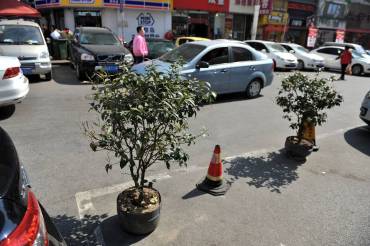
After spending half an hour driving around the Olympic Park area of Beijing in search of a parking space near his home, a furious Xu Fei pulled over to the curb, ditched his car and walked the 10-minute journey home.

With no spaces near his apartment, parking illegally was his only option, risking a fine of 200 yuan ($30).  “I usually bargain with the grocery-store owners downstairs to rent their driveways for parking,” said the 24-year-old finance specialist who lives in a 1970s building that has no parking for any of its 30 apartments. “That evening they were all rented out.”

Once known as the land of the bicycle, China is now the world’s largest automotive market. While the rapid expansion of car ownership has created millions of jobs and helped drive the economy, with it has come congestion, pollution and a shortage of at least 50 million parking spaces in a country where 180 million vehicles ply the roads.

Beijing has 4.4 million private cars, Shanghai 2.1 million cars and the southwestern city of Chengdu 3.3 million cars. By contrast, New York City has 1.9 million cars, Chicago 1.1 million and San Francisco 408,000.

Some major cities have taken measures to restrict car purchases and created tens of thousands of parking spaces over the past years. A Shanghai Municipal Transportation Commission official told the city legislature this week that the agency is considering jacking up parking fees, state media reported.

These measures aren’t keeping pace with car ownership, and there is plenty of room for further growth—vehicle ownership in China is 1/7 that of the U.S.A 2002 residential complex, the Shanghai Grand Garden, comprises 20 high-rise blocks with 1,560 units. The property developer initially assigned 450 spots for cars. Now there are 1,500 resident vehicles.

Cars occupy most of the nearby sidewalks, with some pulled into tiny spots between flower beds, squeezing out pedestrians. The situation gets much worse in the evening, said Tao Baosen, a doorman, pointing at a charcoal Volvo crossover that was pulled over onto the artificial turfs last night.

“Even though it’s very clear how bad the situation is, the number of cars is still growing,” Mr. Tao said.

Parking is a universal problem in densely populated cities. While many developed countries require new buildings to create a specific number of parking spaces, they also take measures to restrict parking. For example, New York City reduced 25,000 off-street parking spaces in Manhattan’s central business district from 1978 to 2010 to prod commuters to take public transportation. London levies costly congestion charges to drive a vehicle into the city center.

By contrast, China is “too lenient towards drivers,” said Liu Shaokun, a vice country director at The Institute for Transportation and Development Policy, a New York-based nonprofit outfit.China has encouraged government and private capital to build more parking spaces. The central government in 2015 required cities with a population of more than 500,000 to target a ratio of 1.3 parking spaces per car when planning residential and commercial developments.

By comparison, every 100 households in New York City’s Brooklyn borough share 40 parking spaces and in Queens, the ratio rises to 60 spaces per 100 households, according to the institute’s research.

“Increasing supply is unlikely to achieve the desired effect,” said Mr. Liu, noting high vacancy rates at many public and commercial parking lots and garages. “Many drivers go to cheaper off-street parking spaces, or just pull over onto the sidewalks since the costs of violating laws are low,” he said.

A variety of services and parking apps has sprung up to try to match cars and parking spaces for money. Edaibo, a Shanghai-based startup that provides valet parking services, has operated at 23 airports in China and last year received an investment from French tire maker Michelin Group to provide the service in major city centers.

D Parking, a Beijing startup, offers an app to connect drivers and parking spots. It aims to take advantage of commuting and business patterns. The company’s research found that more than 70% of the parking spaces in residential communities are idle in the daytime, while office buildings, shops and hospitals nearby face a dearth of spots. The opposite occurs in the evening.

Some efforts to increase supply have also upset drivers who complain they are now being charged to park in areas that were once free.

“We’re used to parking for free. When it comes to money, most of us will drive round and round for a free one,” said Fang Yi, a finance manager for a local hospital in Yiyang, a small city in the center of the country. He said he now spends 15 minutes searching for a free spot when going out

Source: Parking in China Can Be a Long March – China Real Time Report – WSJ

Tags:
30/11/2016

All-American pick-up trucks aim to lure China’s wealthy | Reuters

Automakers Ford (F.N) and General Motors (GM.N) are aiming the pick-up truck, an iconic staple in the United States, at upmarket buyers in China, where most associate trucks with farmers and construction workers.

“The Chinese call it pika, pika – a very low-end worker’s (vehicle). But the (Ford F-150) Raptor is totally different,” said Wesley Liu, Ford’s Asia-Pacific sales director, ahead of this month’s Guangzhou autoshow.

Trucks are largely restricted to overnight driving in most Chinese cities, but four provinces – Yunnan, Liaoning, Hebei and Henan – have this year launched trial programmes allowing them into urban zones in an attempt to stimulate production as economic growth, and car sales, slow.

With those looser restrictions, U.S. pick-up makers aim to distance their trucks from local models made by Great Wall Motor (601633.SS), Jiangling Motors Corp (JMC) (000550.SZ) and others – and appeal to Chinese premium buyers, like Meng Shuo.

The 32-year-old founder of an investment consultancy, who already owned a Chevrolet Camaro when he bought an F-150 pick-up truck five years ago through an unofficial grey market importer. He has since traded it in for a Toyota (7203.T) Tundra, and also owns a Mercedes (DAIGn.DE) luxury sedan and Porsche (PSHG_p.DE) and Mitsubishi (7211.T) sports cars.

Ford said in April it would bring a high-performance version of its F-series – the best-selling vehicle in the U.S. for 34 years – to China, the world’s biggest auto market. A spokesman said the company is studying whether to also bring a mass-market model such as the F-150 or Ranger pick-up to China, depending on demand and future regulations.

“The people who buy the Raptor maybe own some other premium vehicle already. This is another toy,” Liu said.The truck is aimed at four types of buyers, he said – the wealthy, who want to stand out from the crowd; business owners, who want more than a traditional commercial vehicle; drivers who want a single car for all situations; and “gearheads”, who just like the mechanics.

Even as Chinese authorities throw vast subsidies at green, clean auto technologies, the growing wealth of Chinese consumers has driven a boom in larger cars and sport-utility vehicles (SUV). With margins now under pressure in the crowded SUV sector, automakers see potential profits in high-end foreign pick-ups.

Ford and GM – which displayed its Chevrolet Colorado and Silverado trucks around the Guangzhou show, with t-shirt clad urban cowboys and an all-leather rock band selling the trucks’ macho, all-American appeal – have not yet announced prices for their pick-ups, expected to be launched next year. But they should command a sizeable premium to locally made models as China slaps a 25 percent tax on imports.

PICKING UP

For now, pick-ups are a tiny fraction of China’s market.

IHS Markit sees sales increasing by 14 percent this year to 368,791 pick-up trucks, but that would still be only 1.4 percent of China’s light vehicle market.

By contrast, sales in the U.S. are forecast at 2.7 million pick-ups, about 15 percent of the market.

Yan Ningya, an official involved in the Hebei pilot project, said the province, home to Great Wall and other automakers, accounts for half of China’s pick-up production.

The trial has not yet resulted in higher production, he told Reuters, but the local government will need a year from the pilot project’s launch in May to gauge its impact.

After that, the central government may do more to drive production, possibly reclassifying pick-ups as passenger cars rather than commercial vehicles, he said.

The Ministry of Industry and Information Technology, which directed the provinces to launch the pilot projects, did not respond to a faxed request for comment.

“China’s pick-up truck market will be very large in the future,” said Yan, noting domestic brands would likely upgrade their trucks to meet the tastes of middle-class drivers.

Source: All-American pick-up trucks aim to lure China’s wealthy | Reuters

29/11/2016

Nissan Revs Up Connected Car Plans in India – India Real Time – WSJ

Nissan Motor Co. said Tuesday that it planned to accelerate the penetration of internet-connected vehicles by offering a connection device to existing customers in Japan and India starting next year.

Nissan has been among the most aggressive car makers in putting connection technology in lower-priced vehicles. Now, it is expanding the offering to owners of older models.

The device will allow car owners to get live updates on maintenance needs, make service appointments and order parts ahead of time. Nissan said it planned to bring the device to other countries eventually and install it in 30% of the 40 million Nissan vehicles on the road globally today.

The device contains a Global Positioning System tracker and can transmit information about the vehicle’s health to Nissan through mobile networks. The goal is to give customers a taste of connected-car services that will become available on new cars, Nissan said.

“In the coming years, customers will see sophisticated applications of software and hardware that will keep them connected with work, with friends and family. It will allow them to control their vehicles from their phones in their pockets,” said Kent O’Hara, who runs Nissan’s after-sales division.

Source: Nissan Revs Up Connected Car Plans in India – India Real Time – WSJ

Law of Unintended Consequences

continuously updated blog about China & India

ChiaHou's Book Reviews

continuously updated blog about China & India

What's wrong with the world; and its economy

continuously updated blog about China & India