Archive for ‘election 2019’

19/05/2019

Lok Sabha election 2019: Vandalism, rigging reported from Bengal in last phase of polling

The seventh and the last phase of Lok Sabha election in West Bengal was hit by vandalism and rigging on Sunday amid polling in nine parliamentary constituencies with the ruling Trinamool Congress and the BJP locked in a bitter battle for power.

LOK SABHA ELECTIONS Updated: May 19, 2019 11:19 IST

HT Correspondent
HT Correspondent
Hindustan Times, Kolkata
Lok Sabha elections,Lok Sabha polls,Lok Sabha Bengal
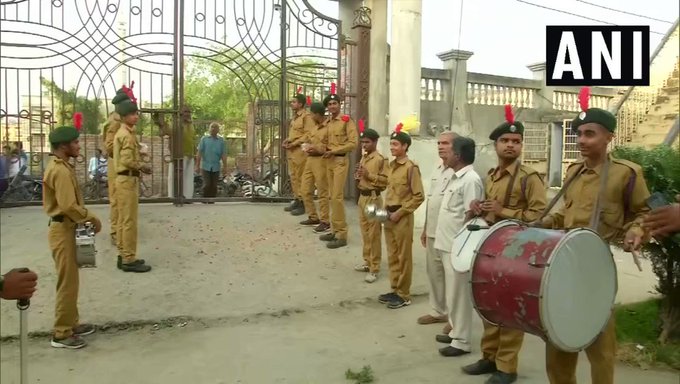
Kolkata Police personnel leaving for polling booth on the eve of final phase of Lok Shabha election from a Polling distribution center in Kolkata on Saturday . (ANI photo for representation)
Crude bombs were hurled at two places on Sunday in West Bengal, where polling is underway in nine constituencies in the last phase of polling of the Lok Sabha election amid reports of vandalism and malfunctioning EVMs.
Reports of bombs thrown in Gilaberia area in Deganga of North 24 Parganas district under Barasat constituency and in Raidighi of South 24 Parganas district under Mathurapur constituency came in as voters queued up in polling booths.
There were allegations that BJP supporters were beaten up and its camp office vandalised allegedly by TMC workers in Kultoli in Jaynagar Lok Sabha constituency as 14.17% polling was recorded till 9am from across the state.
Sayantan Basu, the BJP’s candidate for Basirhat constituency, alleged rigging in several areas and said police was doing nothing to stop it.
“People have queued up from as early as 4:30am to vote. But there are a lot of allegations of muscle flexing and rigging in areas such as Sandeshkhali, Hingalganj and Baduria. The inspector-in-charge of Shashan police station is virtually helping to rig in favour of the TMC,” Basu said.
“About 150 complaints were lodged with the EC (Election Commission) in the first three hours. I have not seen effective steps of the poll panel so far,” Basu, also the general secretary of the Bengal unit of the BJP, alleged.

Follow live updates here

Mala Roy, the TMC’s candidate in Kolkata South constituency, alleged that central force personnel did not allow her to enter booth number 72 in a polling station in Mudiali under her constituency. Roy said she went after learning that polling was stopped for 45 minutes. She said she will lodge a complaint with the poll watchdog.

Trinamool Congress’ Rajya Sabha member Sukhendu Sekhar Ray alleged Electronic Voting Machines in all the parliamentary constituencies were not working as he questioned the EC over the EVMs.

“Hundreds of EVMs found to be dysfunctional from the very start of poll in various booths of the 9 Parliamentary Constituencies Of West Bengal where elections are being held today,” Ray wrote on Facebook.

“Rs 3,173 crores sanctioned by the Government in April 2017 for purchase of 16 Lakh new EVMs. It seems that old and junk machines have been put on service in these 9 constituencies with the evil design to delay the process of voting,” he said.

“Because if the voters after waiting for hours together fail to cast their votes will leave the polling stations in disgust, which will affect percentage of polling severely. Shame Election Commission,” Ray said.

Widespread violence

Before this, the state witnessed numerous incidents of violence in the last six rounds of polling, which included vandalism, attacks on candidates, party workers, security officials and the media, and those of stopping voters from voting.

Sporadic incidents of booth capture, smashing and malfunctioning of electronic voting machines (EVM), intimidation of voters have also been reported from West Bengal in all these phases. Several workers of both the parties have also been killed in violence reported from across the state.

The past week also saw a high-pitched battle between the Bharatiya Janata Party and the TMC, during and in the immediate aftermath of BJP president Amit Shah’s roadshow in Kolkata, which included the vandalising of a bust of 19th century Bengali icon Ishwar Chandra Vidyasagar in an educational institute.

This led to the Election Commission bringing forward the campaign period by 19 hours, a move that received all-round criticism from opposition leaders.

The eastern state is important for both the TMC and the BJP as 42 seats are on offer — the third highest after Uttar Pradesh and Maharashtra — which the ruling party at the Centre is eyeing to offset possible losses in northern India, and which are crucial for chief minister Mamata Banerjee’s national political ambitions.

Candidates, as well as party workers, of both the TMC and BJP have accused each other of violence throughout the six phases of polling in the state.

During the sixth phase on May 12, the BJP’s candidate from Ghatal constituency Bharati Ghosh alleged she was heckled at a polling booth and pushed by some women supporters of the Trinamool Congress. The former Indian Police Service (IPS) officer, once considered close to chief minister Mamata Banerjee, also said stones were thrown at her convoy and that crude bombs were hurled at her car.

Also read: Poll violence at several places in Bengal, BJP to meet EC in Delhi

In Barrackpore parliamentary constituency, the BJP’s candidate Arjun Singh alleged he was “attacked by goondas” of the Trinamool Congress in the fifth phase on May 6. On the same day, at Bongaon Lok Sabha seat, one TMC worker and one cop were injured in the violence.

In Hooghly district, which borders Kolkata, the rented accommodation of BJP’s women’s wing chief Locket Chatterjee, an actor-turned-politician who is also the party’s candidate from the Hooghly Lok Sabha constituency, was allegedly vandalised on May 6 by TMC workers.

A complaint was also filed against Chatterjee for allegedly threatening a presiding officer at a poll booth in Hooghly constituency during the same phase.

Sporadic clashes were reported in West Bengal, especially from Asansol, in the fourth phase of the general election. The BJP’s sitting member of Parliament and candidate Babul Supriyo’s car was vandalised in Asansol allegedly by stone-throwing Trinamool Congress supporters. The minister escaped unharmed with only the rear glass of the vehicle being damaged.

On April 18, the second phase of polling, the Communist Party of India (Marxist) candidate and Raiganj sitting MP Mohammed Salim’s car was attacked when he went to a polling booth on Islampur. Reports of sporadic violence came from Darjeeling constituency as well.

Places such as Nalhati (Birbhum), Nanoor (Bolpur), Barabani (Asansol) and Suri (Birbhum) saw pitched battles between political workers involving knives and long sticks.

Crude bombs were hurled by unidentified men outside polling stations at Tiktikipara in Domkal, Murshidabad, and Kaliachawk in Malda South.

The Election Commission has deployed hundreds of security personnel forces to cover the booths in the battleground eastern state to ensure free and fair polling.

The votes will be counted on May 23.

Source: Hindustan Times
15/04/2019

India election 2019: Oldest voter explains why it’s important to vote

Millions of people across 20 states and union territories will cast their votes in 91 constituencies in the India elections.

One of them is 102-year-old Shyam Saran Negi who lives in Kalpa, deep in the Himalayas bordering China.

He has been voting since the first election in the country in 1951.

Source: The BBC

11/04/2019

India election 2019: Voting begins in world’s largest election

Indians have begun voting in the first phase of a general election that is being seen as a referendum on Prime Minister Narendra Modi.

Tens of millions of Indians across 20 states and union territories are voting in 91 constituencies.

The seven-phase vote to elect a new lower house of parliament will continue until 19 May. Counting day is 23 May.

With 900 million eligible voters across the country, this is the largest election ever seen.

Some observers have billed this as the most important election in decades and the tone of the campaign has been acrimonious.

Mr Modi’s Hindu nationalist Bharatiya Janata Party (BJP) won a historic landslide in the last elections in 2014. He stakes his claim to lead India on a tough image and remains the governing BJP’s main vote-getter.

But critics say his promises of economic growth and job creation haven’t met expectations and India has become more religiously polarised under his leadership.

The BJP faces challenges from strong regional parties and a resurgent Congress party, led by Rahul Gandhi. Mr Gandhi’s father, grandmother and great-grandfather are all former Indian prime ministers. His sister, Priyanka Gandhi, formally joined politics in January.

Modi at a rally in Meerut
Image captionMr Modi has made national security a key election issue

How has voting gone so far?

The Lok Sabha, or lower house of parliament has 543 elected seats and any party or coalition needs a minimum of 272 MPs to form a government.

Hundreds of voters began to queue up outside polling centres early Thursday morning. In the north-eastern state of Assam, lines of voters began forming almost an hour before voting officially began.

Voters at one polling booth in Baraut – in the northern state of Uttar Pradesh – got a royal welcome with people greeted by drums and a shower of flower petals.

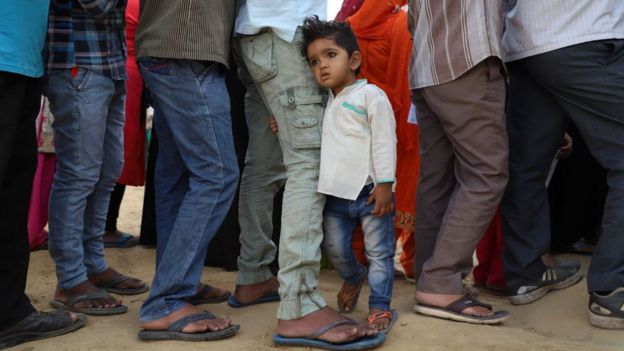
A little boy clutches his father outside a polling booth in Ghaziabad in Uttar Pradesh stateImage copyrightGETTY IMAGES
Image caption A little boy clutches his father outside a polling booth in Ghaziabad in Uttar Pradesh state

In central Chhattisgarh state, suspected Maoists detonated an IED device near a polling booth at around 04:00 local time (23:30 BST) – no injuries were reported.

The mineral-rich state has witnessed an armed conflict for more than three decades and attacks by Maoist rebels on security forces are common. On Tuesday a state lawmaker was killed in a suspected rebel attack.

How big is this election?

It is mind-bogglingly vast – about 900 million people above the age of 18 will be eligible to cast their ballots at one million polling stations. At the last election, vote turn-out was around 66%.

More than 100 million people are eligible to vote in the first phase of the election on Thursday.

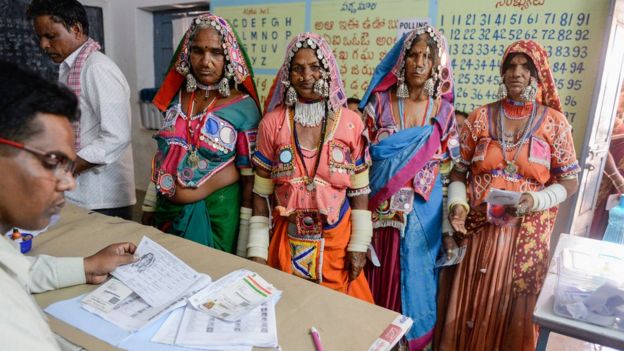
An official checks the names of Indian lambadi tribeswomen at a polling station during India's general election at Pedda Shapur village on the outskirts of Hyderabad on April 11, 2019.Image copyrightGETTY IMAGES
Image caption Indian lambadi tribeswomen at a polling station in southern India

No voter is meant to have to travel more than 2km to reach a polling station. Because of the enormous number of election officials and security personnel involved, voting will take place in seven stages between 11 April and 19 May.

India’s historic first election in 1951-52 took three months to complete. Between 1962 and 1989, elections were completed in four to 10 days. The four-day elections in 1980 were the country’s shortest ever.

Source: The BBC

08/04/2019

India election 2019: Are India’s farmers receiving what they were promised?

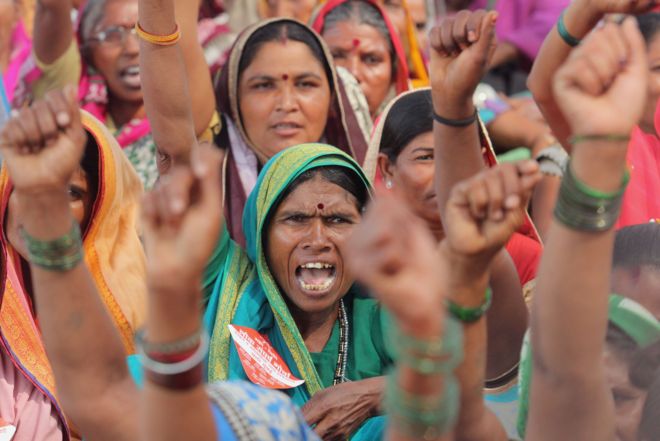
Farmers near Mumbai protesting for better compensationImage copyrightGETTY IMAGES

The plight of India’s farmers has been a major theme in the campaigns ahead of national elections, which get under way on 11 April.

Angry farmers have regularly taken to the streets demanding a better financial deal.

Many find themselves in debt and burdened by other liabilities they’ve taken on to buy seed, fertilisers and equipment.

Thousands of farmers commit suicide every year in India, although the reasons are often complex.

Presentational grey line

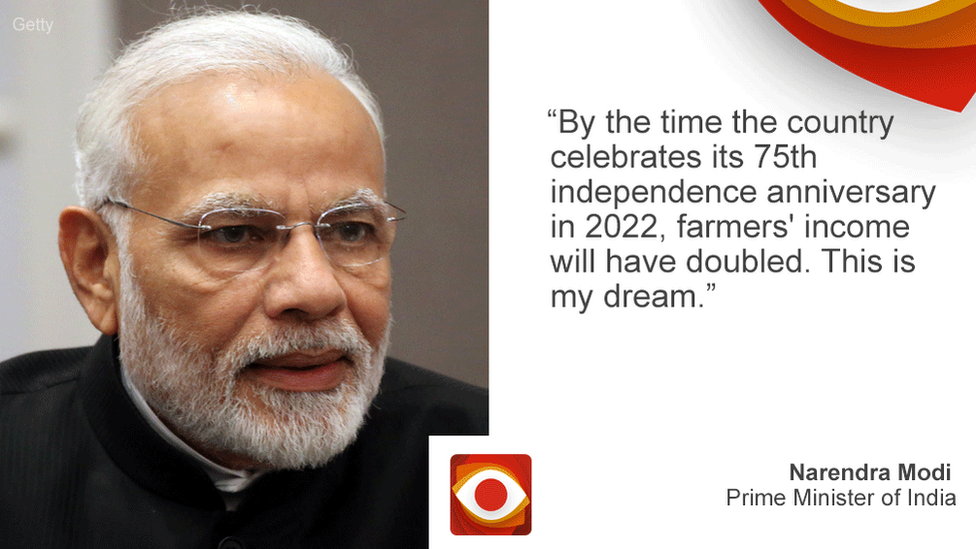
Pledge: Speaking in 2016, India’s Prime Minister, Narendra Modi, said farmers’ incomes would double by 2022.

Verdict: Official data shows farmers’ incomes were rising between 2013 and 2016. Income data for the past two years is not available but there are signs the rural economy is depressed. Unless there is a significant upturn, the doubling of farm incomes by 2022 is unlikely.

Modi quote card
Presentational grey line

The government has now pledged to pay 6,000 Indian rupees (£64) a year to help farmers with holdings of less than two hectares (20,000 sq m), in a bid to reach that goal.

These moves have been criticised by opposition parties as vote-buying ahead of the elections.

The agricultural sector employs more than 40% of the workforce in India, despite its shrinking contribution to the country’s gross domestic product (GDP), the total value of goods and services produced.

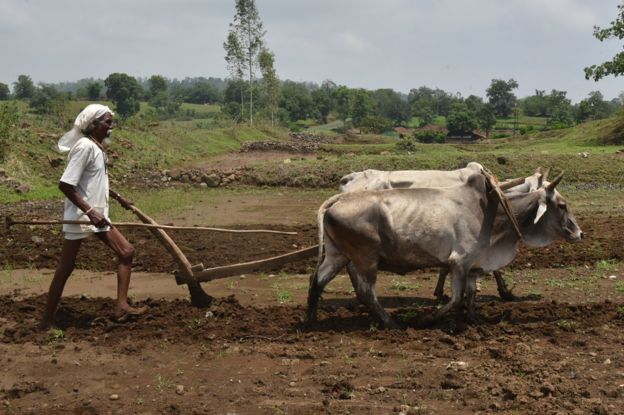
Farmer ploughing field near Jabalpur, India

What’s happened to farming incomes?

In 2016, the average monthly income of a farming household was about 9,000 Indian rupees (£100), according to a survey conducted by the National Bank for Agriculture and Rural Development.

This report also found that farmers’ income had increased by 40% in the three years up to 2016, the latest year for which data is available.

However, there is evidence of a more recent slowdown in the rural economy.

According to one estimate, farm income, which had grown by more than 14% in the year to 2017, slumped to just over a 2% growth rate between 2017 and 2018.

And in several state elections in December 2018, the ruling BJP fared poorly – something put down to growing discontent in rural areas.

What problems do farmers face?

Droughts, bad weather and a lack of modern equipment have plagued Indian agriculture for decades.

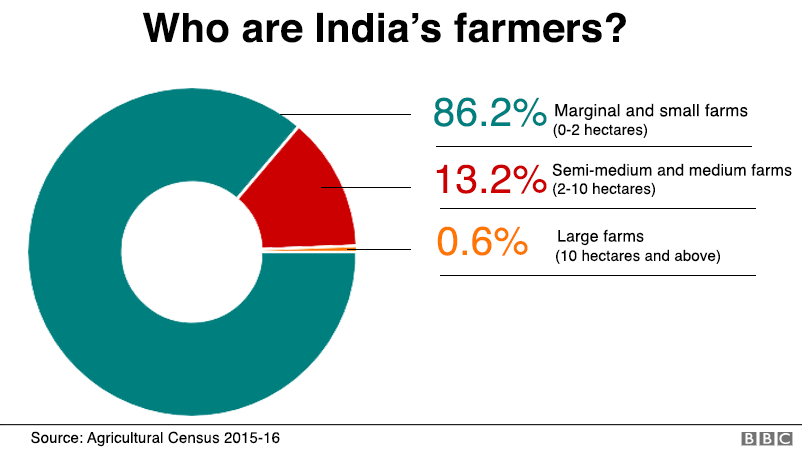
In addition, many of India’s farmers work on vulnerable small or marginal holdings.

Pie chart showing size of farm holdings

The current administration has introduced pro-farming policies that include:

  • a crop insurance scheme
  • a soil health card scheme to improve productivity
  • an online trading platform for agricultural produce

But it’s also faced criticism for other policies that have negatively affected farmers – such as the sudden decision to 2016 withdraw the 500 and 1,000 rupee notes from circulation in a bid to tackle the black economy.

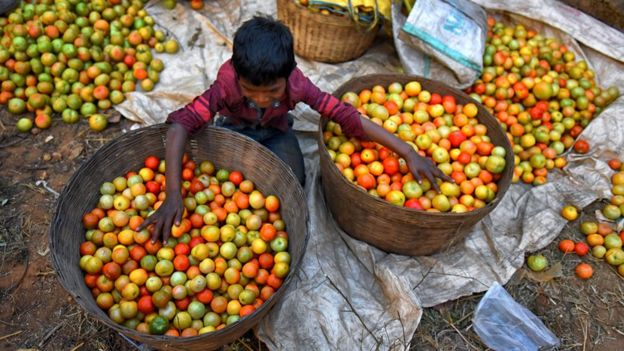
Boy sorting tomato cropImage copyrightGETTY IMAGES
Image captionThere are issues with storage and processing

Why aren’t farmers earning more?

A very good harvest in any year will result in a sharp fall in the price of a commodity.

This helps keep food prices in check for urban consumers but is not so good for rural producers.

To counter this, the government sets a minimum purchase price for major agricultural products each year.

However, a recent official report pointed out serious shortcomings of these price controls.

It cited a lack of awareness among farmers, delays in payments and insufficient facilities to enable farmers to store produce at government-controlled warehouses.

At various times over the years, national and state governments have also announced loan waivers for farmers to write off their debts.

These schemes are expensive and not everyone qualifies for help.

Source: The BBC

26/03/2019

India election 2019: Bringing power to the people

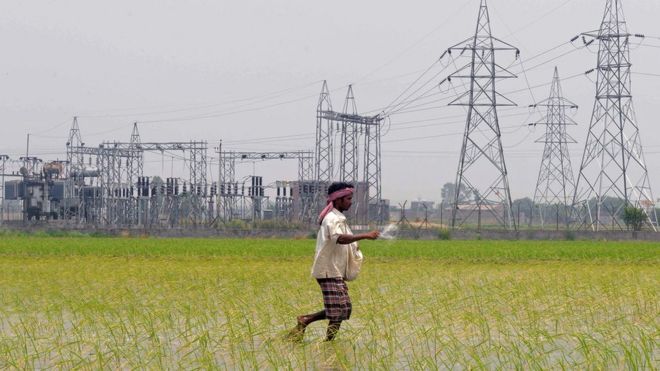
A farmer walks through a lush rice field in rural India with electricity pylons in the backgroundImage copyrightAFP

The Indian Prime Minister, Narendra Modi, said last year that his government had reached its target of providing every village in India with electricity.

“Yesterday, we fulfilled a commitment due to which the lives of several Indians will be changed forever,” Mr Modi tweeted in April 2018.

In the run-up to the Indian election, which gets under way on 11 April, BBC Reality Check examines claims and pledges made by the main political parties.

So does this claim stand up to scrutiny?

Let’s start by looking at villages.

There are almost 600,000 villages in India, according to the 2011 census.

The government defines a village as fully electrified if 10% of its households, as well as public places such as schools and health centres, are connected to the grid.

By this definition, all villages have now been electrified, according to official data.

However, much of the work had been done under the previous governments.

When Mr Modi took office, 96% of all the villages in India were already electrified. That left about 18,000 villages to go.

Before the BJP came to power, India had the world’s largest electricity access deficit – 270 million people.

That accounted for just under a third of the overall global deficit, according to the World Bank’s 2017 State of Electricity Access report.

The World Bank estimates that nearly 85% of the entire population now has access to power supply – that’s slightly higher than the government estimate of 82%.

What about households?

The project Mr Modi launched in September 2017 aimed to provide electricity to all Indian households by December 2018, covering 40 million families, primarily targeting rural India.

Virtually all Indian households have now been electrified, according to the government’s data. As of March, just 19,753 households are left.

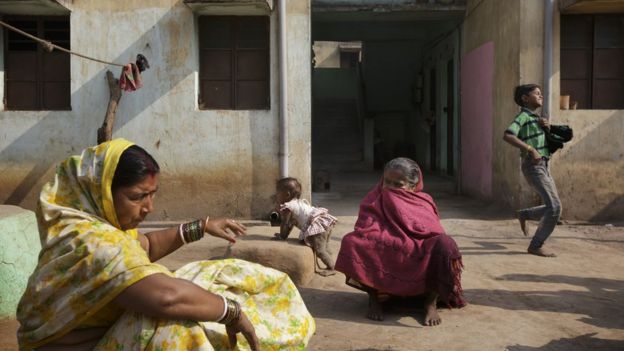
Two Indian women sat opposite each other on the pavement in an Indian village. A boy runs behind them in the background.Image copyrightGETTY IMAGES
Image captionThe quality of the electricity supply is weaker in the northern and eastern states.

The current government has suggested it has been electrifying villages at a faster rate than the previous one.

However, using central electricity authority data, we found that under the previous Congress-led government, an average of more than 9,000 villages a year were being electrified compared with the Modi government’s average of more than 4,000 villages a year.

Problems with supply

Although substantial progress has been made to electrify Indian villages – both by the current and previous administrations – the quality of the supply remains a problem, especially in rural areas.

Only six out of 29 states receive a 24-hour power supply, according to a government response to a question in India’s parliament.

Just under half of villages have more than 12 hours of domestic electricity a day and a third receive between eight and 12 hours, according to government data.

States with the highest percentage of villages that receive between just one and four hours of electricity a day include Jharkhand, Mizoram and Arunachal Pradesh.

Source: The BBC

22/03/2019

India election 2019: When will broadband reach all villages?

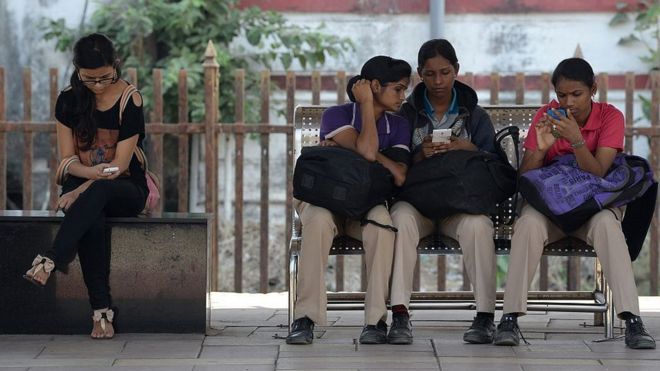
Indian women check their mobile phones at a free Wi-Fi zone in Mumbai in February 2016Image copyrightGETTY IMAGES

India’s Prime Minister Narendra Modi wants more than a billion Indians connected to the internet – and his BJP government is counting on a project taking cheap high-speed broadband to rural areas to achieve this.

The project, to build a nationwide optical fibre network, was launched in 2014 and is the flagship scheme of the government’s Digital India programme.

In the run-up to the Indian election, which gets under way on 11 April, BBC Reality Check is examining claims and pledges made by the main political parties.

So has the project been a success?

Presentational grey line

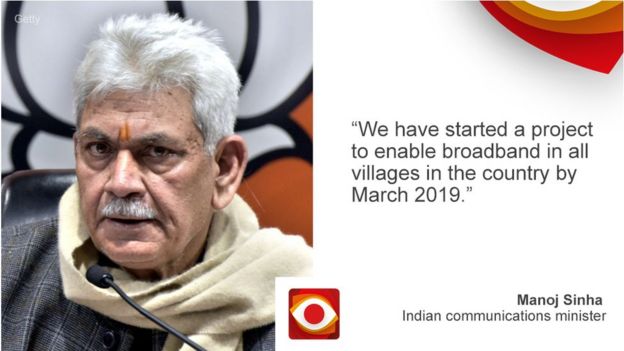
Pledge: Indian Communications Minister Manoj Sinha promised to provide every village in the country with high speed broadband and that this would be achieved by March 2019.

Verdict: The project to set up digital infrastructure in rural India has made substantial headway but has so far achieved less than 50% of its intended target.

Quote card for Indian minister of state (communications) Manoj Sinha
Presentational grey line

An ambitious plan

India has the second highest number of internet users in the world but the penetration is quite low for its size and population.

The BharatNet scheme aims to connect more than 600,000 villages in India with a minimum broadband speed of 100Mbps.

It would enable local service providers to offer internet access to the local population, primarily through mobile phones and other portable devices.

India’s telecom regulator says there were 560 million internet connections in India in September last year.

What’s been achieved so far?

The government’s overall target is to connect 250,000 village councils covering more than 600,000 individual villages across the country.

The work of laying cables and installing equipment to connect 100,000 of them was finally completed in December 2017 after significant delays.

This milestone was hailed a success but there were also critical voices, especially from government opponents about whether the cables were actually operational.

Indian villagers from a self-help group with laptops in Bibinagar village outskirts of Hyderabad on 7 March 2013Image copyrightGETTY IMAGES

The next phase, to connect the remaining councils by March 2019, has been under way for a year now.

In total, as of the end of January this year, official data shows optical fibre cables have been laid in 123,489 village councils – and equipment installed in 116,876 of them.

There is also a plan to install wi-fi hotspots in more than 100,000 council areas – but as of January these were operational in only 12,500 of them.

Old plan, new name

It has been an ambition of successive governments to connect all India to the internet but plans have hit many roadblocks.

BharatNet was first conceived in 2011 by the then Congress government as the National Optical Fibre Network but did not make much headway in its pilot phase.

A parliamentary committee said the project had been affected by “inadequate planning and design” from 2011 to 2014.

When the BJP came to power in 2014, it took over the project and has pushed ahead with national broadband coverage.

And in January last year, the government said it would complete the work ahead of the stipulated deadline of March 2019.

Has the deadline been met?

There was impressive progress made in 2016 and 2017 but since then the pace has slowed.

In January this year, the agency executing BharatNet said 116,411 village councils were “service ready”.

This means that provisions for ready-to-use connectivity have been made.

But not all “service ready” village councils have proper connections, says Osama Manzar, from the non-governmental Digital Empowerment Foundation (DEF).

DEF found that only 50 of 269 “service ready” councils inspected across 13 states in 2018 had the required device and internet connection set-up.

And only 31 of them had “functional”, but slow, internet connections.

Mr Manzar notes that this is problematic considering “the public welfare distribution and the financial sectors rely heavily on digital infrastructure today”.

Another report, citing an internal official memo, said most of the councils had non-functioning networks or faulty equipment.

Next steps

BharatNet has faced also difficulties with electricity supply, theft, low-quality cables and poorly maintained equipment.

And these delays come as India aims to provide broadband in all households and move to 5G networks by 2022.

An official source defended BharatNet as a large-scale infrastructure project tackling difficult sites and not a service scheme, saying it was natural to see delays between set-up and use.

Source: The BBC

21/03/2019

India election 2019: Will fast broadband reach all villages?

Indian women check their mobile phones at a free Wi-Fi zone in Mumbai in February 2016Image copyrightGETTY IMAGES

India’s Prime Minister Narendra Modi wants to connect more than a billion Indians to the internet – and his BJP government is counting on a project taking cheap high-speed broadband to rural areas to achieve this.

The project, to build a nationwide optical fibre network, was launched in 2014 and is the flagship scheme of the government’s Digital India programme.

In the run-up to the Indian election, which gets under way on 11 April, BBC Reality Check is examining claims and pledges made by the main political parties.

So has the project been a success?

Presentational grey line

Pledge: Indian Communications Minister Manoj Sinha promised to provide every village in the country with high speed broadband and that this would be achieved by March 2019.

Verdict: The project to set up digital infrastructure in rural India has made substantial headway but has so far achieved less than 50% of its intended target.

Quote card for Indian minister of state (communications) Manoj Sinha
Presentational grey line

An ambitious plan

India has the second highest number of internet users in the world but the penetration is quite low for its size and population.

The BharatNet scheme aims to connect more than 600,000 villages in India with a minimum broadband speed of 100Mbps.

It would enable local service providers to offer internet access to the local population, primarily through mobile phones and other portable devices.

India’s telecom regulator says there were 560 million internet connections in India in September last year.

India’s broadband users

Source:

But the pace of internet adoption is lower in rural areas, where most Indians live.

What’s been achieved so far?

The government’s overall target is to connect 250,000 village councils covering more than 600,000 individual villages across the country.

The work of laying cables and installing equipment to connect 100,000 of them was finally completed in December 2017 after significant delays.

This milestone was hailed a success but there were also critical voices, especially from government opponents about whether the cables were actually operational.

Indian villagers from a self-help group with laptops in Bibinagar village outskirts of Hyderabad on 7 March 2013Image copyrightGETTY IMAGES

The next phase, to connect the remaining councils by March 2019, has been under way for a year now.

In total, as of the end of January this year, official data shows optical fibre cables have been laid in 123,489 village councils – and equipment installed in 116,876 of them.

There is also a plan to install wi-fi hotspots in more than 100,000 council areas – but as of January these were operational in only 12,500 of them.

Old plan, new name

It has been an ambition of successive governments to connect all India to the internet but plans have hit many roadblocks.

BharatNet was first conceived in 2011 by the then Congress government as the National Optical Fibre Network but did not make much headway in its pilot phase.

A parliamentary committee said the project had been affected by “inadequate planning and design” from 2011 to 2014.

When the BJP came to power in 2014, it took over the project and has pushed ahead with national broadband coverage.

And in January last year, the government said it would complete the work ahead of the stipulated deadline of March 2019.

Has the deadline been met?

There was impressive progress made in 2016 and 2017 but since then the pace has slowed.

In January this year, the agency executing BharatNet said 116,411 village councils were “service ready”.

This means that provisions for ready-to-use connectivity have been made.

Status of BharatNet project

Source: Bharat Broadband Network Limited

But not all “service ready” village councils have proper connections, says Osama Manzar, from the non-governmental Digital Empowerment Foundation (DEF).

DEF found that only 50 of 269 “service ready” councils inspected across 13 states in 2018 had the required device and internet connection set-up.

And only 31 of them had “functional”, but slow, internet connections.

Mr Manzar notes that this is problematic considering “the public welfare distribution and the financial sectors rely heavily on digital infrastructure today”.

Another report, citing an internal official memo, said most of the councils had non-functioning networks or faulty equipment.

Next steps

BharatNet has faced also difficulties with electricity supply, theft, low-quality cables and poorly maintained equipment.

And these delays come as India aims to provide broadband in all households and move to 5G networks by 2022.

An official source defended BharatNet as a large-scale infrastructure project tackling difficult sites and not a service scheme, saying it was natural to see delays between set-up and use.

Source: The BBC

20/03/2019

India election 2019: Are three times more roads being built?

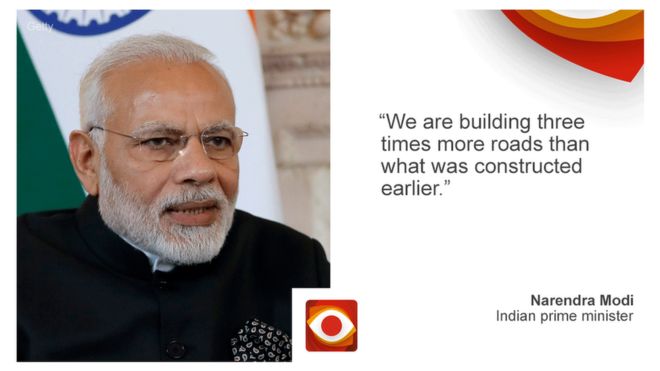
Quote card of PM Modi

In April 2018, India’s Prime Minister, Narendra Modi, said his government was building more roads than ever.

“Today, the volume of work that is being done every day is three times what was done previously,” he said.

India has one of the largest road networks in the world, covering a total of 5.5 million km (3.4 million miles).

In the run-up to the Indian election, which gets under way on 11 April, BBC Reality Check is examining claims and pledges made by the main political parties.

Presentational grey line

Claim: The current government says it is building three times as many roads in India, compared with previous governments.

Verdict: Road-building has gone up significantly under this government, although not as much as Mr Modi has claimed.

Presentational grey line
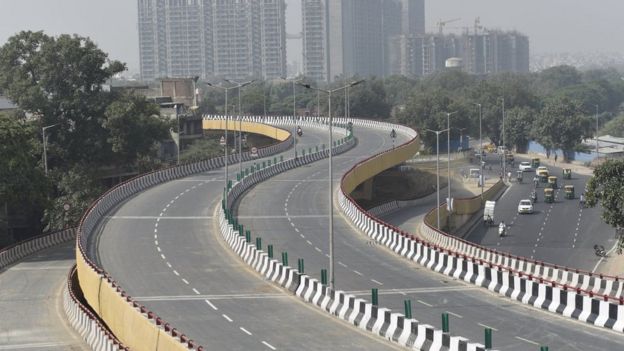
New highway near DelhiImage copyrightGETTY IMAGES
Image captionA recently opened stretch of highway in Delhi

Road infrastructure in India is divided into three categories:

  • national highways
  • state highways
  • rural roads

At independence in 1947 the total length of national highways in India – the main routes that cross the country – was around 21,000km.

By 2018, it had gone up to almost 130,000km.

National highways are funded and constructed by the government, in Delhi, and state highways by state governments across India.

Rural roads come under the Ministry of Rural Development, in Delhi.

Presentational grey line

Construction rate rises

Official government data for the past decade shows the total length of highways built each year increased sharply after 2014, when the BJP came to power.

In its last year in office, in 2013-14, the previous Congress-led government built 4,260km of national highway.

In 2017-18, the current BJP government built a total of 9,829km of highway – more than double but not as much as three times the 2013-14 figure.

National highways in India

In a December 2018 review, the Ministry of Road Transport and Highways said more than 300 government highway projects would be completed by the end of 2019.

The present government has also set aside increasing amounts in the budget each financial year for developing national highways.

Budget allocated to highways

The Highways and Transport Minister, Nitin Gadkari, has said roads and highways are “a country’s assets”

Rural road building

Plans for extending roads in rural areas are not new – in fact, they date back to a previous BJP-led government in 2000.

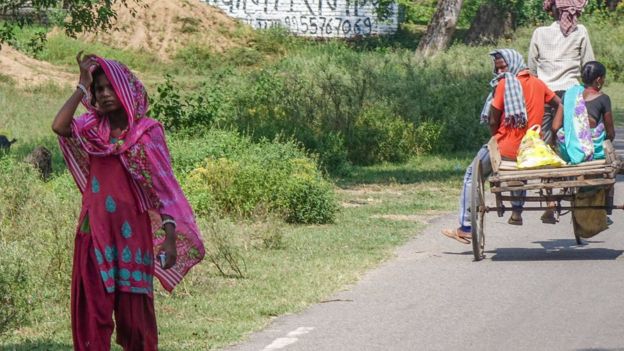
India rural roadImage copyrightGETTY IMAGES
Image captionThe BJP claimed that construction of rural roads reached an all-time high in 2016-2017

In May last year, the current BJP government said more than 47,000km of rural roads had been constructed in the financial year 2016-17.

“Construction of rural roads reached an all-time high in 2016-17, under the Modi government,” it said.

However, official data for the past decade shows that 2009-10 saw an even higher length of rural roads built – 60,117km.

And this was when a Congress-led government was in power.

Rural roads built in India

Sine the BJP came to power, the budget for rural roads has increased every financial year – to expand the network to less accessible areas.

And the World Bank, which has been helping finance rural road building since 2004, said, in a report issued in December 2018, that progress had been “highly satisfactory”.

Source: The BBC

18/03/2019

India election 2019: Is India’s bullet train on time?

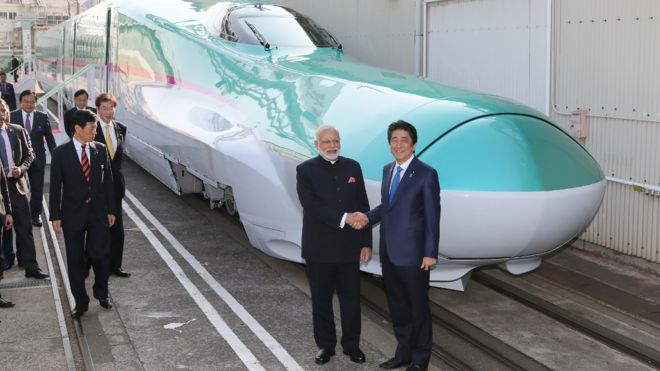
Modi and Abe with bullet trainImage copyrightGETTY IMAGES

India has undertaken an ambitious project for a bullet train to run between two of the country’s major cities.

A deal was signed in 2015 with Japan, which is helping to finance its construction.

The project is part of the government’s commitment to revitalise the country’s creaking 165-year-old rail network.

In the run-up to the Indian election, which gets under way on 11 April, BBC Reality Check is examining claims and pledges made by the main political parties.

Presentational grey line

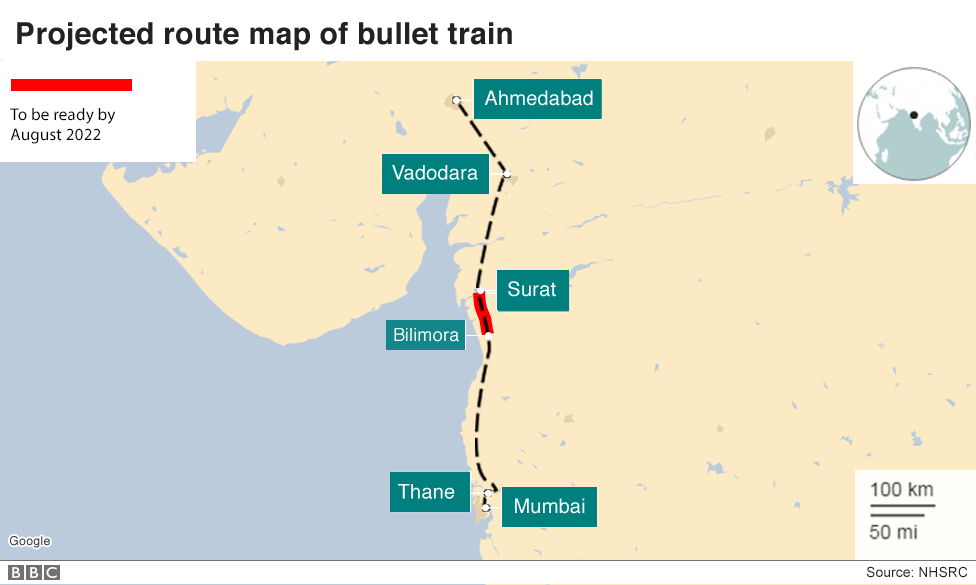
Claim: India will have a bullet train service running by August 2022. This will run down the west coast, connecting the cities of Mumbai and Ahmedabad.

Verdict: Passengers may get to experience a modern high-speed train on just a small section of line by 2022. It looks unlikely the promised bullet train will be fully operational by then or even by the following year.

Presentational grey line

The bullet train project was officially launched at a ceremony in September 2017 attended by the Japanese Prime Minister, Shinzo Abe.

That year, the Indian Ministry of Railways said “all-out efforts” would be made to complete the high speed rail project by 15 August 2022.

However, officials involved with the plan now estimate that only a small part of the route will be completed by this time, with the rest finished in 2023.

The Congress opposition leader, Rahul Gandhi, has described it as a “magic train” that will never be completed.

Why is it needed?

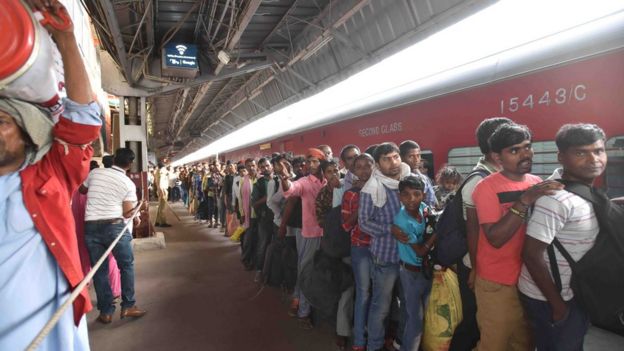
India’s vast rail network offers a cheap and vital transport service for 22 million people a day on about 9,000 trains.

But travellers have long complained of poor services and a lack of investment in modernisation.

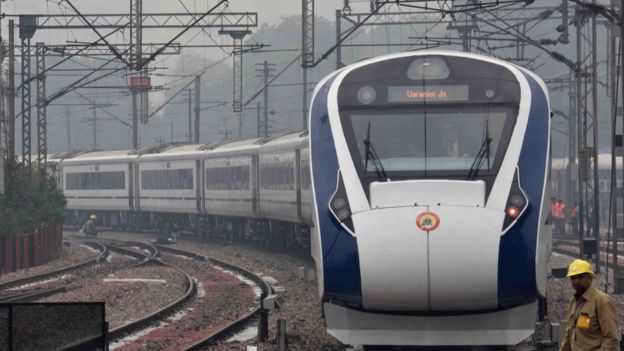
Vande Bharat leaving DelhiImage copyrightGETTY IMAGES
Image captionIndia’s Vande Bharat train – the fastest currently in service

Currently, India’s fastest train is the Vande Bharat Express, which has reached 180km/h (110mph) during trials.

The Japanese bullet train is almost twice as fast, capable of speeds up to 320km/h (200mph).

Once completed, the $15bn (£11bn) high-speed rail route will connect India’s major business and financial hub of Mumbai with important business centres in Gujarat state such as Surat and Ahmedabad.

The 500km-long journey now takes about eight hours.

That’s expected to drop to well under three hours, with the fastest journey times estimated at just two hours and seven minutes.

Map of bullet train route

When will it be finished?

Some experts think even the current deadline given by officials, of December 2023, is overly optimistic.

“I am not sure – considering how slow things are moving,” Debolina Kundu, an associate professor at the National Institute of Urban Affairs, told BBC News.

“And there are bureaucratic hurdles.”

Presentational grey line

Read more from Reality Check

Presentational grey line

The main obstacle is land acquisition.

The train project needs to acquire more than 1,400 hectares (14 sq km) of land, most of it privately owned.

The National High Speed Rail Corporation had been aiming to complete this process by the end of last year but has recently said it will continue until mid-2019.

In February, it told BBC News there were now agreements with more than 1,000 landowners – out of an estimated total of 6,000.

New Delhi railway station queueImage copyrightGETTY IMAGES

One barrier to the land sales has been dissatisfaction with the amount of compensation being offered to the owners.

There have been protests in some areas over plans for land acquisition – and multiple petitions filed in the courts.

And in India, court cases challenging land acquisition can drag on for years.

But those running the project say they are paying compensation of 25% above the legal requirement.

Another potential barrier is the need for wildlife and other environmental clearances, as the train will pass through three wildlife areas and coastal regions.

It will also cross areas classified as forest – and this land can be acquired only once environmental impact studies have been completed and reforestation plans drawn up.

Source: The BBC

16/03/2019

India election 2019: The mystery of 21 million ‘missing’ women voters

Indians, including a woman, at a polling boothImage copyrightAFP
Image captionMore than half of India’s “missing” women voters are from three northern states

Indian women got the right to vote the year their country was born. It was, as a historian said, a “staggering achievement for a post-colonial nation”. But more than 70 years later, why are 21 million women in India apparently being denied the right to vote?

It is one of India’s many social riddles.

Women have been enthusiastic voters in India: voter turnout among women will be higher in this year’s general election than that of men. Most women say they are voting independently, without consulting their spouses and families.

To make them secure, there are separate queues for women at polling stations and female police officers guarding them. Polling stations contain at least one female officer.

More than 660 women candidates contested the 2014 elections, up from 24 in the first election in 1951. And political parties now target women as a separate constituency, offering them cheap cooking gas, scholarships for studies and bicycles to go to college.

‘Major problem’

Yet, a truly astonishing number of women – equal to the population of Sri Lanka – appear to be “missing” from India’s voters lists.

In their upcoming book, The Verdict: Decoding India’s Elections, poll experts Prannoy Roy and Dorab Sopariwala find that the available data on women points to this.

They looked at the number of women above the age of 18 in the census, extrapolated it, and compared it to the number of women in the latest list of voters. And they found a sizeable “shortfall” – 21 million to be exact – in the number of female voters.

Three states – Uttar Pradesh, Maharashtra and Rajasthan – accounted for more than half of the missing female voters. Southern states such as Andhra Pradesh and Tamil Nadu fare better.

India women votersImage copyrightAFP
Image captionMore women are expected to vote than men in the 2019 elections

What does this mean?

More than 20 million missing women, analysts say, translates into 38,000 missing women voters on average in every constituency in India. In places like Uttar Pradesh, India’s most populous and a key bellwether state, the figure swells to 80,000 missing women in every seat.

Given that more than one in every five seats are won or lost by a margin of fewer than 38,000 votes, the missing women could swing the results in many seats. The absence of a large number of women also means that India’s electorate would be higher than the 900 million people who are eligible to vote in the summer elections. If the sex ratio in a constituency is skewed against women and the average voter is male, the preferences of female voters are likely to be ignored.

“Women want to vote, but they are not allowed to vote. This is deeply worrying. It also raises a lot of questions. We know that there are some social reasons behind this problem. But we also know that by controlling turnouts you can control results. Is that one of the reasons? We really need to investigate further to get to the truth,” Prannoy Roy told me.

Presentational grey line

Read more from Soutik Biswas

Presentational grey line

With a sex ratio that is skewed in favour of men, India has had a problem of missing women for a long time.

Last year, a government report found that 63 million women were “missing” from India’s population because the preference for sons led to sex-selective abortions and more care was given to boys. Separately, economists Shamika Ravi and Mudit Kapoor estimated that more than 65 million women – some 20% of the female electorate – were missing. This included women who were not registered to vote and women “who were not in the population because of gross neglect” (worsening sex ratio, which reflected the gross neglect). So elections, they said, were “revealing the preferences or the will of a population that is artificially skewed against women”.

It’s not that election authorities haven’t worked hard to get more women to vote.

The Election Commission adopts a rigorous statistical method – gender ratios, elector-population ratios and ages of voters – to make sure that eligible voters are not left out. There is doorstep verification of voters and a substantial number of officials involved in this exercise are women. In villages, child welfare workers and women’s self-help groups are roped in. State-run TV and radio programmes motivate women to register. There are even polling stations dedicated exclusively to women.

An Indian policewoman on election dutyImage copyrightAFP
Image captionPolicewomen are deployed at polling stations during elections

So why are so many women still missing from the rolls? Is it because many women shift residence after marriage and fail to register anew? (Less than 3% of Indian women aged 30-34 are single.) Is it because families still refuse to provide photographs of women to officials to publish in voters lists? Or does this exclusion have something to do with the “dark arts of voter suppression”?

“There is some social resistance, but it doesn’t explain such large scale exclusion,” says Dr Roy.

People who have helped organise elections in India say there is no reason to panic. Former election commissioner SY Quraishi told me that the enrolment of women had gone up steadily over the years. “There is social resistance to enrolling women still,” he says.

“I have heard of parents not registering their daughter because they don’t want to reveal her age, because they feel it will end up hurting their prospects for marriage. We have also been sometimes indifferent in our outreach to rope in more women voters,” he said.

With the 2019 elections barely a month away, there’s no time to fix this problem. Dr Roy believes there’s only one way out – to let women vote even if they are not registered.

“Any woman who comes to a polling station and wants to cast her vote, and can prove she is 18 years old, must be allowed to vote,” he says.

Source: The BBC

Law of Unintended Consequences

continuously updated blog about China & India

ChiaHou's Book Reviews

continuously updated blog about China & India

What's wrong with the world; and its economy

continuously updated blog about China & India