30/05/2020
- Embassy in France removes ‘false image’ on Twitter in latest online controversy amid accusations of spreading disinformation
- After months of aggressive anti-US posts by Chinese diplomats Beijing is cracking down on ‘smear campaigns’ at home
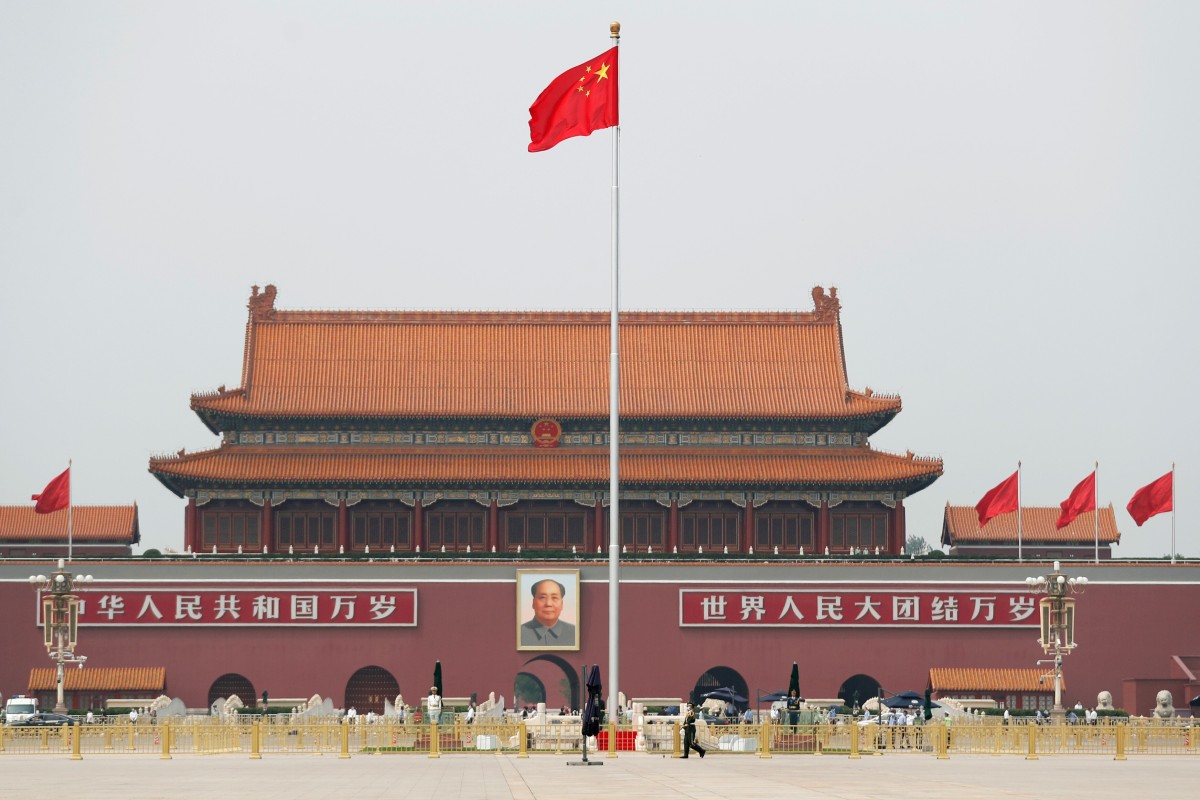
Beijing’s ‘Wolf Warrior’ diplomacy has coincided with a rise of nationalist content on Chinese social media. Photo: Reuters
Beijing is battling allegations that it is running a disinformation campaign on social media, as robust posts by its diplomats in Western countries promoting nationalist sentiment have escalated into a spat between China and other countries, especially the United States.
In the latest in a series of online controversies, the Chinese embassy in France claimed its official Twitter account had been hacked after it featured a cartoon depicting the US as Death, knocking on a door marked Hong Kong after leaving a trail of blood outside doors marked Iraq, Libya, Syria, Ukraine and Venezuela. The inclusion in the image of a Star of David on the scythe also prompted accusations of anti-Semitism.
Top China diplomats call for ‘Wolf Warrior’ army in foreign relations
25 May 2020
“Someone posted a false image on our official Twitter account by posting a cartoon entitled ‘Who is Next?’. The embassy would like to condemn it and always abides by the principles of truthfulness, objectivity and rationality of information,” it said on Monday.
The rise of China’s aggressive “Wolf Warrior” diplomacy has been regarded by analysts as primarily aimed at building support for the government at home but the latest incident is seen as an attempt by Beijing to take back control of the nationalist narrative it has unleashed.
Florian Schneider, director of the Leiden Asia Centre in the Netherlands, said the removal of the embassy’s tweet reflected a constant concern in Beijing about the range of people – including ordinary citizens – who were involved in spreading nationalistic material online.
“The state insists that its nationalism is ‘rational’, meaning it is meant to inspire domestic unity through patriotism but without impacting national interests or endangering social stability,” he said.
“This makes nationalism a mixed blessing for the authorities … if nationalist stories demonise the US or Japan or some other potential enemy, then any Chinese leader dealing diplomatically with those perceived enemies ends up looking weak.
“Trying to guide nationalist sentiment in ways that further the leadership’s interests is a difficult balancing act and I suspect this is partly the reason why the authorities are currently trying to clamp down on unauthorised, nationalist conspiracy theories.”
Too soon: Chinese advisers tell ‘Wolf Warrior’ diplomats to tone it down
The report came after months of social media posts – including by Chinese diplomats – defending China against accusations it had mishandled the coronavirus pandemic and attacking the US and other perceived enemies.
In March, Chinese foreign ministry spokesman Zhao Lijian promoted a conspiracy theory on Twitter suggesting the virus had originated in the US and was brought to China by the US Army. His comments were later downplayed, with China’s ambassador to the US Cui Tiankai saying questions about the origin of the virus should be answered by scientists.
Schneider said this showed that the state-backed nationalistic propaganda online was at risk of backfiring diplomatically.
“The authorities have to constantly worry that they might lose control of the nationalist narrative they unleashed, especially considering how many people produce content on the internet, how fast ideas spread, and how strongly commercial rationales drive misinformation online,” he said.
Last month, a series of widely shared social media articles about people in different countries “yearning to be part of China” resulted in a diplomatic backlash against Beijing. Kazakhstan’s foreign ministry summoned the Chinese ambassador in April to lodge a formal protest against the article.
Following the incident, the Cyberspace Administration of China, the country’s internet regulator which manages the “firewall” and censors material online, announced a two-month long “internet cleansing” to clear privately owned accounts which engage in “smear campaigns”.
A popular account named Zhidao Xuegong was shut down by the Chinese social media platform WeChat’s owner Tencent on Sunday after publishing an article which claimed Covid-19 may have killed 1 million people in the US and suggested the dead were “very likely” being processed as food.
The article had at least 100,000 readers, with 753 people donating money to support the account. According to Xigua Data, a firm that monitors traffic on Chinese social media, the account garnered more than 1.7 million page views for 17 articles in April.
According to a statement from WeChat, the account was closed for fabricating facts, stoking xenophobia and misleading the public.
A journalism professor at the University of Hong Kong said this case differed from the Chinese embassy’s tweet, despite both featuring anti-US sentiment.
Masato Kajimoto, who leads research on news literacy and the misinformation ecosystem, said the closure of the WeChat account seemed to be more about Chinese authorities feeling the need to regulate producers of media content whose motivations were often financial rather than political.
“I would think the government doesn’t like some random misinformation going wild and popular, which affects the overall storylines they would like to push, disseminate and control,” he said.
One way for China to respond to the situation was to fact-check social media and to position itself as a protector facts and defender of the integrity of public information, he said.
“In the age of social media, both fake news and fact-checking are being weaponised by people who try to influence or manipulate the narrative in one way or another,” Kajimoto said.
“Not only China but also many other authoritarian states in Asia are now fact-checking social media. Governments in Singapore, Thailand, Indonesia and other countries all do that.
“Such initiatives benefit them because they can decide what is true and what is not.”
Source: SCMP
Posted in abides, accusations, aggressive, allegations, anti-Semitism, anti-US posts, at home, ‘false image’, ‘smear campaigns’, ‘Who is Next?, ‘Wolf Warrior’ army, “internet cleansing”, “Wolf Warrior”, battles, battling, Beijing, campaign, cartoon, censors, China, Chinese ambassador, Chinese diplomats, chinese foreign ministry spokesman, Chinese social media, coincided, condemn it, conspiracy theories, control, controversy, coronavirus outbreak, Coronavirus pandemic, cracking down, Death, diplomacy, disinformation, door, doors, embassy, European Union, firewall, foreign relations, France, Hong Kong, Indonesia, information, Iraq, Kazakhstan’s foreign ministry, knocking, leaving, Leiden Asia Centre, Libya, marked, narrative, nationalist, nationalist content, objectivity, online, principles, prompted, rationality, removes, running, scythe, Singapore, social media, spreading, Star of David, Syria, TENCENT, Thailand, the Netherlands, trail of blood, truthfulness, Twitter, Ukraine, Uncategorized, United States, University of Hong Kong, Venezuela, weaponised, WeChat’s, xenophobia, Xigua Data |
Leave a Comment »
06/04/2020
- Embassy says those flown back must pay for themselves, and praises the US health system, in a departure from the war of words with Washington
- More than a million Chinese students remain overseas, but China is on alert against the threat of imported infections
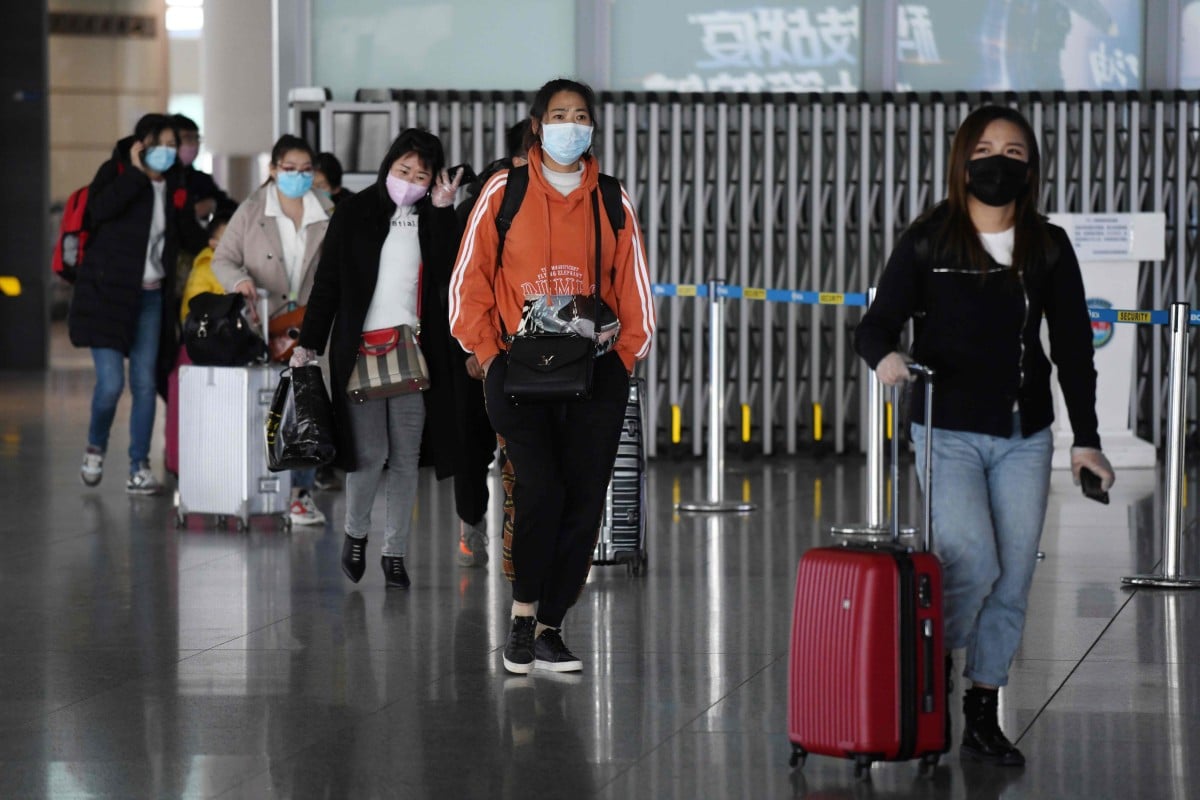
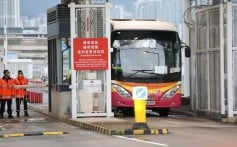
China has drastically cut flights to try to prevent people who arrive from abroad importing the coronavirus. Photo: AFP
Chinese students could be flown home from
coronavirus hotspots such as the United States but will have to pay their own expenses, amid efforts by Beijing to persuade some to remain overseas rather than risk bringing the infection with them.
A statement posted on the website of China’s Washington embassy on Monday said that the Chinese government was aware that many school and university students had encountered difficulties in travelling back to China and was taking steps to arrange charter flights for those who needed to return urgently.
With the initial coronavirus outbreak appearing to have been largely contained in mainland China, some Chinese students have travelled home despite soaring air ticket prices and the requirement that those who have been overseas enter quarantine.
Students brought back on charter flights would still need to pay for the ticket and the costs of the mandatory 14-day quarantine upon arrival in China.
Trump says US approaching a ‘horrendous’ time as coronavirus death toll rises
More than 1.6 million Chinese are studying overseas, including about 410,000 in the US. At least 1.42 million Chinese students remained overseas, vice foreign minister Ma Zhaoxu said on Thursday.
Having initially boasted of its success in stopping the virus, Beijing has become notably cautious in recent weeks about welcoming overseas students back home, especially with imported cases continuing to rise.
China’s foreign ministry and its overseas missions have urged students considering travelling home to exercise caution. The embassy in the US issued a notice on Friday speaking highly of the American medical system and its response to the pandemic, in a marked departure from Beijing’s narrative, which has included pinning the blame for the pandemic on the United States.
Friday’s embassy notice also dismissed rumours that Chinese students had been targeted because of the coronavirus during the closures of universities, and pledged help if students had trouble communicating with universities about campus accommodation.
China advises foreign diplomats to stay away from Beijing until May 15
3 Apr 2020
Ma said that most overseas students had heeded his government’s advice and chosen not to go back to China, but an online survey late last month that was cited by Caixin magazine on Saturday showed nearly 60 per cent of Chinese students in the US wanted to return home.
Most of the 4,000 students polled said they were unable to make the trip because of concerns about contracting the coronavirus during the journey and air fares that had more than doubled recently. Both China and the US have drastically cut back long-haul international flights.
After weeks stranded in Peru, 65 Hongkongers return home
Students under 18 years of age who want to return to China are required by the embassy to register online.
The initial evacuation plan announced on Monday proposed to prioritise school-age children whose parents were not in the US with them. The proposed arrangement appeared to include students from Hong Kong, Macau and Taiwan.
Source: SCMP
Posted in air ticket, American medical system, Beijing, Beijing’s, Caixin magazine, campus accommodation, charter flights, China’s Foreign Ministry, chinese government, Chinese students, coronavirus, coronavirus outbreak, declined, difficulties, embassy, encountered, foreign diplomats, Home, Hong Kong, Hongkongers, hotspots, infections, long-haul international flights, Macau, Mainland China, marked departure, narrative, offers, overseas, overseas missions, own expenses, pandemic, Peru, pinning the blame, prices, quarantine, requirement, school, students, Taiwan, to fly, travelling, Trump, Uncategorized, United States, university, urgently, US, US health system, Washington |
Leave a Comment »
16/10/2019
- Luo Zhaohui, who was credited with helping to resolve 2017 Doklam stand-off peacefully, joins group set up to tackle global warming
Luo Zhaohui previously served as China’s ambassador to India. Photo: Handout
China’s former ambassador to India Luo Zhaohui has joined a national team in charge of fighting climate change, the Chinese government website has announced.
The team, led by Premier Li Keqiang, will be responsible for coming up with proposals to tackle the problem, develop proposals for energy conservation and analyse the impact of climate change on socio-economic development.
China is currently the world’s largest polluter, accounting for a quarter of the world’s total emissions, making it crucial in the effort to curb global warming.
The US withdrawal from the Paris Climate Agreement in 2017 also makes China the largest single economy committed to the efforts to limit emissions.
In this post, Luo is in charge of Beijing’s relations with its Asian neighbours, replacing Kong Xuanyou, who was named China’s new ambassador to Japan.
In July 2017, Luo told media in New Delhi that the Chinese people were deeply angry over the “occupation” by Indian troops of its sovereign territory but helped to resolve the situation through diplomatic means, paving the way for an informal summit between President Xi Jinping and Prime Minister Narendra Modi in Wuhan last year.
Luo, 57, has also served in diplomatic missions in Singapore and the US and was head of the foreign ministry’s department for Asian affairs.
He previously served as ambassador to Pakistan and Canada before being posted to the embassy in New Delhi in India in 2016.
Source: SCMP
Posted in 2017 Doklam stand-off, against, Ambassador, Asian neighbours, Beijing, canada, China alert, Chinese deputy foreign minister, Chinese premier Li Keqiang, climate change, dedicated, embassy, former ambassador, India, Japan, joins team, largest polluter, National Leading Group Dealing with Climate Change, Energy Conservation and Emissions Reduction, New Delhi, Pakistan, Paris climate agreement, President Xi Jinping, Prime Minister Narendra Modi, Singapore, to fight, Uncategorized, US, Wuhan |
Leave a Comment »
22/04/2019
- Embassy officials have contacted families of two Chinese nationals who were killed in the blasts on Easter Sunday, and visited five who were injured
- Four of the missing were travelling to the Indian Ocean on a study trip
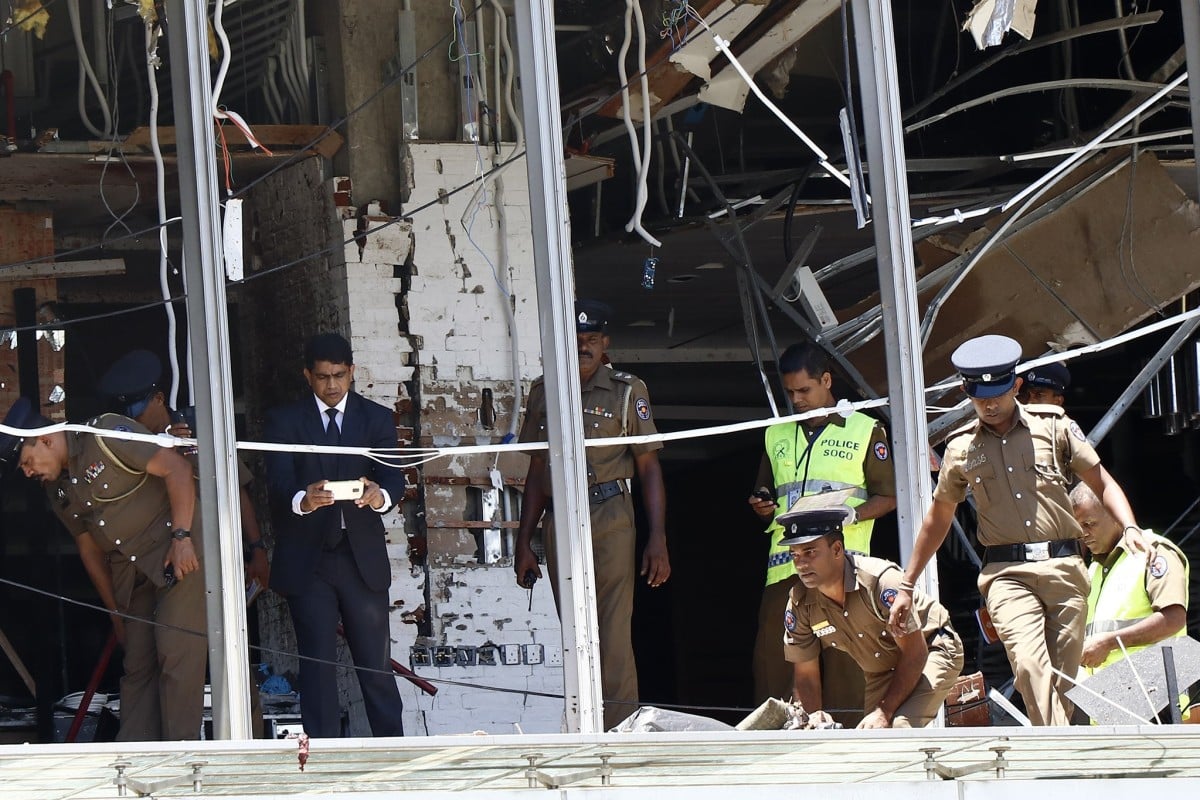
Police and investigators work at the Shangri-La Hotel blast scene in Colombo on Sunday, where the two Chinese were killed. Photo: Xinhua
Five Chinese nationals remain missing following a series of suicide bombings in hotels and churches in Sri Lanka on Easter Sunday that claimed the lives of
At least 290 people were killed and more than 500 others injured in the blasts, according to a Sri Lankan government official on Monday, who said a local militant group was behind the attacks.
The Chinese embassy in Colombo had contacted the families of the two deceased Chinese and was awaiting police confirmation on the fate of the five still missing, state-run People’s Daily reported.
Two Chinese nationals sustained serious injuries in the blasts and three others minor ones. Embassy officials had visited them several times in hospital, the report said.
“The embassy will closely monitor the situation, urge Sri Lankan police to confirm the whereabouts of the missing persons and assist Chinese citizens and families to properly handle the aftermath,” the embassy was quoted as saying.
The two Chinese who died, cousins surnamed Tan, were caught in a blast at the Shangri-La Hotel in Colombo, Red Star News quoted a Chinese businesswoman in the Sri Lankan capital as saying.
“Their families identified them at the scene,” she said.
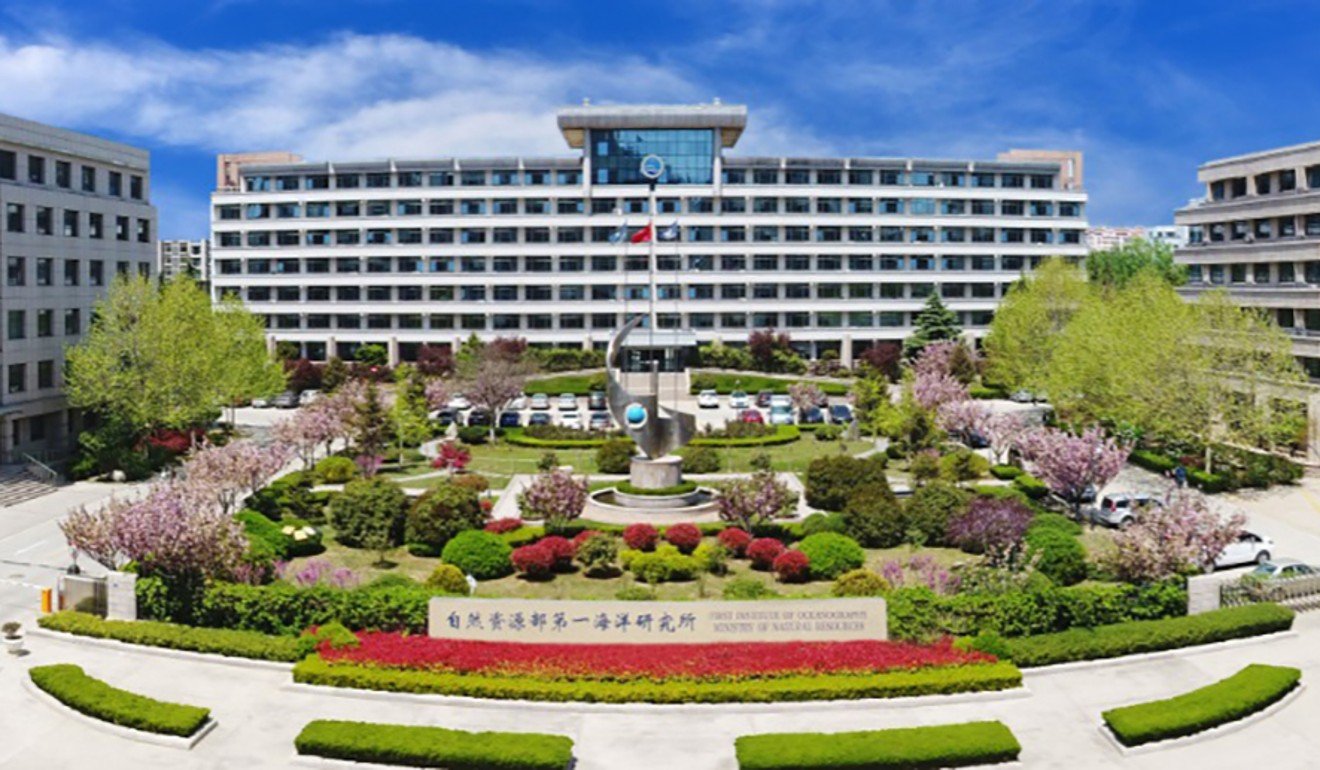
Four of the missing Chinese are students from the First Institute of Oceanography at the Ministry of Natural Resources. Photo: FIO
Four of the missing Chinese – Li Dawei, Li Jian, Pan Wenliang and Wang Liwei – are students from the Ministry of Natural Resources’ First Institute of Oceanography who were going to take part in a study in the Indian Ocean, an institute staff member told Red Star News.
The institute has sent staff to
Four of the five injured are students from the Chinese Academy of Sciences’ South China Sea Institute of Oceanology, who were en route to a study trip in the eastern Indian Ocean.
“It is an annual scientific expedition programme and they were on the way to replace the 10 others who had completed their rotation,” a staff member told The Beijing News. “Some sustained bruising on their legs and one could hardly hear after the blast.”
Tourists who returned to Shanghai and Chengdu, Sichuan province, told the newspaper that their trip had to be cut short as shops were closed and a curfew imposed amid tight security.
“All the private cars, coaches, vans and buses had to open their doors for inspection. There were checkpoints every 10 metres,” said one tour guide from Chengdu.
A traveller from the same city said airport security had also been stepped up. “There was a bombing 20 minutes after we left a restaurant and another one outside the airport when we were waiting there. We had to pass through three or four very strict security checks at the airport,” she said.
Back in Shanghai, another woman said: “We were not scared there but we are very glad to be back home.”
Source: SCMP
Posted in Chengdu, China alert, Chinese Academy of Sciences, Colombo, embassy, First Institute of Oceanography, Five Chinese, Indian Ocean, Li Dawei, Li Jian, Ministry of Natural Resources, missing, Pan Wenliang, People’s Daily, Red Star News, return home, Shanghai, Shangri-La Hotel, sichuan province, South China Sea Institute of Oceanology,, Sri Lanka bombings, Sri Lankan police, suicide bombings, The Beijing News, tourists, Uncategorized, Wang Liwei |
Leave a Comment »





 CHINDIA ALERT: You'll be living in their world, very soon