Chindia Alert: You’ll be Living in their World Very Soon
aims to alert you to the threats and opportunities that China and India present. China and India require serious attention; case of ‘hidden dragon and crouching tiger’.
Without this attention, governments, businesses and, indeed, individuals may find themselves at a great disadvantage sooner rather than later.
The POSTs (front webpages) are mainly 'cuttings' from reliable sources, updated continuously.
The PAGEs (see Tabs, above) attempt to make the information more meaningful by putting some structure to the information we have researched and assembled since 2006.
Image copyright PRESS INFORMATION BUREAUImage caption The area has become a hotspot in part because of a road India has built
The armies of the world’s two most populous nations are locked in a tense face-off high in the Himalayas, which has the potential to escalate as they seek to further their strategic goals.
Officials quoted by the Indian media say thousands of Chinese troops have forced their way into the Galwan valley in Ladakh, in the disputed Kashmir region.
Indian leaders and military strategists have clearly been left stunned.
The reports say that in early May, Chinese forces put up tents, dug trenches and moved heavy equipment several kilometres inside what had been regarded by India as its territory. The move came after India built a road several hundred kilometres long connecting to a high-altitude forward air base which it reactivated in 2008.
The message from China appears clear to observers in Delhi – this is not a routine incursion.
“The situation is serious. The Chinese have come into territory which they themselves accepted as part of India. It has completely changed the status quo,” says Ajai Shukla, an Indian military expert who served as a colonel in the army.
China takes a different view, saying it’s India which has changed facts on the ground.
Reports in the Indian media said soldiers from the two sides clashed on at least two occasions in Ladakh. Stand-offs are reported in at least three locations: the Galwan valley; Hot Springs; and Pangong lake to the south.
India and China share a border more than 3,440km (2,100 miles) long and have overlapping territorial claims. Their border patrols often bump into each other, resulting in occasional scuffles but both sides insist no bullet has been fired in four decades.
Their armies – two of the world’s largest – come face to face at many points. The poorly demarcated Line of Actual Control (LAC) separates the two sides. Rivers, lakes and snowcaps mean the line separating soldiers can shift and they often come close to confrontation.
The current military tension is not limited to Ladakh. Soldiers from the two sides are also eyeball-to-eyeball in Naku La, on the border between China and the north-eastern Indian state of Sikkim. Earlier this month they reportedly came to blows.
And there’s a row over a new map put out by Nepal, too, which accuses India of encroaching on its territory by building a road connecting with China.
Why are tensions rising now?
There are several reasons – but competing strategic goals lie at the root, and both sides blame each other.
“The traditionally peaceful Galwan River has now become a hotspot because it is where the LAC is closest to the new road India has built along the Shyok River to Daulet Beg Oldi (DBO) – the most remote and vulnerable area along the LAC in Ladakh,” Mr Shukla says.
India’s decision to ramp up infrastructure seems to have infuriated Beijing.
Image copyright AFPImage caption There have been protests in Nepal against Indi’s new road link
“According to the Chinese military, India is the one which has forced its way into the Galwan valley. So, India is changing the status quo along the LAC – that has angered the Chinese,” says Dr Long Xingchun, president of the Chengdu Institute of World Affairs (CIWA), a think tank.
Michael Kugelman, deputy director of the Asia programme at the Wilson Center, another think tank, says this face-off is not routine. He adds China’s “massive deployment of soldiers is a show of strength”.
The road could boost Delhi’s capability to move men and material rapidly in case of a conflict.
Differences have been growing in the past year over other areas of policy too.
The new federally-administered Ladakh included Aksai Chin, an area India claims but China controls.
Senior leaders of India’s Hindu-nationalist BJP government have also been talking about recapturing Pakistan-administered Kashmir. A strategic road, the Karakoram highway, passes through this area that connects China with its long-term ally Pakistan. Beijing has invested about $60bn (£48bn) in Pakistan’s infrastructure – the so-called China Pakistan Economic corridor (CPEC) – as part of its Belt and Road Initiative and the highway is key to transporting goods to and from the southern Pakistani port of Gwadar. The port gives China a foothold in the Arabian Sea.
In addition, China was unhappy when India initially banned all exports of medical and protective equipment to shore up its stocks soon after the coronavirus pandemic started earlier this year.
How dangerous could this get?
“We routinely see both armies crossing the LAC – it’s fairly common and such incidents are resolved at the local military level. But this time, the build-up is the largest we have ever seen,” says former Indian diplomat P Stobdan, an expert in Ladakh and India-China affairs.
“The stand-off is happening at some strategic areas that are important for India. If Pangong lake is taken, Ladakh can’t be defended. If the Chinese military is allowed to settle in the strategic valley of Shyok, then the Nubra valley and even Siachen can be reached.”
In what seems to be an intelligence failure, India seems to have been caught off guard again. According to Indian media accounts, the country’s soldiers were outnumbered and surrounded when China swiftly diverted men and machines from a military exercise to the border region.
This triggered alarm in Delhi – and India has limited room for manoeuvre. It can either seek to persuade Beijing to withdraw its troops through dialogue or try to remove them by force. Neither is an easy option.
“China is the world’s second-largest military power. Technologically it’s superior to India. Infrastructure on the other side is very advanced. Financially, China can divert its resources to achieve its military goals, whereas the Indian economy has been struggling in recent years, and the coronavirus crisis has worsened the situation,” says Ajai Shukla.
What next?
History holds difficult lessons for India. It suffered a humiliating defeat during the 1962 border conflict with China. India says China occupies 38,000km of its territory. Several rounds of talks in the last three decades have failed to resolve the boundary issues.
China already controls the Aksai Chin area further east of Ladakh and this region, claimed by India, is strategically important for Beijing as it connect its Xinjiang province with western Tibet.
Image copyright GETTY IMAGESImage caption India and China have a long history of border disputes
In 2017 India and China were engaged in a similar stand-off lasting more than two months in Doklam plateau, a tri-junction between India, China and Bhutan.
This time, too, talks are seen as the only way forward – both countries have so much to lose in a military conflict.
“China has no intention to escalate tensions and I think India also doesn’t want a conflict. But the situation depends on both sides. The Indian government should not be guided by the nationalistic media comments,” says Dr Long Xingchun of the CIWA in Chengdu. “Both countries have the ability to solve the dispute through high-level talks.”
Chinese media have given hardly any coverage to the border issue, which is being interpreted as a possible signal that a route to talks will be sought.
Pratyush Rao, associate director for South Asia at Control Risks consultancy, says both sides have “a clear interest in prioritising their economic recovery” and avoiding military escalation.
“It is important to recognise that both sides have a creditable record of maintaining relative peace and stability along their disputed border.”
Three-year-old security treaty between US and two key allies under threat as tensions between Seoul and Tokyo continue to escalate
End of General Security of Military Information Agreement risks undermining Washington’s influence in the region
South Korean protesters hold signs saying “No Abe” during a rally demanding the abolition of the General Security of Military Information Agreement. Photo: AP
The possible termination of a military information-sharing pact between South Korea and Japan would be a symbolic victory for China, a security analyst has warned.
Recent tension between the two countries recently threatened to spill over into the sphere of intelligence after Seoul signalled that it may pull out of the General Security of Military Information Agreement (GSOMIA) pact.
The agreement signed in 2016 enables three-way intelligence gathering between the US and its two allies and provides a crucial framework for coping with North Korea’s nuclear and missile threats.
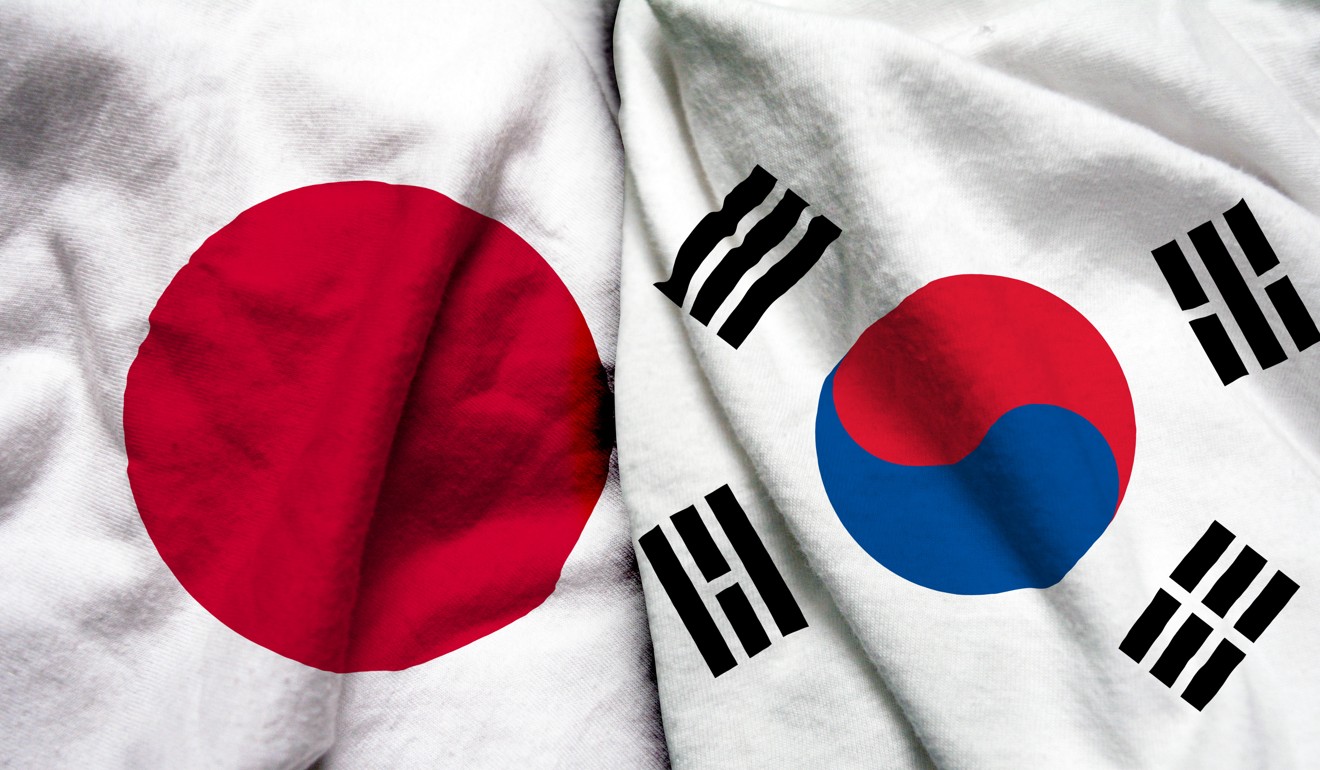
But the escalating trade dispute between Seoul and Tokyo, prompted by a dispute about Japan’s colonial legacy, has left the future of the deal in jeopardy as the annual deadline for its renewal looms.
Japan approves first hi-tech exports to South Korea since start of ‘trade war’ – but with a warning
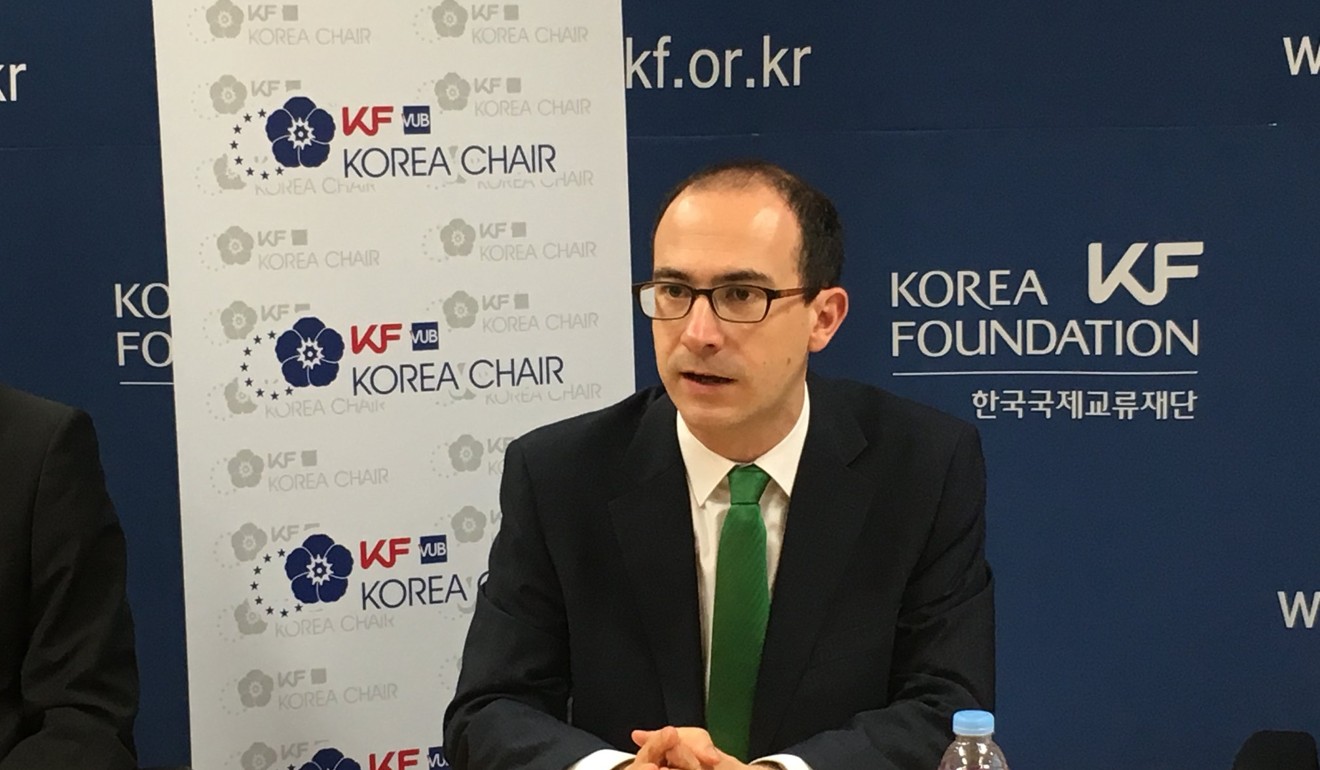
Ramon Pacheco Pardo, the first Korea chair at the Institute for European Studies at Vrije Universiteit Brussel in Belgium, said scrapping the pact would help strengthen China’s influence in the Asia-Pacific region at the expense of the US.
“It is undeniable that termination of GSOMIA would dent the US-South Korea-Japan alliance. The alliance system in northeast Asia will be weaker, strengthening China in relative terms in the process. “This could embolden China and Russia to strengthen their military cooperation in northeast Asia, said Pardo, a member of the non-governmental EU Council for Security Cooperation in the Asia-Pacific.
“Ending GSOMIA would signal that South Korea and Japan are not ready to follow Washington’s lead in the way the latter would like, given the political capital that successive US administrations spent in convincing both countries to share intelligence.”
Ramon Pacheco Pardo said the collapse of the pact would have a largely symbolic impact on China. Photo: Facebook
But Pardo also stressed that the intelligence alliance was not directly targeting China.
“While it is true that GSOMIA serves to connect the weakest link of the US-South Korea-Japan security triangle, ultimately South Korea’s security posture and the capabilities of each country independently mean that it is difficult to argue that the agreement is a concerted effort to contain China.”
“After all, Beijing does not share any significant information on North Korea’s nuclear and missile programmes with South Korea, Japan or the US.
“This is not going to change any time soon. So the good news for China would be symbolic rather than substantial.”
US missiles, jittery neighbours and South Korea’s big security dilemma
Beijing warned on Tuesday that it would take “countermeasures” if the US deployed ground-based missiles in either Japan or South Korea, and Pardo argued that scrapping the intelligence-sharing pact would expose the weaknesses in their co-ordinated approach towards China.
The security deal is automatically renewed every year unless one party decides to pull out. To do so, it must notify the others 90 days before its expiry – a deadline that falls on August 23.
The trade row was sparked by a recent South Korean court ruling that Japanese should compensate individual victims of wartime forced labour. Tokyo believes it settled all necessary compensation under a treaty signed in 1965, but Seoul believes that individual victims’ right to file a claim has not expired.
Relations between South Korea and Japan have deteriorated following a court ruling over forced labour in the wartime era. Photo: Shutterstock
Last week Japan said it would remove South Korea from its “white list” of countries with preferential trade status. Seoul has threatened to respond in kind, but also warned that it may reconsider whether to renew the intelligence-sharing pact.
Both the US and Japan have said they want the arrangement to continue, but Pardo said the effect of the termination would remain largely symbolic.
South Korea has already been investing in its own satellite and anti-submarine programmes to monitor the North’s activities, while Japan has also been developing its own intelligence programmes.
“This shows that neither South Korea nor Japan wants to rely on each other or third parties, namely the US, when it comes to monitoring North Korea’s military activities,” Pardo said.
But he argued that this behaviour already indicated that the alliance was weakening and suggested that terminating the treaty would increase China’s room for manoeuvre.
South Korea buys helicopters worth US$800 million after Trump seeks contribution for US presence
Since the 1990s successive US administrations have pushed for intelligence-sharing arrangements with Japan and South Korea to help build a framework to check Chinese and Russian military expansion in the Pacific.
“Beijing and Moscow are clearly moving in the direction of closer cooperation anyway. GSOMIA or not, military cooperation will continue … as long as Xi Jinping and Vladimir Putin lead each country and most probably even beyond then,” Pardo said.
China and Russia flexed their muscles in the region last month as the trade dispute between the two key allies intensified.
Russian and Chinese long-range military aircraft conducted their first-ever joint air patrol over the Sea of Japan – also known as the East Sea – and the East China Sea.
“The East Asian security landscape would be reshaped insofar that China, North Korea and Russia would see that their main opponent in the region – the US – is unable to convince its two key allies, South Korea and Japan, to cooperate on a key issue,” Pardo said.
“The current dispute between South Korea and Japan will need a negotiated solution … In any case, Japan will have to learn to live with the fact that former colonisers will, from time to time, receive criticism by many of their former colonies, criticism that sometimes will escalate.
“It happens to former European colonial powers, for example, and it is only logical because the interpretation of the past is always in flux.”


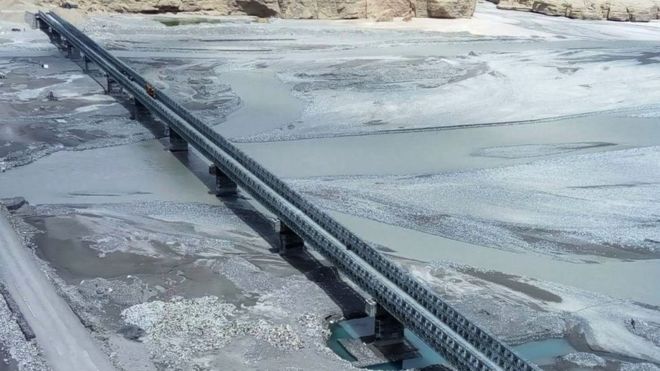 Image copyright PRESS INFORMATION BUREAU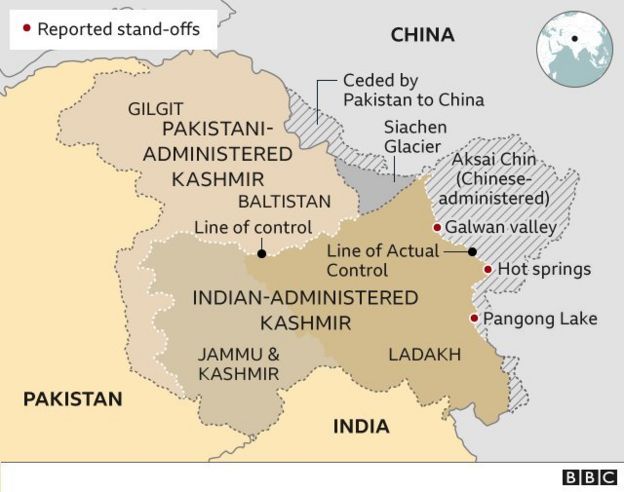
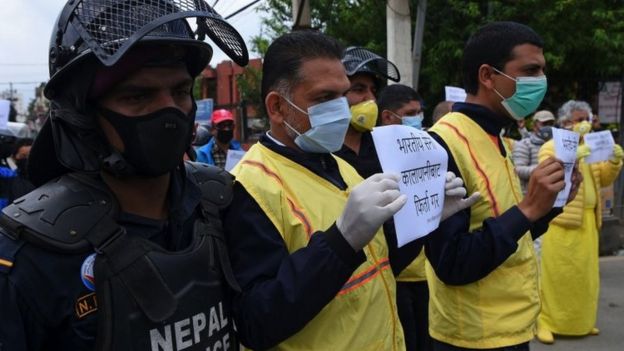 Image copyright AFP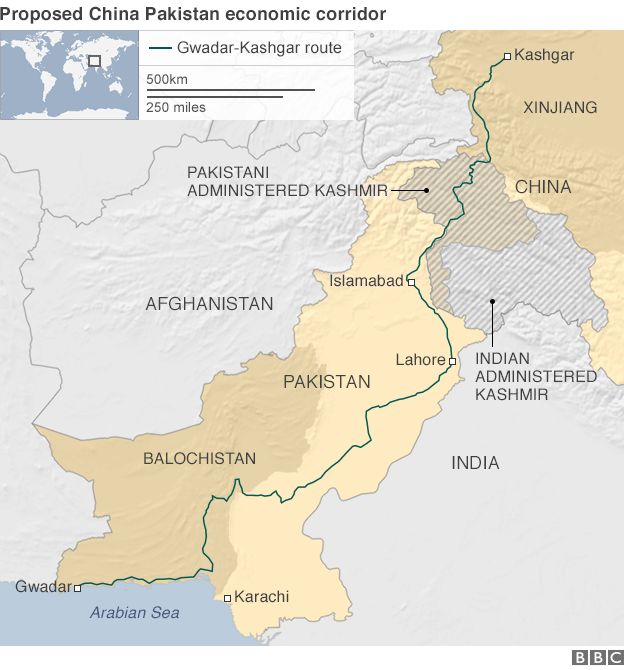
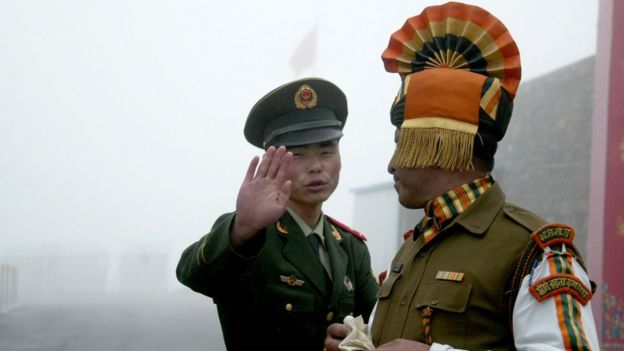 Image copyright GETTY IMAGES

 CHINDIA ALERT: You'll be living in their world, very soon