Archive for ‘ethnic groups’

20/04/2020

Educational situation in China’s Xinjiang much improved: scholar

KATHMANDU, April 19 (Xinhua) — A German scholar has recently found that the right to education for Uygurs and people of other ethnic groups is well protected in China’s Xinjiang region, as young people there enjoy increasingly better opportunities.

Michael Heinrich, who has been teaching German in Minzu University of China for more than five years, said in an article published on Online Khabar news website in March that he has “paid close attention to the development of Chinese education in recent years, especially the education situation in ethnic minority areas.”

Heinrich said he has taught a Xinjiang Uygur student, who often talks with him about the education situation in her hometown and appreciates government policies on education.

The Uygur student has told Heinrich that she lives in a place where she receives Islamic religious education and China’s nine-year compulsory education, and the Uygur students in Xinjiang can enjoy preferential policies, such as extra points in college entrance examination, special policies for college admissions, and employment policy support.

In recent years, the Chinese government has intensified policy support on education in Xinjiang Uygur Autonomous Region, and increased investment in educational resources, especially those on vocational education, the article read.

“Through vocational education, more Uyghur Muslim students can enhance their survival skills and work harder by themselves and improve their living standards with these hands,” it said.

For some time, Xinjiang has been plagued by terrorism, religious extremism and separatism, according to the passage, and carrying out vocational education and training in Xinjiang is an effective measure to promote the rule of law and a practical action to protect the vital interests of people of all ethnic groups there.

It is also a just move in fighting extremism and terrorism to contribute to the stability in Xinjiang, it added.

Some Western media outlets as well as some U.S. politicians often slander the Chinese government under the guise of “human rights,” which does not only disregard the facts but also interferes with China’s sovereignty, Heinrich pointed out.

The situation in Xinjiang that they saw was completely different from the stories told by some Western politicians and media, Heinrich quoted some people who have visited Xinjiang and witnessed its development as saying.

The rights to life and development of people of all ethnic groups in Xinjiang are protected to the largest extent, Heinrich added.

Source: Xinhua

22/01/2020

Xi Focus: Xi extends Chinese New Year greetings to all Chinese

CHINA-YUNNAN-XI JINPING-INSPECTION TOUR (CN)

Chinese President Xi Jinping, also general secretary of the Communist Party of China Central Committee and chairman of the Central Military Commission, beats a wooden drum of the Wa ethnic group three times to bless the coming year in Sanjia Village in the city of Tengchong, southwest China’s Yunnan Province, Jan. 19, 2020. Xi has extended Chinese New Year greetings to all Chinese people during a three-day inspection tour to Yunnan Province which concluded Tuesday. (Xinhua/Ju Peng)

KUNMING, Jan. 21 (Xinhua) — Chinese President Xi Jinping has extended Chinese New Year greetings to all Chinese people.

He wished Chinese people of all ethnic groups a better life and the country greater prosperity in the new year.

Xi, also general secretary of the Communist Party of China (CPC) Central Committee and chairman of the Central Military Commission, made the remarks during a three-day inspection tour of southwest China’s Yunnan Province which concluded Tuesday.

During a visit to Sanjia Village in the city of Tengchong on Sunday afternoon, Xi learned about poverty alleviation efforts and called for efforts to speed up the development of ethnic minorities and areas with large ethnic minority populations.

After joining local villagers in making rice cakes, a traditional local festival food, Xi noted that shaking off poverty is the new starting point, calling for vigorously promoting rural vitalization after China completes the building of a moderately prosperous society in all respects.

According to local custom, Xi beat a wooden drum of the Wa ethnic group three times to bless the coming year.

Later that day, Xi went to the old town of Heshun, a gateway on the ancient Southern Silk Road, where he visited a village-level library built over 90 years ago.

Visiting the memorial hall of Ai Siqi, a renowned philosopher, Xi said the country needs a large number of talented individuals who can explain the adaptation of Marxism to the Chinese context well and who can use easy-to-understand language to spread the Party’s new theories to more ordinary households.

Visiting an ecological wetland of Dianchi Lake in Kunming on Monday, Xi stressed resisting the old way of developing the economy at the cost of the environment.

Dianchi Lake, once among the most polluted lakes in China, has seen its ecology greatly improved after years of conservation efforts.

Inspecting market supply for Chinese New Year at the Kunming International Convention and Exhibition Center, Xi demanded a sufficient supply of safe and reliable goods during the festival.

There, Xi extended Chinese New Year greetings to local residents, the Chinese people of all ethnic groups, compatriots in Hong Kong, Macao and Taiwan, and overseas Chinese nationals.

Xi then went to the former site of the National Southwest Associated University in Kunming. He stressed the close link between education and the fate and future of the country and noted that the goal of China’s education system is to nurture a new generation of capable young people who are well-prepared to join the socialist cause.

After hearing the work reports of the CPC Yunnan Provincial Committee and the provincial government on Tuesday morning, Xi encouraged Yunnan to break new ground in promoting ethnic unity and progress, pushing forward ecological conservation, and pursuing greater cooperation with South Asia and Southeast Asia.

Xi urged efforts to promote high-quality development, accelerate building a modernized economy, consolidate the achievements in poverty alleviation, boost the healthy and sustainable development of tourism, while continuing to fight air, water and soil pollution.

He also required further opening-up to neighboring countries, speeding up the building of connectivity networks and strengthening cultural and people-to-people exchanges.

Xi demanded efforts to strengthen governance capacity in border areas and areas with large ethnic minority populations, implement the plans to boost the development of ethnic minority areas and ethnic groups with small populations, step up the fight against cross-border crime, gangs and their “protective umbrellas,” and maintain the stability of border areas.

On the anti-poverty fight, Xi ordered focusing on areas with extreme poverty, preventing people from falling back into poverty due to illness, injury or the lack of follow-up policies, and further aligning developmental poverty relief with protective poverty relief.

On Party building, Xi said the “staying true to the Party’s founding mission” campaign should be regarded as a lifelong task for strengthening Party building among all Party members and a source of inspiration in the new era.

Source: Xinhua

31/10/2019

China urges U.S., Britain to stop distorting facts on Xinjiang-related issues

BEIJING, Oct. 30 (Xinhua) — China on Wednesday urged countries including the United States and Britain to stop distorting facts on Xinjiang-related issues and make real and concrete efforts to support the healthy development of the international human rights cause.

Foreign Ministry spokesperson Geng Shuang made the remarks at a press briefing when he was asked to comment on what happened during the dialogue between the Third Committee of the United Nations General Assembly and the Committee on the Elimination of Racial Discrimination.

On Oct. 29, a few Western countries including the United States and Britain delivered a common speech during the dialogue, criticizing China’s Xinjiang policy, while more than 60 others countries also made common speeches supporting China’s position on Xinjiang, praising China’s great progress in human rights protection and opposing interference in China’s domestic affairs under the name of human rights.

“The anti-China show put on by a handful of Western countries was a disgraceful failure,” Geng said.

He said the vocational and educational training institutions in Xinjiang were set up as preventive measures to combat terrorism and radicalization, which have turned the security situation around.

For three years, not a single violent or terrorist incident has taken place in Xinjiang, and the region now enjoys social stability and unity among all ethnic groups, said Geng, adding that people there are now living a happy life with a stronger sense of fulfillment and security, while their rights to life, health and development are also significantly improved.

“We urge countries like the United States and Britain to stop calling white black and standing on the opposite of facts,” Geng said.

Geng noted that in March this year, the 46th session of the Council of Foreign Ministers of the Organization of Islamic Cooperation (OIC) adopted a resolution, which spoke highly of and fully recognized the efforts China has made for Chinese Muslims.

In July, ambassadors from more than 50 countries to the UN office at Geneva co-signed a letter to the president of the UN Human Rights Council and High Commissioner for Human Rights, praising China for its respect and protection of human rights in fighting terrorism and deradicalization.

“These events fully indicated to us what is the overwhelming opinion of the international society. Tarnishing China will not get support and is completely futile,” Geng said.

As countries like the United States and Britain have disgraceful human rights records, they have no right to judge other countries and should seriously reflect on themselves, said Geng, adding that China urges those countries to stop politicizing and using double standards on human rights issues, and stop interfering in other countries’ domestic affairs under the pretext of human rights.

Source: Xinhua

21/07/2019

Uygurs in Xinjiang didn’t choose to be Muslims, China says in white paper

  • Islam was forced on ethnic group ‘by religious wars and the ruling class’, Beijing says in latest report defending its actions in far western region
  • Uygurs’ ancestors were enslaved by the Turks, document says
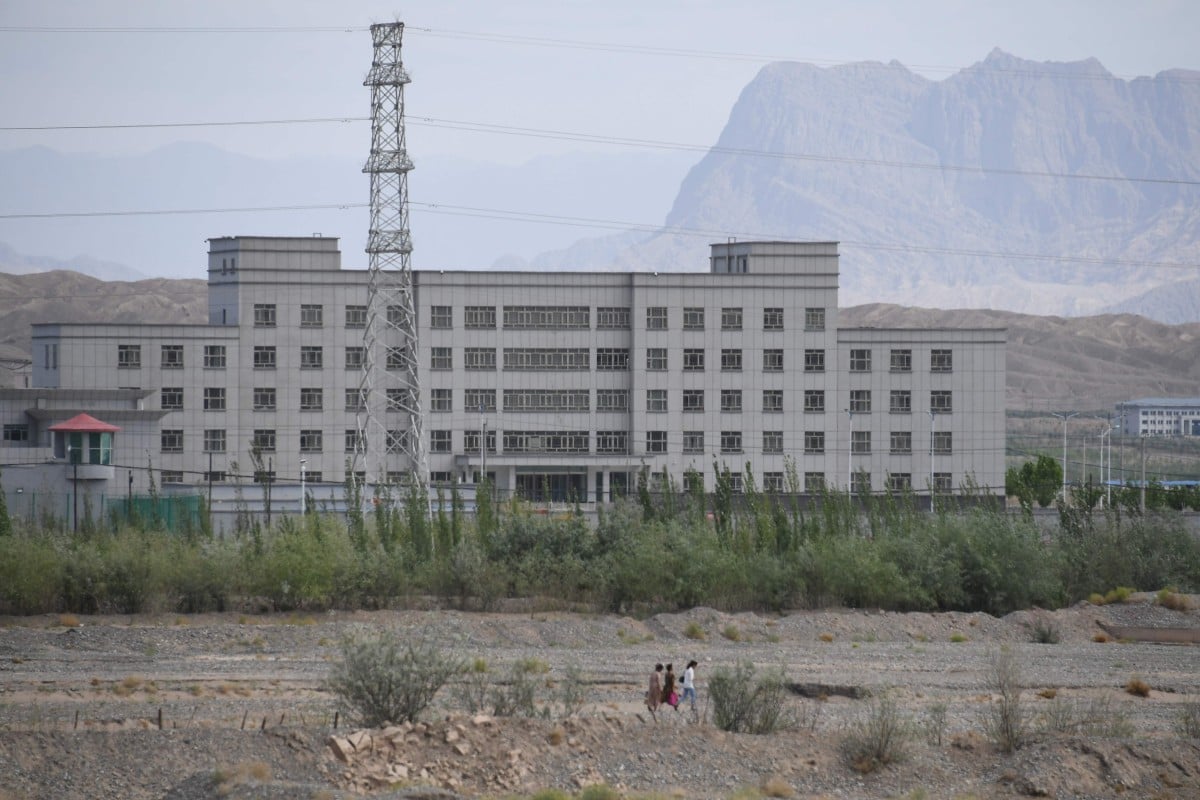
Beijing has issued a white paper seemingly designed to defend its actions in Xinjiang where as least 1 million Uygurs are being held in detention centres. Photo: AFP
Uygurs became Muslims not by choice but by force, and Islam is not their only religion, Beijing said in a white paper published on Sunday, as it continued its propaganda campaign to justify its controversial policies in the far western province of

Xinjiang

.

“The Uygur people adopted Islam not of their own volition … but had it forced upon them by religious wars and the ruling class,” according to the document released by the State Council Information Office.

Islamic beliefs were forced on the Uygurs during the expansion of Arabic states. This is a historical fact, the report said, though that did not undermine the Uygurs’ religious rights now.

The report said also that there are Uygurs who hold to faiths other than Islam, and others who do not practise any religion at all.

The paper also took aim at the Uygurs’s historic links with Turkey.

“Historically, the Uygurs’ ancestors were enslaved by the Turks,” it said, citing a history of conflicts between the two groups dating back to the 8th century.

China promotes Xinjiang as tourist idyll

The white paper was issued amid a campaign by Beijing to justify its policies in the restive region, which is home to more than 10 million Uygurs, most whom are Muslim.

Earlier this month, the ambassadors of 22 countries signed a letter calling on Beijing to halt its mass detention of Uygurs in Xinjiang, the first such joint move on the issue at the UN Human Rights Council.

The signatories included envoys from Britain, France, Germany, Australia, Canada, Japan and Switzerland. The United States, which quit the forum a year ago, did not sign the letter.

China responded by issuing a letter signed by the ambassadors of 37 countries, including several Muslim majority states like Saudi Arabia and Pakistan, backing its policies in the region.

Beijing said the show of support was “a powerful response to the groundless accusations made against China by a small number of Western countries”.

UN experts and activists say at least 1 million Uygurs and other Muslims are currently being held in detention centres in Xinjiang. China describes the facilities as training and education centres that aim to stamp out religious extremism and provide people with useful skills. It has never said how many people are being detained in them.

The United States has repeatedly criticised Beijing over its policies in Xinjiang.

On Wednesday, US President Donald Trump met victims of religious persecution from around the world, including Jewher Ilham, a Uygur woman whose father Ilham Tohti was sentenced to life imprisonment in 2014 after being found guilty of promoting separatism.

“That’s tough stuff,” Trump said after hearing Ilham’s account of her father’s ordeal.

China describes the detention camps in Xinjiang as training and education centres. Photo: AFP
In January, US lawmakers nominated the imprisoned economist, writer and former professor at Minzu University in Beijing, for the 2019 Nobel Peace Prize in a bid to pressure China to stop its crackdown on the minority group.
Sunday’s white paper is the latest in a string of similar documents published recently by Beijing as it seeks to defend the legitimacy of its policies in Xinjiang. In a document issued in March, it said that over the past five years it had arrested nearly 13,000 “terrorists” in the region.
Xinjiang camps defended at UN human rights forum
Neither the March report nor Sunday’s white paper mentioned Beijing’s other controversial policies in the region, such as the collection of DNA samples and extensive surveillance on local people.
“Xinjiang has borrowed from international experiences, combined them with local realities, and taken resolute measures against terrorism and extremism,” it said.
The measures have been effective, it said, though did not elaborate.
Over the past year, China has increased its efforts to defend the camps, including organising strictly controlled visits by selected diplomats and journalists to see the people who live in them.
State media has also released videos showing seemingly happy and healthy people inside the camps in a bid to counter accounts of harsh conditions and abuse published by the Western media.
Source: SCMP
28/02/2019

All 56 ethnic groups part of big family of Chinese nation: Chinese ambassador

SWITZERLAND-GENEVA-UNHRC SESSION

Yu Jianhua, head of the Chinese Mission to the UN Office in Geneva, attends the 40th session of the UN Human Rights Council (UNHRC) in Geneva, Switzerland, Feb. 27, 2019. The 56 ethnic groups in China, living together like brothers and sisters, are all parts of the big family of the Chinese nation, Yu Jianhua told the UNHRC session. “The people of all ethnic groups are tightly held together like pomegranate seeds, and together they are making arduous efforts for the great rejuvenation of the Chinese nation where they can all live a happy life,” Yu said, when elaborating on China’s human rights propositions and expounding achievements of the human rights undertakings in Xinjiang Uygur Autonomous Region in northwest China. (Xinhua/Xu Jinquan)

GENEVA, Feb. 27 (Xinhua) — The 56 ethnic groups in China, living together like brothers and sisters, are all part of the big family of the Chinese nation, a Chinese envoy said Wednesday at the ongoing UN Human Rights Council (UNHRC) session in Geneva.

“The people of all ethnic groups are tightly held together like pomegranate seeds, and together they are making arduous efforts for the great rejuvenation of the Chinese nation where they can all live a happy life,” said Yu Jianhua, head of the Chinese Mission to the UN Office at Geneva, when elaborating on China’s human rights propositions and expounding achievements of the human rights undertakings in Xinjiang Uygur Autonomous Region in northwestern China, during the UNHRC’s 40th session.

Yu said that as unilateralism and protectionism are on the rise in today’s world, coupled with the still outstanding problem of unbalanced, uncoordinated and unsustainable development, it’s particularly important for countries to firmly practise multilateralism and to jointly build a community with a shared future for mankind.

To that end, Yu put forward China’s propositions on advancing undertakings for human rights internationally. Firstly, mutual respect should be taken as a premise, by which all countries should respect their peoples’ choice of development path for human rights.

Secondly, all countries should adhere to the principle of fairness and justice, abide by the purposes and principles of the UN Charter, respect the sovereignty and territorial integrity of each country, and oppose interference into other countries’ internal affairs under the pretext of human rights.

Thirdly, all countries should aim for win-win results through cooperation; and lastly, all countries should champion a people-centered vision and promote human rights through development.

On the topic concerning China’s Xinjiang Uygur Autonomous Region, the Chinese ambassador said that the stance adopted by some countries is biased and entirely based on misjudgment, which runs counter to facts.

He said that the Chinese government has adopted a series of anti-terrorism and de-extremization measures in Xinjiang, including the establishment of vocational training facilities, which aim to help the few people who have been influenced by extremism to get rid of their terrorist and extremist thoughts and reintegrate them into the society as soon as possible.

These measures, carried out in full accordance with the law, have greatly improved the security situation in Xinjiang and effectively safeguarded the human rights of the people of all ethnic groups and thus received sincere support from the people, Yu said.

Source: Xinhua

25/01/2019

China holds reception for ethnic groups in Beijing ahead of Spring Festival

BEIJING, Jan. 24 (Xinhua) — A reception was held Thursday for ethnic groups in Beijing ahead of the Spring Festival, the Chinese New Year.

Bater, vice chairman of the National Committee of the Chinese People’s Political Consultative Conference (CPPCC) and an ethnic Mongolian, delivered a speech at the event, which was presided over by Cao Jianmin, vice chairman of the National People’s Congress (NPC) Standing Committee.

While guaranteeing China’s national unification and ethnic unity, Bater said it is imperative to foster a strong sense of community for the Chinese nation, increase exchange and communication among people of ethnic groups and further efforts to lift areas inhabited by ethnic minorities out of poverty and help build them into moderately prosperous regions, in order to make new contribution to realizing Chinese Dream of national rejuvenation.

The event was jointly held by the United Front Work Department of the Communist Party of China, the ethnic affairs committee of the NPC, the National Ethnic Affairs Commission, the ethnic and religious affairs committee of the CPPCC National Committee and the Beijing municipal government.

The Chinese Lunar New Year falls on Feb. 5 this year. And the public holiday in association with it lasts from Feb. 4 to 10.

Law of Unintended Consequences

continuously updated blog about China & India

ChiaHou's Book Reviews

continuously updated blog about China & India

What's wrong with the world; and its economy

continuously updated blog about China & India