Chindia Alert: You’ll be Living in their World Very Soon
aims to alert you to the threats and opportunities that China and India present. China and India require serious attention; case of ‘hidden dragon and crouching tiger’.
Without this attention, governments, businesses and, indeed, individuals may find themselves at a great disadvantage sooner rather than later.
The POSTs (front webpages) are mainly 'cuttings' from reliable sources, updated continuously.
The PAGEs (see Tabs, above) attempt to make the information more meaningful by putting some structure to the information we have researched and assembled since 2006.
The tech investment push is part of a fiscal package waiting to be signed off by the National People’s Congress, which convenes this week
This initiative will reduce China’s dependence on foreign technology, echoing objectives set forth previously in the ‘Made in China 2025’ programme
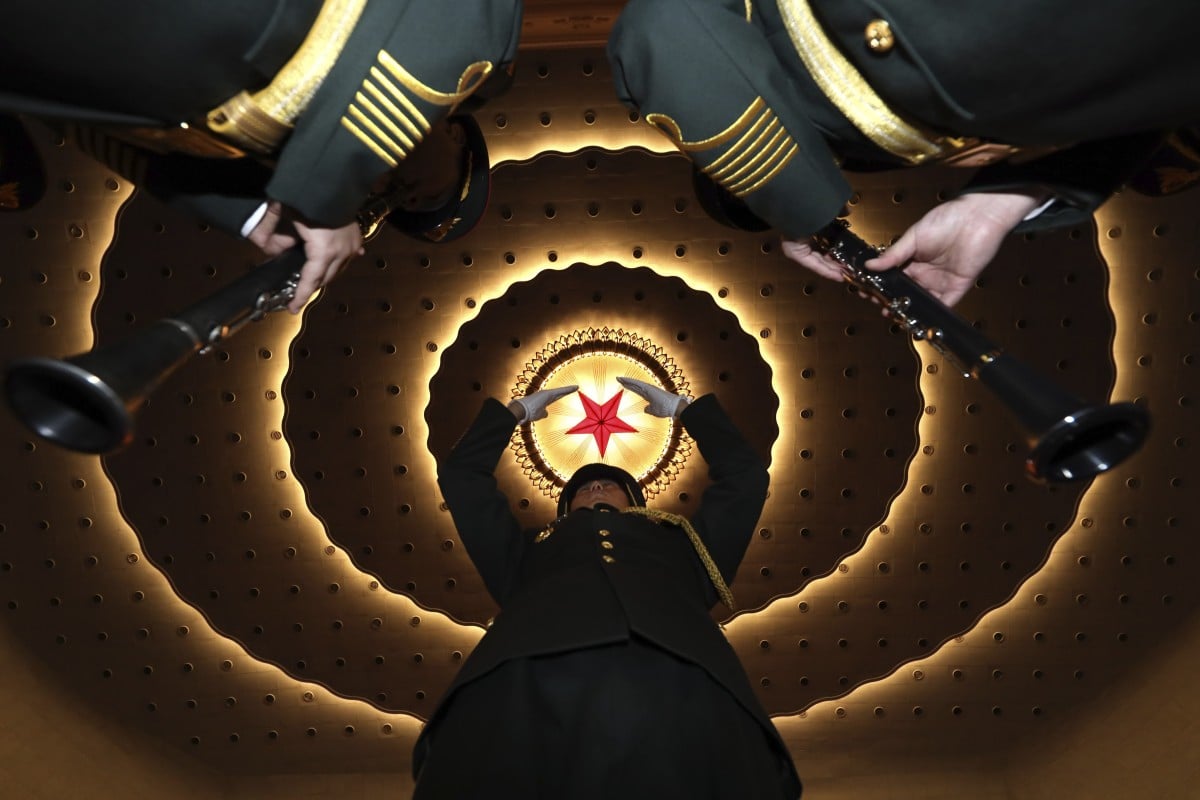
A conductor rehearses the military band on the sidelines of the National People’s Congress in Beijing’s Great Hall of the People in March of last year. China’s legislature is expected to sign off on a massive tech-led stimulus plan. Photo: AP
Beijing is accelerating its bid for global leadership in key technologies, planning to pump more than a trillion dollars into the economy through the roll-out of everything from next-generation wireless networks to artificial intelligence (AI).
In the master plan backed by President Xi Jinping himself, China will invest an estimated 10 trillion yuan (US$1.4 trillion) over six years to 2025, calling on urban governments and private hi-tech giants like Huawei Technologies to help lay 5G wireless networks, install cameras and sensors, and develop AI software that will underpin
and Huawei to SenseTime Group at the expense of US companies.
As tech nationalism mounts, the investment drive will reduce China’s dependence on foreign technology, echoing objectives set forth previously in the “Made in China 2025”
programme. Such initiatives have already drawn fierce criticism from the Trump administration, resulting in moves to block the rise of Chinese tech companies such as Huawei.
How will China’s annual legislative meetings affect the stock investor? Five key industries to watch
18 May 2020
“Nothing like this has happened before, this is China’s gambit to win the global tech race,” said Digital China Holdings chief operating officer Maria Kwok, as she sat in a Hong Kong office surrounded by facial recognition cameras and sensors. “Starting this year, we are really beginning to see the money flow through.”
The tech investment push is part of a fiscal package waiting to be signed off by China’s legislature, the National People’s Congress, which convenes this week. The government is expected to announce infrastructure funding of as much as US$563 billion this year, against the backdrop of the country’s worst economic performance since the Mao era.
The nation’s biggest purveyors of cloud computing and data analysis Alibaba, the parent company of the South China Morning Post, and Tencent Holding will be linchpins of the upcoming endeavour. China has already entrusted Huawei, the world’s largest telecommunications equipment supplier, to help galvanise 5G. Tech leaders including Pony Ma Huateng and Jack Ma are espousing the programme.
Maria Kwok’s company is a government-backed information technology systems integration provider, among many that are jumping at the chance. In the southern city of Guangzhou, Digital China is bringing half a million units of project housing online, including a complex three quarters the size of Central Park in New York City. To find a home, a user just has to log on to an app, scan their face and verify their identity. Leases can be signed digitally via smartphone and the renting authority is automatically flagged if a tenant’s payment is late.
China is no stranger to far-reaching plans with massive price tags that appear to achieve little. There is no guarantee this programme will deliver the economic rejuvenation its proponents promise. Unlike previous efforts to resuscitate the economy with “dumb” bridges and highways, this newly laid digital infrastructure will help national champions develop cutting-edge technologies.
“China’s new stimulus plan will likely lead to a consolidation of industrial internet
providers, and could lead to the emergence of some larger companies able to compete with global leaders, such as GE and Siemens,” said Nannan Kou, head of research at BloombergNEF, in a report. “One bet is on industrial internet-of-things (IoT) platforms, as China aims to cultivate three world leading companies in this area by 2025.”
China is not alone in pumping money into the technology sector as a way to get out of the post-coronavirus economic slump. Earlier this month, South Korea said AI and wireless communications would be at the core of it its “New Deal” to create jobs and boost growth.
Nothing like this has happened before, this is China’s gambit to win the global tech raceMaria Kwok, COO at Digital China Holdings
The 10 trillion yuan that China is estimated to spend from now until 2025 encompasses areas typically considered leading edge, such as AI and IoT, as well as items such as ultra-high voltage lines and high-speed rail, according to the government-backed China Centre for Information Industry Development. More than 20 of mainland China’s 31 provinces and regions have announced projects totaling over 1 trillion yuan with active participation from private capital, a state-backed newspaper reported on Wednesday.
Separate estimates by Morgan Stanley put new infrastructure at around US$180 billion each year for the next 11 years – or US$1.98 trillion in total. Those calculations also include power and rail lines. That annual figure would be almost double the past three-year average, the investment bank said in a March report that listed key stock beneficiaries including companies such as China Tower Corp, Alibaba, GDS Holdings, Quanta Computer and Advantech Co.
Beijing’s half-formed vision is already stirring a plethora of stocks, a big reason why five of China’s 10 best-performing stocks this year are tech plays like networking gear maker Dawning Information Industry and Apple supplier GoerTek. The bare outlines of the master plan were enough to drive pundits toward everything from satellite operators to broadband providers.
China’s telecoms carriers push to complete ‘political task’ of 5G network roll-out amid coronavirus crisis
6 Mar 2020
It is unlikely that US companies will benefit much from the tech-led stimulus and in some cases they stand to lose existing business. Earlier this year, when the country’s largest telecoms carrier China Mobile awarded contracts worth 37 billion yuan for 5G base stations, the lion’s share went to Huawei and other Chinese companies. Sweden’s Ericsson got only a little over 10 per cent of the business in the first four months. In one of its projects, Digital China will help the northeastern city of Changchun swap out American cloud computing staples IBM, Oracle and EMC with home-grown technology.
It is in data centres that a considerable chunk of the new infrastructure development will take place. Over 20 provinces have launched policies to support enterprises using cloud computing services, according to a March research note from UBS Group.
Tony Yu, chief executive of Chinese server maker H3C, said that his company was seeing a significant increase in demand for data centre services from some of the country’s top internet companies. “Rapid growth in up-and-coming sectors will bring a new force to China’s economy after the pandemic passes,” he told Bloomberg News.
From there, more investment should flow. Bain Capital-backed data centre operator ChinData Group estimated that for every one dollar spent on data centres another US$5 to US$10 in investment in related sectors would take place, including in networking, power grid and advanced equipment manufacturing. “A whole host of supply chain companies will benefit,” the company said in a statement.
There is concern about whether this long-term strategy provides much in the way of stimulus now, and where the money will come from. “It’s impossible to prop up China’s economy with new infrastructure alone,” said Zhu Tian, professor of economics at China Europe International Business School in Shanghai. “If you are worried about the government’s added debt levels and their debt servicing abilities right now, of course you wouldn’t do it. But it’s a necessary thing to do at a time of crisis.”
Digital China is confident that follow-up projects from its housing initiative in Guangzhou could generate 30 million yuan in revenue for the company. It is also hoping to replicate those efforts with local governments in the northeastern province of Jilin, where it has 3.3 billion yuan worth of projects approved. These include building a so-called city brain that will for the first time connect databases including traffic, schools and civil matters such as marriage registry. “The concept of smart cities has been touted for years but now we are finally seeing the investment,” said Kwok.
BEIJING (Reuters) – Tang Yue, a 27-year-old teacher from the city of Guilin in southwest China, steam-presses a blue dress and takes dozens of photographs before picking one to clinch her 200th online sale.
For a growing number of Chinese like Tang, hit by job losses, furloughs and salary cuts, the consumer economy has begun to spin in reverse. They are no longer buying – they are selling.
Instead of emerging from the coronavirus epidemic and returning to the shopping habits that helped drive the world’s second-largest economy, many young people are offloading possessions and embracing a new-found ethic for hard times: less is more.
With Tang’s monthly salary of about 7,000 yuan ($988), the self-described shopaholic said she has bought everything from Chanel lipsticks to Apple’s (AAPL.O) latest iPad in the past three years.
But the adrenaline rush that comes with binge-shopping is gone, said Tang, whose wages have been slashed with the suspension of all the classes on tourism management she usually teaches.
“The coronavirus outbreak was a wake-up call,” she said. “When I saw the collapse of so many industries, I realised I had no financial buffer should something unfortunate happen to me.”
There is no guarantee that the nascent minimalist trend will continue once the coronavirus crisis is fully over, but if it does, it could seriously damage China’s consumer sector and hurt thousands of businesses from big retailers to street-corner restaurants, gyms and beauty salons.
To be sure, there are signs that pent-up demand will drive a rush of spending as authorities reopen malls, leisure venues and tourist spots. In South Korea, the first major economy outside of China to be hit by the virus, people thronged malls this weekend to go “revenge shopping” to make up for time lost in lockdown.,
There are some signs that a similar trend will take hold in China, where some upscale malls are starting to get busy, although luxury firm Kering SA (PRTP.PA) – which owns Gucci, Balenciaga and other fashion brands – has said it is hard to predict how or when sales in China might come back.
A recent McKinsey & Co survey showed that between 20% and 30% of respondents in China said they would continue to be cautious, either consuming slightly less or, in a few cases, a lot less.
“The lockdown provided consumers with a lot of time and reasons to reflect and consider what is important to them,” said Mark Tanner, managing director at Shanghai-based research and marketing consultancy China Skinny.
“With much more of their days spent in their homes, consumers also have more time and reasons to sort through things they don’t feel they need – so they’re not living around clutter that is common in many apartments.”
#DITCHYOURSTUFF
Tang made a spreadsheet to keep track of her nearly 200 cosmetic products and hundreds of pieces of clothing. She then marked a few essentials in red that she wanted to keep. In the past two months, she has sold items worth nearly 5,000 yuan on second-hand marketplaces online.
Bargain-hunting online has become a new habit for some Chinese as the stigma that once hung over second-hand goods has begun to fade.
Idle Fish, China’s biggest online site for used goods, hit a record daily transaction volume in March, its parent company Alibaba (BABA.N) told Reuters.
Government researchers predict that transactions for used goods in China may top 1 trillion yuan ($141 billion) this year.
Posts with the hashtag #ditchyourstuff have trended on Chinese social media in recent weeks, garnering more than 140 million views.
Jiang Zhuoyue, 31, who works as an accountant at a traditional Chinese medicine company in Beijing – one of the few industries that may benefit from the health crisis – has also decided to turn to a simpler life.
“I used to shop too much and could be easily lured by discounts,” said Jiang. “One time Sephora offered 20% off for all goods, I then bought a lot of cosmetics because I feel I’m losing money if I don’t.”
Jiang, the mother of a 9-month-old baby, said she recently sold nearly 50 pieces of used clothing as the lockdown gave her the opportunity to clear things out. “It also offered me a chance to rethink what’s essential to me, and the importance of doing financial planning,” she said.
Eleven Li, a 23-year-old flight attendant, said she used to spend her money on all manner of celebrity-endorsed facial masks, snacks, concert tickets and social media activity, but now has no way to fund her spending.
“I just found a new job late last year, then COVID-19 came along, and I haven’t been able to fly once since I joined, and I’ve gotten no salary at all,” said Li, who said she was trying to sell her Kindle.
Some are even selling their pets, as they consider leaving big cities like Beijing and Shanghai where the high cost of living is finally catching up with them.
NO RETURN TO OLD WAYS?
As the coronavirus comes under control in China, the government is gradually releasing cities from lockdown, easing transport restrictions and encouraging consumers to venture back into malls and restaurants by giving out billions-worth of cash vouchers, worth between 10 yuan and 100 yuan.
But many people say they are still worried about job security and potential wage cuts because of the struggling economy. Nationwide retail sales have plunged every month so far this year.
Xu Chi, a Shanghai-based senior strategic analyst with Zhongtai Securities, said some Chinese consumers may prove the ‘21 Day Habit Theory,’ a popular scientific proposition that it only takes that long to establish new habits.
“We believe people’s spending patterns follow the well-known theory, which means most people in China, having been cooped-up at home for more than a month and not having binge-shopped, may break the habit and not return to their old ways,” Xu said.
Jiang said she was determined not to return to her free-spending ways and planned to cook more at home.
“I’ll turn to cheaper goods for some luxury brands,” she said. “I’ll choose Huawei’s smartphone, because (Apple’s) iPhone has too much brand premium.”
Tang, who has recently used 100 yuan of shopping coupons to stock up on food, is going to hold the purse strings even tighter.
“I’ve set my monthly budget at 1,000 yuan,” she said. “Including one – and just one – bottle of bubble tea.”
China’s famed Yiwu International Trade Market, a barometer for the health of the nation’s exports, has been hammered by the economic fallout from Covid-19
Export orders have dried up amid sweeping containment measures in the US and Europe and restrictions on foreigners entering China have shut out international buyers
The coronavirus pandemic has severely dented wholesale trade at the Yiwu International Trade Market in China. Photo: SCMP
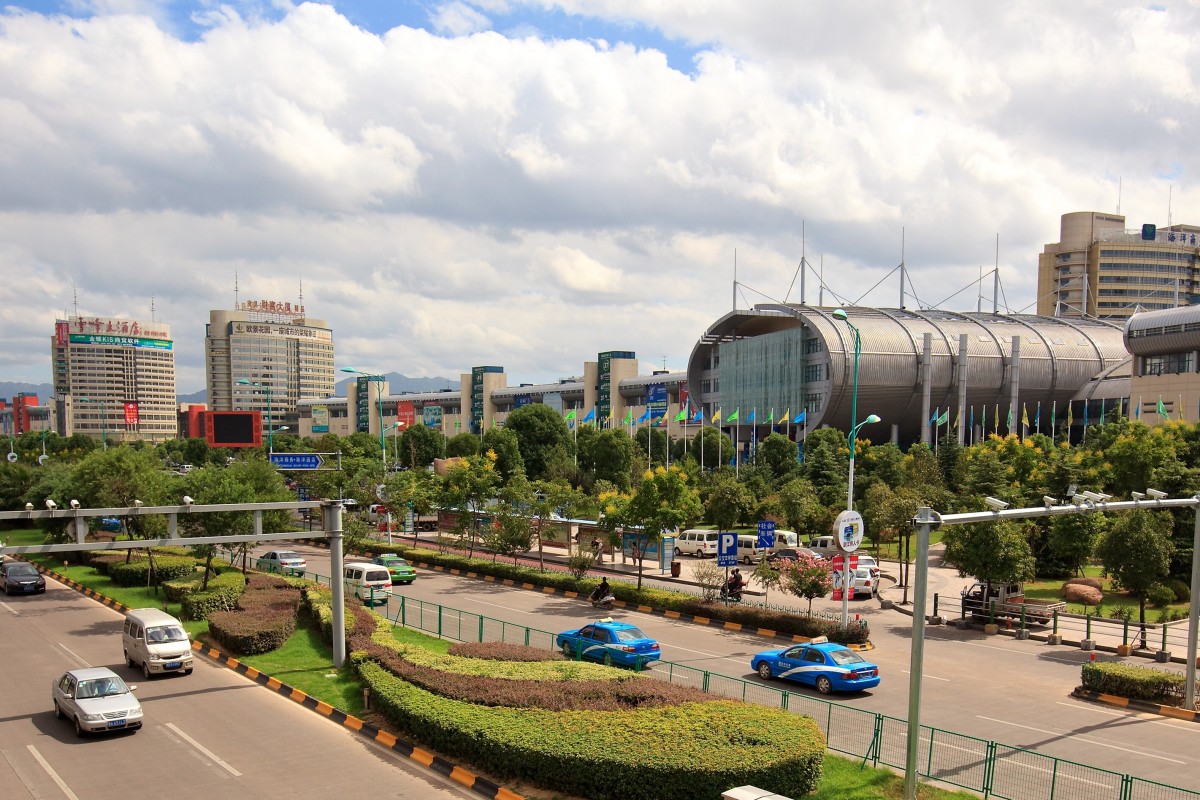
The Yiwu International Trade Market has always been renowned as a window into the vitality of Chinese manufacturing, crammed with stalls showcasing everything from flashlights to machine parts.
But today, as the coronavirus pandemic rips through the global economy, it offers a strikingly different picture – the dismal effect Covid-19 is having on the nation’s exports.
The usually bustling wholesale market, home to some 70,000 vendors supplying 1,700 different types of manufactured goods, is a shadow of its former self.
Only a handful of foreign buyers traipse through aisles of the sprawling 4-million-square-metre (43 million square feet) complex, while store owners – with no customers to tend to – sit hunched over their phones or talking in small groups.
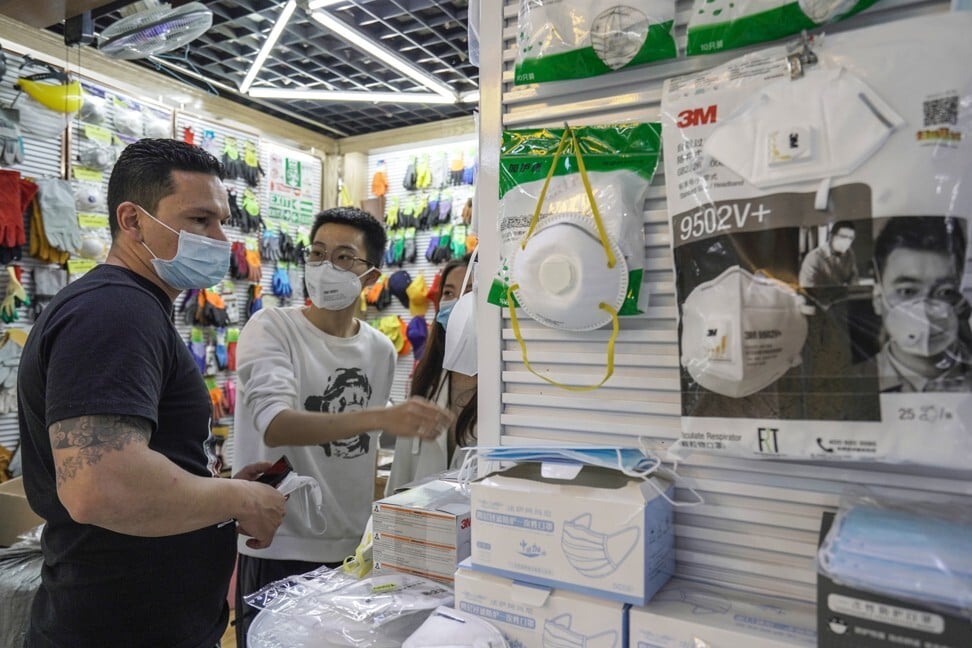
A foreign buyer visits a stall selling face masks. Photo: Ren Wei
“We try to convince ourselves that the deep slump will not last long,” said the owner of Wetell Razor, Tong Ciying, at her empty store. “We cannot let complacency creep in, although the coronavirus has sharply hampered exports of Chinese products.”
Chinese exports plunged by 17.2 per cent in January and February combined compared to the same period a year earlier, according to the General Administration of Customs. The figure was a sharp drop from 7.9 per cent growth in December.
After riding out a supply shock that shut down most of its factories, China is now facing a second wave demand shock, as overseas export orders vanish amid sweeping containment measures to contain the outbreak around the globe.
Nowhere is that clearer to see than in Yiwu. The city of 1.2 million, which lies in the prosperous coastal province of Zhejiang, was catapulted into the international limelight as a showroom for Chinese manufacturing when the country joined the World Trade Organisation in 2001.
Coronavirus: Is the gig economy dead, and should the self-employed worry?
Before the pandemic, thousands of foreign buyers would flock to the mammoth trade market each day to source all manner of products before sending them home.
But the outbreak, which has claimed the lives of more than 113,000 people and infected more than 1.9 million around the world, is proving a major test for the market and the health of the trade dependent city.
Imports and exports via Yiwu last year were valued at 296.7 billion yuan (US$42.2 billion) – nearly double the city’s economic output.
Businesses, however, are facing a very different picture in 2020. Most traders at the market say they have lost at least half their business amid the pandemic, which was first detected in the central Chinese city of Wuhan last year.
Just take a look at the situation in Yiwu and you will understand the extent of the virus’ effect on China’s trade with foreign countries – Tianqing
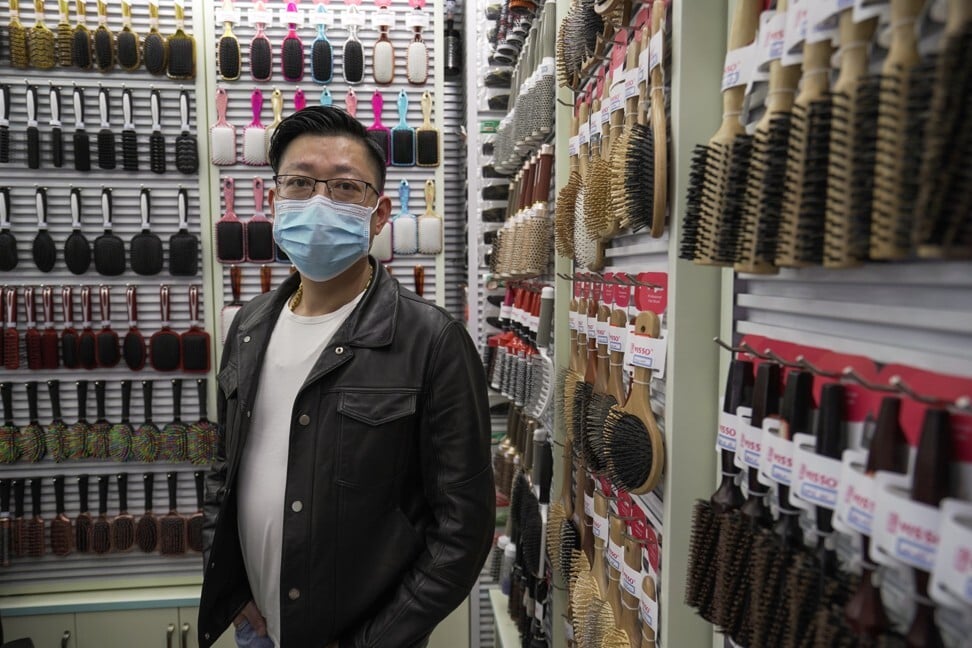
“Yiwu is the barometer for China’s exports,” said Jiang Tianqing, the owner of Beauty Shine Industry, a manufacturer of hair brushes. “Just take a look at the situation in Yiwu and you will understand the extent of the virus’ effect on China’s trade with foreign countries.”
Jiang said his business was only just hanging on thanks to a handful of loyal customers placing orders via WeChat.
“I assume it will be a drawn-out battle against the coronavirus,” he said. “We are aware of the fact that developed economies like the US and Europe have been severely affected.”
The Yiwu market reopened on February 18 after a one-month long hiatus following the Lunar New Year holiday and the government’s order to halt commercial activities to contain the spread of the outbreak.
Jiang Tianqing, owner of hair brush company Beauty Shine Industry. Photo: Ren Wei
But facing the threat of a spike in imported cases, Beijing banned foreigners from entering the country in late March – shutting out potential overseas buyers.
Despite the lack of business, local authorities have urged stall owners to keep their spaces open to display Yiwu’s pro-business attitude, owners said.
“For those bosses who just set up their shops here, it would be a do-or-die moment now since their revenue over the next few months will probably be zero,” said Tong. “I am lucky that my old customers are still making orders for my razors.”
The impact of the coronavirus is just the latest challenge for local merchants, who normally pay 200,000 yuan (US$28,000) per year for a 10-square-metre (108 square feet) stall at the market.
Traders were hard hit by the trade war between China and the United States when the Trump administration imposed a 25 per cent tariff on US$200 billion of Chinese imports last year.
At the time, some Chinese companies agreed to slash their prices to help American buyers digest the additional costs.
“But it is different this time,” said Jiang. “Pricing does not matter. Both buyers and sellers are eager to seal deals, but we are not able to overcome the barriers [to demand caused by the virus].”
Ma Jun, a manager with a LED light bulb trading company, said the only export destination for her company’s products was war-torn Yemen because it was the only country with ports still open.
It is a public health crisis that ravages not just our businesses, but the whole world economy – Dong Xin
Dong Xin, an entrepreneur selling stationery products, said he could not ship the few orders he had because “ocean carriers have stopped operations”.
“It is a public health crisis that ravages not just our businesses, but the whole world economy,” he said. “The only thing can do is to pray for an early end to the pandemic.”
Most wholesale traders in the Yiwu market run manufacturing businesses based outside the city, so a sharp fall in sales has a ripple effect on their factories, potentially resulting in massive job cuts.
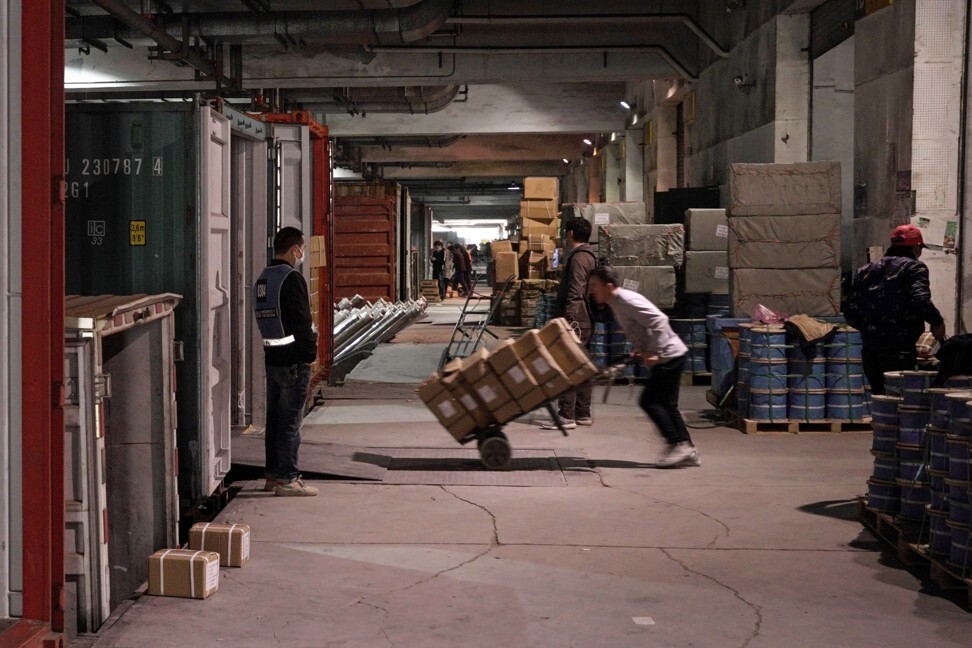
Workers pack containers at Yiwu Port, an inland port home to dozens of warehouses. Photo: Ren Wei
At Yiwu Port, an inland logistics hub full of warehouses where goods from the factories are unpacked and repacked for shipping abroad, container truck drivers joke about their job prospects.
“We used to commute between Shaoxing and here five times a week, and now it is down to twice a week,” said a driver surnamed Wang, describing the trip from his home to the shipping port, just over 100km away.
“At the end of the day, we may not be infected with the coronavirus, but our jobs will still be part of the cost of the fight against it.”
Between January 20 and April 4, PM2.5 levels across the country fell by more than 18 per cent, according to the environment ministry
But observers say that as soon as the nation’s factories and roads get back to normal, so too will the air pollution levels
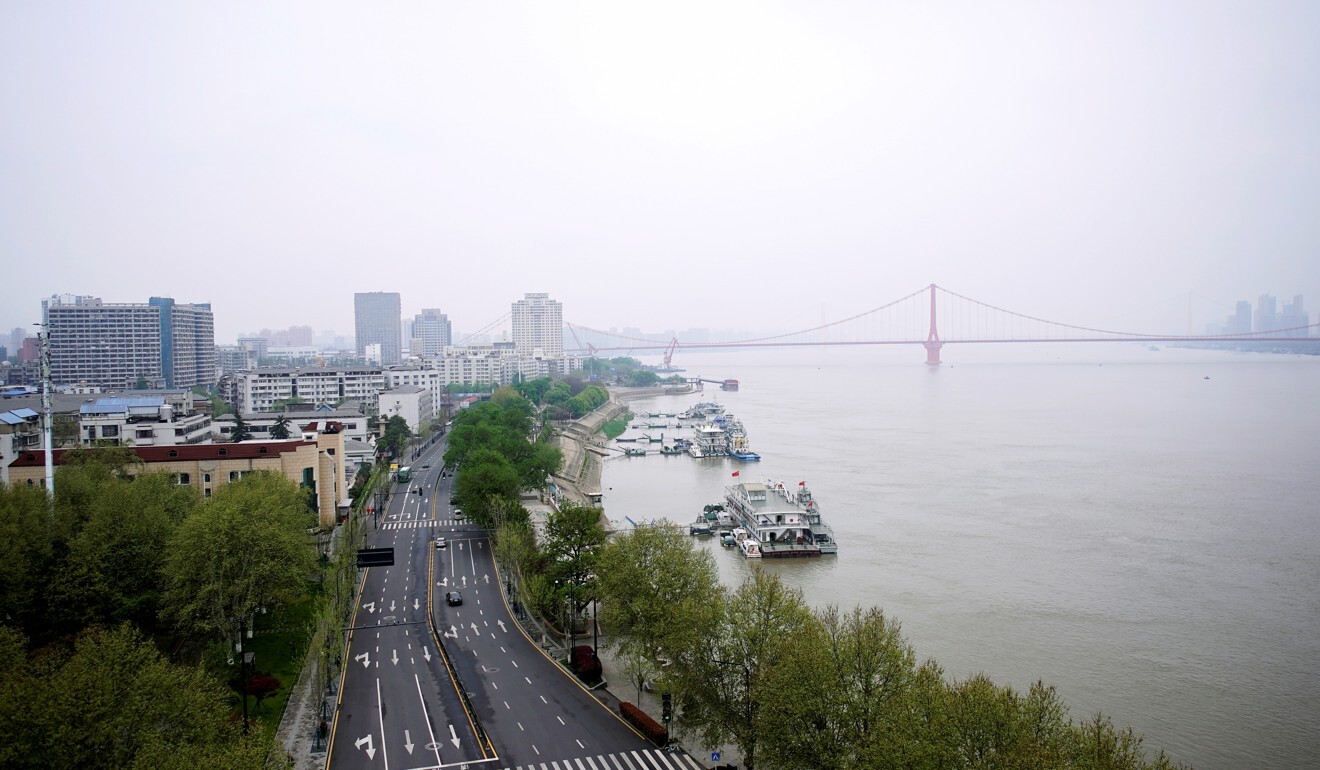
Blue skies were an unexpected upside of locking down cities and halting industrial production across China. Photo: AFP
China’s air quality has improved dramatically in recent weeks as a result of the widespread city lockdowns and strict travel restrictions introduced to contain the
. But experts say the blue skies could rapidly disappear as factories and roads reopen under a government stimulus plan to breathe new life into a stalled economy.
According to the Ministry of Ecology and Environment, between January 20 and April 4 the average concentration of PM2.5 – the tiny particles that pose the biggest risk to health – fell by 18.4 per cent from the same period of last year.
Meanwhile, the average number of days with good air quality – determined as when the air pollution index falls below 100 – rose by 7.5 per cent, it said.
Satellite images released by Nasa and the European Space Agency showed a dramatic drop in nitrogen dioxide emissions in major Chinese cities in the first two months of 2020, compared with a year earlier.
According to Nasa, the changes in Wuhan – the central China city at the epicentre of the initial coronavirus outbreak – were particularly striking, while nitrogen dioxide levels across the whole of eastern and central China were 10 to 30 per cent lower than normal.
The region is home to hundreds of factories, supplying everything from steel and car parts to microchips. Wuhan, which has a population of 11 million, was placed under lockdown on January 23, but those restrictions were lifted on Wednesday
.
Air pollution is likely to return to China’s cities once the lockdowns are lifted. Photo: Reuters
Nitrogen dioxide is produced by cars, power plants and other industrial facilities and is thought to exacerbate respiratory illnesses such as asthma.
The space agency said the decline in air pollution levels coincided with the restrictions imposed on transport and business activities.
That was consistent with official data from China’s National Development and Reform Commission, which recorded a 25 per cent fall in road freight volume and a 14 per cent decline in the consumption of oil products between January and February.
Guangzhou cases prompt shutdown in ‘Little Africa’ trading hub
8 Apr 2020
Liu Qian, a senior climate campaigner for Greenpeace based in Beijing, said the restrictions on industry and travel were the primary reasons for the improvement in air quality.
According to official data, in February, the concentrations of PM2.5, nitrogen dioxide and sulphur dioxide – a toxic gas that comes mostly from industrial burning of coal and other fossil fuels – all fell, by 27 per cent, 28 per cent and 23 per cent, respectively.
“The causes of air pollution are complicated, but the suspension of industrial activity and a drop in public transport use will have helped to reduce levels,” Liu said.
As the epicentre of the Covid-19 pandemic has shifted to the United States and
, human and industrial activity in China is gradually picking back up, and so is air pollution.
Lauri Myllyvirta, lead analyst with the Centre for Research on Energy and Clean Air in Helsinki, said that levels of nitrogen dioxide pollution, measured both by Nasa satellites and official stations in China, started inching back up in the middle of March and had returned to normal levels by the end of the month.
That coincided with the centre’s findings – published on Carbon Brief, a British website on climate change – that coal consumption at power plants and oil refineries across China returned to their normal levels in the fourth week of March.
How the Wuhan experience could help coronavirus battle in US and Europe
10 Apr 2020
Ma Jun, director of the Institute of Public & Environmental Affairs, a Beijing-based charity, said a stimulus plan to kick-start the economy would have a significant impact on air pollution.
“Once industrial production is fully resumed, so are the emission levels,” he said. “Unless another outbreak happens and triggers another lockdown, which would be terrible, the improvement achieved under the pandemic is unstable and won’t last long.”
After the 2008 financial crisis, Beijing launched a 4 trillion yuan (US$567.6 billion) stimulus package that included massive infrastructure investment, but also did huge damage to the environment. In the years that followed, air pollution rose to record highs and sparked a public backlash.
Even before the Covid-19 outbreak, China’s economy was slowing – it grew by 6.1 per cent in 2019, its slowest for 29 years – and concerns are now growing that policymakers will go all out to revive it.
“Local governments have been under huge pressure since last year, and there are fears that environmental regulations will be sidelined [in the push to boost economic output],” Ma said.
But Beijing had the opportunity to get it right this time by investing more in green infrastructure projects rather than high-carbon projects, he said.
“A balance between economic development and environmental protection is key to achieving a green recovery, and that is what China needs.”
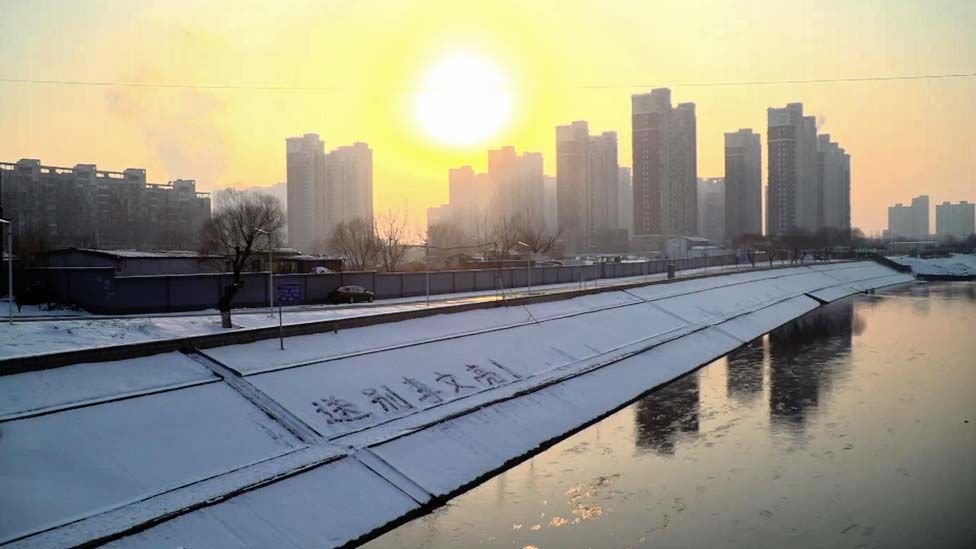
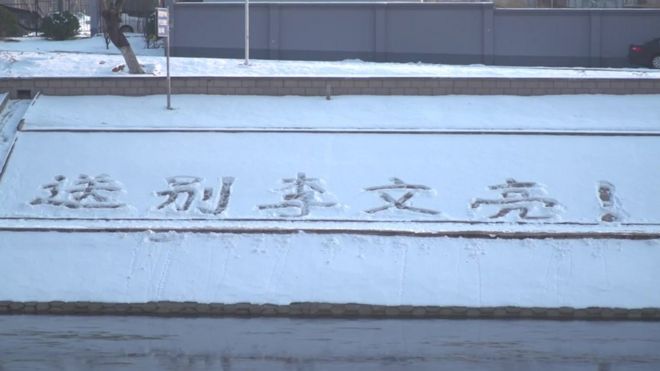
Image caption A message written in the snow alongside the Tonghui river reads “Goodbye Li Wenliang!”
On a cold Beijing morning, on an uninspiring, urban stretch of the Tonghui river, a lone figure could be seen writing giant Chinese characters in the snow.
The message taking shape on the sloping concrete embankment was to a dead doctor.
“Goodbye Li Wenliang!” it read, with the author using their own body to make the imprint of that final exclamation mark.
Five weeks earlier, Dr Li had been punished by the police for trying to warn colleagues about the dangers of a strange new virus infecting patients in his hospital in the Chinese city of Wuhan.
Now he’d succumbed to the illness himself and pictures of that frozen tribute spread fast on the Chinese internet, capturing in physical form a deep moment of national shock and anger.
Image copyright GETTY IMAGESImage caption A worker in a Chinese factory wears a protective mask
There’s still a great deal we don’t know about Covid-19, to give the disease caused by the virus its official name. Before it took its final fatal leap across the species barrier to infect its first human, it is likely to have been lurking inside the biochemistry of an – as yet unidentified – animal. That animal, probably infected after the virus made an earlier zoological jump from a bat, is thought to have been kept in a Wuhan market, where wildlife was traded illegally.
Beyond that, the scientists trying to map its deadly trajectory from origin to epidemic can say little more with any certainty.
But while they continue their urgent, vital work to determine the speed at which it spreads and the risks it poses, one thing is beyond doubt. A month or so on from its discovery, Covid-19 has shaken Chinese society and politics to the core.
That tiny piece of genetic material, measured in ten-thousandths of a millimetre, has set in train a humanitarian and economic catastrophe counted in more than 1,000 Chinese lives and tens of billions of Chinese yuan. It has closed off whole cities, placing an estimated 70 million residents in effective quarantine, shutting down transport links and restricting their ability to leave their homes. And it has exposed the limits of a political system for which social control is the highest value, breaching the rigid layers of censorship with a tsunami of grief and rage.
The risk for the ruling elite is obvious.
It can be seen in their response, ordering into action the military, the media and every level of government from the very top to the lowliest village committee.
The consequences are now entirely dependent on questions no one knows the answers to; can they pull off the complex task of bringing a runaway epidemic under control, and if so, how long might it take?
Across the world, people seem unsure how to respond to the small number of cases being detected in their own countries. The public mood can swing between panic – driven by the pictures of medical workers in hazmat suits – to complacency, brought on by headlines that suggest the risk is no worse than flu. The evidence from China suggests that both responses are misguided. Seasonal flu may well have a low fatality rate, measured in fractions of 1%, but it’s a problem because it affects so many people around the world.
The tiny proportion killed out of the many, many millions who catch it each year still numbers in the hundreds of thousands – individually tragic, collectively a major healthcare burden.
Very early estimates suggested the new virus may be at least as deadly as flu – precisely why so much effort is now going into stopping it becoming another global pandemic. But one new estimate suggests it could prove even deadlier yet, killing as many as 1% of those who contract it. For any individual, that risk is still relatively small, although it’s worth noting such estimates are averages – just like flu, the risks fall more heavily on the elderly and already infirm.
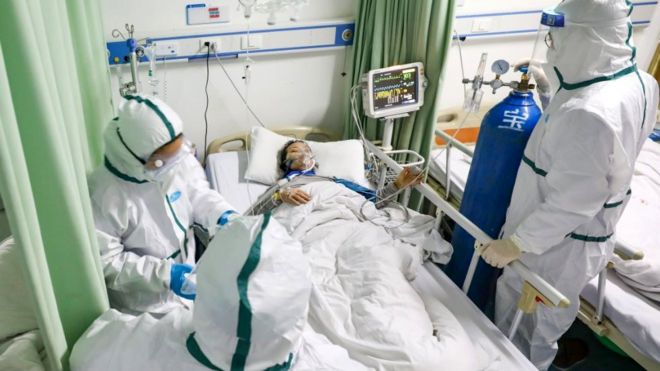
Image copyright REUTERSImage caption Despite the death toll, an increasing number of patients are recovering
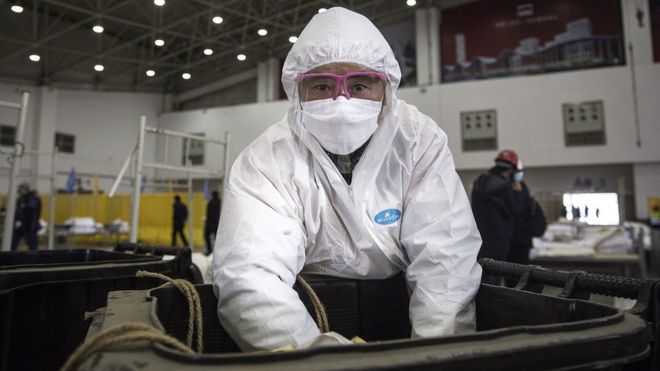
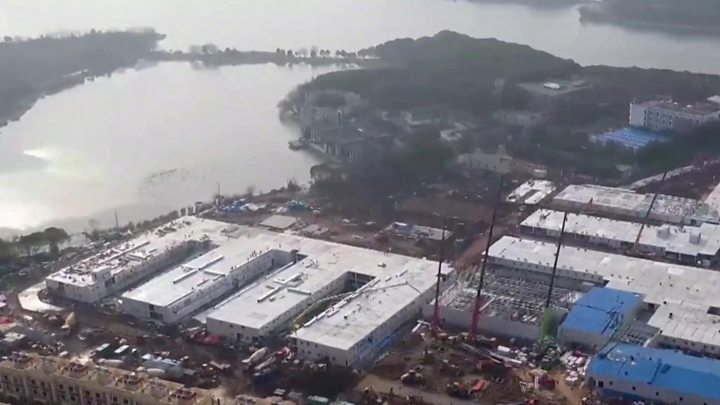
But China’s experience of this epidemic demonstrates two things. Firstly, it offers a terrifying glimpse of the potential effect on a healthcare system when you scale up infections of this kind of virus across massive populations. Two new hospitals have had to be built in Wuhan in a matter of days, with beds for 2,600 patients, and giant stadiums and hotels are being used as quarantine centres, for almost 10,000 more.
Despite these efforts, many have still struggled to find treatment, with reports of people dying at home, unregistered in the official figures. Secondly, it highlights the importance of taking the task of containing outbreaks of new viruses extremely seriously. The best approach, most experts agree, is one based on transparency and trust, with good public information and proportionate, timely government action.
But in an authoritarian system, with strict censorship and an emphasis on political stability above all else, transparency and trust are in short supply.
Media caption Aerial time-lapse shows Wuhan hospital construction
But those measures have become necessary only because its initial response looked like the very definition of complacency.
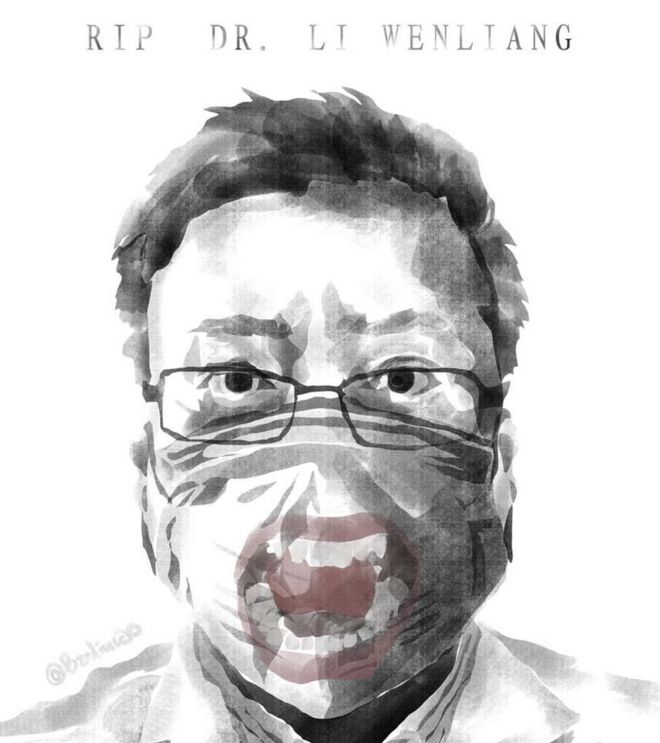
There’s ample evidence that the warning signs were missed by the authorities, and worse, ignored. By late December, medical staff in Wuhan were beginning to notice unusual symptoms of viral pneumonia, with a cluster linked to the market trading in illegal wildlife. On 30 December, Dr Li Wenliang, an ophthalmologist working in Wuhan’s Central Hospital, posted his concerns in a private medical chat group, advising colleagues to take measures to protect themselves. He’d seen seven patients who appeared to be suffering with an illness similar to Sars – another coronavirus that began in an illegal Chinese wildlife market in 2002 and went on to kill 774 people worldwide.
The case received national media attention, with a high-profile state-run TV report announcing that in total, eight people in Wuhan were being investigated for “spreading rumours”. The authorities, though, were well aware of the outbreak of illness. The day after Dr Li posted his message, China notified the World Health Organization, and the day after that, the suspected source – the market – was closed down.
But despite the multiplying cases and the concerns among medics that human-to-human transmission was taking place, the authorities did little to protect the public. Doctors were already setting up quarantine rooms and anticipating extra admissions when Wuhan held its important annual political gathering, the city’s People’s Congress.
Image caption Images from Chinese state TV show the large banquet in Wuhan
Most remarkable of all perhaps, the following day, Wuhan held a Lunar New Year dance performance, attended by senior officials from across the surrounding province of Hubei. A state media report of the event, since hurriedly deleted but captured here, says the performers, some with runny noses and feeling unwell, “overcame the fear of pneumonia… winning praise from the leaders”.
By the time the national authorities had woken up to the impending disaster, and closed the city down on 23 January, it was too late – the epidemic was out of control. Before Wuhan’s transport links were cut, an estimated five million people had left the city for the Lunar New Year break, travelling across China and the world.
The parallels in failures to pass bad news up the chain of command and the incentives to put the short-term interests of political stability ahead of public safety, seem all too apparent. Li Wenliang, who’d gone back to work after being warned to keep quiet, soon discovered he’d also been infected.
He died earlier this month, leaving a five-year-old son and a pregnant wife.
Anger was already simmering over the authorities’ failure to issue timely warnings, with the crisis now being aired in full view. Wuhan’s politicians were blaming senior officials for failing to authorise the release of the information; senior officials appeared to be preparing to hang Wuhan’s politicians out to dry.
But the death of a man, silenced for simply trying to protect his colleagues, burst open the dam with a wave of online fury directed not just at individuals, but at the system itself. So great was the public outrage, China’s censors appeared unsure what to censor and what to let through. The hashtag #Iwantfreedomofspeech was viewed almost two million times before it was blocked. Aware of the tide of emotion, the Party began paying its own tributes to Dr Li.
Image copyright COURTESY BADIUCAOImage caption Doctor Li Wenliang tried to warn authorities about the new virus and died after contracting it
China’s rulers, untroubled by the inconveniences of the ballot box, have far deeper and older fears of what might sweep them from office. The wars, famines and diseases that shook the dynasties of old have given them their inheritance; an acute historical sense of the danger of the unforeseen crisis. They will also know well what Chernobyl did for the legitimacy of the ruling Communist Party in the former USSR.
“It’s impossible to know if Li Wenliang’s death will serve as the catalyst for something bigger,” Jude Blanchette, an expert on Chinese politics at the Center for Strategic and International Studies in Washington, tells me. “But the raw emotion that surged when news of his condition broke indicates deep levels of frustration and anger exist within the country.”
Precisely because it feels the weight of history, however, the Communist Party has made holding onto power a living obsession, and it has an ever more formidable domestic security apparatus to help it to do so. Over the past few decades it has proven nothing if not resilient, enduring through political chaos, devastating earthquakes and man-made disasters.
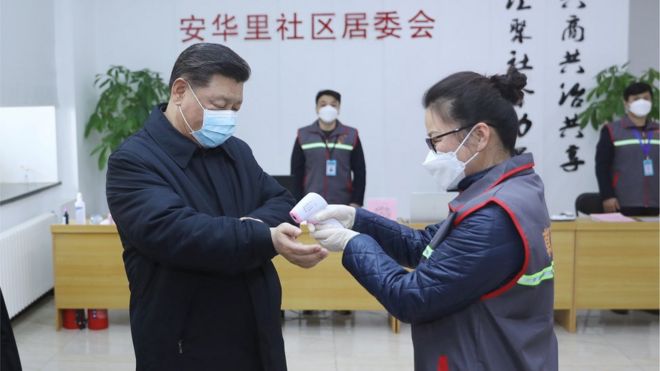
But one sign that might hint at an awareness of just how great the current risks are comes in the role being played by China’s President Xi Jinping. This week – for the first time since the crisis began – he ventured out to meet health workers involved in the fight, visiting a hospital and a virus control centre in Beijing.
In contrast, his premier, Li Keqiang, has been sent to the front lines in Wuhan and appointed head of a special working group to tackle the epidemic.
While it is common for the premier to be the face of reassurance during national disasters, some observers see another reason why Mr Xi might be wise to be seen to delegate.
Image copyright EPAImage caption China’s president has kept a low profile since the outbreak began
“Xi’s absence from this crisis is yet another demonstration that he doesn’t so much lead as he does command,” Mr Blanchette says. “He’s clearly worried that this crisis will blow up in his face, and so he’s pushed out underlings to be the public face of the CCP’s response.”
Already there are signs that the censorship is being ratcheted up once again, with Mr Xi ordering senior officials to “strengthen the control over online media”.
A few days ago, I spoke by phone to the lawyer and blogger, Chen Qiushi, who’d travelled to Wuhan in an attempt to provide independent reporting about the situation. Videos from Mr Chen, and a fellow activist, Fang Bin, have been widely watched, showing not the ranks of patriotic soldier-medics and the building of hospitals that fill state media coverage, but overcrowded waiting rooms and body bags.
He told me he was unsure how long he’d be able to carry on. “The censorship is very strict and people’s accounts are being closed down if they share my content,” he said.
Mr Chen has since gone missing.
Friends and family believe he’s been forced into Wuhan’s quarantine system, in an attempt to silence him.
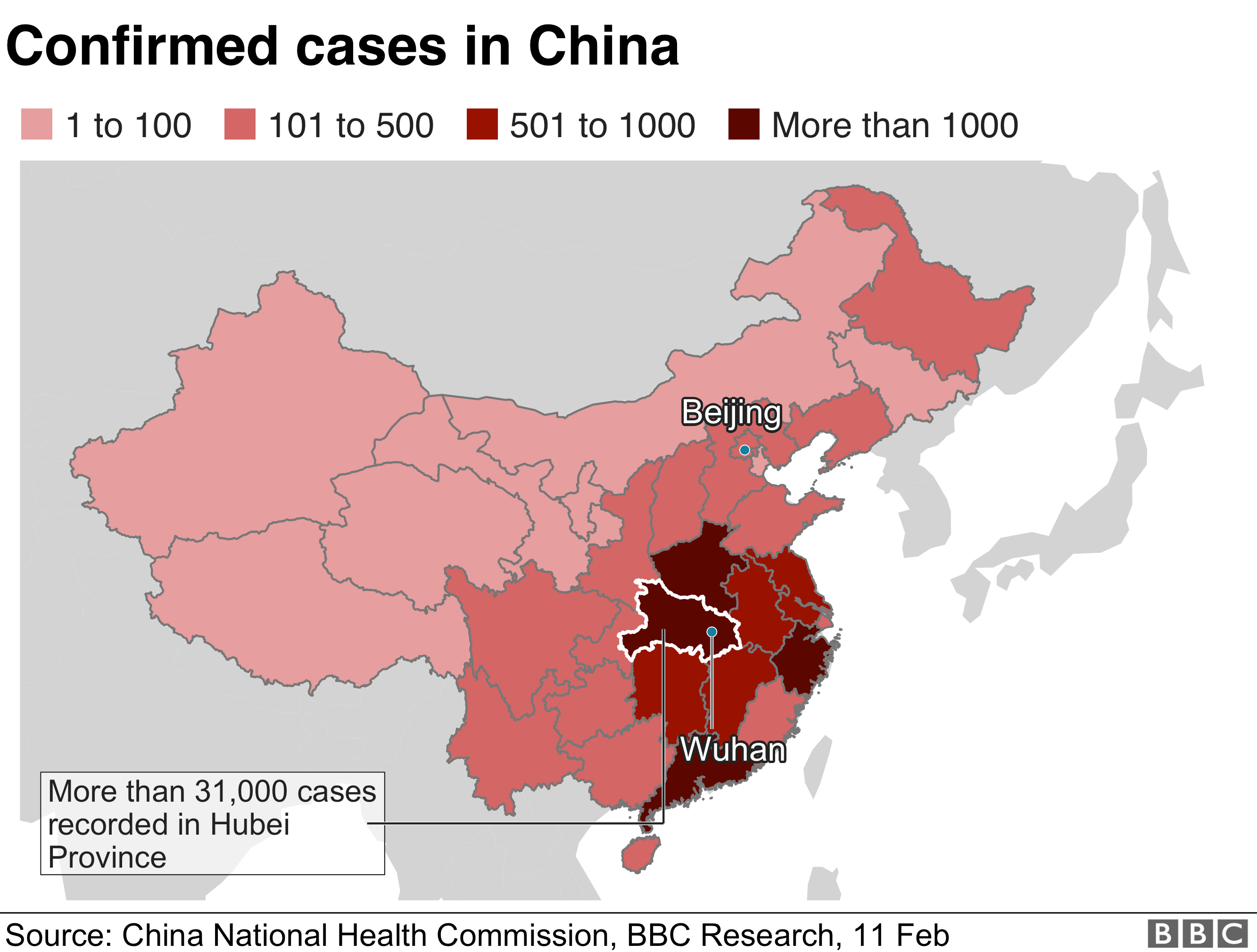
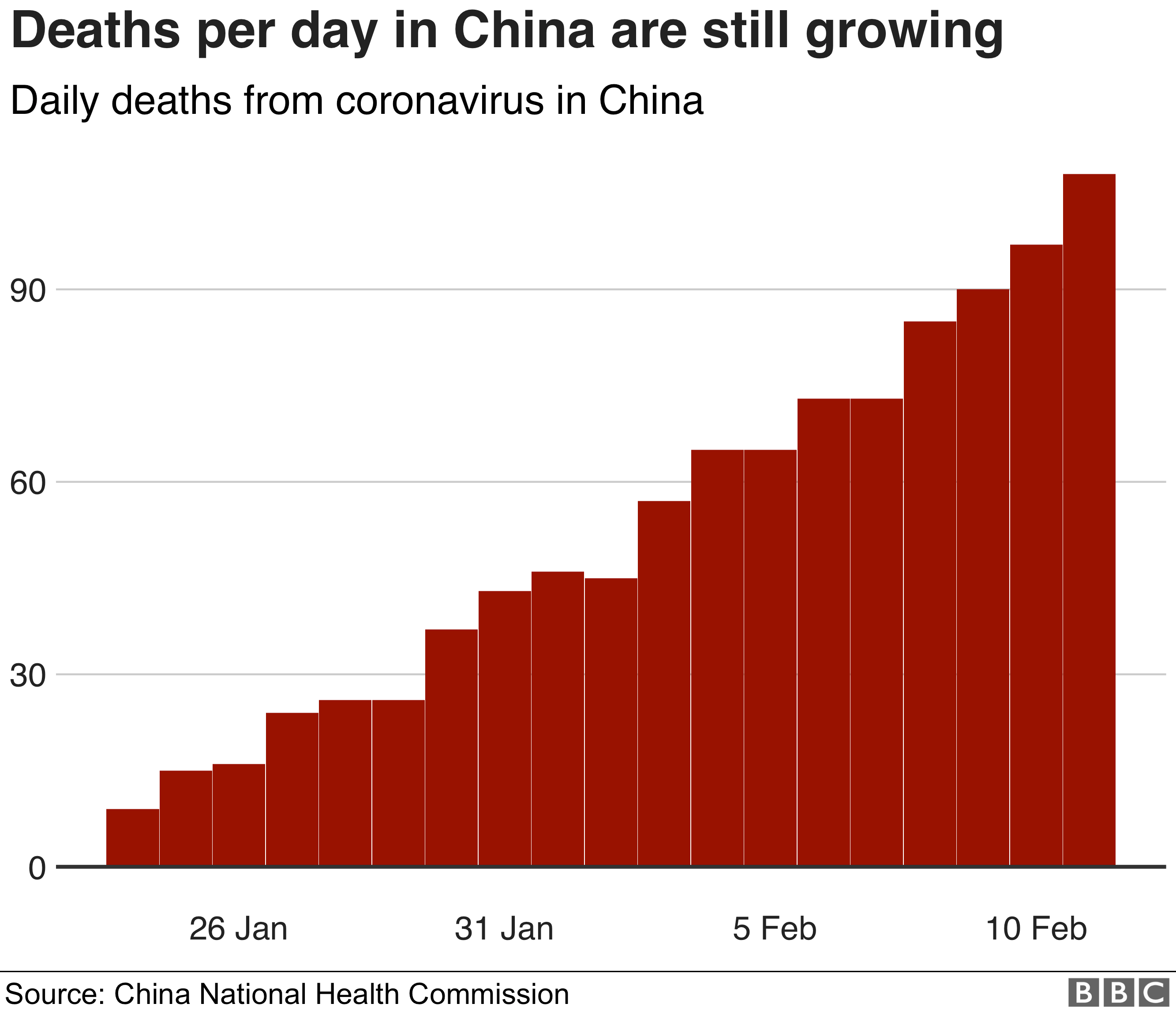
China’s leaders now find their fate linked to the daily charts of infection rates, published city by city, province by province. There are some signs that the extraordinary quarantine measures may be having an effect – outside of Hubei Province, the worst affected area, the number of new daily infections is falling.
But with the need to try to restart the economy – all but frozen now for over a week – the country has begun a slow return to work.
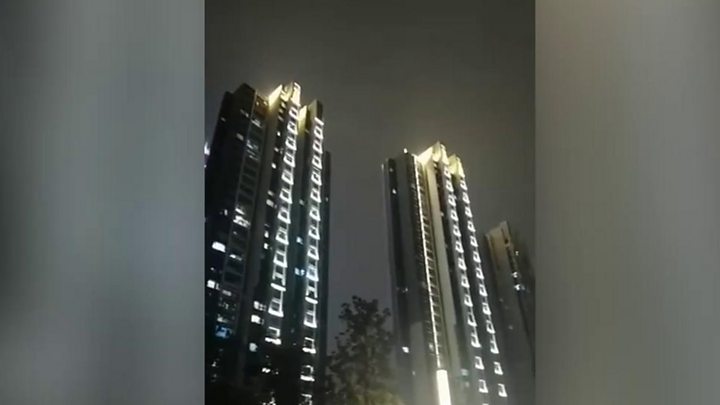
Media caption “Wuhan, add oil!”: Watch residents shouting to boost morale in quarantined city
Strict quarantine measures will remain in force in the worst affected areas, but workers from other parts of the country are trickling back to the cities, with the task of monitoring and managing their movements being handed to local neighbourhood committees.
It will be a difficult balancing act.
Too tough an approach risks further choking off business activity, commerce and travel in a consumer environment already suffocating under the deep psychological fear of contagion. Too lax, and any one of the many potential reservoirs of infection, now scattered across the country, could explode into another, separate epidemic.
That would require further harsh action, knocking domestic confidence and prolonging the international border closures and flight restrictions put in place at such enormous economic cost.
Questions about the systemic failings behind the disaster are dismissed as foreign “prejudice”, as the propaganda machine cranks into overdrive, channelling the narrative and muting the criticisms.
But the devastating scale and scope of China’s world-threatening catastrophe have already revealed something important. The thousands who have lost family members, the millions living under the quarantine measures and the workers and businesses bearing the financial costs have been asking those difficult questions too.
Image caption A tribute in snow to doctor Li Wenliang
On the snowy banks of the Tonghui river, the giant tribute to Li Wenliang remains intact. When we visited, a few locals were taking photos and talking quietly to each other.
A police car crawled slowly by.
Soon, with the warming weather, the characters will be gone.








 CHINDIA ALERT: You'll be living in their world, very soon