Archive for ‘face masks’

31/03/2020

Coronavirus: Countries reject Chinese-made equipment

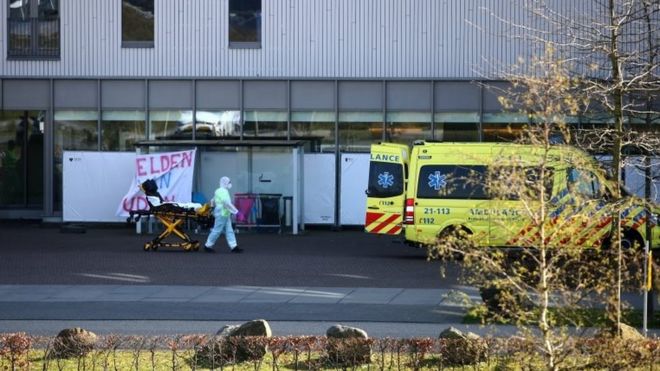
A man in protective gear wheels a stretcher into a hospital in Uden, the NetherlandsImage copyright GETTY IMAGES
Image caption The Netherlands has been among the countries reporting faulty Chinese-made equipment

A number of European governments have rejected Chinese-made equipment designed to combat the coronavirus outbreak.

Thousands of testing kits and medical masks are below standard or defective, according to authorities in Spain, Turkey and the Netherlands.

Europe has reported hundreds of thousands of cases of coronavirus.

More than 10,000 people have died in Italy since the outbreak began.

The virus was first detected in China at the end of 2019. The government implemented strict lockdown measures to bring it under control.

What’s wrong with the equipment?

On Saturday, the Dutch health ministry announced it had recalled 600,000 face masks. The equipment had arrived from a Chinese manufacturer on 21 March, and had already been distributed to front-line medical teams.

Dutch officials said that the masks did not fit and that their filters did not work as intended, even though they had a quality certificate,

Presentational grey line

You may also be interested in:

Presentational grey line

“The rest of the shipment was immediately put on hold and has not been distributed,” a statement read. “Now it has been decided not to use any of this shipment.”

Spain’s government encountered similar problems with testing kits ordered from a Chinese company.

It announced it had bought hundreds of thousands of tests to combat the virus, but revealed in the following days that nearly 60,000 could not accurately determine if a patient had the virus.

The Chinese embassy in Spain tweeted that the company behind the kits, Shenzhen Bioeasy Biotechnology, did not have an official license from Chinese medical authorities to sell its products.

It clarified that separate material donated by the Chinese government and technology and retail group Alibaba did not include products from Shenzhen Bioeasy.

Turkey also announced that it had found some testing kits ordered from Chinese companies were not sufficiently accurate, although it said that some 350,000 of the tests worked well.

Allegations of defective equipment come after critics warned China could be using the coronavirus outbreak to further its influence.

In a blog post last week, EU chief diplomat Josep Borrell warned that there is “a geo-political component including a struggle for influence through spinning and the ‘politics of generosity’.”

“China is aggressively pushing the message that, unlike the US, it is a responsible and reliable partner,” he wrote. “Armed with facts, we need to defend Europe against its detractors.”

What’s the situation in Europe?

On Monday, Spain reported 812 new deaths in the space of 24 hours – bringing its total death toll to 7,340. It now has more than 85,000 infections – surpassing the number of cases reported in China.
Media caption Spanish doctor “scared and exhausted” by pandemic

New measures have also come into force in Spain banning all non-essential workers from going to their jobs. The restrictions will be in place for at least two weeks.

Italy remains the worst affected country worldwide. More than 10,000 people have died from the virus there, and it has recorded nearly 100,000 infections. Only the US has more confirmed cases, although the death toll there is far lower.

Source: The BBC

30/03/2020

Coronavirus: China’s ambassador closely following Netherlands investigation into face masks

  • Dutch inquiry follows recall of 600,000 face masks
  • Ambassador rejects concerns China has a political agenda alongside medical support
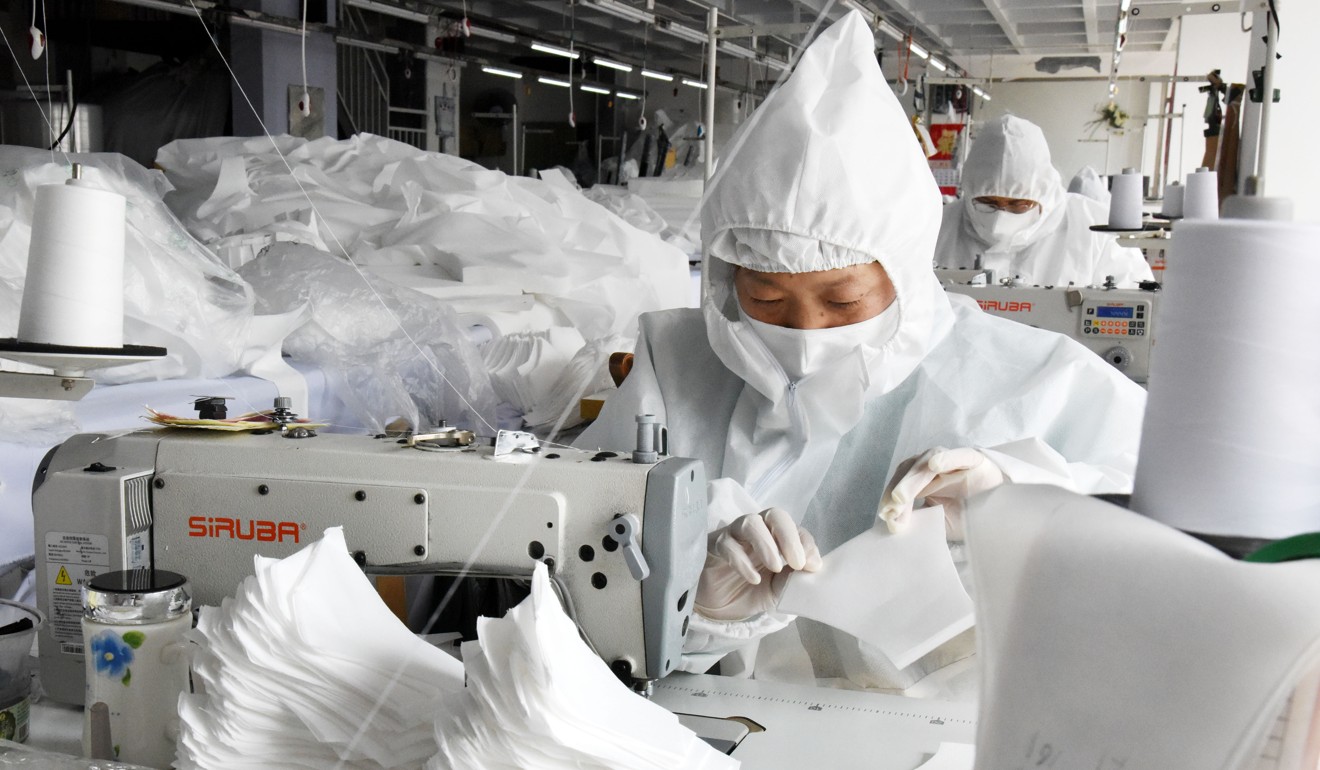
In early March, China’s daily output of face masks reached 116 million units. Photo: Xinhua
China’s embassy in the Netherlands said on Monday that it was closely following a Dutch investigation into reportedly defective masks imported from China and called for the issue not to be politicised.
Xu Hong, China’s ambassador to the Netherlands, made the comment after Dutch officials recalled more than 600,000 face masks which were found to be unsuitable for intensive care medical staff.
“The embassy paid high attention to the March 28 news about the ‘defective’ masks that Dutch government purchased from China, and contacted the Dutch Ministry of Foreign Affairs and the Ministry of Health in the first time to verify the information,” Xu said, according to a statement published on the embassy’s website.
Xu said he had spoken by telephone with the Dutch Minister for Medical Care and Sport Martin van Rijn, on Sunday about the issues and said “if necessary” China would help the Dutch investigation into the quality of the masks.
Netherlands recalls 600,000 face masks from China due to low quality
29 Mar 2020

According to the Dutch Ministry of Health, Welfare and Sport, the masks did not fit well and the filters did not function properly. It was not immediately clear whether the batch in question was given to the Netherlands as a donation or had arrived through a commercial transaction.

“The Netherlands is still looking into the situation, and if there is any further information, it will inform the Chinese side in the first time,” Xu said.

China has ramped up medical assistance abroad where the novel coronavirus pandemic has shown no signs of easing, but China’s efforts have run into rising concerns about the poor quality protective gear and test equipment it offered.

In early March, China's daily output of face masks reached 116 million units. Picture: Xinhua
In early March, China’s daily output of face masks reached 116 million units. Picture: Xinhua
Xu also rejected concerns that China had a political agenda accompanying its medical support. He called for its assistance in not to be politicised.

“The reason why China supports the Netherlands and other countries to fight the pandemic is very simple: we are trying to save lives,” Xu said.

“There is no ‘geopolitical consideration’ as a few claimed. It is normal if some problems arise during the cooperation. These problems can be solved in an objective manner, but should not be politicised.”

It is not the first time European countries have had problems with coronavirus-related medical equipment manufactured in China.

Why China’s ‘mask diplomacy’ is raising concern in the West

29 Mar 2020
The Spanish government said on Thursday that the Covid-19 rapid test kits it bought from Shenzhen Bioeasy Biotechnology via a Spanish supply company had an accuracy rate of only 30 per cent. The Spanish government withdrew 58,000 test kits.

The company said it would replace the test kits sent to Spain.

On Thursday, the Chinese embassy in Spain said on Twitter that the Bioeasy test kits had not been approved by China’s National Medical Products Administration and were not included in the medical supplies sent by the Chinese government to Spain.

Separately, the Philippines’ health department on Sunday apologised for comments it had made a day earlier that two batches of coronavirus test kits provided by China were substandard, and acknowledged that the quality of the test kits did meet global standards.

Source: SCMP

29/03/2020

Why are there so few coronavirus infections in Singapore’s health workers?

  • Throughout the world, overworked health care professionals are being infected with Covid-19, yet the Lion City has kept numbers low
  • Preparation, planning, patient ratios and protective equipment have all played a part. Still, even the best gear cannot guard against discrimination
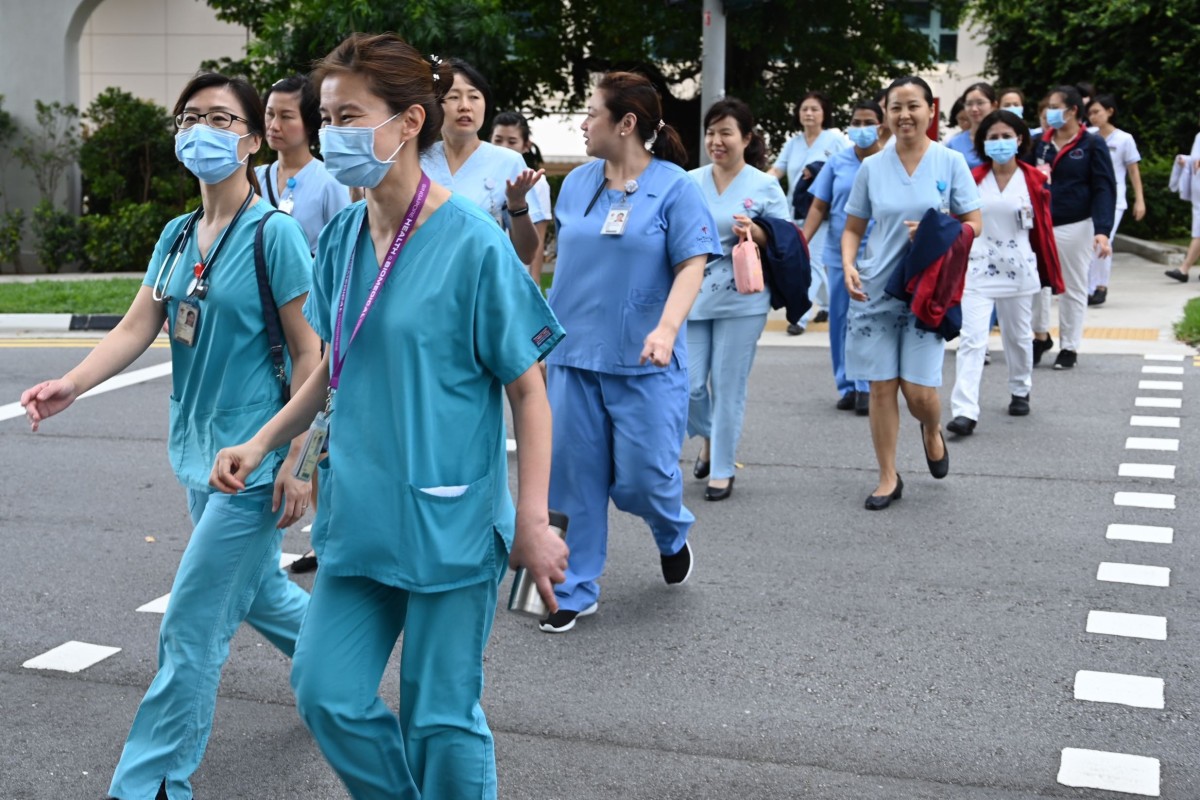
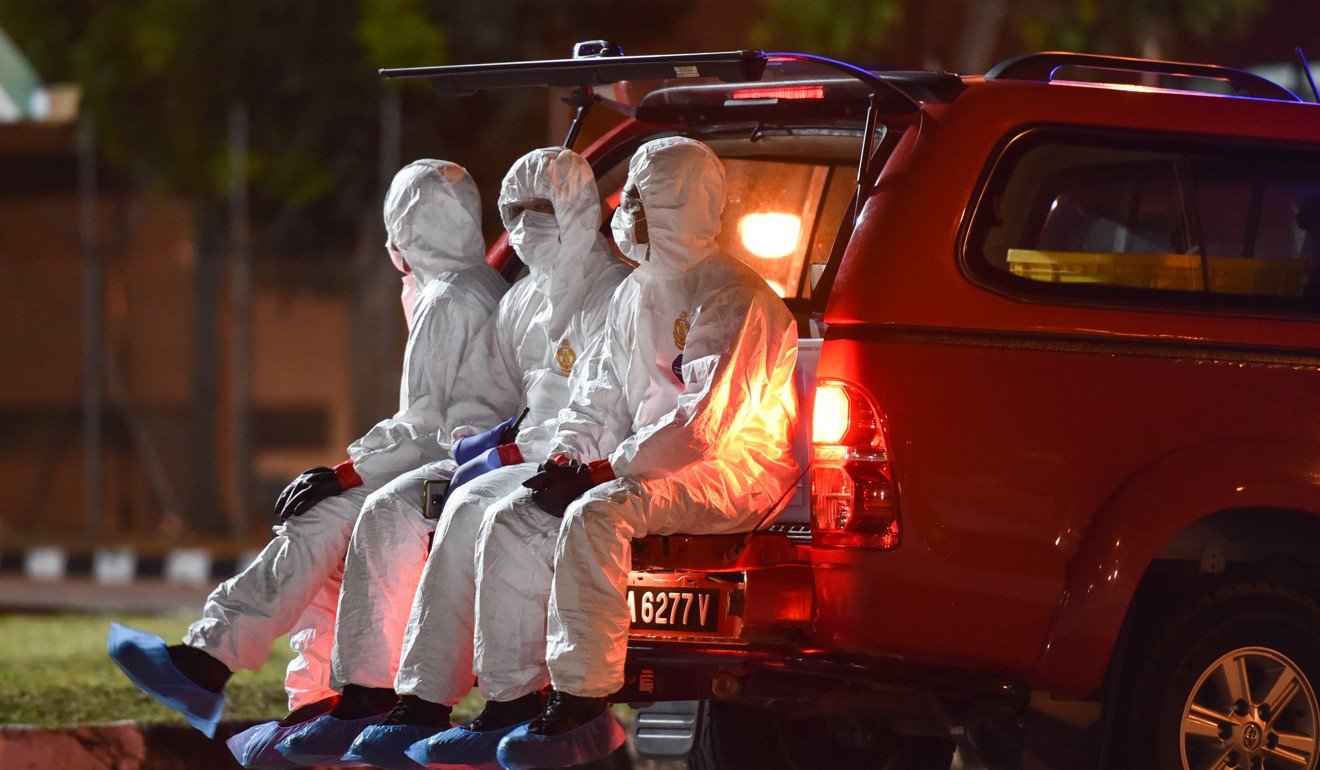
Medical staff walk to the National Centre for Infectious Diseases building at Tan Tock Seng Hospital in Singapore. Photo: AFP
Uncooperative patients, long hours and a lack of protective equipment are hampering health care workers across the world as they take the fight to the coronavirus, leading many to fall sick themselves.
In Malaysia, a pregnant woman who did not disclose that her father was infected tested positive after giving birth, leading to the shutdown of the entire hospital for cleaning. In the Philippines, nine doctors have died, two of whom had dealt with a patient who lied about her travel history.
In Spain, where more than 5,400 health care workers have been infected, accounting for about 14 per cent of the country’s patients, there are no longer enough workers to care for patients.
In Italy, which has more than 69,000 patients, the virus killed a doctor who had no choice but to work without gloves.
In the United States, which has surpassed China to become the world’s most infected nation with more than 83,000 people testing positive for Covid-19, hospitals are being overrun with patients.

Health care staff in the country say patients are packed into emergency wards and intensive care units (ICUs), further raising the risk of infections. They also report shortages of ventilators, face masks, gowns and shields.

The US Centres for Disease Control and Prevention on March 7 released interim guidelines saying health care workers exposed to the coronavirus could be asked to return to work as long as they wore face masks and were not showing symptoms, if their employers had no other manpower available.

Malaysian health workers at Kuala Lumpur International Airport. Photo: AFP
A REASON FOR OPTIMISM
However, amid all the gloom, Singapore’s experienceis being held up as a reason for optimism. The city state has reported more than 630 cases of infection, all of which are being treated in hospital, yet only a handful of its health care professionals have been infected. What’s more, even these cases, according to Vernon Lee, director of communicable diseases at the Ministry of Health, are thought to have been infected outside the health care setting.

Experts suggest this has been more than just luck, pointing to a case in which 41 health workers were exposed to the coronavirus in a Singapore hospital yet evaded infection.

The workers had all come within two metres of a middle-aged man with Covid-19 who was being intubated, a procedure which involves a tube being inserted into the patient’s trachea. The procedure is seen as being particularly hazardous for health workers as it is “aerosol generating” – patients are likely to cough.

The workers had not known at the time that the man had the virus and all were quarantined after he tested positive. However, on their release two weeks later, none of them had the virus.

Coronavirus: as Malaysia braces for third wave, doctors make their own face masks

27 Mar 2020

The case has come to widespread attention partly because the workers were wearing a mix of standard surgical masks and the N95 mask, which doctors see as the gold standard as it filters out 95 per cent of airborne particles.

The conclusion, published in The Annals of Internal Medicine this month, was this: “That none of the health care workers in this situation acquired infection suggests that surgical masks, hand hygiene, and other standard procedures protected them from being infected.”

Surgeon and writer Atul Gawande mentioned the case in an article for The New Yorker on how health care workers could continue seeing patients without becoming patients. He said there were things to learn from Asia and that some of the lessons came out of the “standard public health playbook”. In other words, there is much to be said for social distancing, basic hand hygiene and cleaning regimens.

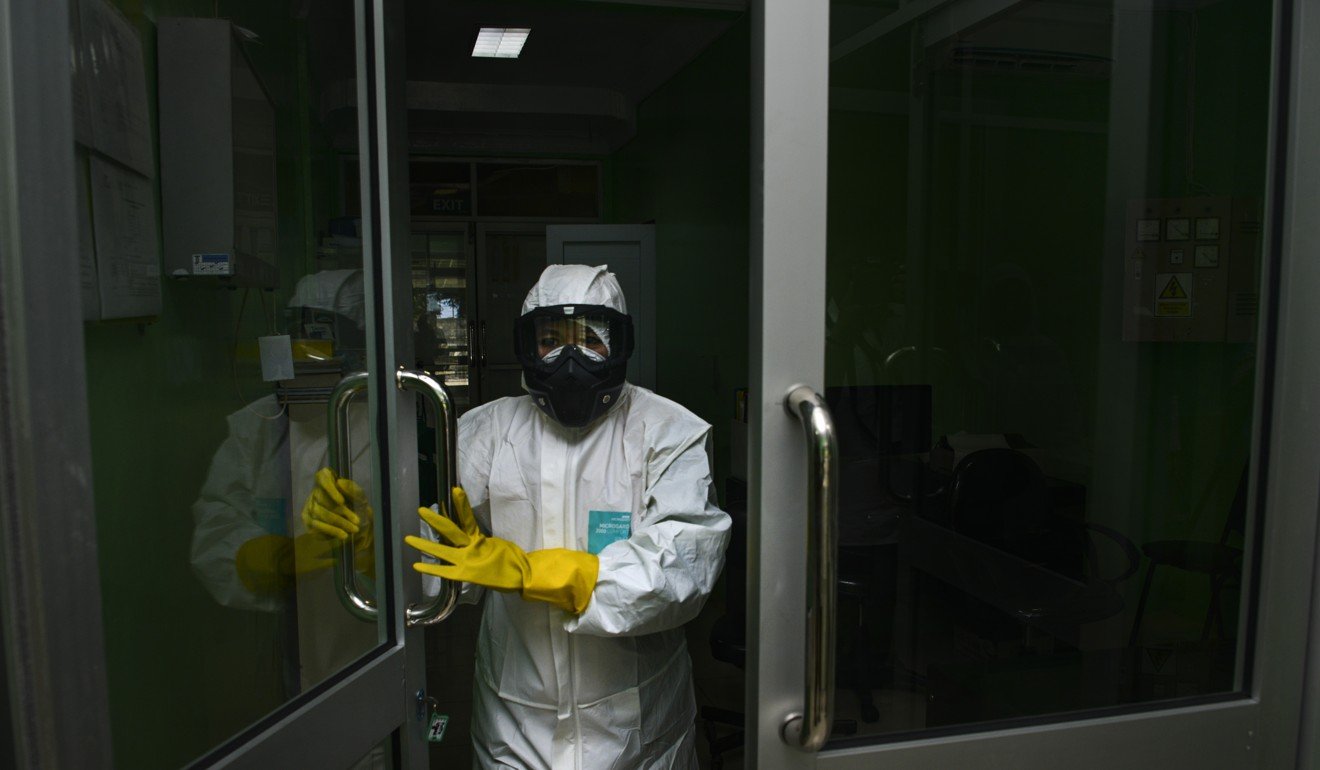
A health worker in protective gear walks into a quarantine room at a hospital in Banda Aceh, Indonesia. Photo: AFP
COMING TOGETHER
With critical supplies running short in many countries, experts say it is increasingly vital that countries share both knowledge and resources.
To this end, China has been donating personal protective equipment to places including the Philippines, Pakistan and Europe. China’s richest man Jack Ma is donating 1.8 million masks, 210,000 Covid-19 test kits and 36,000 pieces of protective clothing to 10 countries in Asia.
At the same time, doctors are encouraging the Western world to learn from Asia.
Infectious diseases expert Leong Hoe Nam said that being “bitten by Sars” (severe acute respiratory syndrome) in 2003 had prepared Asia for Covid-19, while Western countries were not similarly prepared and hence lacked sufficient protective equipment.
He pointed to how about 2,000 health care workers had fallen sick in China early in the outbreak because workers did not initially have protective gear. The trend reversed as equipment became available.
“Once the defences were up, there were very few health care workers who fell sick at work. Rather, they fell sick from contact with sick individuals outside the workplace,” he said.
Malaysia is a case in point. While it has reported 80 health care workers falling ill, most are thought to be community infections.
Coronavirus: Doctor explains the proper way to wash your hands and put on a face mask

In a webinar organised by Caixin Global on Thursday night, Peng Zhiyong, an intensive care specialist at Zhongnan Hospital of Wuhan University, shared how they managed a shortage of personal protective equipment early on in the outbreak by rationing workers to two sets of gear per shift.

Meanwhile, in the Philippines, doctors from Manila’s Chinese General Hospital held a video conference call with doctors in Zhejiang to learn from China’s experience of treating Covid-19 patients.

Crowdsourcing platforms have also been created to share advice. The Brigham and Women’s Hospital in Boston has released guidelines for treating critically ill patients and its website includes information from Chinese doctors.

Why Singapore’s coronavirus response worked – and what we can all learn

27 Mar 2020

The Jack Ma Foundation has also launched an online platform for doctors and nurses around the world to share knowledge on fighting the virus. “One world, one fight,” it said in a tweet.

Associate Professor Jeremy Lim from the global health programme at the Saw Swee Hock School of Public Health said it was crucial for countries to work together.

“Viruses don’t respect borders. Countries have to share information and help each other as we are only as strong as the weakest link. Any country can become a reservoir of disease and the world may then be forced to endure a ping-pong of outbreaks over and over again.”

And the advice of Lee, at Singapore’s Ministry of Health? “Practise good hygiene and wash hands regularly.”

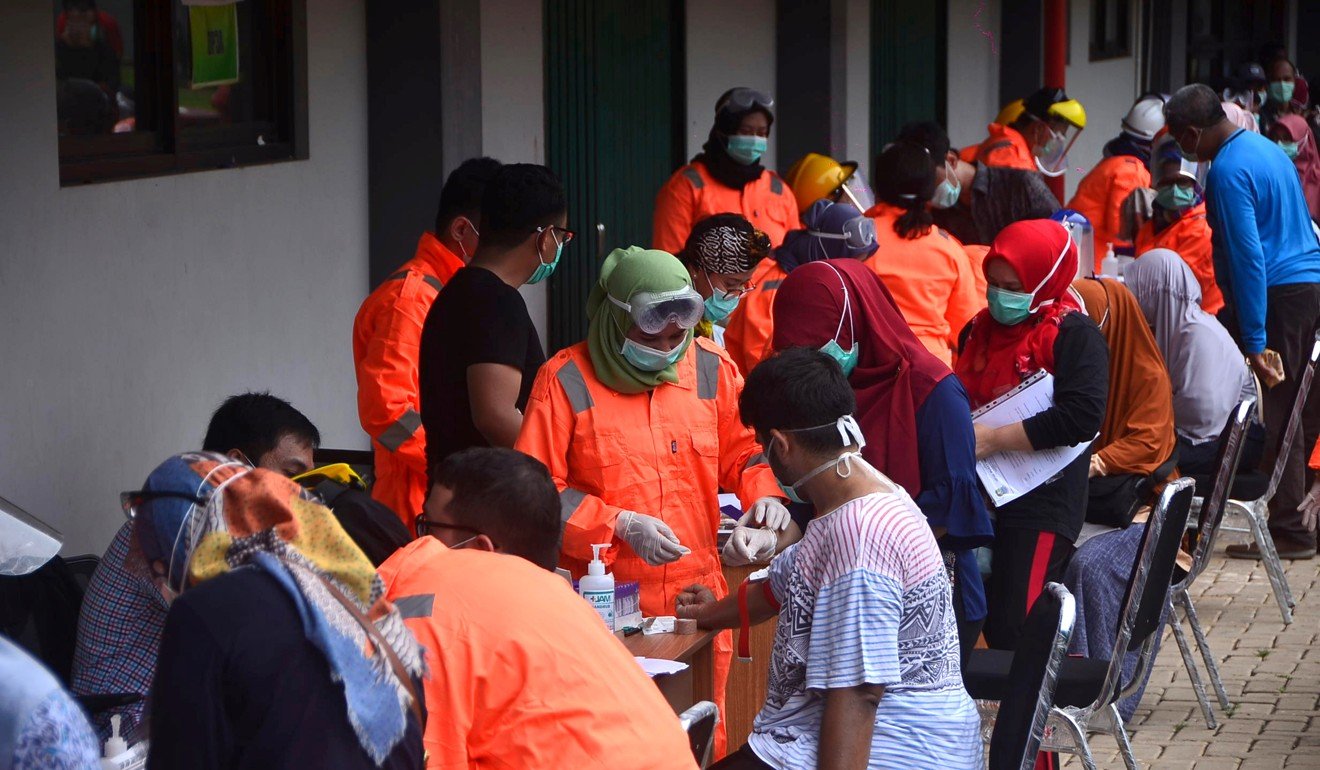
Indonesian medical staff administer mass testing for Covid-19 in Bekasi, West Java. Photo: AFP
SINGAPORE, A CASE STUDY
Amid this sharing of advice, it is often Singapore that is held up as an example to replicate. Despite the country grappling with a rising load of Covid-19 patients, most of whom have recently returned to the city state from abroad, its health care system has continued to run smoothly. Doctors say this is because it has been preparing for a pandemic ever since Sars caught it by surprise. During the Sars outbreak, health care workers accounted for 41 per cent of Singapore’s 238 infections.
Consequently its hospitals swung into contingency planning mode early on in the coronavirus outbreak, telling staff to defer leave and travel plans after its first cases emerged.
Meanwhile, its hospitals swiftly split their workforces into teams to ensure there were enough workers if the outbreak worsened, and to ensure workers got enough rest.

Singapore has 13,766 doctors, or 2.4 doctors for every 1,000 people. That compares to 2.59 in the US, 1.78 in China and 4.2 in Germany. Places like Myanmar and Thailand have fewer than one doctor for every 1,000 people.

Coronavirus: Covid-19 could live on in Indonesia long after world recovers

22 Mar 2020

“The objective is that you can run essential services with the greatest amount of security. Make sure functional units have redundancy built in, and are separate from each other. It depends on what you feel is sufficient to carry on services if one team is affected, factoring in rest periods and some system of rotation,” said Chia Shi-Lu, an orthopaedic surgeon.

The key is to ensure a good doctor-to-patient ratio and ensure there are enough specialists for the critical work, such as doctors and nurses who can provide intensive care, and know how to operate mechanical ventilators or machines to pump and oxygenate a patient’s blood outside the body.

At the emergency department where paediatrics emergency specialist Jade Kua treats Covid-19 cases in addition to regular emergencies, doctors are split into four teams of 21. Each team takes alternate 12-hour shifts and does not interact with other teams.

“We are in modular teams so the teams move together. So you and I would both do morning, off, night, off, morning off. Together. And then the other teams would do the same and we don’t intermingle,” said Kua.

US now has world’s most coronavirus cases, surpassing China
Chia, who works at the Singapore General Hospital, said doctors had been split up according to their functions.
“We try not to meet at all with the other teams as much as possible. We’ll just say hi from across the corridor. Meals are the same. All our cafeterias and everything have got social distancing spaced in already,” said Chia, who is also a member of parliament and chairs a shadow committee on health.
Chia said the health care system could also tap on doctors in the private sector.
Not every country has a plan like this. Last year’s Global Health Security Index by the Economist Intelligence Unit found that 70 per cent of 195 countries scored poorly when it came to having a national plan for dealing with epidemics or pandemics. Almost three in 10 had failed to identify which areas were insufficiently staffed. In India, with a population of 1.3 billion, only about 20,000 doctors are trained in key areas such as critical care, emergency medicine and pulmonology.
Singapore, Hong Kong, Taiwan: the real coronavirus world leaders
19 Mar 2020

In contrast, Singapore published its first Influenza Pandemic Preparedness and Response Plan in June 2005 and has since honed it to a tee. Hospitals regularly war-game scenarios such as pandemics or terrorist attacks and the simulations are sometimes observed by the Ministry of Health, which grades the performance and recommends areas for improvement.

The plan also covers the need to stockpile equipment to avoid the sort of shortages many countries are now facing, another lesson inspired by Sars when masks, gloves and gowns were in short supply.

In a pandemic preparation paper published in 2008, Singapore public health specialist Jeffery Cutter wrote that Singapore’s stockpile was sufficient to cover at least 5 to 6 months’ use by all front-line health care workers.

During the Covid-19 outbreak, it has also told citizens to not wear masks so it can conserve supply for medical staff.

Having enough protective gear has reassured Singapore’s health care workers such as Kua, a mother of six who blogged about her experience fighting Covid-19. Kua said: “I’m safe and my family is safe.”

India’s poor hit hard by 21-day nationwide lockdown amid the coronavirus pandemic
SOMETHING YOU CAN’T GUARD AGAINST
Despite the many positives to emerge from the Lion City, its health care workers are struggling with another problem: discrimination.
While in France, Italy and Britain, residents cheer health care workers from their windows, in Singapore health care workers are seen by some people as disease carriers.
“I try not to wear my uniform home because you never know what kind of incidents you may encounter,” said one Singapore nurse. “The public is scared and wearing our uniforms actually causes quite a bit of inconvenience. One of my staff tried to book a private-hire car to the hospital for an emergency and she was rejected by five drivers.”

There is a similar stigma in India, where the All India Institute of Medical Sciences has appealed to the government for help after health workers were forced out of their homes by panicked landlords and housing societies.

“Many doctors are stranded on the roads with all their luggage, nowhere to go, across the country,” the institute said in a letter.

Lim, from the Saw Swee Hock School of Public Health, said the worst human impulses and “every man for himself” attitudes could emerge in crises and “that is exactly why governments have to step in”.

Discrimination could affect both the performance and motivation of health care workers, Lim warned.

Meanwhile, when health care workers are infected, it creates a “triple whammy” threat.

“It means one fewer professional in an already-strained system, another patient to care for and, potentially, a team of colleagues who need to be quarantined,” said Lim.

“We must do everything possible to keep our health care workforce safe and free from Covid-19.”

Source: SCMP

29/03/2020

China’s Wuhan reopens subway, railway station

CHINA-WUHAN-SUBWAY SERVICE-RESUMPTION (CN)

Passengers walk on the platform of the subway station connected with Hankou Railway Station in Wuhan, central China’s Hubei Province, March 28, 2020. Wuhan, a central Chinese city once at the epicenter of the COVID-19 epidemic, on Saturday resumed its subway service following more than two months of suspension due to the epidemic. Passengers for six metro lines in the capital of Hubei Province are asked to scan their health QR codes with real name information and check body temperature before entering the metro stations and wear face masks during the whole journey. (Xinhua/Xiao Yijiu)

WUHAN, March 28 (Xinhua) — Wuhan, a central Chinese city once at the epicenter of the COVID-19 outbreak, on Saturday reopened its subway and railway station following more than two months of suspension due to the epidemic.

“We clearly remember that the metro service had been suspended for 65 days,” said Li Wei, a staff worker of the Wuhan metro service operator. “I was startled when I first saw the news of shutting down the metro system as I never expected such scenario to happen one day.”

“We are excited and happy today to resume the service to serve the Wuhan residents again,” Li said.

Passengers for six metro lines in the capital of Hubei Province are asked to scan their health QR codes with real name information and check body temperature before entering the metro stations and wear face masks during the whole journey. Many were seen even wearing rubber gloves and hats that can cover the face.

The subway service operator has installed 200 infrared intelligent temperature monitoring equipment at 182 subway stations that are back to service in the initial period.

Inside the subway carriages, there are yellow signs that ask passengers to sit with an empty seat between two of them and security guards who tell people to wear masks during the whole of their trips, not to assemble and scan trip-tracking codes when getting off the subway.

The trip tracking is designed to aid the epidemic prevention and control work. To reduce potential cross-infection, the subway carriages will also be disinfected partly every day and entirely every five days.

“We are finally back. I can go to work next Monday,” said a subway passenger surnamed Yang, who just arrived in Wuhan Saturday with another two family members carrying eggs, preserved meat and vegetables from Sichuan Province.

On Saturday, the Wuhan railway station resumed the arrival service as the epidemic waned. More than 12,000 Hubei passengers returned to Wuhan by high-speed trains from all over the country on Saturday, greeted by applauses and flowers at the station.

“I earlier booked the railway ticket for Feb. 14, but the railway service was halted due to the epidemic,” said a passenger surnamed Zhang. Although the arrival was delayed by one and a half months, he felt safe and relieved to see the epidemic situation under control in his hometown, Zhang said.

“Wandering outside for such a long time, I have anticipated the return to home all the time,” Zhang said. “I finally feel at ease and calm after I step on the land of Wuhan.

“Source: Xinhua

06/02/2020

Coronavirus: Does China have enough face masks to meet its needs?

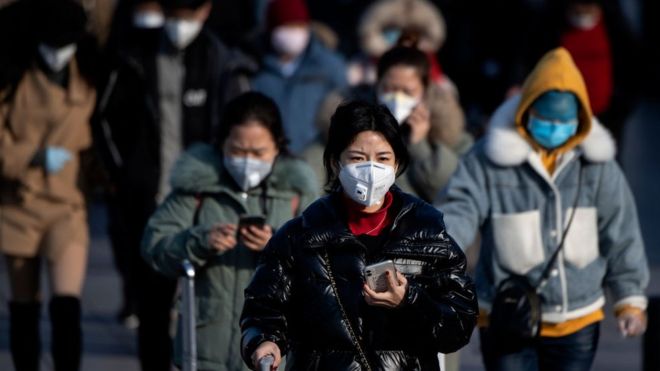
Travellers in Beijing all wearing facemasksImage copyright GETTY IMAGES

As the coronavirus spreads across China, the authorities there have appealed to other countries to help with supplies of protective face masks.

So how many masks does China need, and where are they produced?

Getty
What China urgently needs at present are medical masks, protective suits and safety goggles.
Hua Chunying
Foreign Ministry spokesperson

How many masks does China need?

Although experts are sceptical about their effectiveness, face masks are in widespread use both among the general population and medical staff.

We can’t know a definitive overall number as the virus spreads across China, but to give an idea of the scale of the demand, let’s start by looking at the situation in Hubei province, the epicentre of the outbreak.

Just dealing with medical staff alone, there are an estimated 500,000 across the province.

Medical advice in China is to change face masks regularly, as often as four times a day for medical teams, which would require two million masks each day.

This is the procedure being followed in one of the main hospitals in Wuhan, the largest city in Hubei province.

We don’t have a breakdown for the numbers of medical staff in other significantly affected provinces, but it would be reasonable to assume a similar pattern of usage, as coronavirus infections spread.

Then there’s the widespread use of face masks among the ordinary population, whether or not they’ve been instructed to do so by the authorities.

  • More than half a million staff working on public transport in China have been told to use masks
  • There are reports that some shops, businesses and other public premises have told people to use masks if they want to enter

It’s also important to say that culturally, it’s quite common for people in China to wear face masks, both as general protection and if they feel they are getting ill.

So, although we can’t know overall numbers of masks needed, it’s clear there’s already a huge demand which is only going to increase across China, particularly as people head back to work in mid-February after the New Year holiday.

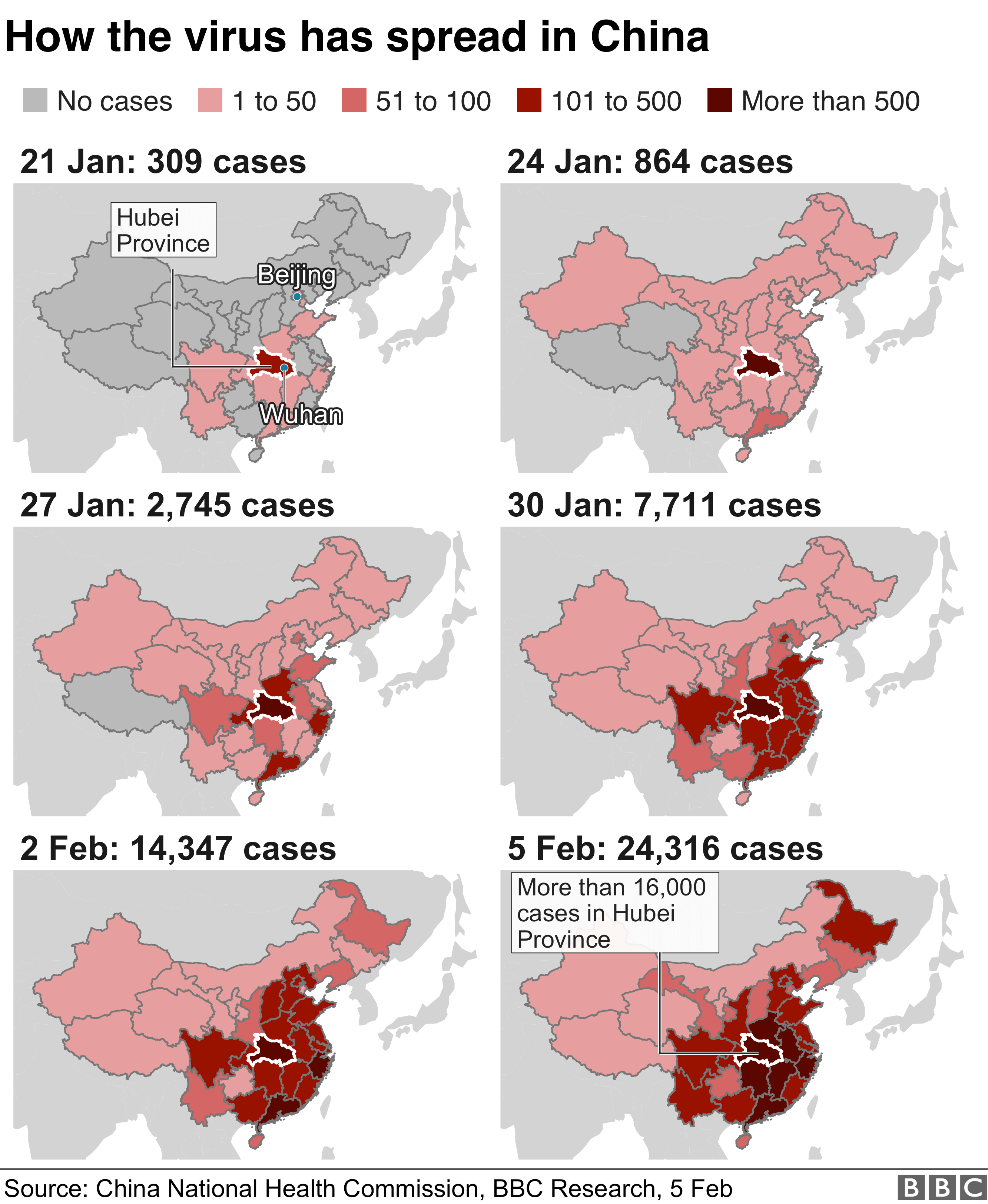
Map of China showing numbers of virus cases by date

How many is China producing?

Under normal circumstances, China produces around twenty millions masks each day. That’s estimated to be around half of all masks made globally.

However, Chinese production has currently been cut to around 10 million, both because of the New Year holiday as well as the impact of the virus itself.

That’s clearly not sufficient to meet even the current demand in China.

In addition, it’s the higher-quality masks which are most effective, and most needed.

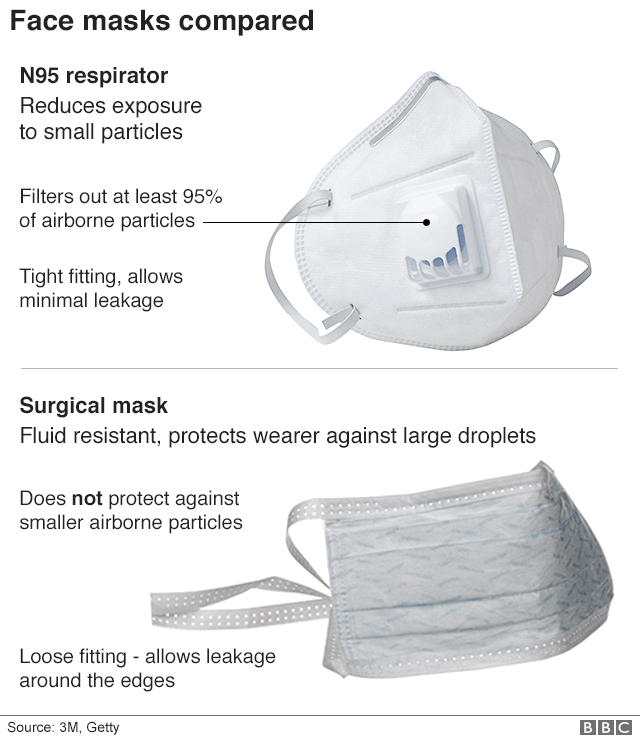
One type, known as the N95 respirator, is designed to filter at least 95% of airborne particles, and is more effective than an ordinary surgical or medical mask, which also needs to be changed more frequently.

Graphic showing different types of face mask

China currently produces each day around 600,000 of these high-quality masks, according to figures from the Ministry of Industry.

One province, Zhejiang, reported on 27 January that they needed a million of these masks each day, and other provinces have said they are only just able to meet demand for these high-quality masks.

In addition, hospitals don’t have large stockpiles of these masks – in most cases, only enough to last two weeks.

Across China, there have been reports of shortages and soaring prices, as people have rushed to buy masks.

To give an idea of this demand, the Chinese online shopping site Taobao says than in just two days in January, they sold more than 80 million masks.

Can China get masks from abroad?

China bought 220 million face masks between 24 January and 2 February, with South Korea one of the countries supplying them.

Since the beginning of February, the authorities have also removed tariffs and duties on imported medical supplies.

The US firm, 3M, which is a major producer of high-quality face masks, says the company is increasing production to meet global demand.

The UK-based Cambridge Mask Company, which makes high-quality respirator masks, says it has faced unprecedented demand, and has completely sold out.

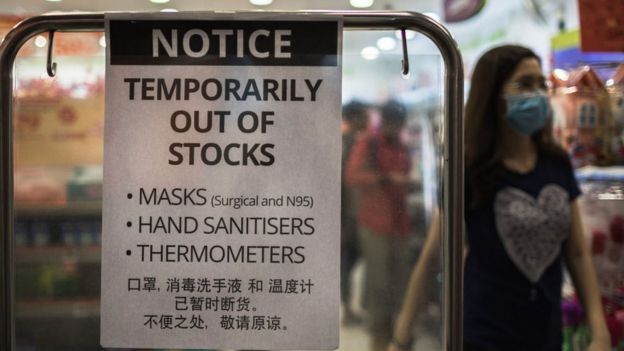
Pharmacy sign in Singapore saying masks out of stockImage copyright GETTY IMAGES
Image caption A pharmacy in Singapore: Supplies have been bought up in countries outside China

Some countries, such as Taiwan and India, have banned the export of protective clothing such as face masks.

Taiwan says it wants to prioritise the protection of its own citizens, and has announced a rationing system for buying face masks.

There have also been reports of shortages in countries outside China because of panic buying, as fears grow about the global spread of the coronavirus.

Source: The BBC

Law of Unintended Consequences

continuously updated blog about China & India

ChiaHou's Book Reviews

continuously updated blog about China & India

What's wrong with the world; and its economy

continuously updated blog about China & India