Chindia Alert: You’ll be Living in their World Very Soon
aims to alert you to the threats and opportunities that China and India present. China and India require serious attention; case of ‘hidden dragon and crouching tiger’.
Without this attention, governments, businesses and, indeed, individuals may find themselves at a great disadvantage sooner rather than later.
The POSTs (front webpages) are mainly 'cuttings' from reliable sources, updated continuously.
The PAGEs (see Tabs, above) attempt to make the information more meaningful by putting some structure to the information we have researched and assembled since 2006.
Image copyright BRENDAN SMIALOWSKIImage caption Kim Jong-un has not been seen in public for more than two weeks
Speculation and rumour about Kim Jong-un’s health may amount to nothing, but questions about who might succeed him in the short or long term will always be there. The BBC spoke to analysts about the contenders and whether history is on their side.
A male member of the Kim family has been in charge of North Korea ever since its founding by Kim Il-sung in 1948 – and the mythology of this family runs deep throughout society.
Propaganda about its greatness begins for citizens before they can even read: pre-schoolers sing a song called: “I want to see our leader Kim Jong-un.”
So how can you imagine a North Korea without this symbolic and political figure at the top? How would elites organise themselves, as well as society as a whole?
The easy answer is: we don’t know. More interestingly, they don’t know either. They have never had to do it.
Image copyrightXINHUAImage captionKim Il-sung is the founder of North Korea and his son Kim Jong-il took over
As Kim Jong-un was being prepared for power, they even began using the term “Paektu Bloodline” to help legitimise his rule. Paektu is the sacred and mythologised mountain where Kim Il-sung is said to have waged guerrilla war and where Kim Jong-il was reportedly born. Kim Jong-un still goes there when he wants to emphasise important policy decisions.
There has always been a Kim at the ideological heart of the country.
What would North Korea be like without such an heir? Kim Jong-un, 36, is believed to have children – but they are far too young. It is thought he has three children, the oldest being 10 and the youngest three. Kim Jong-un himself was considered young when he took power – he was 27.
It is likely that some sort of group leadership would emerge, perhaps as in Vietnam, that leans heavily on the founder’s teachings and legitimacy to boost their own standing.
Observers can track who holds certain key positions and can follow news and open-source intelligence about important institutions, but can’t really tell how factions are developing, nor who is holding power through personal rather than institutional bonds. Moreover, sometimes vice or deputy directors wield more real power than the titular heads of institutions. This makes all predictions extremely difficult.
The three remaining Kims
Image copyrightPATRICK SEMANSKY – POOL /GETTY IMAGESImage captionKim Yo-jong, as the only woman in the top leadership, has sparked fascination
The are three Kims who could potentially be involved in the political make-up of North Korea if Kim Jong-un were to disappear. They all face limitations in carrying on family rule.
The first is Kim Yo-jong, Kim Jong-un’s younger sister. She is said to have been a favourite of her father who commented on her precocity, her interest in politics from a young age. Her manner is efficient, mild and one suspects rather observant. Much has been made of her closeness to her brother. At the Singapore Trump-Kim summit she was famously on hand to pass him a pen to sign the agreement with, and at the next summit in Hanoi, was pictured peeking out from behind corners as her brother posed for statesman-like photos.
Yet she was not above a temporary demotion after the Hanoi summit – purportedly because of its failure although this will never be confirmed. She doesn’t sit on the top policy-making body, the State Affairs Commission, but is an alternate member of the Politburo and vice director of the Propaganda and Agitation Department (PAD) of the Workers’ Party of Korea. These may seem like incomprehensible acronyms but the PAD is a powerful organisation that ensures ideological loyalty in the system.
She is a woman, however, and this makes it hard to imagine her occupying the top position in such a deeply patriarchal country. North Korea is an extremely male state, in which gender carries rigid expectations. Being supreme leader, and certainly running the military, does not fit in the range of womanly duties.
The second is Kim Jong-chul. He is Kim Jong-un’s older brother, but has never appeared interested in politics or power. (He is known to be interested in Eric Clapton.) At most, he could be a symbolic link to the Kim family: perhaps made the head of a foundation and put forward to read the odd speech.
The final one is Kim Pyong-il, Kim Jong-il’s half-brother. His mother – Kim Jong-il’s stepmother – was angling to have him become Kim Il-sung’s successor. She failed and was sidelined by Kim Jong-il as he rose in influence. Kim Pyong-il was sent to Europe in 1979, where he has held various ambassadorships, returning to North Korea only last year. This means it is very unlikely he has the network to be a central player in elite politics in Pyongyang.
The second-most powerful man in North Korea right now
Image copyrightALEXANDER NEMENOV/AFP VIA GETTY IMAGESImage captionAs special envoy for Kim Jong-un Choe Ryong-hae (right) has met foreign dignitaries
There are other individuals who have been central in the Kim Jong-un era, but it is difficult to know who among them would form co-operative relationships and who would compete with one another.
One is Choe Ryong-hae. He has had his ups and downs under Kim Jong-un, but having weathered a few storms currently sits on the presidium of the politburo and is also first vice chairman of the State Affairs Commission. Last year he became the first new president in 20 years, replacing the aging Kim Yong-nam – so he is the person who represents the North at international engagements.
Choe has also held high positions in the military and the Organization and Guidance Department (OGD) of the Worker’s Party of Korea, responsible for enforcing loyalty throughout the regime. This is an extremely powerful organisation: it enforces the adherence of all citizens to North Korea’s ideology. He is probably the second most powerful man in North Korea.
The old spymasters and rising political grandees
Image copyrightOLIVIER DOULIERY-POOL/GETTY IMAGESImage captionKim Yong-chol travelled to Washington DC to meet Donald Trump
Another is Kim Yong-chol. This general paved the way for the Trump-Kim summits, meeting US Secretary of State Mike Pompeo several times. He has been head of the United Front Department (responsible for relations with South Korea) and the Reconnaissance General Bureau, the country’s main intelligence service. He seems to have suffered a demotion following the collapse talks with the United States, but it is unlikely this spymaster will remain obscure for long.
Yet another is Kim Jae-ryong. As well as being on the State Affairs Commission, he is Premier of the Cabinet, a moderately influential position. Relatively little is known about him, but his star has risen in the past years as others have fallen. He is known for managing industries and ran the most isolated province, home to key military-industrial sites, for several years. This may mean he has been closely involved in the nuclear program.
Jong Kyong-taek is responsible for the State Security Department, which investigates and punishes political crimes. It also helps physically protect the leadership. These are crucial responsibilities that help enforce stability in the system.
Hwang Pyong-so is another official who has held top military posts and has run the OGD in the Kim Jong-un era. Like Choe (and many others) he has been disciplined; he doesn’t seem to have been rehabilitated in the same way, however. Other 2010s foreign policy stalwarts Ri Yong-ho and Ri Su-yong have also seen roles diminish recently. They have been replaced by Ri Son-gwon and Kim Hyung-jun. The former is said to be an ally of Kim Yong-chol.
The military enforcers
A handful of top generals of the Korean People’s Army (KPA) would also certainly exert influence in any transition period. Currently, two men sit atop the General Political Bureau of the KPA, Kim Su-gil and Kim Won-hong. This bureau enforces political loyalty in the military, something that would be absolutely crucial during periods of uncertainty.
Kim Won-hong, helps illustrate how difficult it is to predict how power would be shared if Kim Jong-un were no longer there. Kim Won-hong and Hwang Pyong-so had been thought to be rivals, competing to influence Kim Jong-un at the other’s expense.
Amongst top elites, who would clash and who would ally? Would there be pro and anti-Kim Yo-jong factions? Would the fear of instability stop rivalries from getting out of hand? After all, it is in no elite politician’s interest to see the state collapse, opening the door for some kind of takeover by South Korea, or even China.
There is currently no perfect contender: his sister would have to overcome the sexism and the break from tradition of a male heir. Anybody else is not directly descended from that all-important Paektu bloodline. but in the end, they will all have to think of the unity of the state they have defied every international norm to preserve.
But trade with partner countries might not be as badly affected as with countries elsewhere in the world, observers say
China’s trade with belt and road countries rose by 3.2 per cent in the January-March period, but second-quarter results will depend on how well they manage to contain the pathogen, academic says
China’s investment in foreign infrastructure as part of its Belt and Road Initiative has been curtailed because of the coronavirus pandemic. Photo: Xinhua
The coronavirus pandemic is set to cause a slump in Chinese investment in its signature
and a dip in trade with partner countries that could take a year to overcome, analysts say.
But the impact of the health crisis on China’s economic relations with nations involved in the ambitious infrastructure development programme might not be as great as on those that are not.
China’s total foreign trade in the first quarter of 2020 fell by 6.4 per cent year on year, according to official figures from Beijing.
Trade with the United States, Europe and Japan all dropped in the period, by 18.3, 10.4 and 8.1 per cent, respectively, the commerce ministry said.
By comparison, China’s trade with belt and road countries increased by 3.2 per cent in the first quarter, although the growth figure was lower than the 10.8 per cent reported for the whole of 2019.
China’s trade with 56 belt and road countries – located across Africa, Asia, Europe and South America – accounts for about 30 per cent of its total annual volume, according to the commerce ministry.
Despite the first-quarter growth, Tong Jiadong, a professor of international trade at Nankai University in Tianjin, said he expected China’s trade with belt and road countries to fall by between 2 and 5 per cent this year.
His predictions are less gloomy than the 13 to 32 per cent contraction in global trade forecast for this year by the World Trade Organisation.
“A drop in [China’s total] first-quarter trade was inevitable but it slowly started to recover as it resumed production, especially with Southeast Asian, Eastern European and Arab countries,” Tong said.
“The second quarter will really depend on how the epidemic is contained in belt and road countries.”
Nick Marro, Hong Kong-based head of global trade at the Economist Intelligence Unit, said he expected China’s total overseas direct investment to fall by about 30 per cent this year, which would be bad news for the belt and road plan.
“This will derive from a combination of growing domestic stress in China, enhanced regulatory scrutiny over Chinese investment in major international markets, and weakened global economic prospects that will naturally depress investment demand,” he said.
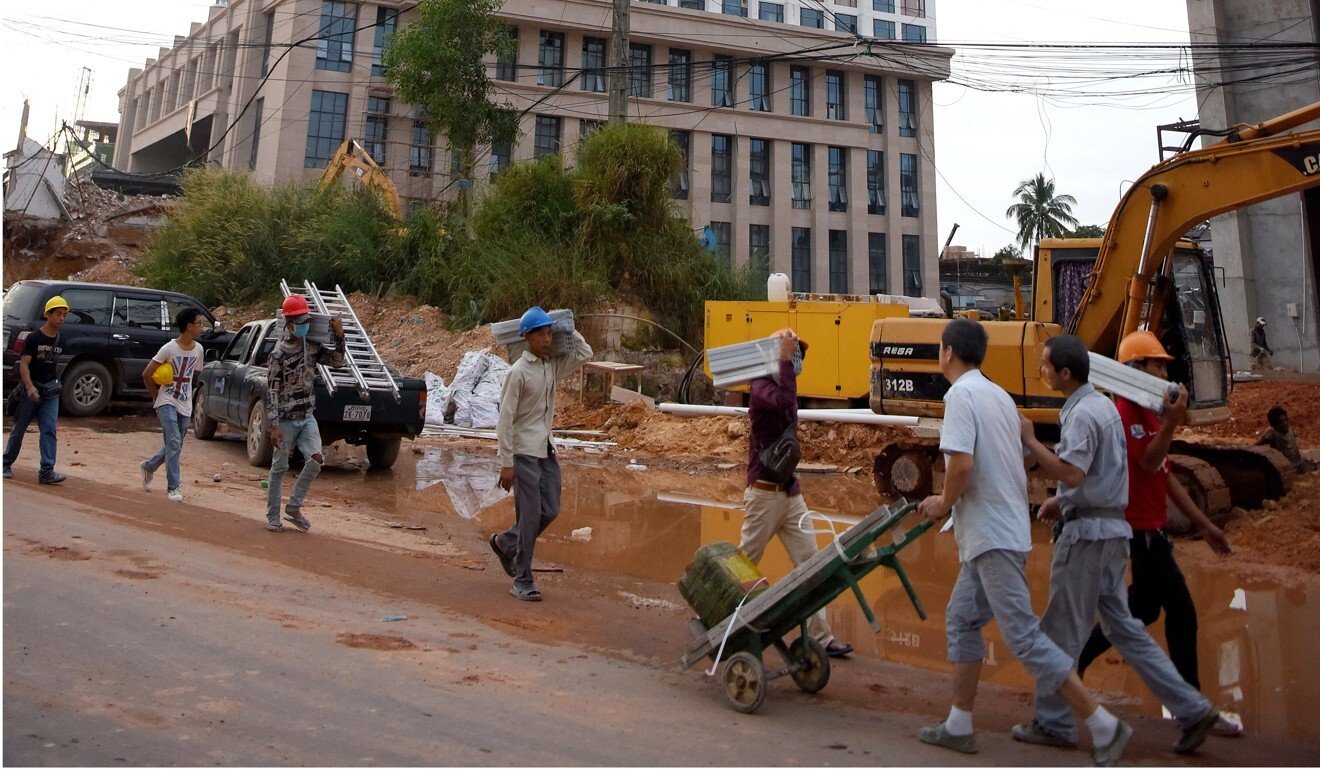
The development of the Chinese built and operated special economic zone in the Cambodian town of Sihanoukville is reported to have slowed, while infrastructure projects in Bangladesh, including the Payra coal-fired power plant, have been put on hold.
The development of the Chinese built and operated special economic zone in the Cambodian town of Sihanoukville is reported to have slowed. Photo: AFP
Marro said the reduction of capital and labour from China might complicate other projects for key belt and road partner, like Pakistan, which is home to infrastructure projects worth tens of billions of US dollars, and funded and built in large part by China.
“Pakistan looks concerning, particularly in terms of how we’ve assessed its sovereign and currency risk,” Marro said.
“Public debt is high compared to other emerging markets, while the coronavirus will push the budget deficit to expand to 10 per cent of GDP [gross domestic product] this year.”
Last week, Pakistan asked China for a 10-year extension to the repayment period on US$30 billion worth of loans used to fund the development of infrastructure projects, according to a report by local newspaper Dawn.
China’s overseas investment has been falling steadily from its peak in 2016, mostly as a result of Beijing’s curbs on capital outflows.
Last year, the direct investment by Chinese companies and organisations other than banks in belt and road countries fell 3.8 per cent from 2018 to US$15 billion, with most of the money going to South and Southeast Asian countries, including Singapore, Vietnam, Indonesia and Pakistan.
Tong said the pandemic had made Chinese investors nervous about putting their money in countries where disease control measures were becoming increasingly stringent, but added that the pause in activity would give all parties time to regroup.
“Investment in the second quarter will decline and allow time for the questions to be answered,” he said.
“Past experience along the belt and road has taught many lessons to both China and its partners, and forced them to think calmly about their own interests. The epidemic provides both parties with a good time for this.”
Dr Frans-Paul van der Putten, a senior research fellow at Clingendael Institute in the Netherlands, said China’s post-pandemic strategy for the belt and road in Europe
might include a shift away from investing in high-profile infrastructure projects like ports and airports.
Investors might instead cooperate with transport and logistics providers rather than invest directly, he said.
“Even though in the coming years the amount of money China loans and invests abroad may be lower than in the peak years around 2015-16, I expect it to maintain the belt and road plan as its overall strategic framework for its foreign economic relations,” he said.
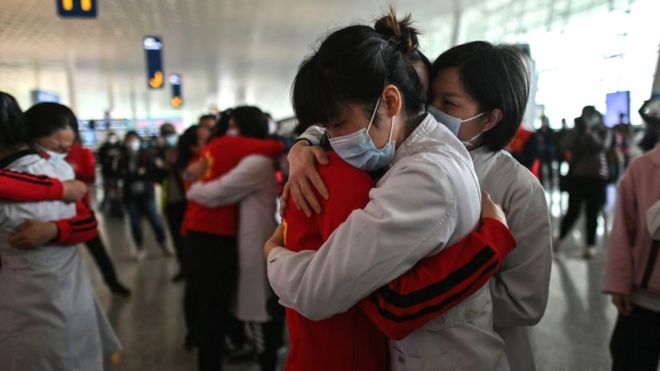
Image copyright GETTY IMAGESImage caption The Chinese city of Wuhan recently lifted its strict quarantine measures
The Chinese city of Wuhan, where the coronavirus originated last year, has raised its official Covid-19 death toll by 50%, adding 1,290 fatalities.
Wuhan officials attributed the new figure to updated reporting and deaths outside hospitals. China has insisted there was no cover-up.
It has been accused of downplaying the severity of its virus outbreak.
Wuhan’s 11 million residents spent months in strict lockdown conditions, which have only recently been eased.
The latest official figures bring the death toll in the city in China’s central Hubei province to 3,869, increasing the national total to more than 4,600.
China has confirmed nearly 84,000 coronavirus infections, the seventh-highest globally, according to Johns Hopkins University data.
What’s China’s explanation for the rise in deaths?
In a statement released on Friday, officials in Wuhan said the revised figures were the result of new data received from multiple sources, including records kept by funeral homes and prisons.
Deaths linked to the virus outside hospitals, such as people who died at home, had not previously been recorded.
Media caption Learn how Wuhan dealt with the lockdown
The “statistical verification” followed efforts by authorities to “ensure that information on the city’s Covid-19 epidemic is open, transparent and the data [is] accurate”, the statement said.
It added that health systems were initially overwhelmed and cases were “mistakenly reported” – in some instances counted more than once and in others missed entirely.
A shortage of testing capacity in the early stages meant that many infected patients were not accounted for, it said.
A spokesman for China’s National Health Commission, Mi Feng, said the new death count came from a “comprehensive review” of epidemic data.
In its daily news conference, the foreign ministry said accusations of a cover-up, which have been made most stridently on the world stage by US President Donald Trump, were unsubstantiated. “We’ll never allow any concealment,” a spokesman said.
Why are there concerns over China’s figures?
Friday’s revised figures come amid growing international concern that deaths in China have been under-reported. Questions have also been raised about Beijing’s handling of the epidemic, particularly in its early stages.
In December 2019, Chinese authorities launched an investigation into a mysterious viral pneumonia after cases began circulating in Wuhan.
China reported the cases to the World Health Organization (WHO), the UN’s global health agency, on 31 December.
But WHO experts were only allowed to visit China and investigate the outbreak on 10 February, by which time the country had more than 40,000 cases.
The mayor of Wuhan has previously admitted there was a lack of action between the start of January – when about 100 cases had been confirmed – and 23 January, when city-wide restrictions were enacted.
Around that time, a doctor who tried to warn his colleagues about an outbreak of a Sars-like virus was silenced by the authorities. Dr Li Wenliang later died from Covid-19.
Wuhan’s death toll increase of almost exactly 50% has left some analysts wondering if this is all a bit too neat.
For months questions have been asked about the veracity of China’s official coronavirus statistics.
The inference has been that some Chinese officials may have deliberately under-reported deaths and infections to give the impression that cities and towns were successfully managing the emergency.
If that was the case, Chinese officials were not to know just how bad this crisis would get in other countries, making its own figures now seem implausibly small.
The authorities in Wuhan, where the first cluster of this disease was reported, said there had been no deliberate misrepresentation of data, rather that a stabilisation in the emergency had allowed them time to revisit the reported cases and to add any previously missed.
That the new death toll was released at the same time as a press conference announcing a total collapse in China’s economic growth figures has led some to wonder whether this was a deliberate attempt to bury one or other of these stories.
Then again, it could also be a complete coincidence.
China has been pushing back against US suggestions that the coronavirus came from a laboratory studying infectious diseases in Wuhan, the BBC’s Barbara Plett Usher in Washington DC reports.
US President Donald Trump and some of his officials have been flirting with the outlier theory in the midst of a propaganda war with China over the origin and handling of the pandemic, our correspondent says.
Mr Trump this week halted funding for the World Health Organization (WHO), accusing it of making deadly mistakes and overly trusting China.
“Do you really believe those numbers in this vast country called China, and that they have a certain number of cases and a certain number of deaths; does anybody really believe that?” Mr Trump said at the White House on Wednesday.
On Thursday, UK Foreign Secretary Dominic Raab said: “We’ll have to ask the hard questions about how [coronavirus] came about and how it couldn’t have been stopped earlier.”
But China has also been praised for its handling of the crisis and the unprecedented restrictions that it instituted to slow the spread of the virus.


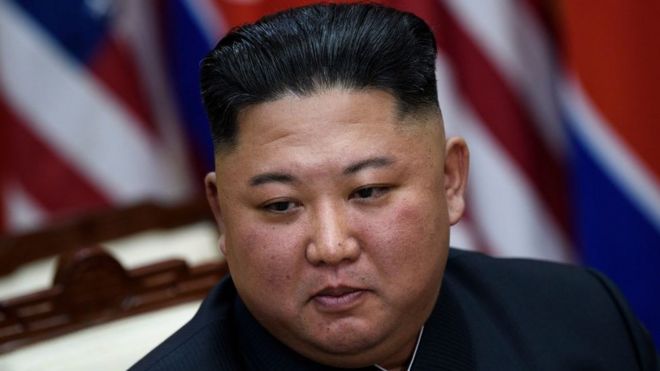 Image copyright BRENDAN SMIALOWSKI
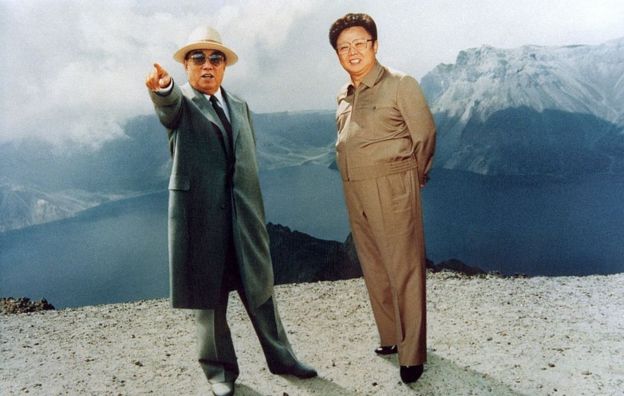 Image copyrightXINHUA
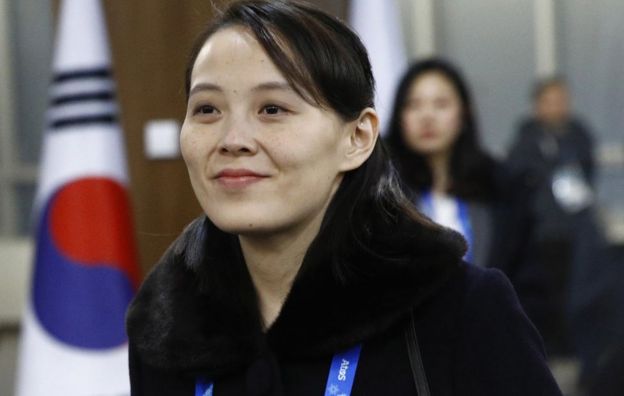 Image copyrightPATRICK SEMANSKY – POOL /GETTY IMAGES
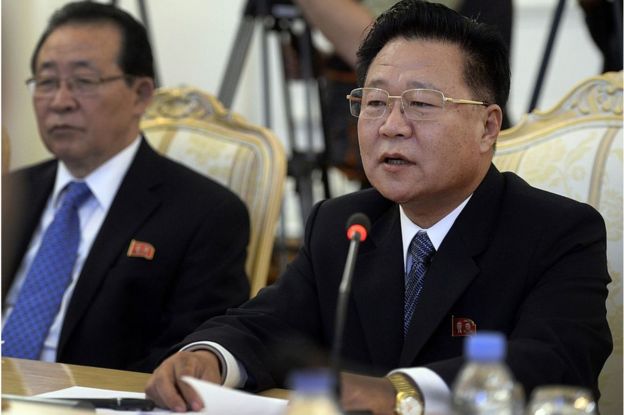 Image copyrightALEXANDER NEMENOV/AFP VIA GETTY IMAGES
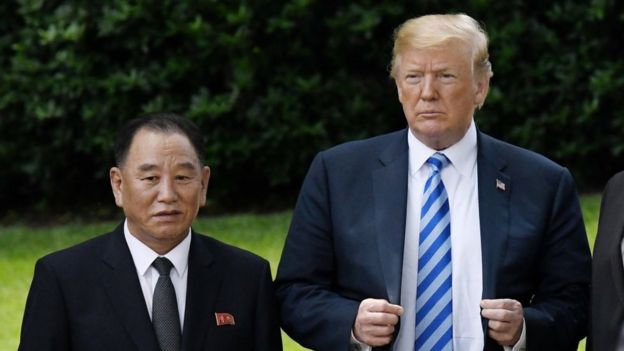 Image copyrightOLIVIER DOULIERY-POOL/GETTY IMAGES





 CHINDIA ALERT: You'll be living in their world, very soon