Archive for ‘fishermen’

20/12/2019

Fishermen cry foul as China bids to fix drought-hit lake

WUCHENG, China (Reuters) – After wading through mudflats, Fan Xinde, a 36-year-old fisherman, sifts old copper coins from the debris scooped from the bed of a dwindling river that feeds China’s biggest freshwater lake, the Poyang.

As residents fled invading Japanese troops 80 years ago, the coins were packed into boxes and sent down the river on rafts, with many sinking without trace. They are now being unearthed as the water in the Poyang recedes to its lowest level in decades, providing a small income for fishermen like Fan facing an uncertain future.

On Jan. 1 2020, China will ban fishing in environmentally sensitive regions along the Yangtze, China’s longest river, and by the start of 2021, fishing throughout the Poyang itself will be prohibited for at least 10 years.

Fan, who has worked half his life on the lake, said he and as many as 100,000 other fishermen were being unfairly blamed for mounting local environmental problems and must now find other ways to make a living.

“Our sources of income have been cut off. We don’t have anything else,” he said. “To be honest, we shouldn’t be collecting the coins at all because they are owned by the state, but it is only a tiny amount.”

The government says excessive fishing has brought stocks down to perilously low levels and put endangered species under threat, including China’s last surviving river mammal, the Yangtze finless porpoise.

But the Poyang, described by President Xi Jinping as a vital “kidney” filtering the water supplies of 40% of China’s population, has also been hurt by intensive sand mining, untreated wastewater and the impact of the giant Three Gorges Dam some 560km (350 miles) upstream.

Water in the Poyang, which spills off from the middle reaches of the Yangtze River in Jiangxi province, routinely declines in winter. But the lake is now at its lowest in 60 years. With little rain since July, hundreds of shriveled anchovies and tiny shellfish have been baked into the exposed shoreline flats.

DAMS AND QUARRIES

Residents blame the Three Gorges Project for the problems facing the lake, with its vast 660km-long (410 mile-long) reservoir storing huge volumes of water behind a giant dam for power generation.

“The Three Gorges is blocking off all the water,” said Zhang Yingsheng, a 59-year old fisherman picking clams from the edge of the lake. “Every winter is like this now, but this year is especially low because of the drought.”

With the 181-metre (600-foot) dam reducing the Yangtze’s flow in winter, water from the Poyang drains quickly and easily back into the river.

But the primary cause of problems is the two decades of intensive sand mining in the Poyang, said David Shankman, professor at the University of Alabama, who studies the lake.

“Sand mining has made the drainage channel (in the northern part of the lake) deeper and wider” accelerating the draining, he said.

Zhang said quarrying by giant dredgers had hit fishing hard, with deeper lake beds making it harder for fishermen to deploy their nets. The sand industry had also damaged the lake’s ecosystem, he said.

According to policy plans seen by Reuters, the local government is already working to reduce mining activity in the Poyang after banning it in the Yangtze River two decades ago.

Annual sand production will be limited to 39.9 million tonnes from 2019-2024, down 26.9% compared to the 2014-2018 period. Dredgers will be permitted to mine 65 square km (25 square miles) of the lake area, a quarter of the previous level.

The new policy was a sign officials had recognized sand mining had become a serious environmental liability, Shankman said, but simply stopping the activity wouldn’t automatically solve the problems.

“It depends not only on the extent of the mining, and not on the total area of the mining, but where they are mining,” he said.

IRREVERSIBLE

China is in the middle of a campaign aimed at ending big and “destructive” development along the Yangtze. President Xi said restoring the Poyang was a crucial element of the plan to revitalize regions along the river’s banks.

But experts say many of the devastating changes to the lake are irreversible.

Even before the Three Gorges Dam and the sand mining boom, the lake had already shrunk considerably as a result of an earlier campaign to reclaim farmland and curb floods through the use of dykes and diversions.

“Everything in the lake has been dramatically altered by landscape change, dams and sand mining,” said Shankman. “The amount of water in the lake, in the Yangtze River, the sediment going in and going out – everything is affected by human activity.”

Source: Reuters
13/11/2019

Two endangered Chinese finless porpoises found dead in Yangtze River as species struggles for survival

  • Remains of two of river’s estimated 1,012 porpoises found in less than a week
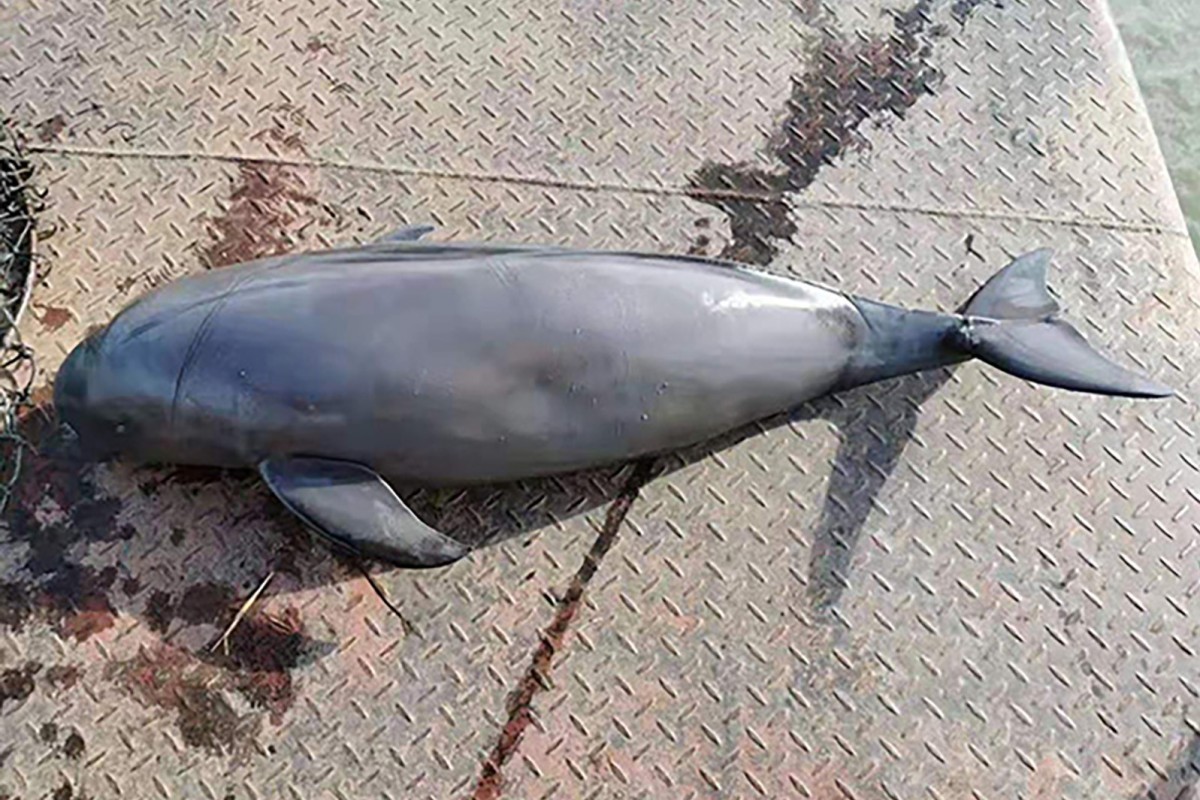
The finless porpoise found dead in the Yangtze River in Hubei on Monday was the second fatality in a week. Photo: 163.com

Two endangered finless porpoises have been found dead in the Yangtze River in the space of a week, according to mainland Chinese media reports.

One was found on Monday in Jiayu county, central Hubei province, four days after the remains of another were recovered from Dongting Lake, a tributary of the Yangtze in central Hunan province, news website Thepaper.cn reported.

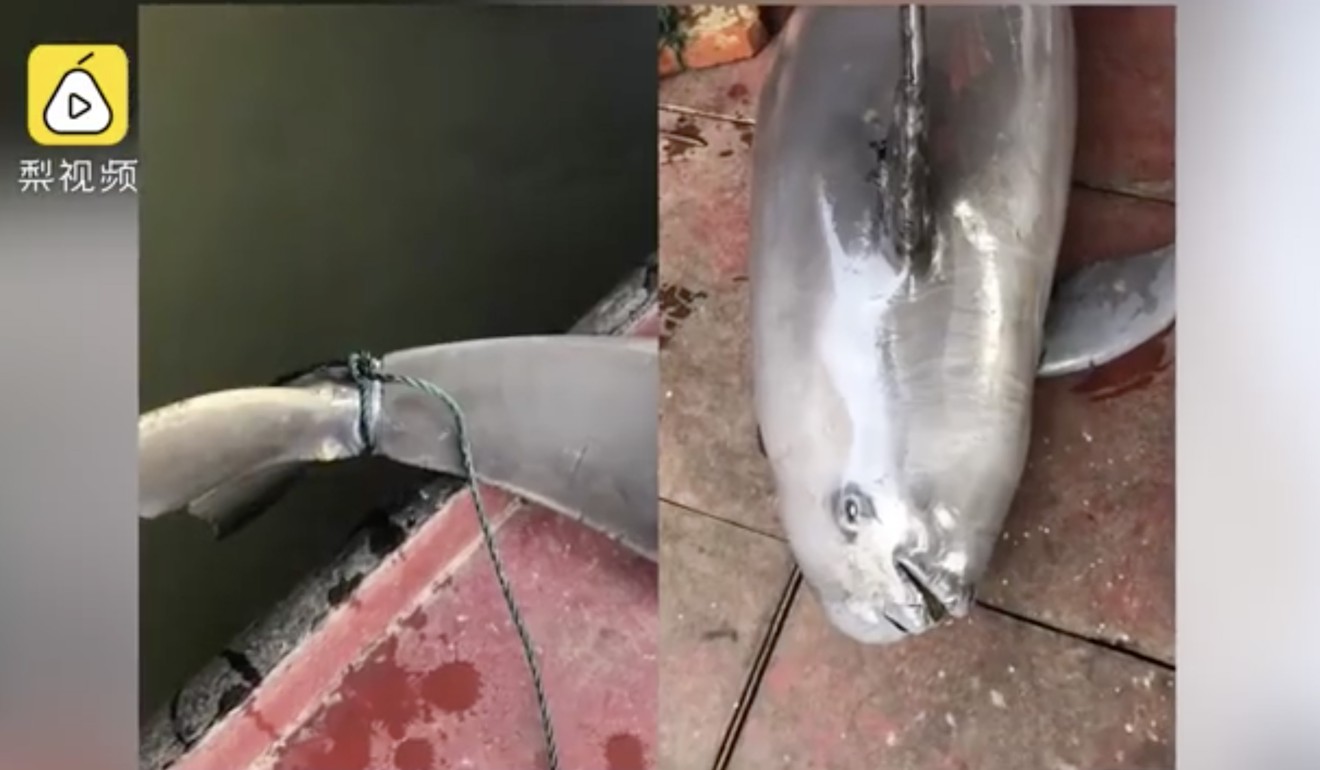
The Dongting Lake carcass was tied with a rope and weighted with bricks, and authorities in Hunan said the creature became tangled in a fishing net. The Hubei death is under investigation.

The Yangtze’s finless porpoises are “extremely endangered”, the Ministry of Agriculture and Rural Affairs said in a 2016 action plan to protect the species. Last year, vice-minister Yu Kangzhen said surveys showed there were about 1,012 of the animals in the river.

The tail of a dead finless porpoise pulled from Dongting Lake in Hunan appears to have been tied to weights. Photo: Pear Video

In 2017, China raised its protection for the mammals to its highest level because of the critical dangers they faced. Experts said that as the river’s “flagship” species, the porpoise was an indicator for the Yangtze’s ecology.

The porpoise discovered in Hubei was small and it had suffered superficial wounds, investigators were quoted as saying. They estimated that it was found soon after its death.

Xiaoxiang Morning Post quoted fisheries authorities in Yueyang, near Dongting Lake, as saying the porpoise in Hunan was found with weights around its tail.

Two porpoise carcasses found on separate Hong Kong shores
Officials said the fishermen who set the net feared they would be blamed for the creature’s death and tied bricks to its tail to sink it.

Other fishermen who witnessed the incident told the authority, leading to the discovery of the body, the report said. The investigation is ongoing and the suspects are still at large.

A fishing authority spokesman told the newspaper that the porpoise’s death showed the difficulty of balancing conservation with the livelihoods of fishermen.

“It’s difficult to figure out a good model to protect the porpoises without affecting fishermen’s business,” he said.

In mainland China, finless porpoises are referred to as “giant pandas in water” because of their endangered status. Their numbers fell from 2,700 in 1991 to 1,800 in 2006, and there were 1,045 finless porpoises in 2012, according to agriculture ministry data.

Source: SCMP

29/04/2019

Cyclone Fani may be headed to Odisha; NDRF, Coast Guard on alert

The NDRF and the Indian Coast Guard have been put on high alert and placed at the disposal of the state governments concerned.

INDIA Updated: Apr 29, 2019 14:37 IST

HT Correspondent
HT Correspondent
New Delhi
Cyclone fani,NDRF,Coast Guard
Representational Image(REUTERS File)

The NDRF and the Indian Coast Guard have been put on high alert and fishermen asked not to venture into the sea, the Home Ministry said Monday.

According to the India Meteorological Department (IMD), its landfall over Tamil Nadu and Andhra Pradesh is ruled out. However, the possibility of landfall in Odisha is under continuous watch.

On Monday morning, it was located at 880 km of South-East of Chennai and it will continue to move North-West and change its path to North-East from Wednesday.

The National Disaster Response Force (NDRF) and the Indian Coast Guard have been put on high alert and placed at the disposal of the state governments concerned. Regular warnings have been issued since April 25 to fishermen not to venture into the sea and asking those at sea to return to coast, it said.

The IMD has been issuing three hourly bulletins with latest forecast to all the states concerned and the home ministry is also in continuous touch with the state governments and the central agencies concerned, the statement said.
Source: Hindustan Times
09/03/2019

Vietnam says investigating cause of boat’s sinking in contested waters

HANOI (Reuters) – Vietnam is seeking clarification of how a fishing boat came to sink this week in the contested South China Sea, the Foreign Ministry said on Saturday, days after a local rescue agency said it was rammed by a Chinese vessel.

Vietnam and China have long been embroiled in maritime disputes in the potentially energy-rich stretch of water, called East Sea by Vietnam.

The boat sank on Wednesday near Da Loi island in the Paracel Archipelago, the ministry said in an emailed statement. It said all five fishermen on board were rescued by another Vietnamese fishing boat.

“Vietnamese authorities are continuing to clarify the cause of the incident,” the ministry said, without elaborating.

Source: Reuters

Law of Unintended Consequences

continuously updated blog about China & India

ChiaHou's Book Reviews

continuously updated blog about China & India

What's wrong with the world; and its economy

continuously updated blog about China & India