Archive for ‘Forbidden City in Beijing’

01/05/2020

Tourists trickle back to village by China’s Great Wall as virus curbs relaxed

GUBEI WATER TOWN, China (Reuters) – The mock Qing dynasty village nestled below the Great Wall would normally be teeming with tourists on Labour Day, but the thin crowds on Friday showed that while China’s coronavirus epidemic has subsided, people’s fears could take longer to fade.

During holidays, some 100,000 visitors a day would traipse round the quaint stone-paved streets of Gubei Water Town, 110 kilometres (68 miles) northeast of Beijing. Its marketing manager reckoned on getting just a tenth of that number this year.

“People have concerns about the virus and are unwilling to travel long distances,” said Guo Baorong. For a start, there will be no international tourists this time, he said, noting foreigners would normally make up around 15% of visitors.

About 70% of China’s tourist attractions had reopened as of Thursday, according to China’s Ministry of Culture and Tourism, but all sites have had to cap visitors to 30% of designed capacity.

More sites, including the Forbidden City in Beijing, were set to reopen Friday.

Staff at the entrance to Gubei Water Town checked visitors’ temperatures and health tracking codes. And inside, lines on the ground directed tourists to stand one meter apart and stores used ropes to keep crowds from forming. Like everywhere in China since the lockdowns were imposed to stem the epidemic, everyone wore masks.

Still, in places where tourists squeezed together as the streets narrowed, staff shouted at them to spread out.

Some tourists enjoyed the smaller crowds.

Xiao Chen, a 24-year-old student wearing traditional Chinese garb known as “Hanfu” came to Gubei to take pictures around ancient architecture.

“It’s good to come out of the city. There was barely anyone in Gubei Water Town yesterday, and even today, it’s not crowded,” she said.

The tranquility may not last. Room bookings jumped on Thursday after Beijing and nearby areas began easing coronavirus restrictions, with about 90% of accommodation now reserved.

“We were not expecting that many people to come in,” said Guo.

Source: Reuters
 

20/04/2019

Leica China video sparks backlash over Tiananmen Square image

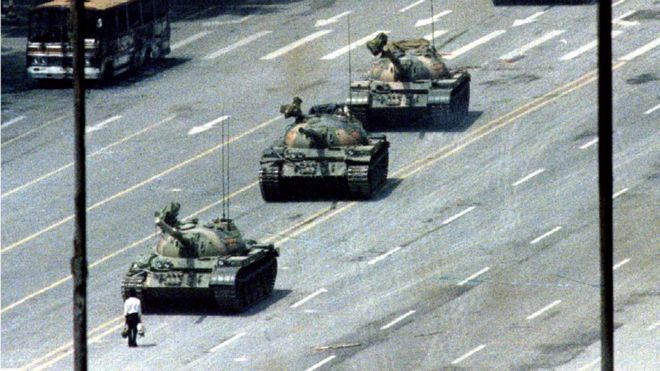
A man stands in front of three tanksImage copyrightREUTERS
Image caption This year marks the 30th anniversary of the pro-democracy protests

A promotional video for camera company Leica has sparked backlash in China for featuring a famous Tiananmen Square image.

The video depicts photographers working in conflicts around the world, including a photographer covering the 1989 protests.

People on Chinese social media site Weibo have called for a boycott of the camera brand.

Leica has distanced itself from the video.

“Tank Man” was a lone protester who brought a column of tanks to a standstill during a crackdown on pro-democracy protesters in Beijing in 1989.

He refused to move out of the way and climbed onto the leading tank to speak to the driver. He was later pulled away from the scene by two men. What happened to him remains unknown.

Beginning with the caption “Beijing 1989”, the Leica video features a photographer taking the famous image. The “Tank Man” can be seen in the camera’s lens.

Users on Chinese social media site Weibo have been forbidden from commenting on recent official posts by Leica. However some people are managing to post carefully worded comments on earlier official Leica posts, BBC Monitoring has found.

A search of the hashtag Leica shows that 42,000 users have left posts on Weibo but only 10 are available to view.

Some comments urge users to “boycott the camera” and joke about the company being linked to “patriotic Huawei”.

Chinese technology giant Huawei has been restricted by the US and other countries over security concerns in telecommunications networks. Consumers in China have rallied around the company, which uses Leica technology in its latest mobile phones.

A spokeswoman for Leica told the South China Morning Post that the film was not an officially sanctioned marketing film commissioned by the company. However it features Leica cameras and the company’s logo at the end of the footage.

They added that the company “must therefore distance itself from the content shown in the video and regrets any misunderstandings of false conclusions that may have been drawn”.

The BBC has contacted Leica for additional comment.


How China keeps Tiananmen off the internet

By Kerry Allen, BBC Monitoring China analyst

China has banned all activists’ commemorations of the 1989 Tiananmen incident for years and has strictly regulated online discussion of it.

If users search for “Tiananmen” on domestic search engines like Baidu or social media platforms like Sina Weibo, they only see sunny pictures of the Forbidden City in Beijing. If any pictures of tanks running along Chang’an Avenue are visible in image searches, they are only from Victory Day parades.

Hundreds of references to 4 June 1989 are banned all-year round by thousands of cyber police, and Weibo steps up censorship of even seemingly innocuous references to the incident on its anniversary.

Simple candle emojis, and number sequences that reference the date, such as “46” and “64” (4 June) and “1989” (the year of the protests), are instantly deleted. Small businesses also struggle to market items on 4 June every year, if their sale price is 46 or 64 yuan. Such advertising posts are swiftly removed by nervous censors.

But creative users always find ways of circumventing the censors. For example in 2014, when Taylor Swift released her 1989 album, the album cover featuring the words “T.S.” and “1989” was seen as an effective metaphor by users to talk about the incident – as T.S. could be taken to mean “Tiananmen Square”.


More than one million Chinese students and workers occupied Tiananmen Square in 1989, beginning the largest political protest in communist China’s history. Six weeks of protests ended with the bloody crackdown on protesters of 3-4 June.

Estimates of the death toll range from several hundred to more than 1,000.

China’s statement at the end of June 1989 said that 200 civilians and several dozen security personnel had died in Beijing following the suppression of “counter-revolutionary riots” on 4 June 1989.

Source: The BBC

04/03/2019

Chinese mother detained over bus driver attack after letting son urinate on bus

  • Police say woman told toddler to use a rubbish bin when he needed to go to the toilet then got into argument with driver after he called her ‘uncivilised’
  • Security camera footage shows her bashing on compartment door and grabbing the man’s coat as he is driving

Mother detained over bus driver attack after letting son urinate on bus

4 Mar 2019

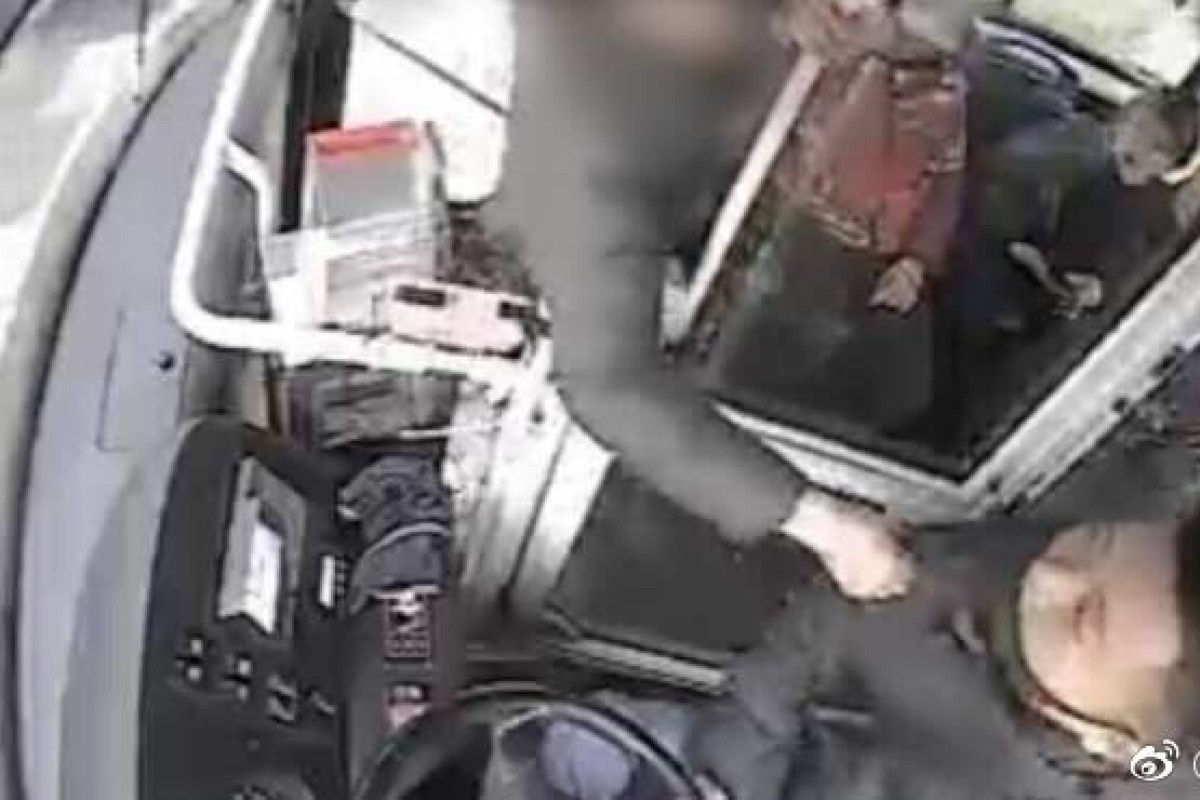
The woman is seen in security camera footage grabbing the bus driver’s coat while he is behind the wheel. Photo: Weibo

A mother in central China has been detained after she allowed her two-year-old son to urinate in a rubbish bin on a bus then attacked the driver when he told her she was “uncivilised”.

Security camera footage of the incident in Dazhi, Hubei province on Saturday shows the woman supporting the toddler by the bin on the floor of the bus while he urinates in front of the other passengers.

She is then seen rushing up to the driver and arguing with him after he complains about her behaviour, bashing on the compartment door and grabbing the man’s coat as he is driving.

A police officer told news website PearVideo on Sunday that the woman, identified only by her surname Chen, said the boy needed to go to the toilet while they were on the bus so she took him over to the bin.

“The driver saw them and said she was uncivilised, and they got into an argument over it,” the officer said. “Chen became agitated – she hit the driver’s compartment door and reached around to attack him while he was driving.”

The driver, who was not identified, is seen in the security footage calmly pulling over and calling the police while the woman is attacking him.

Chen has been placed under criminal detention for posing a threat to public security and Dazhi police are investigating the case, according to the report.

It comes after a series of recent attacks on bus drivers in China, including an accident in October when an angry passenger who missed her stop assaulted the driver, causing the bus to veer off a bridge and crash into the Yangtze River in Chongqing, killing all 15 people on board.
A police investigation found that the 48-year-old woman had been fighting with the driver as he tried to steer the bus when the crash happened.

Reacting to the latest case, some social media users said they understood the mother’s situation, but it has angered others, who say she should have used a diaper or got off the bus at the next stop.

“Anyone might need to use the toilet [on a bus], especially a kid, but parents should take heed of the criticism – she was clearly in the wrong,” one person wrote on Weibo, China’s Twitter.

There have been other cases in recent years of Chinese parents sparking anger for letting their children urinate in public – on the mainland and elsewhere. Last month, photos of a Chinese tourist allowing her son to pee on the floor of the Forbidden City in Beijing triggered a strong reaction on social media, with many people criticising the woman.
Source: SCMP
Law of Unintended Consequences

continuously updated blog about China & India

ChiaHou's Book Reviews

continuously updated blog about China & India

What's wrong with the world; and its economy

continuously updated blog about China & India