Archive for ‘from China’

03/05/2020

Plane carrying 56 tons of sanitary material from China arrives in Madrid

MADRID, May 3 (Xinhua) — A Boeing 777 plane carrying 56 tons of sanitary material from China for Community of Madrid, one of the 17 autonomous communities of Spain, landed at Madrid-Barajas Airport late on Saturday night, the regional government has informed.

Among the equipment on the aircraft, which came from Shanghai, were 315 multi-parameter monitors, which are used in intensive care units.

The material was shipped to Pavilion 10 at the IFEMA exhibition center in Madrid, which is being used as a warehouse for sanitary equipment during the ongoing coronavirus crisis, and will subsequently be distributed among the region’s hospitals.

Saturday’s arrival was the sixth shipment of sanitary material which has arrived in Madrid from China since April 2, bringing a total of 18 million items, such as facemasks, protective gowns and shoe coverings.

Apart from the monitors, Saturday’s arrival contained 1.5 million face masks (including 560,000 FFP2 masks), 560,000 gloves and 158,000 protective gowns.

Madrid is the worst-hit region of Spain by the pandemic with over 62,000 confirmed cases of COVID-19 and 8,332 deaths.

Source: Xinhua

29/04/2020

Coronavirus outbreak in France did not come directly from China, gene-tracing scientists say

  • Researchers conclude that the virus was circulating undetected in France in February
  • Findings highlight the difficulties governments face in tracing the source of coronavirus outbreaks
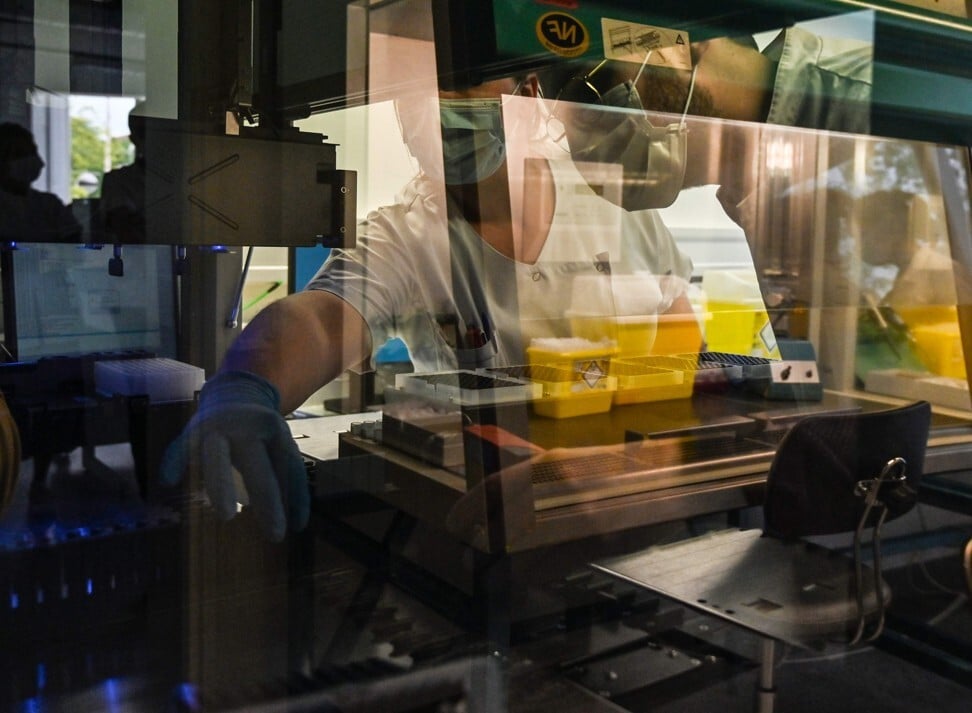
Researchers in France have carried out genetic analysis and found that the dominant types of the viral strains in the country did not come from China or Italy. Photo: AP
The coronavirus outbreak in France was not caused by cases imported from China, but from a locally circulating strain of unknown origin, according to a new study by French scientists at the Institut Pasteur in Paris.
Genetic analysis showed that the dominant types of the viral strains in France belonged to a clade – or group with a common ancestor – that did not come from China or Italy, the earliest hotspot in Europe.
“The French outbreak has been mainly seeded by one or several variants of this clade … we can infer that the virus was silently circulating in France in February,” said researchers led by Dr Sylvie van der Werf and Etienne Simon-Loriere in a non-peer reviewed paper released on bioRxiv.org last week.
The Covid-19 pandemic has infected more than 128,000 people in France and caused more than 23,000 deaths.
France detected the virus in late January, before any other country in Europe. A few patients with a travel history that included China’s Hubei province were sampled on January 24 and tested positive.
The Covid-19 pandemic has infected more than 128,000 people in France and caused more than 23,000 deaths. Photo: AFP
The French government took quick and decisive measures to trace contacts of the infected people and shut down the chance of further infection.

However, these strains were not found in patients tested after the initial imported cases, suggesting “the quarantine imposed on the initial Covid-19 cases in France appears to have prevented local transmission”, the researchers said.

The Pasteur institute collected samples from more than 90 other patients across France and found the strains all came from one genetic line. Strains following this unique path of evolution had so far only been detected in Europe and the Americas.

Singapore Covid-19 cases to rise as not all migrant workers being tested

28 Apr 2020

The earliest sample in the French clade was collected on February 19 from a patient who had no history of travel and no known contact with returned travellers.

Several patients had recently travelled to other European countries, the United Arab Emirates, Madagascar and Egypt but there was no direct evidence that they contracted the disease in these destinations.

To the researchers’ surprise, some of the later strains collected were genetically older – or closer to the ancestral root – than the first sample in this clade.

Spanish official cries reading names of health workers killed by coronavirus
A possible explanation, according to the authors, was that local transmission had been occurring in France for some time without being detected by health authorities.
The French government may have missed detecting the transmission. According to the researchers, a large proportion of those patients might have had mild symptoms or none at all.

The researchers also found that three sequences later sampled in Algeria were closely related to those in France, suggesting that travellers from France might have introduced the virus to the African country and caused an outbreak.

China says US politicians are lying as Trump calls for Covid-19 damages

29 Apr 2020

Benjamin Neuman, professor and chair of biological sciences with the Texas A&M University-Texarkana, said the French strains might have come from Belgium, where some sequences most closely related to the original strain from China were clustered.

“Since the earliest European strains of [the coronavirus] Sars-CoV-2 seem to be associated with Belgium, the idea that the virus spread from Belgium to both Italy and France at around the same time seems plausible, as this paper contends,” he said.

France is the latest in a growing number of countries and areas where no direct link between China and local outbreaks could be established.

The dominant strains in Russia and Australia, for instance, came from Europe and the United States, respectively, according to some studies.

These findings have drawn fire from some politicians who have tried to deflect domestic anger over their handling of the crisis by blaming China.

US President Donald Trump lashed out on social media after two separate teams in the US found the strains devastating New York came from Europe.

Is this the next big hotspot for the ‘little flu’?

28 Apr 2020

“So now the Fake News @nytimes is tracing the CoronaVirus origins back to Europe, NOT China. This is a first!” he tweeted on April 11, referring to a story about the studies in the The New York Times’ science section.

The findings also highlight the difficulties governments face in tracing the source of coronavirus outbreaks.

Less-developed countries may never know where their strains came from due to inadequate testing and sequencing capability.

India, for example, has released the genetic sequence of fewer than 40 samples to the public so far, a small number considering its huge population.

Most of the strains sampled in 35 early cases came from clades that could be traced to Italy and Iran, with only a few from China, according to a recent study. But researchers were not able to track further because of the lack of data.

A scientist on the study, Dr Mukesh Thakur, of the Zoological Survey of India, said it was too early to rule out China as the source of outbreaks in India because the number of samples at hand was limited.

A 20-year-old student studying medicine in Wuhan, for instance, might have come in contact with many people on the way home before she was tested positive on January 30.

Thakur said local media reported that the Indian government quarantined 3,500 people possibly linked to three positive cases imported from Wuhan.

“God knows how many of them tested positive in the subsequent stages,” Thakur said in an email response to the Post’s queries on Tuesday.

Some prominent scientists, including Francis Collins, director of the US National Institutes of Health, said the virus might have been spreading quietly in humans for years, or even decades, without causing a detectable outbreak.

The virus had thus adapted well to the human body. Some genes regulating its binding to host cells were similar, or even identical, to those found in some other highly infectious human viruses, such as HIV and Ebola.

According to some estimates, the ancestor of Sars-CoV-2, the virus causing Covid-19, might have left bats between 50 and 70 years ago. A recent study by a team of geneticists in Oxford University estimated the first outbreak of the current pandemic could have occurred as early as September last year.

They found that the dominant strains circulating in China and Asia were genetically younger than some popular strains in the United States.

Source: SCMP

04/07/2019

Samsung and other South Korean companies’ exodus from China sets an example to Western firms fleeing trade war tariffs

  • Lotte, Kia and Hyundai are also gradually winding down their China business due to political risks, tariffs and losing market share
  • Western companies fleeing Donald Trump’s tariffs may not have luxury of a managed exit, but should look at the South Korean case studies closely, experts say
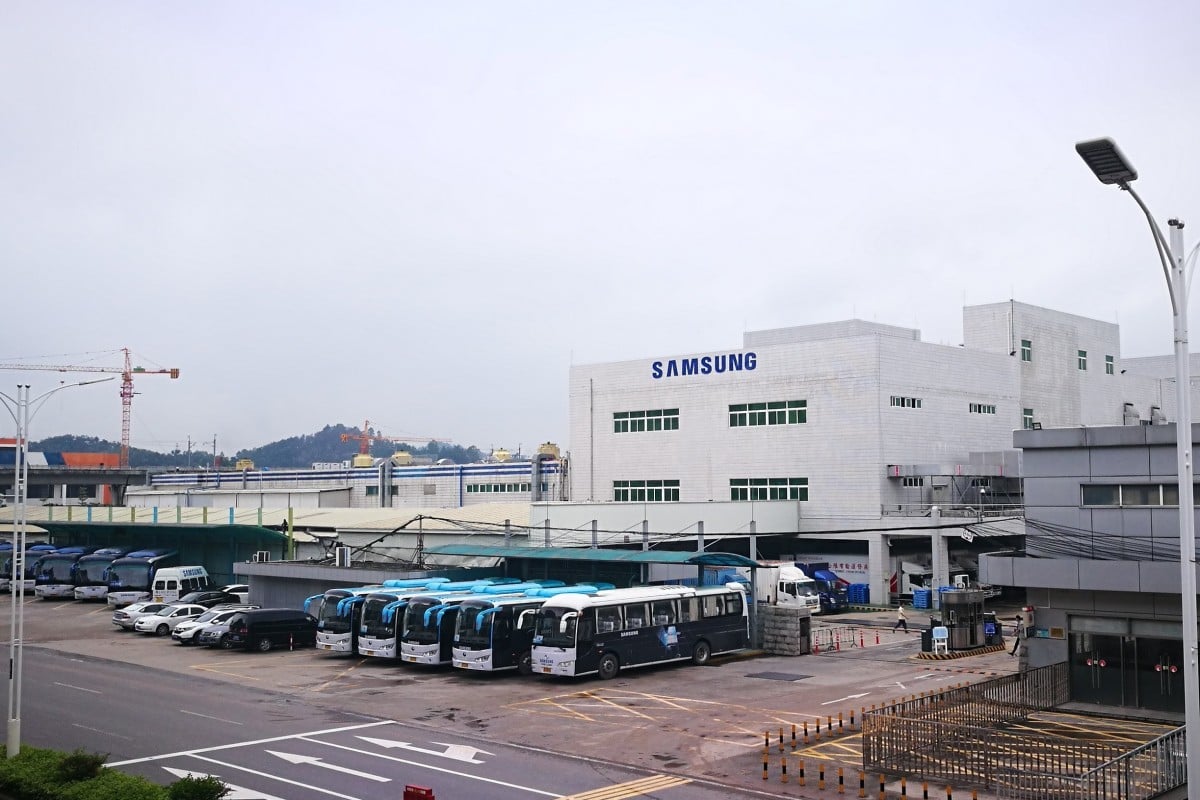
Samsung’s last mobile phone production line remaining in China in Huizhou is winding down, implementing a voluntary retirement programme. Photo: He Huifeng
Upon landing in Australia in 2017 to attend a seminar, a senior politician with South Korea’s parliamentary defence committee was greeted by Julie Bishop, then Australia’s foreign minister, who had a burning question: “How are you dealing with the China threat?”
Bishop was referring to the treatment of South Korean firms in China, which escalated after Seoul agreed in 2016 to a long-standing request from the United States to allow the deployment of the Terminal High Altitude Area Defence system (THAAD) on South Korean soil.
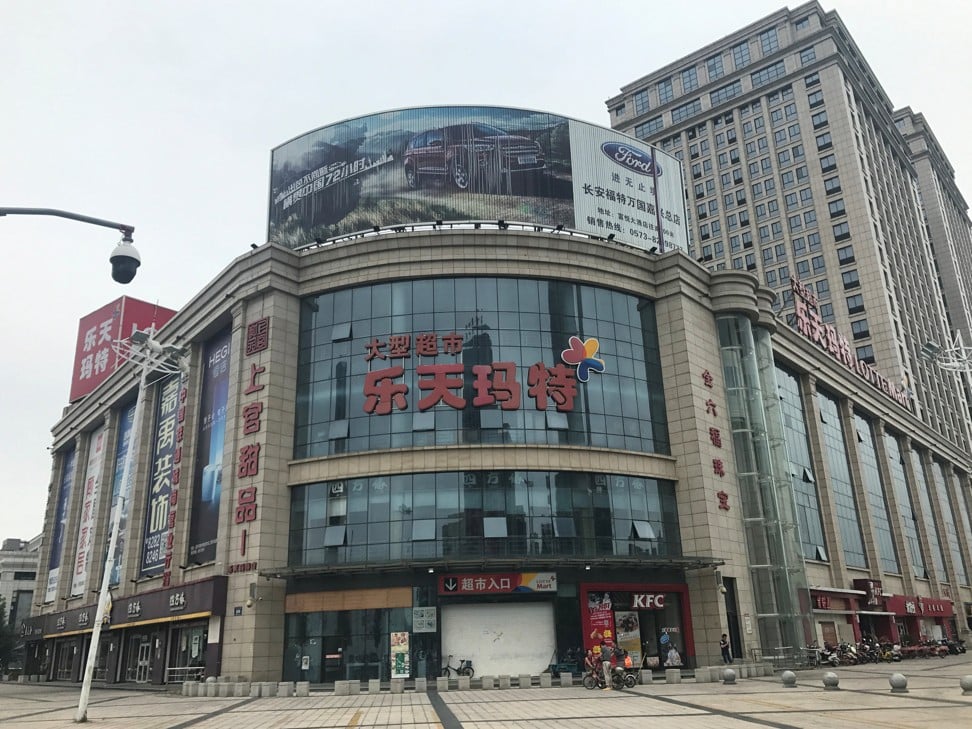
Lotte Corporation, one of Korea’s chaebol conglomerates that dominate its economy, had sold a plot of land in Seongju county to the South Korean government, on which the system’s radar and interceptor missiles were set up. While both Washington and Seoul said it was meant to counter threats from North Korea, Beijing viewed THAAD as a security risk, since its radar had the range to monitor China’s nearby military facilities.
After it was deployed in 2017, THAAD triggered widespread boycotts of Lotte’s retail operations in China, with the state-owned media acting as aggressive cheerleaders. The company was sanctioned by Beijing, with its expansion plans in China grinding to a halt on the orders of the Chinese government.
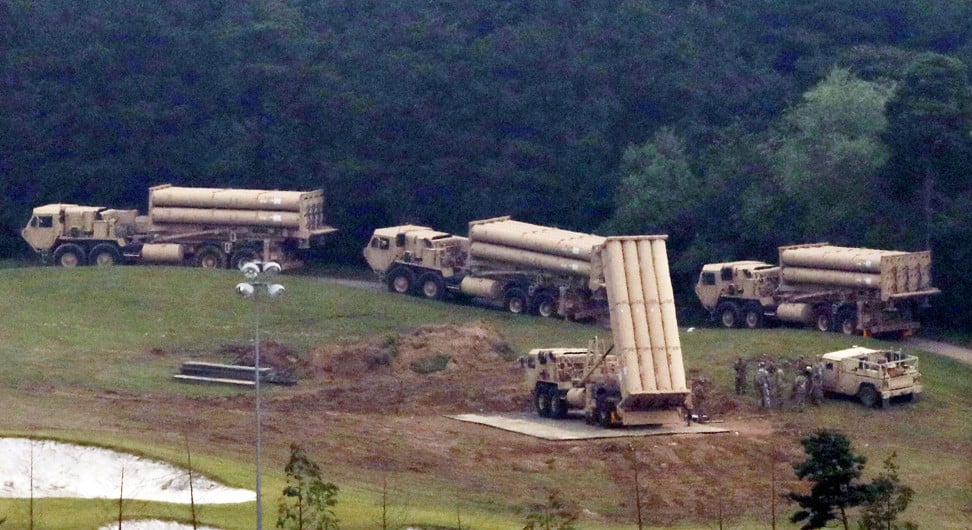
The Terminal High Altitude Area Defence (THAAD) arrived in Seongju in September 2017. Photo: Reuters

Australia – like South Korea – is heavily dependent on trade with China, but is also closely bound to the US in defence and political terms, and Bishop feared that should Australia fall out of favour with Beijing, Australian companies could face similar risks, and so she sought the counsel of the politician, who asked not to be named.

The case of Canadian canola and meat exports being banned from China, reportedly in retaliation for the arrest of Huawei chief financial officer Meng Wanzhou, also known as Sabrina Meng and Cathy Meng, is an example of how third nations can be drawn into the modern day superpower rivalry.

Many analysts say the efforts of South Korean firms in China should be essential study material for Western governments and businesses about the political risks of doing business in the mainland, which are growing as the US-China trade war threatens to draw in other nations and expand into a broader geopolitical struggle.

But large South Korean firms have been gradually withdrawing from China for a number of years – even before the THAAD crisis – and have been able to leave on a managed basis. They are leaving to avoid a repeat of the political crisis that ruined Lotte’s China business, and to avoid tariffs on exports of their China-made products to the US.

Lotte have been forced to close retail operations in China. Photo: Reuters

But they are also leaving because Chinese firms have become much more competitive in the domestic market that South Korean companies had found so fruitful for more than a decade – a fate that could easily befall Western companies that are eyeing China’s burgeoning middle-class consumer market. Now, while American firms are considering exiting China and setting up in nations that have lower tariff access to the US, South

Korean competitors have had a few years’ head start.

“In a way, all the problems that some South Korean companies had since 2017 might be a blessing in disguise. It meant that they started all of this [supply chain shift] two years before all the other companies,” said Andrew Gilholm, Seoul-based director of analysis for China and Korea at political risk advisory, Control Risks.

Another chaebol, Samsung Electronics, opened its first plant in Vietnam in 2008 and this long-term presence has enabled it to build a supply chain of South Korean companies, which in turn makes it easier for other South Korean firms to establish a base in the Southeast Asian nation.

We have experienced some of the worst situations in China over the past few years and learnt that the political risk there wouldn’t just simply go away overnight Ex-Lotte Shopping manager

As a result, South Korean investment into Vietnam climbed to US$1.97 billion in the first half of 2018, exceeding the country’s investment in China of US$1.6 billion over the same period for the first time, according to the Export-Import Bank of Korea.

Overall in 2018, South Korea’s total investment to the Southeast Asian country totalled US$3.2 billion. Its exports to Vietnam also increased to US$48.6 billion, 121 times that of 1992, when the two countries established diplomatic relations, and the trend is expected to continue.

“We have experienced some of the worst situations in China over the past few years and learnt that the political risk there wouldn’t just simply go away overnight,” said a former manager of Lotte Shopping, the chaebol’s retail arm, who spoke on condition of anonymity.

“China may pass all the legislation ensuring the safety of foreign investments and the rights of multinational companies, but the chance of it swinging away again when there is another political confrontation is just too high … we cannot afford to take any more risk.”

China eventually lifted its economic sanctions on Lotte in April, and the municipal government of Shenyang, the capital of Liaoning province in Northeastern China, gave the company permission in May to resume work on the US$2.6 billion Lotte Town shopping and leisure development.

But according to a person close to the project, Lotte is considering selling the complex after its completion, as it does not wish to continue its retail business in China. A Lotte spokesman declined to comment, saying the situation is “complicated”.

On one hand, its eagerness to leave China reflects the volatility in the market, but on the other, its decision to complete the construction of project before leaving suggests an unwillingness to burn bridges in the process, analysts said.

Samsung is another South Korean giant downsizing its Chinese manufacturing presence after it closed its Shenzhen production line in May 2018, followed by its Tianjin factory in December.

Samsung has been very aware of the potential issues around those closuresJason Wright

Its last remaining mobile phone production line in

China, in Huizhou, is also winding down,

implementing a voluntary retirement programme. Samsung is also considering moving some television manufacturing from China to Vietnam, according to a company insider.

However, it too, is carefully managing its exit strategy, said Jason Wright, founder of Hong Kong-based intelligence firm Argo Associates, who is advising a growing number of South Korean companies seeking to leave China. Samsung is still a large supplier of microchips to Chinese companies like Huawei, and to exit on negative terms could disrupt its ongoing business.
“Samsung has been quite generous in the packages that have been offered [to workers in the factories that it has closed],” Wright said. “Samsung has been very aware of the potential issues around those closures.”
As well as the political risks and tariffs, Samsung has seen its mainland market share in several product queues shrink dramatically due to competition from Chinese rivals. Its share of China’s smartphone market, for example, fell from 20 per cent in 2013 to just 0.8 per cent last year, according to Strategy Analytics, a market research firm.
Over the same period, it has been moving its supply chain out of China in a “subtle and imperceptible” way, according to Julien Chaisse, a professor of trade law at City University of Hong Kong who has advised, among others, Lotte on its plans to relocate to Vietnam.
Samsung Electronics opened its first plant in Vietnam in 2008. Photo: Cissy Zhou
As stories emerged in June that Apple was considering a partial exit of China, it was impossible not to see parallels. iPhone sales in China fell 30 per cent in the first quarter of 2019, according to research firm Canalys, while smartphones will be among those facing a potential tariff of up to 25 per cent, although this has been at least delayed after the trade war truce agreed by

US President Donald Trump

and Chinese President Xi Jinping at the

G20 summit in Osaka.

Meanwhile, South Korean car companies Kia and Hyundai’s combined market share in China fell to 2.7 per cent last year, from about 10 per cent at the beginning of the decade. Both companies, which have shared ownership, are downsizing their Chinese operations.

“In the past, China was just a great market, but for Korea, now China has become a competitor. So that is really a change in the dynamic over the last five years. China was not really able to compete with Korea in most areas,” said Wright from Argo Associates.

City University of Hong Kong professor Chaisse traces the exodus of South Korean firms back to 2014, before THAAD and before the trade war, and highlighted an arcane arbitration case at the United Nations’ dispute settlement courts as a turning point. After that case, South Korean companies in China faced an increasingly hostile environment.

Filed in 2014 and settled in 2017, the case emerged after South Korean company Ansung Housing had been forced to sell a golf resort it was developing in Eastern China after a change in the country’s real estate legislation.

Ansung took the case to an arbitration panel, claiming it breached a Sino-Korean investment treaty. The company won – only the second defeat for China in two decades of participation in the court, but this ushered in a “change in atmosphere” for South Korean firms.

“My take is that while the Korean case is unique for a number of reasons, it highlights what is going to happen to many other foreign companies operating in China,” Chaisse said.

“I think very soon even European companies will be reconsidering their businesses in China. Every time it will be a different story: different countries, different companies, in different economic sectors will have different reaction times and the magnitude of their withdrawal may vary.”

But for those now fleeing trade war tariffs, they may not have the luxury of long-term planning that companies like Samsung and Lotte have had, said Gilholm from Control Risks.

“Long term, I think the Korean firms that are moving out of China have had it easier because they haven’t had to do it under quite such pressured and scrutinised circumstances as a company which starts to move things now,” he said.

Source: SCMP

Law of Unintended Consequences

continuously updated blog about China & India

ChiaHou's Book Reviews

continuously updated blog about China & India

What's wrong with the world; and its economy

continuously updated blog about China & India