Archive for ‘Geely’

17/12/2019

China and Europe are partners not rivals, says Chinese FM

BRUSSELS, Dec. 16 (Xinhua) — China and Europe are partners, not rivals, Chinese State Councilor and Foreign Minister Wang Yi said in a speech here on Monday evening.

“In recent years, we have heard an argument suggesting that China has become a rival of Europe in the economic field and should be subjected to all sorts of restrictions,” Wang said while speaking at an event hosted by the European Policy Center, a think tank.

“Although it is not the mainstream view, we must raise our vigilance and not allow it to go unchecked. In fact, any cool-headed person with an objective view will see that, for China and the EU, cooperation far outweighs competition, and our areas of consensus far exceed differences. We are partners, not rivals,” he said.

Over the years, Europe has benefited tremendously from cooperation with China, Wang said.

Between 2001 and 2018, EU’s exports to China grew by 14.7 percent on average each year, more than twice the EU’s average export growth, supporting about four million local jobs. Investment of Chinese companies in the EU has also been growing. As of the end of 2017, Chinese companies have set up over 2,900 ventures in EU countries through direct investment, creating 176,000 jobs for the local people, according to Wang.

Acquisition of Volvo by China’s automaker Geely injected new energy to the Volvo factory in Ghent, Belgium, retaining and creating over 6,000 jobs, said the senior Chinese official, noting that China is now the most profitable market for European companies — as many as 7 million cars, or nearly a quarter of all automobiles sold in China, are produced by European automakers.

Wang said that despite trade friction and the world economy in downward pressure, economic and trade cooperation between China and the EU has bucked the trend and kept growing.

He pointed out that in the first 11 months of this year, trade between China and the EU, according to statistics, was estimated to grow by 7.7 percent from last year. From January to July, EU investment in China was up by 18.3 percent year on year, and sixty percent of EU companies regard China as a leading destination of investment.

China, as a major developing country with some 1.4 billion people, a 900-million-strong labor force and 120 million market entities, has solid internal growth momentum, great resilience, and enormous economic potential, said Wang, adding that China is bound to offer a new round of cooperation opportunities and share the development dividend with countries in Europe.

Source: Xinhua
31/05/2019

Tesla announces prices of made-in-China Model 3. At 328,000 yuan it’s 13 per cent cheaper than US imports

  • Deliveries will start in the next six to 10 months, carmaker says
  • Tesla will take on Chinese carmakers such as Geely and SAIC, and electric car start-ups including Nio and Xpeng Motors
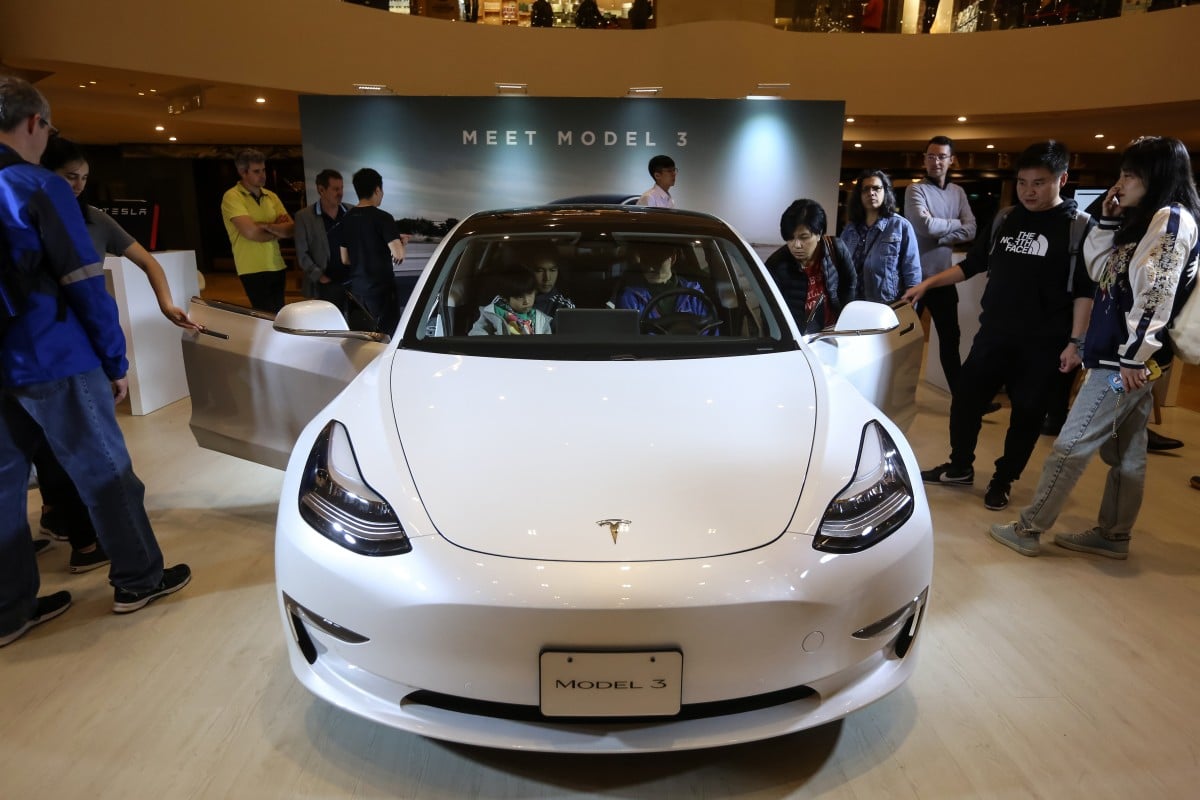
Tesla said on Friday that its Model 3 electric car, which will be assembled in China, will be ready for deliveries in six to 10 months. Photo: AFP
Customers can pre-order the Model 3 assembled in China after Tesla announced on Friday that it would be priced 13 per cent lower than the US imports, taking the electric carmaker a step closer in tapping the world’s largest EV market.
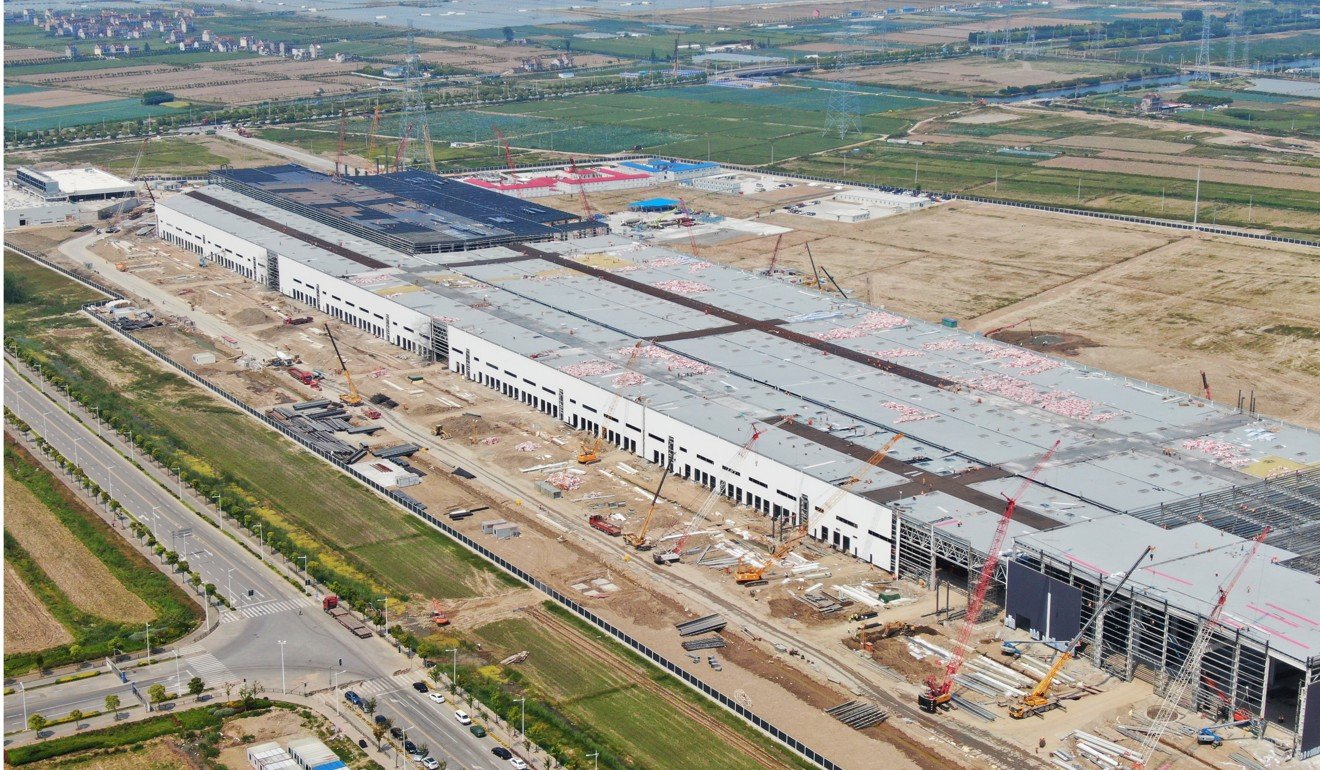
The standard range plus Model 3 car that Tesla plans to assemble at the Gigafactory 3 in Lingang, Shanghai, will be priced at 328,000 yuan (US$47,529), 49,000 yuan cheaper than the same model currently imported from the US.
Tesla’s US-built cars are now subject to a 25 per cent import duty in China. The bestselling US electric carmaker plans to start deliveries in the next six to 10 months.

“Today we announced that Model 3 Standard Range Plus vehicles built at Gigafactory Shanghai will begin at 328,000 yuan for our customers in China,” Tesla said in a statement.

Aerial view of the Tesla Shanghai Gigafactory under construction in Lingang, Shanghai, on May 10, 2019. Photo: Imaginechina

The model has a range of 460km and a top speed of 225km/h.

Industry observers said that the price of the locally made car aimed at the mass market is on the higher side, adding that a 300,000 yuan price tag could attract thousands of Chinese buyers.

“If a Chinese customer can buy a Tesla car for less than 300,000 yuan, many of them will make a decision on the spur of the moment since it is viewed as the best EV in the world,” said Tian Maowei, a sales manager at Shanghai-based Yiyou Auto Service.

Tesla rushes Model 3s to China before trade war truce expires

US President Donald Trump has signed an executive order barring US companies from using telecoms equipment made by companies that pose a threat to national security, a move aimed at shutting out Huawei Technologies.

US technology companies including Google and Microsoft have severed business ties with Huawei to comply with the US trade ban.

Tesla’s Gigafactory 3 is expected to make around 3,000 Model 3 vehicles a week in the initial phase. Photo: AP

In January, Tesla started construction on a US$5 billion wholly-owned plant in Shanghai, the city’s single largest foreign direct investment just three months after it secured a land parcel to make electric cars locally.

The factory will produce Model 3 and Model Y electric vehicles that are seen as affordable to drivers in China.

Podcast: Here’s how the US-China tech war is affecting small electronics companies

Gigafactory 3 is expected to make around 3,000 Model 3 vehicles a week in the initial phase, ramping up to 500,000 per year when it becomes fully operational, Tesla said.

Tesla will take on Chinese carmakers such as Geely and SAIC and electric car start-ups including Nio and Xpeng Motors in China where sales of new-energy vehicles including battery-powered and plug-ins are expected to jump 27 per cent this year to 1.6 million units, according to the China Association of Automobile Manufacturers.

In March Beijing announced a cut in cash subsidies offered to NEV buyers by up to 60 per cent, believing it was time to remove the crutches and cull an industry that had spawned hundreds of small manufacturers.

It is unclear whether Tesla vehicles will receive subsidies from the Chinese government.

Source: SCMP

11/05/2019

Exclusive: China’s BAIC seeks to buy 5 percent Daimler stake – sources

BEIJING/FRANKFURT (Reuters) – China’s BAIC Group is seeking to buy a stake of up to 5 percent in Daimler as a way to secure its investment in Chinese Mercedes-Benz manufacturing company Beijing Benz Automotive, three sources familiar with the matter told Reuters.

BAIC informed Daimler of its intention to buy a 4-5 percent stake in the German maker of Mercedes-Benz cars earlier this year, two of the three sources said.

BAIC has asked local authorities in Beijing to support a 4-5 percent stake purchase, two of these sources said.

BAIC has started acquiring Daimler shares on the open market, one source said.

“Daimler’s share price is currently being underpinned by a buyer who appears to be building a stake,” a person familiar with the matter said.

BAIC did not respond to repeated phone calls and text messages seeking comment outside regular business hours. Daimler declined to comment.

It remains unclear whether BAIC Group can raise the nearly 3 billion euros (£2.6 billion) that a 5 percent stake in Daimler would cost, based on the German carmaker’s closing market value on Friday of 57.6 billion euros, two of these sources said.

German regulatory filings do not show BAIC as a significant shareholder of Daimler. German takeover rules allow a buyer to acquire a stake of up to 3 percent before a regulatory disclosure is required.

Daimler has ruled out issuing new stock to help an outside party build a stake, forcing potential buyers to acquire shares on the market.

BAIC signalled its interest in buying a Daimler stake as far back as 2015, and has redoubled its effort after Li Shufu, chairman of rival Chinese carmaker Zhejiang Geely Holding Group built a 9.69 percent stake in Stuttgart-based Daimler in early 2018.

By using Hong Kong shell companies, derivatives, bank financing and structured share options, Li kept the plan under wraps until he was able, at a stroke, to become Daimler’s single largest shareholder.

The Germans in March agreed to build the next generation of Smart-branded city cars together with Geely, which is based in Hangzhou. Daimler has also reassured BAIC that any new industrial alliances involving Mercedes and a Chinese partner would only happen after a consensus is found with BAIC.

Source: Reuters

Law of Unintended Consequences

continuously updated blog about China & India

ChiaHou's Book Reviews

continuously updated blog about China & India

What's wrong with the world; and its economy

continuously updated blog about China & India