Archive for ‘Good news’

24/05/2012

* Landmark lawsuit demands compensation for pollution victims

Xinhua: “In a landmark lawsuit, two non-governmental organizations NGOs have demanded compensation of 10 million yuan (1.58 million U.S. dollars) from companies which dumped toxic chemicals in southwest China’s Yunnan Province.

Friends of Nature FON and the Chongqing Green Volunteer Association exchanged evidence with the defendant, Luliang Chemical Industry Co. Ltd. and Luliang Peace Technology Co. Ltd. in court on Wednesday. If the the NGOs win the case, the compensation will be used for environmental rehabilitation in the polluted areas in Qujing city, said Guo Jinghui, a spokeswoman of FON.

Qujing city’s environmental protection bureau also joined as plaintiff in the lawsuit, which was filed last September and accepted by the city’s Intermediate Peoples Court in October 2011. The court has set up a special environmental protection tribunal, but the trial date has not been confirmed, said Guo.”

via Landmark lawsuit demands compensation for pollution victims – Xinhua | English.news.cn.

Related posts: https://chindia-alert.org/2012/03/14/premier-wen-says-china-needs-political-reform-warns-of-another-cultural-revolution-if-without/

23/05/2012

* U.S. lets China bypass Wall St for Treasury orders

Reuters: “China can now bypass Wall Street when buying U.S. government debt and go straight to the U.S. Treasury, in what is the Treasurys first-ever direct relationship with a foreign government, according to documents viewed by Reuters.

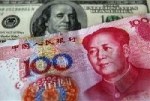
The relationship means the People’s Bank of China buys U.S. debt using a different method than any other central bank in the world. The other central banks, including the Bank of Japan, which has a large appetite for Treasuries, place orders for U.S. debt with major Wall Street banks designated by the government as primary dealers. Those dealers then bid on their behalf at Treasury auctions. China, which holds $1.17 trillion in U.S. Treasuries, still buys some Treasuries through primary dealers, but since June 2011, that route hasn’t been necessary. The documents viewed by Reuters show the U.S. Treasury Department has given the People’s Bank of China a direct computer link to its auction system, which the Chinese first used to buy two-year notes in late June 2011. China can now participate in auctions without placing bids through primary dealers. If it wants to sell, however, it still has to go through the market.”

Incidentally, there is no finance benefit as commissions are not charged for such dealings.

via EXCLUSIVE: U.S. lets China bypass Wall St for Treasury orders – Reuters –.

An example of pragmatism on the part of the US government – giving special treatment to its biggest customer.

20/05/2012

* China dissident Chen Guangcheng arrives in the US

BBC News: “Chinese activist Chen Guangcheng has arrived in New York to begin a new life in the United States.

The blind human rights lawyer caused a diplomatic crisis when he escaped house arrest to arrive at the US embassy in Beijing last month. Speaking outside New York University, where he has been offered a fellowship, Mr Chen said China had dealt with the situation with “restraint and calm”. But he raised concerns about ongoing reprisals against his family. “Acts of retribution in Shandong have not been abated and my rights to practice law have been curbed – we hope to see a thorough investigation into this,” he said, referring to the province where he was kept under house arrest. The activist thanked US officials and his supporters for their help and said he had come to the United States for “recuperation in body and spirit”.

Chen Guangcheng and his family were taken from a Beijing hospital, where he was being treated for a foot injury, to the capitals airport on Saturday. A crowd of activists, supporters and curious New Yorkers greeted Chen at the university apartment block in Greenwich Village where he and his family will stay. Wearing dark glasses and hobbling on crutches, he may not have looked like a conquering hero, but that is how he was treated. There were cheers and screams of encouragement. Some had brought flowers, while one woman was led away in tears after failing to secure a hug from her idol.

Former House speaker Nancy Pelosi described his arrival in the US as “a milestone in the cause for human rights in China“.”

via BBC News – China dissident Chen Guangcheng arrives in the US.

19/05/2012

* Rich in kindness

China Daily: “Billionaire behind major philanthropic projects says there’s always more to do.

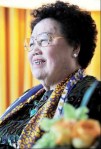
Entrepreneur and philanthropist Chan Laiwa, also known as Chen Lihua, is no stranger to lists of the world’s richest people, from Forbes to Hurun. But the self-made billionaire finds there is “so much” beyond wealth. “While wealth does come through our hard work and efforts, it is not the ultimate goal and is not above everything,” Chan, 71, says in her Manhattan hotel room the day before she was honored at an April gala as one of Time magazine’s 100 Most Influential People for 2012.

Such sentiments might seem standard from any rich person concerned with public image, but Chan in person – sincere, humble and thoughtful – makes people around her feel at ease. She impresses most with her passion for art, particularly of sandalwood, a medium she has loved since she was a girl. Born into a family of Manchu, the ethnic group that led Chinas last imperial dynasty, the Qing 1644-1911, Chan spent most of her childhood in the Summer Palace in Beijing. She is a descendant of a noble Manchu family of the Yellow Banner Clan, some members of which were ministers of state under the Qing emperor.

Chan’s childhood home was furnished with red sandalwood, a material used in the emperors’ palace in bygone times. “As I grew older, I felt the need to preserve this important part of Chinese culture,” recalls Chan, who opened a furniture factory in the 1980s and began making old-style pieces modeled after those from Beijing’s Palace Museum, more widely known as the Forbidden City.

In 1999, Chan fulfilled a childhood dream by investing in a $16 million red sandalwood museum in the capital. The thousands of treasures displayed there include a scale model of a corner tower in the Forbidden City, a reproduction of the memorial gateway carved with 320 dragons from Longquan Temple in Shanxi province, and a number of intricate furniture pieces and sculptures.

She made her fortune in the 1990s through a series of real estate ventures involving her Fu Wah International Group, the Hong Kong company fashioned out of Chan’s furniture store. The businesswoman later moved to Beijing for more opportunities. Chan was recently voted among Time magazines 100 Most Influential People in the World for 2012.

via Rich in kindness|People|chinadaily.com.cn.

08/05/2012

* China issues policies to raise wellbeing of working women

Xinhua: “A new regulation, made public Monday, provides employed Chinese women with better welfare policies, including extended maternity leave and higher workplace protection.

A pregnant woman

A pregnant woman (Photo credit: Wikipedia)

According to the regulation adopted by the State Council in April, maternity leave has been extended from 90 days to 98 days, which is in line with the 14-week minimum standard set by the International Labour Organization. The regulation more clearly specifies leave granted to women who have miscarriages. According to it, a female employee will get 15 days of leave if their miscarriage occurs within the first four months of pregnancy and 42 days of leave if it happens later. Under the regulation, female employees should be paid either by the maternity insurance programs they have joined or by employers during their maternity leave.

The regulation also expands the categories of jobs that pregnant women and breastfeeding mothers are banned from working for, while removing restrictions on what jobs married women at the childbearing age should take.It also imposes clear penalties on the offenders, ranging from 1,000 to 300,000 yuan 159 to 47,619 U.S. dollars. And it stipulates that those employers who seriously violate the rules should be suspended from operation.

According to the government, China is estimated to currently have 102 million women in full-time employment.”

via China issues policies to raise wellbeing of working women – Xinhua | English.news.cn.

03/05/2012

* China, Japan, South Korea to boost investment in each others bonds

Reuters: “China, Japan and South Korea agreed on Thursday to boost cross-investment in government bond markets, worth nearly a combined $15 trillion, in a move that will better prepare the countries to protect their financial markets from external shocks.

East Asia blank map China/Japan/Korean peninsu...

East Asia map China/Japan/Korean peninsula (Photo credit: Wikipedia)

The three economic powers sought a formal agreement, a rare one on securities investment, to ease mutual concerns about possibly massive cross-border fund flows and because their capital markets are at different levels of development. The move also comes as many of the heavily exposed economies in East Asia have struggled to find ways to avoid a repeat of the 1997/98 Asian financial meltdown and other turmoil that has struck during times of crises originating outside the region.”

via China, Japan, South Korea to boost investment in each others bonds | Reuters.

01/05/2012

* Sign nuclear non-proliferation treaty, Japan tells India

The Hindu: “Japan on Monday asked India to sign the Nuclear Non-Proliferation Treaty NPT even as the two sides decided to reopen talks on a bilateral civil nuclear agreement.

During the sixth Foreign Minister-level strategic dialogue here, the two sides agreed to prepare a master plan for the industrial development of south India, especially areas around Chennai and Bangalore, and accelerate talks on export of rare earths to Japan.

Another decision was to extend their dialogue to a code of conduct in outer space, cyber security and maritime issues, including security and freedom of navigation in the South China Sea. The talks also covered Japanese investment in high speed trains, the Delhi-Mumbai Industrial Corridor and the Dedicated Freight Corridor. While agreeing to step up interaction between the Coast Guards, India and Japan decided to hold their first-ever maritime exercises towards the middle of the year.”

via The Hindu : News / National : Sign nuclear non-proliferation treaty, Japan tells India.

29/04/2012

* China’s great leap forward – into the supermarket

The Guardian: “Made in China says everything, economically, about the last decade. Sold in China tells you everything about the next.

Recent output figures from China were greeted with concern after the country reported its lowest GDP growth for three years, although, at 8.1%, its magnificent compared to the UK’s double-dip recession. Still, there is much talk among economists about a “hard landing”, a “property bubble” and “bankrupt banks”. But there is one key fact to remember about the economy in China. It’s that the minimum wage is going up 15% a year, every year, for the next five years. Take a billion workers and give them a 100% pay rise. It changes everything.

Within a generation, China is likely to displace the US as the biggest consumer market in the world. At Tianjin Port, the world’s fifth biggest, container ships used to export Chinese goods to the rest of the world but come back empty. Now they return with the finished and semi-finished goods from the rest of the world to satisfy a ravenous consumer appetite.

In Tianjin’s vast factory zone, across the road from a Foxconn plant making the next wave of Apple iPhones, the Master Kong factory makes more pot noodles than anywhere else in the world. The huge automated production lines, with machine tools imported from Japan and Germany, churn out five billion noodle packets a year – enough to reach to the moon and back. All the raw materials come from China, all of the finished product is consumed in China. Its just one of 23 Master Kong plants on the mainland.

Further south in the “groundscraper” and weirdly Hogwarts-esque Shanghai offices of Ping An, China’s second biggest insurer, 12,000 commission-led telesales agents make one million sales calls every day. It is the largest telemarketing operation on the planet, feeding on the explosive growth of domestic car sales. Last year 14.5m cars were sold in China – or 2m more than in the US, previously the world’s biggest auto market. Nine in 10 were to people who had never bought a car before. Ping An now insures 32m private cars, raking in premiums of £2.2bn 22.3bn renminbi a year. Four years ago, that revenue was below £100m.

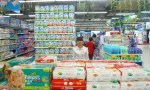
Just off outer ring road five in Beijing, a mundane average-income district, the Wu Mart hypermarket is perhaps an early indicator of how domestic consumption will grow.

The store bears more resemblance to a Lidl than a Tesco but, unlike the oddly deserted luxury shops in the city centre, it is teeming. It’s instantly apparent that mid-range western brands are phenomenally popular with middle-income Chinese consumers. Shelf after shelf stocks the likes of Colgate toothpaste, Nivea, Quaker Oats and Snickers bars.

Whole aisles are devoted to disposable nappies. China’s one-child policy, rigorously enforced, means that spending on a sole child is proportionately huge. Hong Kong babies use 50% more diapers than those in the west, and mainland China is heading the same way. Want to invest in China? Maybe buy Procter & Gamble (Pampers) or Kimberly-Clark (Huggies) instead.

via Chinas great leap forward – into the supermarket | Money | The Guardian.

27/04/2012

* China Wants More Trade With Central and Eastern Europe

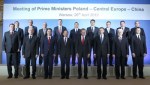
New York Times: “Prime Minister Wen Jiabao said Thursday that China wanted to double trade with the countries of Central and Eastern Europe to $100 billion a year by 2015, and pledged billions in loans to help promote investment in the region.

Mr. Wen made the announcement at a gathering in Warsaw that brought together business and political leaders of countries stretching from the Baltics to the Balkans that are eager to do business with China, even as they struggle to overcome stereotypes still held by many in the region who associate the Chinese as makers of inexpensive toys and designer knock-offs.

Infrastructure, high technology and green technology are target areas for growth, Mr. Wen said, announcing that Beijing would set up a $10 billion line of credit to support investment in these specific industries. He also pledged an additional $500 million in funds to be made available to Chinese companies seeking to make first-stage investment in the region.”

via China Wants More Trade With Central and Eastern Europe – NYTimes.com.

China continues to woo everyone. And Mr Wen is making himself very busy in his final year in office.

Related post: https://chindiapedia.wordpress.com/wp-admin/post.php?post=5753&action=edit

https://chindia-alert.org/political-factors/geopolitics-chinese/

27/04/2012

* Wen paints Europe green in 4-nation trip

China Daily: “Trade and investment deals and business cooperation have been the focus of Premier Wen Jiabao’s tour to four European nations this week. Such fare is common for such visits, but

Wen Jiabao (温家宝), Chinese Premier

Wen Jiabao (温家宝), Chinese Premier (Photo credit: Wikipedia)

there was a new ingredient in the latest trip: Wen and his delegation have been paying particular attention to green and innovative industries in almost every destination of the seven-day visit, which ends on April 29.

As China switches from high growth to sustainability in the current five-year plan and as the country’s foreign trade growth slows, politicians, businesses and industrial leaders from China and Europe are seeing more opportunities in each others markets. Before his scheduled arrival in Warsaw on April 27, Wen pressed for global action on sustainable development that strikes a balance between economic growth, social progress and environmental protection, instead of focusing exclusively on the environment, at the Stockholm+40 conference in Sweden.”

via Wen paints Europe green in 4-nation trip|News|chinadaily.com.cn.

This relatively new theme of ‘sustainability’ goes along with strenuous efforts to reduce carbon and increase renewable energy sources. Good for China and good for the world.

Related pagehttps://chindia-alert.org/economic-factors/greening-of-china/

Law of Unintended Consequences

continuously updated blog about China & India

ChiaHou's Book Reviews

continuously updated blog about China & India

What's wrong with the world; and its economy

continuously updated blog about China & India