Archive for ‘governor’

22/05/2020

NPC: China begins move to impose controversial Hong Kong security law

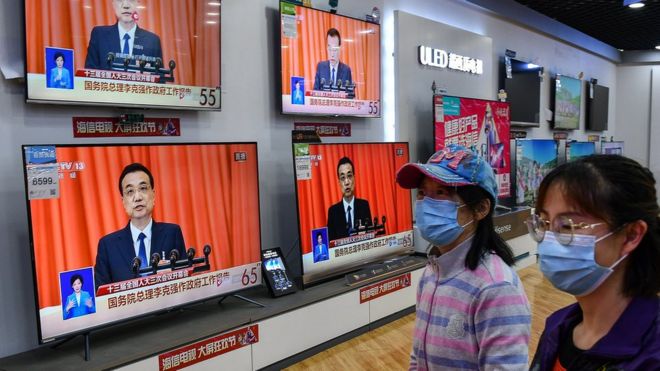
Shoppers walking past a broadcast of Chinese Premier Li Keqiang delivering his speech at the opening of the NPCImage copyright AFP / GETTY
Image caption Shoppers walking past a broadcast of Chinese Premier Li Keqiang delivering his speech at the opening of the NPC on Thursday

China’s ruling Communist Party has set in motion a controversial national security law for Hong Kong, a move seen as a major blow to the city’s freedoms.

The law to ban “treason, secession, sedition and subversion” could bypass Hong Kong’s lawmakers.

Critics say China is breaking its promise to allow Hong Kong freedoms not seen elsewhere in China.

It is likely to fuel public anger and may even trigger fresh protests and demands for democratic reform.

The plan was submitted at the annual National People’s Congress (NPC), which largely rubber-stamps decisions already taken by the Communist leadership, but is still the most important political event of the year.

Hong Kong, a semi-autonomous region and an economic powerhouse, was always meant to have introduced such laws after the handover from British control to Chinese rule in 1997.

After last year’s wave of sustained and violent protest, Beijing is now attempting to push them through, arguing “law-based and forceful measures” must be taken to “prevent, stop and punish” such protests in the future.

On Friday, Hong Kong’s government said it would co-operate with Beijing to enact the law, adding it would not affect the city’s freedoms.

What is in Beijing’s proposed law?

The “draft decision” – as it is known before approval by the NPC – was explained by Wang Chen, vice chairman of the Standing Committee of the NPC.

It consists of an introduction and seven articles. Article 4 may prove the most controversial.

That article says Hong Kong “must improve” national security, before adding: “When needed, relevant national security organs of the Central People’s Government will set up agencies in Hong Kong to fulfil relevant duties to safeguard national security in accordance with the law.”

China could essentially place this law into Annex III of the Basic Law, which covers national laws that must be implemented in Hong Kong – either by legislation, or decree.

Addressing the congress, Premier Li Keqiang spoke of the economic impact of the coronavirus and on Hong Kong and Macau said: “We’ll establish sound legal systems and enforcement mechanisms for safeguarding national security in the two Special Administrative Regions.”

What do opponents say the dangers are?

Hong Kong is what is known as a “special administrative region” of China.

It has observed a “one country, two systems” policy since Britain returned sovereignty in 1997, which has allowed it certain freedoms the rest of China does not have.

Pro-democracy activists fear that China pushing through the law could mean “the end of Hong Kong” – that is, the effective end of its autonomy and these freedoms.

Last year’s mass protests in Hong Kong were sparked by a bill that would have allowed extraditions to mainland China.
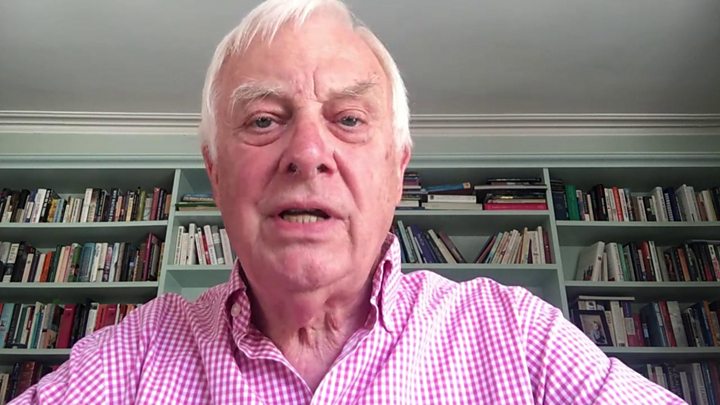
Media caption Former Hong Kong governor Chris Patten: “UK should tell China this is outrageous”

The bill was paused, then withdrawn – but the protests continued until the virus outbreak at the end of the year.

The US has also weighed in, with President Trump saying the US would react strongly if it went through – without giving details.

It is currently considering whether to extend Hong Kong’s preferential trading and investment privileges.

Why is China doing this?

Mr Wang said the security risks had become “increasingly notable” – a reference to last year’s protests.

“Considering Hong Kong’s situation at present, efforts must be made at the state-level to establish and improve the legal system and enforcement mechanisms,” he is quoted as saying in state media.
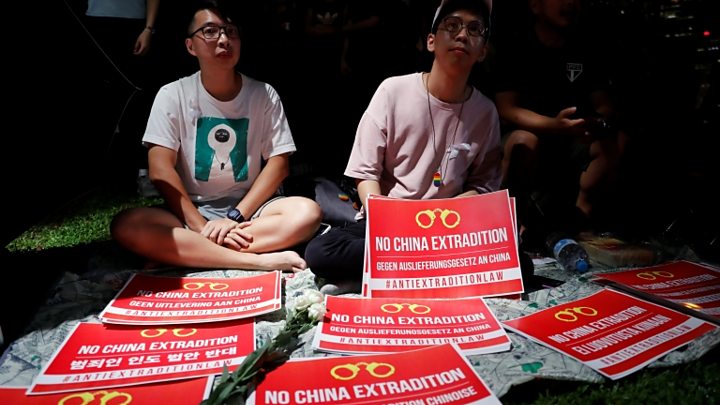
Media caption The BBC’s Helier Cheung on Hong Kong’s 2019 protests

Beijing may also fear September’s elections to Hong Kong’s legislature.

If last year’s success for pro-democracy parties in district elections is repeated, government bills could potentially be blocked.

What is Hong Kong’s legal situation?

Hong Kong was under British control for more than 150 years up to 1997.

The British and Chinese governments signed a treaty – the Sino-British Joint Declaration – that agreed Hong Kong would have “a high degree of autonomy, except in foreign and defence affairs”, for 50 years.

This was enshrined in the Basic Law, which runs out in 2047.

As a result, Hong Kong’s own legal system, borders, and rights – including freedom of assembly and free speech – are protected.

But Beijing has the ability to veto any changes to the political system and has, for example, ruled out direct election of the chief executive.
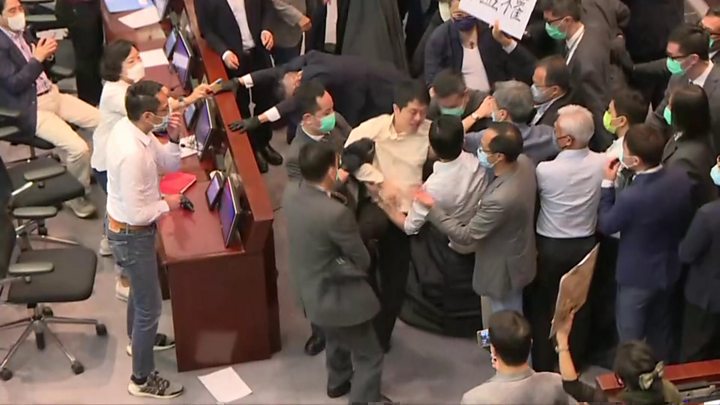
Media caption Uproar on Monday in Hong Kong’s legislature

Source: The BBC

30/04/2020

Last Hong Kong governor Chris Patten asks UK to watch out for Beijing interference in city affairs

  • Patten says to watch out for any future attempts by Beijing to ‘undermine the rule of law and to corrupt the electoral process in the months ahead’
  • The plea comes as the ruling Conservative Party in Britain toughens up China policies
Chris Patten is an outspoken critic of the Chinese government’s handling of Hong Kong affairs. Photo: AFP

Britain’s last colonial governor of Hong Kong, Chris Patten, has asked the British government to watch out for Chinese attempts to interfere with the city’s affairs while the world grapples with the coronavirus pandemic.

He made the plea to Foreign Secretary Dominic Raab as the ruling Conservative Party toughens up China policies, amid what many party members see as Beijing’s deliberate failures to be transparent about the initial Covid-19 outbreaks.

The call also comes amid growing worry among Hong Kong’s pro-democracy activists, as police have rounded up dissidents and Beijing authorities have stepped up the rhetoric of national security concerns.

Patten, an outspoken critic of the Chinese government’s handling of Hong Kong affairs, said: “I hope we can … count on the British government to call out China for its breaches of the [Sino-British] Joint Declaration and to watch carefully for future attempts by Beijing to undermine the rule of law and to corrupt the electoral process in the months ahead.”

Wave of arrests of Hong Kong pro-democracy figures draws global criticism

The declaration provided for Hong Kong’s status quo until 2047.

The Foreign Office has not responded to an inquiry by the Post on Patten’s letter.

Citing their roles in unlawful protests, Hong Kong police rounded up at least 15 opposition camp activists earlier this month, including media tycoon Jimmy Lai Chee-ying and prominent barrister Martin Lee Chu-ming, known as the city’s “father of democracy”.
On Tuesday, a bipartisan group of US lawmakers wrote Secretary of State Mike Pompeo requesting that his department’s upcoming assessment of Hong Kong’s autonomy reflect a recent wave of arrests by the city’s authorities of pro-democracy activists.
Hong Kong police to respond with force to any Labour Day protests
30 Apr 2020

Patten also asked the British government to investigate the origin of the coronavirus.

“I would be grateful for your assurance that the British government will press for an expert mission to Wuhan and will encourage other countries to do the same,” he wrote, underscoring the need to “make sure that we know everything about the nature of the virus in order to fight it effectively. We also need to prevent anything similar happening in the future.”

On Wednesday, Britain’s ambassador to the US Karen Pierce backed calls for an investigation into the origins of the novel coronavirus and the response of the World Health Organisation.

“We need to learn after all these crises, just as we did after Ebola in 2014. We need to learn how we can always do things better,” she said.

The comments came after Britain’s foreign affairs parliamentary committee asked the government whether it plans to use international bodies to hold China to account over the Covid-19 pandemic.

Source: SCMP

09/04/2020

Japan’s economy faces extreme uncertainty as coronavirus spreads: central bank head

TOKYO (Reuters) – Uncertainty over Japan’s economic outlook is “extremely high” as the coronavirus pandemic hits output and consumption, central bank Governor Haruhiko Kuroda said, stressing his readiness to take additional monetary steps to prevent a deep recession.

While aggressive central bank actions across the globe have eased financial market tensions somewhat, corporate funding strains were worsening, Kuroda told a quarterly meeting of the Bank of Japan’s regional branch managers on Thursday.

“The spread of the coronavirus is having a severe impact on Japan’s economy through declines in exports, output, demand from overseas tourists and private consumption,” he said.

Japan recorded 503 new coronavirus infections on Wednesday – its biggest daily increase since the start of the pandemic – as a state of emergency took effect giving governors stronger legal authority to urge people to stay home and businesses to close.

In contrast to stringent lockdowns in some countries, mandating fines and arrests for non-compliance, enforcement will rely more on peer pressure and a deep-rooted Japanese tradition of respect for authority.

The balancing act underscores the difficulty authorities have in trying to contain the outbreak without imposing a mandatory lockdown that could deal a major blow to an economy already struggling to cope with the virus outbreak.

Hideaki Omura, the governor of the central Japan prefecture of Aichi, said he would declare a state of emergency for his prefecture on Friday.

Omura said Aichi, which includes the city of Nagoya and hosts Toyota Motor Corp, was talking with the central government about being included in the national state of emergency as well, but felt he could not wait any longer to restrict movement.

“Looking at things the past week and watching the situation – the rise in patients, the number without any traceable cause – we judged that it was a very dangerous situation and wanted to make preparations,” he told a news conference.

Even with less stringent restrictions compared with other countries, analysts polled by Reuters expect Japan to slip into a deep recession this year as the virus outbreak wreaks havoc on business and daily life.

Shares of Oriental Land Co (4661.T) fell on Thursday after the operator of Tokyo Disneyland said it would keep the amusement park shut until mid-May.

Entertainment facility operator Uchiyama Holdings (6059.T) said it was closing 43 karaoke shops and 11 restaurants until May 6.

“For the time being, we won’t hesitate to take additional monetary easing steps if needed, with a close eye on developments regarding the coronavirus outbreak,” Kuroda said.

Kuroda’s remarks highlight the strong concern policymakers have over the outlook for Japan’s economy and how companies continue to struggle to generate cash, despite government and central bank promises to flood the economy with funds.

At its policy meeting later this month, the BOJ is likely to make a rare projection that the world’s third-largest economy will shrink this year, sources have told Reuters.

The BOJ eased monetary policy in March by pledging to boost purchases of assets ranging from government bonds, commercial paper, corporate bonds and trust funds investing in stocks.

The government also rolled out a nearly $1 trillion stimulus package to soften the economic blow.

Source: Reuters

27/03/2020

U.S. has most coronavirus cases in world, next wave aimed at Louisiana

NEW YORK (Reuters) – The number of U.S. coronavirus infections climbed above 82,000 on Thursday, surpassing the national tallies of China and Italy, as New York, New Orleans and other hot spots faced a surge in hospitalizations and looming shortages of supplies, staff and sick beds.

With medical facilities running low on ventilators and protective masks and hampered by limited diagnostic testing capacity, the U.S. death toll from COVID-19, the respiratory disease caused by the virus, rose beyond 1,200.

“Any scenario that is realistic will overwhelm the capacity of the healthcare system,” New York Governor Andrew Cuomo told a news conference. He described the state’s projected shortfall in ventilators – machines that support the respiration of people have cannot breathe on their own – as “astronomical.”

“It’s not like they have them sitting in the warehouse,” Cuomo added. “There is no stockpile available.”

At least one New York City hospital, New York-Presbyterian/Columbia University Medical Center in Manhattan, has begun a trial of sharing single ventilators between two patients.

While New York was the coronavirus epicenter in the United States this week, the next big wave of infections appeared headed for Louisiana, where demand for ventilators has already doubled. In New Orleans, the state’s biggest city, Mardi Gras celebrations late last month are believed to have fueled the outbreak.

Louisiana Governor John Bel Edwards said New Orleans would be out of ventilators by April 2 and potentially out of bed space by April 7 “if we don’t flatten the infection curve soon.”

“It’s not conjecture, it’s not some flimsy theory,” Edwards told a press conference. “This is what is going to happen.”

About 80% of Louisiana’s intensive care patients are now on breathing machines, up from the normal rate of 30-40%, said Warner Thomas, chief executive of Ochsner Health System, the state’s hospital group.

Scarcities of protective masks, gloves, gowns and eyewear for doctors and nurses – reports abound of healthcare workers recycling old face masks, making their own or even using trash bags to shield themselves – have emerged as a national problem.

“Our nurses across the country do not have the personal protective equipment that is necessary to care for COVID patients, or any of their patients,” Bonnie Castillo, head of the largest U.S. nurses union, National Nurses United, told MSNBC.

In an ominous milestone for the United States as a whole, at least 82,153 people nationwide were infected as of Thursday, according to a Reuters tally from state and local public health agencies. China, where the global pandemic emerged late last year, had the second highest number of cases, 81,285, followed by Italy with 80,539.

At least 1,204 Americans have died from COVID-19, which has proven especially dangerous to the elderly and people with underlying chronic health conditions, Reuters’ tally showed.

MORE BEDS NEEDED

For New York state, Cuomo said a key goal was rapidly to expand the number of available hospital beds from 53,000 to 140,000.

New York hospitals were racing to comply with Cuomo’s directive to increase capacity by at least 50%. At Mount Sinai Hospital’s Upper East Side location, rooms were being constructed within an atrium to open up more space for beds.

At Elmhurst Hospital in New York’s borough of Queens, about a hundred people, many wearing masks with their hoods pulled up, lined up behind barriers outside the emergency room entrance, waiting to enter a tent to be screened for the coronavirus.

The city coroner’s office has posted refrigerated trucks outside Elmhurst and Bellevue Hospital to temporarily store bodies of the deceased.

Deborah White, vice chair of emergency medicine at Jack D. Weiler Hospital in the city’s Bronx borough, said 80% of its emergency room visits were patients with coronavirus-like symptoms.

A ventilator shortfall and surge in hospitalizations has already raised the prospect of rationing healthcare.

Asked about guidelines being drafted on how to allocate ventilators to patients in case of a shortage, New Jersey Governor Phil Murphy told reporters such bioethical discussions “haunted him” but were unavoidable.

Outside New York and New Orleans, other hot spots appeared to be emerging around the country, including Detroit.

Brandon Allen, 48, was buying groceries in Detroit for his 72-year-old mother, who has tested positive and was self-quarantining at home.

“It’s surreal,” Allen said. “People around me I know are dying. I know of a couple people who have died. I know a couple of people who are fighting for their lives. Everyday you hear of another person who has it.”

RECORD UNEMPLOYMENT CLAIMS

Desperate to slow virus transmissions by limiting physical contact among people, state and local governments have issued stay-at-home orders covering about half the U.S. population. A major side effect has been the strangulation of the economy, and a wave of layoffs.

The U.S. Labor Department reported Thursday the number of Americans filing claims for unemployment benefits last week soared to a record of nearly 3.28 million – almost five times the previous weekly peak of 695,000 during the 1982 recession.

Dr. Anthony Fauci, director of the U.S. National Institute of Allergy and Infectious Diseases, said warmer weather may help tamp down the U.S. outbreak as summer approaches, though the virus could re-emerge in the winter.

“We hope we get a respite as we get into April, May and June,” Fauci said on WNYC public radio.

Washington state Governor Jay Inslee said he may extend a stay-at-home order tentatively set to expire April 6, encouraged by what he called a “very modest improvement” in the Seattle area.

Washington experienced the first major U.S. outbreak of COVID-19 and has been among the hardest-hit states. As of Thursday the state reported about 3,200 cases and 147 deaths.

In California’s Coachella Valley, a region rife with retirees who are especially vulnerable, 25 members of the state’s National Guard helped a non-profit distribute food to people stuck in their homes, as most of the regular volunteers are senior citizens.

More than 10,000 troops have been deployed in 50 states to provide humanitarian aid during the pandemic.

Source: Reuters

22/02/2020

China reports fall in new coronavirus cases but concerns grow over rising global spread

BEIJING (Reuters) – China reported a sharp decrease in new deaths and cases of the coronavirus on Saturday but a doubling of infections in South Korea and 10 new cases in Iran added to unease about its rapid spread and global reach.

Mainland China had 397 new confirmed cases of coronavirus infections on Friday, down from 889 a day earlier, but only 31 cases were outside of the virus epicentre of Hubei province, the lowest number since the National Health Commission started compiling nationwide data a month ago.

But infection numbers continued to rise elsewhere, with outbreaks worsening in South Korea, Italy and Lebanon and Iran, prompting a warning from the World Health Organization that the window of opportunity to contain the international spread was closing..

South Korea saw another spike in infections, with 229 new confirmed cases, taking its tally to 433. Officials warned that could rise substantially as more than 1,000 people who attended a church at the centre of the outbreak had shown flu-like symptoms.

Iran, which had no reported cases earlier this week, saw 10 new cases, one of which had died, taking the number to 28 infections and five deaths.

Concerns about the virus weighed on U.S. stocks on Friday, driven by an earlier spike in cases in China and data showing stalling U.S. business activity in February. [MKTS/GLOB]

It has spread to some 26 countries and territories outside mainland China, killing 13 people, according to a Reuters tally.

WHO director-general Tedros Adhanom Ghebreyesus on Twitter expressed concern on Saturday about cases with no clear link to China and called on all countries to invest urgently in preparedness. He made an appeal for $675 million to support the most vulnerable countries.

On Friday, he said now was the time to act decisively.

“We still have a chance to contain it,” he said. “If we don’t, if we squander the opportunity, then there will be a serious problem on our hands.”

An outbreak in northern Italy worsened with its first two deaths, among 17 confirmed cases including its first known instance of local transmission.

Japan confirmed 14 new coronavirus cases on Saturday, among those a teacher who had shown symptoms while working at her school.

Japan is facing growing questions about whether it is doing enough to contain its spread, and concern about whether it could scupper this year’s Tokyo Olympics. Organisers on Saturday postponed the start of training for volunteers as a precaution.

The Bank of Japan’s governor on Saturday shrugged off talk that the widening epidemic is triggering an outflow of funds from Asia.

Online site for coronavirus news – here

GRAPHIC: Tracking the novel coronavirus – here

NEW COMPLICATIONS

The total number of confirmed cases in mainland China rose to 76,288, with the death toll at 2,345 as of the end of Friday. Hubei reported 106 new deaths, of which 90 were in Wuhan.

But new, albeit isolated findings about the coronavirus could complicate efforts to thwart it, including the Hubei government’s announcement on Saturday that an elderly man took 27 days to show symptoms after infection, almost twice the presumed 14-day incubation period.

That follows Chinese scientists reporting that a woman from Wuhan had travelled 400 miles (675 km) and infected five relatives without showing signs of infection, offering new evidence of asymptomatical spreading.

State television on Saturday showed the arrival in Wuhan of the “blue whale”, the first of seven river cruise ships it is bringing in to house medical workers, tens of thousands of which have been sent to Hubei to contain the virus.

Senior Chinese central bank officials sought to ease global investors’ worries about the potential damage to the world’s second-largest economy from the outbreak, saying interest rates would be guided lower and that the country’s financial system and currency were resilient.

Chen Yulu, a deputy governor of the People’s Bank of China, said policymakers had plenty of tools to support the economy, and were fully confident of winning the war against the epidemic.

“We believe that after this epidemic is over, pent-up demand for consumption and investment will be fully released, and China’s economy will rebound swiftly,” Chen told state television.

China has recently cut several key lending rates, including the benchmark lending rate on Thursday, and has urged banks to extend cheap loans to the worst-hit companies which are struggling to resume production and are running out of cash.

The transport ministry said businesses would resume operations on a larger scale later this month and said more roads, waterways and ports were returning to normal.

Online media and Weibo users posted footage and images on Saturday of some malls reopening, including in the cities of Wuxi, Hangzhou and in Gansu province, with shoppers queuing in near-empty streets outside for mandatory temperature checks as trickles of customers in masks perused luxury goods shops and makeup counters.

Some analysts believe China’s economy could contract in the first quarter from the previous three months due to the combined supply and demand shocks caused by the epidemic and strict government containment measures. On an annual basis, some warn growth could fall by as much as half from 6% in the fourth quarter.

However, transport restrictions remain in many areas and while more firms are reopening, the limited data available suggests manufacturing is still at weak levels, with disruptions starting to spillover into global supply chains.

Samsung Electronics (005930.KS) said on Saturday that one coronavirus case had been confirmed at its mobile device factory complex in Gumi, causing a shutdown of its entire facility.

Finance leaders from the Group of 20 major economies were set to discuss risks to the world economy in Saudi Arabia this weekend.

The WHO’s Tedros on Twitter said 13 priority countries in Africa had been identified for help because of their direct links to China or high travel volume. That would include 30,000 personal protective kits on the way to six countries and 60,000 more for 19 states in the weeks ahead.

Source: Reuters

30/08/2019

Is China set to beat Facebook’s Libra by launching its digital currency this autumn?

  • ‘Forbes’ magazine reported that China’s central bank will launch its own sovereign digital currency to coincide with the Singles’ Day online shopping festival
  • The People’s Bank of China is seeking to address financial risks and counter the current dominance of the US dollar
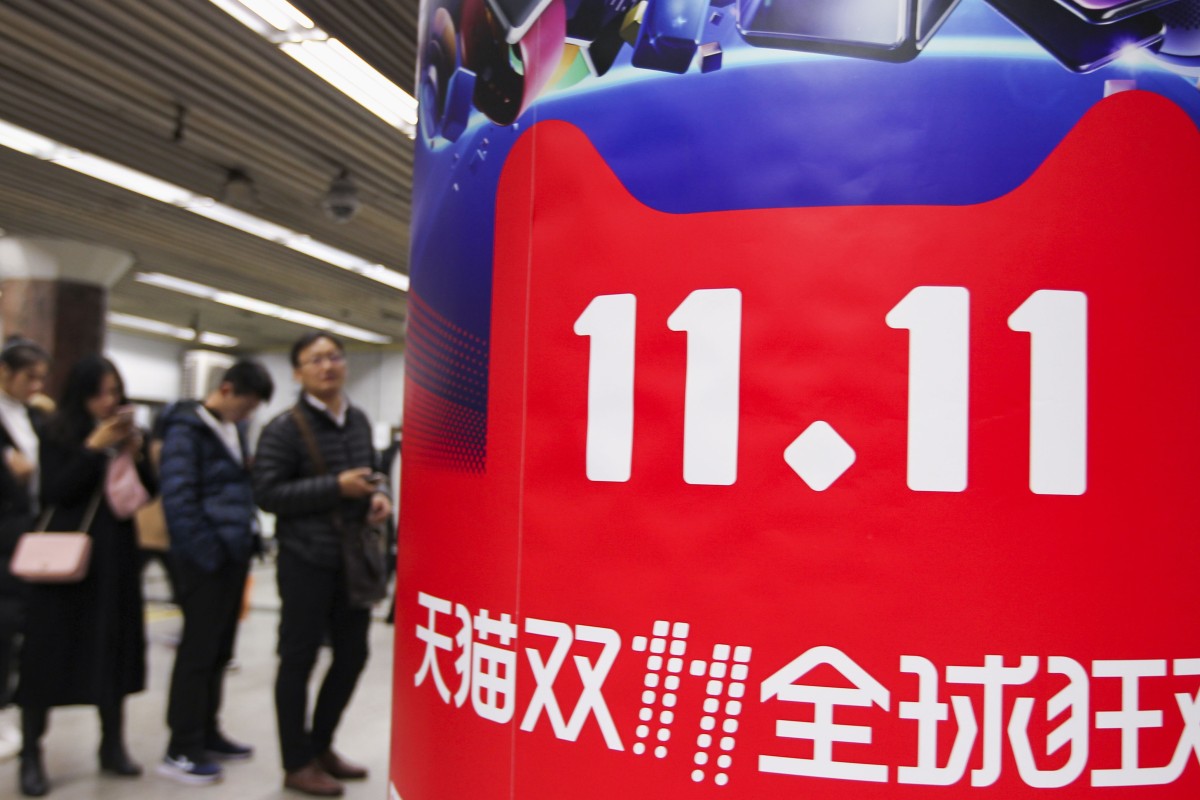
The Singles' Day is a holiday celebrated in China on November 11 and has become the largest online shopping day in the world. Photo: Simon Song
The Singles’ Day is a holiday celebrated in China on November 11 and has become the largest online shopping day in the world. Photo: Simon Song

China’s desire to launch the world’s first government-backed digital currency could see the possible rival to Facebook’s Libra be launched in time for November’s Singles’ Day online shopping festival despite a Chinese media report playing down the timing as “inaccurate speculation”.

Several central bank officials have publicly spoken out over the past several weeks about the need for China to launch its own digital currency since Facebook unveiled its plans for Libra, and the People’s Bank of China (PBOC) appear to be making rapid progress ahead of an expected launch.

Forbes magazine reported this week, citing a source who previously worked for the Chinese government, that China’s central bank could launch the digital currency as soon as November 11 as its bids to address financial risks and to counter the current dominance of the US dollar.

The PBOC did not respond to a faxed request for comment on the Forbes story, although Sina.com said that the report was “inaccurate speculation” citing an unnamed source close to the central bank.

China’s central bank is expected to distribute its digital currency through the big four state-owned banks – the Industrial and Commercial Bank of China, China Construction Bank, the Agricultural Bank of China, and the Bank of China – and mobile payments systems Alipay and WeChat Pay, as well as UnionPay, the state-supported credit card provider, according to the Forbes report. Alibaba is the owner of the South China Morning Post.
Ma Changchun, deputy chief of the Payment and Settlement Division of the PBOC, said at the start of August that a digital currency prototype existed and that the central banks’ Digital Money Research Group had already fully adopted blockchain architecture to ensure its use in retail transactions.

“The People’s Bank digital currency can now be said to be ready,” said Ma on August 11.

The People’s Bank digital currency can now be said to be ready Ma Changchun
Former central bank governor Zhou Xiaochuan said last month that, in addition to central banks, “commercial entities” should be allowed to issue banknotes backed by their own private currency assets, although he did not elaborate on what kind of “commercial entities” might be appropriate to issue a digital currency in China.

China is also ready to make Shenzhen a pilot zone for digital currency as part of plans for the city to become a socialist model city, according to a statement summarising a meeting between the Shenzhen party secretary Wang Weizhong and central bank governor Yi Gang released on Thursday.

The PBOC implemented a blanket crackdown in China on trading of cryptocurrency, including bitcoin, which are not backed by any government, viewing them as risks to China’s financial stability and security. At the same time, in 2014 the central bank created its own academy to study digital currencies and the related blockchain technology.

Neil Woodfine, director of marketing at blockchain start-up Blockstream, said a digital currency created by the PBOC would be “just like cash” and “would be fully controlled by the central bank.”

“If it’s digital instead of physical, they can close accounts and monitor all activities [in the entire financial system]. Commercial bank deposits are difficult for them to monitor, control or pull information out of for verification because the numbers are in each bank’s data centre,” Woodfine said.

Wang Xin, director of the central bank’s research bureau, said last month that

Facebook’s plans 

to create its own digital currency have pushed Beijing to speed up its own digital currency plan as Libra could potentially pose a challenge to Chinese cross-border payments, monetary policy and even financial sovereignty.

Leonhard Weese, the president of the Bitcoin Association of Hong Kong, said that a government-backed digital currency may enhance the PBOC’s control of China’s monetary system, cutting reliance on commercial banks to transmit changes in monetary policy.
“It would be similar to just killing the commercial banks,” Weese said.
Facebook’s Libra,

which would be a non-sovereign digital currency controlled by a Swiss-based company, has come under intense scrutiny by regulators and central banks worldwide. Last month, the Group of Seven industrialised nations, known as the G7, called for urgent regulatory measures and other types of action to address serious concerns over Libra.

Central banks, however, have expressed interest in launching their own digital currencies to counter the US dollar and to gain more control of their own monetary systems.
Mark Carney, governor of the Bank of England, argued last week that the US dollar, the current dominant reserve currency, could be replaced by a global digital alternative to tackle ultra-low interest rates.
Facebook’s Libra, which is expected to be launched next year, will be pegged to a basket of convertible currencies – so it could serve as a stable online currency – while its payments will be endorsed by Visa and Mastercard. Photo: Reuters

A digital currency “could dampen the domineering influence of the US dollar on global trade”, Carney said last week at the US Federal Reserve’s annual conference, adding that a digital currency has the edge to counter shocks emanating from the US through trade and exchange rates.

Daniel Wang, chief executive and co-founder of blockchain start-up Loopring, said that a Chinese government-backed digital currency may provide a new way for the yuan to compete globally.

“If the central bank wants to increase the global competitiveness of the yuan through its digital currency, only an open and standard-based competitor carries any hope,” said Wang.

A digital yuan would “remain a sovereign currency under a centralised sovereign,” continuing to require the trust from users in the Chinese central bank and government institutions behind it, Wang added.

Alfred Schipke, senior resident representative for China at the International Monetary Fund (IMF), said that the bank is “open” to digital currencies, including the one being developed by China’s central bank.

The IMF in principle is looking at these things favourably. It’s a two-way process where we learn from China, which is often at the forefront of development. Alfred Schipke

“We don’t have a specific view on a particular currency, we haven’t looked at the details of the latest proposals from China,” Schipke said on Thursday. “The IMF in principle is looking at these things favourably. It’s a two-way process where we learn from China, which is often at the forefront of development.”
Blockstream’s Woodfine said that Beijing’s move also reflects a growing concerns among central banks that a financial disaster is on the horizon.
The 30-year US Treasury bond yield fell to an all-time low 1.976 per cent on Thursday, while yields around the world also plunged to multi-year or record low, triggering rising fears over a global recession.
Central banks around have also been driving down interest rates, with the PBOC recently unveiling a key interest rate reform that effectively cuts borrowing costs for companies to boost its slowing economy.
“We’ll see a move by governments and central banks to take back control over the financial system and use that power to direct their economies, continuing to pump money into the system to keep it afloat,” Woodfine added.
“A digital currency would be the perfect channel for helicopter money,” he said in reference to the idea that a central bank could stimulate the economy by giving out large quantities of money to the public, as if dumped from the sky. “They can send out free money to consumers.”
Source: SCMP
25/05/2019

Feature: Governors compete for investment at China-U.S. Governors Forum

LEXINGTON, the United States, May 24 (Xinhua) — Chinese and U.S. governors gathered here on Thursday, competing to promote their state or province for investment at the Fifth China-U.S. Governors Forum.

“I want to be a little bit more objective. I’ll tell you not what I think, but what U.S. News (and World Report) just said,” said Cyrus Habib, lieutenant governor of the U.S. state of Washington, grabbing the opportunity when he took the podium to present his state. “In the U.S. News ranked states in the United States, they ranked Washington state No. 1 overall.”

The national media U.S. News and World Report published its yearly Best States Rankings on May 14, putting Washington state on top based on several criteria including health care, education, economy and opportunity.

“It is not a coincidence for Washington to get ranked the No. 1 place to do business and the No. 1 place to live,” he said. “I always tell them the key is international relationships … We are the No. 1 exporter per capita of any state in the country.”

“We are the No. 1 source of U.S. imports into China and so our relationship with China is absolutely key central to the success that we have had now economically in terms of trade,” he added.

Dianne Primavera, lieutenant governor of the U.S. state of Colorado, advertised her state by saying “according to the U.S. News and World Report, Colorado is home to the No. 1 economy in the United States.”

“Our business climate is an active mix of knowledge-based industries and entrepreneurial activity that drives successful startups,” Primavera said. “Colorado welcomes the opportunity to do business with China.”

Matt Bevin, governor of Kentucky and host of the event, was also eager to grasp the opportunity to talk about the benefits of his state.

“We have rivers and roads and railways that transect through this state. You can put goods on the Ohio River and take them straight to any port in China,” he said. “We want you here, we want your investment here.”

U.S. state of Tennessee Governor Bill Lee introduced his state as a neighbor of Kentucky, saying “when Kentucky or Tennessee has investment from companies, from countries like China, then we both benefit. We are a regional economy and what is good for one state and our region is good for another state in our region.”

Local Chinese officials also presented their province or municipality.

Mayor of Chongqing Tang Liangzhi said the southwestern Chinese municipality has an important role in regional development and China’s opening-up layout, and that he hopes to cooperate with U.S. states in many fields like intelligent industry, auto manufacturing, and environmental protection.

Liu Guozhong, governor of China’s northwestern Shaanxi Province, deliberated on the long-standing history and culture, as well as the recent tax-cutting policies of his province, hoping to expand cooperation in technological innovation and environmental protection between the two countries.

Chinese and U.S. companies signed three cooperation agreements at the forum on Thursday. Meanwhile, China’s southeastern province of Jiangxi and the U.S. state of Kentucky signed a memorandum of understanding.

Initiated in 2011, the China-U.S. Governors Forum has become an important platform to promote exchanges and cooperation between the local governments of the two countries.

Source: Xinhua

Law of Unintended Consequences

continuously updated blog about China & India

ChiaHou's Book Reviews

continuously updated blog about China & India

What's wrong with the world; and its economy

continuously updated blog about China & India