Archive for ‘guangdong province’

01/06/2020

Update: Xi extends Int’l Children’s Day greetings

Children from Hejiazhuang primary school paint in Hejiazhuang Village of Wangba Township in Kangxian County, northwest China’s Gansu Province, May 30, 2020. (Xinhua/Chen Bin)

BEIJING, May 31 (Xinhua) — Chinese President Xi Jinping has greeted children of all ethnic groups across the country on International Children’s Day, which falls on June 1.

Xi, also general secretary of the Communist Party of China Central Committee and chairman of the Central Military Commission, called on children to study hard, firm up their ideals and convictions and develop strong bodies and minds to prepare for realizing the Chinese Dream of national rejuvenation.

Xi noted that children nationwide have experienced a special period during the country’s fight against COVID-19 as all Chinese people stand united.

Children paint elephants at the Chimelong Safari Park in Guangzhou, south China’s Guangdong Province, May 27, 2020. Two female Asian elephants gave birth to two babies respectively on April 30 and May 12 in the Chimelong Safari Park in Guangzhou, adding the total number of the Asian elephants here to 27. (Xinhua/Liu Dawei)

Witnessing the great feats of Chinese people working together and rising to challenges, the children have followed the call of the Party and the government to support the anti-epidemic battle with their concrete actions, demonstrating the fine spirit of the country’s children, Xi said.

He stressed that China’s children today are not only undergoing and witnessing the realization of the country’s first centenary goal, they are also a new force for achieving the second centenary goal and building China into a great modern socialist country.

Xi urged Party committees and governments at all levels as well as the society to care for children and create favorable conditions for their growth.

Source: Xinhua

31/03/2020

Masses of tiny shrimp shut down nuclear power plant in southern China twice in one week

  • Big shoals of acetes, which are just a few centimetres long, crippled the water pumping stations and caused a unit to go into automatic safe shutdown
  • The same thing happened the next day with all units powered down, but the safety regulator says they are now in a ‘safe and controllable condition’
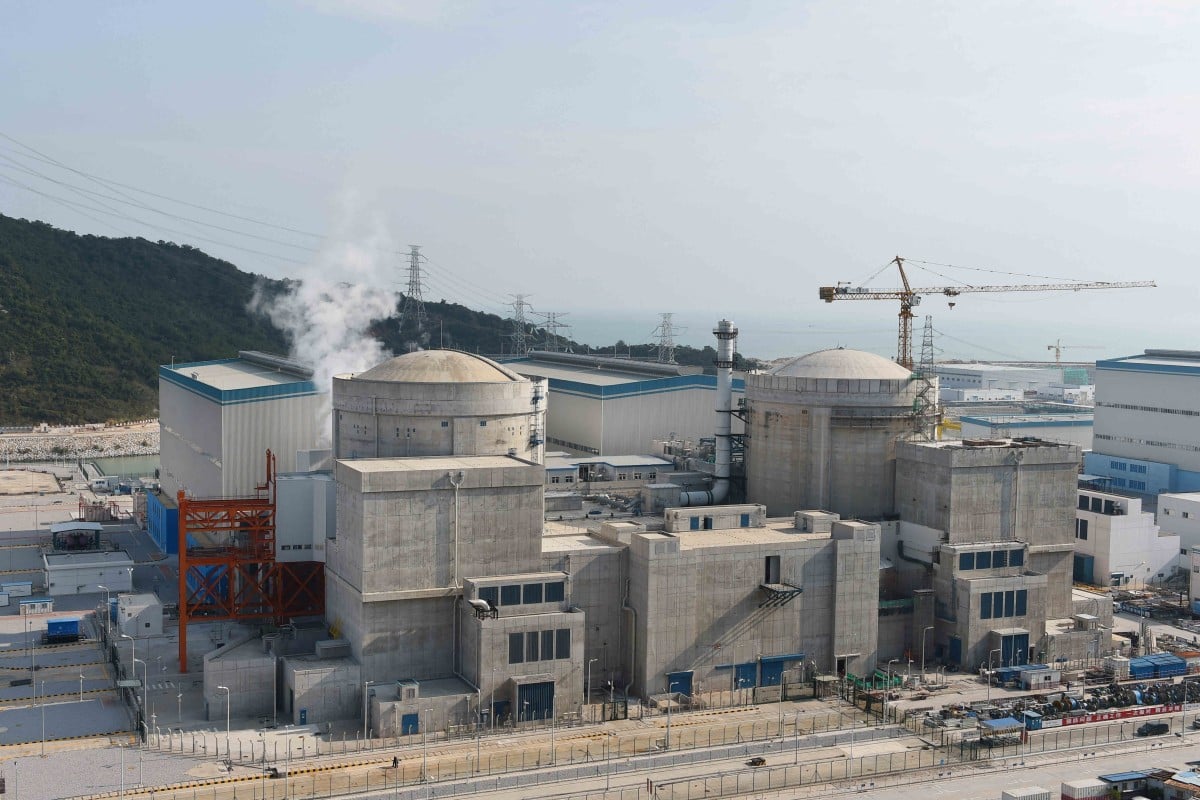
The Yangjiang Nuclear Power Station in Guangdong province is about 235km from Hong Kong. Photo: Handout

The power-generating units of a nuclear plant in southern China were shut down twice last week after its water filters were blocked by masses of small shrimp, the safety regulator said.

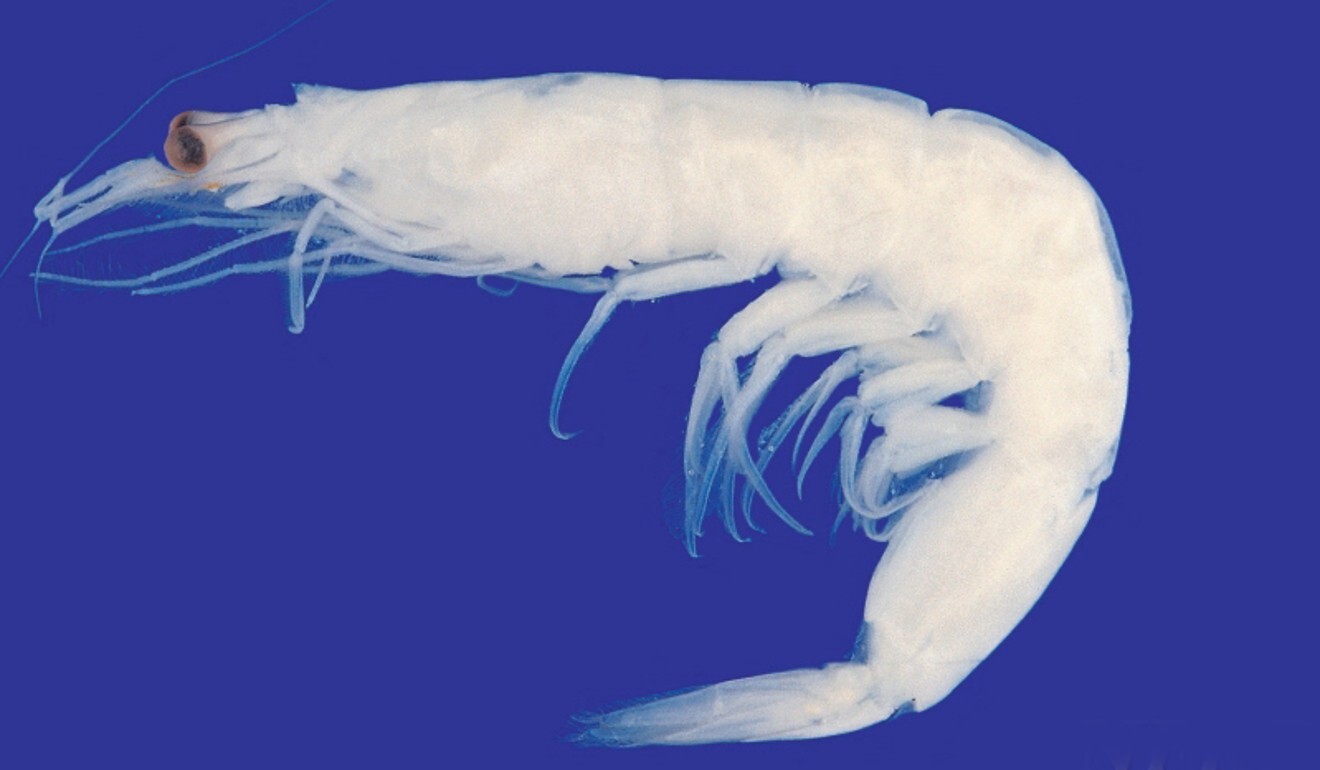
Big shoals of the tiny acetes – krill-like shrimp that are just a few centimetres long – flooded the seawater diversion channel and circulating water pumping stations of the Yangjiang Nuclear Power Station in Guangdong on March 24, the National Nuclear Safety Administration said in a statement.

They crippled the water pumping stations and caused one of the nuclear plant’s six power-generating units to go into automatic safe shutdown, while the other five units ran at 80 per cent of capacity.

The unit that shut down was powered up again the next day after station staff cleared the acetes and cleaned the filters.

But soon after on March 25, the same thing happened, with large shoals of acetes again finding their way into the pumping stations and causing four power-generating units to shut down automatically. The station shut off the other two units for safety reasons.

Big shoals of acetes found their way into the nuclear plant’s pumping stations. Photo: Handout
The incident on March 25 was rated a Level 1 on the International Nuclear and Radiological Event Scale, meaning it was an “anomaly” that had no safety or health consequences. Only two nuclear events have been rated at the top of the scale as Level 7 “major accidents” – the Chernobyl disaster in 1986 and Fukushima in 2011.

China’s nuclear safety regulator said the situation at the Yangjiang plant was under control.

“At present, all six units … are in a safe and controllable condition,” the statement said. “Staff at the scene are taking measures such as fishing out the acetes and cleaning the filters, before reactivating the units and bringing them back to normal operation in accordance with the relevant procedures.”

Nearly a decade after tsunami, clean-up continues at Japan’s Fukushima nuclear plant

Pan Chin, head and chair professor of nuclear engineering at City University of Hong Kong, said the two incidents were “operational events with no radiation leak”.

“The shutdown … is also an indication that the protection system of the power plant is functioning as designed,” he said.

“This incident is not unexpected,” Pan said. “The power plant uses seawater as a coolant for the condenser and occasionally aquatic animals may get close to the intake and cause such incidents.”

The Hong Kong Nuclear Society also noted that similar incidents had happened before.

“Similar events have occurred at nuclear power plants using seawater as a coolant for their power-generating units [including non-nuclear ones] throughout the world, including China,” said Luk Bing-lam, chairman of the society.

New Wufengshan power line across China’s Yangtze River completed
In 2016, a generating unit at the Lingao Nuclear Power Plant in Shenzhen was guided to a safe shutdown by an automatic reactor protection signal after its seawater intake was inundated with tiny marine crustaceans, according to Hong Kong’s Security Bureau. They blocked the filtering screen drum at the intake and tripped two seawater intake pumps.
China tech giants wake up to renewable energy, but fossil fuels still dominate as electricity source
17 Feb 2020

China’s nuclear safety regulator said it had asked all nuclear power station operators to use marine life detection systems in light of incidents such as those at Yangjiang last week.

But Pan from CityU said the acetes could be too small to be detected by a marine life warning system.

“If a system can detect the approach of marine life, large or small, early enough, leaving enough time to take some action to prevent them from approaching further … there will be no such incident,” he said, adding that the systems needed to be improved.

The Yangjiang nuclear plant in Guangdong is about 235km from Hong Kong. It is owned by the China General Nuclear Power Corporation, which operates over 20 nuclear power stations in China. CLP, one of Hong Kong’s two power companies, acquired a 17 per cent stake in the plant in 2017.

Source: SCMP

31/03/2020

Rail repair underway after train derails in central China

CHANGSHA, March 30 (Xinhua) — Railway repair is well underway after a train derailed in the city of Chenzhou in central China’s Hunan Province Monday that killed one and injured 127.

The accident happened in Yongxing County at 11:40 a.m. when the train ran into a landslide, leaving five carriages derailed. The power generation car caught on fire.

The fire has been put out and all of the injured have been sent to hospital, with four in serious condition, local authorities said.

There were 691 people on board the train when the derailment occurred, rescuers said. Except for those injured that were sent to hospital, other passengers took shelter in a nearby primary school until buses were sent to deliver them to a high-speed railway station.

“We volunteered to cook noodles and dress the wounds of several hundred passengers in the school until they were picked up,” said Liu Guijiao, a local villager.

He Zhiwen from China Railway Guangzhou Group told Xinhua that about 380 meters of tracks need repair. The engineering department has prepared 450 meters of tracks and 1,600 railroad ties.

Carriages will be removed after the repairs are completed, but the time for the traffic to resume has not been decided yet.

He said over 1,000 workers have been sent along with seven excavators, six railcars, two large tampers and three relief trains.

“We will try our best to resume traffic as soon as possible,” said an engineer on site.

The train, T179, was running from the city of Jinan, east China’s Shandong Province, to Guangzhou in south China’s Guangdong Province.

The group said 88 trains on the southern section of the Beijing-Guangzhou railway have been affected, including 54 suspensions, 22 returns and 12 detours.

Source: Xinhua

23/03/2020

Coronavirus: China’s largest trade expo postponed as Canton Fair spring session falls foul of pandemic

  • The spring session of China’s Canton Fair has been postponed due to fears about the spread of the coronavirus pandemic, authorities in Guangdong province say
  • Premier Li Keqiang had insisted early this month that the fair’s spring session would go ahead as it was crucial for efforts to ‘stabilise’ the global economy
The spring session of China’s Canton Fair has been postponed due to the coronavirus outbreak. Photo: Xinhua

The spring session of China’s largest trade expo, the Canton Fair, has been suspended over concerns about the spread of the coronavirus, Chinese authorities said on Monday.

The announcement comes amid reports that regular foreign buyers were scrapping plans to attend the event, which was due to open on April 15. The fair has held its spring session in Guangzhou, the capital of Guangdong province, between mid-April and early May since 1957.

The decision was made after considering the current development of the pandemic, especially the high risk of imported infections, Ma Hua, deputy director of Guangdong’s department of commerce, was quoted as saying on Monday by the official Nanfang Daily.

Guangdong will assess the epidemic situation and make suggestions to the relevant departments of the central government, Ma said at a press conference.

No new date for the fair was announced, but veteran traders who regularly attend the event said the Guangdong government is talking with Beijing about a new time, possibly in May.

Premier Li Keqiang had insisted early this month that the fair’s spring session would go ahead despite the virus outbreak, as it was an important part of Beijing’s efforts to

“stabilise” the global economy

.

The containment measures, which come as China braces for a second wave
of imported coronavirus cases, would have applied to tens of thousands of foreign merchants attending the fair.
Coronavirus: Chinese companies cut salaries and staff in industries hit hardest by Covid-19
The Canton Fair occurs twice a year and is China’s oldest and largest exhibition. The spring session last year attracted 195,454 foreign buyers from 213 countries and regions across the world. The top five sources of buyers were from Hong Kong, India, the United States, South Korea and Thailand.

But a growing number of regular attendees have recently cancelled plans to take part in this year’s spring session, Chinese exporters said, as concerns mount about possible infection and extra expenses due to a mandatory two week quarantine after arrival.

“About 80 per cent of our firm’s veteran clients told us last month they won’t come this time,” said Jason Liang, a sales manager at a Guangzhou-based exporter of electronic products, who did not want his company identified. “Plus with this new [quarantine], I think at least 90 per cent or almost all of them would drop the trip.

“The costs – time, security and expense – are totally uncontrollable for international travel currently. We also have no plans to attend any exhibition before the summer.”

About 80 per cent of our firm’s veteran clients told us last month they won’t come this time … The costs – time, security and expense – are totally uncontrollable for international travel currently. Jason Liang

Felly Mwamba, a leader of the Congolese community in Guangzhou who has been in the city since 2003, said China’s quarantine measures made it hard for people to visit Guangzhou.

Xie Jun, a furniture and fabric exporter from Zhejiang, said buyers from developing countries that were part of the Belt and Road Initiative would be hard hit if they were forced to pay for quarantine and treatment.

“In February before the pandemic occurred, to cushion the impact some local governments in China’s exporting trade hubs, such as Yiwu and Jinhua, introduced subsidies to attract foreign merchants,” he said. “But now all the subsidies policies are cancelled from what I know.”

Coronavirus and the ‘war economy’: the US and China bicker as the shop goes down

Chinese exporters, traders, and even local residents in Guangdong, have previously voiced concern about authorities’ decision to press on with the even due to the growing number of imported cases to China.

“We strongly call on the government to cancel the spring session of the Canton Fair,” said Zhu Yinghua, a retired teacher in Guangzhou, said before the announcement.

“It’s too dangerous for us local residents if dozens of thousands of foreigners to flock into Guangzhou.”

Source: SCMP

09/03/2020

Chinese parents reunited with teenage son kidnapped as a baby in ‘Aunt Mei’ case

  • Shen Cong, taken from the family home in Guangzhou 15 years ago, was found in a nearby city last week
  • He was one of nine children abducted by a gang, but police say there is no evidence of a woman alleged to be the go-between
Shen Cong’s parents had been searching for him since he was abducted in 2005. Photo: Handout

A teenage boy was reunited with his parents in the southern Chinese city of Guangzhou on Saturday after being kidnapped from their home as an infant, ending a 15-year search by his family.

The boy was taken in 2005 – one of nine children abducted by a gang in Guangdong province around that time. In recent years the case has drawn attention on Chinese social media, particularly the alleged involvement of a shadowy go-between known as “Aunt Mei”, but Guangzhou police stressed there was no evidence such a person existed.

Police said 16-year-old Shen Cong had been found on Wednesday in Meizhou, a city about 400km (250 miles) away. DNA testing confirmed he was the missing child and police arranged the reunion with his parents, Shen Junliang and his wife, who was identified as Yu in the statement.

Police did not say what had led to the discovery of the boy, but they said his foster parents had been taken in for questioning.

His biological father Shen Junliang on Sunday said they were overjoyed to have their son back home, adding that he was healthy and a tall boy who loved sports.

“Before I met my son I’d been imagining what it would be like to talk to him. I didn’t think he would be this mature – he seems more mature than his peers and he has good manners,” the father wrote on Weibo, China’s Twitter. “We’ve spent the entire time together, from Saturday night until now. We’re getting along and he’s happy too.”

Shen Junliang said they were overjoyed to have their son back home at last. Photo: Handout
The parents are now getting to know their son, having not seen him since he was abducted from their rented flat in Zengcheng district on January 4, 2005.

That day, the child had been at home with his mother while his father was at work. Shen Junliang has alleged that two of their neighbours led two strangers into the flat at about 10.40am, and the two strangers drugged and tied up Yu before kidnapping the one-year-old boy.

His mum revealed she was abandoned as a kid. A film was born

21 Dec 2019

Shen Junliang had been searching for his boy ever since. He gave up his job and has travelled all over Guangdong province looking for him. He had more than 1 million posters printed with photos and a description of his son, offering a reward of 100,000 yuan (US$14,400) for any information on the case.

One of them read: “Shen Cong has birthmarks on the toe of his left foot, his right buttock and his right thigh. Anyone who has any leads … please contact me or Guangzhou police.”

Kidnapped: the Chinese parents desperately searching for missing children

He started posting about the case on Weibo in 2016, sharing every piece of news related to the kidnap and appealing for anyone with information to come forward.

In March that year, there was a development, with police arresting five suspects in the case.

Police said the lead suspect, Zhang Weiping, had confessed to selling Shen Cong to a couple in Heyuan, another city in Guangdong, for 13,000 yuan on January 6, 2005.

Zhang told police that an intermediary nicknamed Aunt Mei had been involved in that deal and the sale of eight other boys in the province from 2003 to 2005.

Zhang Weiping, who was sentenced to death for kidnapping children, alleged an intermediary known as Aunt Mei was involved in the case. Photo: Handout
Zhang and another gang member were sentenced to death for kidnapping children in 2018, two others were jailed for life, and a fifth person was jailed for 10 years.

Two of the other boys who had been abducted were found by police last year.

But Guangzhou police said they had not found any information leading them to the mysterious woman – apparently in her 60s and a Cantonese and Hakka speaker – Zhang alleged was the go-between.

“Police have checked all the details, all the people and places related to Zhang’s confession,” the statement said. “We’ve also received reports from people all over China since 2017 about Aunt Mei, but so far none of these tips have proved to be true.”

Source: SCMP

05/03/2020

Special Report – Before coronavirus, China bungled swine epidemic with secrecy

(Reuters) – When the deadly virus was first discovered in China, authorities told the people in the know to keep quiet or else. Fearing reprisal from Beijing, local officials failed to order tests to confirm outbreaks and didn’t properly warn the public as the pathogen spread death around the country.

All this happened long before China’s coronavirus outbreak, which has claimed more than 3,000 lives worldwide in less than three months. For the past 19 months, secrecy has hobbled the nation’s response to African swine fever, an epidemic that has killed millions of pigs. A Reuters examination has found that swine fever’s swift spread was made possible by China’s systemic under-reporting of outbreaks. And even today, bureaucratic secrecy and perverse policy incentives continue undermining Chinese efforts to defeat one of the worst livestock epidemics in modern history.

Beijing’s secretive early handling of the coronavirus epidemic has troubling similarities to its missteps in containing African swine fever, but with the far higher stakes of a human infection. After the coronavirus was found in December 2019 in Wuhan, the capital of Hubei province, local and national officials were slow to sound the alarm and take actions disease experts say are needed to contain deadly outbreaks. Beijing continues to gag negative news and online postings about the disease, along with criticism of the government’s response.

With swine fever, Beijing set a tone of furtiveness across government and industry by denying or downplaying the severity of a disease that the meat industry estimates has shrunk China’s 440-million-hog herd by more than half. The epidemic has taken a quarter of the world’s hogs off the market, hurt livelihoods, caused meat prices to spike globally and pushed food inflation to an eight-year high. (For a graphic on soaring China pork prices, click here)

Cover-ups across China – coupled with underfinancing of relief for devastated pig farmers and weak enforcement of restrictions on pork transport and slaughter – have enabled the spread of the livestock virus to the point where it now threatens pig farmers worldwide, according to veterinarians, industry analysts and hog producers. Since the China outbreak, African swine fever has broken out in 10 countries in Asia.

The vacuum of credible information has made it impossible for farmers, industry and government to tell how and why the disease spread so quickly, making preventive measures difficult, said Wayne Johnson, a Beijing-based veterinarian who runs Enable Ag-Tech Consulting.

“To get it under control, you have to know where it is,” Johnson said.

China’s Ministry of Agriculture and Rural Affairs said in a statement to Reuters that it has repeatedly communicated to all regions the importance of timely and accurate reporting of African swine fever outbreaks and had zero tolerance for hiding and delaying the reporting of cases.

Interviews with farmers, industry analysts and major suppliers to China’s pork sector indicate otherwise. More than a dozen Chinese farmers told Reuters they reported disease outbreaks to local authorities that never made it into Beijing’s official statistics. Those infections are going unreported to central authorities in part because counties lack the cash to follow a separate requirement from Beijing to compensate farmers for pigs killed to control the disease.

Local officials have also avoided reporting outbreaks out of fear of the political consequences. And they have routinely refused to test pigs for the virus when mass deaths are reported, according to interviews with farmers and executives at corporate producers.

A farmer surnamed Zhao, who raises a herd in Henan province, said local officials told him as much when they resisted recording the outbreak he reported on his farm, which wiped out his herd.

“‘We haven’t had a single case of African swine fever. If I report it, we have a case,’” Zhao recalled an official telling him. The local officials could not be reached for comment and a fax seeking comment went unanswered.

When the coronavirus hit, Chinese authorities reacted with a push to reassure the public that all was well. The first reported death from the virus, also known as SARS-CoV-2, came on Jan. 9 – a 61-year-old man in Wuhan. In the following days, Chinese authorities said that the virus was under control and not widely transmissible.

The assurances came despite a lack of reliable data and testing capacity in Wuhan. Testing kits for the disease were not distributed to some of Wuhan’s hospitals until about Jan. 20, an official at the Hubei Provincial Centre for Disease Control and Prevention (Hubei CDC) told Reuters. Before then, samples had to be sent to a laboratory in Beijing for testing, a process that took three to five days to get results, according to Wuhan health authorities.

During that gap, city hospitals reduced the number of people under medical observation from 739 to 82, according to data from Wuhan health authorities compiled by Reuters, and no new cases were reported inside China.

China’s top leadership has dramatically ramped up the public-health response since its early missteps. Beijing built new hospitals in days to treat the sick and launched an unprecedented blockade of the disease epicentre on Jan. 23, first quarantining Wuhan’s 11 million residents at home, then suspending transport in all major cities of Hubei province, home to about 60 million people.

Still, the initial attempts to tightly control information left many people unaware of the risks and unable to take precautions that might have prevented infection – and the suppressing of news and commentary continues today. Wuhan authorities reprimanded eight people they accused of spreading “illegal and false” information about the disease. One of them, 34-year-old doctor Li Wenliang, later died from coronavirus, triggering an angry backlash on social media.

Some critical posts were allowed during a brief and unusual period of online openness in late January. But Beijing’s censors – the Cyberspace Administration of China (CAC) – have since cracked down on posts about Li and other information that authorities deem negative, according to CAC censorship orders sent to online news outlets and seen by Reuters. One CAC notice ordered online outlets to guard against “harmful information.” Another ordered them not to “push any negative story.”

The CAC did not respond to a request for comment sent by fax.

UNREPORTED OUTBREAKS

Beijing had years to prepare for African swine fever. Veterinarians have frequently warned Chinese authorities of the risks since the disease started spreading through the Caucasus region in 2007.

Pigs infected by the virus initially suffer high fever, loss of appetite and diarrhoea. Then their skin turns red as internal haemorrhaging starts and their organs swell, leading to death in as little as a week.

With no vaccine or cure available for the disease, experts recommend that infected pigs and others housed in the same barn are culled, with the carcasses either burned or buried to prevent further infection. Farms, equipment and vehicles that could be contaminated need to be thoroughly cleaned and disinfected.

The first case in China was discovered on Aug. 1, 2018, on a farm near Shenyang, in the northeastern province of Liaoning. Just two weeks later, the virus was found more than 1,000 kilometres to the south in pigs bought by the country’s top pork processor, WH Group(0288.HK), from another northeastern province, Heilongjiang. It took Beijing another two weeks to block pig exports from the whole region, and that and other transport restrictions were poorly enforced, said Johnson and other industry experts. WH Group declined to comment.

One factor behind the epidemic: Chinese consumers prefer fresh pork – straight from the slaughterhouse, rather than chilled. This means hundreds of thousands of live pigs are moved long distances every day to supply processors in major cities. That mass movement spread the disease relentlessly.

Over the first four months of the outbreak, Beijing reported swine-fever cases almost daily as the virus spread from the northeast down through central China, west into Sichuan, and to the huge province of Guangdong by year-end. Veterinarians believe the virus spread quickly because it can survive for weeks on dirty farm equipment or livestock trucks.

And yet gaps in counting and tracking the pig disease have been routine across China. Reuters found a striking absence of reported outbreaks in some of the nation’s most productive pork regions.

For instance, almost none of the reported outbreaks have come from the major hog-raising provinces of Hebei, Shandong and Henan. The three contiguous northern provinces were the source of some 20% of the 700 million pigs China slaughtered in 2017. Many came from backyard farms, which make up a large part of China’s industry and have proven fertile breeding grounds for the disease. Yet each of the three provinces has reported just a single case of African swine fever, despite widespread anecdotal reports of outbreaks there that industry sources believe killed millions of pigs.

Neither Shandong nor Henan authorities responded to requests for comment. Hebei’s department of agriculture said it had “strictly reported and verified the epidemic” and that the disease situation was currently “stable.”

Six Henan farmers told Reuters they reported outbreaks during late 2018 and the first half of 2019. In some cases, local authorities helped deal with dead pigs, they said, but never tested for the virus.

That’s what happened when Wang Shuxi, a farmer in Henan’s Gushi County, lost more than 400 pigs in March 2019. Wang said he had no doubt that his pigs had African swine fever, even though authorities never tested them – and he couldn’t test them himself, because Beijing did not permit the commercial sale of disease test kits at the time.

His pigs showed telltale symptoms of the disease.

“The whole body went red,” he said. He injected the animals with an anti-fever medication to no avail. “At the start, they didn’t eat, and even after injections, it kept returning,” he said. “If you can’t cure it, you know it’s swine fever.”

Provincial and county governments had strong incentives to avoid verifying and reporting outbreaks because of Beijing’s rules on compensating farmers, said Huang Yanzhong, specialist in health governance with the Council on Foreign Relations in New York.

Under an African swine fever contingency plan drawn up in 2015, Beijing ordered the culling of all pigs on farms where the disease is found and on every farm within a three-kilometre radius. The central government raised compensation from 800 yuan ($115) to 1,200 yuan for every pig culled in 2018. Beijing typically promised to provide between 40% and 80% of the money, depending on the province. Localities would fund the rest.

In April 2019, the national agriculture ministry said the central government had allocated 630 million yuan to cull 1.01 million pigs to contain the disease. But that money either wasn’t sufficient or regularly did not get paid out, farmers told Reuters. None of about a dozen farmers who told Reuters they tried to report outbreaks said they had received the promised 1,200 yuan for each pig.

Many got nothing. Wang, the Gushi County farmer, said that almost a year after his pigs died, he has received no recompense. Gushi County officials could not be reached for comment.

Many farmers, eager to salvage value from their herds, have resorted to sending their pigs to slaughter at the first sign of illness – thereby thrusting the virus into the human food supply. The swine fever virus does not threaten people. But its presence in meat – where it can survive for weeks – creates a cycle of infection because many backyard farmers feed pigs with restaurant scraps that include pork.

Garbage feeding caused 23 outbreaks in 2018, Huang Baoxu, deputy director of the China Animal Health and Epidemiology Center, told reporters at a briefing in November that year. His remarks were a rare instance where the central government revealed findings about the spread of the hog virus. The centre declined to comment for this story.

Farmers visiting slaughterhouses dealing in sick pigs also likely picked up the virus on their trucks or equipment, spreading it back to their farms, Johnson said.

In the southern province of Guangxi, the disease raged through the spring of 2019 and early summer, several farmers told Reuters last year. Bobai County was hit hard.

A Bobai farmer surnamed Huang said she lost almost 500 pigs during April and May. She said she tried to report the diseased pigs to the local government but was ignored. The official she spoke to by phone never came to her farm. He told Huang that her pigs could not be saved – but that they didn’t have African swine fever. His advice, she said: “hurry and sell the pigs while they could be sold.”

Huang said she sold more than 30 pigs that she believed had the virus. They looked healthy when she sold them, she said. Others sold obviously sick pigs at very low prices. “Traders took all the pigs, including the sick ones – as long as they could walk to the trucks,” she said.

Huang buried her dead pigs daily for weeks on a relative’s land. Others simply dumped their dead pigs on the roadside or in the mountains, she said. The government provided no help.

Eventually, in late May, Bobai County reported one pig dead from the disease, official statistics show.

Authorities in Guangxi did not respond to a request for comment, and officials in Bobai county’s agriculture bureau could not be reached.

Beijing’s agriculture ministry said in a statement that it had issued an August 2019 order requiring punishments in situations where localities failed to report outbreaks. The ministry said it meted out unspecified discipline to more than 600 local personnel for what it called failures to manage the disease that were uncovered in its investigations of problem areas.

The practice of processing infected hogs has persisted despite new rules from Beijing in July that required slaughterhouses to test all batches of pigs for the virus. The agriculture ministry said in January that 5% of the more than 2,000 samples taken from slaughterhouses in November tested positive for the disease.

An Australian study in September found 48% of meat products confiscated from Asian travellers arriving at its ports and airports contained the virus.

“It showed there’s an awful lot of unrevealed infection not being reported to the authorities,” said Trevor Drew, director of the Australian Animal Health Laboratory.

One such information gap is at the top of the industry – China’s large corporate pig producers. They have also been hit hard by the disease, despite taking more extensive measures than backyard farms to disinfect trucks and require workers to change clothes and shower before and after shifts.

None of China’s top publicly traded producers have publicly announced any swine fever outbreak, but executives of major hog producers acknowledged in interviews with Reuters that their herds were hit by the disease.

Thai conglomerate C.P. Pokphand(0043.HK), one of China’s leading pig producers, has had swine-fever outbreaks on farms in Liaoning, Shandong, Henan and Jiangsu provinces, Bai Shanlin, chief executive of China operations, told Reuters in a rare admission by a listed firm. Executives at three other listed companies, also among China’s top pig producers, acknowledged outbreaks at several farms but declined to be identified.

None of the outbreaks that these large companies have confirmed to Reuters were reported by Beijing, according to a Reuters review of the agriculture ministry’s data on outbreaks.

By August 2019, a year after the first case was found in China, pork prices had passed a record set back in 2016. And they were still climbing rapidly. With a crucial national celebration approaching in October – the 70th anniversary of the founding of the People’s Republic – China’s top leaders took note. Pork is a staple of Chinese cuisine, and rising meat production has been among the many signature achievements in the Communist Party’s decades-long drive to bring prosperity to China.

In a video conference that month with officials from all 34 provinces and regions, Vice Premier Hu Chunhua issued a warning: Sufficient pork was vital to people’s lives and the country’s stability. He called for the urgent recovery of the herd as a key “political task.”

A raft of new production policies and incentives emerged from Beijing. And as the provinces rallied to replenish the nation’s herd, reports of African swine fever grew even more rare. Disease outbreaks reported by the agriculture ministry have tailed off since August. In January, Agriculture Minister Han Changfu said the situation has stabilized.

The government’s statistics are rife with contradictions, however. The ministry has reported 163 outbreaks of African swine fever since August 2018 and said 1.19 million pigs have been culled, a fraction of 1% of China’s total herd. Separate ministry data tracking the herd monthly show that, by September 2019, the herd had shrunk by 41% from the prior year. (For a graphic on the decline in China’s pig herd, click tmsnrt.rs/38lkOcx )

These official estimates of the decline are far too low, three major industry suppliers told Reuters.

“It’s at least 60%,” said Johan de Schepper, managing director of Dutch feed ingredients firm Agrifirm International. His assessment, based on sales to about 100 large pig producers, echoed those of others in the industry.

The virus is still killing pigs nationwide and the herd may still be shrinking, say farmers and industry suppliers. “Half of the herd was gone before this winter, and I think half of the rest will be gone by the end of the season,” said Johnson, the veterinarian, citing conversations with clients from across China.

The problem: Some areas were hit with a second wave of the disease.

Henan province is among them, farmers told Reuters. Last year, about 60% of Henan’s herd was wiped out, mainly in the densely farmed areas in the south and west of the province, analysts at Guotai Junan Securities wrote in an internal memo seen by Reuters. Recently, the memo noted, the virus has moved through east Henan, taking out another 20%.

The vicious disease ruined Zhao, the farmer in central China’s Henan province. The virus struck in October, causing high fever, internal bleeding, vomiting and diarrhoea in his pigs. Just two survived. The other 196 died in a week.

When Zhao tried to report the outbreak to the county veterinary authority, he said, officials strongly encouraged him to keep quiet. A local official reminded him of the national mandate to cull all pigs within three kilometres of an infected farm. That could spell disaster for his neighbours if Zhao spoke up.

“If it’s found to be African swine fever, people nearby will have to stop raising pigs,” Zhao recalled a local official telling him. Zhao decided against filing a report to protect his neighbours, he told Reuters on a recent visit to his farm.

Further up the political hierarchy, the deputy governor of Henan province was quoted by the provincial agriculture bureau as saying in December that Henan had been free of the disease for 14 months, after a single reported case in September 2018. The provincial government did not respond to requests for comment.

The disinformation game continues. Zhao says that when county officials came by his farm in January, they recorded that he still had 180 pigs. In fact, he said, he had just the two hogs that survived the October outbreak.

“The country is being kept in the dark,” he said.

Source: Reuters

23/02/2020

WHO experts travel to Wuhan for COVID-19 investigation

BEIJING, Feb. 22 (Xinhua) — Some members of the China-World Health Organization (WHO) joint expert team traveled to Wuhan Saturday to investigate the COVID-19 outbreak, the National Health Commission said.

The experts will have discussions with Wuhan’s health authorities and visit medical and health institutions, the commission said.

The joint expert team began its work in China on Feb. 16 and has finished investigation in Beijing, Guangdong Province and Sichuan Province.

Source: Xinhua

29/12/2019

Discover China: Green shoots of prosperity as asparagus takes root in rural China

YINCHUAN, Dec. 28 (Xinhua) — In the remote Xiamaguan Township of northwest China’s Ningxia Hui Autonomous Region, swathes of green asparagus sway in the endless loess field.

Farmer Dong Yi started growing asparagus in 2017 when local officials encouraged villagers to cultivate the green plant to get out of poverty.

“We had never seen asparagus before, and everybody doubted if the plant could survive the harsh environment here,” said Dong, 56. “But I decided to try it anyway, because I was struggling to make money.”

Xiamaguan Township is located deep in the mountains, and the dry weather there leaves it in dire need of water. The township is among Ningxia’s poorest, where many people are still struggling to make ends meet.

Despite years of prosperity in the coastal regions, pockets of residents still lag behind in China’s underdeveloped rural areas, which poses a challenge for the country’s battle to wipe out absolute poverty by 2020.

In 2012, China had 98.99 million rural people living under the national poverty line of 2,300 yuan (329 U.S. dollars) in annual income. By the end of 2018, the number had dropped by 82.4 million, with 16.6 million still left in poverty. Ningxia is home to one of the largest poor populations in China.

However, the asparagus has brought fortunes to Xiamaguan Township, with more than 100 families having been lifted out of poverty since the industry took root there, according to the latest government figures. Currently, more than 130 hectares of asparagus thrive in the fields.

In the past, asparagus was something unheard of among impoverished farmers such as Dong Yi in Xiamaguan. Dong’s family has about three hectares of land. For generations, the family depended on grain plantation to make a living, though they barely made enough money to live a decent life.

A few years ago, a series of irrigation projects pumped water from the Yellow River into the dry, sandy lands in Ningxia. The Yellow River is China’s second-longest river. With more water, local residents decided to grow more crops, said local Party official Dong Zhanping.

“The farmers tried a variety of plants at first, including traditional Chinese herbs, and corn, but the yields were less than satisfactory,” the official said.

In 2017, township officials decided to introduce asparagus to the area after multiple field surveys. They invited a company that had success growing asparagus in a nearby county.

“We persuaded farmers to lease their land to us and we managed the land collectively,” Dong Zhanping said, adding that they gave 3,000 yuan to the farmers for each hectare of land they leased. Experts then cultivated asparagus seedlings in greenhouses, before planting them in the fields, depending on dripping irrigation technology.

“Different from the bamboo in southern China, asparagus can adapt to a very dry environment, which is why the land in Xiamaguan is perfect for its cultivation,” said company manager He Jiang. “Besides, the air here is fresh, and the soil is very clean, so the asparagus grown here is very good quality.”

In 2017, Dong Yi, the local farmer, went to learn about asparagus cultivation with the company’s technical staff in east China’s Shandong Province. He learned about weeding and fertilizing there, and returned home to train other villagers. By commanding new techniques and with hard work, farmers like Dong saw the potential of the industry after reaping a good harvest.

“This year we will have another bumper harvest,” he said. “Currently, more than 200 villagers are toiling in the fields.”

The success of Xiamaguan Township has permeated to other villages, according to local officials. In the past, many farmers left home for big cities for decent-paying jobs, but now they stay in their hometown and attend to the asparagus.

Dong Yi said the asparagus is in high demand, with orders from buyers in the provinces of Shandong and Guangdong. Many of the buyers purchased the crop online.

“When the harvest season comes in January, we will rake in more than 150,000 yuan per hectare,” he said.

The asparagus industry has also brought environmental benefits, including less sandy areas and more moist air, in addition to the economic boost.

“We hope to bring more farmers into the industry,” said Party official Dong Zhanping. “The plant has truly changed lives here.”

Source: Xinhua

30/11/2019

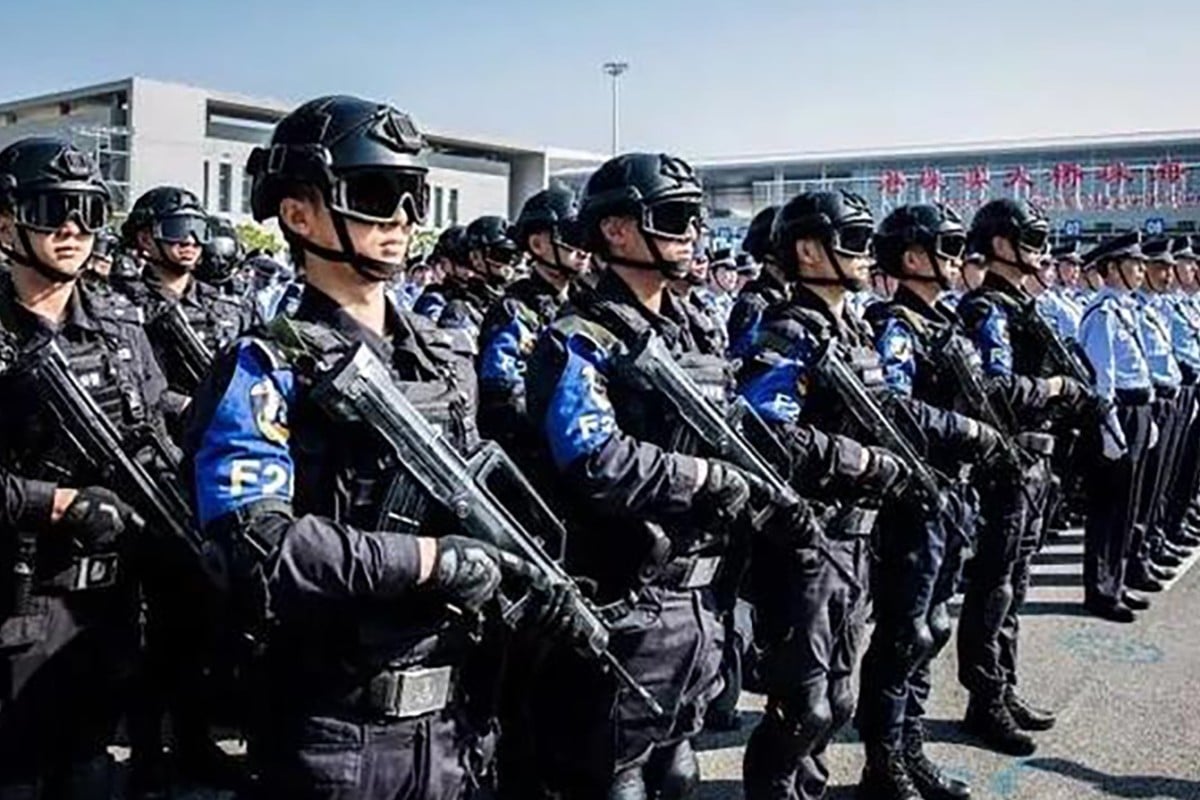
Chinese police prepare for Macau handover anniversary with anti-terror drill near Hong Kong

  • Zhuhai police, at the end of the world’s longest sea bridge, use body armour and tear gas in preparation for Macau’s 20th anniversary celebration
  • Hong Kong is just an hour’s drive away from Macau using the bridge
More than 1,000 police officers took part in the anti-terror drill in Zhuhai. Photo: Toutiao
Armed police in the southern Chinese city of Zhuhai held a massive anti-terror drill at its end of the Hong Kong-Zhuhai-Macau Bridge on Friday morning as part of its preparations for the 20th anniversary of the handover of Macau, when President Xi Jinping is expected to visit the city.
More than 1,000 police officers and 80 vehicles were involved in the exercise, amid 
ongoing political turmoil in Hong Kong

, according to local news portal Southcn.com.

Photos circulated online showed officers in body armour, helmets and shields firing tear gas as they confronted a group of people carrying sticks and wearing black shirts and yellow helmets – attire associated with the protesters in Hong Kong, 60km (37 miles) away from Macau.
The drill was held three weeks before the 20th anniversary of Macau’s return to Chinese administration under the “one country, two systems” policy on December 20.
Police trucks and riot officers during Friday’s exercise at the Zhuhai end of the Hong Kong-Zhuhai-Macau Bridge. Photo: Toutiao

Security is expected to be tightened when Xi visits the city, in response to the violent clashes in Hong Kong over the past six months, which Beijing has repeatedly blamed on radical protesters.

The former Portuguese colony is connected to Hong Kong and its neighbouring city of Zhuhai, Guangdong province, by the world’s longest sea crossing bridge. It takes about an hour to drive from Hong Kong to Macau via the bridge.

Guo Yonghang, Zhuhai party chief, urged the local police to stay loyal to the party. “[Police] should be loyal and fulfil duty and mission to create a peaceful and stable political and social environment for the construction of the Guangdong-Hong Kong-Macau Greater Bay Area and the celebration of the 20th anniversary of Macau’s reunification to the motherland,” he said.

Macau was returned to China two years after Hong Kong and celebrations of its success under one country, two systems could be overshadowed by its neighbour’s anti-government protests which stemmed from opposition to proposed extradition legislation and have escalated into violence on the streets and in university campuses.

In August, two months after more than 2 million people in Hong Kong took to the streets to protest the now-suspended extradition bill, police in Shenzhen held at least three drills featuring anti-riot exercises involving tear gas, armoured vehicles and water cannon.

Source: SCMP

23/10/2019

Have scientists discovered why China is so rich in rare earth elements the world’s smartphones need?

  • Chinese geologists think they have formula that could help to increase control of market in the elements hi-tech industries depend upon
  • Simple combination of clay mined for porcelain production, granite bedrock and acid rain could point to lucrative sources of rare earths
China has 80 per cent of the reserves of rare earth elements the world needs to keep talking on its smartphones, and geologists in Guangzhou think they know why. Photo: EPA
Geologists in southern China say they have isolated a series of critical factors that could make it easier to find rare earth elements used in hi-tech consumer goods such as smartphones.
China has more than 80 per cent of the world’s reserves of heavy rare earths such as terbium, dysprosium and holmium concentrated in a few provinces to the south of the country.
The reason for the concentration is one of the biggest puzzles in geology, but researchers at the Guangzhou Institute of Geochemistry in Guangdong province say the answer may be found in a combination of clay deposits, acid rain and granite that is distinctive to southern China.

Professor He Hongping and his colleagues came to the conclusion by testing the interaction between rare earths and different types of clay. Through their research they found that kaolinite – or china clay – was the best at absorbing rare earths from water.

The clay, named after Gaoling village near Jingdezhen, a centuries-old ceramic production centre in east China’s Jiangxi province, is a raw material for porcelain production.

While kaolinite is found in many countries, those places do not have rare earth deposits – probably because of the lack of acid rain, He said.

“You need the right environment.”

He said that rocks that contained tiny amounts of rare earth elements weathered faster in an acid environment, but the acidity could not be too high or the rare earth might run off before it could be captured by the clay.

Why Beijing cut tax rate on rare earths amid trade war

Rainwater with the right natural acidity often occurred in areas around 20 degrees latitude, such as southern China, he said.

The last step was to locate the source rock. Granite formed in volcanic eruptions between 100 million and 200 million years ago is considered to be the main source of rare earths.

He said that part of the Pacific tectonic plate containing rare elements might have been forced under the Eurasian Plate and was pushed to the surface as magma that formed rocks.

Other countries could learn from the Chinese experience, said He, whose team submitted their findings to the research journal Chemical Geology.

Recent discoveries in Vietnam, Australia and North Carolina in the United States conformed to the Guangzhou team’s theory, but there was still more research to do, he said.

“Rare earth deposits are quite unlike minerals such as copper. Sometimes they occur in this mountain but not in another nearby with almost the same geological features. Sometimes they occur in one half of the mountain but not in the other.”

With China and the US engaged in a trade war, and Beijing cutting taxes on mining companies looking for these elements, the pressure was on to unlock the secrets of China’s abundant rare earth deposits, he said.

Does China’s dominance in rare earths hold leverage in trade war?

Dr Huang Fan, associate researcher with the China Geological Survey, said the Guangzhou discovery would help geologists to find more rare earths.

Most rare earth mines were located along the borders between provinces such as Guangdong and Jiangxi, but recently there were discoveries on a plateau in Yunnan province, where few geologists believed rare earths could be found, he said.

“There are many more rare earth deposits out there waiting for us.”

Source: SCMP

Law of Unintended Consequences

continuously updated blog about China & India

ChiaHou's Book Reviews

continuously updated blog about China & India

What's wrong with the world; and its economy

continuously updated blog about China & India