Chindia Alert: You’ll be Living in their World Very Soon
aims to alert you to the threats and opportunities that China and India present. China and India require serious attention; case of ‘hidden dragon and crouching tiger’.
Without this attention, governments, businesses and, indeed, individuals may find themselves at a great disadvantage sooner rather than later.
The POSTs (front webpages) are mainly 'cuttings' from reliable sources, updated continuously.
The PAGEs (see Tabs, above) attempt to make the information more meaningful by putting some structure to the information we have researched and assembled since 2006.
Children from Hejiazhuang primary school paint in Hejiazhuang Village of Wangba Township in Kangxian County, northwest China’s Gansu Province, May 30, 2020. (Xinhua/Chen Bin)
BEIJING, May 31 (Xinhua) — Chinese President Xi Jinping has greeted children of all ethnic groups across the country on International Children’s Day, which falls on June 1.
Xi, also general secretary of the Communist Party of China Central Committee and chairman of the Central Military Commission, called on children to study hard, firm up their ideals and convictions and develop strong bodies and minds to prepare for realizing the Chinese Dream of national rejuvenation.
Xi noted that children nationwide have experienced a special period during the country’s fight against COVID-19 as all Chinese people stand united.
Children paint elephants at the Chimelong Safari Park in Guangzhou, south China’s Guangdong Province, May 27, 2020. Two female Asian elephants gave birth to two babies respectively on April 30 and May 12 in the Chimelong Safari Park in Guangzhou, adding the total number of the Asian elephants here to 27. (Xinhua/Liu Dawei)
Witnessing the great feats of Chinese people working together and rising to challenges, the children have followed the call of the Party and the government to support the anti-epidemic battle with their concrete actions, demonstrating the fine spirit of the country’s children, Xi said.
He stressed that China’s children today are not only undergoing and witnessing the realization of the country’s first centenary goal, they are also a new force for achieving the second centenary goal and building China into a great modern socialist country.
Xi urged Party committees and governments at all levels as well as the society to care for children and create favorable conditions for their growth.
The tech investment push is part of a fiscal package waiting to be signed off by the National People’s Congress, which convenes this week
This initiative will reduce China’s dependence on foreign technology, echoing objectives set forth previously in the ‘Made in China 2025’ programme
A conductor rehearses the military band on the sidelines of the National People’s Congress in Beijing’s Great Hall of the People in March of last year. China’s legislature is expected to sign off on a massive tech-led stimulus plan. Photo: AP
Beijing is accelerating its bid for global leadership in key technologies, planning to pump more than a trillion dollars into the economy through the roll-out of everything from next-generation wireless networks to artificial intelligence (AI).
In the master plan backed by President Xi Jinping himself, China will invest an estimated 10 trillion yuan (US$1.4 trillion) over six years to 2025, calling on urban governments and private hi-tech giants like Huawei Technologies to help lay 5G wireless networks, install cameras and sensors, and develop AI software that will underpin
and Huawei to SenseTime Group at the expense of US companies.
As tech nationalism mounts, the investment drive will reduce China’s dependence on foreign technology, echoing objectives set forth previously in the “Made in China 2025”
programme. Such initiatives have already drawn fierce criticism from the Trump administration, resulting in moves to block the rise of Chinese tech companies such as Huawei.
How will China’s annual legislative meetings affect the stock investor? Five key industries to watch
18 May 2020
“Nothing like this has happened before, this is China’s gambit to win the global tech race,” said Digital China Holdings chief operating officer Maria Kwok, as she sat in a Hong Kong office surrounded by facial recognition cameras and sensors. “Starting this year, we are really beginning to see the money flow through.”
The tech investment push is part of a fiscal package waiting to be signed off by China’s legislature, the National People’s Congress, which convenes this week. The government is expected to announce infrastructure funding of as much as US$563 billion this year, against the backdrop of the country’s worst economic performance since the Mao era.
The nation’s biggest purveyors of cloud computing and data analysis Alibaba, the parent company of the South China Morning Post, and Tencent Holding will be linchpins of the upcoming endeavour. China has already entrusted Huawei, the world’s largest telecommunications equipment supplier, to help galvanise 5G. Tech leaders including Pony Ma Huateng and Jack Ma are espousing the programme.
Maria Kwok’s company is a government-backed information technology systems integration provider, among many that are jumping at the chance. In the southern city of Guangzhou, Digital China is bringing half a million units of project housing online, including a complex three quarters the size of Central Park in New York City. To find a home, a user just has to log on to an app, scan their face and verify their identity. Leases can be signed digitally via smartphone and the renting authority is automatically flagged if a tenant’s payment is late.
China is no stranger to far-reaching plans with massive price tags that appear to achieve little. There is no guarantee this programme will deliver the economic rejuvenation its proponents promise. Unlike previous efforts to resuscitate the economy with “dumb” bridges and highways, this newly laid digital infrastructure will help national champions develop cutting-edge technologies.
“China’s new stimulus plan will likely lead to a consolidation of industrial internet
providers, and could lead to the emergence of some larger companies able to compete with global leaders, such as GE and Siemens,” said Nannan Kou, head of research at BloombergNEF, in a report. “One bet is on industrial internet-of-things (IoT) platforms, as China aims to cultivate three world leading companies in this area by 2025.”
China is not alone in pumping money into the technology sector as a way to get out of the post-coronavirus economic slump. Earlier this month, South Korea said AI and wireless communications would be at the core of it its “New Deal” to create jobs and boost growth.
Nothing like this has happened before, this is China’s gambit to win the global tech raceMaria Kwok, COO at Digital China Holdings
The 10 trillion yuan that China is estimated to spend from now until 2025 encompasses areas typically considered leading edge, such as AI and IoT, as well as items such as ultra-high voltage lines and high-speed rail, according to the government-backed China Centre for Information Industry Development. More than 20 of mainland China’s 31 provinces and regions have announced projects totaling over 1 trillion yuan with active participation from private capital, a state-backed newspaper reported on Wednesday.
Separate estimates by Morgan Stanley put new infrastructure at around US$180 billion each year for the next 11 years – or US$1.98 trillion in total. Those calculations also include power and rail lines. That annual figure would be almost double the past three-year average, the investment bank said in a March report that listed key stock beneficiaries including companies such as China Tower Corp, Alibaba, GDS Holdings, Quanta Computer and Advantech Co.
Beijing’s half-formed vision is already stirring a plethora of stocks, a big reason why five of China’s 10 best-performing stocks this year are tech plays like networking gear maker Dawning Information Industry and Apple supplier GoerTek. The bare outlines of the master plan were enough to drive pundits toward everything from satellite operators to broadband providers.
China’s telecoms carriers push to complete ‘political task’ of 5G network roll-out amid coronavirus crisis
6 Mar 2020
It is unlikely that US companies will benefit much from the tech-led stimulus and in some cases they stand to lose existing business. Earlier this year, when the country’s largest telecoms carrier China Mobile awarded contracts worth 37 billion yuan for 5G base stations, the lion’s share went to Huawei and other Chinese companies. Sweden’s Ericsson got only a little over 10 per cent of the business in the first four months. In one of its projects, Digital China will help the northeastern city of Changchun swap out American cloud computing staples IBM, Oracle and EMC with home-grown technology.
It is in data centres that a considerable chunk of the new infrastructure development will take place. Over 20 provinces have launched policies to support enterprises using cloud computing services, according to a March research note from UBS Group.
Tony Yu, chief executive of Chinese server maker H3C, said that his company was seeing a significant increase in demand for data centre services from some of the country’s top internet companies. “Rapid growth in up-and-coming sectors will bring a new force to China’s economy after the pandemic passes,” he told Bloomberg News.
From there, more investment should flow. Bain Capital-backed data centre operator ChinData Group estimated that for every one dollar spent on data centres another US$5 to US$10 in investment in related sectors would take place, including in networking, power grid and advanced equipment manufacturing. “A whole host of supply chain companies will benefit,” the company said in a statement.
There is concern about whether this long-term strategy provides much in the way of stimulus now, and where the money will come from. “It’s impossible to prop up China’s economy with new infrastructure alone,” said Zhu Tian, professor of economics at China Europe International Business School in Shanghai. “If you are worried about the government’s added debt levels and their debt servicing abilities right now, of course you wouldn’t do it. But it’s a necessary thing to do at a time of crisis.”
Digital China is confident that follow-up projects from its housing initiative in Guangzhou could generate 30 million yuan in revenue for the company. It is also hoping to replicate those efforts with local governments in the northeastern province of Jilin, where it has 3.3 billion yuan worth of projects approved. These include building a so-called city brain that will for the first time connect databases including traffic, schools and civil matters such as marriage registry. “The concept of smart cities has been touted for years but now we are finally seeing the investment,” said Kwok.
– The last nine poverty-stricken county-level regions in east China’s Anhui Province have been removed from the country’s list of impoverished counties.
– This marks that all county-level regions in the Yangtze River Delta, consisting of Shanghai and the provinces of Jiangsu, Zhejiang and Anhui, have been officially lifted out of poverty for the first time in history.
HEFEI, April 29 (Xinhua) — Sitting in front of his smartphone, Zhang Chuanfeng touts dried sweet potatoes to viewers on China’s popular video-sharing app Douyin, also known as TikTok.
“These are made from sweet potatoes I grew myself. They are sweet and have an excellent texture,” said Zhang while livestreaming in Tangjiahui Township of Jinzhai County in east China’s Anhui Province. Tucked away in the boundless Dabie Mountains, the township used to have the biggest poor population in the county.
Aerial photo taken on April 16, 2020 shows residential buildings in Dawan Village of Jinzhai County, east China’s Anhui Province. (Xinhua/Liu Junxi)
Jinzhai County is among the last nine county-level regions in Anhui that have been removed from the country’s list of impoverished counties, according to an announcement issued by the provincial government Wednesday. They are also the last group of county-level regions that bid farewell to poverty in the Yangtze River Delta.
E-COMMERCE
Zhang might seem like a typical e-commerce businessman reaping success in China’s booming livestreaming industry. But his road to success has been a lot bumpier: he suffers from dwarfism.
A little more than 1.4 meters tall, Zhang has a babyface, making him “look like a junior school student,” he said. But the man, 38, is the father of a nine-year-old boy.
For Zhang, life was tough before 2014. “Nobody wanted me because of my ‘disabilities’ when I went out to look for jobs,” he said. “I was turned down again and again.”
Zhang was put on the government’s poverty list in 2014 as China implemented targeted poverty-relief measures. With the help of local officials, he got a bank loan of 10,000 yuan (about 1,400 U.S. dollars) and bought 22 lambs. He tended the animals whole-heartedly and seized every opportunity to learn how to raise them more professionally.
Zhang Chuanfeng feeds his lambs in Zhufan Village of Jinzhai County, east China’s Anhui Province, April 26, 2017. (Xinhua/Zhang Duan)
Within a year, the number of his lambs expanded to hundreds. In 2016, Zhang’s earnings exceeded 100,000 yuan, more than enough for him to cast off poverty.
Riding on this success, Zhang began to seek new opportunities. He rented a shop and started selling products online to embrace an e-commerce strategy the local government introduced in 2017.
More than 100 online shops, including Zhang’s, in the county have helped more than 7,000 poverty-stricken households sell about 73 million yuan worth of local specialties since 2018. Zhang alone earned 500,000 yuan from a sales revenue of 5 million yuan last year.
A villager arranges local specialties for sale at Dawan Village of Jinzhai County, east China’s Anhui Province, April 17, 2020. (Xinhua/Liu Junxi)
WICKERWORK SUCCESS
About 100 km north of Jinzhai lies Funan, a place that used to be vulnerable to constant floods.
Zhang Chaoling, who lives by the Huaihe River in Funan County, had to flee her hometown at a young age due to floods, but has flourished on a willow plantation along the river later.
“The land is largely covered by silt following continual flooding in the past. It is an ideal place to plant willows and make wickerwork,” Zhang said.
Zhang left her hometown for Guangzhou in 1993 and found a job in a garment factory. A few years later, she founded a trading company with her husband in Guangzhou, selling wickerwork products from her hometown to other countries.
Zhang returned to her hometown and set up a wickerwork production base in 2011. Funan is famous for its delicate wickerwork. Skilled craftsmen traditionally use local willow as a raw material to weave products such as baskets, furniture and home decorations.
A villager arranges wickerwork products in Funan County, east China’s Anhui Province, April 15, 2020. (Photo by Zhou Mu/Xinhua)
“The flood is well controlled now. I remember the last huge flood came in 2007,” Zhang said.
Taking advantage of the fertile land along the Huaihe River, she plants over 130 hectares of willow trees and employs hundreds of locals mostly in their 50s and 60s.
“I can process 100 to 150 kg of willow twigs per day, from which I make around 80 yuan,” said Geng Shifen, who peels willow twigs with a clamp next to the plantation.
A total of 130,000 people are engaged in the wickerwork industry in Funan, creating an output of nearly 9 billion yuan in 2019, and helping 15,000 locals shake off poverty, local statistics showed.
POVERTY REDUCTION FEAT
The Anhui provincial government Wednesday announced that its last nine county-level regions including Jinzhai and Funan are removed from the country’s list of impoverished counties.
This marks that all 31 impoverished county-level regions in Anhui have shaken off poverty, echoing China’s efforts to eradicate absolute poverty by the end of 2020.
With the announcement, all county-level regions in the Yangtze River Delta have been officially lifted out of poverty for the first time in history.
A bus runs on a rural road in Jinzhai County, east China’s Anhui Province, April 17, 2020. (Xinhua/Liu Junxi)
Covering a 358,000-square-km expanse, the Yangtze River Delta, consisting of Shanghai and the provinces of Jiangsu, Zhejiang and Anhui, is one of the most populated and economically dynamic areas in China, contributing one-fourth of the country’s GDP.
Anhui had a population of 63.65 million as of 2019, official data showed. The poor population in the province had decreased from 4.84 million in 2014 to 87,000 in 2019, and the poverty headcount ratio had been reduced from 9.1 percent to 0.16 percent during the period, according to the provincial poverty relief office.
A county can be removed from the list if its impoverished population drops to less than 2 percent, according to a national mechanism established in April 2016 to eliminate poverty in affected regions. The ratio can be loosened to 3 percent in the western region.
By the end of 2019, 5.51 million people in China were still living in poverty.
“We will continue our work to prevent people from returning to poverty, and help the remaining poor population shake off poverty by all means,” said Jiang Hong, director of the Anhui provincial poverty relief office.
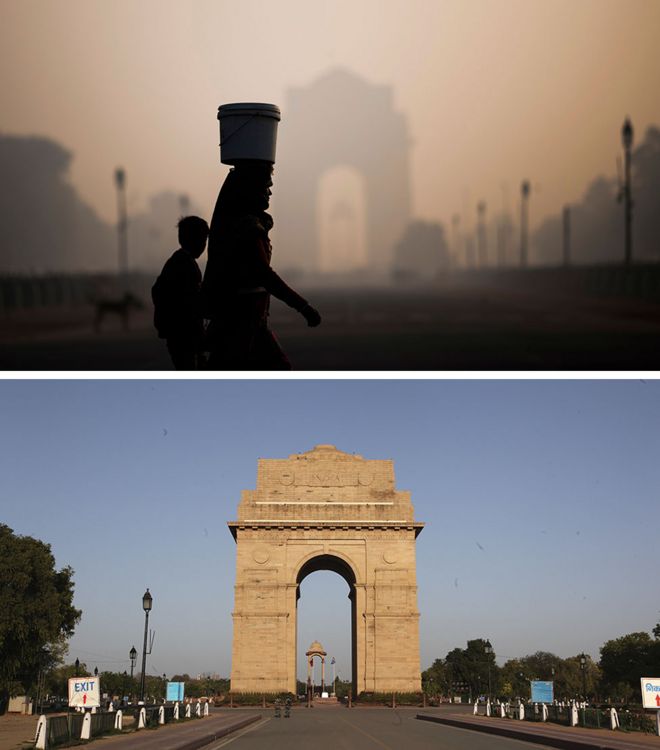
Image copyright GETTY IMAGESImage caption Delhi’sair quality has improved remarkably during the shutdown
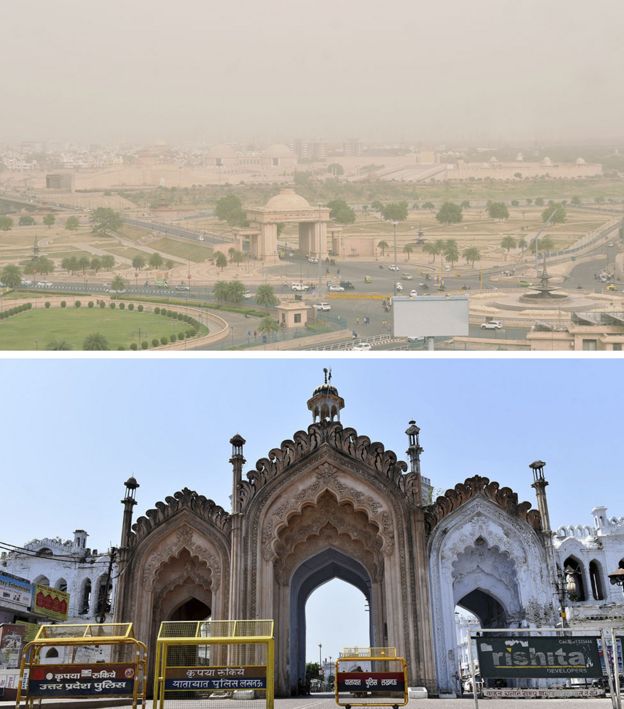
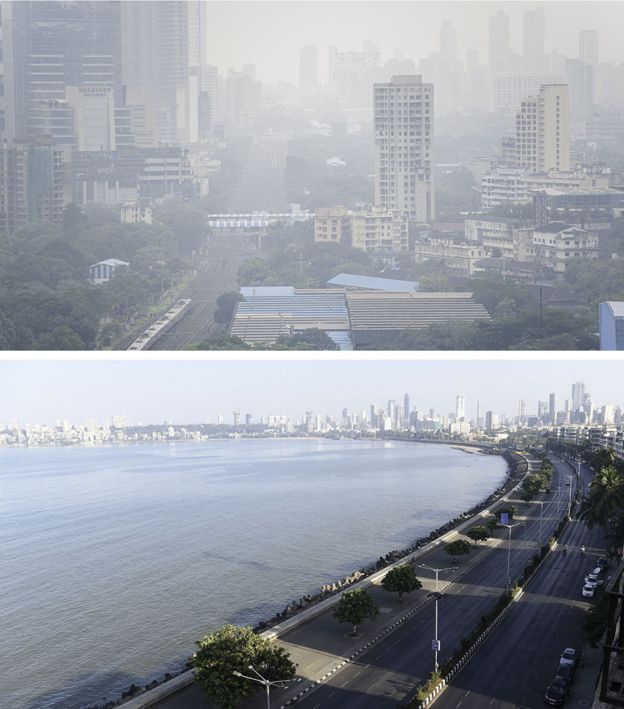
When India shut down last month and suspended all transport to contain the spread of coronavirus, the skies over its polluted cities quickly turned an azure blue, and the air, unusually fresh.
As air pollution plummeted to levels unseen in living memory, people shared pictures of spotless skies and even Himalayan peaks from cities where the view had been obscured by fog for decades.
On one social messaging group, a resident of the capital, Delhi, which regularly records some of the foulest air in the world, celebrated the city’s “alpine weather“. Politician and author Shashi Tharoor wrote that the “blissful sight of blue skies and the joy of breathing clean air provides just the contrast to illustrate what we are doing to ourselves the rest of the time”.
Media caption India coronavirus lockdown cleans up Ganges river
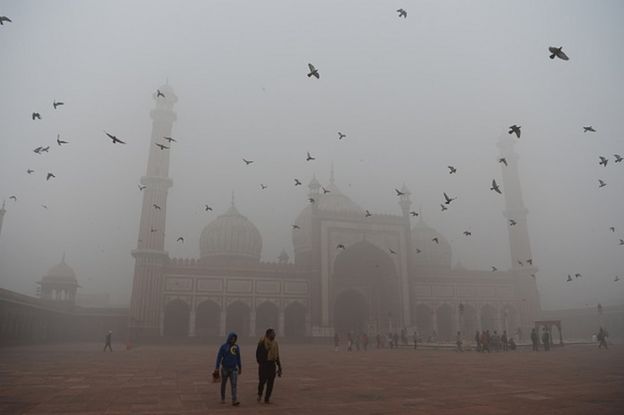
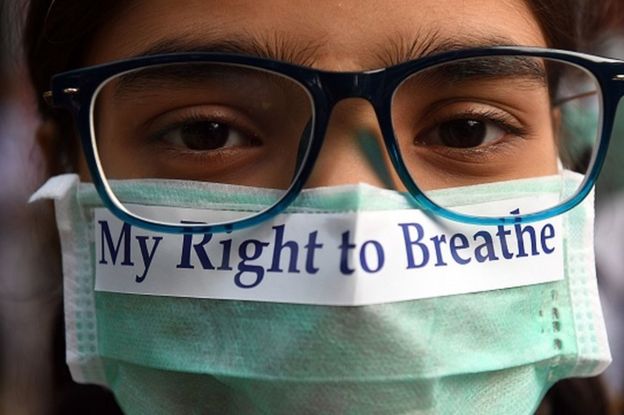
Less than six months ago, Delhi was gasping for breath. Authorities said air quality had reached “unbearable levels”. Schools were shut, flights were diverted, and people were asked to wear masks, avoid polluted areas and keep doors and windows closed.
Delhi and 13 other Indian cities feature on a list of the world’s 20 most polluted. It is estimated that more than a million Indians die every year because of air pollution-related diseases. Industrial smoke, vehicular emissions, burning of trash and crop residue, and construction and road dust are the major contributors.
As urban Indians gazed at the skies and breathed clean air inside their homes, researchers hunkered down to track data on how the grinding lockdown – now extended to 3 May – was impacting air pollution across the country.
Image copyright GETTY IMAGESImage caption Lucknow is another city on the top 20 world’s most polluted list
“This was an unprecedented opportunity for us to take a close look at how air pollution levels have responded to an extraordinary development,” Sarath Guttikunda, who heads Urban Emissions, an independent research group that provides air quality forecasts, told me.
Dr Guttikunda and his team of researchers looked at the data spewed out by the 100-odd air quality monitoring stations all over India. They decided to concentrate on the capital Delhi and its suburbs – a massive sprawl called the National Capital region, where more than 20 million people live. Last winter, air pollution here had reached more than 20 times the World Health Organization’s safe limit.
Image copyright HINDUSTAN TIMESImage caption The financial capital Mumbai also seems very different
The deadliest particle in Delhi’s foul air is the tiny but deadly PM 2.5, which increases the likelihood of respiratory and cardiovascular diseases. They primarily come from combustion – fires, automobiles and power plants.
Urban Emissions found the levels of PM 2.5 in Delhi during the lockdown plummeted to 20 micrograms per cubic metre with a 20-day average of 35.
To put this into context, between 2017 and 2019, the monthly average of PM 2.5 in the capital was up to four times higher. (The national standard is set at 40, and the WHO has an annual average guideline of just 10 micrograms per cubic metre.)
“If 35 is the average lowest available PM2.5 with limited local emissions, it means that at least 70% of the pollution is locally generated,” Mr Guttikunda told me.
Media caption India coronavirus lockdown cleans up Ganges river
His study also found a marked dip in PM 10, caused mainly by road and construction dust, and nitrogen dioxide, which comes mainly from vehicular emissions, and nearly 90% of vehicles are off the road.
“The current crisis has shown us that clear skies and breathable air can be achieved very fast if concrete action is taken to reduce burning of fossil fuels,” says Sunil Dahiya, of the Centre for Research on Energy and Clean Air, which has also been tracking air pollution levels during the lockdown.
But will this prompt change? After all, urban Indians’ and the media’s panic and outrage during the deadly winter pollution every year soon gets lost in the fog of summer heat and concerns over monsoon rains and droughts.
“We don’t yet have a democratic demand for clean air,” Arunabha Ghosh, Chief Executive Officer of the Council on Energy, Environment and Water, a leading climate think tank, told me. Orders to clean up the air have almost always come from the courts, responding to pleas by NGOs.
Image copyright GETTY IMAGESImage caption Pollution in Delhi peaks during winter
However, Dr Ghosh still hopes that “the experience of blue skies and fresh air could be a trigger to create a democratic demand for clean air in India”.
Crises often trigger life changing reforms. A fatal four-day “pea-souper” that engulfed London in 1952 and killed thousands provoked the passing of the Clean Air Act to reduce the use of smoky fuels.
China tried to clean up its air several times before hosting marquee international events – like the Beijing Olympics in 2008, the World Expo in Shanghai and the Guangzhou Asian Games in 2010 – before sliding back to grey, smoky skies.
But many believe the 2014 Apec meeting in Beijing, when China hosted 21 heads of Asia-Pacific economies, was a turning point. The rare blue skies over Beijing spawned the phrase ‘Apec blue‘. In a rush to clean its air, China introduced a set of far-reaching measures. Over the next four years, this resulted in a 32% drop in average pollution across major Chinese cities.
So could a lockdown to prevent the spread of a pandemic, which has imperilled the health and livelihoods of millions, trigger similar policy changes to clean up India’s air?
Image copyright GETTY IMAGESImage caption The movement for clean air has been sporadic and mainly pushed by NGOs
Could it move to a shift in reducing traffic on the road by asking people to work from home in shifts now that millions have experienced clean air for the first time in years? (Facing energy shortages after the loss of the Fukushima nuclear power plant, Japan unleashed a Cool Biz campaign to cut down air conditioning in workplaces and reduce carbon emissions by asking office workers to shed their suits.)
Or can India use some of the money from an inevitable stimulus to help kick-start the economy go towards helping green industries? Renewables, experts say, creates more jobs than coal: India has already created nearly 100,000 jobs in solar and wind energy firms.
Can the country use the windfall revenues accruing from the steep decline in oil prices – most of India’s oil is imported – to provide rebates to polluting factories to set up much-needed emission control equipment?
“We have to learn lessons to deploy the economic recovery from the pandemic. We need growth, jobs and sustainable development,” says Dr Ghosh. Cleaning up the air could be the key. For too long, India – and Indians – have ignored their right to breathe easy.
What’s more, if China can reduce air pollution by 32% in four-and-a-half years, why can’t India pledge to reduce pollution by 80% in 80 cities by 2027, which is our 80th anniversary of Independence? asks Dr Ghosh.
Faced with a backlash from the West over its handling of the early stages of the pandemic, Beijing has been quietly gaining ground in Asia
Teams of experts and donations of medical supplies have been largely welcomed by China’s neighbours
Despite facing some criticism from the West, China’s Asian neighbours have welcomed its medical expertise and vital supplies. Photo: Xinhua
While China’s campaign to mend its international image in the wake of its handling of the coronavirus health crisis has been met with scepticism and even a backlash from the US and its Western allies, Beijing has been quietly gaining ground in Asia.
Teams of experts have been sent to Cambodia, the Philippines, Myanmar, Pakistan and soon to Malaysia, to share their knowledge from the pandemic’s ground zero in central China.
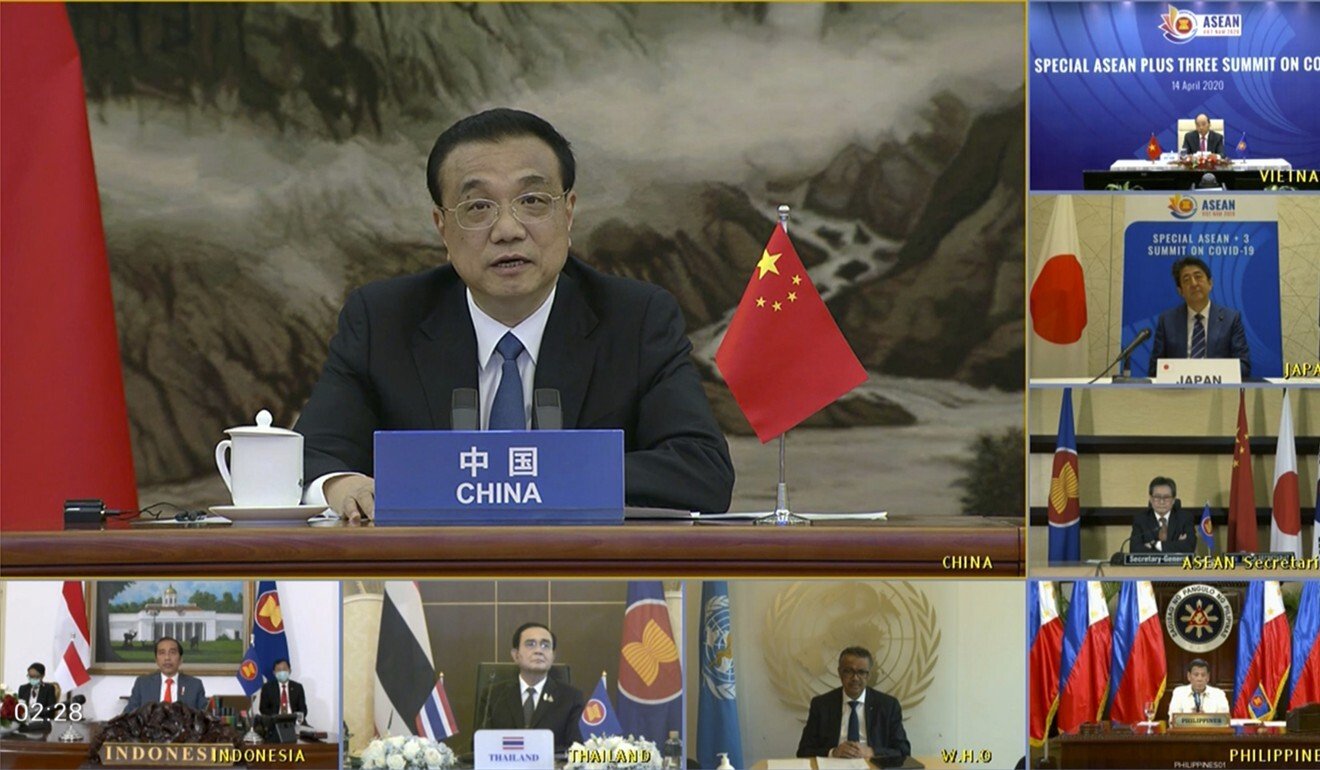
China has also held a series of online “special meetings” with its Asian neighbours, most recently on Tuesday when Premier Li Keqiang discussed his country’s experiences in combating the disease and rebooting a stalled economy with the leaders of the Association of Southeast Asian Nations (Asean), Japan and South Korea.
Chinese Prime Minister Li Keqiang speaks to Asean Plus Three leaders during a virtual summit on Tuesday. Photo: AP
Many Western politicians have publicly questioned Beijing’s role and its subsequent handling of the crisis but Asian leaders – including Philippine President Rodrigo Duterte and Japanese Prime Minister Shinzo Abe – have been reluctant to blame the Chinese government, while also facing criticism at home for not closing their borders with China soon enough to prevent the spread of the virus.
An official from one Asian country said attention had shifted from the early stages of the outbreak – when disgruntled voices among the public were at their loudest – as people watched the virus continue its deadly spread through their homes and across the world.
“Now everybody just wants to get past the quarantine,” he said. “China has been very helpful to us. It’s also closer to us so it’s easier to get shipments from them. The [medical] supplies keep coming, which is what we need right now.”
The official said also that while the teams of experts sent by Beijing were mainly there to observe and offer advice, the gesture was still appreciated.
Another Asian official said the tardy response by Western governments in handling the outbreak had given China an advantage, despite its initial lack of transparency over the outbreak.
“The West is not doing a better job on this,” he said, adding that his government had taken cues from Beijing on the use of propaganda in shaping public opinion and boosting patriotic sentiment in a time of crisis.
“Because it happened in China first, it has given us time to observe what works in China and adopt [these measures] for our country,” the official said.
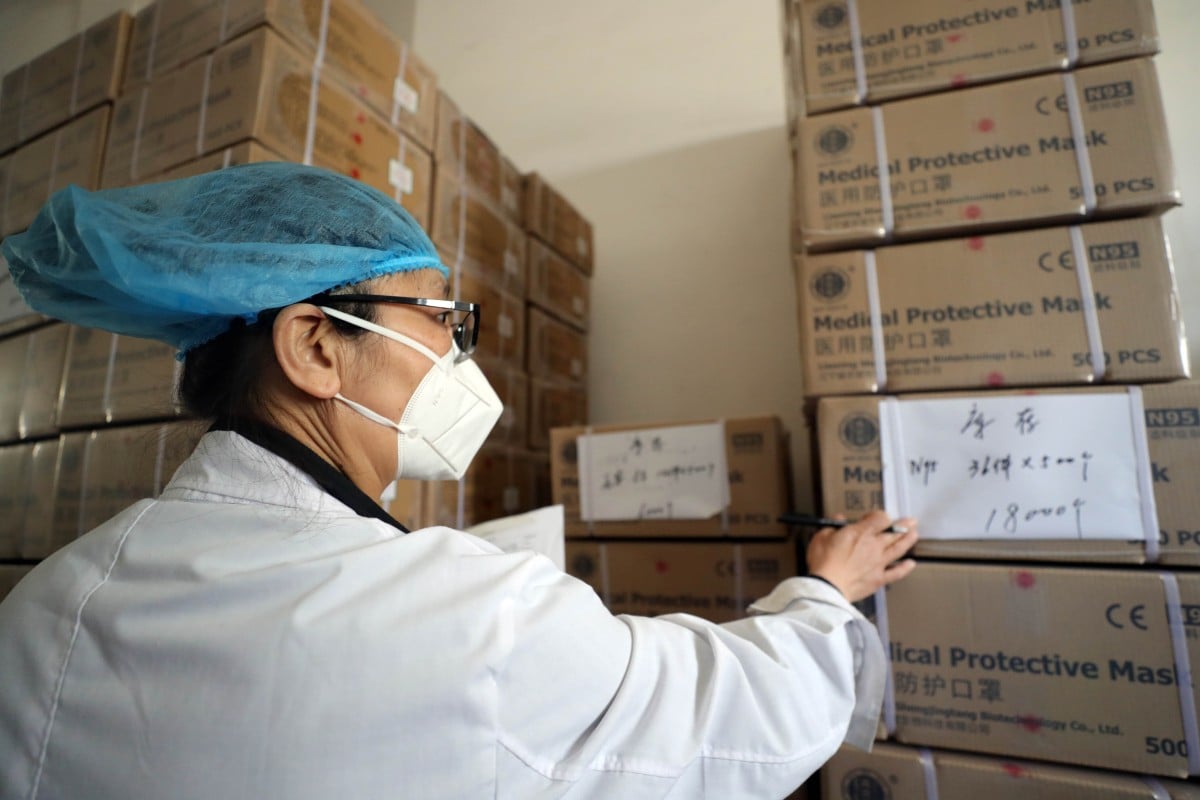
Experts in the region said that Beijing’s intensifying campaign of “mask diplomacy” to reverse the damage to its reputation had met with less resistance in Asia.
Why China’s ‘mask diplomacy’ is raising concern in the West
29 Mar 2020
“Over the past two months or so, China, after getting the Covid-19 outbreak under control, has been using a very concerted effort to reshape the narrative, to pre-empt the narrative that China is liable for this global pandemic, that China has to compensate other countries,” said Richard Heydarian, a Manila-based academic and former policy adviser to the Philippine government.
“It doesn’t help that the US is in lockdown with its domestic crisis and that we have someone like President Trump who is more interested in playing the blame game rather than acting like a global leader,” he said.
Shahriman Lockman, a senior analyst with the foreign policy and security studies programme at Malaysia’s Institute of Strategic and International Studies, said that as the US had withdrawn into its own affairs as it struggled to contain the pandemic, China had found Southeast Asia a fertile ground for cultivating an image of itself as a provider.
China’s first-quarter GDP shrinks for the first time since 1976 as coronavirus cripples economy
Beijing’s highly publicised delegations tasking medical equipment and supplies had burnished that reputation, he said, adding that the Chinese government had also “quite successfully shaped general Southeast Asian perceptions of its handling of the pandemic, despite growing evidence that it could have acted more swiftly at the early stages of the outbreak in Wuhan”.
“Its capacity and will to build hospitals from scratch and put hundreds of millions of people on lockdown are being compared to the more indecisive and chaotic responses seen in the West, especially in Britain and the United States,” he said.
Coronavirus droplets may travel further than personal distancing guidelines
16 Apr 2020
Lockman said Southeast Asian countries had also been careful to avoid getting caught in the middle of the deteriorating relationship between Beijing and Washington as the two powers pointed fingers at each other over the origins of the new coronavirus.
“The squabble between China and the United States about the pandemic is precisely what Asean governments would go to great lengths to avoid because it is seen as an expression of Sino-US rivalry,” he said.
“Furthermore, the immense Chinese market is seen as providing an irreplaceable route towards Southeast Asia’s post-pandemic economic recovery.”
Aaron Connelly, a research fellow in Southeast Asian political change and foreign policy with the International Institute for Strategic Studies in Singapore, said Asian countries’ dependence on China had made them slow to blame China for the pandemic.
“Anecdotally, it seems to me that most Southeast Asian political and business elites have given Beijing a pass on the initial cover-up of Covid-19, and high marks for the domestic lockdown that followed,” he said.
“This may be motivated reasoning, because these elites are so dependent on Chinese trade and investment, and see little benefit in criticising China.”
China and Vietnam ‘likely to clash again’ as they build maritime militias
12 Apr 2020
The cooperation with its neighbours as they grapple with the coronavirus had not slowed China’s military and research activities in the disputed areas of the South China Sea – a point of contention that would continue to cloud relations in the region, experts said.
Earlier this month an encounter in the South China Sea with a Chinese coastguard vessel led to the sinking of a fishing boat from Vietnam, which this year assumed chairmanship of Asean.
And in a move that could spark fresh regional concerns, shipping data on Thursday showed a controversial Chinese government survey ship, the Haiyang Dizhi 8, had moved closer to Malaysia’s exclusive economic zone.
The survey ship was embroiled in a months-long stand-off last year with Vietnamese vessels within Hanoi’s exclusive economic zone and was spotted again on Tuesday 158km (98 miles) off the Vietnamese coast.
Between January 20 and April 4, PM2.5 levels across the country fell by more than 18 per cent, according to the environment ministry
But observers say that as soon as the nation’s factories and roads get back to normal, so too will the air pollution levels
Blue skies were an unexpected upside of locking down cities and halting industrial production across China. Photo: AFP
China’s air quality has improved dramatically in recent weeks as a result of the widespread city lockdowns and strict travel restrictions introduced to contain the
. But experts say the blue skies could rapidly disappear as factories and roads reopen under a government stimulus plan to breathe new life into a stalled economy.
According to the Ministry of Ecology and Environment, between January 20 and April 4 the average concentration of PM2.5 – the tiny particles that pose the biggest risk to health – fell by 18.4 per cent from the same period of last year.
Meanwhile, the average number of days with good air quality – determined as when the air pollution index falls below 100 – rose by 7.5 per cent, it said.
Satellite images released by Nasa and the European Space Agency showed a dramatic drop in nitrogen dioxide emissions in major Chinese cities in the first two months of 2020, compared with a year earlier.
According to Nasa, the changes in Wuhan – the central China city at the epicentre of the initial coronavirus outbreak – were particularly striking, while nitrogen dioxide levels across the whole of eastern and central China were 10 to 30 per cent lower than normal.
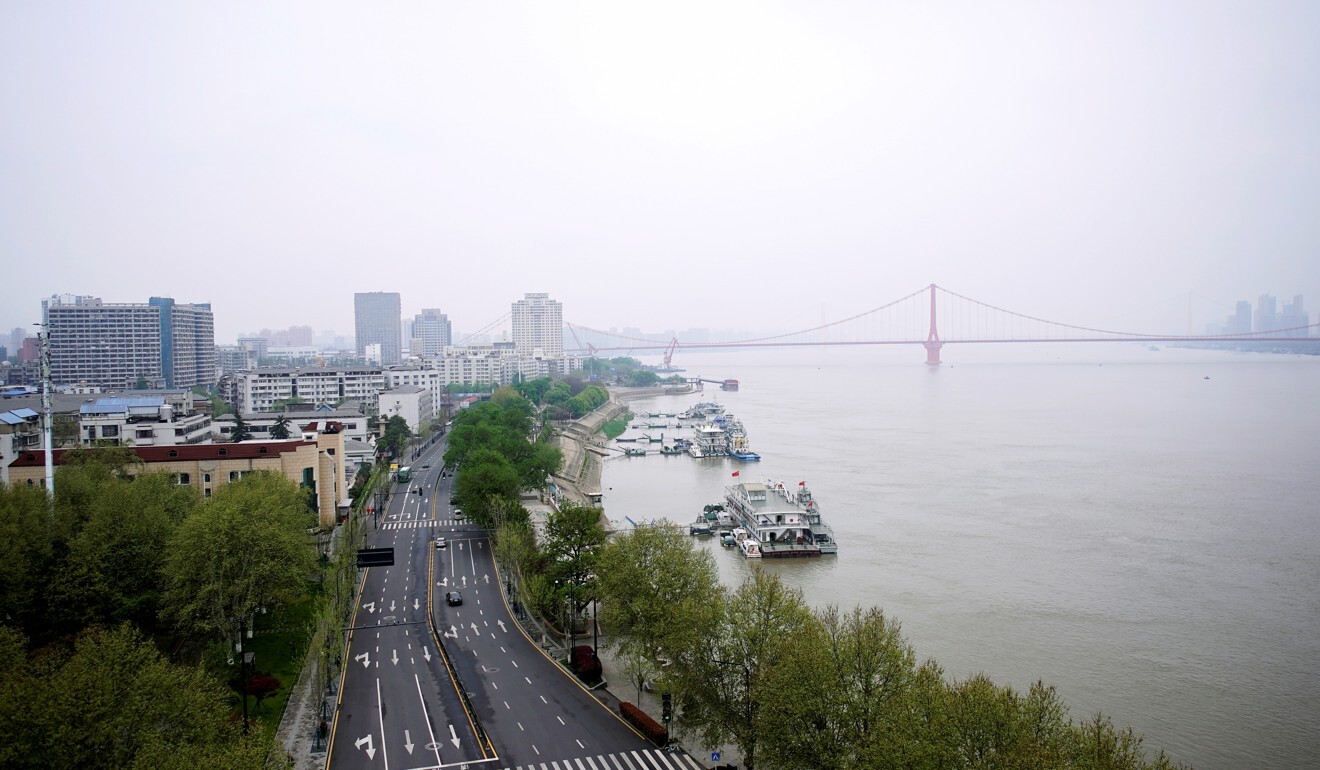
The region is home to hundreds of factories, supplying everything from steel and car parts to microchips. Wuhan, which has a population of 11 million, was placed under lockdown on January 23, but those restrictions were lifted on Wednesday
.
Air pollution is likely to return to China’s cities once the lockdowns are lifted. Photo: Reuters
Nitrogen dioxide is produced by cars, power plants and other industrial facilities and is thought to exacerbate respiratory illnesses such as asthma.
The space agency said the decline in air pollution levels coincided with the restrictions imposed on transport and business activities.
That was consistent with official data from China’s National Development and Reform Commission, which recorded a 25 per cent fall in road freight volume and a 14 per cent decline in the consumption of oil products between January and February.
Guangzhou cases prompt shutdown in ‘Little Africa’ trading hub
8 Apr 2020
Liu Qian, a senior climate campaigner for Greenpeace based in Beijing, said the restrictions on industry and travel were the primary reasons for the improvement in air quality.
According to official data, in February, the concentrations of PM2.5, nitrogen dioxide and sulphur dioxide – a toxic gas that comes mostly from industrial burning of coal and other fossil fuels – all fell, by 27 per cent, 28 per cent and 23 per cent, respectively.
“The causes of air pollution are complicated, but the suspension of industrial activity and a drop in public transport use will have helped to reduce levels,” Liu said.
As the epicentre of the Covid-19 pandemic has shifted to the United States and
, human and industrial activity in China is gradually picking back up, and so is air pollution.
Lauri Myllyvirta, lead analyst with the Centre for Research on Energy and Clean Air in Helsinki, said that levels of nitrogen dioxide pollution, measured both by Nasa satellites and official stations in China, started inching back up in the middle of March and had returned to normal levels by the end of the month.
That coincided with the centre’s findings – published on Carbon Brief, a British website on climate change – that coal consumption at power plants and oil refineries across China returned to their normal levels in the fourth week of March.
How the Wuhan experience could help coronavirus battle in US and Europe
10 Apr 2020
Ma Jun, director of the Institute of Public & Environmental Affairs, a Beijing-based charity, said a stimulus plan to kick-start the economy would have a significant impact on air pollution.
“Once industrial production is fully resumed, so are the emission levels,” he said. “Unless another outbreak happens and triggers another lockdown, which would be terrible, the improvement achieved under the pandemic is unstable and won’t last long.”
After the 2008 financial crisis, Beijing launched a 4 trillion yuan (US$567.6 billion) stimulus package that included massive infrastructure investment, but also did huge damage to the environment. In the years that followed, air pollution rose to record highs and sparked a public backlash.
Even before the Covid-19 outbreak, China’s economy was slowing – it grew by 6.1 per cent in 2019, its slowest for 29 years – and concerns are now growing that policymakers will go all out to revive it.
“Local governments have been under huge pressure since last year, and there are fears that environmental regulations will be sidelined [in the push to boost economic output],” Ma said.
But Beijing had the opportunity to get it right this time by investing more in green infrastructure projects rather than high-carbon projects, he said.
“A balance between economic development and environmental protection is key to achieving a green recovery, and that is what China needs.”
JOHANNESBURG (Reuters) – African ambassadors in China have written to the country’s foreign minister over what they call discrimination against Africans as the country seeks to prevent a resurgence of the coronavirus.
Several African countries have separately also demanded that China address their concerns that Africans, in particular in the southern city of Guangzhou, are being mistreated and harassed.
Having brought under control the original outbreak centred on the city of Wuhan, China is now concerned about imported cases and is stepping up scrutiny of foreigners coming into the country and tightening border controls. It has denied any discrimination.
In recent days Africans in Guangzhou have reported being ejected from their apartments by their landlords, being tested for coronavirus several times without being given results and being shunned and discriminated against in public. Such complaints have been made in local media, and on social media.
The ambassadors’ note said such “stigmatisation and discrimination” created the false impression that the virus was being spread by Africans.
“The Group of African Ambassadors in Beijing immediately demands the cessation of forceful testing, quarantine and other inhuman treatments meted out to Africans,” it said.
The note was sent to China’s top diplomat, Wang Yi, copying the chair of the African Union, South African President Cyril Ramaphosa and all African foreign ministers.
The Chinese foreign ministry’s International Press Centre did not immediately respond to a request for comment on the note, sent outside of business hours.
The Chinese embassy in South Africa also did not respond.
Foreign affairs official Liu Baochun told a news conference on Sunday that Guangzhou is enforcing anti-virus measures on anyone who enters the city from across the national border, regardless of nationality, race or gender.
The Chinese embassy in Zimbabwe on Saturday dismissed the accusation that Africans were being deliberately targeted.
“It is harmful to sensationalize isolated incidents,” it said in a tweeted statement. “China treats all individuals in the country, Chinese and foreign alike, as equals.”
DISAPPOINTMENT
The ambassadors’ note highlighted a number of reported incidents, including that Africans were being ejected from hotels in the middle of the night, the seizure of passports, and threats of visa revocation, arrest or deportation.
On Saturday, Ghana’s foreign minister of affairs Shirley Ayorkor Botchwey said she had summoned the Chinese ambassador to express her disappointment and demand action.
Kenya’s foreign ministry has also “officially expressed concern”, adding the government is working with Chinese authorities to address the matter.
On Friday, Nigerian legislator Akinola Alabi tweeted a video of a meeting between the leader of Nigeria’s lower house of parliament, Femi Gbajabiamila, and Chinese Ambassador Zhou Pingjian. In it, Gbajabiamila demanded an explanation from the diplomat after showing Zhou a video of a Nigerian complaining about mistreatment in China.
The ambassador said in response to the questions from the house leader that he took the complaints “very seriously” and promised to convey them to the authorities back home.
BEIJING (Reuters) – China reported on Saturday a rise in new coronavirus cases, as authorities try to head off a second wave of infections, particularly from imported and asymptomatic cases, as curbs on cities and travel are lifted.
The National Health Commission said 46 new cases were reported on Friday, including 42 involving travellers from abroad, up from 42 cases a day earlier.
In its statement the commission added that 34 new asymptomatic cases were reported, down from 47 the previous day.
Mainland China’s tally of infections now stands at 81,953. The death toll rose by three to 3,339.
Tough curbs imposed since January helped rein in infections sharply from the height of the pandemic in February. But policymakers fear a second wave triggered by arrivals from overseas or asymptomatic patients.
Northeastern Heilongjiang recently reported a spike in new cases because of Chinese nationals entering the province from Russia, which has seen a surge of cases.
Provincial health officials said it had 22 new imported cases on Friday, all Chinese nationals coming from Russia, and one new local case, in its capital of Harbin.
Inner Mongolia had a daily tally of 27 new imported cases by Saturday morning, all from Russia, the region’s health authority said.
The central province of Hubei, where the virus emerged late last year, reported no new cases for a seventh successive day.
A rise in virus infections has prompted authorities in Guangzhou to step up scrutiny of foreigners, ordering bars and restaurants not to serve clients who appear to be of African origin, the U.S. consulate in the southern city said.
Anyone with “African contacts” faces mandatory virus tests followed by quarantine, regardless of recent travel history or previous isolation, it said in a statement.
It advised African-Americans or those who feel they might be suspected of contact with nationals of African origin to avoid the city.
Since the epidemic broke out in the provincial capital of Wuhan, it has spread around the world, infecting 1.6 million people and killing more than 100,000.
CHANGSHA, March 30 (Xinhua) — Railway repair is well underway after a train derailed in the city of Chenzhou in central China’s Hunan Province Monday that killed one and injured 127.
The accident happened in Yongxing County at 11:40 a.m. when the train ran into a landslide, leaving five carriages derailed. The power generation car caught on fire.
The fire has been put out and all of the injured have been sent to hospital, with four in serious condition, local authorities said.
There were 691 people on board the train when the derailment occurred, rescuers said. Except for those injured that were sent to hospital, other passengers took shelter in a nearby primary school until buses were sent to deliver them to a high-speed railway station.
“We volunteered to cook noodles and dress the wounds of several hundred passengers in the school until they were picked up,” said Liu Guijiao, a local villager.
He Zhiwen from China Railway Guangzhou Group told Xinhua that about 380 meters of tracks need repair. The engineering department has prepared 450 meters of tracks and 1,600 railroad ties.
Carriages will be removed after the repairs are completed, but the time for the traffic to resume has not been decided yet.
He said over 1,000 workers have been sent along with seven excavators, six railcars, two large tampers and three relief trains.
“We will try our best to resume traffic as soon as possible,” said an engineer on site.
The train, T179, was running from the city of Jinan, east China’s Shandong Province, to Guangzhou in south China’s Guangdong Province.
The group said 88 trains on the southern section of the Beijing-Guangzhou railway have been affected, including 54 suspensions, 22 returns and 12 detours.
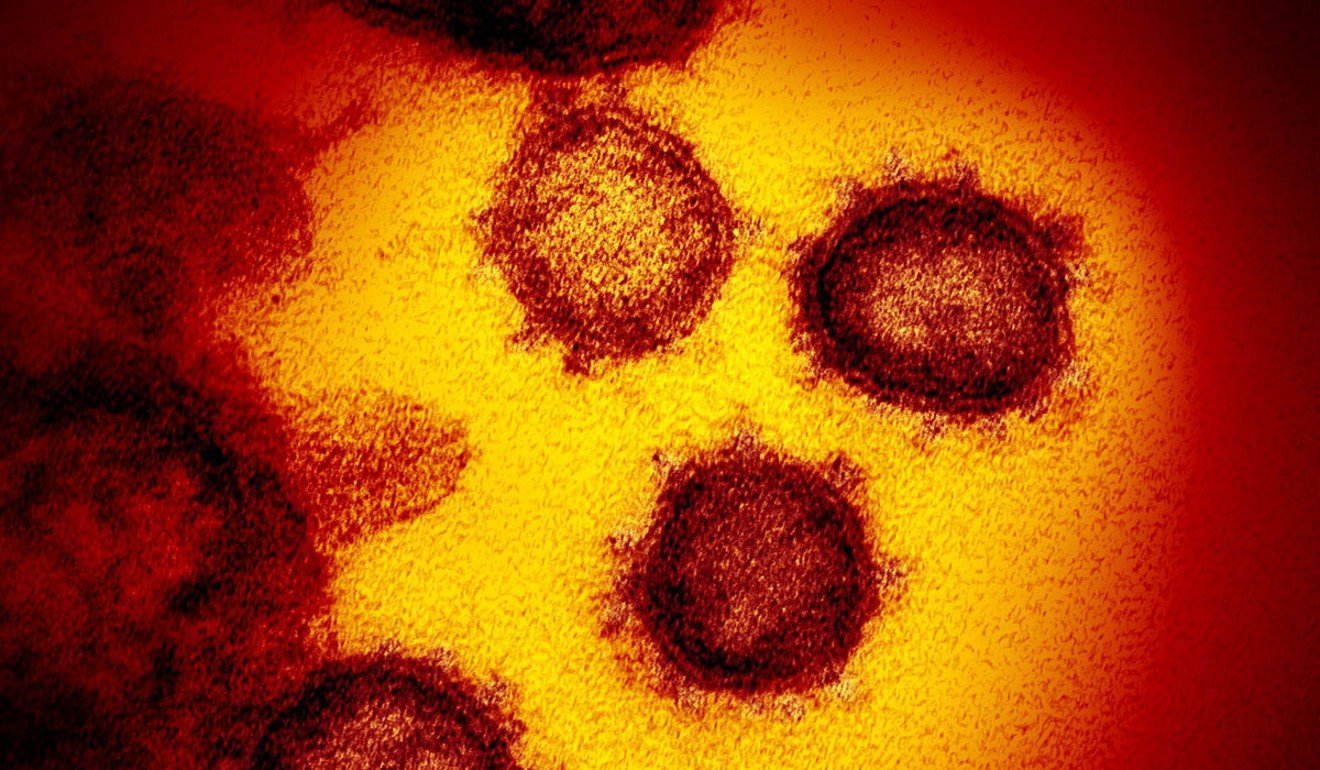
Virus may have jumped from animal to humans long before the first detection in Wuhan, according to research by an international team of scientists
Findings significantly reduce the possibility of the virus having a laboratory origin, director of the US National Institute of Health says
An international team of scientists say the coronavirus may have jumped from animal to humans long before the first detection in China. Photo: AP
The coronavirus that causes Covid-19 might have been quietly spreading among humans for years or even decades before the sudden outbreak that sparked a global health crisis, according to an investigation by some of the world’s top virus hunters.
Researchers from the United States, Britain and Australia looked at piles of data released by scientists around the world for clues about the virus’ evolutionary past, and found it might have made the jump from animal to humans long before the first detection in the central China city of Wuhan.
Though there could be other possibilities, the scientists said the coronavirus carried a unique mutation that was not found in suspected animal hosts, but was likely to occur during repeated, small-cluster infections in humans.
The study, conducted by Kristian Andersen from the Scripps Research Institute in California, Andrew Rambaut from the University of Edinburgh in Scotland, Ian Lipkin from Columbia University in New York, Edward Holmes from the University of Sydney, and Robert Garry from Tulane University in New Orleans, was published in the scientific journal Nature Medicine on March 17.
Dr Francis Collins, director of the US National Institute of Health, who was not involved in the research, said the study suggested a possible scenario in which the coronavirus crossed from animals into humans before it became capable of causing disease in people.
“Then, as a result of gradual evolutionary changes over years or perhaps decades, the virus eventually gained the ability to spread from human to human and cause serious, often life-threatening disease,” he said in an article published on the institute’s website on Thursday.
In December, doctors in Wuhan began noticing a surge in the number of people suffering from a mysterious pneumonia. Tests for flu and other pathogens returned negative. An unknown strain was isolated, and a team from the Wuhan Institute of Virology led by Shi Zhengli traced its origin to a bat virus found in a mountain cave close to the China-Myanmar border.
The two viruses shared more than 96 per cent of their genes, but the bat virus could not infect humans. It lacked a spike protein to bind with receptors in human cells.
Coronaviruses with a similar spike protein were later discovered in Malayan pangolins
by separate teams from Guangzhou and Hong Kong, which led some researchers to believe that a recombination of genomes had occurred between the bat and pangolin viruses.
Doctors in Wuhan began noticing a surge in the number of people suffering from a mysterious pneumonia in December. Photo: Handout
But the new strain, or SARS-Cov-2, had a mutation in its genes known as a polybasic cleavage site that was unseen in any coronaviruses found in bats or pangolins, according to Andersen and his colleagues.
This mutation, according to separate studies by researchers from China, France and the US, could produce a unique structure in the virus’ spike protein to interact with furin, a widely distributed enzyme in the human body. That could then trigger a fusion of the viral envelope and human cell membrane when they came into contact with one another.
Some human viruses including HIV and Ebola have the same furin-like cleavage site, which makes them contagious.
It is possible that the mutation happened naturally to the virus on animal hosts. Sars (severe acute respiratory syndrome) and Mers (Middle East respiratory syndrome), for instance, were believed to have been direct descendants of species found in masked civets and camels, which had a 99 per cent genetic similarity.
There was, however, no such direct evidence for the novel coronavirus, according to the international team. The gap between human and animal types was too large, they said, so they proposed another alternative.
“It is possible that a progenitor of SARS-CoV-2 jumped into humans, acquiring the genomic features described above through adaptation during undetected human-to-human transmission,” they said in the paper.
“Once acquired, these adaptations would enable the pandemic to take off and produce a sufficiently large cluster of cases to trigger the surveillance system that detected it.”
They said also that the most powerful computer models based on current knowledge about the coronavirus could not generate such a strange but highly efficient spike protein structure to bind with host cells.
The study had significantly reduced, if not ruled out, the possibility of a laboratory origin, Collins said.
“In fact, any bioengineer trying to design a coronavirus that threatened human health probably would never have chosen this particular conformation for a spike protein,” he said.
The findings by Western scientists echoed the mainstream opinion among Chinese researchers.
Zhong Nanshan, who advises Beijing on outbreak containment policies, had said on numerous occasions that there was growing scientific evidence to suggest the origin of the virus might not have been in China.
“The occurrence of Covid-19 in Wuhan does not mean it originated in Wuhan,” he said last week.
A doctor working in a public hospital treating Covid-19 patients in Beijing said numerous cases of mysterious pneumonia outbreaks had been reported by health professionals in several countries last year.
Re-examining the records and samples of these patients could reveal more clues about the history of this worsening pandemic, said the doctor, who asked not to be named due to the political sensitivity of the issue.
“There will be a day when the whole thing comes to light.”














 CHINDIA ALERT: You'll be living in their world, very soon