Archive for ‘Guizhou’

06/05/2020

Poverty-alleviation workshops resume production in Huishui County, Guizhou

CHINA-GUIZHOU-HUISHUI-POVERTY ALLEVIATION WORKSHOP-WORK RESUMPTION (CN)A worker makes clothes at a poverty-alleviation workshop in a resettlement area for the poor in Huishui County, southwest China’s Guizhou Province, May 6, 2020. With strict epidemic prevention measures in place, the county’s all 11 poverty-alleviation workshops have resumed work and production recently, providing over 1,100 jobs to locals. (Xinhua/Ou Dongqu)

Soiurce: Xinhua

06/03/2020

China’s Hubei reports no new coronavirus cases outside city of Wuhan

BEIJING (Reuters) – China’s central province of Hubei, excluding the provincial capital Wuhan, has reported zero new cases of coronavirus over 24 hours for the first time in the outbreak, as authorities seek to stem imported infections in other areas.

Wuhan, the centre of the epidemic, reported 126 new confirmed cases on Thursday but there were no new infections elsewhere in the province, the National Health Commission said on Friday.

Elsewhere in China, schools in provinces reporting no new cases for a number of days started to set reopening dates.

Qinghai, a northwesterly that had reported no new infections for 29 days as of March 5, said it would stagger the start date of different schools between March 11 and March 20, according to a notice posted on an official website.

The southwesterly province of Guizhou has said its schools will start reopening from March 16.

Outside of Hubei, there were 17 new confirmed cases, bringing the total new infections in mainland China to 143 on Thursday, up from 139 cases a day earlier.

Of the 17 new cases, 16 were imported from outside of China – 11 in Gansu province, four in Beijing and one in Shanghai.

A total of 311 passengers arriving at Gansu’s provincial capital Lanzhou from Iran were quarantined, state television reported late on Thursday.

Beijing’s four new cases had come from Italy. On Friday, one of the city’s government officials described its epidemic control campaign as being at its most challenging period, adding that roughly 827,000 people who had returned to the capital from outside – most of them from extended Lunar New Year holidays – were currently undergoing home observation.

Last month, Gansu became the first province to lower its emergency response measures from level I to level III, reflecting the lack of new infections.

Tibet became the latest region to lower its emergency response level on Friday, announcing on an official website that some areas had eased to level II and others to level III.

OPTIMISM FOR WUHAN

Health authorities in Shanghai said that the city had recorded three new cases in the first 12 hours of Friday. All were Chinese nationals who had studied in Iran, state media reported. [B9N28E04N]

All three had been transferred by Shanghai customs to quarantine on March 3, a spokeswoman for the city’s health commission told a news briefing.

Despite the fresh cases in Wuhan, senior Chinese government officials expressed optimism about its situation as the city shut its second makeshift hospital on Friday afternoon, state radio reported.

“As the situation in Wuhan and Hubei improves, relevant authorities, with approvals, will make timely adjustments according to China’s Infectious Diseases Law and public health emergency regulations,” Ding Xiangyang, vice secretary general at the State Council, told a news briefing.

“When I went out in the morning, the cherry blossoms were blooming in front of my door, telling us that winter has passed and spring has come. I think the day everyone has been looking forward to is not far away,” he said.

As new cases dwindle in China, attention has turned to potential infections arriving from overseas.

Authorities in Beijing, Shanghai and Guangdong have all vowed to quarantine travellers from countries hit the hardest by the coronavirus, which Beijing identified as South Korea, Japan, Iran and Italy.

The overall accumulated number of confirmed cases in mainland China stood at 80,552 as of Thursday.

The death toll from the outbreak in mainland China was 3,042 as of the end of Thursday, up by 30 from the previous day.

Hubei reported 29 new deaths, while in Wuhan, 23 people died.

Source: Reuters

11/04/2019

Guizhou strives to develop clean, efficient electricity industry

GUIYANG, April 10 (Xinhua) — Southwest China’s Guizhou Province will strive to develop a clean and efficient electricity industry, the provincial energy administration said Wednesday.

The province said that it aims to achieve 200 billion yuan (30 billion U.S. dollars) of output value in this field.

To promote the development of clean and efficient power industry, Guizhou will improve the efficiency of existing coal power facilities, speed up energy conservation and emission reduction, and accelerate the development of both coal and power industries.

In 2019, Guizhou will attempt to upgrade 1.8 million kW of coal-fired facilities to realize ultra-low emissions, while 3 million kW of coal-fired facilities are expected to accept energy-saving reconstruction.

The administration said the province would speed up the development of hydropower projects and increase the province’s hydropower capacity.

In addition to hydropower, Guizhou will further develop renewable energy, including wind and solar power. The province aims to add more than 500,000 kW of power in 2019 produced by non-hydro renewable energy.

Source: Xinhua

12/03/2019

Two dead after Chinese navy plane crashes

  • No other injuries reported following accident on southern island of Hainan
  • Military is currently intensifying training for pilots as it looks to strengthen capabilities

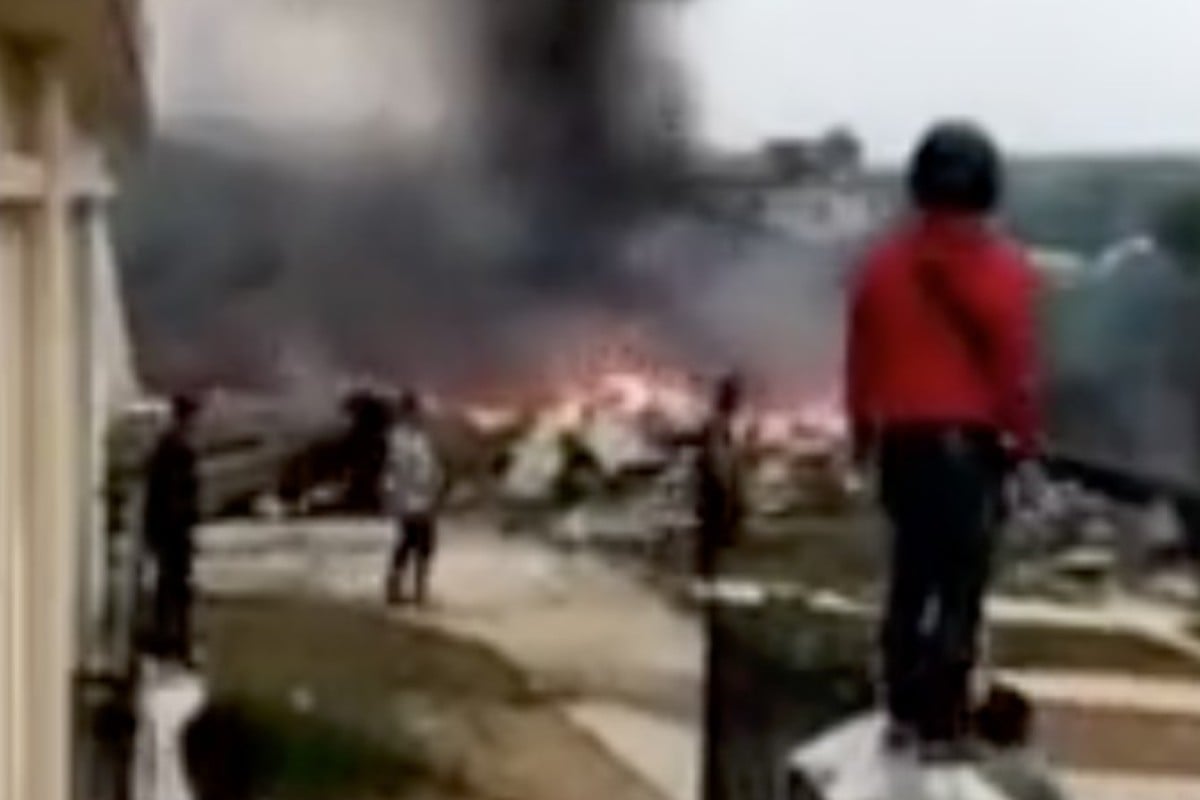
Mobile phone footage believed to be taken from the crash site. Photo: Handout
A Chinese navy plane crashed in Hainan province on Tuesday killing two crew members, the military said.
A short statement said the crash happened during a training exercise over rural Ledong county in the southern island province.
No one else was reported to have been injured after the plane hit the ground and the cause of the incident is being investigated.
Footage that purported to be taken from the crash site started circulating on social media after the accident.
Footage apparently taken at the crash site. Photo: Handout

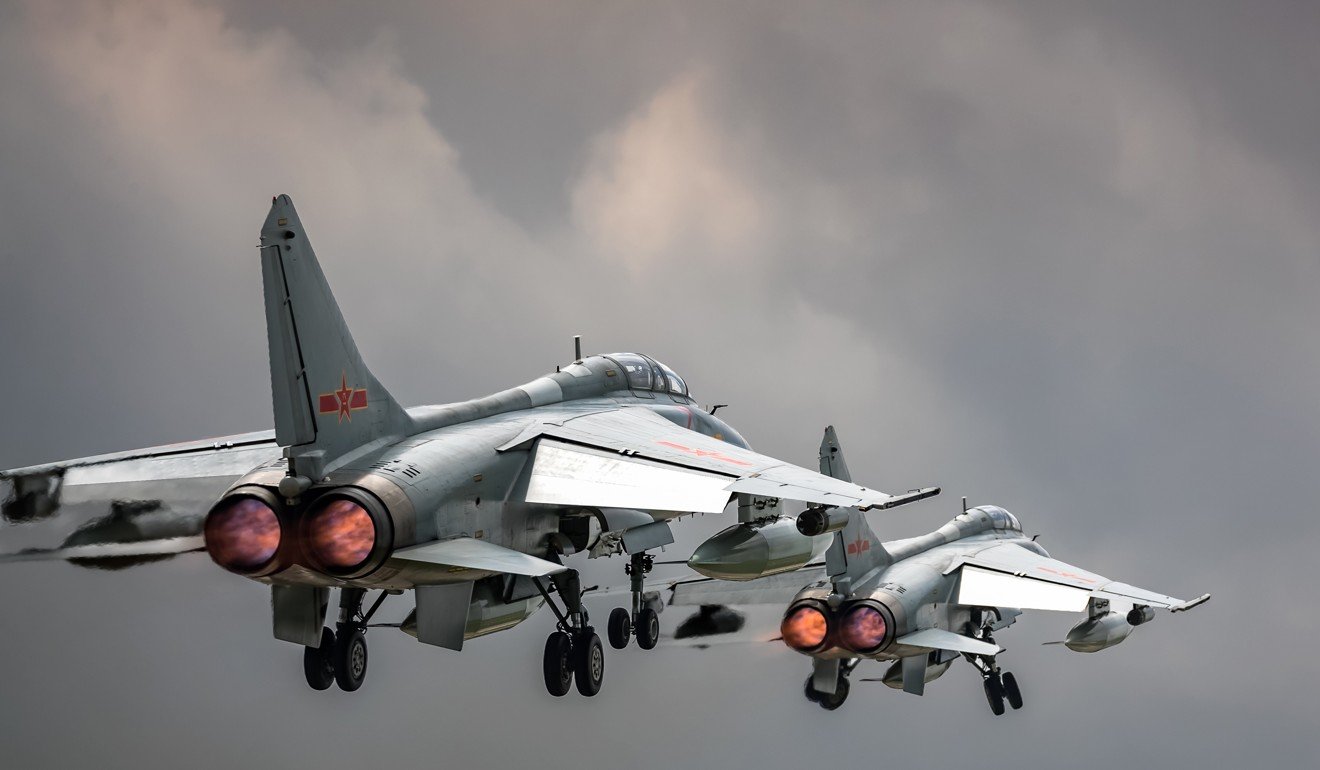
The PLA’s official statement did not specify the type plane that crashed, although unverified witness account online said it was a twin-seat Xian JH-7 “Flying Leopard”.

The JH-7, which entered service with the navy and air force in the 1990s, has been involved in a number of fatal accidents over the years.

The country’s worst military air accident in recent years happened in January 2018. At least 12 crew members died when a PLA Air Force plane, believed to be an electronic reconnaissance aircraft, crashed in Guizhou in the southwest of the country.

Between 2016 and 2017, there were at least four accidents involving the navy’s J-15 “Flying Sharks”, one of them resulting in the death of the pilot.

Military commentators have previously said that China’s drive to improve its combat readiness, which includes the building of new aircraft carriers and warplanes, has resulted in a serious shortage of qualified pilots.

To fill the vacancies the Chinese military has started a major recruitment drive and intensive training programme for pilot pilots.

One unverified report said the plane that crashed was a JH-7 “Flying Leopard”. Photo. Xinhua

Currently China has one aircraft carrier, the Liaoning, in service, which can carry a maximum of 24 J-15s as well as other aircraft.

Meanwhile, the new home-grown carrier Type 001A will soon be commissioned, which is designed to accommodate to carry eight more fighters.

In addition, construction is believed to have started on another carrier that will be able to carry heavier and more advanced warplanes.

Chinese navy veteran warns training, not hardware is key to military preparedness
According to figures from the end of 2016, there were only 25 pilots qualified to fly the J-15 while 12 others were in training.
Most of the Chinese navy’s pilots have been redeployed from the air force, which is itself in need of more trained pilots.
This year the navy for the first time began a nation-wide programme to scout out potential pilots.
Speaking on the sidelines of the ongoing legislative meeting in Beijing Feng Wei, a PLA pilot from the Western Theatre, said the military was currently intensifying its pilots’ training as increasing amounts of new equipment entered service.
“Personnel quality is the key to everything,” he added.
Source: SCMP
Law of Unintended Consequences

continuously updated blog about China & India

ChiaHou's Book Reviews

continuously updated blog about China & India

What's wrong with the world; and its economy

continuously updated blog about China & India