Archive for ‘hailed’

20/05/2020

US semiconductor giant shuts China factory hailed as ‘a miracle’, in blow to Beijing’s chip plans

  • US chip giant GlobalFoundries confirms it has ceased operations at its only Chinese facility, with industry experts saying the poorly-planned project was doomed to fail
  • Closure deals blow to China’s plans to move up semiconductor value chain, amid increasingly hostile tech rivalry with the United States
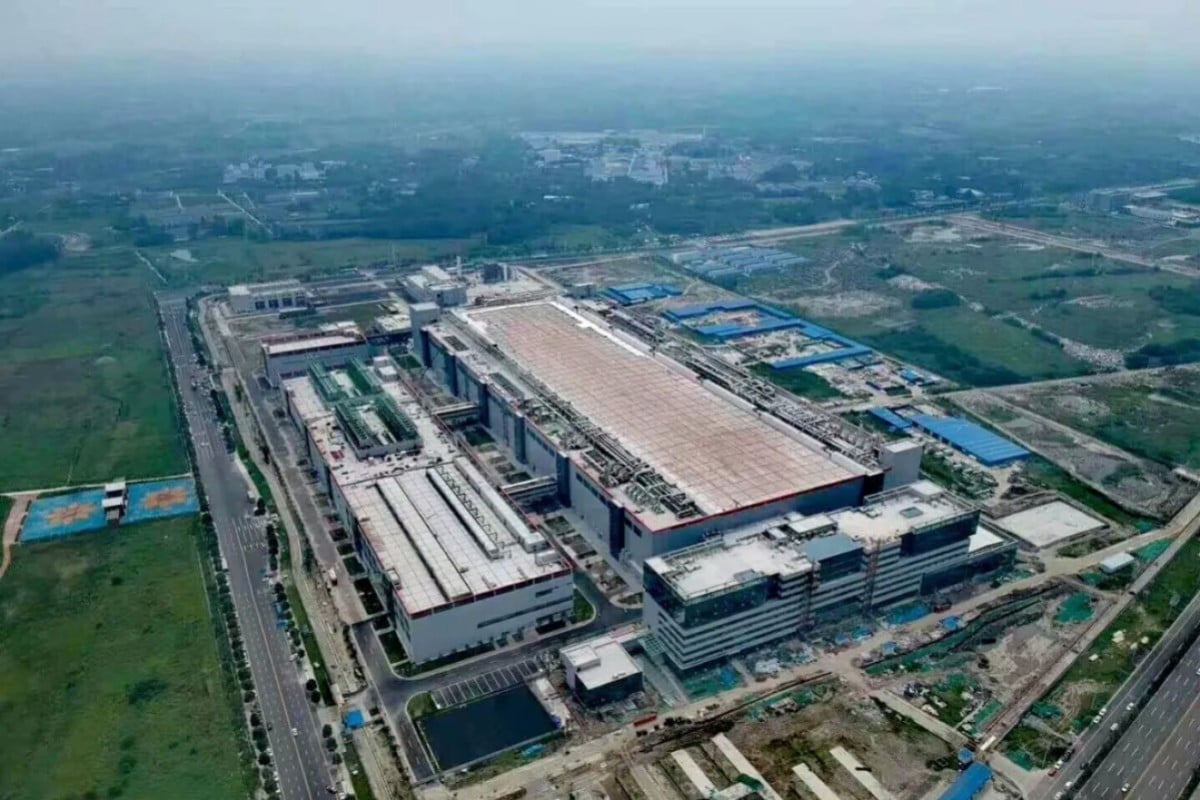
Beijing boasted that the final total investment in the GlobalFoundries plant could be US$10 billion. The plant was intended to produce 300mm wafers, a key material in making chips, but production never started at the 65,000 square metre facility, which was completed mid-2018. Photo: Weibo

US chip giant GlobalFoundries has halted operations at a joint venture factory in China, the company has confirmed, dealing a potential blow to China’s bid to own a bigger slice of the global semiconductor market.

The closure of the firm’s only China facility comes just three years after it announced plans to make chips in the mainland, and comes amid an escalating tech war with the United States.

The winding down, however, has little to do with the fierce superpower rivalry. It comes after two years of speculation as to what was actually happening at the US$100 million facility, which was hailed as “a miracle” by local media when announced to fanfare in 2017, but which never got off the ground.

Nonetheless, the symbolism is rich.

China is struggling in its efforts to boost its domestic chip research and production in a bid to counter US efforts to block it from American technology.

Last week, the US Department of Commerce upped the ante by banning the sale
of Huawei-designed chips produced outside America if they are made using the US software and technology, adding further pressure to the Chinese telecom giant’s global supply chain.
The GlobalFoundries factory, in a hi-tech park in the southwestern city of Chengdu, was one of China’s major foreign-invested semiconductor projects, for which the local government rolled out the red carpet three years ago.

At the time, Chengdu boasted that the final total investment in the plant could be US$10 billion. The plant was intended to produce 300mm wafers, a key material in making chips, but production never started at the 65,000 square metre facility, which was completed mid-2018.

A spokesperson for California-based GlobalFoundries confirmed that the Chengdu plant had stopped operations and that it had offered staff an “employee optimisation plan”, a commonly-used euphemism for lay-offs.

“The plan is being carried out on the basis of open and transparent communications with the employees and they have been offered various options to choose from based on their personal situations,” a company statement read.

A 2018 annual report from the joint venture, in which GlobalFoundries had a stake of 51 per cent with the rest controlled by an investment vehicle of the Chengdu government, showed that the plant had 320 employees.

A company notice sent to employees dated May 14 and seen by the Post said that after mid-June, the company would only pay 70 per cent of Chengdu’s minimum monthly wage, about 1,246 yuan (US$175.38), while negotiating severance packages with staff.

For some industry analysts who have followed the Chengdu project from its inception, its demise has less to do with the trade war, more to do with poor planning.

There was little detailed research and planning before the project was launched. As far as the Chengdu government is concerned, it lacks a sufficient understanding of GlobalFoundriesGu Wenjun, analyst

“There was little detailed research and planning before the project was launched. As far as the Chengdu government is concerned, it lacks a sufficient understanding of GlobalFoundries, its decision-making mechanism and economic strengths, and it did not get strong support from the central government,” said Gu Wenjun, chief analyst at Shanghai-based semiconductor research firm ICwise.
The idea of establishing a joint venture was first pitched to Chongqing municipality, a neighbouring city of Chengdu, in 2016. Chongqing signed a memorandum of understanding with GlobalFoundries to set up a plant to manufacture 300mm silicon wafers – components for making integrated circuits – using technology from GlobalFoundries’ Singapore factory.
After the deal to open a Chongqing plant fell through for unclear reasons, Chengdu moved in to cut a deal with GlobalFoundries in late-2016. A 2017 blueprint stated that 3,500 employees could be working at the site, according to Wallace Pai, then GlobalFoundries’ general manager for China.
But production never started. Initially the project was supposed to have two phases: using mainstream technologies to manufacture 300mm wafers from 2018, then transferring to more advanced technologies in late-2019.
However, in October 2018, the two partners decided to “bypass” the phase one manufacturing stage, partly because of China’s increasing demand for more advanced products and GlobalFoundries’ own financial stress. The project has since stalled.

Comparing official announcements from the Chengdu government and GlobalFroundries back in 2017, Gu from ICwise said the two had different focuses, which might explain the plant’s derailment. The government clearly wanted to bring in mainstream, lower-risk technologies to boost the city’s brand, while the company aimed for Chinese capital and government support to invest in more advanced technology, Gu said.

The joint venture will continue after the factory’s demise, with GlobalFoundries still expecting to expand sales in the Chinese market, the company said in its statement. It now has five factories, three in the US and one each in Singapore and Germany.

When The Post contacted the office of the joint venture partner within the Chengdu government, the person answering the phone said they did not know anything about the closure nor future plans, before hanging up without giving their name.

“Our focus in China is on developing and growing our partner ecosystem including creating local technology infrastructure and bringing more intellectual property vendors and electronic design automation partners to better serve the local market,” the company said.

According to the China Semiconductor Industry Association, China’s integrated circuits sales rose 15.8 per cent in 2019 from a year earlier to 756.2 billion yuan (US$106.44 billion), while sales in the global semiconductor market dropped by 12 per cent to US$412 billion.

Last week, Dutch company ASML Holding, a key supplier of chip-making equipment, set up a plant in Wuxi, in Jiangsu province, in a boost to China’s efforts to attract foreign semiconductor investment.

Source: SCMP

15/05/2020

Trump says doesn’t want to talk to Xi, could even cut China ties

WASHINGTON (Reuters) – U.S. President Donald Trump signaled a further deterioration of his relationship with China over the coronavirus outbreak, saying he has no interest in speaking to President Xi Jinping right now and going so far as to suggest he could even cut ties with the world’s second largest economy.

In an interview with Fox Business Network broadcast on Thursday, Trump said he was very disappointed with China’s failure to contain the disease and that the pandemic had cast a pall over his January trade deal with Beijing, which he has previously hailed as a major achievement.

“They should have never let this happen,” Trump said. “So I make a great trade deal and now I say this doesn’t feel the same to me. The ink was barely dry and the plague came over. And it doesn’t feel the same to me.”

Trump’s pique extended to Xi, with whom the U.S. president has said repeatedly he has a good relationship.

“But I just – right now I don’t want to speak to him,” Trump said in the interview, which was taped on Wednesday.

Trump was asked about a Republican senator’s suggestion that U.S. visas be denied to Chinese students applying to study in fields related to national security, such as quantum computing and artificial intelligence.

“There are many things we could do. We could do things. We could cut off the whole relationship,” he replied.

“Now, if you did, what would happen? You’d save $500 billion,” Trump said, referring to estimated U.S. annual imports from China, which he often refers to as lost money.

Chinese foreign ministry spokesman Zhao Lijian told reporters in Beijing on Friday that maintaining a steady bilateral relationship served the interests of both peoples and would be beneficial for world peace and stability.

“Both China and the U.S. should now be cooperating more on fighting the virus together, to cure patients and resume economic production, but this requires the U.S. to want to work with us on this,” Zhao said.

Trump’s remarks drew ridicule from Hu Xijin, editor in chief of China’s influential Global Times tabloid, who referred to the president’s much-criticized comments last month about how COVID-19, the disease caused by the coronavirus, might be treated.

“This president once suggested COVID-19 patients inject disinfectants,” Hu said on Twitter. “Remember this and you won’t be surprised when he said he could cut off the whole relationship with China.”

CONCERNED, REVIEWING OPTIONS

U.S. Treasury Secretary Steven Mnuchin told Fox Business Network China needed to provide a lot more information about the coronavirus and Trump was reviewing his options.

“The president is concerned. He’s reviewing all his options. Obviously, we’re very concerned about the impact of this virus on the economy, on American jobs, the health of the American public and the president is going to do everything to protect the economy and protect American workers,” Mnuchin said.

“It’s a difficult and complex matter and the president has made very clear, he wants more information. They didn’t let us in, they didn’t let us understand what was going on.”

Trump and his Republican backers have accused Beijing of failing to alert the world to the severity and scope of the coronavirus outbreak and of withholding data about the earliest cases. The pandemic has sparked a sharp global recession and threatened Trump’s November re-election chances.

The United States has been hardest hit by the pandemic, according to official data.

China insists it has been transparent, and, amid increasingly bitter exchanges, both sides have questioned the future of the trade deal.

Opponents of Trump have said that while China has much to answer for over the outbreak, he appears to be seeking to deflect attention from criticism over his response to the crisis.

Scott Kennedy of Washington’s Center for Strategic and International Studies think tank called Trump’s remarks “dangerous bravado.”

“Avoiding communication is not an effective strategy for solving a crisis that requires global cooperation. And cutting off the economic relationship would badly damage the American economy,” he said.

Michael Pillsbury, a China analyst who has worked as an outside adviser to Trump, told Reuters he believed the president was concerned that China not only wanted to re-negotiate the Phase 1 deal, but also had not been meeting goals in purchasing from United States.

He said that according to figures cited by the China Daily, China’s purchases of U.S. products in the first four months of this year were 3% less than during the same period last year.

“It’s not good news for reducing the trade deficit or helping our economy recover from the coronavirus crisis,” he said.

China took some additional steps towards the Phase 1 goals on Thursday, buying U.S. soybean oil for the first time in nearly two years and issued customs notices allowing imports of U.S. barley and blueberries.

An executive from Chinese state agriculture trading house COFCO said China was set to speed up purchases of U.S. farm goods to implement the Phase 1 deal.

While U.S. intelligence agencies have said the coronavirus does not appear manmade or genetically modified, Trump said in his interview that China should have stopped it at its source.

“Whether it came from the lab or came from the bats, it all came from China, and they should have stopped it,” he said.

“It got out of control.”

Source: Reuters

Law of Unintended Consequences

continuously updated blog about China & India

ChiaHou's Book Reviews

continuously updated blog about China & India

What's wrong with the world; and its economy

continuously updated blog about China & India