02/05/2020
BEIJING/SHANGHAI (Reuters) – A northeastern Chinese city of 10 million people struggling with currently the country’s biggest coronavirus cluster shut dine-in services on Saturday, as the rest of China eases restrictions designed to hamper the spread of the disease.
Harbin, the provincial capital of Heilongjiang and its biggest city, said it temporarily suspended dine-in services for all eateries, reported the official CCTV citing an emergency epidemic prevention notice.
Catering services operating in the city, such as barbecue eateries and those selling skewers, shabu shabu, and stew, shall suspend dine-in meals until further notice and in accordance with changes in the epidemic situation, the notice said.
While mainland China reported only one case on Saturday and crowds returned to some of its most famous tourist attractions for the 5-day May holiday, the northern province of Heilongjiang is hunkering down to prevent further clusters from forming.
Of the 140 local transmissions in mainland China, over half have been reported as from Heilongjiang, according to a Reuters tally.
Heilongjiang province borders Russia and has become the frontline in the fight against a resurgence of the coronavirus epidemic, with many new infections from citizens entering from Russia.
The province has already banned entry to residential zones by non-locals and vehicles registered elsewhere. It had also ordered isolation for those arriving from outside China or key epidemic areas.
On the back of the outbreak, deputy secretary of the Provincial Party Committee Wang Wentao said at a Friday meeting “we deeply blame ourselves”, according to local media.
“We had an inadequate understanding of epidemic prevention and control,” said Wang, adding that the failure to carry out testing in a timely manner contributed to the clusters.
Source: Reuters
Posted in 5-day, accordance, arriving, banned entry, Barbecue, Beijing, biggest, biggest city, borders, Catering services, CCTV, changes, China, Chinese city, citing, Citizens, cluster, coronavirus, coronavirus epidemic, country’s, crowds, curbs, currently, deputy secretary, designed, Disease, ease, eateries, elsewhere, emergency, entering, epidemic areas, epidemic prevention, epidemic prevention and control, epidemic situation, fight, forming, Friday, frontline, hamper, Harbin, Heilongjiang, Heilongjiang province, hunkering down, inadequate understanding, isolation, key, local transmissions, Mainland China, May holiday, meals, meeting, million, most famous, new infections, non-locals, Northeastern, northern province, notice, Official, operating, ordered, outbreak, outside, People, prevent, provincial capital, Provincial Party Committee, registered elsewhere, reported, residential zones, rest of, restrictions, resurgence, returned, Reuters tally, Russia, Saturday, selling, Shanghai, shut, shuts, skewers, spread, stew, struggling, suspended, temporarily, tourist attractions, Uncategorized, vehicles |
Leave a Comment »
19/04/2020
- Faced with a backlash from the West over its handling of the early stages of the pandemic, Beijing has been quietly gaining ground in Asia
- Teams of experts and donations of medical supplies have been largely welcomed by China’s neighbours
Despite facing some criticism from the West, China’s Asian neighbours have welcomed its medical expertise and vital supplies. Photo: Xinhua
While China’s campaign to mend its international image in the wake of its handling of the
coronavirus health crisis has been met with scepticism and even a backlash from the US and its Western allies, Beijing has been quietly gaining ground in Asia.
Teams of experts have been sent to Cambodia, the Philippines, Myanmar, Pakistan and soon to Malaysia, to share their knowledge from the pandemic’s ground zero in central China.
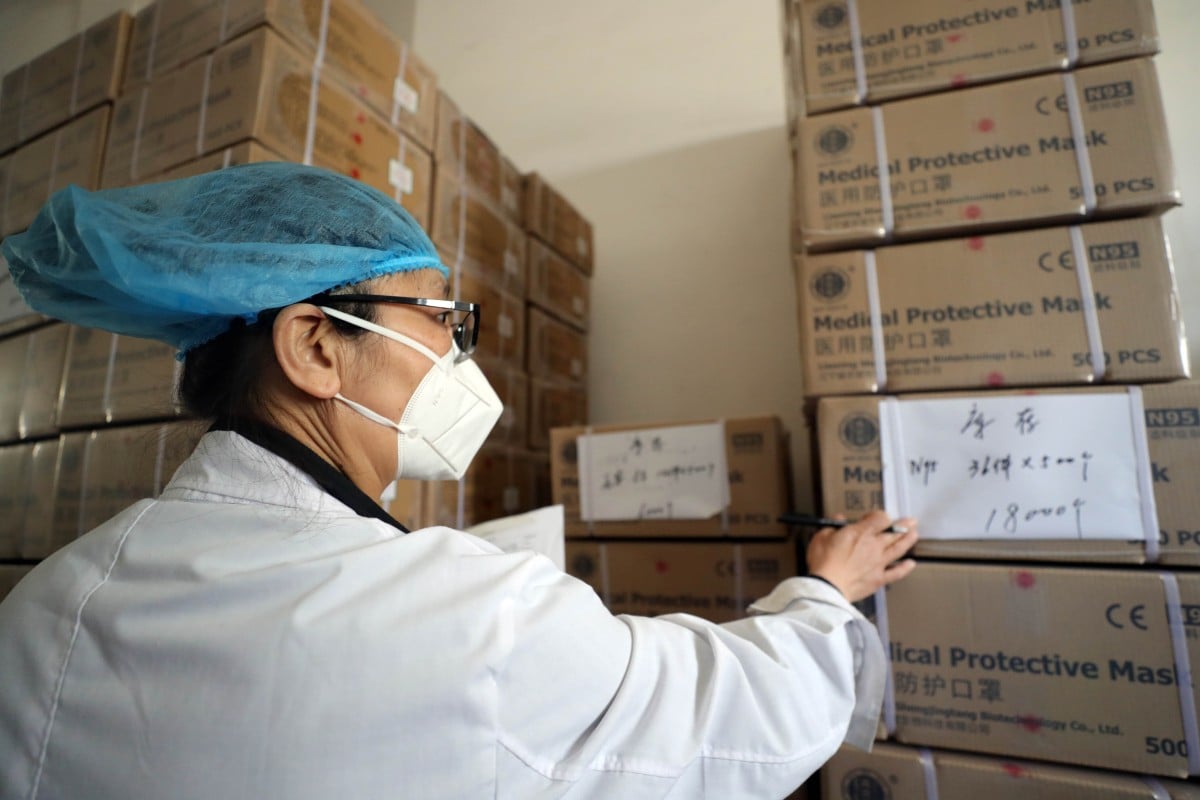
Beijing has also donated or facilitated shipments of medical masks and ventilators to countries in need. And despite some of the equipment failing to meet Western quality standards, or being downright defective, the supplies have been largely welcomed in Asian countries.
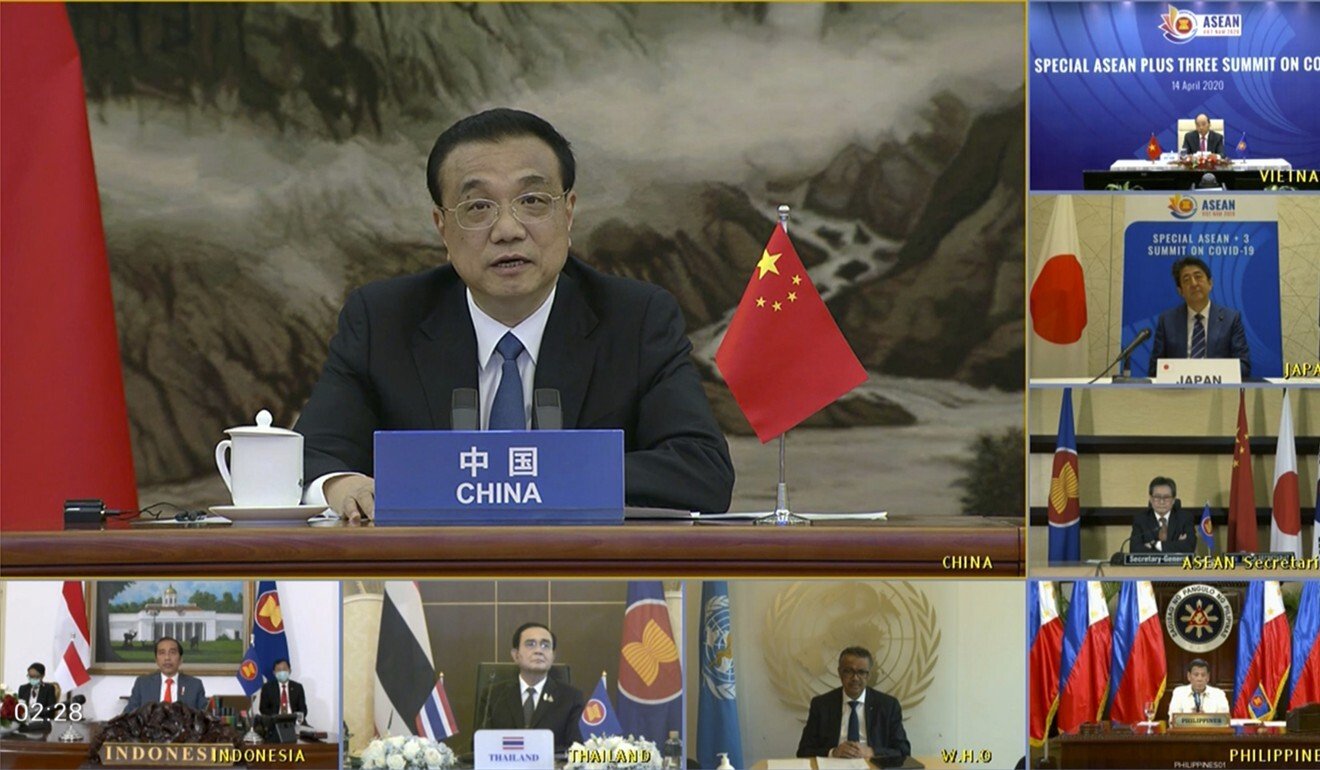
China has also held a series of online “special meetings” with its Asian neighbours, most recently on Tuesday when Premier Li Keqiang discussed his country’s experiences in combating the disease and rebooting a stalled economy with the leaders of the Association of Southeast Asian Nations (Asean), Japan and South Korea.
Chinese Prime Minister Li Keqiang speaks to Asean Plus Three leaders during a virtual summit on Tuesday. Photo: AP
Many Western politicians have publicly questioned Beijing’s role and its subsequent handling of the crisis but Asian leaders – including Philippine President Rodrigo Duterte and Japanese Prime Minister Shinzo Abe – have been reluctant to blame the Chinese government, while also facing criticism at home for not closing their borders with China soon enough to prevent the spread of the virus.
An official from one Asian country said attention had shifted from the early stages of the outbreak – when disgruntled voices among the public were at their loudest – as people watched the virus continue its deadly spread through their homes and across the world.
“Now everybody just wants to get past the quarantine,” he said. “China has been very helpful to us. It’s also closer to us so it’s easier to get shipments from them. The [medical] supplies keep coming, which is what we need right now.”
The official said also that while the teams of experts sent by Beijing were mainly there to observe and offer advice, the gesture was still appreciated.
Another Asian official said the tardy response by Western governments in handling the outbreak had given China an advantage, despite its initial lack of transparency over the outbreak.
“The West is not doing a better job on this,” he said, adding that his government had taken cues from Beijing on the use of propaganda in shaping public opinion and boosting patriotic sentiment in a time of crisis.
“Because it happened in China first, it has given us time to observe what works in China and adopt [these measures] for our country,” the official said.
Experts in the region said that Beijing’s intensifying campaign of “mask diplomacy” to reverse the damage to its reputation had met with less resistance in Asia.
Why China’s ‘mask diplomacy’ is raising concern in the West
“Over the past two months or so, China, after getting the Covid-19 outbreak under control, has been using a very concerted effort to reshape the narrative, to pre-empt the narrative that China is liable for this global pandemic, that China has to compensate other countries,” said Richard Heydarian, a Manila-based academic and former policy adviser to the Philippine government.
“It doesn’t help that the US is in lockdown with its domestic crisis and that we have someone like President Trump who is more interested in playing the blame game rather than acting like a global leader,” he said.
Shahriman Lockman, a senior analyst with the foreign policy and security studies programme at Malaysia’s Institute of Strategic and International Studies, said that as the US had withdrawn into its own affairs as it struggled to contain the pandemic, China had found Southeast Asia a fertile ground for cultivating an image of itself as a provider.
China’s first-quarter GDP shrinks for the first time since 1976 as coronavirus cripples economy
Beijing’s highly publicised delegations tasking medical equipment and supplies had burnished that reputation, he said, adding that the Chinese government had also “quite successfully shaped general Southeast Asian perceptions of its handling of the pandemic, despite growing evidence that it could have acted more swiftly at the early stages of the outbreak in Wuhan”.
“Its capacity and will to build hospitals from scratch and put hundreds of millions of people on lockdown are being compared to the more indecisive and chaotic responses seen in the West, especially in Britain and the United States,” he said.
Coronavirus droplets may travel further than personal distancing guidelines
Lockman said Southeast Asian countries had also been careful to avoid getting caught in the middle of the deteriorating relationship between Beijing and Washington as the two powers pointed fingers at each other over the origins of the new coronavirus.
“The squabble between China and the United States about the pandemic is precisely what Asean governments would go to great lengths to avoid because it is seen as an expression of Sino-US rivalry,” he said.
“Furthermore, the immense Chinese market is seen as providing an irreplaceable route towards Southeast Asia’s post-pandemic economic recovery.”
Aaron Connelly, a research fellow in Southeast Asian political change and foreign policy with the International Institute for Strategic Studies in Singapore, said Asian countries’ dependence on China had made them slow to blame China for the pandemic.
“Anecdotally, it seems to me that most Southeast Asian political and business elites have given Beijing a pass on the initial cover-up of Covid-19, and high marks for the domestic lockdown that followed,” he said.
“This may be motivated reasoning, because these elites are so dependent on Chinese trade and investment, and see little benefit in criticising China.”
China and Vietnam ‘likely to clash again’ as they build maritime militias
The cooperation with its neighbours as they grapple with the coronavirus had not slowed China’s military and research activities in the disputed areas of the
South China Sea – a point of contention that would continue to cloud relations in the region, experts said.
Earlier this month an encounter in the South China Sea with a Chinese coastguard vessel led to the sinking of a fishing boat from Vietnam, which this year assumed chairmanship of Asean.
And in a move that could spark fresh regional concerns, shipping data on Thursday showed a controversial Chinese government survey ship, the Haiyang Dizhi 8, had moved closer to Malaysia’s exclusive economic zone.
The survey ship was embroiled in a months-long stand-off last year with Vietnamese vessels within Hanoi’s exclusive economic zone and was spotted again on Tuesday 158km (98 miles) off the Vietnamese coast.
Source: SCMP
Posted in 10, 13, 15, 16, 17, 18, 1976, 27, 44, 50%, 54, according, across the world, again, against, April, areas, arriving, ASEAN, Asian, Association of Southeast Asian Nations (ASEAN), ASYMPTOMATIC CASES, at, authorities, avoid, ‘mask diplomacy’, battling, Beijing, Beijing’s, biggest, blame, blame game, borders, Britain, build, burnished, cabinet, cases, cautioning, central, central district, chairmanship, China, China's, China’s National Health Commission, Chinese capital, chinese government, Chinese market, City, clinical, closer, closing, coast, coastguard vesse, coastguard vessel, combating, compensate, confirmed, confirmed cases, considered, contain, contention, control, controversial, coronavirus, coronavirus cases, cough, countries, country’s, COVID-19, COVID-19 outbreak, cripples, crisis, criticism, cross infections, Data, day, deadly spread, death toll, deaths, declines, delegations, despite, destabilising, Disease, disputed areas, districts, domestic, down, earlier, eastern, economic recovery, economically, economy, elsewhere, embroiled, epicentre, epidemic, everybody, exclusive economic zones, experiences, eyes, facing, fall, family gatherings, fever, first time, fishing boat, flare-up, foreign policy and security studies programme, Friday, from, GDP, global leader, global pandemic, Government, Guangzhou, Haiyang Dizhi 8, handling, Hanoi’s, Harbin, health commission, Heilongjiang, high-risk, Home, hospitals, However, hubei province, hundreds, imported, imported infections, including, infected, Institute of Strategic and International Studies, interested, International Institute for Strategic Studies, investigations, irreplaceable, Japan, Japanese Prime Minister, Japanese Prime Minister Shinzo Abe, Jiaozhou, km, last, leaders, local, locally, lockdown, low-risk, lowest, mainland, Mainland China, Major, Malaysia’s, March, medical equipment and supplies, medium-risk, miles, military and research activities, millions, months-long, moved, narrative, new, nine, Northeastern, Notably, now, number, off, Official, officials, on guard, outbreak, patients, People, perceptions, Philippine, playing, political, politicians, Post, post-pandemic, pre-empt, Premier Li Keqiang, present, President Trump, prevent, previous, province, provincial capital, provincial government, publicly, published, punished, quarantine, questioned, quickly, quoted, reached, rebooting, rebound, recent, reluctant, remaining, reported, reporting, reputation, research fellow, reshape, resurgence, role, route, Russia, Saturday, saying, scratch, seen, senior analyst, shandong province, shipping data, showed, shrinks, since, Singapore, sinking, Sino-US rivalry, slow, social media, socially, soon enough, South China Sea, South Korea, Southeast Asia, Southeast Asian political change and foreign policy, southern city, spotted, spread, squabble, stalled, stand-off, State Council, statement, stood, stop, subsequent, Suifenhe, Sunday, surge, survey ship, symptoms, tally, task, test positive, Three, Thursday, Total, towards, transmitted, Transparency, travellers, Tuesday, two, Uncategorized, United States, vice governor, vice mayor, Vietnam, Vietnamese, Vietnamese vessels, virtual summit, Virus, Washington, website, weeks, were, Western, within, Wuhan, year |
Leave a Comment »
13/04/2020
SUIFENHE, China (Reuters) – China’s northeastern border with Russia has become a frontline in the fight against a resurgence of the coronavirus epidemic as new daily cases rose to the highest in nearly six weeks – with more than 90% involving people coming from abroad.
Having largely stamped out domestic transmission of the disease, China has been slowly easing curbs on movement as it tries to get its economy back on track, but there are fears that a rise in imported cases could spark a second wave of COVID-19.
A total of 108 new coronavirus cases were reported in mainland China on Sunday, up from 99 a day earlier, marking the highest daily tally since March 5.
Imported cases accounted for a record 98. Half involved Chinese nationals returning from Russia’s Far Eastern Federal District, home to the city of Vladivostok, who re-entered China through border crossings in Heilongjiang province.
“Our little town here, we thought it was the safest place,” said a resident of the border city of Suifenhe, who only gave his surname as Zhu.
“Some Chinese citizens – they want to come back, but it’s not very sensible, what are you doing coming here for?”
The border is closed, except to Chinese nationals, and the land route through the city had become one of few options available for people trying to return home after Russia stopped flights to China except for those evacuating people.
Streets in Suifenhe were virtually empty on Sunday evening due to restrictions of movement and gatherings announced last week, when authorities took preventative measures similar to those imposed in Wuhan, the central Chinese city where the pandemic ripping round the world first emerged late last year.
The total number of confirmed cases in mainland China now stands at 82,160 as of Sunday, and at the peak of the first wave of the epidemic on Feb 12 there were over 15,000 new cases.
Though the number of daily infections across China has dropped sharply from that peak, China has seen the daily toll creep higher after hitting a trough on March 12 because of the rise in imported cases.
Chinese cities near the Russian frontier are tightening border controls and imposing stricter quarantines in response.
Suifenhe and Harbin, the capital of Heilongjiang, are now mandating 28 days of quarantine as well as nucleic acid and antibody tests for all arrivals from abroad.
In Shanghai, authorities found that 60 people who arrived on Aeroflot flight SU208 from Moscow on April 10 have the coronavirus, Zheng Jin, a spokeswoman for the Shanghai Municipal Health Commission, told a press conference on Monday.
Residents in Suifenhe said a lot of people had left the city fearing contagion, but others put their trust in authorities’ containment measures.
“I don’t need to worry,” Zhao Wei, another Suifenhe resident, told Reuters. “If there’s a local transmission, I would, but there’s not a single one. They’re all from the border, but they’ve all been sent to quarantine.”
Source: Reuters
Posted in 10, 12, 28, 60, 99, abroad, Aeroflot, against, April, authorities, Back on track, become, becomes, border, border crossings, capital, central, China, China's, Chinese city, Chinese nationals, City, confirmed cases, contagion, coronavirus, coronavirus cases, coronavirus epidemic, COVID-19, daily cases, daily tally, days, Disease, domestic transmission, easing curbs, economy, emerged, epidemic, evacuating, evening, Far Eastern, Fears, Feb, Federal District, fight, first wave, flight, flights, found, frontline, gatherings, Harbin, Heilongjiang province, highest, Home, imported cases, imposed, infections, land route, local transmission, Mainland China, mandating, Monday, Moscow, movement, Northeastern, pandemic, People, press conference, preventative measures, quarantine, quarantines, re-entered, reported, residents, restrictions, resurgence, returning, Reuters, ripping, Russia, Russia's, Russian, second, second wave, Shanghai, Shanghai Municipal Health Commission, six, Spark, stamped out, streets, Suifenhe, Sunday, the world, Uncategorized, virtually empty, Virus, virus efforts, Vladivostok, wave, weeks, Wuhan, year |
Leave a Comment »
11/04/2020
BEIJING (Reuters) – China reported on Saturday a rise in new coronavirus cases, as authorities try to head off a second wave of infections, particularly from imported and asymptomatic cases, as curbs on cities and travel are lifted.
The National Health Commission said 46 new cases were reported on Friday, including 42 involving travellers from abroad, up from 42 cases a day earlier.
In its statement the commission added that 34 new asymptomatic cases were reported, down from 47 the previous day.
Mainland China’s tally of infections now stands at 81,953. The death toll rose by three to 3,339.
Tough curbs imposed since January helped rein in infections sharply from the height of the pandemic in February. But policymakers fear a second wave triggered by arrivals from overseas or asymptomatic patients.
Northeastern Heilongjiang recently reported a spike in new cases because of Chinese nationals entering the province from Russia, which has seen a surge of cases.
Provincial health officials said it had 22 new imported cases on Friday, all Chinese nationals coming from Russia, and one new local case, in its capital of Harbin.
Inner Mongolia had a daily tally of 27 new imported cases by Saturday morning, all from Russia, the region’s health authority said.
The central province of Hubei, where the virus emerged late last year, reported no new cases for a seventh successive day.
A rise in virus infections has prompted authorities in Guangzhou to step up scrutiny of foreigners, ordering bars and restaurants not to serve clients who appear to be of African origin, the U.S. consulate in the southern city said.
Anyone with “African contacts” faces mandatory virus tests followed by quarantine, regardless of recent travel history or previous isolation, it said in a statement.
It advised African-Americans or those who feel they might be suspected of contact with nationals of African origin to avoid the city.
Since the epidemic broke out in the provincial capital of Wuhan, it has spread around the world, infecting 1.6 million people and killing more than 100,000.
Source: Reuters
Posted in 100,000, 42, 46, abroad, advised, African, African Americans, Anyone, around the world, Arrivals, asymptomatic, authorities, “African contacts”, bars, capital, cases, central province, China, China’s, Chinese nationals, cities, clients, commission, coronavirus cases, curbs, day, death toll, earlier, emerged, entering, epidemic, February, followed by, Foreigners, Friday, from, Guangzhou, Harbin, head off, Health officials, Heilongjiang, History, Hubei, imported, infecting, infections, Inner Mongolia, isolation, January, killing, late last year, lifted, Mainland China, mandatory, million, morning, National Health Commission, new, Northeastern, ordering, origin, overseas, pandemic, particularly, People, policymakers, previous, province, Provincial, provincial capital, quarantine, recent, regardless, reported, reports, restaurants, rise, Russia, said, Saturday, scrutiny, second wave, seventh, southern city, spike, spread, statement, successive, surge, tally, travel, travellers, triggered, try, U.S. consulate, Uncategorized, up from, Virus, virus tests, Wuhan |
Leave a Comment »
25/03/2020
HARBIN, March 24 (Xinhua) — After climbing an iron ladder and mounting a 10-meter-high drilling platform, Ge Yifan, a driller in the Daqing Oilfield, keeps a close eye on the control room screen and uses a microphone to instruct his workmates cleaning mud off the platform.
Ge works in the 1205 Drilling Team in Daqing Oilfield, the country’s largest oil production base in northeast China’s Heilongjiang Province.
“Since the oilfield resumed production on Feb. 11, we have been working around the clock to speed up oil production to mitigate the effects caused by the epidemic,” said Zhang Jing, head of the drilling team.
Discovered in 1959, the oilfield has produced about 2.4 billion tonnes of crude oil over the past 60 years. Its overseas business projects have covered 26 countries and regions, with overseas market revenue exceeding 10 billion yuan (around 1.4 billion U.S. dollars) and overseas equity output exceeding 9 million tonnes.
“While fighting against COVID-19, our domestic and overseas colleagues have been making efforts to promote the resumption of oil production to ensure the domestic and global supply,” said Xie Yuxin, manager of the market development department of the Daqing Oilfield of the China National Petroleum Corporation (CNPC).
Since the epidemic outbreak, Daqing Oilfield has taken stringent prevention measures to contain the spread of the deadly virus in the work areas.
Visitors who enter an oil extraction plant on the oilfield production base are asked to get disinfected and have their body temperatures measured at the entrance.
“Start the No. 1 oil pump.” “Roger.” In a dehydration pump room of the plant, the only worker, Wang Zhongying, operates equipment following instructions from the command room.
“We have carried out information technology updates on equipment operations over the past years,” said Zhao Shiqing, a worker of the plant. “It plays a significant role in reducing the gathering of employees during the epidemic.”
“In the fight against COVID-19, everyone is a soldier. We will stick to our posts and make every effort to help secure the global oil supply chain,” said Wang Hongchen, a project manager of Daqing Oilfield of CNPC in Indonesia.
Source: Xinhua
Posted in China National Petroleum Corporation (CNPC), COVID-19, Daqing Oilfield, Drilling Team, epidemic, Harbin, Heilongjiang province, Indonesia, Largest oilfield, production, revs up, secure, supply, Uncategorized |
Leave a Comment »
26/02/2020
- Around two thirds of the total number of flights scheduled every day in February were cancelled, placing huge financial pressure on airlines and airports
- China’s aviation industry has also been affected by a series of restrictions by other countries and airlines, with British Airways extending its suspension until mid-April
The cancellation of around 10,000 flights a day, or around two thirds of the total number of flights scheduled every day in February, has placed huge financial pressure on airlines and airports. Photo: Kyodo
A one-way air ticket from the coastal economic hub of Shanghai to the inland municipality of Chongqing, a journey of over 1,400km (870 miles), now costs less than a cup of coffee, with Chinese airlines slashing prices in a bid to boost weak domestic demand amid the coronavirus outbreak.
The cancellation of around 10,000 flights a day, or around two thirds of the total number of flights scheduled every day in February, has placed huge financial pressure on airlines and airports.
The Civil Aviation Administration of China said in a notice on Tuesday that flights should resume gradually as part of the country’s efforts to return economic and social life back to normal, but passengers are still reluctant to fly with the deadly outbreak still not fully under control.
The one-way flight from Shanghai to Chongqing is being offered for just 29 yuan (US$4.10) by China’s biggest low-cost carrier, Spring Airlines, as a special offer for its frequent flyer club members, while a tall caffe latte at Starbucks in China costs 32 yuan (US$4.5).
Many Chinese carriers do receive subsidies for operating key domestic routes, so this also skews the economics as well Luya You
A one-way ticket from Shanghai to Harbin, the capital of the northern Heilongjiang province, a distance of over 1,600km (994 miles), costs just 69 yuan (US$9.80).
Shenzhen Airlines, a division of state-owned carrier Air China, is also running special offers to Chongqing, with a one-way ticket for the 1000km (621 miles) journey from Shenzhen costing just 100 yuan (US$14), around 5 per cent of the standard price of 1,940 yuan (US$276).
Chengdu Airlines, a unit of Sichuan Airlines, which counts China Southern Airlines as a shareholder, is also offering cheap one-way flights from Shenzhen to Chengdu, a distance of over 1,300km (808 miles), for just 100 yuan.
“Considering lower average costs of operating in mainland China, carriers could potentially offer deeper discounts while making slim profits or just breaking even,” said Luya You, an aviation analyst with Bank of Communication International. “As outbreak numbers stabilise or even decline, carriers will likely adjust their fares as well, so these low fares will not last if the situation quickly turns for the better.
“Many Chinese carriers do receive subsidies for operating key domestic routes, so this also skews the economics as well. If it is a key route, for example, the carrier may choose to continue operating regardless of fares or loads as the route constitutes a major link in the domestic network infrastructure.”
China’s aviation authority confirmed earlier this month that between January 25 and February 14, which included the Lunar New Year holiday, the average daily passenger traffic in China was just 470,000, representing a 75 per cent drop from the same period last year.
China’s aviation industry has also been affected by a series of restrictions by other countries and airlines, with British Airways last week extending its suspension of flights to China until after the Easter holiday in mid-April following travel advice from the British government.
The
novel coronavirus, which causes the disease officially named Covid-19, has infected more than 78,000 people and killed 2,700 in China. In recent days, South Korea, Italy and Iran have all reported a surge in new cases, raising fears over the spread of the coronavirus.
“The flight suspensions will track the outbreaks, but not likely lead them. If there are more outbreaks, expect more flight suspensions,” said Andrew Charlton, managing director of Aviation Advocacy.
Source: SCMP
Posted in Air China, airlines, airports, amid, Aviation Advocacy, aviation authority, aviation industry, Bank of Communication International, British Airways, caffe latte, Chengdu, Chengdu Airlines, China, China Southern Airlines, China’s airlines, Chongqing, coronavirus, COVID-19, Easter holiday, frequent flyer club members, Harbin, Heilongjiang province, industry, iran, Italy, Lunar New Year holiday, Mainland China, novel coronavirus, offer, outbreak, Shanghai, Shenzhen, Shenzhen Airlines, Sichuan Airlines, South Korea, Spring Airlines, starbucks, struggles, Uncategorized, US$4 |
Leave a Comment »
13/02/2020
- The Eyes of Darkness features a Chinese military lab in Wuhan that creates a virus as a bioweapon; civilians soon become sick after accidentally contracting it
- In fact, the one lab in China able to handle the deadliest viruses is in Wuhan and helped sequence the novel coronavirus the world is currently battling
The opening of the maximum-security lab was covered in a 2017 story in the journal Nature, which warned of safety risks in a culture where hierarchy trumps an open culture.
Koontz has written more than 80 novels and 74 works of short fiction. Photo: Douglas Sonders
Fringe conspiracy theories that the coronavirus involved in the current outbreak appears to be man-made and likely escaped from the Wuhan virology lab have been circulated, but have been widely debunked. In fact the lab was one of the first to sequence the coronavirus.
In Koontz’s thriller, the virus is considered the “perfect weapon” because it only affects humans and, since it cannot survive outside the human body for longer than a minute, it does not demand expensive decontamination once a population is wiped out, allowing the victors to roll in and claim a conquered territory.
It’s no exaggeration to call Koontz a prolific writer. His first book, Star Quest, was published in 1968 and he has been churning out suspense fiction at a phenomenal rate since with more than 80 novels and 74 works of short fiction under his belt. The 74-year-old, a devout Catholic, lives in California with his wife. But what are the odds of him so closely predicting the future?
Albert Wan, who runs the Bleak House Books store in San Po Kong, says Wuhan has historically been the site of numerous scientific research facilities, including ones dealing with microbiology and virology. “Smart, savvy writers like Koontz would have known all this and used this bit of factual information to craft a story that is both convincing and unsettling. Hence the Wuhan-400,” says Wan.
British writer Paul French, who specialises in books about China, says many of the elements around viruses in China relate back to the second world war, which may have been a factor in Koontz’s thinking.
The Eyes of Darkness, by Koontz.
“The Japanese definitely did do chemical weapons research in China, which we mostly associate with Unit 731 in Harbin and northern China. But they also stored chemical weapons in Wuhan – which Japan admitted,” says French.
Publisher Pete Spurrier, who runs Hong Kong publishing house Blacksmith Books, muses that for a fiction writer mapping out a thriller about a virus outbreak set in China, Wuhan is a good choice.
“It’s on the Yangtze River that goes east-west; it’s on the high-speed rail [line] that goes north-south; it’s right at the crossroads of transport networks in the centre of the country. Where better to start a fictional epidemic, or indeed a real one?” says Spurrier. (Spurrier works part-time as a subeditor for the Post.)
Albert Wan runs the Bleak House Books store in San Po Kong, Hong Kong.
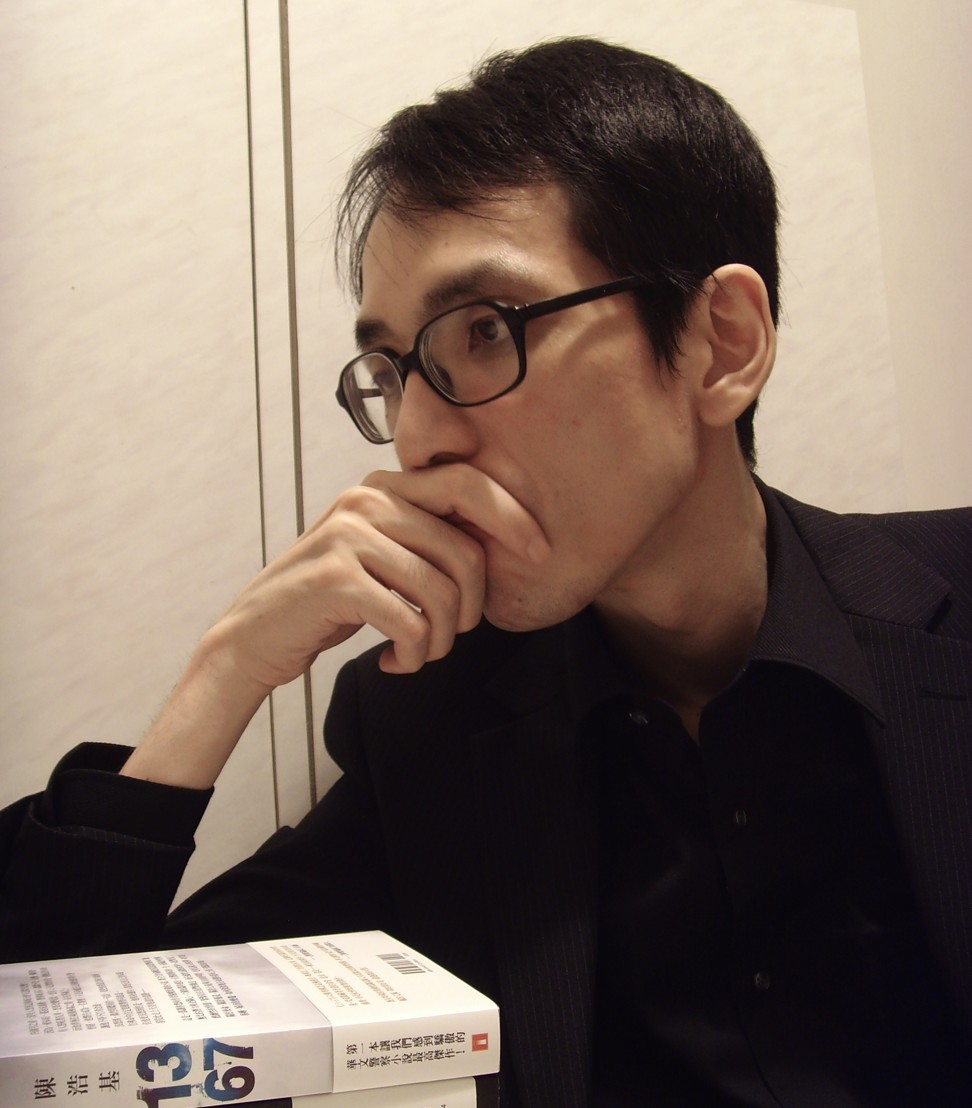
Hong Kong crime author Chan Ho-kei believes that this kind of “fiction-prophecy” is not uncommon.
“If you look really hard, I bet you can spot prophecies for almost all events. It makes me think about the ‘infinite monkey’ theorem,” he says, referring to the theory that a monkey hitting keys at random on a typewriter keyboard for an infinite amount of time will almost surely type any given text.
“The probability is low, but not impossible.”
British writer Paul French.
Chan points to the 1898 novella Futility, which told the story of a huge ocean liner that sank in the North Atlantic after striking an iceberg. Many uncanny similarities were noted between the fictional ship – called Titan – and the real-life passenger ship RMS Titanic, which sank 14 years later. Following the sinking of the Titanic, the book was reissued with some changes, particularly in the ship’s gross tonnage.
“Fiction writers always try to imagine what the reality would be, so it’s very likely to write something like a prediction. Of course, it’s bizarre when the details collide, but I think it’s just a matter of mathematics,” says Chan.
Many of Koontz’s books have been adapted for television or the big screen, but The Eyes of Darkness never achieved such glory. This bizarre coincidence will thrust it into the spotlight and may see sales of this otherwise forgotten thriller jump.
Hong Kong crime author Chan Ho-kei.
Amazon is currently offering it on Kindle for just US$1. Perhaps, like Futility, it will also be reissued with some updates to make it really echo the current outbreak.
Source: SCMP
Posted in 1981, appear, bioweapon, Blacksmith Books, chemical weapons research, Chinese military lab, civilians, Dean Koontz, epicentre, events, Futility, Harbin, High-speed rail, Hong Kong, Japan, Japanese, nature, outbreak, prophesy, publishing house, RMS Titanic, second world war, some books, The Eyes of Darkness, thriller, Uncategorized, Unit 731, Virus, Wuhan, Wuhan Institute of Virology, Wuhan-400, Yangtze River |
Leave a Comment »
23/12/2019
HARBIN, Dec. 22 (Xinhua) — Northeast China’s Heilongjiang Province has extended train routes to the country’s northernmost city of Mohe in a move to boost winter travel in the province, according to the local railway operator.
Train K7068/9, which travels 1,348 km between Suihua in the middle of the province and Jiagedaqi in the northwest, has extended its route to reach Mohe from Dec. 20 to Feb. 17 next year, said China Railway Harbin Group Co., Ltd.
The group also added carriages to three train sets that travel to Mohe to increase transport capacity.
The temperature in Mohe this winter dropped to as low as minus 40 degrees Celsius, but many tourists still come, especially for its Arctic Village, which features a spectacular snow landscape, igloos and a starry sky.
Mohe has an annual ice and snow period of up to eight months. The city has developed a variety of winter tourism programs including the Arctic Plaza of China, an ice sculpture garden, ice and snow amusement park, and ice maze.
Source: Xinhua
Posted in Arctic Plaza of China, Arctic Village, China Railway Harbin Group Co., Ltd., China's, facilitates, Harbin, Heilongjiang province, ice and snow amusement park, ice maze, ice sculpture garden, Mohe, northernmost, province, Suihua, train routes, Uncategorized, winter travel |
Leave a Comment »


















 CHINDIA ALERT: You'll be living in their world, very soon