Chindia Alert: You’ll be Living in their World Very Soon
aims to alert you to the threats and opportunities that China and India present. China and India require serious attention; case of ‘hidden dragon and crouching tiger’.
Without this attention, governments, businesses and, indeed, individuals may find themselves at a great disadvantage sooner rather than later.
The POSTs (front webpages) are mainly 'cuttings' from reliable sources, updated continuously.
The PAGEs (see Tabs, above) attempt to make the information more meaningful by putting some structure to the information we have researched and assembled since 2006.
BEIJING (Reuters) – China reported on Saturday a rise in new coronavirus cases, as authorities try to head off a second wave of infections, particularly from imported and asymptomatic cases, as curbs on cities and travel are lifted.
The National Health Commission said 46 new cases were reported on Friday, including 42 involving travellers from abroad, up from 42 cases a day earlier.
In its statement the commission added that 34 new asymptomatic cases were reported, down from 47 the previous day.
Mainland China’s tally of infections now stands at 81,953. The death toll rose by three to 3,339.
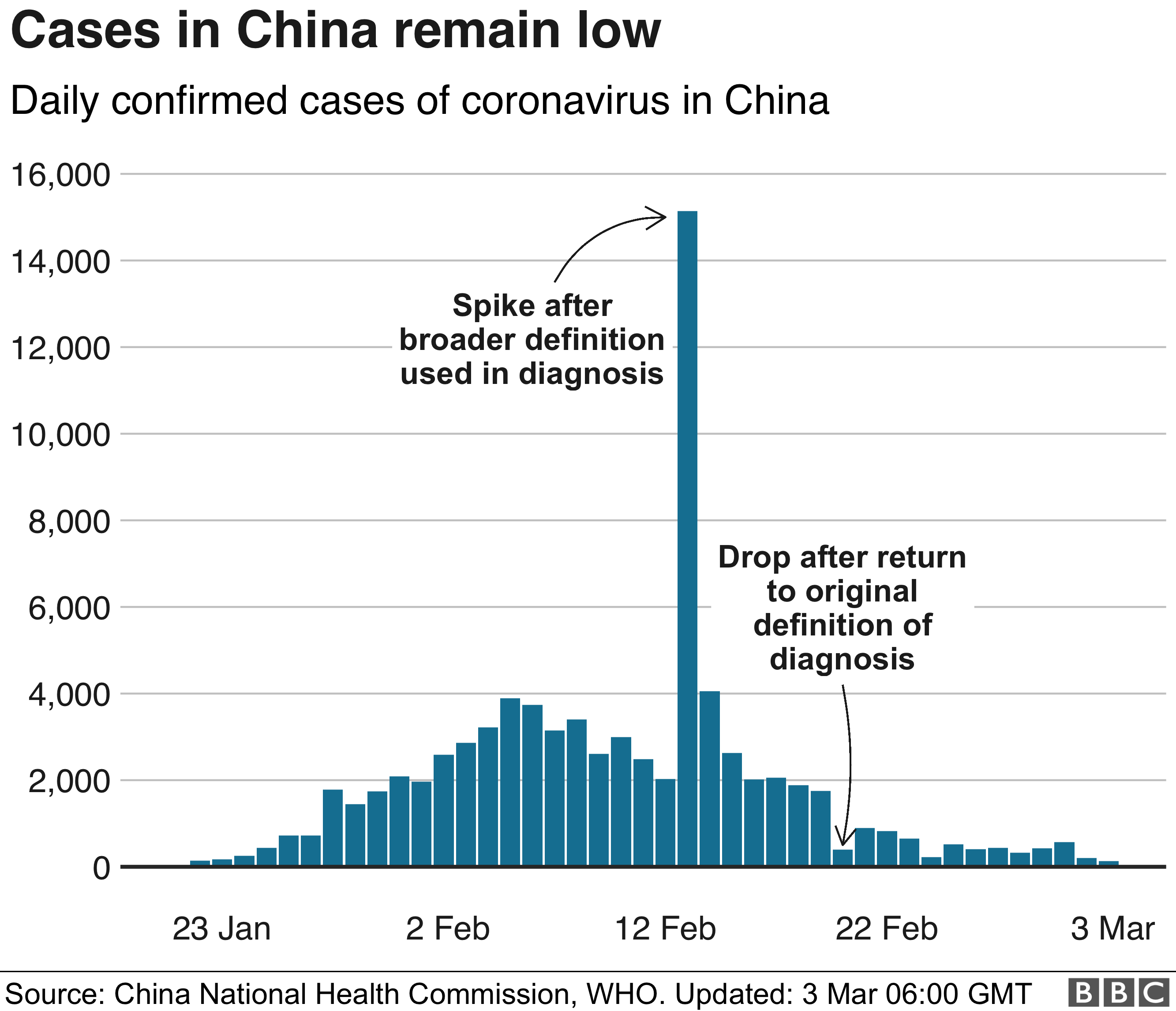
Tough curbs imposed since January helped rein in infections sharply from the height of the pandemic in February. But policymakers fear a second wave triggered by arrivals from overseas or asymptomatic patients.
Northeastern Heilongjiang recently reported a spike in new cases because of Chinese nationals entering the province from Russia, which has seen a surge of cases.
Provincial health officials said it had 22 new imported cases on Friday, all Chinese nationals coming from Russia, and one new local case, in its capital of Harbin.
Inner Mongolia had a daily tally of 27 new imported cases by Saturday morning, all from Russia, the region’s health authority said.
The central province of Hubei, where the virus emerged late last year, reported no new cases for a seventh successive day.
A rise in virus infections has prompted authorities in Guangzhou to step up scrutiny of foreigners, ordering bars and restaurants not to serve clients who appear to be of African origin, the U.S. consulate in the southern city said.
Anyone with “African contacts” faces mandatory virus tests followed by quarantine, regardless of recent travel history or previous isolation, it said in a statement.
It advised African-Americans or those who feel they might be suspected of contact with nationals of African origin to avoid the city.
Since the epidemic broke out in the provincial capital of Wuhan, it has spread around the world, infecting 1.6 million people and killing more than 100,000.
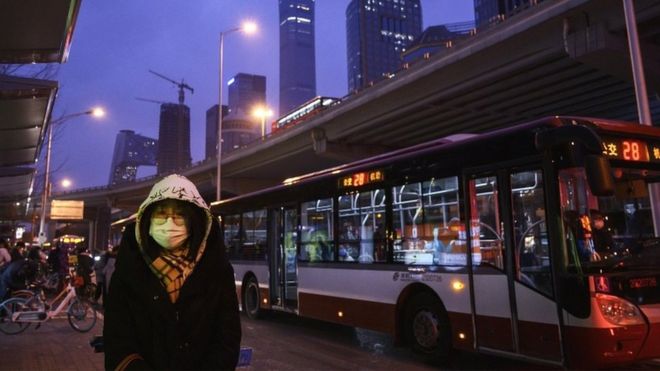
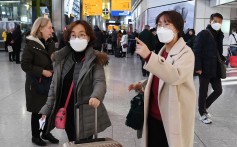
Image copyright GETTY IMAGESImage caption Authorities are also asking overseas Chinese to reconsider travel plans
Travellers from countries with severe coronavirus outbreaks who arrive in some parts of China will have to undergo a 14-day quarantine, state media say.
Travellers from the virus hotspots of South Korea, Japan, Iran and Italy arriving in the capital will have to be isolated, a Beijing official has said.
Shanghai and Guangdong announced similar restrictions earlier.
Authorities are worried the virus might be imported back into the country.
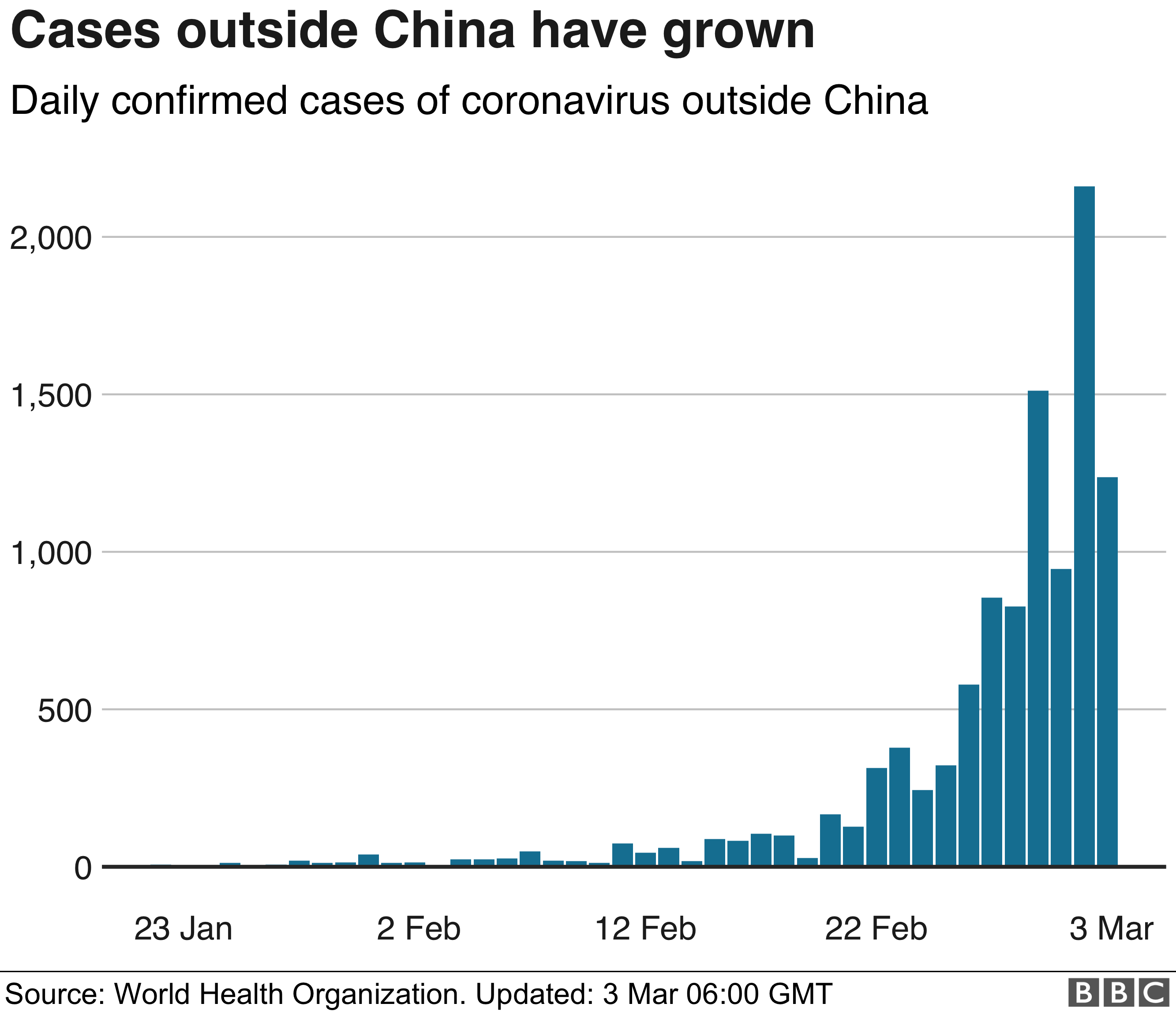
Although most virus deaths have been in China, Monday saw nine times more new infections outside China than in.
Shanghai said it would require new arrivals from countries with “relatively serious virus conditions” to be isolated, without naming the countries.
Authorities are also asking overseas Chinese to reconsider travel plans.
“For the sake of your family’s health and safety, please strengthen your precautions, carefully decide on your travel plans and minimise mobility,” officials in one southern Chinese province said.
China reported 125 new virus cases on Tuesday – the lowest number of new daily infections in six weeks. There were also 31 more deaths – all in Hubei province, where the virus emerged.
In other developments:
Finance ministers from the G7 countries have said they are “ready to take action”, including fiscal measures to aid the response to the virus and support the global economy
The Pope, who had cancelled a Lent retreat for the first time in his papacy because he was suffering from a cold, has tested negative for the virus, Italian media report
South Korean President Moon Jae-in has put the country into a “state of war” and ordered all government departments to shift to a 24-hour emergency system
Jailed British-Iranian woman Nazanin Zaghari-Ratcliffe is in good health, Iran’s judiciary has said. She was assessed after her husband said she was showing symptoms of Covid-19
Media caption Julie, who lives in Singapore, was diagnosed with coronavirus and then put into isolation
How are different countries affected?
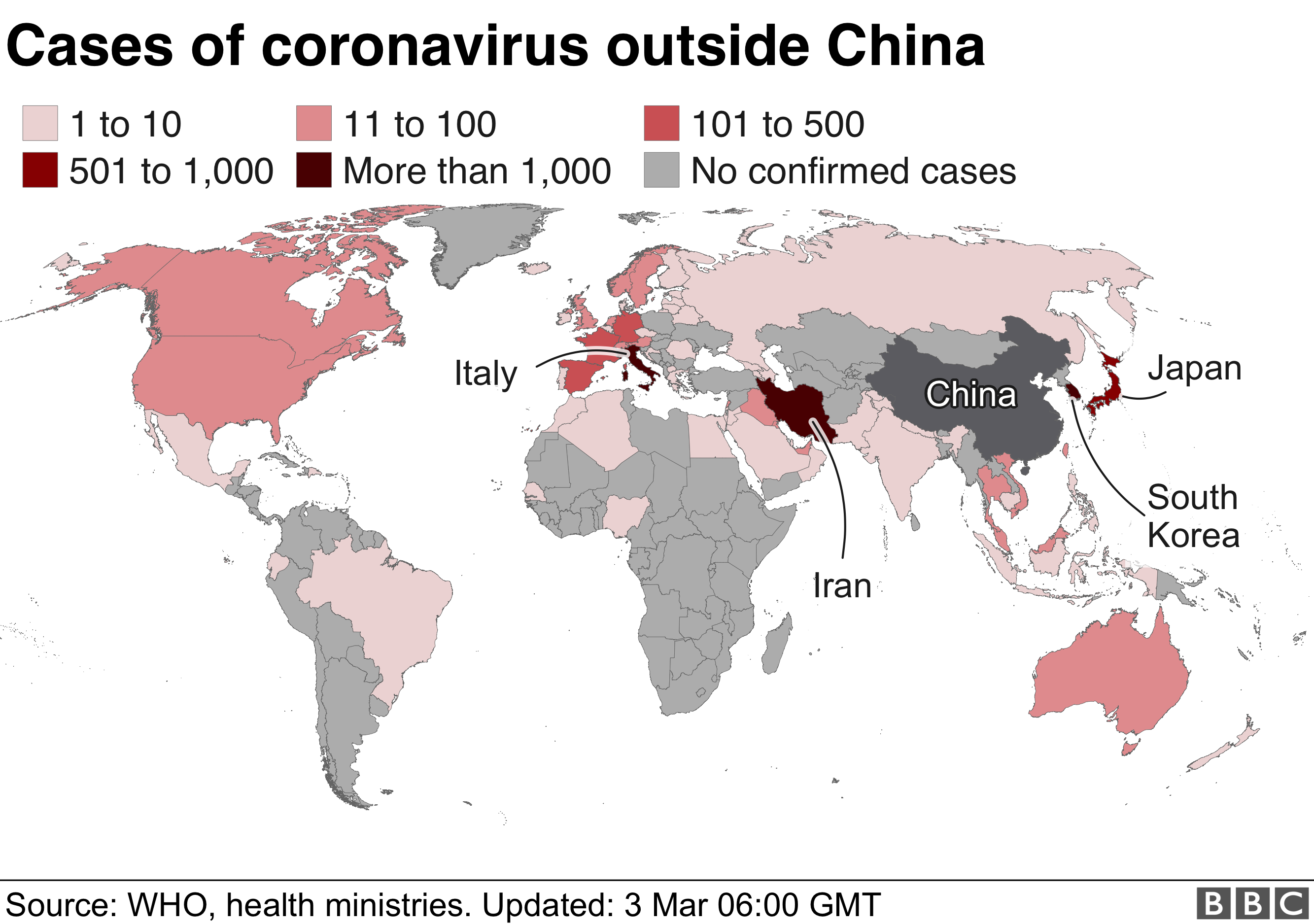
There are now almost 90,000 cases worldwide in about 70 countries, although the vast majority – just under 90% – remain in China, and most of those are in Hubei province where the virus originated late last year.
Of the nearly 8,800 cases outside China, 81% are in four countries – Iran, South Korea, Italy and Japan.
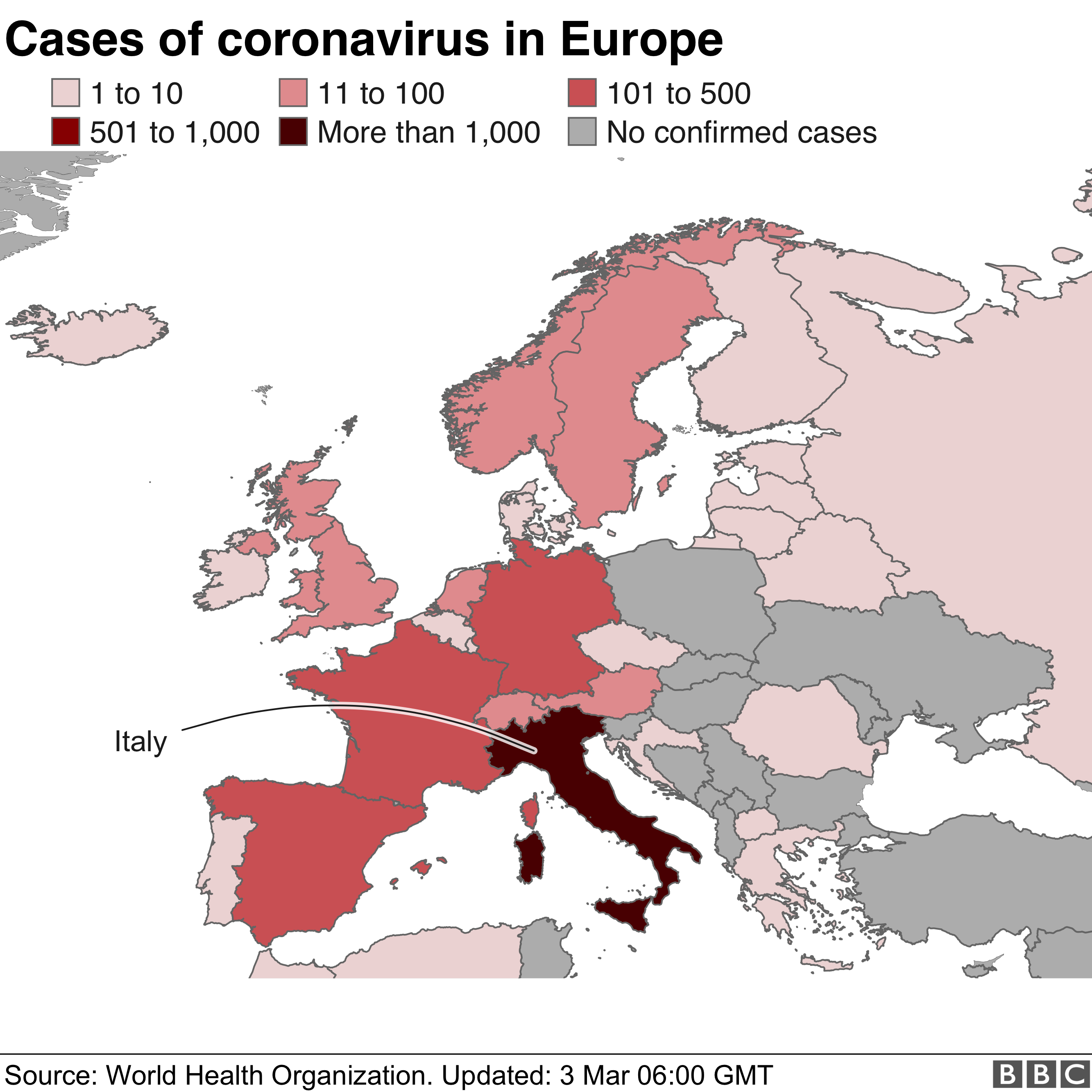
One of the countries worst affected outside China – Italy – said on Monday that the death toll there had risen by 18 to 52. There are 1,835 confirmed cases, most of them in the Lombardy and Veneto areas of the north. Nearly 150 people are said to have recovered.
However, the country is seeing a slowdown in new cases. On Monday, the authorities said there were 258 new cases of the virus – a 16% increase on the previous day – after new cases spiked by 50% on Sunday.
On Tuesday, Iran said the latest death toll from the virus was 77 – although the real figure is believed to be much higher. More than 2,300 people are said to be infected, including senior political figures. The head of Iran’s emergency medical services, Pirhossein Kolivand, was one of them, the Ilna news agency reported on Tuesday.
Some 23 MPs are also reported to have tested positive for the virus, and an official close to the Supreme Leader, Ayatollah Ali Khamenei, was reported on Monday to have died of the disease.
Health officials in the US state of Washington said on Monday that four more people had died, bringing the total there to six. They are the only deaths in the US so far. Local officials say they are buying a hotel to convert it into an isolation hospital.
On Tuesday, Ukraine confirmed its first case of coronavirus, while Portugal, Iceland, Jordan, Tunisia, Armenia, Latvia, Senegal, Morocco and Andorra confirmed their first cases on Monday.
How deadly is Covid-19?
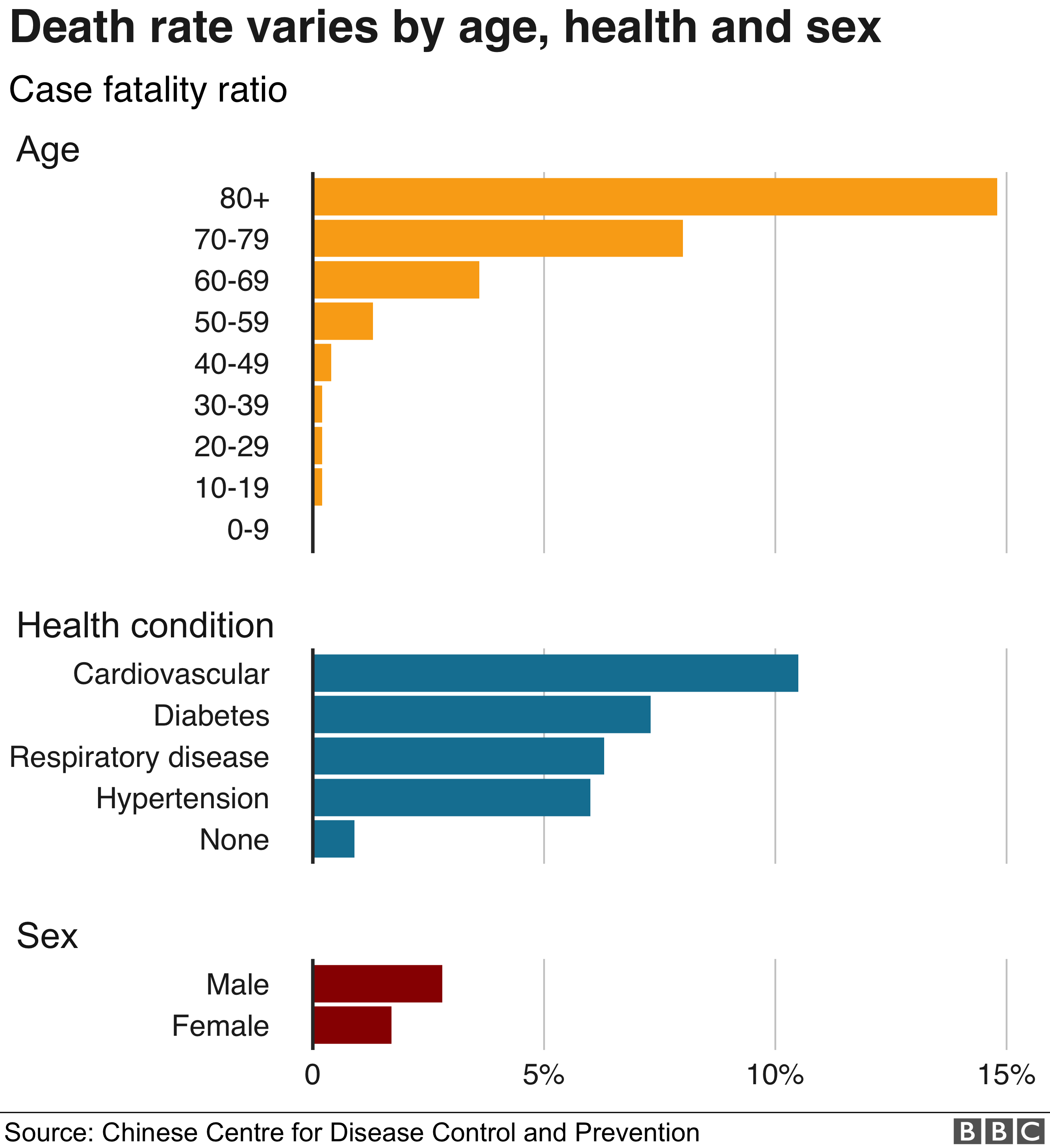
The WHO says the virus appears to particularly affect those over 60, and people already ill.
In the first large analysis of more than 44,000 cases from China, the death rate was 10 times higher in the very elderly compared to the middle-aged.
Most patients have only mild symptoms and the death rate appears to be between 2% and 5%, the WHO said.
By comparison, seasonal flu has an average mortality rate of about 0.1%, but is highly infectious – with up to 400,000 people dying from it each year.
Other strains of coronavirus, such as Severe Acute Respiratory Syndrome (Sars) and Middle East Respiratory Syndrome (Mers), have much higher death rates than Covid-19.
The decision, which follows a similar move by the US this week, came as the death toll from the outbreak soared to 259
Health officials on Friday confirmed the first cases in the UK after two people tested positive for the virus
A coach carrying British nationals evacuated from Wuhan arrives at the Arrowe Park Hospital in Wirral, near Liverpool in northwest England. Photo: AFP
Britain on Saturday said it was temporarily withdrawing some staff and their families from its diplomatic sites in China, as Beijing struggles to contain the nationwide new
The decision, which follows a similar move by the United States this week, came as the death toll from the outbreak soared to 259 and the total number of cases neared 12,000 within China.
The Sars-like virus has also begun to spread around the world, with more than 100 infections reported in more than 20 countries.
“We are committed to ensuring the safety and well-being of our staff and their families,” a spokesman for the British Foreign Office said.
“We are therefore temporarily withdrawing some UK staff, and their dependents from our embassy and consulates in China.”
He added that Britain’s ambassador in Beijing and staff needed to continue critical work will remain, and that British nationals in China would still have access to constant consular assistance.
The US, which on Friday temporarily banned the entry of foreign nationals, who had travelled to China over the past two weeks, has also made similar changes.
Two people in UK test positive for coronavirus
31 Jan 2020
On Wednesday, it authorised the departure of non-emergency government employees and their family members from its offices in Beijing, Chengdu, Guangzhou, Shanghai, and Shenyang.
And on Friday, it ordered all relatives of staff members under the age of 21 to leave China immediately.
A spokesman for the US Embassy in Beijing said it made the decision “out of an abundance of caution related to logistical disruptions stemming from restricted transportation and overwhelmed hospitals related to the novel coronavirus”.
Coronavirus outbreak: global businesses shut down operations in China
British health officials on Friday confirmed the first cases in the UK, after two members of the same family tested positive for the virus.
One of the two individuals is a student at the University of York, a university spokesman said on Saturday.
Also on Friday, 83 British citizens returned on a UK government-chartered flight from Wuhan, the Chinese city at the centre of the epidemic.
They were immediately taken to a hospital in northwest England for a two-week quarantine.







 CHINDIA ALERT: You'll be living in their world, very soon